The Power of Pilates: Everything You Need to Know
Every year, a fresh wave of fitness trends rise to the surface, each promising the path to optimal health, well-being, and that desired toned physique. However, amid the ever-evolving fitness landscape, one method has withstood the test of time, quietly demonstrating its effectiveness and efficiency. That method is Pilates, a versatile form of exercise that has been helping people enhance their physical health and mental well-being for nearly a century. But what exactly is Pilates and why should it matter to you? Whether you’re a seasoned athlete, a fitness newbie, or someone in-between, Pilates has something to offer everyone.
Named after its creator, Joseph Pilates, this unique form of exercise was designed with the intention of strengthening the mind and body. It’s a blend of Western and Eastern philosophies, drawing on elements from yoga, martial arts, gymnastics, and bodybuilding. This blog post will delve deep into the world of Pilates, unraveling its core principles, benefits, and why it could be the perfect addition to your fitness routine.
Pilates is often compared to yoga, but it’s a slightly different beast. While both promote strength, flexibility, and mindfulness, Pilates places more emphasis on strength, particularly core strength. At its heart are six principles—centering, control, flow, breath, precision, and concentration. Each principle contributes to the overall effectiveness of Pilates as a holistic approach to exercise.
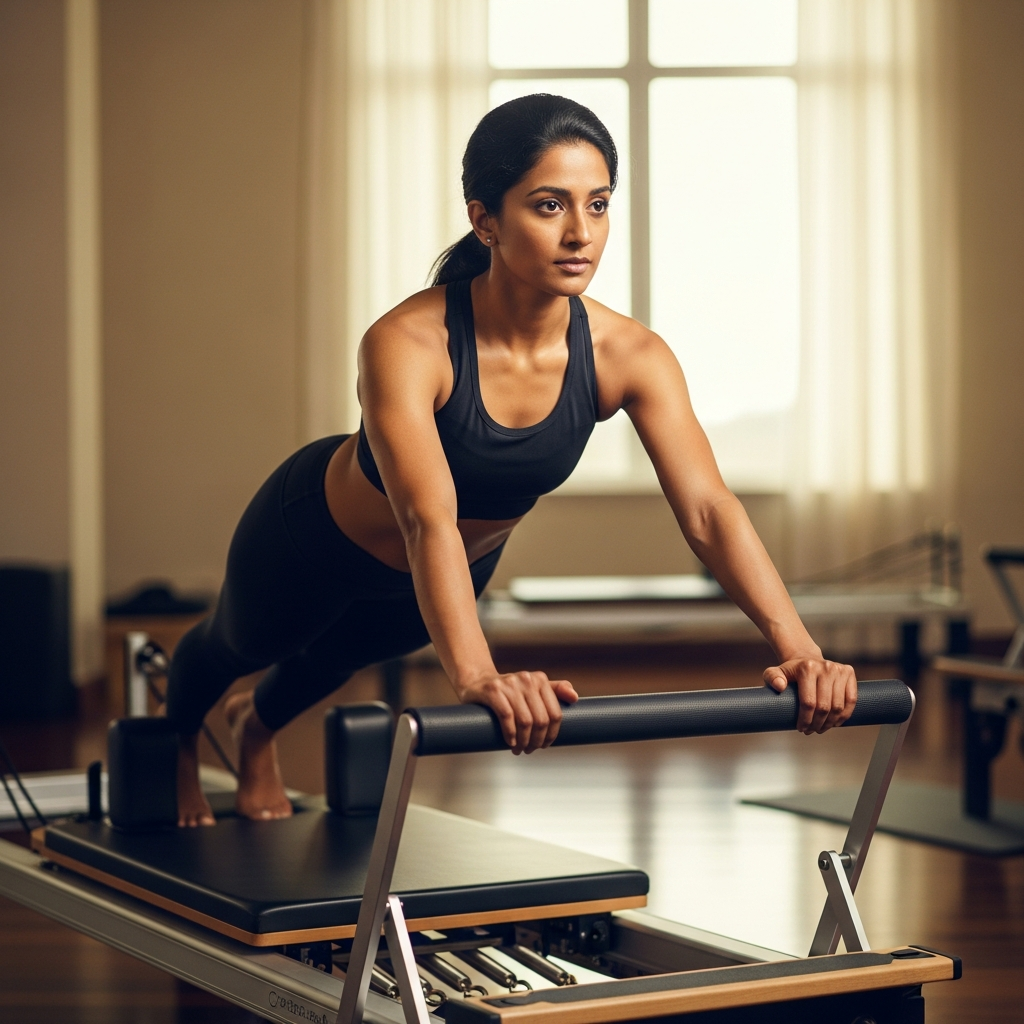
One common misconception about Pilates is that it only involves mat work. While mat Pilates is a significant aspect of this exercise method, it’s just the tip of the iceberg. Pilates also incorporates various pieces of equipment like the Reformer, the Cadillac, and the Wunda Chair. Each piece of equipment provides different resistance levels and can be used to perform a variety of exercises.
This blog post aims to guide you through the various facets of Pilates—from its history and philosophy to its different types, including mat Pilates and equipment-based classes. We will delve into the benefits that Pilates can bring to your physical health, mental well-being, and overall lifestyle. We will also provide practical advice on how to get started with Pilates, what to expect in your first class, and how to integrate it into your current exercise regimen.
Why does all this matter? For starters, understanding the depth of Pilates can inspire you to take the first step towards a healthier, more balanced lifestyle. It can also help you make an informed decision about whether or not Pilates is the right fit for you. Moreover, being knowledgeable about Pilates can help you maximize your workouts, ensuring that you get the most out of every session.
In a world where time is a precious commodity, we need workouts that are efficient, effective and can fit seamlessly into our busy lives. Pilates offers just that—a comprehensive, full-body workout that can be tailored to suit any fitness level. So, whether you are seeking to complement your existing exercise routine, recover from an injury, or simply try something new—Pilates could be the perfect solution.
So, are you ready to dive into the world of Pilates? Join us as we explore this unique exercise method and uncover why it has been a favorite among fitness enthusiasts for decades. After all, understanding is the first step towards action—and in this case, a step towards a healthier, happier you.
Pilates: A Comprehensive Introduction
Pilates, a physical fitness system developed in the early 20th century by Joseph Pilates, is a discipline that emphasizes the balanced development of the body through core strength, flexibility, and awareness to support efficient, graceful movement. It is named after its creator, Joseph Pilates, a former gymnast, and bodybuilder who devised this method to rehabilitate injured World War I soldiers.
The historical roots of Pilates are closely tied with the concept of mind-body connection. Joseph Pilates believed that mental health and physical health were interrelated and his exercise program was designed to strengthen both. His idea was to create a method of exercise emphasizing the balance of body and mind, using principles such as concentration, control, centering, flow, precision, and breathing.
At the heart of Pilates is the concept of ‘core’ or ‘powerhouse’. This refers to the muscles in the center of your body – encompassing your abdominals, pelvic floor, lower back, and glutes. Pilates exercises are designed to strengthen this powerhouse, enabling the rest of the body to move freely. By doing so, it can improve posture, alleviate back pain and prevent injuries.
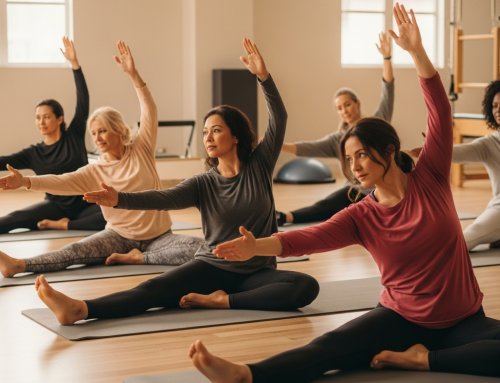
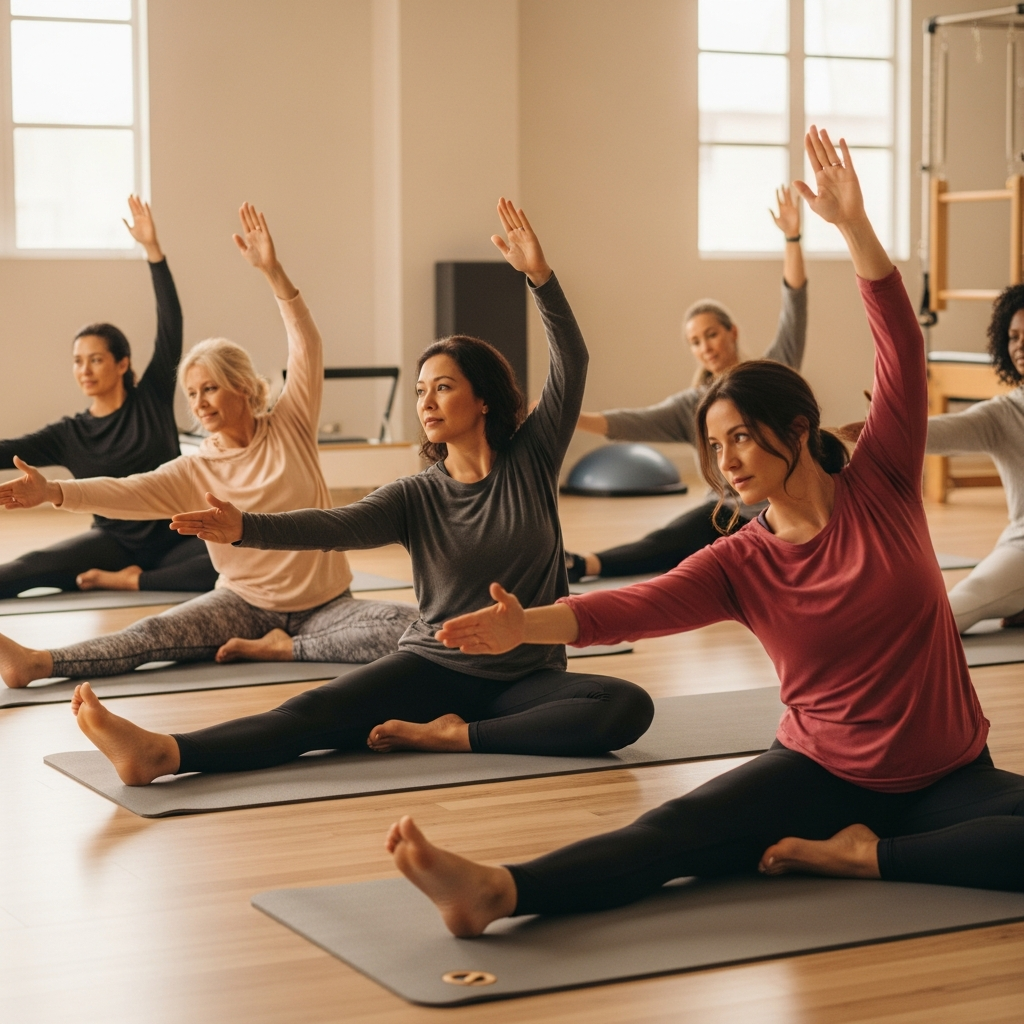
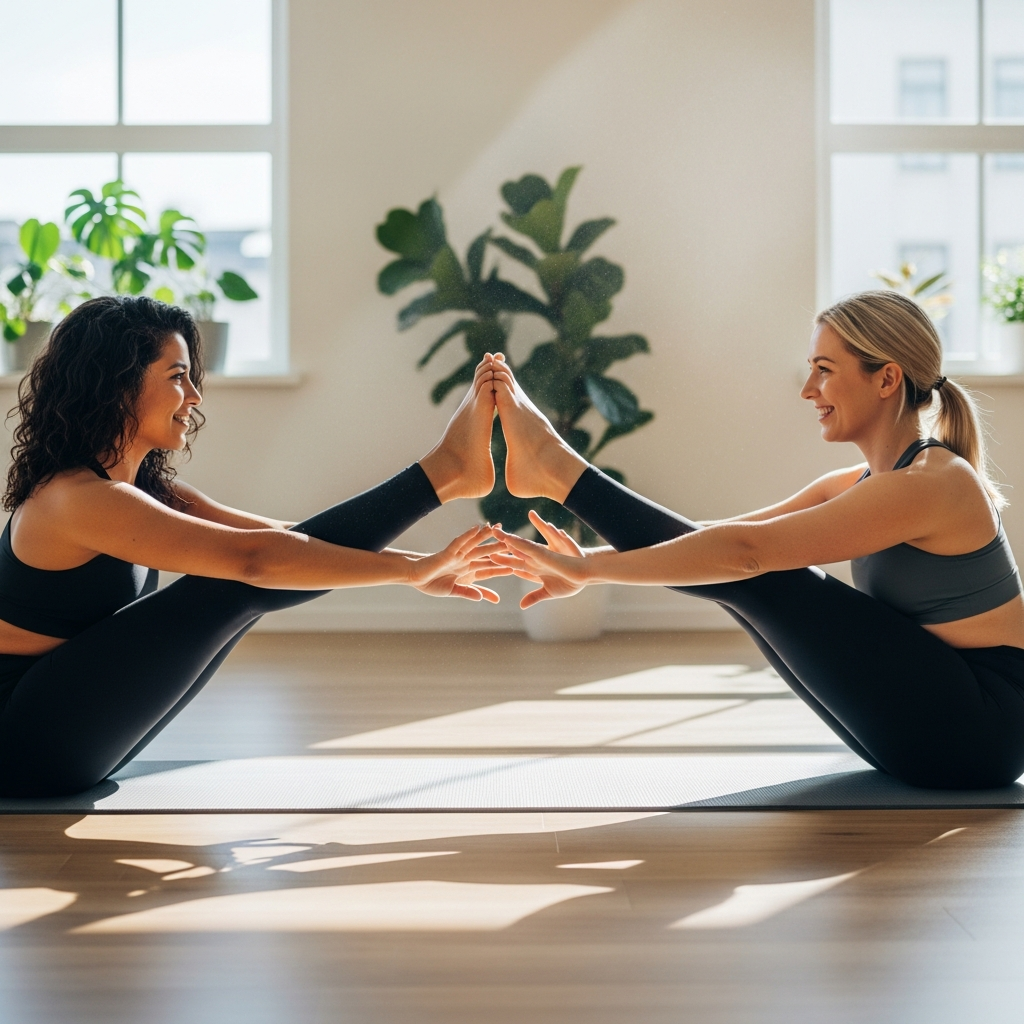
Pilates can be classified into two categories: mat-based and equipment-based. Mat-based Pilates is a series of exercises performed on the floor using gravity and your body weight to provide resistance. The primary focus is on conditioning the body’s core. Meanwhile, equipment-based Pilates uses various pieces of equipment to create resistance. This includes the Reformer, Cadillac, Wunda Chair, and more. Each piece of equipment has its unique set of exercises designed to train the body in different ways.
Pilates exercises are low-impact but still challenging. They require precision and control, with a strong emphasis on technique and correct form instead of repetitions. The goal of Pilates training is not just to work out a specific set of muscles but to engage the whole body. This holistic approach ensures a balanced muscle development.
Breathing is another key element of Pilates. Proper breathing techniques can help practitioners perform exercises with maximum efficiency and also improve their overall oxygen flow. Joseph Pilates emphasized using the lungs strongly to inhale and exhale air fully which he believed was the best way to cleanse the body and blood.
The benefits of Pilates are plentiful. Regular practice can improve posture, muscle tone, balance, and joint mobility, as well as relieve stress and tension. For athletes, including dancers, it can enhance their performance by developing whole-body strength and flexibility and reducing the risk of injury. For those rehabilitating from physical injuries, Pilates can be a safe and effective way to restore physical functions.
Despite its seemingly elitist image, Pilates is for everyone – young or old, fit or out of shape, healthy or recovering from an injury. The exercises can be modified to suit everyone from beginners to elite athletes. Furthermore, you don’t necessarily have to go to a Pilates studio to practice. Many Pilates exercises can be performed at home with minimal equipment.
In recent years, Pilates has seen a surge in popularity. This is due in part to its effectiveness in building a strong core, but also because it provides a welcome alternative to high-impact exercises that can strain the body. It’s a discipline that encourages slow, controlled movements and deep concentration, offering a refreshing antidote to our fast-paced, hyper-connected lives.
In conclusion, Pilates is a versatile and adaptable system of physical fitness that is rooted in principles of mind-body connection. It offers a myriad of benefits from improved physical strength and flexibility to enhanced mental wellbeing. Whether you’re looking to tone up, rehabilitate from an injury, or simply want a more mindful workout experience, Pilates could be just what you’re looking for. As Joseph Pilates himself once said, “In 10 sessions, you’ll feel the difference, in 20 you’ll see the difference, and in 30 you’ll have a new body.”
Understanding Pilates: A Comprehensive Guide
Pilates is a comprehensive mind-body workout that focuses on core strength, flexibility, and overall body awareness. It was developed by Joseph Pilates in the early 20th century and has since evolved into a popular form of exercise worldwide. Whether you’re a seasoned fitness enthusiast or a beginner looking to get into shape, understanding the fundamentals of Pilates is the first step to incorporating this method into your fitness regimen.
To start with, it’s essential to understand that there are two primary types of Pilates: Mat Pilates and Reformer Pilates. Mat Pilates is performed on a padded mat and uses your body weight as resistance. This is where most people begin their Pilates journey. On the other hand, Reformer Pilates is performed on a specialized piece of equipment called a Reformer, which uses springs and pulleys to provide a more challenging workout.
1. Starting with Mat Pilates
Mat Pilates is an excellent starting point for beginners. Classes typically focus on controlled, precise movements that target your core (or “powerhouse,” as it’s referred to in Pilates) but also work other areas of your body. A standard class might include exercises like the Hundred (a breathing exercise that also targets core strength and stability), the Roll-Up (a slow, precise move that stretches the spine and the muscles of the back and hamstrings), and Leg Circles (which promote hip flexibility and control).
Actionable Advice: If you’re starting with mat Pilates, try to find a beginners’ class or one-on-one instruction to ensure you’re getting the most from your workout and doing the exercises correctly. Remember, Pilates is about quality over quantity. Focus on performing each movement correctly rather than rushing through the exercises.
2. Progressing to Reformer Pilates
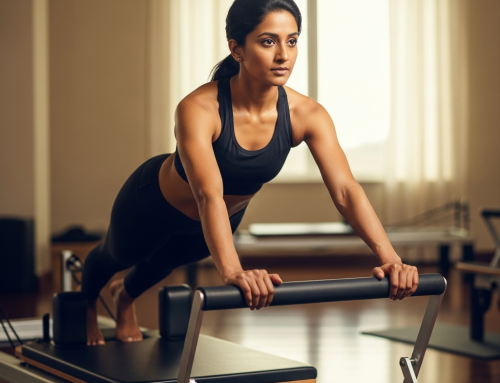
Once you’ve mastered the basics on the mat, you might choose to move on to Reformer Pilates. The Reformer is a piece of equipment that provides resistance through springs and pulleys, increasing the difficulty and intensity of the workout. Exercises on the Reformer can be done lying down, sitting, standing or even in a kneeling position.
Actionable Advice: If you’re considering moving from mat to Reformer Pilates, make sure you’ve got a solid understanding of the basic principles first. You’ll need to be comfortable controlling your body and maintaining proper alignment before adding in the challenge of the Reformer.
3. Choosing the Right Pilates Class
The type of Pilates class that’s best for you will depend on your fitness level, goals, and personal preference. Some people prefer the control and precision of mat classes, while others enjoy the additional challenge provided by the Reformer.
Actionable Advice: Try a few different types of classes before deciding which one is right for you. Remember, it’s not about which type is ‘better’ – it’s about finding the style that suits you best.
4. Benefits of Pilates
Regular Pilates practice can offer numerous benefits, including improved strength, flexibility, balance, and body awareness. It can also enhance concentration, relieve stress, and reduce the risk of injury by promoting better posture and body alignment.
Actionable Advice: To start seeing these benefits, aim to incorporate Pilates into your routine at least twice a week. Remember, consistency is key when it comes to any form of exercise.
5. Integrating Pilates into Your Lifestyle
One of the fantastic things about Pilates is that it can be adapted to suit anyone – from athletes to people at the beginning of their fitness journey. It’s also flexible enough to be incorporated into any lifestyle or schedule.
Actionable Advice: If you’re struggling to fit Pilates classes into your schedule, consider investing in a mat and practicing at home. There are plenty of online resources available to guide you, making it easier than ever to practice Pilates wherever and whenever suits you.
Pilates is a versatile and accessible method of exercise that can benefit people of all fitness levels. By understanding the basics, choosing the right class for your needs, and integrating it into your lifestyle, you can start enjoying the many benefits this practice has to offer.
Pilates is a comprehensive and versatile workout regimen that offers a wide array of benefits including improved strength, flexibility, balance, and posture. Whether you are new to pilates or have been practicing for a while, understanding its fundamentals, overcoming common challenges, and learning expert tips can maximize your performance and results.
**Misconceptions About Pilates**
One of the most common misconceptions about pilates is that it’s easy or similar to yoga. Although pilates does incorporate elements of mindfulness and controlled movements like yoga, it places a significant emphasis on core strength, full-body conditioning, and functional movement. Pilates can be quite challenging as it requires precision, control, and concentration.
Another misconception is that pilates is only for women. This is far from the truth. Pilates was actually created by a man, Joseph Pilates, and it’s beneficial for all genders. It offers an effective workout for athletes looking to strengthen their core, prevent injuries, and improve their performance.
**Common Challenges in Pilates**
1. **Understanding the Pilates Principles**: Pilates is based on six key principles: centering, concentration, control, precision, breath, and flow. Understanding and applying these principles can be challenging for beginners but are critical to performing the exercises correctly and safely.
2. **Building Core Strength**: Many pilates exercises require substantial core strength. If you’re new to pilates or do not regularly engage in core-focused workouts, these exercises can be challenging at first.
3. **Maintaining Proper Form**: Pilates requires precise alignment and form. Maintaining the correct posture throughout each exercise can be challenging but is essential to avoid injury and maximize effectiveness.
**Solutions & Tips**
1. **Mastering the Pilates Principles**: To understand the pilates principles, take time to learn about each one individually. Start with centering, which involves focusing on the center of your body (the powerhouse area which spans from the bottom of your ribs to your pubic bone) and working outwards. Concentration and control are about being mindful in each movement, while precision is linked to focus and form. Breath is used to facilitate movement, and flow relates to smooth, continuous movements.
2. **Building Core Strength**: Be patient with yourself. Core strength takes time to build. Incorporate simple core exercises into your regular routine and gradually increase the intensity as your strength improves.
3. **Maintaining Proper Form**: Regularly attending pilates classes can be incredibly beneficial. A qualified instructor will guide you through each exercise and correct your form as needed. Watching yourself in a mirror can also help you to self-correct your alignment.
**Mat Pilates vs Pilates Classes**
Mat pilates and pilates using equipment like reformers, are both excellent ways to practice this form of exercise but they offer different benefits. Mat pilates is convenient, portable, and focuses on using your own body weight as resistance. Pilates classes, particularly those using reformers or other equipment, can provide enhanced resistance and a wider variety of exercises. A balanced pilates regimen might incorporate both mat work and equipment-based classes.
**Best Practices for Pilates**
1. **Consistency is Key**: Like any fitness routine, consistency is key in pilates. Try to create a regular schedule for your pilates workouts.
2. **Mindful Movement**: Remember that pilates is about quality, not quantity. Focus on performing each movement with precision and control.
3. **Listen to Your Body**: While it’s important to push yourself, it’s equally important to listen to your body. If something doesn’t feel right, modify the exercise or take a break.
4. **Wear Comfortable Clothing**: Wear clothing that allows you to move freely but isn’t too loose. Form-fitting clothes can allow your instructor to better see your alignment and form.
5. **Stay Hydrated and Nourished**: Proper hydration and nutrition will fuel your workouts and aid recovery.
Pilates is a journey, not a destination. It’s about building a better connection with your body and improving your overall health and well-being. Remember to be patient with yourself, stay consistent, and most importantly, enjoy the process. As Joseph Pilates once said, “In 10 sessions you’ll feel the difference, in 20 you’ll see the difference, and in 30 you’ll have a whole new body.”
What Should I Know About Pilates?
Pilates is a fitness regimen that emphasizes the balanced development of the body through a blend of strength, flexibility, and mindful movement. Originally developed by Joseph Pilates in the early 20th century, it’s now considered a holistic approach to physical wellness, focusing on core strength, body alignment, and mental focus. If you’re considering embarking on your Pilates journey, here’s what you can expect, timelines to keep in mind, and next steps to take.
**What To Expect**
As a beginner, you might find that Pilates challenges your body in new ways. It focuses on small movements that require control and precision. The primary focus is on strengthening the core, but it works other muscle groups too. Expect to engage muscles you didn’t even know you had!
Pilates can be done using specially designed apparatus like the Reformer or the Cadillac, or on a simple exercise mat. Mat Pilates is most accessible for beginners since it requires no special equipment apart from a mat. Mat exercises focus mainly on strengthening the body’s ‘powerhouse,’ a term that Pilates practitioners use to describe the muscles of the core.
In a typical Pilates class, whether it’s mat or equipment-based, you’ll go through a series of exercises directed by an instructor. These classes generally last around 45 minutes to an hour. The exercises involve smooth, continuous movements to help improve flexibility, strength, balance and body awareness.
**Timelines**
The timeline for seeing results from Pilates will vary based on the frequency of your workouts, your initial fitness level, and whether you’re practicing mat Pilates or using equipment. As a rule of thumb, you may start to see increased muscle tone and flexibility in four to six weeks with regular sessions.
It’s generally recommended to undertake two to three Pilates sessions per week for optimum results. While you may not see drastic physical changes immediately, you’ll likely notice improvements in your posture and movement within a few weeks.
**Next Steps**
If you’re ready to get started with Pilates, the first step is to find a beginner’s class or a qualified instructor. You can find Pilates classes at most fitness centers, or you can opt for online classes if you prefer to work out at home.
When starting out, it’s important to take it slow and focus on mastering the fundamentals. Pilates is all about control and precision, so it’s crucial to learn proper technique to maximize benefits and avoid injury.
For mat Pilates, you’ll need a good quality exercise mat. Choose one that’s thick enough to provide adequate cushioning but firm enough to support your movements. For equipment-based Pilates, find a studio with certified instructors who can guide you on how to use the equipment correctly.
After getting comfortable with the basic exercises, you can gradually move on to more advanced moves or try using Pilates machines like the Reformer. Remember, progress in Pilates is not about doing more repetitions, but about adding complexity and control to your movements.
**Practical Guidance**
1. Remember to breathe: Proper breathing is crucial in Pilates. It helps you execute movements with power and efficiency.
2. Listen to your body: While it’s normal to feel a little sore after a workout, sharp pain is a red flag. If an exercise causes discomfort, let your instructor know so they can modify it for you.
3. Consistency is key: Regular practice will help you improve faster. Make Pilates a part of your weekly routine for best results.
4. Warm-up and cool down: Just like any other workout, ensure you warm up before starting your routine and cool down afterward.
5. Dress comfortably: Wear stretchy, comfortable clothing that allows you to move freely.
Pilates is a flexible and adaptable exercise method that can benefit people of all ages and fitness levels. Whether you’re looking to improve your posture, strengthen your core, or simply add variety to your workout routine, Pilates could be the perfect fit for you. Remember, as with any new exercise program, it’s a good idea to consult with a healthcare provider before getting started.
In conclusion, Pilates is an innovative and safe exercise method that emphasizes body balance, strength, flexibility, and mind-body awareness. It’s a unique combination of stretching and strength training that offers numerous benefits to practitioners of all fitness levels. Whether you’re young or old, fit or unfit, Pilates has something to offer everyone.
Through our comprehensive exploration, we’ve discovered that Pilates can contribute effectively to improved posture and core strength. It’s an exercise method that targets the core muscles while also engaging other parts of the body. By routinely practicing Pilates, you’ll likely notice enhanced flexibility, better balance, and improved coordination. This can be instrumental for injury prevention and also for enhancing performance in other sports and physical activities.
We’ve also learned that Pilates can be a powerful tool for stress relief and mental wellness. The concentration required during Pilates sessions encourages mindfulness and presence, helping to clear the mind and reduce stress. By focusing on the connection between mind and body, Pilates provides a unique opportunity for mental relaxation and rejuvenation.
Moreover, Pilates is adaptable. It can be modified to meet individual needs and is suitable for all fitness levels. It’s a versatile workout that can be performed on a mat or specialized equipment, making it accessible for home practice or in a studio setting. With its scalability, Pilates can offer challenging workouts for seasoned athletes while still being approachable for beginners.
Importantly, we’ve underscored the need for proper guidance and instruction in Pilates. As with any exercise routine, correct form and technique are crucial to prevent injuries and reap the maximum benefits. A certified Pilates instructor can provide the necessary supervision and guidance to ensure safety and effectiveness.
In light of this, whether you’re considering starting Pilates or advancing your routine, it’s advisable to seek professional advice. This can help tailor your workout to your unique needs and goals, ensuring a personalized approach that maximizes benefits while minimizing the risk of injury.
To sum up, Pilates is a holistic, adaptable, and efficient exercise method that offers physical and mental benefits. It can help improve posture, core strength, flexibility, and balance, while also providing a means for stress relief. However, as with any exercise regimen, proper guidance is key to ensuring safety and effectiveness.
Now that you’ve learned about what Pilates entails, are you intrigued to give it a try? Or perhaps you’re an experienced practitioner looking to deepen your practice? Whatever your situation or goals, we’re here to assist. We offer expert guidance, personalized programs, and a supportive community to help you on your Pilates journey.
Don’t let uncertainties or questions hold you back. Contact us today. Our team of certified Pilates instructors is ready to provide you with the support and guidance you need. Embark on your Pilates journey with us and experience the transformative power of this unique exercise method. Remember, every journey begins with a single step. Let that step lead you to us, and together we can explore the exciting world of Pilates.