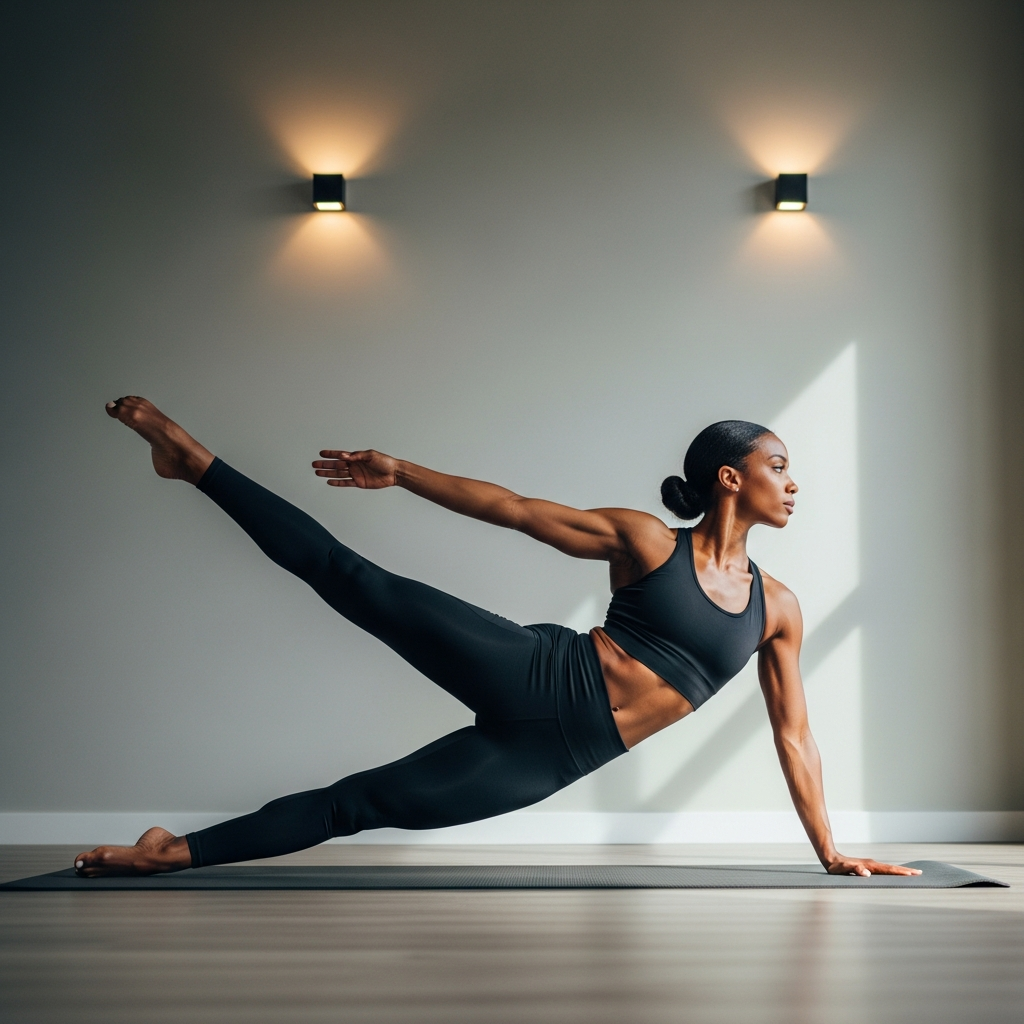
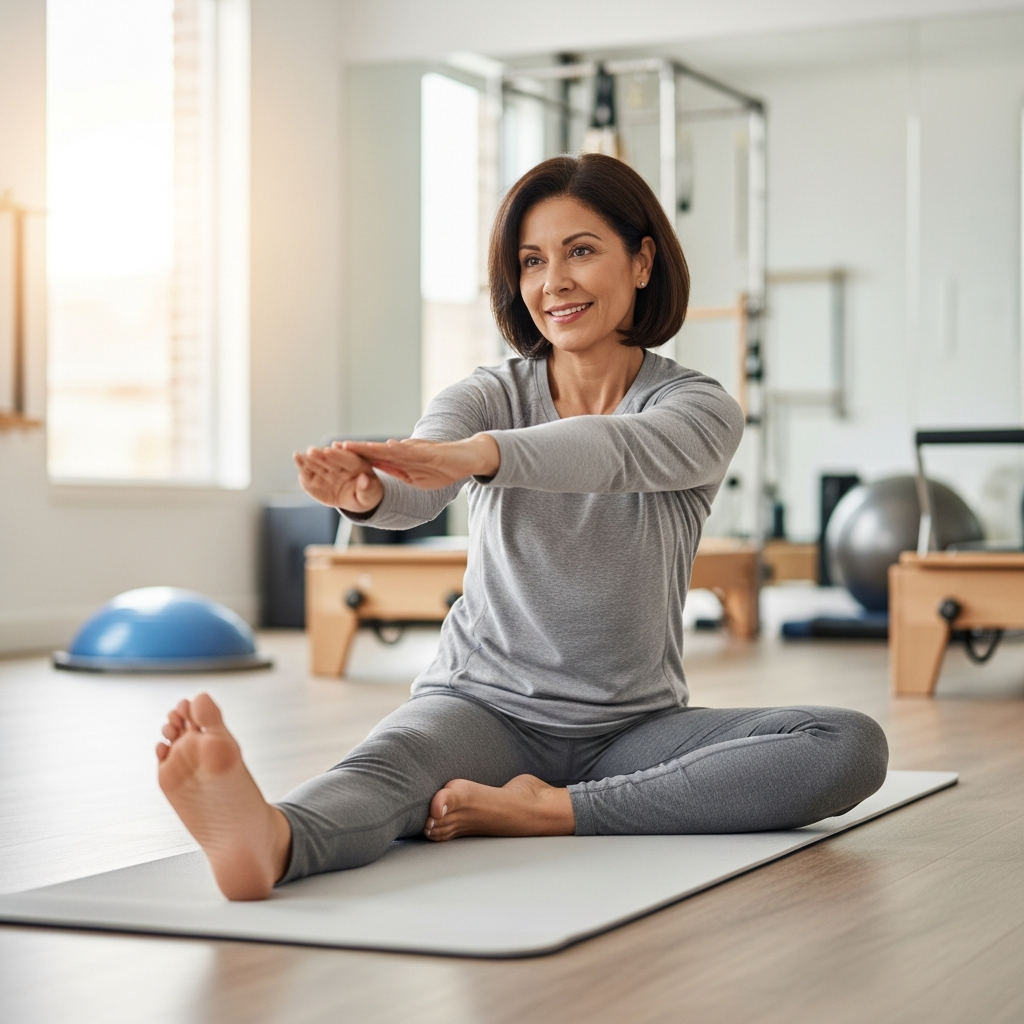
Pilates vs Yoga: An Insightful Journey into Wellness
Are you standing at the crossroads of wellness, trying to decide whether Yoga or Pilates is the right path for your fitness journey? Well, you’re not alone. With the ever-growing popularity of both these exercise regimens, many fitness enthusiasts are often caught in the Yoga vs Pilates conundrum. But don’t worry, we’re here to clarify, compare, and contrast these two disciplines to help you make an informed decision that aligns with your health goals.
Pilates and Yoga, both boasting a rich history and a legion of followers, are holistic approaches to health and well-being. They offer a unique blend of strength, flexibility, and mindfulness that transcend beyond just physical fitness. However, their individual philosophies, techniques, and benefits can vary significantly, making the choice between the two a bit challenging.
In this comprehensive guide, we will delve deep into the world of Pilates and Yoga. We’ll explore their principles, practices, and perks with a particular focus on mat Pilates and reformer Pilates. We’ll also shed light on how they intersect and diverge in their journey towards holistic health.
The reason why this matters to you? Well, understanding the nature of each discipline can help you align your exercise regimen with your personal health goals and lifestyle. Whether you’re looking to improve core strength, boost flexibility, rehabilitate from an injury, or simply seeking a stress-relieving activity—comprehending the nuances of Pilates vs Yoga can be the key to unlock your path to wellness.
We’ll kick off our discussion with an exploration of Pilates—both mat and reformer varieties. Originating in the early 20th century, Pilates was developed by Joseph Pilates as a rehabilitative and body conditioning routine. Although it’s evolved over the years, its core principles of control, concentration, centering, precision, breath, and flow remain intact.
Mat Pilates, performed on a padded mat, uses your own body weight as resistance. It is designed to strengthen the core, improve balance, increase coordination, and decrease stress. On the other hand, Reformer Pilates involves a specially designed machine to provide a balanced workout that stretches and strengthens the body.
Then, we’ll journey into the ancient practice of Yoga. Rooted in India over 5,000 years ago, Yoga is more than just physical postures; it’s a philosophical lifestyle that unites body, mind, and spirit. We’ll delve into its principles and how its focus on flexibility, endurance, and mindful breathing can complement or contrast with Pilates.
In the end, we’ll compare and contrast Pilates and Yoga side by side. We’ll consider factors such as target demographic, health benefits, injury prevention and rehabilitation, equipment and space requirements, and more. By doing so, we aim to provide you with a clearer picture of which discipline—Yoga or Pilates—is better suited to you.
But remember, there’s no definitive answer to the question of Pilates vs Yoga. Everyone’s body is different and so are their fitness goals. What’s crucial is finding an exercise routine that you enjoy and can commit to consistently. So, buckle up, and let’s embark on this enlightening journey of Pilates vs Yoga together.
Pilates vs. Yoga: A Detailed Exploration of Pilates
Pilates, an exercise regimen that focuses on the core postural muscles, has been a popular choice for fitness enthusiasts worldwide. Before delving into the comparison of Pilates and yoga, it’s crucial to understand the fundamental principles and framework of Pilates to appreciate its unique approach to physical fitness.
Pilates was developed in the early 20th century by Joseph Pilates, a German physical trainer. He designed it as a form of exercise to rehabilitate soldiers returning from war and later, dancers. This origin story underlines the primary focus of Pilates – it’s an exercise system designed to strengthen the body and aid in injury recovery.
The Pilates Method, as it is often referred to, revolves around six fundamental principles: concentration, control, centering, precision, flow, and breath. Each principle plays a pivotal role in performing Pilates exercises effectively and safely.
1. Concentration: This principle emphasizes the mind-body connection. Practitioners are encouraged to stay mentally present and focus on each movement during the workout. This mindful attention to detail helps in performing exercises with accuracy, leading to more effective results.
2. Control: Control is a vital aspect of Pilates. Instead of relying on momentum, every movement in Pilates needs to be done with control. This not only yields better results but also reduces the risk of injury.
3. Centering: In Pilates, the ‘center’ or the ‘powerhouse’ refers to the area between the lower ribs and pubic bone, encompassing the abdomen, lower and upper back, hips, buttocks, and inner thighs. All movements in Pilates originate from this powerhouse, promoting core stability and strength.
4. Precision: Pilates is not about doing numerous repetitions, but rather about performing each exercise with meticulous precision. This principle ensures that the correct muscles are targeted in each exercise.
5. Flow: The exercises in Pilates are meant to flow into each other smoothly, creating a sense of rhythm and fluidity throughout the workout. This not only makes the movements more graceful but also enhances muscle endurance.
6. Breath: Breathing is another key principle in Pilates. Proper breathing techniques not only oxygenate the muscles but also help in maintaining control and precision during the workout.
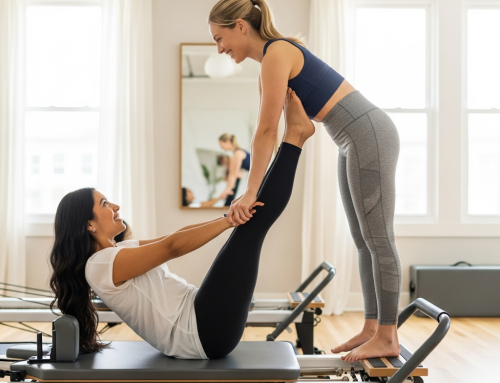
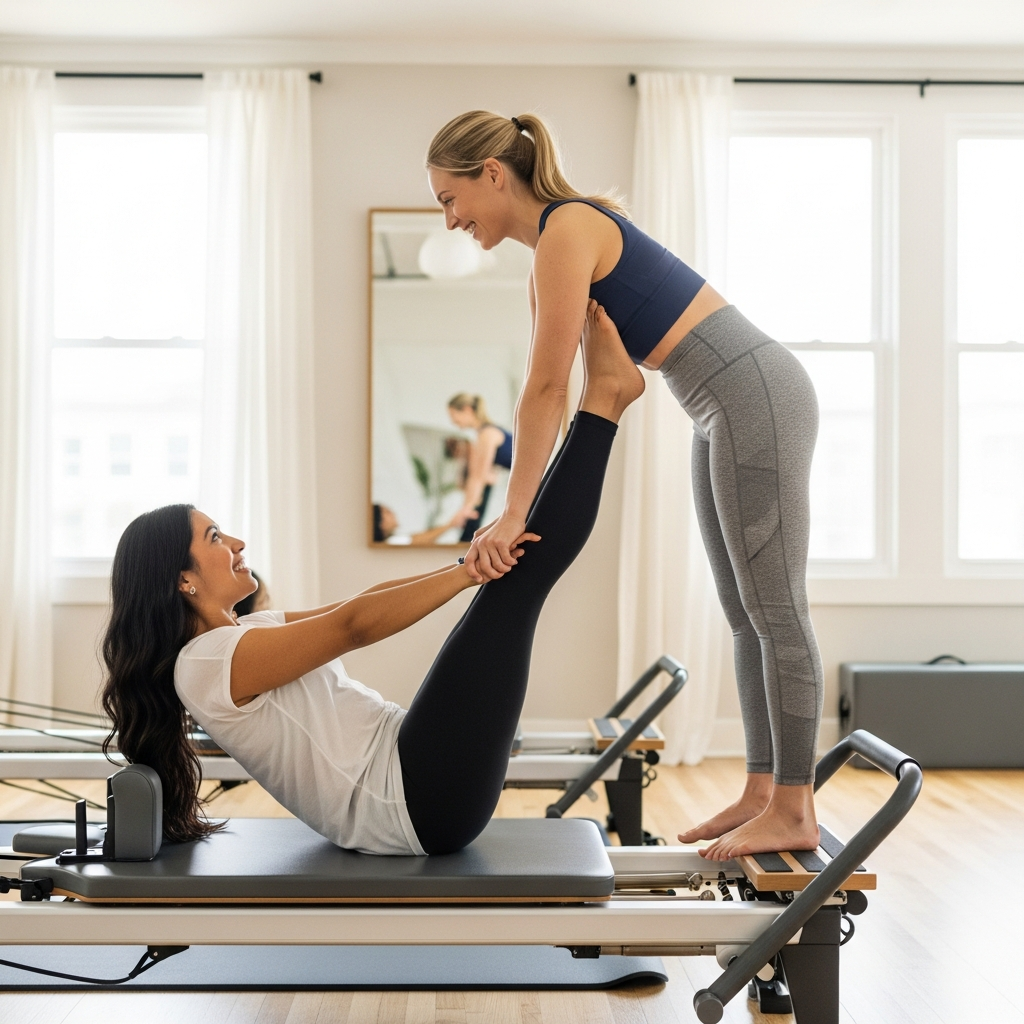
Pilates exercises can be mat-based or performed on specialized equipment, known as reformers. The reformer, with its system of springs, straps, and pulleys, provides resistance to help tone and strengthen muscles. Mat-based Pilates exercises primarily use the practitioner’s own body weight for resistance.
Pilates offers a balanced approach to fitness, where the focus is not just on building strength but also on improving flexibility, enhancing coordination, promoting better posture, increasing body awareness, and reducing stress. It’s beneficial for people of all fitness levels – from athletes to individuals recovering from injuries.
Unlike many other forms of exercise, Pilates does not focus on repetitions or muscle exhaustion, but rather on the quality of movement. This makes Pilates a safe choice for exercise that can be customized according to individual needs and limitations.
In comparison with yoga, which we will explore in detail later, Pilates has a more clinical approach to fitness. While both systems promote strength, flexibility, and mind-body connection, Pilates often emphasizes more on the physical conditioning of the body, particularly core strength and stability. The inclusion of equipment like reformers also sets Pilates apart from traditional yoga.
Understanding the principles and framework of Pilates allows us to appreciate its depth as an exercise system. It is not just another workout regimen but a comprehensive approach to body conditioning that combines strength, flexibility, and mindfulness. The next step would be comparing it to yoga, another equally profound system, to understand their differences and respective benefits fully.
Pilates vs. Yoga: A Detailed Comparison and Guidance for Beginners
When it comes to fitness and wellness, people often find themselves caught in the debate of Pilates vs. Yoga. Both disciplines offer excellent benefits such as flexibility, muscle strengthening, stress relief, and mental clarity. However, their approaches and techniques differ significantly. This article provides a comprehensive comparison between the two, along with actionable advice on how to get started with each.
1. Understanding Pilates
Joseph Pilates conceptualized Pilates in the early 20th century as a method of body conditioning that focuses on core strength, flexibility, and awareness to support efficient, graceful movement.
There are two main types of Pilates: Mat Pilates and Reformer Pilates.
a) Mat Pilates: Mat Pilates is performed on a padded mat using your own body weight as resistance. The exercises are designed to target your core (or ‘powerhouse’ as it’s called in Pilates) although they work other areas of your body as well.
b) Reformer Pilates: Reformer Pilates is performed on a machine (reformer) that uses springs for resistance. This type of Pilates tends to be more intense and more dynamic than mat exercises because it provides resistance.
2. Understanding Yoga
Yoga, on the other hand, originated in ancient India and focuses on harmonizing mind, body, and spirit. It involves a series of postures (asanas), breathing exercises (pranayama), and meditation. Yoga promotes flexibility, strength, balance, and inner peace.
3. Pilates vs. Yoga – What’s the Difference?
The primary difference lies in the ultimate goal. Yoga is an integration of mind, body, and spirit, aiming for a state of enlightenment or self-realization. Pilates focuses more on physical conditioning, particularly core strength and flexibility.
In terms of movements and pace, Yoga postures are typically held for a longer period, promoting flexibility and deep, mindful breathing. Pilates exercises are often done in a flowing movement with a focus on precise, controlled movements to strengthen the core.
4. Which One is Right for You?
The choice between Pilates and Yoga largely depends on your personal goals, needs, and preferences.
If you’re looking for a stress-reliever with a spiritual aspect that improves flexibility and balance, Yoga might be more suitable for you. Yoga also offers a wider variety of styles, from calming Yin yoga to more vigorous Vinyasa or Power yoga.
However, if your primary goal is to build strength, particularly in your core, or if you’re rehabilitating from an injury, Pilates could be a better choice. Pilates is also ideal for those who prefer a more structured workout without the spiritual elements of Yoga.
5. How to Get Started?
For both Pilates and Yoga, it’s advisable to start with a beginner’s class or an introductory course. This allows you to learn the basics and build a strong foundation under the guidance of a qualified instructor.
a) Mat Pilates: Beginners should start with basic exercises to understand how to activate their core and coordinate their movements. Some beginner-friendly exercises include the Pilates Hundred, the Roll-Up, and the Spine Stretch Forward.
b) Reformer Pilates: If you’re interested in Reformer Pilates, find a local studio that offers introductory classes. The instructor will guide you on how to use the machine and teach you basic exercises.
c) Yoga: For Yoga beginners, start with basic postures like Mountain pose (Tadasana), Tree pose (Vrikshasana), Downward-Facing Dog (Adho Mukha Svanasana), etc. Incorporate pranayama (breathing exercises) and simple meditation techniques into your routine.
Remember, consistency is key in both disciplines. Be patient with your progress, listen to your body, and most importantly, enjoy the process. Whether you choose Pilates or Yoga, both offer a holistic approach to health that goes beyond physical fitness, promoting overall well-being and quality of life.
Pilates vs Yoga: A Comprehensive Guide to Understanding the Distinctions
Both Pilates and yoga are popular forms of exercise worldwide, but they are often misunderstood as being the same. While they share similarities such as promoting strength, flexibility, and mindfulness, they have distinct differences in their origin, principles, techniques, and benefits. This guide aims to dispel any misconceptions and provide best practices related to Pilates, Mat Pilates, and Reformer Pilates.
Pilates, named after its creator Joseph Pilates, is a physical fitness system developed in the early 20th century. It focuses on core strength, flexibility, body awareness, and overall body balance. On the other hand, yoga is an ancient discipline from India that promotes physical, mental, and spiritual well-being through poses (asanas), breath control (pranayama), and meditation.
One common challenge faced by beginners is understanding the key differences between the two disciplines. Here’s a breakdown
1. Focus: Pilates primarily targets core strength, while yoga mainly focuses on flexibility and relaxation.
2. Breathing: In Pilates, practitioners are taught to breathe into their rib cage or the back and sides of their lungs. In contrast, yoga involves full yogic breathing, inhaling and exhaling through the nose with a focus on the belly.
3. Equipment: Pilates often involves the use of equipment like a reformer or Cadillac. Yoga typically requires just a mat, but props like blocks and straps can be used.
4. Sequencing: A Pilates class follows a structured sequence with a focus on repetitions. Yoga sequences can vary greatly between classes and styles but generally move at a slower pace.
Now that we understand the distinctions let’s delve deeper into the world of Pilates – specifically Mat Pilates and Reformer Pilates.
Mat Pilates is the most common form of Pilates. As the name suggests, it is performed on a mat and uses body weight as resistance. It focuses on developing core strength, improving postural alignment, and enhancing flexibility. However, beginners may find some Mat Pilates exercises challenging due to the need for a high level of control and precision.
Reformer Pilates, on the other hand, utilizes a piece of equipment called a reformer – a sliding carriage rigged with springs, bars, and straps. The reformer provides varying levels of resistance, making it suitable for individuals of all fitness levels. Beginners may face challenges in learning how to use the equipment effectively.
Here are some expert tips to tackle these challenges
1. Start with Basic Movements: Whether you’re practicing Mat or Reformer Pilates, it’s crucial to master basic movements first. This will help you build a strong foundation and gradually progress to more complex exercises.
2. Listen to Your Body: Pilates is about control and precision, not speed or repetition. So, listen to your body and only move within your comfort range. Over time, you’ll be able to increase your flexibility and strength.
3. Consistency is Key: Like any form of exercise, consistency is key in Pilates. Regular practice will help you improve your technique, strength, and flexibility.
4. Seek Professional Guidance: If you’re new to Pilates, consider taking a class or hiring a certified instructor. They can provide personalized guidance, correct your posture, and ensure you’re performing each exercise safely and effectively.
In conclusion, while Pilates and yoga share some similarities, they are unique disciplines with their benefits and techniques. Whether you choose Pilates, yoga, or both largely depends on your personal fitness goals. Remember to start slow, be consistent, and always listen to your body. Happy exercising!
Pilates vs. Yoga: What to Expect, Timelines, and Next Steps
Pilates and yoga are two distinct types of mind-body exercises that have gained immense popularity due to their immense health benefits. While both practices share similarities in enhancing flexibility, strength, balance, and promoting mindfulness, they have unique features that make them stand out. Let’s delve deeper into these two practices and explore what to expect, timelines, and next steps.
Pilates, developed by Joseph Pilates in the 20th century, is a form of low-impact exercise that targets core strength, muscle tone, flexibility, and overall body awareness. It is often divided into two types: Mat Pilates and Reformer Pilates.
Mat Pilates is performed on a mat and uses bodyweight resistance, emphasizing proper postural alignment, core strength, and muscle balance. On the other hand, Reformer Pilates is performed on a specialized machine called a Pilates Reformer, which uses springs for resistance. These workouts are more intense and can be adapted to suit everyone from rehab patients to elite athletes.
Yoga, on the other hand, has ancient roots with a focus on uniting the mind, body, and spirit. It involves various poses (asanas), breathing exercises (pranayama), and meditation (dhyana) to cultivate physical strength, relaxation, inner peace, and self-discovery.
When comparing Pilates vs. yoga, you should expect different experiences. In Pilates, whether mat or reformer, expect a structured workout with a focus on strengthening the core (or ‘powerhouse’ as it’s often called in Pilates) and improving postural alignment. You’ll perform a series of movements in a specific order, and each exercise has a prescribed number of repetitions.
Yoga is less structured and more flexible with the order of poses. The classes can range from gentle to strenuous, depending on the style of yoga. The focus is on flexibility, balance, and relaxation through deep breathing and mindfulness.
The timelines for both practices depend on your fitness goals, consistency, and commitment. You can expect to see improvements in your strength, flexibility, and posture after a few weeks of consistent Pilates or yoga practice. However, the key to experiencing these benefits is regular practice. For beginners, it’s recommended to start with two to three sessions per week.
As for the next steps, if you’re choosing between Pilates and yoga, consider your fitness goals. If you’re looking for a workout that emphasizes core strength and muscle toning with a side of flexibility, Pilates might be your best bet. However, if you’re seeking a holistic practice that promotes flexibility, balance, relaxation, and mental wellbeing, then yoga could be a better fit.
If you’ve decided to go with Pilates, start with a beginner’s mat class to get familiar with the basics. Once you’re comfortable with the foundational exercises, you can progress to more advanced mat classes or try out Reformer Pilates for a more challenging workout.
If yoga is your choice, start with a beginner’s class in a style that suits your preference. Hatha and Iyengar are great for beginners because they’re slower-paced and focus on alignment. As you become more comfortable, you can explore other styles like Vinyasa or Ashtanga.
Whether you choose Pilates or yoga, remember that both practices are about connecting with your body and mind. So, listen to your body, respect your limitations, and most importantly, enjoy the journey.
In summary, the debate between Pilates and yoga isn’t about which is superior or more beneficial. Both practices have their unique strengths and appeal differently to different individuals, depending on their wellness goals, physical conditions, and personal preferences.
Pilates primarily focuses on strength, flexibility, and overall body awareness. It emphasizes the importance of core strengthening and controlled, precise movements. The exercises are often performed using special apparatuses, such as reformers, and can be tailored to cater to everyone from beginners to advanced athletes. Pilates is especially effective for individuals interested in rehabilitative work, injury prevention, and enhancing athletic performance.
Yoga, on the other hand, is a holistic practice that encompasses physical postures (asanas), breathing techniques (pranayama), and meditation. It aims to unite body, mind, and spirit, promoting overall wellness. Yoga offers the benefits of improved flexibility, strength, balance, and inner peace. It is an excellent choice for individuals seeking stress relief, spiritual growth, or a more mindful approach to fitness.
When choosing between Pilates and yoga, it’s crucial to consider your personal fitness goals and needs. If you’re looking for a workout that emphasizes strength, particularly in the core, and improving muscle tone, then Pilates might be your best bet. If you’re seeking a practice that offers stress relief, increased flexibility, and a spiritual element, yoga could be the right choice for you.
However, it’s worth noting that the two practices aren’t mutually exclusive—you can incorporate both into your fitness regime. Together, they can provide a comprehensive workout that strengthens your body, calms your mind, and nourishes your spirit.
Remember that the most effective exercise regimen is one that you enjoy and can commit to consistently. Experiment with both practices and see what resonates with you and your body. In both Pilates and yoga, the journey is personal. It’s not about how you compare with others, but about your progress and how you feel.
We hope this comparison has given you a clearer understanding of Pilates and yoga, their similarities and differences, and their unique benefits. The choice between Pilates and yoga doesn’t have to be an either-or decision. Both can coexist in your fitness journey, complementing each other to provide a well-rounded routine that caters to your physical, mental, and spiritual well-being.
Should you need further assistance or have any questions about starting a Pilates or yoga practice, please don’t hesitate to get in touch with us. Our team of experts is ready and eager to help you embark on or deepen your wellness journey, customizing a plan that suits your unique needs and goals. Whether you’re a seasoned practitioner or a complete beginner, we’re here to guide you every step of the way.
Remember, your journey to fitness and wellness is a personal one. It’s not about perfection but about progress and finding practices that resonate with you, bring you joy, and contribute positively to your overall well-being. So why wait? Reach out to us today and start your journey towards a healthier, happier, more balanced you.