Introduction:
Are you bored with the same old gym routine? Do you find yourself seeking a workout that will challenge your body in new and exciting ways? Or perhaps you’re recovering from an injury and need a fitness regimen that can help you regain strength and flexibility without causing further damage? If any of these scenarios sound like you, it might be time to consider Pilates Reformer.
Pilates Reformer—often simply referred to as ‘Reformer’—is a specialized form of Pilates that uses a unique piece of equipment called a Reformer machine. This machine, invented by Pilates founder, Joseph Pilates, offers a dynamic and versatile platform for exercise, allowing for a wide range of movements that can be customized to suit your fitness level and goals. But what exactly is Pilates Reformer, and how does it differ from traditional Mat Pilates?
In this blog post, we’ll delve deeply into the world of Pilates Reformer, exploring its origins, benefits, and how it compares to Mat Pilates. We’ll also provide some practical tips for getting started with Reformer, whether you’re a seasoned Pilates practitioner or a complete novice. This information is vital for anyone interested in understanding this unique form of exercise and considering whether it might be the right fit for their fitness journey.
To begin with, let’s talk about Pilates itself. Pilates is a low-impact exercise method that focuses on core strength, flexibility, and overall body awareness. It was developed in the early 20th century by Joseph Pilates, a physical trainer from Germany. While Mat Pilates—which is performed on the floor using just a mat and your own body weight—is perhaps the most well-known form of Pilates, it’s actually just one part of a larger system that also includes apparatus-based exercises.
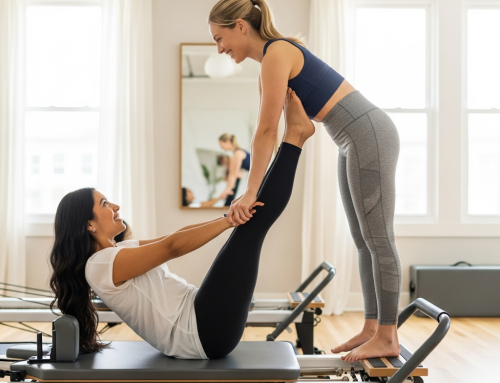
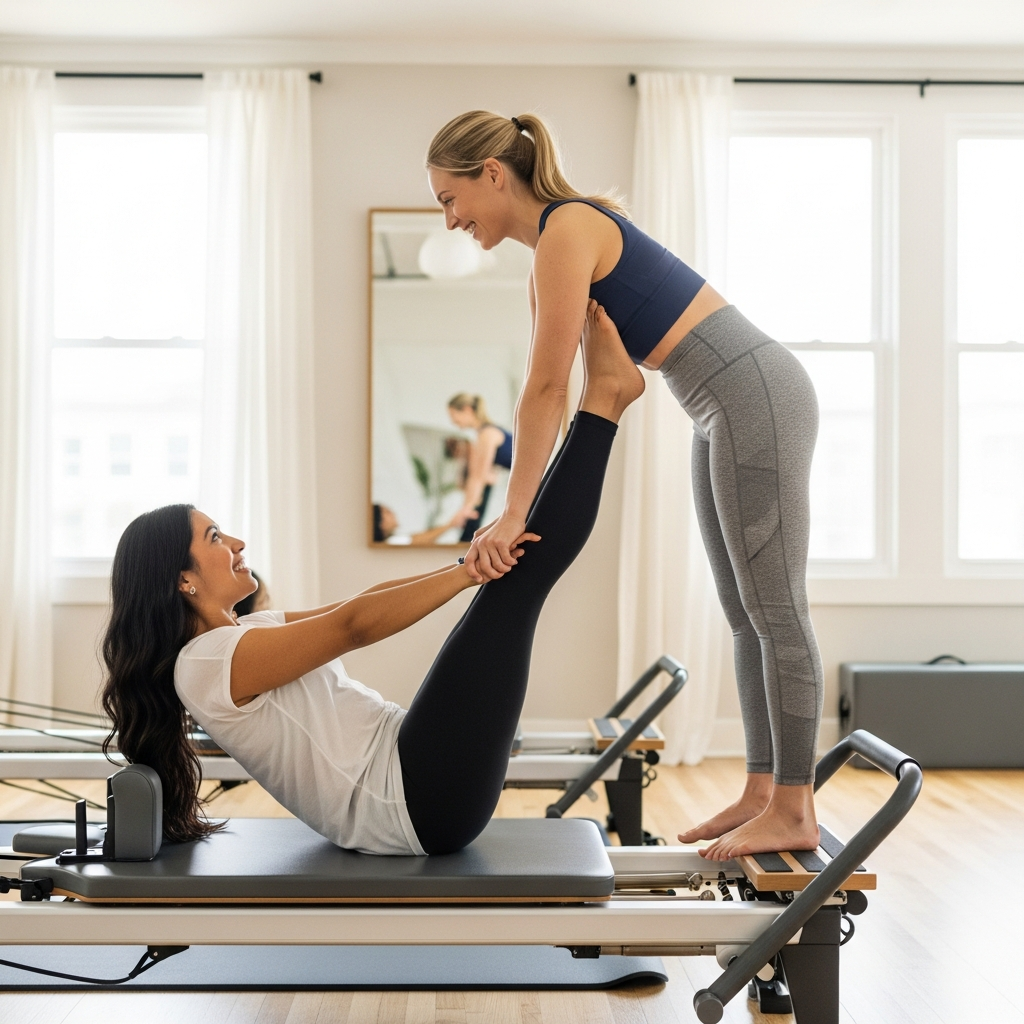
This is where Reformer comes in. The Reformer machine consists of a flat platform called a carriage, which moves back and forth along tracks within a frame. The carriage is attached to springs that provide varying levels of resistance, and there are also straps for your hands or feet and a footbar at one end. The result is a highly adaptable piece of equipment that allows you to perform hundreds of different exercises in a variety of positions, including lying down, sitting, standing, and even upside down!
Reformer offers several advantages over Mat Pilates. For one thing, the spring-loaded resistance can provide a more challenging workout for your muscles than mat-based exercises alone. At the same time, the Reformer can also be adjusted to offer gentle, supportive movements that are ideal for those recovering from injuries or dealing with chronic pain. Moreover, the Reformer’s versatile nature means that it can cater to a wider variety of fitness levels and goals than Mat Pilates alone.
However, this is not to say that Mat Pilates is inferior or unnecessary. In fact, many practitioners find that the two forms of Pilates complement each other perfectly. Mat work helps to build a solid foundation of strength and body awareness that can make Reformer exercises more effective, while the Reformer can take your Pilates practice to new heights by offering additional challenges and variations.
Understanding the differences between Mat Pilates and Reformer—and how they can work together—is key to getting the most out of your Pilates practice. It’s also important to remember that Pilates is not a one-size-fits-all solution. What works best for you will depend on your individual needs, goals, and circumstances.
Whether you’re looking to improve your athletic performance, recover from an injury, or simply find a fun and engaging way to stay fit, Pilates Reformer could be just what you need. So why not give it a try? You might be surprised by what you can achieve.
Stay tuned as we delve deeper into the fascinating world of Pilates Reformer. Trust us, your body will thank you.
The Fundamentals of Pilates Reformer: A Comprehensive Guide
The Pilates Reformer is one of the most renowned apparatuses in the expansive world of Pilates. This dynamic machine is not only a centerpiece of the Pilates method but also a fundamental tool that revolutionizes the way we understand and approach fitness. To fully grasp the essence of the Pilates Reformer, it is crucial to delve into the basics of Pilates and its founder, Joseph Pilates.
The Origin of Pilates
Joseph Pilates, born in Germany in 1883, was a fitness enthusiast who initially developed his body conditioning methodology in the early 20th century to help himself and others overcome physical ailments and improve overall health. His work was influenced by Eastern practices like yoga, Zen Buddhism, and elements of ancient Greek and Roman physical regimens.
His unique approach focused on mind-body connection, emphasizing the importance of mental awareness in physical movements. This holistic approach not only enhances physical strength but also stimulates mental fortitude. Joseph Pilates referred to his method as “Contrology,” which means the comprehensive control of body, mind, and spirit.
What is Pilates?
Pilates is a low-impact exercise regimen designed to strengthen muscles, improve postural alignment, increase flexibility, and enhance mental awareness. It primarily targets the core, although it also works other areas of the body.
Pilates is based on six core principles: Centering, Concentration, Control, Precision, Breath, and Flow. These principles interlink to form a holistic approach to fitness that integrates body, mind, and spirit.
The Pilates Reformer: An Overview
The Pilates Reformer is an exercise machine used in the practice of Pilates to provide a full-body workout. The Reformer was invented by Joseph Pilates himself and is still widely used today. It consists of a flat platform called the carriage that moves back and forth along a track. The carriage is attached to one end of the reformer by a set of springs that provide varying levels of resistance.
This apparatus is equipped with a foot bar, shoulder blocks, and adjustable straps for hands or feet. These components can be modified according to the user’s level of flexibility and strength. The various parts of the Reformer allow for a wide range of exercises to be performed in different positions – sitting, standing, lying down, pulling the straps, pushing the foot bar, and more.
The Pilates Reformer offers a wide range of benefits. It provides a balanced workout for all muscle groups, improves postural problems, increases core strength and stability, and enhances physical coordination and balance. Additionally, it allows for modification of exercises, making it suitable for beginners and advanced practitioners alike.
The Magic Behind the Pilates Reformer
The magic of the Pilates Reformer lies in its versatility. With this machine, you can perform countless exercises targeting different muscle groups and focusing on specific body areas. It provides a dynamic resistance that challenges your muscles in both the concentric (shortening) and eccentric (lengthening) phases of movement.
Furthermore, the Pilates Reformer enhances mind-body connection. The focus on controlled, flowing movements requires mental concentration, which in turn fosters body awareness. This heightened body consciousness can lead to improved physical performance and injury prevention.
In Conclusion
At its core, Pilates is not just a physical exercise method. It is a holistic approach to health that integrates physical fitness with mental concentration and spiritual wellness. The Pilates Reformer, as a central part of this method, provides an effective and versatile tool for achieving these health goals.
Understanding the fundamentals of Pilates and the framework behind the Pilates Reformer can help you appreciate the depth of this exercise method. Whether you are a beginner seeking a comprehensive workout or an experienced practitioner looking to deepen your practice, the Pilates Reformer is a versatile apparatus that can help you achieve your fitness goals.
Embracing the Pilates Reformer: A Comprehensive Guide
The Pilates Reformer, an oddly intriguing piece of fitness equipment, can be intimidating to the uninitiated. Despite its complex appearance, it’s a tool that revolutionizes Pilates workouts, taking them to a new level of effectiveness. This guide will demystify the Pilates Reformer and provide step-by-step guidance on how to incorporate it into your routine.
**What is a Pilates Reformer?**
The Pilates Reformer is a bed-like frame with a flat platform, called the carriage, which rolls back and forth on wheels within the frame. The carriage is attached to one end of the reformer by a set of springs, which provide differing levels of resistance as the carriage is pushed or pulled along the frame. The reformer also includes several other components like straps, ropes and a foot bar.
**Mat Pilates vs. Reformer Pilates**
While traditional mat Pilates utilizes body weight for resistance and primarily focuses on strengthening the core, Reformer Pilates introduces a resistance element to the workout. This allows for a broader range of exercises and increased intensity.
For example, in mat Pilates, an exercise like ‘The Hundred’ relies solely on your core strength to lift your head and shoulders off the mat. In contrast, using a Reformer, you can perform ‘The Hundred’ with your feet in the straps, providing added resistance and engaging your lower body to a greater extent.
**Getting Started with Pilates Reformer**
1. **Understanding the Machine**: Before jumping on the reformer, spend time understanding its parts. Familiarize yourself with the carriage, springs (their different strengths and how to adjust them), straps, and foot bar.
2. **Warm-up**: Start with a simple warm-up on the reformer. Lie down on the carriage with your feet on the foot bar. Keep your knees bent and push the carriage away using your legs. Slowly return the carriage to the starting position. This is known as ‘Footwork’. Repeat this 10-15 times.
3. **Master Basic Exercises**: Begin with basic Pilates Reformer exercises
– **Leg Press**: Similar to the warm-up, but with different foot positions (toes, arches, and heels on the foot bar). – **Arm Circles**: Sit on the carriage facing the straps. Hold onto them and extend your arms straight in front of you. Circle your arms out to the sides, overhead and then back down to complete a full circle. – **The Hundred**: Lie down on the carriage with your knees bent and feet in the straps. Lift your head and shoulders, extend your arms by your sides and pulse them up and down while breathing rhythmically.
4. **Progress Gradually**: As you grow more comfortable and your strength improves, you can try more complex exercises like ‘Short Spine’ or ‘Long Stretch’. Always remember to adjust the resistance according to your comfort level.
5. **Cool Down**: Finish your session with a cool-down exercise like ‘Mermaid’ that helps stretch your body.
**Real-World Scenarios and Actionable Advice**
1. **Busy Professionals**: If you’re a busy professional looking for an efficient workout, reformer Pilates could be a great fit. It targets multiple muscle groups at once and is low impact, reducing the risk of injury. Try to fit in short 20-minute sessions during your lunch break or before starting your day.
2. **Rehabilitation**: If you’re recovering from an injury or surgery, reformer Pilates can aid in rehabilitation. The adjustable resistance allows for low-intensity workouts that can be gradually increased as strength returns. Always consult with a healthcare professional before starting any new exercise regimen.
3. **Prenatal and Postnatal**: Reformer Pilates is beneficial for both prenatal and postnatal women. It helps strengthen the core, improve posture, and increase flexibility. However, it’s important to work with a trained instructor to ensure safety.
The Pilates Reformer might look daunting, but with understanding and practice, it can transform your workout routine. Whether you’re a fitness enthusiast, a professional looking to break the monotony of gym workouts, or someone seeking physical rehabilitation, the Pilates Reformer can cater to your needs. Remember to always prioritize form over speed or resistance to get the most out of your Pilates Reformer workouts.
Demystifying Pilates Reformer: Challenges, Solutions, and Expert Tips
Pilates Reformer, a type of Pilates that utilizes a specialized machine – the ‘Reformer’, is an effective way to improve flexibility, strength, and body awareness. Despite its benefits, some people find it intimidating due to misconceptions and lack of understanding. In this article, we’ll address common challenges and provide expert tips to help you get the most out of your Pilates Reformer sessions.
One common misconception about Pilates Reformer is that it’s only for advanced practitioners. However, Pilates Reformer is adaptable for all fitness levels. Beginners can benefit from the machine’s support and resistance, which help to correctly align the body and facilitate the right movements. As you progress, the Reformer can be adjusted to provide more challenging workouts.
Another challenge is the fear of injury. Pilates Reformer exercises can indeed be intense, but they’re designed to be low-impact, focusing on controlled, precise movements. The key to avoiding injury is proper form – your instructor should guide you through each exercise, ensuring that you’re positioning your body correctly and not pushing yourself too hard too soon.
Pilates Reformer also requires a certain level of core strength. Some beginners may struggle with exercises that require lifting the torso or legs. If this is a challenge for you, don’t be discouraged. Regular practice will increase your core strength over time. You can also supplement your Reformer workouts with mat Pilates exercises that target the core, such as the Pilates hundred or the plank.
Now let’s move onto some practical tips to help you get started with Pilates Reformer.
Firstly, seek out a qualified instructor. They should have specific training in Reformer Pilates and be able to adapt exercises to suit different abilities. A good instructor will ensure that you’re using the machine correctly and safely, and can help you progress at a pace that’s right for you.
Next, familiarize yourself with the Reformer machine. It may look complicated, but it’s actually quite straightforward. The carriage is the part you lie or sit on, the footbar is where you place your feet or hands for certain exercises, and the springs provide resistance. Your instructor will show you how to adjust the springs to change the level of resistance.
When it comes to clothing, opt for something comfortable that you can move freely in. Avoid loose clothing that could get caught in the machine, and remember to remove any jewellery that could do the same. Most Pilates studios prefer that you workout barefoot or in socks with grips on the bottom.
Remember to always warm up before starting your session. This will prepare your muscles for the workout and help prevent injury. Your warm-up could include some simple stretches, or a few minutes on a cardio machine if your studio has one.
Lastly, be patient with yourself. Pilates Reformer is a challenging workout that requires concentration and control. You might not get it right straight away, and that’s okay. With regular practice, you’ll see improvements in your strength, flexibility, and overall fitness.
In conclusion, Pilates Reformer is a versatile workout that can benefit people of all fitness levels. While it can be challenging at first, with the right guidance and approach, it can be a rewarding addition to your fitness routine. So, don’t let misconceptions and initial challenges deter you. Embrace the process, listen to your body, and enjoy the journey to better health and well-being with Pilates Reformer.
What About Pilates Reformer? – Expectations, Timelines, and Next Steps
As a comprehensive system of physical exercise, Pilates has been celebrated for its ability to enhance flexibility, strength, and body awareness. While mat Pilates is a widely recognized form of the practice, the Pilates Reformer – a versatile piece of equipment that provides a platform for numerous exercises – is an integral part of the Pilates experience.
The Pilates Reformer is a bed-like frame with a flat platform, called the carriage, which rolls back and forth on wheels within the frame. The carriage is attached to one end of the reformer by a set of springs, which provide differing levels of resistance as exercises are performed. The machine can be adjusted for varying fitness levels and goals, making it suitable for beginners, fitness enthusiasts, and athletes alike.
So, what can you expect when you step onto a Pilates Reformer for the first time?
**First Impressions and Expectations**
Initially, the Pilates Reformer can be intimidating due to its complex appearance. However, under the guidance of a certified Pilates instructor, you’ll quickly learn how to use this versatile machine.
The first few sessions generally focus on familiarizing yourself with the equipment and learning basic movements. You’ll be guided through exercises that promote elongation, strength, and flexibility. Unlike traditional workouts that isolate muscle groups, Pilates Reformer workouts engage several muscle groups simultaneously, leading to improved overall strength, balance, and coordination.
**Timelines**
The timeline for seeing results from your Pilates Reformer workouts depends on various factors such as your fitness level, frequency of workouts, and diet. However, with consistent practice – ideally two to three sessions per week – you can expect to notice improvements in posture, flexibility, and core strength within a few weeks. Significant changes in body composition, including muscle tone and weight loss, are typically observed within three to six months.
**Next Steps**
After your initial sessions, your Pilates instructor will gradually introduce more challenging exercises into your routine. These exercises will continue to engage your core, while also targeting other muscle groups. As you progress, you’ll find that the reformer can accommodate an incredibly varied exercise repertoire, continually challenging you and keeping your workouts interesting.
**Mat Pilates vs. Reformer Pilates**
While both Mat and Reformer Pilates aim to strengthen the core, improve balance, and increase flexibility, they offer different experiences and benefits.
Mat Pilates is typically a beginner-friendly option and uses your body weight as resistance. It’s a great starting point for those new to Pilates as it introduces the basic principles, such as proper alignment, breathing, and core activation.
Reformer Pilates, on the other hand, adds a new level of resistance to the exercises with its spring-loaded carriage. It provides a more dynamic workout that can be easily adjusted to increase or decrease intensity, making it suitable for all fitness levels. The reformer also allows for a broader range of exercises than the mat, particularly those that involve movement of the arms and legs.
**Practical Guidance**
Whether you’re transitioning from mat Pilates to reformer Pilates or are new to the practice altogether, consider the following practical guidance
1. **Start with a Certified Instructor:** A certified instructor will ensure that you’re using the equipment correctly and safely, reducing the risk of injury.
2. **Listen to Your Body:** While Pilates Reformer exercises can be challenging, it’s important to listen to your body. If something doesn’t feel right, let your instructor know.
3. **Consistency is Key:** Regular practice will yield the best results. Strive for two to three sessions per week.
4. **Patience:** Remember that progress takes time. Celebrate small improvements and trust in the process.
5. **Healthy Diet:** As with any fitness regimen, a balanced diet will enhance your results.
In conclusion, the Pilates Reformer is a powerful tool in enhancing your overall fitness. While it may take time to familiarize yourself with the equipment and see significant results, the benefits of improved strength, flexibility, and body awareness make it worth the effort.
In conclusion, the Pilates Reformer is a remarkable apparatus that transforms Pilates exercise from a gentle, mat-based practice to a full-on workout method that targets the body holistically, promoting strength, flexibility, and balance. The benefits of incorporating the Pilates Reformer into your fitness routine are numerous and extend beyond physical wellness to encompass mental well-being as well.
The Reformer’s unique design, with its system of springs, ropes, and carriage, allows for a wide range of exercises that can be modified to suit individual needs and abilities. Its versatility is one of its most appealing features. Whether you’re an athlete looking to enhance your performance, recovering from an injury, or simply seeking to improve your overall health and well-being, the Pilates Reformer can be tailored to support your goals.
Key takeaways about the Pilates Reformer include its effectiveness in building a strong core, a critical aspect of good health that is often overlooked in traditional workout regimens. Developing a strong core can improve your posture, reduce back pain, and heighten your overall physical performance. Moreover, the Pilates Reformer offers a low-impact exercise option that protects your joints while still providing a challenging workout.
Another vital point to remember about the Pilates Reformer is its role in fostering mind-body connection. Each movement on the Reformer requires a degree of concentration and precision that encourages mindfulness, a state of being present and engaged in the moment. This helps reduce stress and anxiety, promoting a more balanced mental state.
In terms of rehabilitation, the Pilates Reformer is highly beneficial. It offers an effective way to regain strength and mobility after injury or surgery. The adjustable resistance allows for a gradual increase in intensity as recovery progresses, ensuring a safe and effective rehabilitation process.
To fully appreciate the benefits of the Pilates Reformer, it’s essential to receive proper instruction from certified professionals. While it’s possible to use the Reformer on your own, it’s easy to fall into incorrect postures or ineffective exercises without expert guidance. A professional can help you understand and execute the movements correctly, enhancing their effectiveness and reducing the risk of injury.
In summary, the Pilates Reformer is a dynamic and adaptable fitness tool that offers a comprehensive workout for individuals of all fitness levels. Its focus on core strength, flexibility, balance, and mindfulness sets it apart from other exercise methods, making it an exceptional choice for anyone looking to improve their physical and mental well-being.
We hope this article has provided you with valuable insights into the benefits and functions of the Pilates Reformer. If you’re interested in exploring this incredible exercise method further, we’d be delighted to assist you. Our team of certified professionals can provide guidance tailored to your specific needs and goals, ensuring you get the most out of your Pilates Reformer experience.
Don’t hesitate to take the next step on your fitness journey with the Pilates Reformer. Contact us today for further information or to schedule a session. Let us help you unlock the transformative power of the Pilates Reformer and experience firsthand the remarkable benefits it has to offer. Your journey towards enhanced health and well-being starts here.