Mat Pilates Vs. Reformer Pilates: The Ultimate Pilates Showdown
Are you looking to introduce pilates into your fitness regime but are unsure about the difference between mat pilates and reformer pilates? You’re not alone. With the overwhelming number of exercise choices available, it can be challenging to understand which one best suits your needs, preferences, and goals. That’s precisely why we’ve created this comprehensive guide to help you discern the subtle and not-so-subtle differences between these two popular forms of pilates.
Pilates, an innovative system of mind-body exercise invented by Joseph Pilates in the early 20th century, has taken the fitness world by storm over the past few decades. Known for its ability to strengthen the core, improve flexibility, and promote overall body awareness, pilates is a versatile fitness tool that can be tailored to any individual’s needs or fitness levels. But as with any exercise regimen, there are various forms and methods, each offering their unique advantages. In the realm of pilates, the most commonly known variants are mat pilates and reformer pilates.
Mat pilates, as the name suggests, is carried out on a mat, much like yoga. These exercises mainly leverage body weight and gravity to challenge your body and build strength, particularly focusing on the core muscles. In contrast, reformer pilates involves a specialized piece of equipment known as a reformer – a sliding carriage rigged with springs, bars and straps – to provide resistance and support during workouts.
In this blog post, we will dive deeper into understanding what mat and reformer pilates are, their benefits, the differences between them, who they’re more suitable for, and how you can incorporate them into your fitness routine. Whether you’re a fitness novice looking to dip your toes into the world of pilates or an experienced practitioner wanting to expand your knowledge about this versatile exercise system, this guide will offer valuable insights.
Understanding the difference between these two forms of pilates is more than just a matter of choice—it’s about aligning your fitness goals with the right form of exercise. Perhaps you’re after a low-impact workout that boosts flexibility and core strength, or maybe you’re seeking a challenging routine that enhances muscular strength and endurance. No matter your fitness objective, understanding the differences and similarities between mat and reformer pilates can be instrumental in guiding your fitness journey.
In the coming sections, we will explore the origins of pilates, the principles that underpin this exercise system, and a detailed comparison between mat and reformer pilates. We’ll also debunk some common misconceptions about pilates and provide expert tips on getting started with either mat or reformer pilates.
So why does this matter to you, our readers? Because knowledge is power, especially when it comes to your health and fitness. The more informed you are about the types of exercises available and how they can benefit you, the better equipped you will be to make choices that align with your fitness aspirations. By understanding the differences between mat and reformer pilates, you’ll be able to select a workout method that not only matches your fitness goals but also caters to your lifestyle, budget, and personal preferences.
Stay tuned as we delve into the world of pilates, providing you with the tools you need to navigate your fitness journey confidently. Whether you ultimately choose mat pilates, reformer pilates, or a combination of both, we’re here to help you make an educated decision that supports your journey towards better health and wellbeing.
Understanding Pilates: A Comparative Study of Pilates and Mat Pilates
Pilates is a form of exercise that was developed in the early 20th century by Joseph Pilates. It is a physical fitness system that emphasizes the balanced development of the body through core strength, flexibility, and awareness in order to support efficient, graceful movement. Over time, Pilates has gained worldwide acclaim for its ability to improve muscle tone, balance, posture, and body awareness.
Pilates can be divided into two main categories: Equipment-based Pilates and Mat Pilates. While these two forms share the same fundamental principles, they differ significantly in their execution, equipment used, and benefits.
Equipment-based Pilates typically uses specialized apparatus designed by Joseph Pilates himself. The most common apparatus used is the Reformer, a bed-like frame with a flat platform on it, called the carriage, which rolls back and forth on wheels within the frame. Other equipment includes the Cadillac, Wunda Chair, Spine Corrector, and Ladder Barrel. Each piece of apparatus has its own set of exercises designed to target specific areas of the body.
In contrast, Mat Pilates is performed on a mat, much like yoga. It does not involve any heavy equipment. Instead, it uses the weight of the body and gravity to provide resistance. The focus is on precise movements that target specific muscle groups. It’s often considered more accessible because it requires little to no equipment and can be done just about anywhere.
While both Equipment-based and Mat Pilates offer a range of benefits including increased strength, flexibility, improved posture, and body awareness, there are some key differences that might make one more suitable than the other depending on individual preferences and fitness goals.
Firstly, in terms of resistance and intensity, Equipment-based Pilates might offer a more intense workout due to the adjustable resistance offered by the machines. This can lead to more noticeable muscle tone and strength over time. The apparatus can also provide additional support allowing for a wider range of exercises and greater precision in movement.
In contrast, Mat Pilates relies on body weight and gravity for resistance which can make some exercises more challenging. This form of Pilates is fantastic for strengthening the core as many mat exercises require you to hold your body in a controlled position while moving your limbs in different directions.
Secondly, accessibility is a major distinguishing factor. Mat Pilates can be done virtually anywhere with minimal space and equipment. This makes it ideal for individuals who prefer to workout at home or while travelling. On the other hand, Equipment-based Pilates requires a larger space and specialized equipment, making it less available for home workouts unless you have the necessary apparatus.
Lastly, from a cost perspective, Mat Pilates tends to be more affordable as it does not require any expensive equipment. Classes are often cheaper than Equipment-based Pilates classes, and many online platforms offer free or inexpensive mat workouts. Equipment-based Pilates, however, due to the cost of the apparatus and the need for more specialized instructors, is often more expensive.
In conclusion, both Equipment-based and Mat Pilates offer excellent ways to improve your body’s strength, flexibility, and overall wellness. The choice between the two often comes down to individual preferences, needs, and resources available. It is always recommended to try both forms to determine which one resonates best with you. Always remember that consistency is key in any exercise regimen, so choose the form of Pilates that you feel you will enjoy and stick with for the long run.
Distinguishing Between Pilates and Mat Pilates: A Detailed Guide
Pilates is a distinctive exercise method designed to strengthen the body’s core, enhance flexibility, improve posture, and foster mental awareness. It comes in two main variants: Mat Pilates and Reformer Pilates. Understanding the difference between these two types can help you choose what’s best for your fitness needs.
Mat Pilates
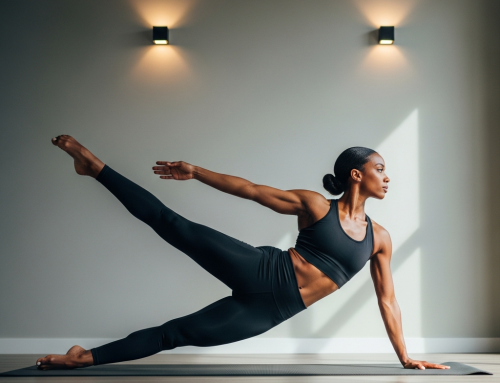
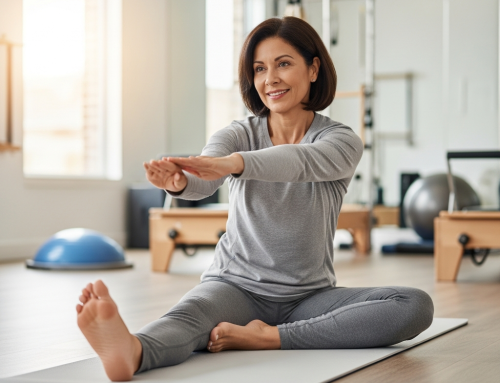
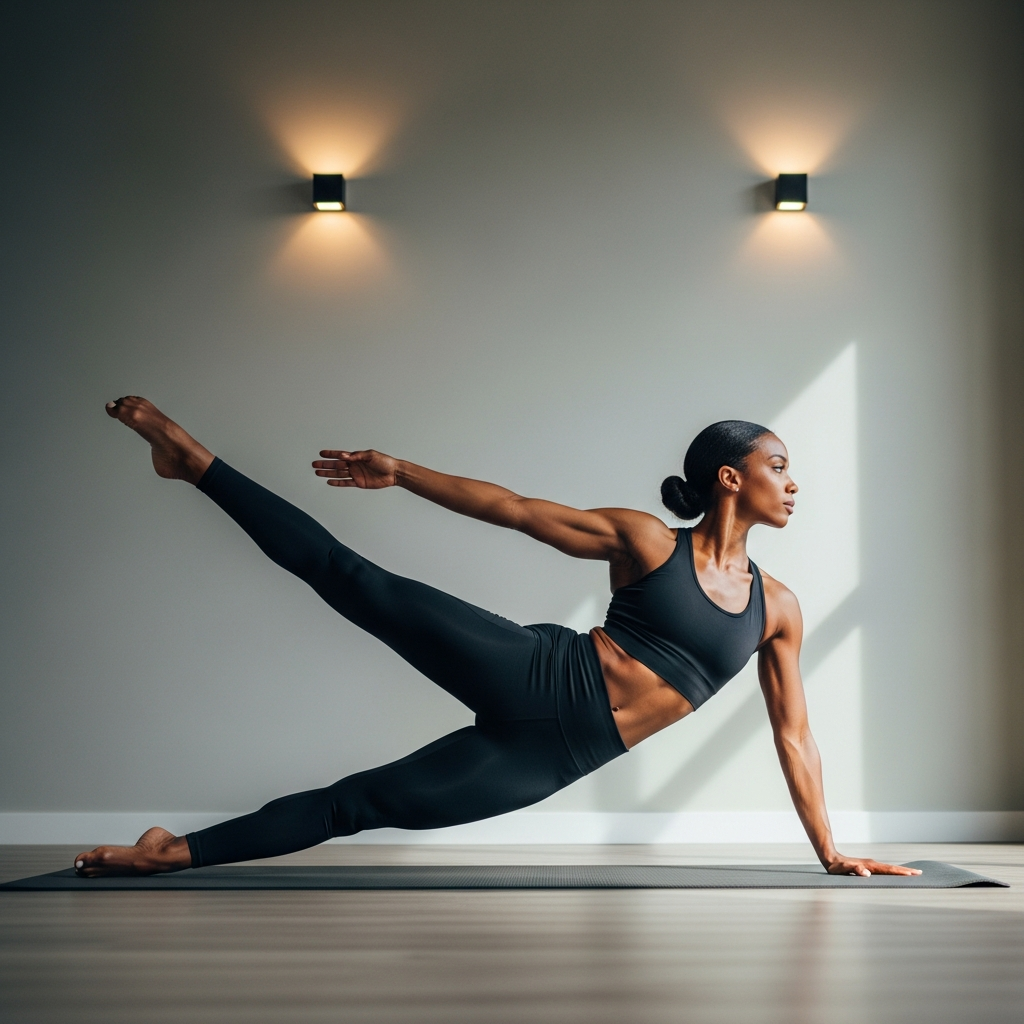
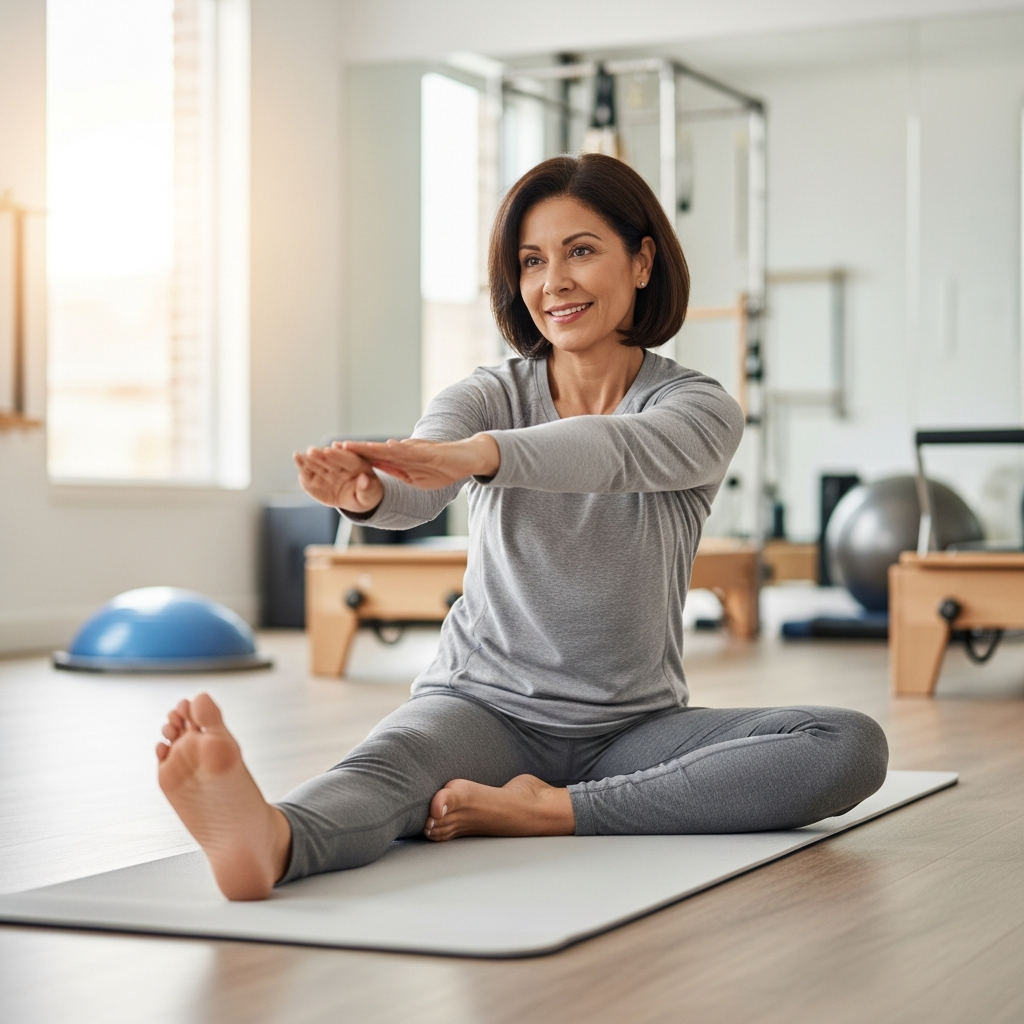
Mat Pilates is the most common and accessible form of Pilates. As the name suggests, Mat Pilates exercises are performed on a mat, similar to a yoga mat but thicker to cushion pressure points. The primary focus is on developing core strength, although the workouts also engage other parts of the body.
A typical Mat Pilates session includes a variety of exercise sequences that are performed in sitting or lying positions on the mat. For example, you might perform the ‘Pilates Hundred’—a core-focused exercise where you lie on your back, lift your legs and head off the mat, and pump your arms up and down.
Mat Pilates is highly adaptable and can be modified to suit individual needs, making it an excellent choice for beginners. All you need is a mat and enough space to move around. However, it requires self-discipline as the onus is on you to use your body correctly.
Reformer Pilates
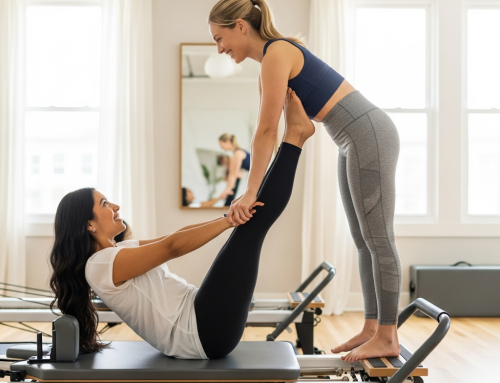
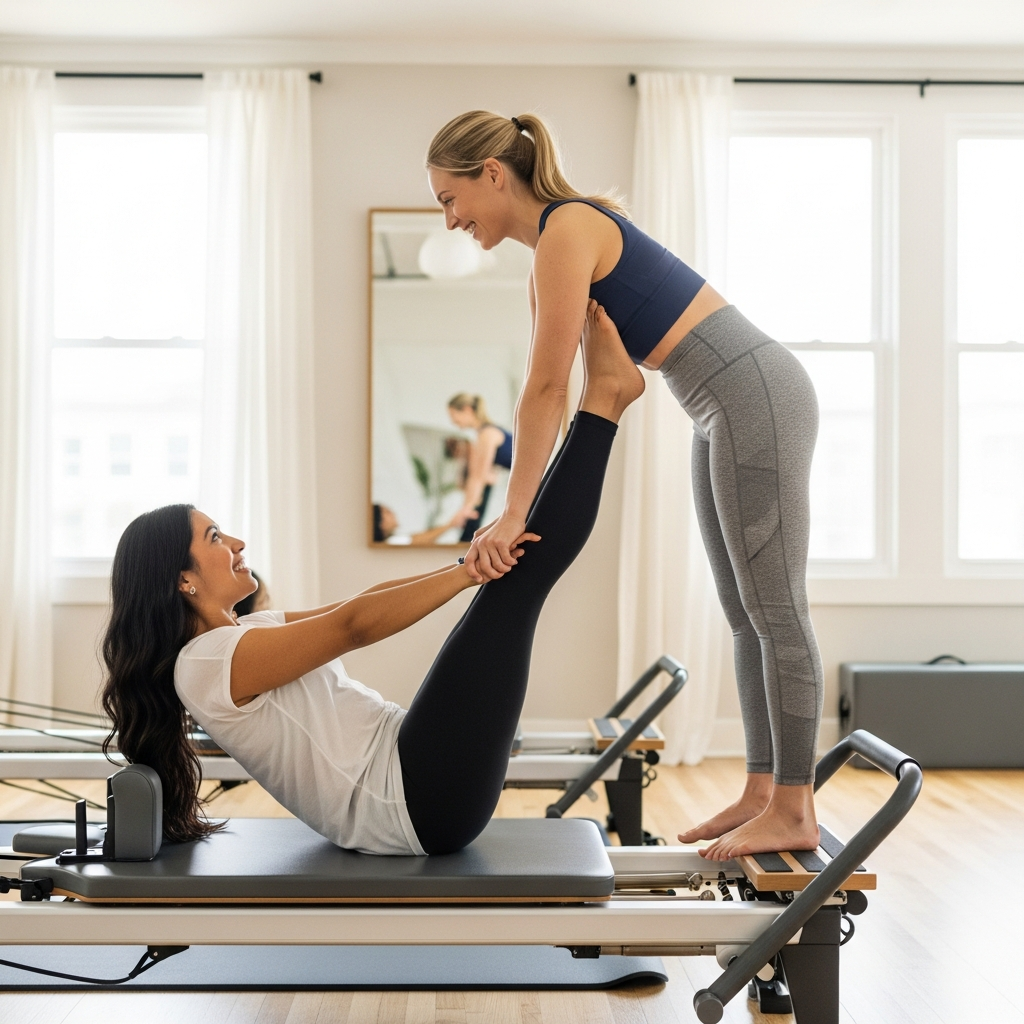
Reformer Pilates, on the other hand, is performed on a specially designed piece of equipment called a Reformer. The Reformer is a sliding carriage rigged with springs, bars, and straps that provide resistance and support for a wide range of exercises.
The Reformer allows for more varied workouts than Mat Pilates. You can lie down, stand up, sit, and kneel, all while pulling or pushing the carriage along its track. For instance, the ‘Footwork’ series of exercises sees you lying on your back with your feet on the footbar, pushing the carriage away using your legs.
Reformer Pilates not only works your core but also gives a more intensive workout to the rest of your body. The adjustable springs allow for progressive levels of resistance, making the Reformer suitable for beginners and advanced students alike. However, it is more expensive and less accessible than Mat Pilates, as it requires specialized equipment and ideally, a trained instructor.
Comparing Mat Pilates and Reformer Pilates
When choosing between Mat and Reformer Pilates, consider your fitness goals, budget, and access to equipment or classes.
If your aim is to improve core strength and flexibility with minimal investment, Mat Pilates may be the better choice. It’s easy to get started at home with online tutorials or DVDs. However, it can be challenging to keep correct form without an instructor’s guidance.
On the other hand, if you’re looking for a more comprehensive workout and don’t mind the added cost, Reformer Pilates could be for you. The Reformer’s adjustable resistance allows for a wider variety of exercises and difficulty levels. However, due to the complexity of the equipment, it’s best learned in a class under professional supervision.
In conclusion, Mat Pilates and Reformer Pilates both offer a host of physical and mental benefits. They each provide a unique approach to the principles of Pilates—concentration, control, centering, flow, precision, and breath. The best choice depends on individual preferences and circumstances. It’s also worth noting that many practitioners enjoy combining both forms for a well-rounded workout experience.
Discerning the Difference: Pilates vs Mat Pilates
Understanding the contrast between Pilates and Mat Pilates can be a bit confusing, primarily due to the overlap in principles and practices. However, the use of different apparatus and the focus of exercises separate these two types of Pilates. Let’s demystify the differences, misconceptions, and best practices for both.
Pilates, created by Joseph Pilates in the early 20th century, is a low-impact physical fitness system. It aims to develop strength, flexibility, muscular endurance, coordination, balance, and good posture — with a much lower chance of injury than with other forms of exercise. The system emphasizes correct form instead of going for broke, which makes it great for beginners.
On the other hand, Mat Pilates is a style within the larger discipline of Pilates. It is performed on a mat, similar to a yoga mat. Mat Pilates does not involve a lot of equipment; instead, it uses gravity and your body weight to provide resistance.
The Misconception:
A common misconception is that Mat Pilates is less challenging or effective than other forms of Pilates. This couldn’t be further from the truth. Without the support of machines, your muscles — especially those in your core — have to work harder to maintain balance and perform the exercises correctly.
The Difference:
The key difference between Pilates and Mat Pilates lies in the use of equipment and the focus of the exercises. Traditional Pilates involves various apparatus, like the Reformer, Cadillac, Wunda Chair, or Tower. These machines use springs to create resistance, making this form of Pilates more adaptable to different strength levels and abilities.
Mat Pilates, as mentioned earlier, utilizes body weight and gravity as resistance. The focus is primarily on strengthening the core, although it also provides a full-body workout.
Reformer Pilates is another subset of Pilates, performed on a specially designed machine called a Reformer. These machines use springs to provide resistance, similar to traditional Pilates, but the exercises are more dynamic and varied.
Solutions and Best Practices:
If you’re a beginner, starting with Mat Pilates can be beneficial because it introduces you to the basic principles and movements of Pilates without the complication of handling equipment. However, if you have specific fitness goals or health conditions, a specialized Pilates class using equipment might be more suitable.
Regardless of which type you choose, here are some best practices
1. Consistency: Pilates isn’t a quick fix. It requires regular practice to see and maintain results. Aim for at least two sessions per week.
2. Correct Form: Pilates is all about precision and control, not about doing as many reps as possible. Focus on doing each movement correctly.
3. Breathing: Correct breathing is essential in Pilates. It helps engage your core and makes your movements more efficient.
Expert Tips:
1. Choose the Right Class: Ensure you pick a class appropriate for your fitness level. Starting with a class too advanced can lead to discouragement or even injury.
2. Listen to Your Body: Pilates should not cause pain. If something feels wrong, stop and ask your instructor for guidance.
3. Personalize Your Workout: As you become more comfortable with the exercises, don’t be afraid to tailor them to your needs.
Pilates and Mat Pilates both offer unique benefits and challenges. Choosing between them depends on your personal fitness goals, preferences, and needs. Whether you favor the simplicity of Mat Pilates or the versatility of Reformer or traditional Pilates, the most important thing is that you’re moving your body in a way that feels good and contributes to your overall health and wellness.
Pilates, since its inception in the early 20th century by Joseph Pilates, has grown in leaps and bounds across the globe, thanks to its holistic approach to body fitness. It is a versatile exercise regime that accommodates everyone from beginners to experts. The two primary forms of Pilates that are widely practiced are Mat Pilates and Reformer Pilates. While both are rooted in the same philosophy, they differ significantly in execution, equipment, and the impact they have on the body. Here’s an in-depth discussion on their differences, what to expect, timelines, and next steps.
Mat Pilates is the most common form of Pilates, and as the name suggests, it is performed on a mat, much like yoga. It primarily focuses on developing core strength, improving posture, and increasing flexibility. Compared to other exercises, Mat Pilates is low-impact, meaning it’s easier on the joints and therefore suitable for everyone from beginners to seniors.
One of the key characteristics of Mat Pilates is that it utilizes your own body weight for resistance. This requires a tremendous amount of core strength as you have to control not only your movements but also maintain balance. Mat Pilates classes often incorporate small pieces of equipment such as magic circles, resistance bands, or small weighted balls to add variety and challenge.
Reformer Pilates, on the other hand, involves a specially designed machine called a ‘reformer,’ which looks like a bed frame with a sliding carriage rigged with springs for resistance. The reformer is highly adaptable and can cater to all levels of fitness by adjusting the spring tension.
The key advantage of the Reformer is its versatility. You can perform a wide range of exercises in various positions – lying down, sitting, standing, and even upside down. It provides a more dynamic workout because it challenges your body through a wider range of motion compared to Mat Pilates. Besides building strength and flexibility, Reformer Pilates also improves endurance and coordination.
So, which one should you choose? It depends on your fitness goals and preferences. If you’re a beginner, it’s a good idea to start with Mat Pilates. It helps you master the basic principles of Pilates such as breath control, centring, concentration, control, precision, and flow. Once you’re comfortable with these principles, you can explore Reformer Pilates for a more intense workout.
In terms of timelines, don’t expect overnight results. Pilates is all about slow, controlled movements and developing an understanding of your body. Most practitioners start to notice improvements in their posture, flexibility, and overall body strength within a month of regular practice. However, it may take longer (about three to four months) to see significant changes in body shape and muscle tone.
As for the next steps, if you’re interested in starting Pilates, find a reputable Pilates studio or a certified instructor near you. There are also plenty of online classes available if you prefer to learn at home. Remember to start slow and gradually increase the intensity of your workouts. Listen to your body and progress at your own pace. It’s not about how quickly you can move through the exercises, but how well you can perform them.
In conclusion, both Mat Pilates and Reformer Pilates offer unique benefits. Mat offers simplicity and accessibility, while Reformer offers variety and intensity. Regardless of the type you choose, Pilates is an excellent way to improve your strength, flexibility, and overall health.
In conclusion, understanding the difference between Pilates and Mat Pilates can be a game-changer in how you approach your exercise regimen. Both forms of exercise are derived from the principles of Joseph Pilates and are designed to strengthen the body, improve posture, enhance flexibility, and foster a greater sense of physical and mental well-being. However, they differ significantly in terms of equipment used, intensity, and focus areas.
Mat Pilates is the more traditional form of Pilates, performed on a mat using only your body weight for resistance. It primarily targets the core (the “powerhouse” as Joseph Pilates called it), but also includes exercises for the whole body. Mat Pilates is highly accessible as it can be done virtually anywhere with a simple mat. It helps to improve overall strength, flexibility, and coordination, making it an excellent choice for beginners or those who prefer a more straightforward workout routine.
On the other hand, Pilates (often referred to as Reformer Pilates) utilizes specifically designed apparatus like the Reformer, Cadillac, and Wunda Chair. This equipment incorporates springs and pulleys to create variable resistance that can be adjusted to cater to individual fitness levels and goals. While it still focuses on the core, Reformer Pilates provides a more comprehensive full-body workout. It increases the challenge and intensity of the exercises, making it an excellent choice for advanced practitioners or those seeking a more dynamic workout.
Choosing between Mat Pilates and Reformer Pilates ultimately depends on your personal goals, needs, and preferences. If you’re seeking a convenient and cost-effective workout that can be easily incorporated into your daily routine, Mat Pilates may be the way to go. However, if you’re looking for a more intensive workout that targets a wider range of muscles and can be tailored to your specific fitness level, Reformer Pilates might be better suited for you.
Regardless of which form you choose, both Mat and Reformer Pilates offer profound benefits. They can help improve physical strength, enhance mental resilience, boost body awareness, and promote better posture. More importantly, they foster an overall sense of well-being that permeates into other aspects of your life.
Remember, as with any form of exercise, the key to seeing results in Pilates is consistency. Regular practice is essential to enhance your strength, improve your flexibility, and reap the full benefits of the workout. It is advisable to start slow, listen to your body, and gradually increase the intensity of your workouts. Most importantly, enjoy the journey.
If you are unsure about where to begin or how to incorporate Pilates into your fitness routine, we’re here to help. Our expert trainers can guide you through the process, tailoring a program that meets your individual needs and goals. Whether you’re a beginner seeking to understand the basics or an experienced practitioner looking to deepen your practice, we can provide the support you need. Reach out to us today and embark on your Pilates journey with confidence and clarity.
In truth, there’s no “one size fits all” when it comes to Pilates. It’s all about finding the style that resonates with you, challenges you, and helps you achieve your unique fitness goals. So, why wait? Contact us today and discover the power of Pilates for yourself. We look forward to helping you shape a healthier, happier, and more balanced lifestyle through the transformative power of Pilates.