The Mat Pilates Vs Yoga Showdown: Which Packs a Greater Punch?
Hook: If you’re a fitness enthusiast, you might have found yourself at the crossroads of choosing between mat Pilates and yoga. Both reputed for their mind-body benefits, they’ve become fan favourites in the wellness world. But which one is more challenging? Grab your water bottle, and let’s deep dive into this compelling comparison.
Context: Originating from different parts of the world, mat Pilates and yoga have made their way into our daily fitness regimes, capturing our hearts with their unique blend of strength, flexibility, and meditative conditioning. Mat Pilates, birthed by Joseph Pilates in the early 20th century, places an emphasis on core strength and stability. It’s a series of controlled movements performed on a mat, relying solely on bodyweight for resistance. On the other hand, yoga, with its roots in ancient India, focuses on the harmony between mind, body, and spirit through various postures (asanas), breathing exercises (pranayama), and meditation.
What will be covered: In this comprehensive blog post, we will delve into both mat Pilates and yoga, examining their principles, benefits, differences, and similarities. We will further explore which of these two practices is generally considered more challenging and why. While both disciplines are known to offer profound health benefits ranging from improved flexibility and muscle strength to stress relief and improved mental clarity, their approach to achieving these goals varies significantly. This post will also cover insights into Reformer Pilates—a dynamic variant of Pilates that incorporates the use of a specialized machine for added resistance and versatility.
Why this matters to readers: The debate around whether mat Pilates is harder than yoga isn’t just about picking a winner. It’s about understanding how each discipline works—how they push your body and mind—and determining which one aligns best with your personal fitness goals and preferences. For some, the challenge lies in the intense core conditioning of Pilates, while for others, the physical and mental endurance demanded by yoga may seem more daunting. So, whether you’re a fitness newbie trying to decide which class to sign up for, or an experienced practitioner looking to switch things up, this post will equip you with the necessary knowledge to make an informed decision.
Stay tuned as we unpick these two popular fitness practices, shedding light on their unique strengths and challenges. By the end of this post, you’ll have a deeper understanding of mat Pilates and yoga, empowering you to choose the practice that resonates most with your fitness journey. Remember, when it comes to fitness, the ‘best’ choice is always the one that keeps you motivated, excited, and committed to your health and wellness journey. So, are you ready to find out which practice steals the crown for being the most challenging? Let’s get started!
Is Mat Pilates Harder Than Yoga?: A Comprehensive Analysis
Pilates, named after its inventor, Joseph Pilates, was developed in the early 20th century as a method of physical rehabilitation and body conditioning. Pilates focuses on strengthening the body’s core – the abdomen, obliques, lower back, inner and outer thigh, and so on. It is an exercise regimen that emphasizes muscle balance, strength, flexibility, and overall body awareness.
There are two main types of Pilates: Mat Pilates and Reformer Pilates. Mat Pilates is performed on a mat, similar to yoga, and primarily uses your own body weight as resistance. It targets the core muscles while also incorporating work for the entire body. Mat Pilates can be done anywhere as it requires minimal equipment, making it a popular choice for many people.
What distinguishes Pilates from other forms of exercise is its focus on the ‘Powerhouse’ or the center of the body. It encompasses the deep abdominal muscles along with the muscles closest to the spine. This method is designed to improve balance, coordination, and overall strength without adding muscle bulk. The exercises involve slow, controlled movements requiring intense concentration and precision to activate the body’s powerhouse.
Pilates aims to create a balance in the body by building strength without sacrificing flexibility. This balance is achieved through precise and mindful movements rather than repetitive and high-intensity workouts. The primary aim is to strengthen the stabilizing muscles to improve posture, alignment, and movement efficiency.
Mat Pilates exercises can help to improve overall body strength, flexibility, balance, and posture. Some of the common mat Pilates exercises include ‘The Hundred,’ ‘Roll Up,’ ‘Swan,’ and ‘Leg Circles.’ These exercises target specific muscle groups while also engaging your core and promoting mindful movement.
The Hundred exercise, for example, is a classic mat Pilates warm-up exercise. It promotes core strength and stability and requires a great deal of control and endurance. The Roll Up exercise is another core-focused move that helps to strengthen the abdominal muscles, increase spine flexibility, and improve overall body control.
In contrast to many other forms of exercise, Pilates does not focus on repetitions but rather on performing precise and mindful movements. The exercises are usually done in a specific order, one right after another. The movements have names, like ‘The 100,’ ‘Criss-Cross,’ ‘Elephant,’ and ‘Swan Dive.’
Moreover, Pilates exercises are often modified to match an individual’s abilities. If you’re a beginner, you can start with basic exercises and gradually add more challenging exercises as your strength and flexibility improve. It’s also suitable for people with certain physical conditions or who are recovering from injuries.
A common misconception about Pilates is that it’s just a series of abdominal workouts. However, Pilates is a full-body workout that encourages the use of the body as an integrated whole. It works several muscle groups simultaneously through smooth, continuous motions with a particular concentration on strengthening and stabilizing the core.
When comparing Mat Pilates to yoga, it’s important to remember that while they both focus on improving strength, flexibility, and body awareness, they approach these goals differently. Both practices can be modified to suit individuals at different fitness levels and can be practiced on a mat with minimal equipment.
However, the key difference lies in the emphasis of each practice. Yoga often focuses on flexibility and relaxation, incorporating breath work and meditation. On the other hand, Pilates places greater emphasis on strength, particularly core strength, and body control, without the same spiritual or meditative elements found in yoga.
In conclusion, whether Mat Pilates is harder than yoga really depends on what you personally find challenging. If strength-building, especially in your core, is a struggle for you but flexibility comes easily, you might find Pilates to be more challenging. Conversely, if you find it difficult to relax and stretch but have strong muscles, you may find yoga more challenging. Both practices offer unique benefits and can complement each other well in a balanced fitness regimen.
Is Mat Pilates Harder Than Yoga? A Comparative Analysis
When it comes to fitness regimens, Pilates and Yoga have been at the forefront of popularity for quite a long time. Both are holistic practices emphasizing mind-body connectivity, flexibility, and strength. However, the question often posed is: “Is mat Pilates harder than Yoga?” The answer is not black or white, as difficulty is subjective and depends on various factors like personal fitness levels, flexibility, core strength, and individual objectives.
Mat Pilates and Yoga: The Basic Differences
Before we delve into which might be more challenging, let’s understand the fundamental differences between mat Pilates and Yoga.
Yoga is an ancient practice with roots in Indian philosophy. It focuses on enhancing the overall wellbeing of individuals through a variety of asanas (poses), pranayama (breathing exercises), and meditation techniques. Yoga aims for harmony within the body, mind, and spirit.
Mat Pilates, on the other hand, is a 20th-century creation by Joseph Pilates. It primarily focuses on strengthening the core, or the ‘powerhouse’ of the body. Mat Pilates also improves flexibility and posture while promoting efficient movement patterns.
Difficulty Levels: Mat Pilates vs. Yoga
In terms of physical demand, both practices may pose different challenges based on the type of class or style you choose. For instance, a Hatha Yoga class that includes gentle, slow-paced asanas might feel less challenging when compared to a fast-paced Vinyasa Yoga or a Power Yoga class.
Similarly, in mat Pilates, beginner classes that focus on basic movements and principles could be less demanding than an advanced class that includes complex sequences and exercises.
Specific Scenarios
Scenario 1: Let’s say you’re a runner seeking to improve your core strength and stability for better performance. In this case, mat Pilates may feel more challenging as it targets your core muscles intensely and directly compared to a regular Yoga session.
Scenario 2: If you’re a beginner seeking to enhance your flexibility and mental tranquility, you might find Yoga more challenging initially due to the diverse range of poses and the emphasis on deep, mindful breathing.
Actionable Advice
Understanding Your Fitness Goals: Before deciding whether mat Pilates or Yoga is harder, pinpoint your fitness goals. If you aim for strong core and improved posture, mat Pilates is your go-to practice. If you seek overall flexibility, stress reduction, and mental tranquility, Yoga is the perfect fit.
Knowing Your Body: Listen to your body. If you have a history of back pain or injury, mat Pilates can be challenging as it focuses on core strength, which includes your back. Conversely, if you have tight hamstrings or shoulder tension, some Yoga poses can be quite hard.
Seeking Professional Guidance: It’s always smart to seek professional guidance. Find a certified instructor who can guide you through the fundamental principles of either mat Pilates or Yoga, ensuring that you perform the exercises correctly and safely.
Starting Slow: Whether it’s mat Pilates or Yoga, start slow. Do not rush into advanced classes or complex poses. Gradually intensify your practice as your strength and flexibility improve.
In conclusion, whether mat Pilates is harder than Yoga depends on various factors including your personal fitness level, goals, and body awareness. Neither is superior to the other; both offer unique benefits that cater to different needs. By understanding these differences and applying the actionable advice provided, you can find the practice that best aligns with your personal objectives and physical abilities.
Mat Pilates versus Yoga: Challenges, Solutions, and Expert Tips
Mat Pilates and yoga are both renowned methods of exercise that promote strength, flexibility, and mind-body connection. However, there often exists a misconception that Mat Pilates is harder than yoga, largely due to the different ways these practices challenge the body. This article aims to clarify these misconceptions and provide best practices for both.
Mat Pilates, originally developed by Joseph Pilates in the 1920s, is a non-aerobic exercise method that targets the core muscles, while also engaging the whole body. Yoga, on the other hand, is an ancient practice originating from India over 5,000 years ago, that encompasses physical postures, breath control, and meditation.
While the difficulty level can be subjective and depend largely on an individual’s physical condition and abilities, many people find Mat Pilates to be more challenging than yoga due to its focus on small, precise movements that target specific muscles. It’s also worth noting that Mat Pilates exercises often require higher levels of strength and endurance than basic yoga poses.
Challenges and Solutions:
1. Core Strength: Mat Pilates requires a significant amount of core strength. Without it, some moves can be quite challenging. Solution: Start with basic exercises to gradually build your core strength. A qualified instructor can provide modifications to suit your abilities.
2. Flexibility: Yoga demands high levels of flexibility, especially in advanced poses. If you’re not naturally flexible, it can be daunting. Solution: Be patient with yourself and understand that flexibility improves over time. Use props like straps and blocks to help you ease into poses.
3. Precision: The precision required in Mat Pilates can be a challenge for beginners. Each movement needs to be performed accurately for effective results. Solution: Regular practice and good instruction can help you understand and master the precision of movements.
4. Breath Control: Both practices emphasize breath control, which can be challenging for beginners in both disciplines. Solution: Practice breath control exercises separately until you feel comfortable incorporating them into your routines.
Expert Tips:
1. Start Slow: Regardless of whether you’re practicing Mat Pilates or yoga, it’s essential to start slow and gradually increase the intensity as your strength and flexibility improve.
2. Listen to Your Body: Both Pilates and yoga should be challenging but not painful. Listen to your body and modify poses or exercises as needed.
3. Consistent Practice: Consistency is key in both practices. Regular practice will help you improve your strength, flexibility, and precision.
4. Qualified Instruction: Working with a qualified instructor can help ensure that you’re performing movements correctly and safely.
5. Variety: Try different styles of yoga and Pilates to find what suits you best. There are many variations of each, so don’t be afraid to explore.
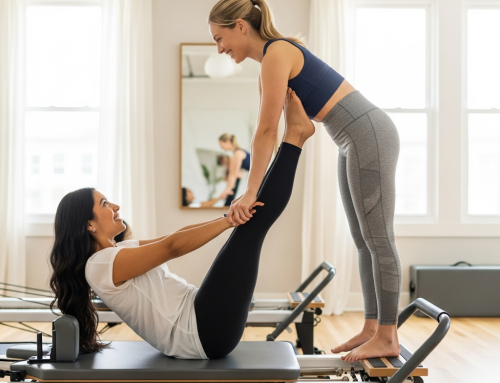
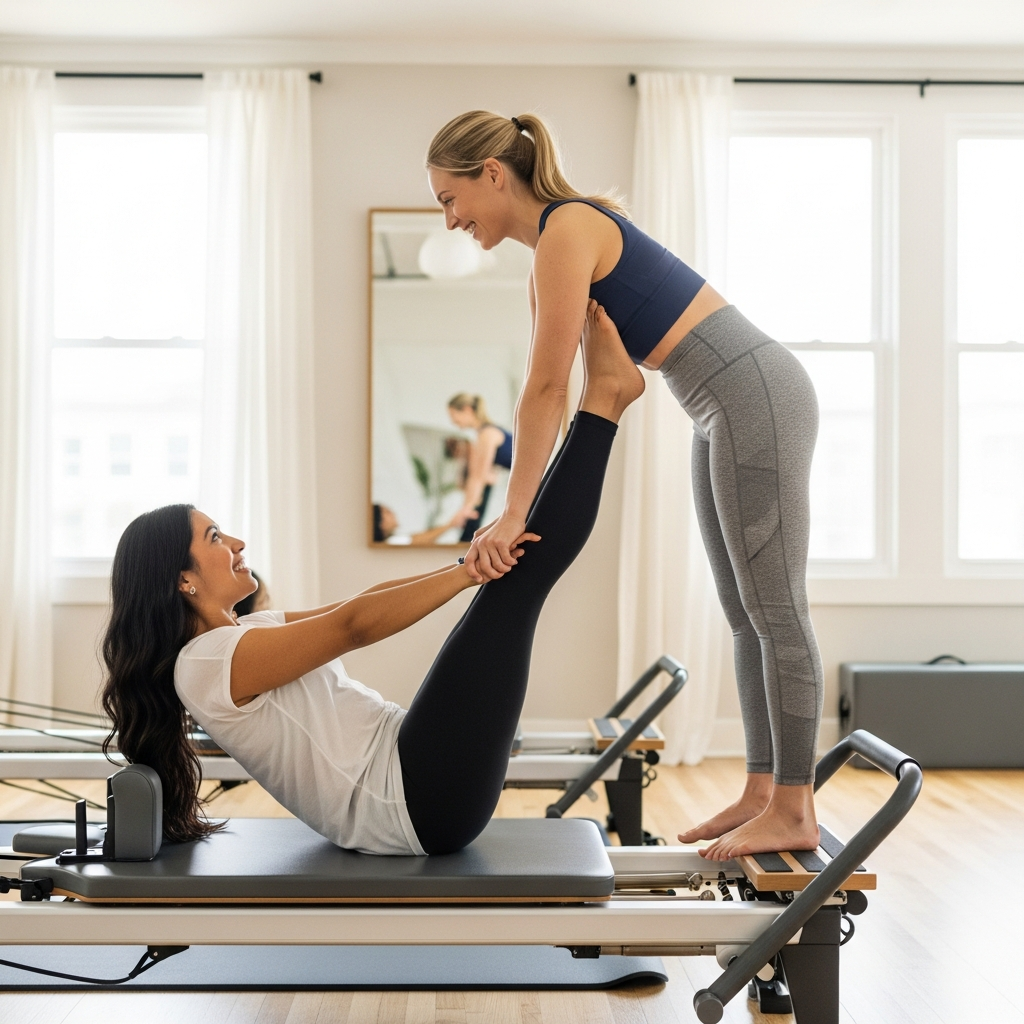
Reformer Pilates is another variation of Pilates that uses a machine called a reformer. It’s often considered more challenging than Mat Pilates due to the added resistance from the machine’s springs. However, Reformer Pilates can also be more adaptable than Mat Pilates because the reformer can aid in supporting the body in different positions, making it accessible for people of various fitness levels.
In conclusion, whether Mat Pilates is harder than yoga is subjective and depends on various factors such as your physical condition, flexibility, strength, and personal preference. The key is to find what you enjoy, what challenges you appropriately, and what meets your fitness goals. Whatever you choose, both practices offer significant health benefits when performed regularly and correctly.
Is Mat Pilates Harder Than Yoga? Expectations, Timelines, and Next Steps
Mat Pilates and Yoga are two different disciplines, each with its own set of benefits, challenges, and techniques. While many people often compare them due to their similarities, such as promoting flexibility and mindfulness, they are fundamentally distinct practices. If you’re considering adding one or both of these into your fitness routine, understanding their differences can help you make an informed choice.
Mat Pilates focuses on core strengthening and overall muscle toning. It is a series of exercises derived from the work of Joseph Pilates, who believed that physical and mental health were closely linked. Mat Pilates exercises target the core muscles (the area from your hips to your shoulders). While it can be challenging, it’s not necessarily harder than yoga. The difficulty level depends on various factors, such as the complexity of the exercises, your fitness level, and the instructor’s teaching style.
On the other hand, Yoga is a centuries-old practice that focuses on mindfulness, flexibility, and balance. It involves holding different poses (asanas) for certain periods and focusing on your breathing. Yoga can be both gentle or challenging depending on the type of practice you choose (i.e., Hatha Yoga is known to be gentle while Ashtanga or Power Yoga can be quite physically demanding).
When comparing Mat Pilates to Yoga, here are some key points to consider
1. Core Strength vs. Flexibility: Mat Pilates primarily aims to build core strength. If you’re looking for a workout that will tone your body particularly your abs, glutes, and lower back, Mat Pilates is a great choice. On the other hand, if you aim to increase your flexibility and balance, you may find yoga more beneficial.
2. Speed: Mat Pilates exercises are usually performed at a quicker pace than yoga poses. This makes Pilates a more dynamic workout, which some people find more challenging.
3. Equipment: While both can be done with just a mat, Yoga often incorporates props like blocks and straps to aid in flexibility and alignment. In contrast, Mat Pilates can include tools like resistance bands and Pilates circles for added resistance, increasing the challenge.
4. Focus: Yoga involves a strong focus on breathing and mindfulness, often including meditation. While Pilates also encourages mindful movement, its primary focus is on physical conditioning.
When choosing between the two, consider your fitness goals, personal preference, and current physical condition. It’s possible that one will be more challenging for you depending on these factors.
Now, let’s talk about timelines. Both practices require consistency to see improvements. For beginners, it’s advisable to start with 2-3 sessions per week. After a month or two, you should start noticing improvements in strength (for Pilates) or flexibility (for Yoga). However, remember that everyone’s body responds differently to exercise, so your progress may not be the same as someone else’s.
If you’re considering Reformer Pilates, a machine-based version of Pilates, know that it typically offers a more intense workout than Mat Pilates. The reformer machine adds resistance to the exercises, making your muscles work harder. If you’re already doing Mat Pilates and want to level up your routine, moving to Reformer Pilates could be a good next step.
In conclusion, neither Mat Pilates nor Yoga is categorically harder than the other. It depends on your personal fitness goals, the specific class or routine you are doing, and your body’s individual response to each practice. The best way to find out which is more challenging for you is to try both and see how your body responds. If possible, try several classes of each to get a feel for the different styles and teachers. Remember, the goal is not just to find the “hardest” workout, but to find the one that brings you the most benefits and enjoyment.
In conclusion, whether mat pilates is harder than yoga is not a clear-cut matter. It’s a subjective question that largely depends on the individual’s physical capabilities, personal preferences, and objectives. Both practices have their unique challenges and benefits, and they cater to different physical and mental needs.
Mat pilates focuses more on core strength, stability, and muscle tone. It requires precision, control, and a deep understanding of your body’s mechanics. The exercises can be demanding as they engage tiny, stabilizer muscles that you might not normally use. However, with practice, you will notice significant improvements in your overall strength, flexibility, posture, and body awareness.
On the other hand, yoga not only aims to enhance physical strength and flexibility but also to achieve mental and spiritual well-being. Yoga can be challenging in terms of maintaining balance in various poses, stretching beyond your usual range of motion, and managing your breath. The difficulty level also varies widely across different styles of yoga—some are gentle and restorative, while others are vigorous and physically demanding.
It is important to note that neither practice is inherently “harder” or “easier.” Instead, they offer different paths towards health and wellness. Your choice between mat pilates and yoga (or even a combination of both) should hinge on which one aligns better with your fitness goals, suits your physical condition, and resonates with your personal interests.
If you’re still uncertain about which practice to choose, it might be beneficial to try both. This will give you a firsthand experience of the strengths and challenges of each method. Remember, the best exercise for you is the one you enjoy and can commit to consistently because it is the regular practice that leads to long-lasting results.
If you’re looking to improve core strength and want a more structured workout focusing on specific muscle groups, mat pilates might be the right choice for you. If you’re seeking holistic wellbeing, love variety in your workouts, and want to incorporate meditative elements into your routine, you might find yoga more appealing.
Ultimately, both mat pilates and yoga are excellent practices that can greatly enhance your fitness and well-being. It’s not about which one is harder or easier—it’s about which one is more suitable for you. Listen to your body and choose the practice that makes you feel good, inside and out.
In today’s busy world, it’s easy to get overwhelmed by the myriad of fitness options available. That’s why we are here—to guide you in choosing the right path for you. Our team of trained professionals is committed to helping you achieve your fitness goals and improve your overall well-being.
Don’t hesitate to reach out to us for assistance. We offer personalized advice based on your fitness level, preferences, and objectives. Whether you’re interested in mat pilates, yoga, or both—we’re here to support you every step of the way. Remember, your journey towards health and wellness is unique, and we’re dedicated to helping you navigate it with confidence.
Choose to invest in your health today. Choose the workout that best suits your needs. And remember, we’re just a call or message away whenever you need guidance or assistance. Let us walk this journey with you—towards a healthier, happier, and more balanced life.