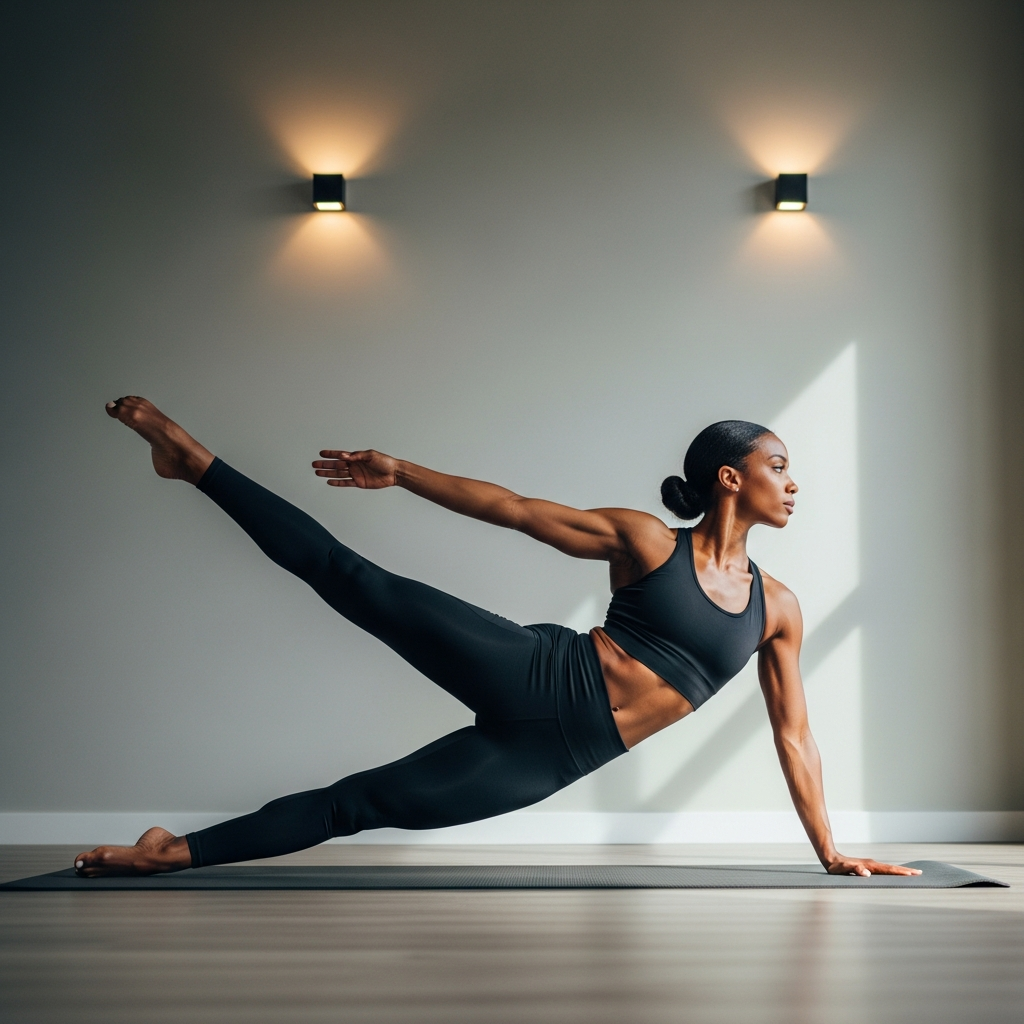
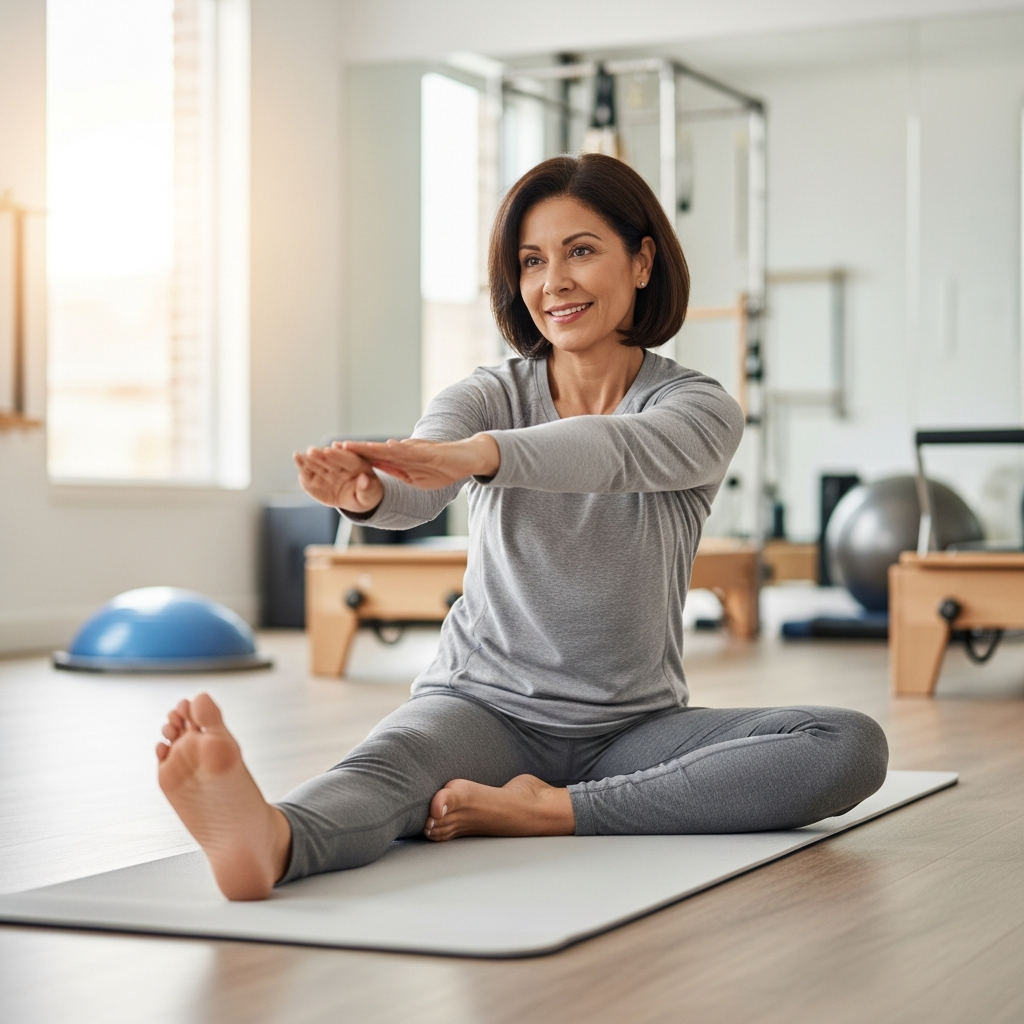
Unraveling the Power of Mat Pilates Exercises: A Comprehensive Guide
Have you ever wondered how some people manage to stay in shape, exuding a healthy glow with a seemingly effortless grace? Their secret may lie in the transformative power of Pilates – more specifically, Mat Pilates. This blog post is designed to take you on an in-depth exploration of the world of Mat Pilates exercises. So, let’s dive in and uncover the secrets behind this extraordinary fitness discipline.
Pilates, a physical fitness system developed in the early 20th century by Joseph Pilates, has been embraced by millions worldwide. It is a gentle yet challenging workout system that can be tailored to suit anyone, from fitness novices to professional athletes. While several types of Pilates are practiced today, including reformer Pilates, Mat Pilates stands out for its simplicity and effectiveness.
Mat Pilates, as the name suggests, utilizes a mat and your bodyweight for resistance to engage your core, tone your muscles, and increase your flexibility. Unlike the Reformer – a specialized piece of equipment associated with Pilates that offers resistance through springs – Mat Pilates requires no more than a mat and your body. This simplicity makes Mat Pilates an easily accessible and versatile workout option.
But what makes Mat Pilates worth your while? And why should you consider incorporating it into your fitness routine? This blog post will answer these questions and more by delving into the world of Mat Pilates exercises. We’ll explore the benefits of these exercises, provide an overview of some fundamental moves, and offer tips on how to maximize your workouts.
This matters to you because Pilates is not just about physical fitness; it’s a holistic approach to wellness. Mat Pilates exercises aim to improve physical strength, flexibility, posture, and enhance mental awareness. It’s a workout regimen that doesn’t discriminate; it suits all ages, fitness levels, and body types. Whether you’re a busy professional seeking a more efficient way to stay fit, a senior citizen looking to improve mobility, or a sportsperson aiming to enhance performance, Mat Pilates has something to offer you.
The beauty of Mat Pilates lies in its simplicity and versatility. It can be done anywhere – at home, in a park, or even when you’re traveling. All you need is a mat and enough space to stretch out. It’s a fitness regimen that easily fits into your lifestyle, making it a practical choice for regular workouts.
Moreover, with Mat Pilates, you’re not just mindlessly repeating exercises. It encourages you to connect with your body and understand the mechanics behind each movement. This mindful approach not only maximizes the benefits of the workout but also helps you develop a stronger mind-body connection.
In this comprehensive guide, we’ll delve deeper into the realm of Mat Pilates exercises, providing you with everything you need to get started or deepen your practice. By understanding the fundamentals, benefits, and techniques of Mat Pilates, you can leverage this powerful tool to cultivate a healthier, fitter, and more balanced lifestyle.
So, if you’re ready to transform your fitness journey and discover the potent benefits of this low-impact yet highly effective exercise regimen, keep reading. This blog post is your ticket to unlocking the full potential of Mat Pilates and making it a part of your wellness journey.
Embark on this exciting journey with us as we unravel the power and potential of Mat Pilates exercises – your body and mind will thank you.
Mat Pilates is a type of exercise regimen that has been growing in popularity due to its emphasis on body awareness, core strength, and flexibility. Developed by Joseph Pilates in the early 20th century, this method of exercise was originally intended to help rehabilitate soldiers returning from war and later found popularity among dancers.
Mat Pilates, as the name suggests, is performed on a mat and mainly focuses on exercises that utilize the body’s own resistance. Unlike other forms of Pilates that use machines to create resistance, Mat Pilates primarily uses body weight and gravity to provide the resistance needed to strengthen muscles.
The core, often referred to as the “powerhouse” in Pilates terminology, is the main focus of Mat Pilates. The powerhouse includes the abdominal muscles, lower back muscles, pelvic muscles, glutes, and hip muscles. The exercises are designed to strengthen these areas to improve posture, alignment, and overall body strength.
The fundamentals of Mat Pilates can be summed up in six principles: concentration, control, centering, breathing, precision, and flow.
1. Concentration: This principle emphasizes mindfulness during workouts. Every movement in Mat Pilates should be performed with full attention and intention. This is not simply a physical exercise – it’s a mind-body workout that requires focus and engagement.
2. Control: Control is about managing every aspect of each movement. There should be no uncontrolled or sloppy movements in Pilates. Every motion should be deliberate and controlled, which helps reduce the risk of injury and increases the effectiveness of the workout.
3. Centering: In Mat Pilates, all movements originate from the powerhouse or the core. By focusing on this center, practitioners can achieve better balance and stability which aids in performing daily tasks more efficiently.
4. Breathing: Breathing is an integral part of Pilates. Proper breathing techniques can help increase blood circulation, which helps remove toxins and supply oxygen to the muscles. In Mat Pilates, practitioners are taught to inhale deeply through the nose, and exhale through the mouth while engaging the core.
5. Precision: This principle is about performing each movement with accuracy and perfect alignment. The focus is on quality over quantity – it’s better to do fewer repetitions correctly than many with poor form.
6. Flow: Flow refers to the smooth, graceful manner in which the exercises are performed. Each movement should flow into the next without any sudden jerks or stops.
Mat Pilates exercises can be modified to cater to different fitness levels and needs, making them accessible to almost anyone. They can be easily performed at home, requiring minimal equipment – just a mat and enough space to move around.
While it might seem like a simple form of exercise, Mat Pilates can be quite challenging. It requires strength, flexibility, balance, and coordination – all of which improve with regular practice. Mat Pilates exercises can help improve posture, increase core strength, enhance flexibility, reduce stress, and promote better body awareness.
In conclusion, Mat Pilates is more than just a workout—it’s a method of movement that encourages strength, flexibility, and mindfulness. Its fundamentals set it apart from many other forms of exercise, making it a unique and effective choice for those seeking a comprehensive and balanced fitness routine. Whether you’re a beginner or an experienced athlete, Mat Pilates can offer beneficial challenges and rewards.
Mat Pilates Exercises: A Comprehensive Guide
Pilates is a system of exercises designed to improve physical strength, flexibility, posture, and mental awareness. It can be divided into two categories: mat pilates and reformer pilates. While the latter requires specific equipment, mat pilates exercises are performed on a mat and utilize your own body for resistance. Let’s delve into a step-by-step guide to mat pilates exercises.
1. Warm-Up
Begin your mat pilates session with a warm-up to increase blood flow, warm your muscles, and prepare your body for exercise. A warm-up could include simple movements like standing toe touches, light jogging in place, or arm circles.
2. The Hundred
Start by lying flat on your back with your legs in table top position (knees bent at a 90-degree angle) and your arms extended by your sides. Lift your head, neck, and shoulders off the mat while pumping your arms up and down as you inhale for five counts and exhale for five counts. This exercise is excellent for warming up the body and engaging the core.
3. Roll Up
Lie flat on your back with your arms extended over your head. Inhale deeply, and as you exhale, bring your arms forward, tuck your chin into your chest, and slowly roll up one vertebra at a time until you’re sitting upright. The roll up strengthens the spine and abdominal muscles.
4. The Saw
Sit upright with your legs extended in a wide V-shape and your arms out to the sides. Twist your torso to the right, reach your left hand towards your right foot, and pulse three times as if you are sawing off your toes. Repeat on the other side. This exercise enhances spinal rotation and flexibility.
5. Single Leg Circles
Lie flat on your back with your right knee bent towards your chest and your left leg extended on the mat. Circle your right knee clockwise for five counts, then counter-clockwise for five counts. Repeat with your left knee. This exercise improves hip mobility and core stability.
6. The Teaser
Lie flat on your back with your legs extended in the air at a 45-degree angle and your arms above your head. Inhale, and as you exhale, roll up into a V-sit position, balancing on your sit bones with your legs still elevated and your arms extended forward. This is a challenging exercise that engages the entire core.
7. Cool Down
After completing your pilates routine, it’s crucial to cool down with some gentle stretches to relax your muscles and prevent stiffness. This could include a seated forward bend, a spinal twist, or a butterfly stretch.
Remember, consistency is key when practicing pilates. Aim to perform these exercises 3-4 times a week to see improvements in strength, flexibility, and posture.
For those interested in reformer pilates, these exercises are performed on a special machine that provides resistance with a series of springs and ropes. Reformer pilates exercises can be more intense and challenging than mat exercises, but they also offer more variety and can be modified to suit all fitness levels.
To conclude, mat pilates exercises provide a versatile and accessible way to improve physical fitness and well-being. Whether you’re a seasoned athlete or just starting your fitness journey, incorporating mat pilates into your routine can provide numerous benefits. Remember, as with any new exercise regime, it’s always wise to consult with a healthcare provider or certified pilates instructor to ensure you’re performing the exercises correctly and safely.
Unraveling the Enigma of Mat Pilates Exercises: Challenges, Solutions, and Expert Tips
Mat Pilates, a low-impact exercise regimen designed to build strength, improve flexibility, and enhance mind-body awareness, has gained widespread popularity in recent years. However, like any fitness discipline, it can be challenging for beginners and seasoned practitioners alike. This article aims to demystify Mat Pilates, debunk common misconceptions, and provide practical solutions and expert tips to optimize your practice.
**Misconceptions about Mat Pilates**
One common misconception is that Pilates and yoga are interchangeable. While both promote strength, flexibility, and mindfulness, they are distinctly different disciplines. Yoga primarily focuses on flexibility and spirituality, whereas Pilates concentrates on strengthening the body’s core (the abdomen, lower back, hips, and buttocks) and improving postural alignment.
Another fallacy is that Pilates is only for fit, lean individuals. In truth, it’s an adaptable exercise regimen suitable for people of all fitness levels and body types. The exercises can be modified to cater to everyone from athletes to seniors and those recovering from injuries.
Lastly, many believe that mat exercises are less challenging than Reformer Pilates, which uses a sliding carriage and resistance springs. While Reformer Pilates can indeed provide a more intense workout, mat exercises can be just as challenging when performed correctly.
**Common Challenges in Mat Pilates**
The most common challenges in Mat Pilates are maintaining proper form and alignment, building core strength, and breathing correctly.
1. **Alignment and Form**: Proper alignment is crucial in Pilates to prevent injuries and ensure effectiveness. Beginners often struggle with maintaining the correct posture throughout the exercises.
2. **Core Strength**: Pilates heavily relies on core engagement. However, it can take some time for beginners to develop the necessary core strength to perform the exercises correctly.
3. **Breathing**: The integration of breath with movement is a key component of Pilates, but it can be tricky to master.
**Solutions and Expert Tips**
1. **Alignment and Form**: To tackle alignment issues, it’s beneficial to start with a certified Pilates instructor who can correct your form and guide you through the exercises. Over time, you’ll develop body awareness and be able to self-correct.
2. **Core Strength**: Building core strength is a gradual process. Start with basic exercises like the Pilates hundred or bridge and gradually progress to more complex ones. Don’t rush – consistency is key in Pilates.
3. **Breathing**: Breathing in Pilates can seem counter-intuitive at first as it often involves exhaling on the effort and inhaling on the release, which is opposite to what we usually do. Practice makes perfect – try coupling your movements with your breath even when you’re not exercising.
**Best Practices for Mat Pilates**
1. **Warm Up**: Always warm up before starting your routine to prepare your body and reduce risk of injury.
2. **Progress at Your Own Pace**: Don’t compare your progress with others. Pilates is a personal journey, and everyone progresses at different rates.
3. **Consistency**: Consistency is paramount in Pilates. Aim for at least 2-3 sessions per week.
4. **Focus on Quality, Not Quantity**: It’s better to perform fewer repetitions with perfect form than many with poor form.
5. **Listen to Your Body**: If an exercise causes pain, stop immediately. Seek advice from a certified instructor or physiotherapist.
Mat Pilates, when practiced correctly and consistently, can provide numerous health benefits, including improved strength, balance, flexibility, and posture, as well as reduced stress levels. By understanding the common challenges and applying the solutions and best practices outlined above, you can make the most of your Mat Pilates journey.
Unraveling the Mysteries of Mat Pilates: Expectations, Timelines, and Next Steps
Mat Pilates is an exercise regimen that focuses on improving flexibility, strength, and body awareness. With a focus on the core, referred to as the ‘powerhouse’ in Pilates, every movement originates from this central region of the body. Here’s what you can expect when embarking on a journey with Mat Pilates, including timelines and next steps.
Expectations:
Mat Pilates exercises are typically performed on a padded mat and use the body’s own weight for resistance. Unlike Reformer Pilates, which uses a specialized machine, Mat Pilates requires minimal equipment. You can expect exercises that target all areas of your body, particularly your core, to help improve posture, balance, flexibility, and overall strength.
A typical mat Pilates session starts with a warm-up, focusing on spinal mobility and abdominal engagement. This is followed by a sequence of exercises that can be modified or progressed to suit individual fitness levels. Expect a mix of seated, lying, and standing exercises with transitions between positions to maintain flow.
Mat Pilates tends to be more accessible to beginners due to its simple setup and focus on mastering fundamental movements. However, it is equally beneficial for experienced practitioners seeking to deepen their practice. One key point to note is that Mat Pilates is not always easier than Reformer Pilates – it can be quite challenging due to the lack of support and resistance from a machine.
Timelines:
The timeline for seeing results from Mat Pilates varies based on several factors including initial fitness level, frequency of practice, diet, and lifestyle. However, Joseph Pilates himself famously said: “In 10 sessions you’ll feel the difference, in 20 sessions you’ll see the difference, and in 30 sessions you’ll have a whole new body.”
This statement serves as a rough guideline for the timeline of results. Most people start to feel better, more flexible, and stronger within a few sessions. Visible improvements such as a toned body, improved posture, and weight loss can take a few weeks to a couple of months. Regular practice, ideally three times a week, will yield faster and more significant results.
Next Steps:
If you’ve decided to embark on your Mat Pilates journey, here are some next steps to consider
Choosing the right class: Begin with a basic or beginner’s class if you’re new to Pilates. This will allow you to learn the fundamentals at a comfortable pace. As your strength and confidence increase, you can progress to intermediate or advanced classes.
Getting the Right Equipment: A good quality Pilates mat is crucial for comfort and safety. Unlike yoga mats, Pilates mats are thicker and provide more cushioning. Also consider purchasing props like Pilates balls, bands, and magic circles to add variety and challenge to your routine.
Learning the Proper Form: Pilates is all about precision and control. It’s essential to learn the correct form from a certified instructor initially. Remember, it’s not about how many reps you can do but how well you can perform each movement.
Setting Realistic Goals: Whether your goal is to improve flexibility, build strength, or lose weight, make sure it’s specific, measurable, achievable, relevant, and time-bound (SMART). Keep track of your progress and celebrate your achievements.
In conclusion, Mat Pilates can serve as an excellent workout regimen that promotes body strength, flexibility, and mind-body connection. Set clear expectations, follow a realistic timeline, and take the necessary next steps towards your fitness journey. As with any exercise program, it’s important to consult with a healthcare professional before starting Mat Pilates, especially if you have any health concerns or medical conditions.
In conclusion, mat Pilates exercises offer a comprehensive and dynamic workout targeting the entire body, though they are particularly beneficial for strengthening the core, enhancing flexibility, and improving balance and posture. These exercises, grounded in mindfulness and precision, are an excellent choice for individuals looking to improve their physical fitness, rehabilitate from injuries, or enhance their overall wellbeing.
The beauty of mat Pilates lies in its simplicity and accessibility. You don’t need elaborate equipment or a gym membership to partake in these exercises. With a mat and some open space, you can engage in a workout that strengthens your muscles, enhances your flexibility, and challenges your body in new ways. From the Hundred to the Roll Up, the Plank to the Saw, these exercises are designed to work different areas of your body while promoting mindfulness and coordination.
Another significant advantage of mat Pilates is its adaptability. Whether you’re a seasoned athlete or a beginner, you can modify these exercises to match your fitness levels and personal objectives. This adaptability not only makes Pilates accessible to a wider audience but also allows you to grow with the program, gradually increasing the intensity of your workouts as you become stronger.
We have also discussed the profound health benefits associated with mat Pilates. Regularly engaging in these exercises can lead to improved strength, particularly in the core, increased flexibility, better balance and coordination, enhanced mind-body connection, stress relief and improved mental health. Additionally, for those rehabilitating from injuries or living with chronic conditions such as arthritis, mat Pilates can provide a safe and effective way to stay active and manage symptoms.
One of the most striking features of mat Pilates is its emphasis on quality over quantity. Instead of focusing on how many reps you can do or how much weight you can lift, Pilates encourages you to pay attention to the quality of your movements. This focus on precision and control not only minimizes the risk of injury but also ensures that you are effectively engaging and strengthening your muscles.
However, to reap the full benefits of mat Pilates, it’s crucial to learn the right techniques and maintain proper form. Although there are numerous resources available online, nothing can substitute for personalized guidance from a trained professional.
Therefore, regardless of your fitness level or health goals, we invite you to contact us for expert assistance. Our team of certified Pilates instructors is dedicated to helping you master the intricacies of mat Pilates, ensuring that you perform each exercise with precision and control to maximize its benefits. Whether you’re looking to strengthen your core, enhance your flexibility, or simply want a workout that engages both mind and body, we’re here to guide you every step of the way.
Remember, your fitness journey is unique, and so are your needs. Don’t hesitate to reach out to us with any questions or concerns you may have. Together, we can design a mat Pilates program that is tailored to your specific objectives, helping you achieve optimal health and wellbeing.
In the end, your dedication and consistency, coupled with our expertise and support, can make mat Pilates an integral part of your wellness routine. We look forward to assisting you on this exciting journey towards better health and fitness. So why wait? Contact us today, and let’s embark on this journey together.