Mat Pilates vs. Reformer Pilates: Your Comprehensive Guide to Choose What’s Best for You
Hook: Are you ready to embark on your Pilates journey but find yourself tangled in the Mat vs. Reformer dilemma? Fear not, as we dive deep into the world of Pilates to provide you with an exhaustive guide on these two popular forms.
Context: Pilates, a physical fitness system developed by Joseph Pilates in the early 20th century, has snowballed in popularity worldwide. It’s a mind-body workout that targets your core (or, as Joseph Pilates called it, your “powerhouse”) muscles while also stretching and strengthening other areas. Despite its growing popularity, many enthusiasts and beginners alike find themselves grappling with the Mat Pilates vs. Reformer Pilates conundrum. Both forms have their unique benefits and challenges, making it essential to understand each before choosing the one that aligns best with your fitness goals.
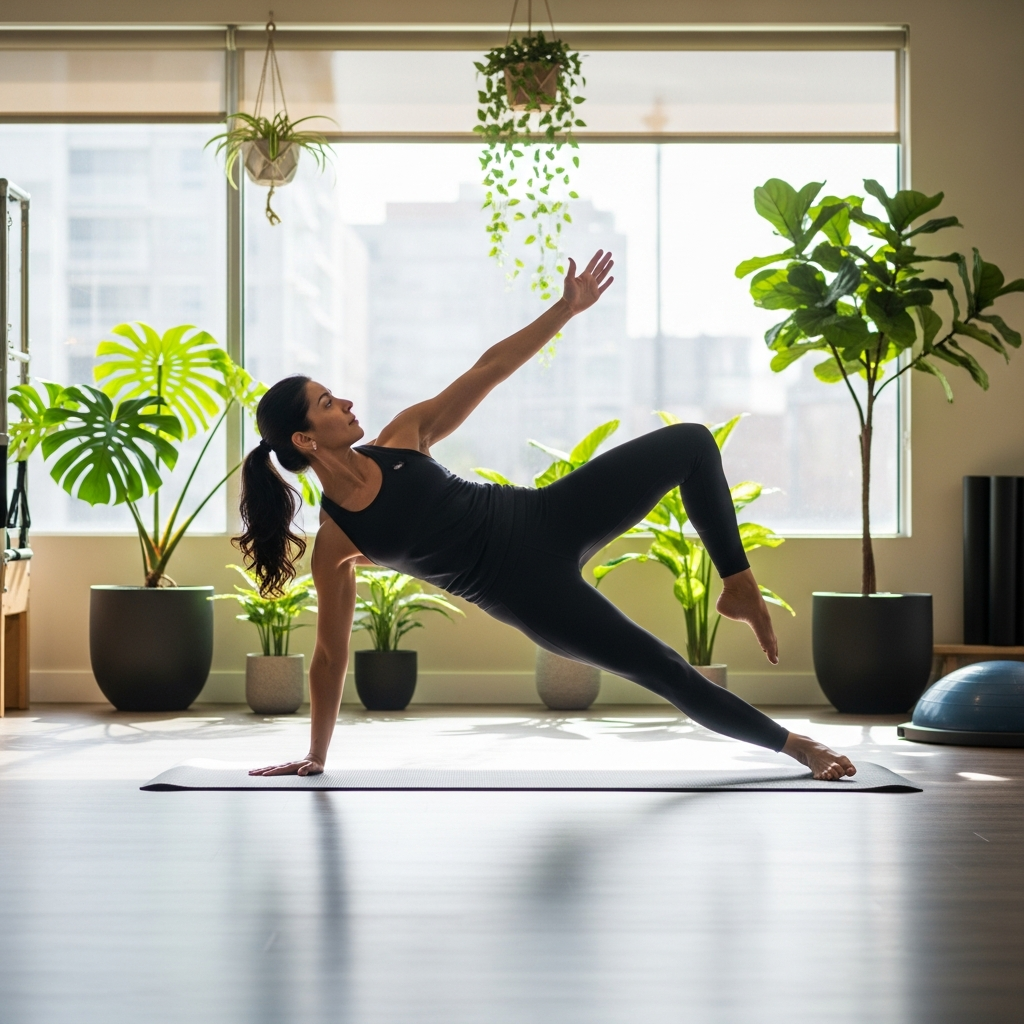
Mat Pilates, as the name suggests, is done on a mat, similar to a yoga mat but thicker. It uses body weight as resistance and focuses on precise movements to target specific muscle groups. It’s a great starting point for beginners due to its simplicity, affordability, and focus on mastering form and control.
On the other hand, Reformer Pilates involves using a machine called the ‘Reformer,’ designed by Joseph Pilates himself. The Reformer is a bed-like frame with a flat platform that rolls back and forth on wheels. It leverages springs for resistance and ropes and pulleys to create a challenging workout that can be tailored to various skill levels.
What Will be Covered: In this post, we will delve deep into the nuances of both Mat and Reformer Pilates. We’ll explore their unique benefits, drawbacks, and distinctive features. We will assess each form’s effectiveness for strength building, flexibility enhancement, injury rehabilitation, and overall fitness improvement. We’ll also discuss which form might be more suitable for different individuals depending on their fitness levels, goals, and preferences.
Why This Matters: The choice between Mat and Reformer Pilates can significantly impact your fitness journey. Each form offers different advantages: while Mat Pilates is lauded for its convenience and foundational strength building, Reformer Pilates is praised for its versatility and enhanced muscle toning. Understanding the differences between the two can help you make an informed choice that resonates with your fitness aspirations.
Choosing the right form of exercise is crucial to maintaining enthusiasm, consistency, and achieving desired results. This comprehensive guide aims to demystify the Mat Pilates vs. Reformer Pilates debate, enabling you to make a choice that complements your lifestyle, aligns with your goals, and propels you towards a healthier and fitter you. So, are you ready to dive in and unravel the world of Pilates?
Mat Pilates vs Reformer: A Comprehensive Comparison
Pilates, first developed by Joseph Pilates in the 1920s, is a versatile fitness regimen that aims to improve physical strength, flexibility, posture, and mental awareness. This system of exercises is designed to strengthen the body in an even way, with particular emphasis on core strength to improve general fitness and wellbeing. Although Pilates can be done with or without equipment, the two most common forms that people often find themselves choosing between are Mat Pilates and Reformer Pilates.
Mat Pilates is typically what most people think of when they first consider Pilates. This form of Pilates is performed on a mat, similar to a yoga mat but thicker for better support. Mat Pilates exercises are performed in a series of controlled movements and poses that help build and improve flexibility, strength, endurance, and posture. Mat workouts primarily use your body’s own weight to create resistance and achieve the desired workout effect.
While Mat Pilates focuses on using your body weight to create resistance, Reformer Pilates introduces the use of a machine (the reformer) to provide a more intensive workout. The reformer is a bed-like frame with a flat platform on it, called the carriage, which rolls back and forth on wheels within the frame. The carriage is attached to one end of the reformer by a set of springs which provide differing levels of resistance as the carriage is pushed or pulled along the frame. The reformer also has long straps with handles on them that are attached to the top end of the frame for arm exercises.
Both Mat and Reformer Pilates can provide an effective workout, but they each have their unique features and benefits.
Mat Pilates is a great way for beginners to learn the basics of Pilates without the complexity of equipment. It allows practitioners to focus on learning to control their muscles and strengthen their core, which can be beneficial for people of all fitness levels. Mat Pilates is also more accessible and can be done virtually anywhere with minimal equipment, making it a popular choice for home workouts.
Reformer Pilates, on the other hand, is often seen as more dynamic and versatile. The reformer offers a wider range of exercises compared to the mat, as it allows for movements in multiple planes of motion and provides variable resistance. This makes it suitable for people of all fitness levels, including athletes looking for a challenging workout and those recovering from injuries. The adjustable resistance of the reformer can aid in rehabilitation by providing support for weak or injured areas, allowing the user to safely perform controlled movements.
The choice between Mat and Reformer Pilates often depends on personal goals, budget, convenience, and individual preference. However, it is important to note that the two are not mutually exclusive. Many practitioners opt to incorporate both into their fitness regimen, using Mat Pilates to master the basics and body control, then moving onto the reformer for added variety and intensity.
In conclusion, whether you choose Mat Pilates or Reformer Pilates, both offer an excellent way to improve your strength, flexibility, coordination, and balance. They each emphasize proper alignment, core strength, and muscle balance. While Mat Pilates may be more accessible and easier to start with, Reformer Pilates offers a wider range of possibilities and can often provide a more intensive workout. Regardless of the method you choose, Pilates is a valuable addition to any fitness routine.
Mat Pilates vs Reformer Pilates: A Comprehensive Guide
If you’re interested in Pilates and considering which method to pursue, you’ve likely come across two popular forms: Mat Pilates and Reformer Pilates. Both are effective and beneficial, but they have distinct features and benefits that may cater to different fitness needs and preferences. In this guide, we will delve into the details of Mat Pilates vs Reformer Pilates, providing step-by-step guidance and actionable advice to help you make an informed choice.
1. Understanding the Basics
Before we start comparing, it’s important to understand what each form entails. Mat Pilates is a series of exercises performed on the floor using gravity and your body’s weight to provide resistance. The primary focus is on strengthening the core muscles.
On the other hand, Reformer Pilates involves a unique piece of equipment called a ‘Reformer’. This machine uses springs to provide adjustable resistance as you push and pull along its carriage. Reformer Pilates works various parts of your body, including the core, arms, and legs.
2. Assessing Your Fitness Level
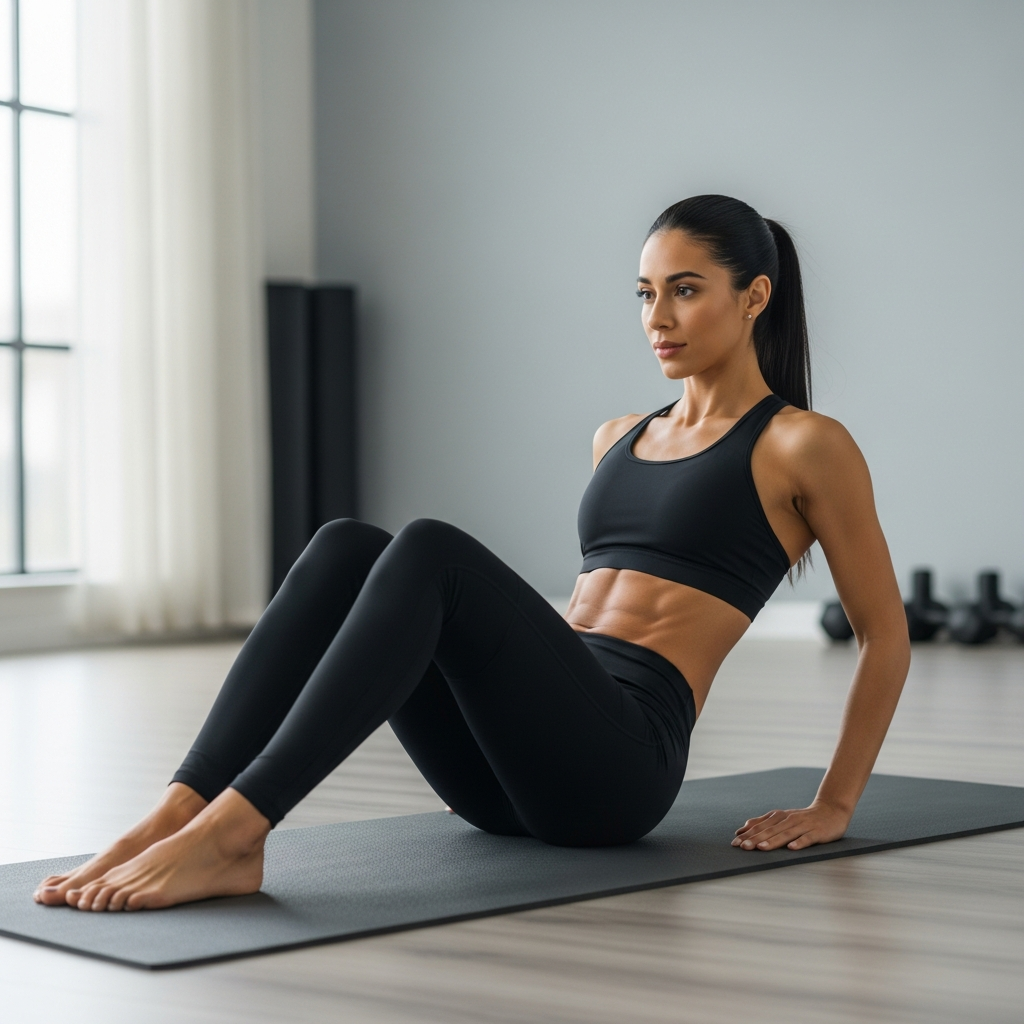
If you’re a beginner, Mat Pilates might be more suitable for you. It focuses on mastering control and learning to stabilize your core, which is crucial before moving on to more challenging exercises. For instance, consider ‘The Hundred’, a classic Mat Pilates exercise that promotes abdominal strength. Here’s how you do it
– Lie down on your mat with your knees bent. – Raise your head, neck, and shoulders off the mat while extending your legs at a 45-degree angle. – Pump your arms up and down as you inhale for five counts and exhale for five counts. – Repeat this 10 times to complete a ‘Hundred’.
Reformer Pilates may seem intimidating to beginners due to the machine’s complex appearance. However, it’s considered very effective for intermediate and advanced fitness enthusiasts as the reformer can increase the intensity of the exercises.
3. Identifying Your Fitness Goals
Mat Pilates is excellent for strengthening and toning your core muscles. For example, if you’re aiming to improve your posture or alleviate lower back pain, Mat Pilates exercises like ‘Spine Stretch Forward’ can be beneficial.
In contrast, if you want to work on your overall body strength, flexibility, coordination, and balance, Reformer Pilates would be more suitable. It offers a full-body workout and allows more variety of movements. For instance, exercises like ‘Leg Circles’ on the reformer can enhance leg strength and hip flexibility.
4. Considering Your Budget and Accessibility
Mat Pilates is typically more affordable and accessible than Reformer Pilates. You only need a mat, and you can do it at home, in a park, or virtually anywhere. Plus, there are plenty of free online resources available.
Reformer Pilates usually requires a studio setting due to the cost and size of the equipment. Classes tend to be more expensive as well, given the need for qualified instructors to ensure proper use of the apparatus.
5. Trying Both Forms
Finally, why not try both forms of Pilates? Incorporating both Mat and Reformer Pilates into your routine can keep your workouts diverse and exciting. While Mat Pilates helps you master the fundamentals and offers convenience, Reformer Pilates can take your fitness to the next level by providing a more challenging workout.
To conclude, whether you choose Mat Pilates or Reformer Pilates largely depends on your personal preferences, fitness level, goals, and resources. Both offer unique benefits, so don’t hesitate to try each form and see what works best for you. Remember, consistency is key in any fitness journey, so pick the method that you enjoy most and can stick with in the long run.
Mat Pilates vs Reformer Pilates: Common Challenges, Solutions and Expert Tips
Pilates, a mind-body exercise regimen designed by Joseph Pilates in the early 20th century, has gained significant popularity over the years. Regardless of the type – Mat Pilates or Reformer Pilates – the essence remains the same: to improve strength, flexibility, and body awareness. But when it comes to choosing between Mat Pilates and Reformer Pilates, many practitioners often find themselves in a dilemma.
1. Understanding Mat Pilates
Mat Pilates is typically performed on a padded mat and utilizes your own body weight as resistance. It focuses on core strengthening, body control, flexibility, and balance. Many beginners start with mat exercises due to its simplicity and ease of setup.
Common Challenges:
The primary challenge with Mat Pilates is that using your own body weight for resistance can be either too difficult or too easy, depending on one’s fitness level. Also, achieving the correct form is a common issue faced by beginners.
Solutions & Expert Tips:
Consistent practice under a trained instructor can help overcome these challenges. Having an expert eye to correct your form can make all the difference in the effectiveness of your workout. Additionally, props like resistance bands and Pilates rings can be introduced to either increase or decrease the difficulty level.
2. Understanding Reformer Pilates
Reformer Pilates involves a machine that uses springs and pulleys to provide variable resistance, making the exercises more challenging and dynamic. This modality enhances overall strength, flexibility, coordination, and balance.
Common Challenges:
One of the main challenges with Reformer Pilates is its intimidating look. The complexity of adjusting the machine’s settings according to one’s body type and fitness level can also be challenging for beginners.
Solutions & Expert Tips:
Don’t let the reformer machine intimidate you. A certified Pilates instructor will guide you through the process of adjusting the machine and performing exercises correctly. Remember, the key is to focus on form and precision rather than the number of repetitions.
3. Mat Pilates vs Reformer Pilates
Misconceptions:
A common misconception is that one method is superior to the other. The truth, however, is that both Mat and Reformer Pilates offer unique benefits and neither is inherently better than the other. It’s more about personal preference, convenience, and specific fitness goals.
Best practices:
If you’re new to Pilates, starting with mat work can provide a solid foundation. As you get comfortable with the principles of control, centering, concentration, breath, precision, and flow, you can then advance to the reformer.
In terms of frequency, it’s generally recommended to practice Pilates 2-3 times per week. However, this can vary depending on your fitness level and goals. Always listen to your body and adjust your routine as needed.
Remember, whether you choose Mat Pilates or Reformer Pilates, the most important thing is consistency. Consistent practice will lead to improvements in strength, flexibility, posture, and overall well-being.
In conclusion, both Mat and Reformer Pilates are effective methods for improving physical and mental health. Your choice between the two should depend on your personal preferences, fitness level, and goals. It’s always best to seek advice from a certified Pilates instructor or a fitness professional to determine the most appropriate method for you.
Mat Pilates vs Reformer Pilates: Expectations, Timelines, and Next Steps
Introduction
Pilates is an effective exercise discipline that focuses on the core, improving flexibility, strength, balance, and body awareness. Generally, Pilates can be segregated into two main types: Mat Pilates and Reformer Pilates. Both have unique benefits and challenges, and understanding the difference can help you decide which is right for you.
Mat Pilates
Mat Pilates is the most common form of Pilates. It is performed on a mat, similar to a yoga mat but thicker for better support. Mat Pilates exercises are primarily focused on strengthening the body’s core, although they also involve the entire body. The only equipment used in mat Pilates is your body weight, which provides natural resistance.
Mat Pilates is suitable for beginners due to its simplicity and minimal equipment requirements. It is also convenient; you can do it at home or even while traveling. The timeline to see noticeable changes with regular Mat Pilates sessions varies from person to person, but generally, positive changes in body conditioning and flexibility can be observed within 10-12 weeks.
Reformer Pilates
Reformer Pilates, on the other hand, involves special equipment known as a Reformer. This equipment is a bed-like frame with a flat carriage on it, which rolls back and forth on wheels. The carriage is attached to one end of the reformer by a set of springs that provides differing levels of resistance.
Reformer Pilates offers a more dynamic workout than mat Pilates due to its versatility. It allows you to do more exercises in various positions – lying down, standing, sitting, and even pulling or pushing the footbar. The machine helps provide support for difficult exercises and adds resistance to simple ones, making it great for all fitness levels.
Notable results from Reformer Pilates can often be seen in 8-10 weeks, but it largely depends on individual fitness levels and the frequency of sessions. Always remember, consistency is key.
Mat Pilates vs Reformer Pilates: What to Expect
When deciding between mat and reformer Pilates, consider your fitness goals, budget, and available resources. Mat Pilates is excellent for building a strong foundation, especially focusing on core strength and stability. It’s also more affordable as it doesn’t require special equipment, making it accessible to a larger audience.
Reformer Pilates can be more engaging as the machine offers more resistance and support, allowing for a wider range of exercises. It’s particularly beneficial for those wanting to work on their balance, flexibility, coordination, and posture. However, Reformer Pilates classes are often more expensive due to equipment costs.
Next Steps: Choosing Between Mat and Reformer Pilates
Here are some practical steps to help you decide between mat and reformer Pilates
1. Assess Your Goals: If you’re looking for an affordable, convenient way to strengthen your core and improve flexibility, Mat Pilates is a great starting point. If you’re interested in a more intense, versatile workout that will help improve strength, coordination, balance, and posture, invest in Reformer Pilates.
2. Determine Your Budget: Consider the costs associated with each type. Mat Pilates is less expensive as it requires no special equipment. Reformer Pilates involves additional costs for the machine and possibly higher session fees.
3. Take a Trial Class: Before committing, take a trial class of both mat and reformer Pilates. This will give you a feel for each type and help you decide which one you prefer.
4. Consult an Expert: Speak with a certified Pilates instructor who can provide advice based on your fitness level, goals, and medical history.
In conclusion, both Mat and Reformer Pilates offer unique benefits that can contribute to your overall health and fitness. Whether you choose Mat Pilates for its simplicity and convenience, or Reformer Pilates for its versatility and intensity, both types will provide a full-body workout that strengthens the core, improves flexibility and boosts overall body awareness. The key is to choose the one that best suits your personal needs and goals, and to stay consistent with your practice.
In conclusion, both Mat Pilates and Reformer Pilates offer unique benefits that make them worth considering for your fitness regimen. They share the same core principles, including concentration, control, precision, breath, flow, and centering. However, the way these principles are applied and the equipment used vary between the two.
Mat Pilates is typically the starting point for many Pilates enthusiasts. It’s simple, requires little to no equipment, and can be done virtually anywhere. It focuses on strengthening your core muscles – the powerhouse – and improving flexibility, coordination, body awareness, and balance. The exercises can be modified to suit beginners or made more challenging for advanced practitioners. It’s an excellent option for those who want to incorporate Pilates into their daily routine at home or while traveling.
On the other hand, Reformer Pilates takes your workout to another level with specialized equipment called the Reformer. This apparatus offers resistance through a series of springs and ropes, making it possible to work out different muscle groups in various ways. The Reformer is highly versatile and can accommodate a wide range of exercises. It’s perfect for those who need more support and structure in their workouts, as well as those who want to increase the intensity of their Pilates practice. By working against resistance, you can build strength, flexibility, stability, and endurance much faster.
Choosing between Mat and Reformer Pilates ultimately depends on your personal fitness goals, needs, and preferences. If you’re just starting out or prefer a minimalist approach to exercise, Mat Pilates might be your best bet. But if you’re looking for a more dynamic and challenging workout that can be tailored to your specific needs, Reformer Pilates might be worth exploring.
The important thing is that both Mat and Reformer Pilates promote overall well-being by enhancing physical strength, flexibility, balance, and mental awareness. These benefits can significantly improve your quality of life, whether you’re a professional athlete, recovering from an injury, looking to tone your body, or simply wanting to stay active and healthy.
So, are you ready to embark on your Pilates journey? Whether you’re leaning towards Mat Pilates or intrigued by Reformer Pilates, we’re here to guide you every step of the way. Our professional team can help you understand the nuances of each method and determine the best one for you based on your individual goals and circumstances.
Remember that the most effective workout is the one that you enjoy and can commit to consistently. Don’t hesitate to try both Mat and Reformer Pilates to see which one resonates with you more. You might even find that a combination of both brings you the most benefits.
To get started, contact us today. We can provide personalized advice, answer any questions you may have, and arrange a trial session for you. We’re dedicated to helping you achieve your fitness goals and experience the transformative power of Pilates. Don’t wait any longer – your journey towards a stronger, more flexible, and healthier body begins now.