Pilates Instructor Training Online: Transforming Fitness Passion into a Rewarding Career
Introduction
Do your friends admire your fitness levels? Do they often turn to you for advice on maintaining a healthy lifestyle? If so, why not turn your passion for wellness into a rewarding career? Here’s a thought – consider becoming a certified Pilates instructor. Now, I know you’re wondering, “What about Pilates instructor training online?” We’ve got you covered. This comprehensive guide will take you through everything you need to know about becoming a qualified Pilates instructor from the comfort of your home.
Pilates, named after its founder Joseph Pilates, is a popular form of exercise that enhances body strength, flexibility, and mental awareness. It offers a unique blend of resistance and conditioning training, especially beneficial for those seeking rehabilitation from injuries or specific physical conditions. Its flexibility has seen its adoption expand beyond the traditional studio environment to include other fitness platforms such as mat Pilates and online Pilates classes. Mat Pilates, a variation of the traditional method, focuses on core strength and stability, reducing the risk of injury and improving overall fitness.
As we continue to adjust our lives around the ongoing pandemic, online learning has become an essential tool across many industries – and the fitness sector is no exception. The rise of digital technology has made it possible for aspiring fitness enthusiasts to pursue their passion without leaving their homes. Online Pilates instructor training is one such opportunity that offers flexibility and convenience to those eager to start their journey in the fitness industry.
In this guide, we will delve deep into the world of online Pilates instructor training. We’ll explore what the training involves, the necessary prerequisites, and the potential career paths post-certification. We’ll also provide you with some invaluable tips on how to choose the right course for your needs. Whether you’re interested in teaching mat Pilates or running online Pilates classes, our guide will offer practical advice to set you on the right path.
Why should this matter to you? Well, the world is increasingly becoming health-conscious, and there’s a growing need for fitness professionals who can guide individuals on their wellness journey. With the shift towards online training, there’s never been a better time to become a certified Pilates instructor. As a certified instructor, you can not only contribute to the wellness of others but also create a fulfilling career for yourself.
Becoming a Pilates instructor doesn’t just mean teaching exercise routines; it’s about educating others on how to lead healthier lives, providing motivation, and helping individuals meet their fitness goals. By opting for online Pilates instructor training, you can gain the necessary skills and knowledge at your own pace, from wherever you are, while still maintaining your current responsibilities.
So if you’re all about fitness, passionate about helping others, and looking for a career that offers both personal satisfaction and professional growth, then keep reading. This comprehensive guide will provide you with all the essential insights you need to kickstart your journey as a certified Pilates instructor.
Through this journey, remember that every step you take brings you closer to transforming lives, including your own. So, let’s dive in and uncover the exciting world of online Pilates instructor training. It’s time to turn your passion for fitness into a rewarding profession.
Exploring Online Pilates Instructor Training: A Comprehensive Guide
Pilates, a form of exercise that emphasizes the balanced development of the body through strength, flexibility, and awareness, has been a part of the fitness industry for nearly a century. It was first developed by German physical trainer Joseph Pilates in the early 20th century. Today, it has evolved into a popular and widely practiced fitness regimen, with millions of people worldwide reaping its numerous benefits.
Joseph Pilates’ original method involved a series of controlled movements performed on a special mat or specific equipment. These exercises are designed to improve physical strength, flexibility, posture, and mental awareness. They also aim to provide holistic wellness by focusing on the body’s core postural muscles which help keep the body balanced and are essential for providing support to the spine.
As the demand for Pilates continues to grow, so does the need for qualified Pilates instructors. Traditional Pilates instructor training typically involves in-person courses, workshops, and extensive practice hours. However, with the advent of technology and changing lifestyle needs, online Pilates instructor training has emerged as a viable and popular alternative.
Online Pilates instructor training offers flexibility and convenience that on-site training can’t match. It allows aspiring instructors to learn at their own pace and in their own space. This modern approach to training caters to individuals who may have other commitments such as work or family, making it easier for them to pursue their passion for teaching Pilates.
Much like traditional training, comprehensive online Pilates instructor training courses cover a wide range of topics from anatomy, biomechanics, and kinesiology to the principles of Joseph Pilates’ method, including concentration, control, centering, precision, breath, and flow. They also delve into the study of all levels of mat work and Pilates apparatus exercises.
The framework for online Pilates instructor training often includes interactive sessions where students can watch live demonstrations, engage in discussions, and receive real-time feedback. Most online programs also offer access to a library of pre-recorded videos, lectures, and manuals for students to review and practice at their convenience.
Besides the technical aspects, online Pilates instructor training also emphasizes the development of essential teaching skills. These include effective communication, observation, and modification techniques to meet individual client needs, safety guidelines, and professional ethics. The goal is not just to produce instructors who can perform Pilates exercises but those who can effectively teach others.
Accreditation plays a crucial role in the quality of online Pilates instructor training programs. Prospective students should look for programs certified by recognized bodies like the Pilates Method Alliance (PMA) or other international fitness accreditation organizations. This ensures that the program meets industry standards and that the certificate will be recognized by employers worldwide.
In terms of prerequisites, most online Pilates instructor training programs require candidates to have a certain level of basic Pilates experience. This is to ensure that they have a good understanding of the method and are physically prepared for the rigorous training. Some programs may also require an understanding of basic anatomy or completion of an introductory anatomy course.
Online Pilates instructor training, although convenient, still requires dedication, commitment, and discipline from the students. Most programs require a combination of online theoretical learning and practical application. Students may need to log specific hours of teaching practice and pass examinations to earn their certification.
In conclusion, online Pilates instructor training offers a comprehensive pathway to becoming a certified Pilates instructor. It encompasses not only the practical application of Pilates exercises but also an in-depth understanding of the body and how it moves. While the mode of delivery may be different from traditional in-person training, the core teachings and principles remain faithful to Joseph Pilates’ original method.
Pilates Instructor Training Online: A Comprehensive Guide
Introduction:
The advent of technology has made it possible to learn almost anything from the comfort of your home, including becoming a certified Pilates instructor. Online Pilates instructor training courses are flexible, cost-effective, and can be just as comprehensive as their in-person counterparts. This step-by-step guide will walk you through the process, highlighting key points to consider and offering actionable advice.
Step 1: Understanding Pilates
Before diving into becoming an instructor, you need a solid understanding of Pilates itself. Pilates is a mind-body workout that emphasizes the core, including the abs, lower back, hips, and thighs. It’s not just exercise, but a series of controlled movements that helps improve physical strength, flexibility, and posture while enhancing mental awareness.
Step 2: Choose Your Path – Mat or Apparatus Pilates
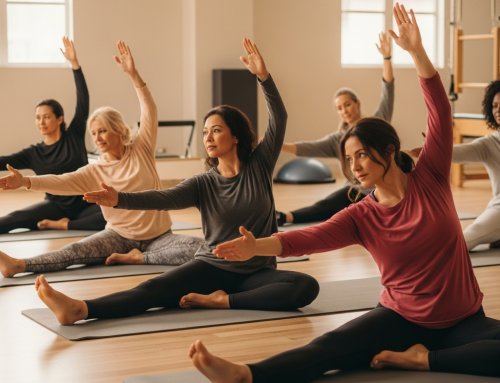
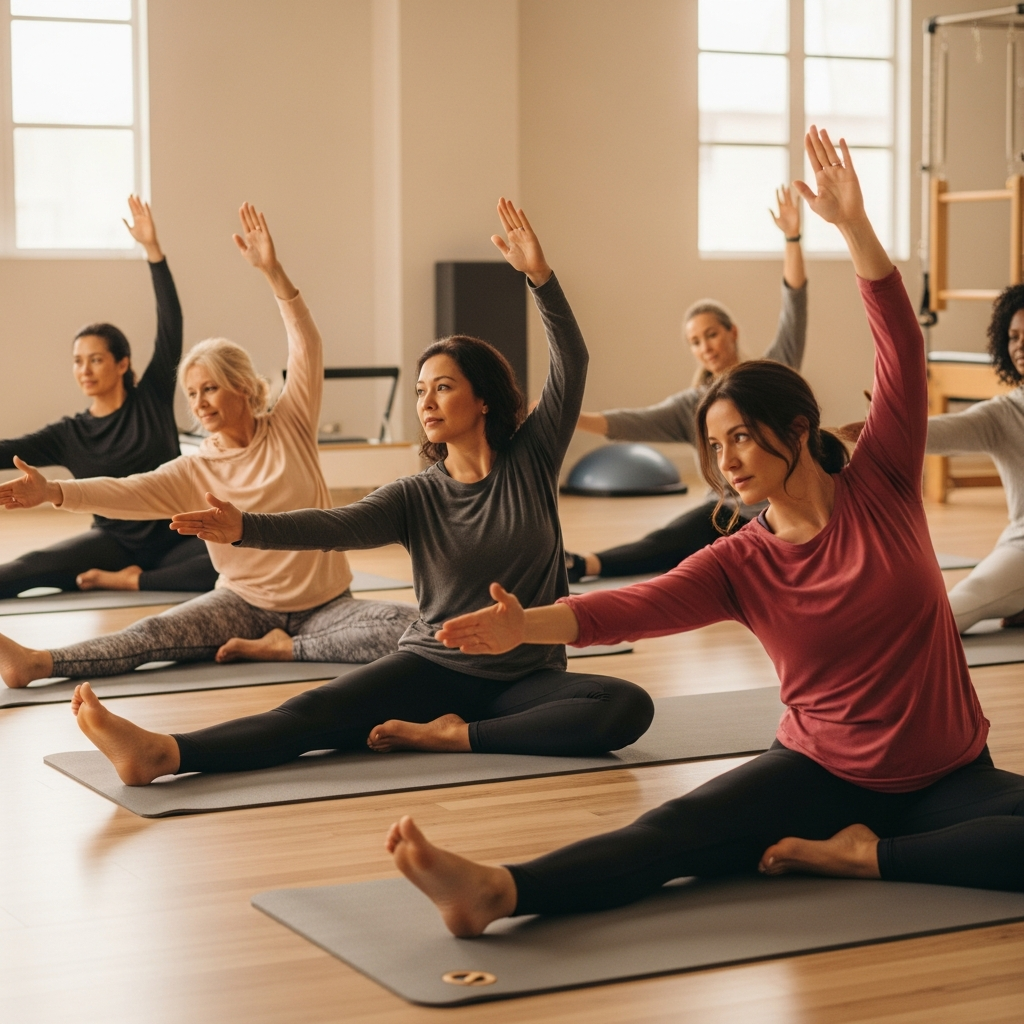
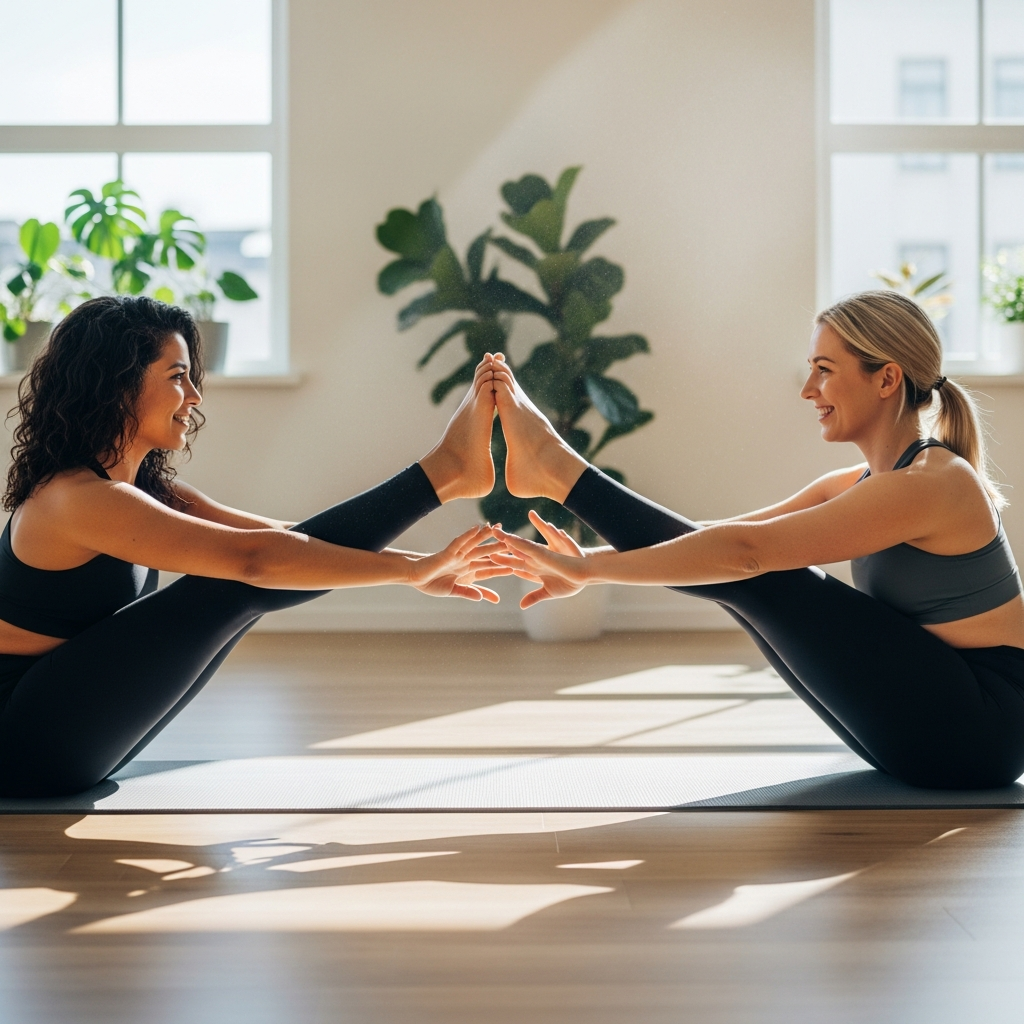
There are two primary forms of Pilates – Mat and Apparatus. Mat Pilates focuses on exercises performed on a mat, often using your body weight as resistance. It’s popular due to its simplicity and adaptability.
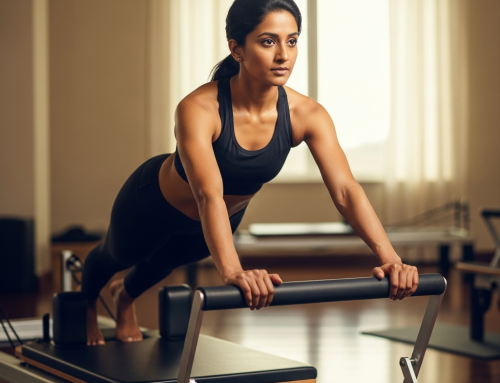
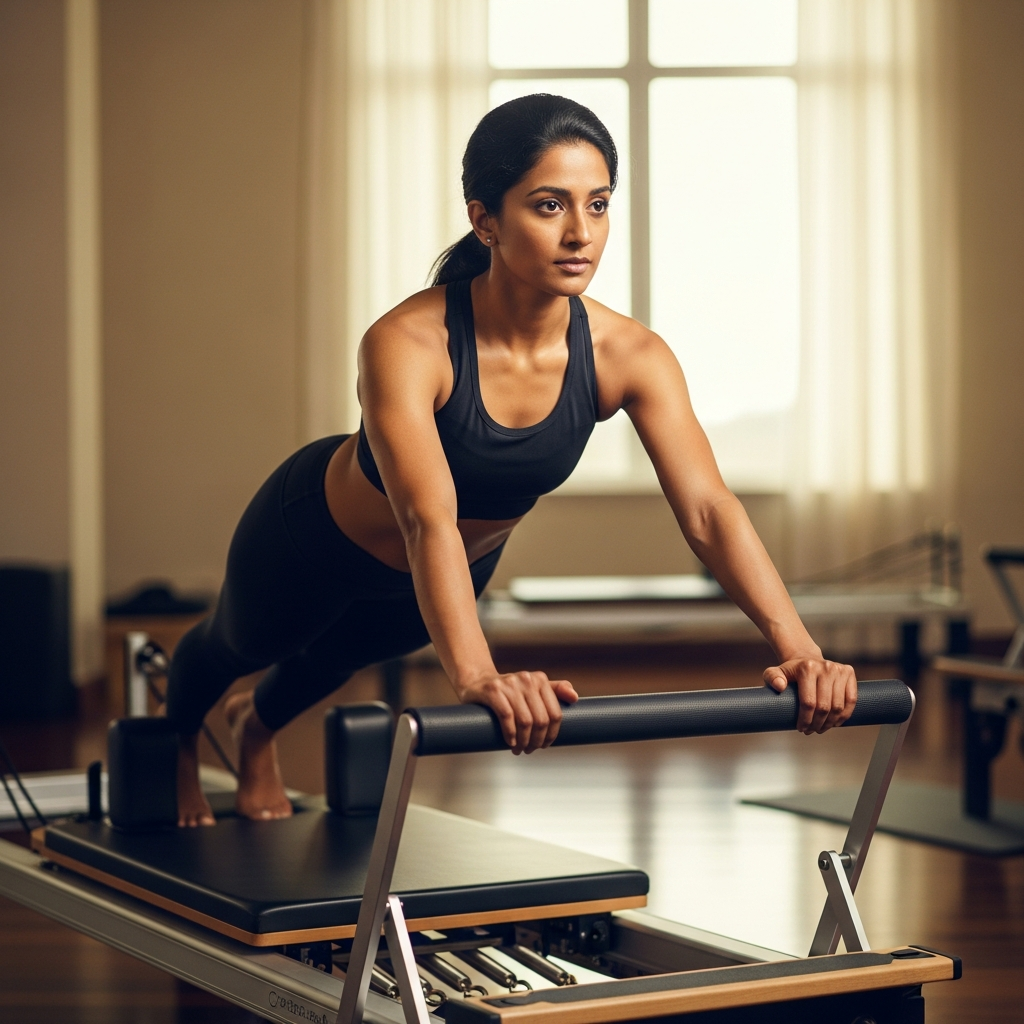
Apparatus Pilates involves specialized equipment, such as the Reformer, Cadillac, or Barrels. These provide resistance via springs and pulleys to intensify the workout and target specific muscle groups.
Decide which path suits your preferences and career goals. If you’re just starting out or have budget constraints, Mat Pilates certification may be the best option.
Step 3: Research Online Training Programs
Now comes the research phase. Look for accredited online programs that offer comprehensive training in the type of Pilates you chose. The program should cover anatomy, exercise physiology, teaching techniques, modification for different fitness levels and health conditions, and hands-on practice through video submissions.
Ensure that the course is recognized by a reputable Pilates Association, such as the Pilates Method Alliance (PMA).
Step 4: Enroll and Study
Once you’ve found the right course, it’s time to enroll and dive into your studies. Be prepared to commit a significant amount of time to learning the theory behind Pilates, watching instructional videos, practicing movements, and studying anatomy.
Step 5: Hands-on Practice
While studying online, it’s important to get as much real-world practice as possible. This could involve practicing the movements yourself or teaching friends and family. Video submissions of you teaching a mock class are often a compulsory part of the course assessment.
Step 6: Pass Your Exam
Most online Pilates instructor courses culminate in an examination, which can also be taken online. This typically involves both a written test of your theoretical knowledge and a practical demonstration of teaching skills. Completing this successfully will earn you your certification.
Step 7: Continuing Education
Once certified, your journey doesn’t end there. To stay at the top of your game and maintain your certification, you’ll need to pursue continuing education. Many online platforms offer workshops and advanced courses in areas such as pre/postnatal Pilates, Pilates for seniors, Pilates for rehabilitation, and more.
Conclusion:
Becoming a certified Pilates instructor online is a convenient and flexible way to turn your passion into a career. It requires dedication, thorough research, rigorous practice, and continual learning. Remember that the ultimate goal is to equip yourself with the skills required to teach safe and effective Pilates classes, whether it’s in a gym, a dedicated Pilates studio or online.
By following these steps, you’ll be well on your way to becoming a qualified Pilates instructor, ready to guide others on their fitness journey.
Pilates has carved a niche for itself in the fitness world, renowned for its ability to tone, strengthen, and increase flexibility. Becoming a Pilates instructor can be a gratifying career choice for fitness enthusiasts. However, how about undertaking Pilates instructor training online? Is it as effective as the traditional face-to-face method? This article aims to provide a comprehensive understanding of the challenges, solutions, and expert tips about online Pilates instructor training.
**Common Challenges**
1. **Practicality**: One of the biggest challenges of online Pilates training is the lack of hands-on experience. In a live classroom setting, immediate feedback is available, which is crucial when learning the precise movements and techniques of Pilates.
2. **Limited Interaction**: The absence of real-time interaction can limit the ability to ask questions and clarify doubts immediately. Sometimes, specifics of a movement or alignment might be difficult to grasp through online videos or descriptions.
3. **Self-Discipline**: Online learning requires a high level of self-discipline and motivation. Without the structure of scheduled classes or the presence of an instructor, procrastination can creep in easily.
**Solutions & Expert Tips**
1. **Choose a Comprehensive Course**: Not all online courses are created equal. Look for a course that offers detailed instruction, including anatomy, principles of Pilates, teaching methodology, and varied workouts. It should ideally provide video lessons, reading materials, quizzes and assignments for comprehensive learning.
2. **Ensure interactive Sessions**: Opt for courses that offer live interactive sessions or webinars. This will allow you to ask questions and receive feedback from the instructor. Some courses also provide an opportunity to submit videos of your practice for personalized feedback.
3. **Create a Schedule**: Implement structure in your training by creating a schedule. Allocate specific hours each day for your Pilates study and practice. This will help keep procrastination at bay and ensure consistent progress.
4. **Practice Makes Perfect**: Pilates is a physical practice. The more you do it, the better you understand and can teach it. Regularly practice the exercises you learn, fine-tune your techniques, and enjoy the process of becoming an instructor.
5. **Seek Peer Support**: Engage with other online students through forums or social media groups. This can help you feel connected, share experiences, solve doubts, and learn from each other.
**Misconceptions about Online Pilates Instructor Training**
1. **Quality of Education**: A common misconception is that the quality of education in online learning is inferior to traditional classroom learning. However, a well-structured online Pilates course taught by experienced instructors can be just as informative and enriching.
2. **Recognition of Certification**: Some people believe online certifications are not widely recognized. However, if the course is accredited by a recognized Pilates or fitness association, the certification is as valid as any obtained through a traditional setup.
3. **Mat Pilates vs. Equipment Pilates**: It’s often believed that online training is only suitable for mat Pilates. While mat Pilates can be more straightforward to learn online, equipment-based Pilates can also be effectively taught if the course provides detailed video instructions and allows for interactive sessions for feedback.
In conclusion, while online Pilates instructor training comes with its unique challenges, it also offers flexibility and convenience that traditional face-to-face classes may not provide. With focused discipline, the right course selection, and active interaction, online training can be a viable option for aspiring Pilates instructors everywhere. Always remember that in Pilates, as with any profession, continuous learning and practice are key to becoming a successful instructor.
Embracing the Pilates Journey: A Comprehensive Guide to Online Pilates Instructor Training
Embarking on a journey to become a certified Pilates instructor is a rewarding choice for fitness enthusiasts, wellness advocates, and those simply fascinated by the transformative potentials of Pilates. With the advent of technology, the training process has been made more accessible through online programs, allowing you to learn at your own pace and in your own space. Here’s what you can expect when you opt for online Pilates instructor training.
**Understanding the Basics**
Before delving into the depths of Pilates instruction, it’s important to have a strong foundation in both the physical practice and the theoretical understanding of Pilates. Online courses typically start with an introduction to the philosophy and principles of Pilates. You will learn about its origin, its founder Joseph Pilates, and how it has evolved over the years. This includes gaining an understanding of the six primary principles of Pilates: Concentration, Control, Centering, Flow, Precision, and Breathing.
**Mat Pilates Training**
Mat Pilates forms the bedrock of any Pilates training program. It is where most beginners start and focuses on exercises that are performed on a mat, utilizing one’s body weight as resistance. The Mat Pilates module in online courses provides comprehensive training on mat exercises from the beginner level to advanced. It includes mastering technique, learning modifications and variations, understanding anatomy related to each exercise, and ensuring safety.
**Pilates Apparatus Training**
Beyond Mat Pilates, online training programs tend to cover apparatus-based exercises. This portion of the program introduces you to various types of Pilates equipment such as the Reformer, Cadillac/Trapeze Table, Chair, Ladder Barrel, Spine Corrector, and more. Each module will teach you how to safely and effectively perform, teach, and modify exercises on these pieces of equipment.
**Teaching Methodology & Practice Teaching**
A significant part of any Pilates instructor certification is dedicated to teaching methodology. Here, you will learn how to design and deliver effective Pilates classes, how to cue and correct postures, manage different class scenarios, work with diverse populations, and handle potential injuries or health conditions that could affect a client’s practice.
In addition, online programs often encourage students to gather practice teaching hours. This could involve teaching family members, friends or volunteering at local community centers. The goal is to give you hands-on experience and confidence before you start teaching professionally.
**Study Time & Completion Timeline**
The timeline for completing an online Pilates instructor training varies depending on the program and your personal schedule. Most comprehensive Pilates instructor training run between 450-500 hours, encompassing both instruction and self-study/practice teaching hours. If you dedicate around 10-15 hours per week, you can expect to finish in approximately one year. However, online training offers flexibility, so you can adjust the pace according to your needs.
**Certification Exam**
Upon completion of the course modules and required practice teaching hours, students typically must pass a comprehensive examination to become certified. This may include a written test covering theoretical knowledge and a practical exam where you demonstrate teaching skills.
**Continued Education**
Becoming a certified Pilates instructor is just the start of your journey. The field of Pilates continues to evolve, and it’s important to stay updated through continued education. Many online platforms offer advanced courses and workshops that can help you deepen your knowledge and skills.
**In Conclusion**
Online Pilates instructor training provides the flexibility to learn at your own pace while maintaining the rigorous standards required to become an effective instructor. It’s an exciting journey filled with learning and growth, and it equips you with the knowledge and skills to guide others on their path to fitness and wellness. Remember, becoming a Pilates instructor is not just about mastering exercises; it’s about embodying the philosophy of Pilates in your teaching and your life.
In conclusion, the prospect of Pilates instructor training online is not only feasible but also offers numerous advantages. As we’ve explored throughout this article, online training programs have created a new pathway for fitness enthusiasts to acquire the required skills and knowledge to become a certified Pilates instructor. These programs, being flexible, affordable, and comprehensive, are changing the landscape of fitness education and breaking geographical barriers.
The key takeaways from this discussion should underscore the importance of selecting the appropriate online training program. It’s critical to choose a program that is recognized by fitness bodies or organizations to ensure that your certification has value and is widely accepted. A good training program should not only teach you the various Pilates exercises but should also provide in-depth knowledge about anatomy, physiology, biomechanics, and teaching methodologies.
Additionally, the immersive nature of these training programs, aided by modern technology, has made it possible to learn from anywhere in the world and at your own pace. This is particularly advantageous for those with busy schedules or other commitments. We also discussed the importance of having a self-disciplined, motivated approach to your learning journey as this could significantly impact your success in an online learning environment.
Remember, becoming a Pilates instructor is not just about mastering a set of exercises; it’s about developing a deep understanding of the Pilates method and its principles. It’s about learning how to guide others safely and effectively through their own Pilates journey.
Moreover, we discovered that many online platforms provide continuous support during and after your course completion. Whether it’s through online discussion forums, webinars, or one-to-one video calls, you never have to feel isolated or stuck during your learning process.
Finally, we highlighted the importance of practical application and hands-on experience. Despite the virtual nature of online courses, they should not neglect the importance of practice teaching hours. Some training programs have partnerships with local studios for this purpose or provide you with the necessary resources to complete your practice hours in your own setting.
To sum it up, the prospect of online Pilates instructor training is a game-changer. It provides an accessible, flexible, and affordable route for anyone interested in becoming a certified Pilates instructor. However, like all educational endeavors, the success of online learning depends on the quality of the program and the commitment of the learner.
We hope this article has provided you with valuable insights into what to expect from online Pilates instructor training and helped you make an informed decision. If you are passionate about Pilates and keen on sharing its numerous benefits with others, don’t let location or time constraints hinder your ambitions.
At our company, we believe in empowering fitness enthusiasts like you to achieve their goals. If you need further assistance or have any queries about online Pilates instructor training, don’t hesitate to contact us. We have a team of experts who are more than willing to guide you through your fitness education journey. So why wait? Get in touch with us today and take your first step towards becoming a certified Pilates instructor. Your dream career is just a click away!