The Power Of Movement: A Deep Dive Into Reformer Pilates Exercises
Introduction:
Are you looking to take your Pilates journey to the next level? Perhaps you’ve mastered mat Pilates and are eager for a new challenge? Or maybe you’re simply intrigued by the sleek, somewhat mysterious machinery that is the Pilates Reformer? If you’ve answered ‘yes’ to any of these, then you’re in the right place. This guide is designed to help you explore the transformative world of Reformer Pilates exercises, demystify the machine, and illustrate how it can elevate your fitness routine.
Pilates, named after its German founder Joseph Pilates, has been shaping bodies and minds for over a century. Initially conceived as a rehabilitation method for injured soldiers during World War I, its principles have since been adopted by athletes, dancers, fitness enthusiasts, and those seeking a body-mind workout. Mat Pilates, the form most people are familiar with, utilizes body weight and gravity to build strength, flexibility, and balance. However, there’s another side to Pilates that many may not be aware of – Reformer Pilates.
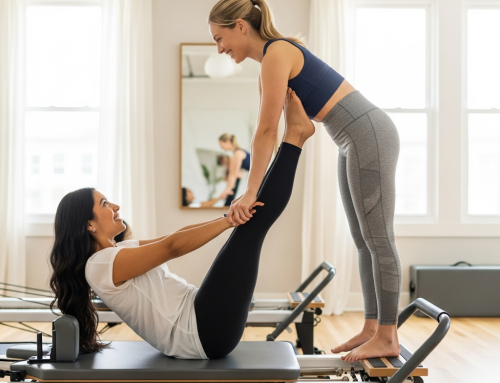
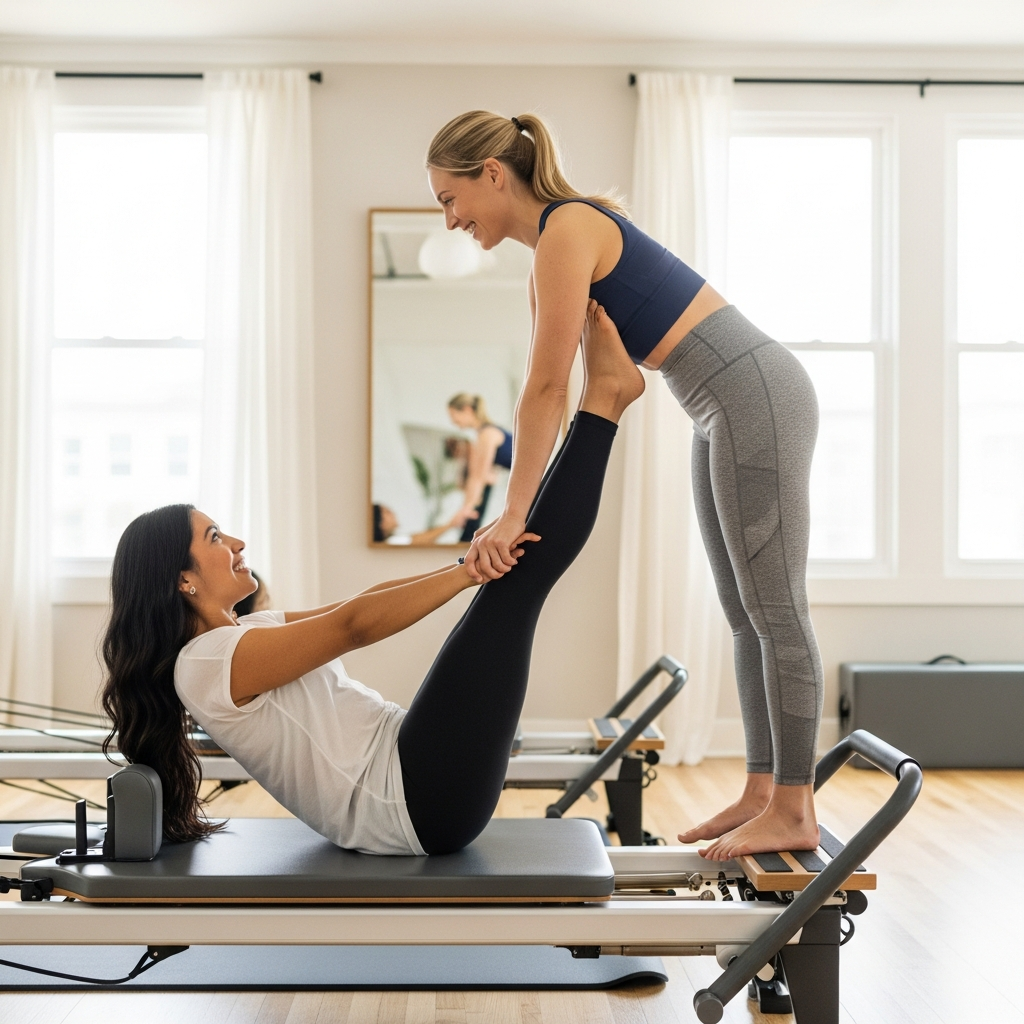
The Reformer is an elegantly designed machine that looks like a single bed frame but with a moving carriage, springs, ropes, and pulleys. Despite its intimidating appearance, it’s a versatile piece of equipment that enhances the Pilates experience by offering resistance training, expanding the range of exercises possible, and providing feedback on alignment and form. While Mat Pilates is already highly beneficial, incorporating Reformer Pilates exercises into your routine can help accelerate your progress and offer unique benefits.
In this comprehensive post, we’ll delve into the specifics of Reformer Pilates exercises – what they are, how they work, their benefits, and how they compare to Mat Pilates. We’ll look closely at the Reformer machine itself and explore some classic exercises that can be performed on it. We’ll also discuss who can benefit from these exercises, what to expect in a typical Reformer class, and tips for getting started.
By the end of this guide, our aim is to empower you with a solid understanding of Reformer Pilates, debunk any misconceptions you may have, and inspire you to give this powerful fitness method a try. Whether you’re a seasoned Pilates practitioner seeking to expand your knowledge or a complete novice curious about this unique form of exercise, there’s something in this post for you.
So why should you care? Well, in an age where health and wellness are increasingly valued, understanding and leveraging diverse fitness modalities can be a game-changer. Reformer Pilates exercises offer an opportunity to enhance your strength, flexibility, coordination, and body awareness in ways that few other workouts can match. Plus, it’s an approach that respects your body’s limits while continually challenging it to evolve. And who doesn’t want that?
Let’s embark on this journey to unfold the magic of Reformer Pilates exercises and how they can revolutionize your workout routine. After all, as Joseph Pilates himself said, “Change happens through movement and movement heals.” So, are you ready to move and heal with Reformer Pilates? Let’s dive in!
Understanding the Fundamentals of Reformer Pilates Exercises
Reformer Pilates, a variant of the Pilates exercise methodology, is an increasingly popular fitness approach that encompasses the use of a specially designed apparatus called a ‘Reformer.’ This machine, invented by Joseph Pilates, the founder of Pilates, has a flat platform that moves back and forth on wheels within a frame. The platform is attached to one end of the Reformer by a set of springs that provide differing levels of resistance as exercises are performed.
The original purpose of the Reformer was to help individuals perform the classical Pilates mat exercises more efficiently and effectively by offering support and resistance. The machine’s design allows for a variety of movements to be performed in multiple positions, including lying down, sitting, standing, pulling straps, and pushing the footbar.
Reformer Pilates combines the principles of concentration, control, centering, flow, precision, and breath – the six fundamental principles of Pilates. These principles form the basis of every exercise performed on the Reformer, ensuring a full-body workout that strengthens the core, improves posture, enhances flexibility, and increases mind-body awareness.
Concentration in Reformer Pilates refers to the ability to maintain focus on each movement’s execution. This mindfulness allows for better execution and helps maximize the benefits from each exercise. Control, another essential principle in Reformer Pilates, refers to maintaining physical control over every motion. No movement in Reformer Pilates is performed without control; this idea is central to preventing injuries and ensuring effectiveness.
Centering is a concept in Pilates that refers to focusing on the body’s core or the ‘powerhouse.’ This includes the abdominal muscles, lower back, hips, and buttocks. In Reformer Pilates, many exercises are initiated from this powerhouse, promoting stability and strength.
Flow is another integral part of Reformer Pilates. Each exercise is performed with a sense of flow and ease, which not only makes the workout seem more like a dance but also ensures that energy is expended efficiently. Precision is tied closely with concentration and control. Each movement in Reformer Pilates is precise, with no room for sloppy or uncontrolled movements.
Breath, the final principle, is central to every movement in Reformer Pilates. Joseph Pilates emphasized the importance of proper breathing techniques, teaching that the breath should be synchronized with each movement. Breathing correctly during workouts can aid in oxygenating the muscles and maintaining focus and control.
Reformer Pilates exercises are incredibly versatile. They can be adapted to suit everyone from beginners to advanced practitioners. The adjustable resistance offered by the Reformer’s springs allows for exercises to be made easier or harder based on individual needs, making it an excellent tool for rehabilitation, general fitness, and athletes looking for a challenge.
Exercises on the Reformer can target specific muscle groups, promote better alignment, or offer a comprehensive full-body workout. This versatility makes it a valuable tool for individuals with different fitness goals – whether it’s building strength, improving flexibility, enhancing balance and coordination, or rehabilitating after an injury.
In conclusion, Reformer Pilates is a dynamic and adaptable fitness methodology that offers numerous benefits. It builds on the principles of classical Pilates to provide a workout that not only strengthens the body but also promotes better posture, increases flexibility, and improves mind-body awareness. Whether you’re a beginner or an experienced practitioner, Reformer Pilates exercises can be customized to fit your fitness level and help you achieve your wellness goals.
Reformer Pilates Exercises: The Ultimate Guide
The beauty of Pilates lies in its versatility and adaptability. Traditionally, Pilates exercises could be performed on a mat or using a piece of equipment called the Reformer. Today, we are going to delve into the world of Reformer Pilates, providing you with step-by-step guidance and actionable advice that you can easily follow at home or in your local Pilates studio.
Understanding the Reformer
Before we dive into the exercises, it’s crucial to understand what a Reformer is. A Reformer is a bed-like frame with a flat platform on it, called the carriage, which rolls back and forth on wheels within the frame. The carriage is attached to one end of the reformer by a set of springs. These springs provide choices of differing levels of resistance as the carriage is pushed or pulled along the frame.
Now let’s move onto five key Reformer Pilates exercises that target core strength and stability, flexibility, and body awareness.
1. Footwork
This is typically the first series of movements you’ll perform on the Reformer. It’s designed to warm up your body and introduce you to the concept of working against resistance.
– Start by sitting on the carriage with your feet placed on the foot bar. – Extend your legs fully without locking your knees. – Slowly draw your carriage back in towards the foot bar. – Repeat this series for 10-15 repetitions.
Remember to keep your core engaged throughout and monitor your breathing – inhaling as you extend your legs and exhaling as you bring them back in.
2. Leg Circles
This exercise focuses on enhancing hip mobility and strengthening your lower body.
– Lie on the Reformer with your head on the headrest and hands by your sides. – Lift one leg towards the ceiling and place it into a strap. – Circle this leg out to the side, down towards the end of the reformer, across the body, and then back up to the ceiling. – Aim for 5-10 circles in each direction while maintaining stability in your pelvis and torso.
3. The Hundred
Named for the goal of 100 breaths during the exercise, The Hundred is a classic Pilates mat exercise that is also performed on the Reformer.
– Start by lying down with your legs in tabletop position (knees bent above hips and shins parallel to the floor). – Curl your head and shoulders off the mat and extend your arms by your sides. – Pump your arms up and down while inhaling for five counts and exhaling for five counts. – Continue until you reach 100 counts.
4. Short Spine
Short Spine is a great stretch for the back and also works the hamstrings.
– Lie on your back with both feet in the straps. – Inhale as you extend your legs to a high diagonal. – Exhale as you bend your knees into your chest, peeling your spine off the carriage one vertebra at a time. – Inhale at the top of the movement, then exhale as you articulate your spine back onto the carriage, lengthening your legs along the way. – Repeat for 3-5 times.
5. Long Stretch Series
This series includes exercises that challenge balance, core stability, and upper body strength.
– Start in a plank position with your hands on the foot bar, feet on the carriage. – Push the carriage out by straightening your arms and then pull it back in. – Aim for 5-10 repetitions while maintaining a strong, steady plank position.
Reformer Pilates allows for a wide range of exercises to be performed – from beginners to advanced levels. Remember, it’s not about how many exercises you can do, but rather about executing them correctly and with control. Always listen to your body and modify exercises as needed.
As with any form of exercise, consistency is key. Regular practice will yield the best results, improving your strength, flexibility, and overall body awareness. Whether you’re a professional athlete or someone looking to maintain a healthy lifestyle, Reformer Pilates can be a beneficial addition to your fitness regime.
Unraveling the World of Reformer Pilates: Challenges, Solutions, and Expert Tips
While Pilates has gained considerable popularity over the years, many individuals are still unfamiliar with its subset, Reformer Pilates. This form of exercise utilizes a unique piece of equipment called a Reformer, designed by Joseph Pilates, the founder of this holistic exercise regimen. The aim of this article is to address common challenges and misconceptions associated with Reformer Pilates, provide solutions, and share expert tips to make your journey easier.
One of the primary misconceptions about Reformer Pilates is that it’s only for seasoned athletes or professional dancers. While it’s true that these groups were among the first to embrace this exercise form, Reformer Pilates is adaptable to all fitness levels. The use of springs on the Reformer allows for resistance adjustment, making exercises as easy or challenging as necessary.
Another common challenge is the intimidation factor of the Reformer machine itself. Sporting springs, straps, and a moving carriage, it can appear daunting to beginners. However, once you understand its functionality, you’ll find that it’s an instrumental tool in creating a balanced body and enhancing overall strength and flexibility.
Now, let’s discuss some common challenges and their solutions
1. **Difficulty in Maintaining Form:** One of the keys to successful Reformer Pilates is maintaining proper form. However, for beginners, it can be difficult to get the hang of this. Solution: A certified instructor can guide you, correcting form and ensuring you’re reaping maximum benefits from each move. Remember, Pilates is about quality over quantity.
2. **Understanding the Machine:** The Reformer machine might seem complex initially. Solution: Take time to familiarize yourself with it. Understand how the springs work and learn about the carriage’s movement. Your instructor can help demystify the apparatus for you.
3. **Fear of Injury:** Given the nature of movements and the apparatus involved, fear of injury can be a deterrent. Solution: Start slow. With a professional trainer’s guidance, you can gradually increase the intensity of your workouts as your strength and flexibility improve.
4. **Finding it Hard to Keep Up:** Reformer Pilates requires concentration, and keeping up with the class can seem challenging. Solution: Don’t rush. The beauty of Pilates is in its flow. Take your time to understand each movement, focusing on your breath.
Now that we’ve addressed challenges and solutions, let’s delve into some expert tips
1. **Emphasize on Breath Control:** Breath control is central to Pilates. Deep, controlled breathing activates muscles, aids movement, and helps maintain focus.
2. **Start with a Beginner’s Mindset:** Even if you are experienced in Mat Pilates, approach Reformer Pilates as a beginner. Each form has its unique aspects, and it’s crucial to adapt accordingly.
3. **Commit Consistently:** As with any exercise regimen, consistency is key in Reformer Pilates. Regular sessions will help you get accustomed to the apparatus faster, improve your form, and see visible results.
4. **Listen to Your Body:** While pushing your limits can be good, it’s essential not to overdo it. If a certain movement or intensity level causes discomfort, take a step back.
Lastly, whether you’re venturing into Mat Pilates or Reformer Pilates, remember that Pilates is a journey, not a race. It’s about creating a healthy relationship with your body. With practice and patience, you’ll find Reformer Pilates cultivating not just physical strength and flexibility but also mental resilience and mindfulness.
Whether you’re an athlete looking to enhance performance or someone simply seeking to improve overall fitness and wellbeing, Reformer Pilates can be an effective and rewarding addition to your exercise regimen. Embrace the challenges, enjoy the process, and embark on this journey of holistic health.
Reformer Pilates: An Overview
Reformer Pilates is a well-known form of exercise that utilizes a special machine, known as a Pilates reformer, to enhance the traditional Pilates workout. Known for its ability to provide a balanced full-body workout, Reformer Pilates is a fantastic way to achieve strength, flexibility and coordination. Here’s what you can expect when you take on this rewarding fitness journey.
What to Expect:
Reformer Pilates isn’t your average gym workout. The reformer machine, a sleek apparatus with a flat platform that moves back and forth on wheels within its frame, is designed to provide controlled, spring-loaded resistance to your movements. It has an adjustable foot bar and long straps with handles to accommodate different heights and levels of fitness.
Your first Reformer Pilates session might seem intimidating, but rest assured, it’s designed for people of all fitness levels. A qualified instructor will guide you through a series of exercises that are performed in a specific order, each one targeting a particular muscle group. The exercises aim to strengthen and lengthen muscles, improve posture, increase flexibility and boost overall fitness.
During a typical session, you can expect to perform a variety of movements, including pulling and pushing against the springs, or using the straps to suspend your body. The resistance provided by the reformer can be adjusted according to your ability and comfort level, making it an excellent choice for beginners as well as seasoned Pilates practitioners.
Timelines:
The timeline for seeing results from Reformer Pilates varies from person to person. It generally depends on factors such as your initial fitness level, the frequency of your workouts and your commitment to practicing Pilates outside of class.
As a general guide, Joseph Pilates, the creator of the Pilates method, once said that you would feel better in 10 sessions, look better in 20 sessions and have a completely new body in 30 sessions. While this is not a rigid rule, it gives a rough idea of the potential timeline for progress. Most people notice an improvement in their flexibility, strength and posture after a few weeks of regular Reformer Pilates sessions.
Next Steps:
If you’re ready to try Reformer Pilates, the first step is to find a reputable studio or fitness center that offers classes. Ensure that the instructors are certified and experienced in teaching Reformer Pilates.
Before your first class, it’s recommended to have a basic understanding of Pilates principles. Mat Pilates classes are a great introduction to the techniques and principles used in Reformer Pilates, such as control, centering, concentration, precision, breath, and flow. If you can, take a few mat classes before stepping onto the reformer.
Once you start your Reformer Pilates journey, consistency is key. Try to attend classes regularly – ideally, two to three times per week. This will allow you to progress steadily and safely while reaping the full benefits of this unique form of exercise.
Remember that Pilates is not a quick fix. It’s a holistic approach to health and fitness that requires patience and commitment. Rather than focusing solely on weight loss or muscle gain, the goal of Pilates is to improve overall body strength, flexibility, balance, and posture. With time and consistency, you’ll see significant improvements in these areas, leading to increased physical fitness and overall well-being.
In conclusion, Reformer Pilates offers a highly adaptable and effective exercise method that suits people of all fitness levels. Whether you’re looking for a low-impact exercise option, want to improve your athletic performance, or simply want to feel and look better, give Reformer Pilates a try. It could be the start of a life-changing fitness journey.
In conclusion, it’s evident that Reformer Pilates exercises offer an extensive range of benefits that should not be overlooked by anyone seeking to improve their physical health and overall wellness. From increasing strength, flexibility, and balance to enhancing mind-body awareness, the advantages of these exercises are multi-faceted and far-reaching.
Reformer Pilates is a dynamic form of exercise that can be easily adapted to meet the needs of different individuals, regardless of their fitness level or medical history. This versatility is one of its greatest strengths. Whether you’re a seasoned athlete looking for a new challenge, a complete beginner hoping to get in shape, or recovering from an injury, Reformer Pilates can be tailored to suit you.
It’s also worth noting that Reformer Pilates exercises are engaging and enjoyable. The various movements and routines keep workouts interesting, which can help motivate you to stick with your fitness regime. Plus, the emphasis on controlled, mindful movements makes each workout session an opportunity for relaxation and stress relief.
One of the key takeaways from our discussion on Reformer Pilates exercises is the importance of proper form and technique. The effectiveness of these exercises largely depends on how well they’re executed. Incorrect form can lead to injuries and diminish the benefits of your workout. Therefore, it’s crucial to ensure you’re doing the exercises correctly. This is where professional instruction can be invaluable.
We also discussed the role Reformer Pilates exercises can play in rehabilitation. These exercises are low-impact and place minimal stress on joints and muscles, making them ideal for people recovering from injuries or surgeries. With the right guidance, Reformer Pilates can help restore mobility, improve functional strength, and speed up recovery.
In addition, we touched on how Reformer Pilates exercises can enhance athletic performance. These exercises can help athletes develop the core strength, flexibility, balance, and body awareness necessary for optimal performance in various sports. Moreover, the focus on injury prevention makes Reformer Pilates a wise addition to any athlete’s training regime.
Finally, it’s worth highlighting that while Reformer Pilates exercises are powerful, they’re just one aspect of a balanced fitness program. For optimal results, these exercises should be combined with other forms of exercise and a healthy diet.
Remember, the journey to better health and fitness is a personal one, and it’s never too late to start. Reformer Pilates could be the key to unlocking your full potential and achieving your fitness goals.
To learn more about how Reformer Pilates exercises can benefit you, we invite you to contact us. Our team of experienced instructors is ready and eager to guide you through the process. Whether you’re interested in joining a class, scheduling private sessions, or simply have questions, we’re here to help. Don’t hesitate to reach out to us – let’s embark on this exciting journey towards improved health and wellness together.