Pilates vs Yoga: Unraveling the Intricacies of Two Holistic Body-Mind Disciplines
Are you trying to decide between Pilates and Yoga for your next workout regimen? Or perhaps you’re simply curious about the differences between these two popular fitness activities? Either way, you’ve landed on the right page. This blog post is designed to unravel the intricacies of Pilates and Yoga, shedding light on their origins, principles, benefits, and the unique elements that make each of them stand apart.
Pilates and Yoga are both holistic practices that aim to foster a connection between your body and mind, enhancing overall wellness. However, they’re not identical twins. In fact, they’re more like cousins – related, yet distinctly different. Knowing the differences between Pilates and Yoga can help you determine which practice aligns better with your personal fitness goals and lifestyle. So, let’s dive in and get started!
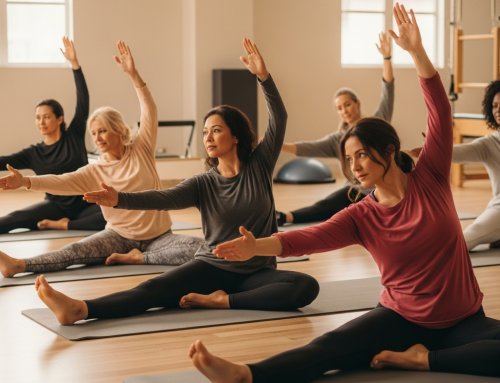
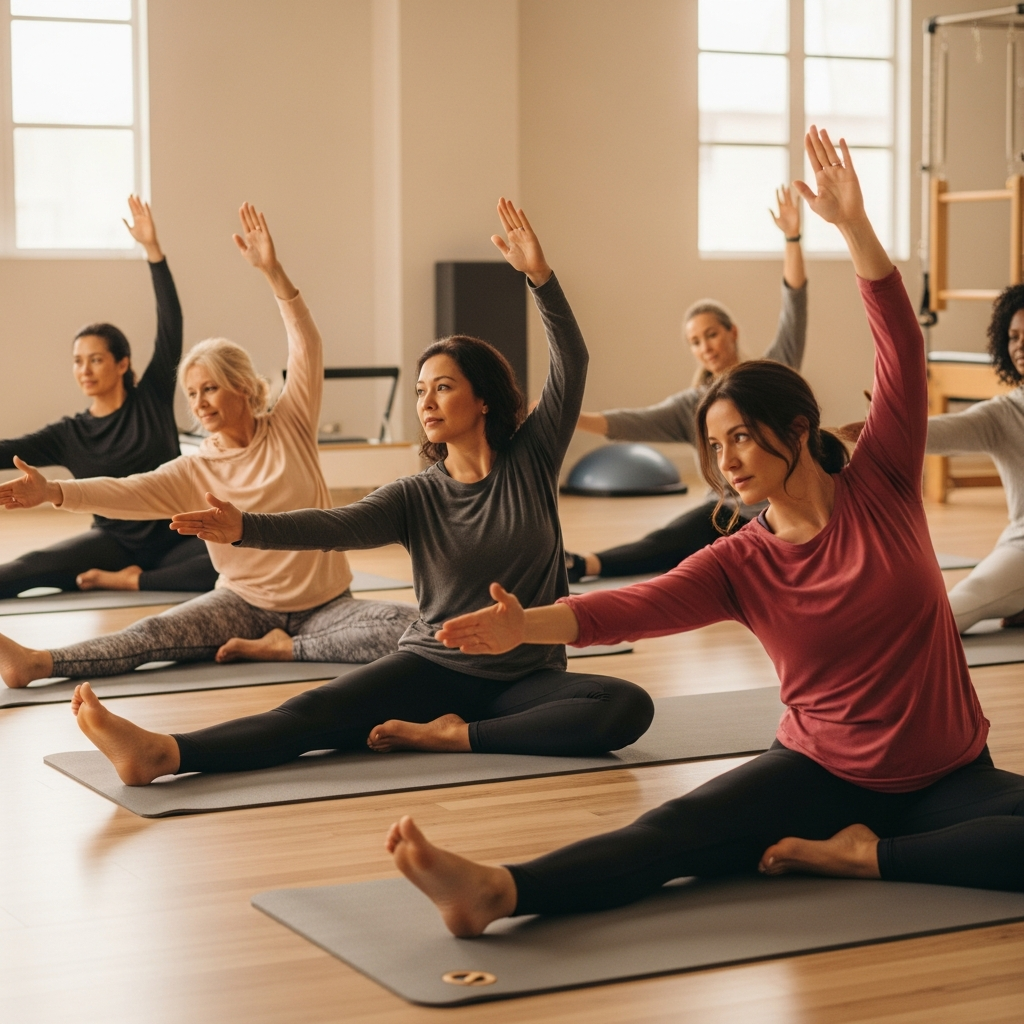
Pilates is a physical fitness system developed in the early 20th century by Joseph Pilates. Designed to improve strength, flexibility, balance, and body awareness, Pilates is often recommended as a way to condition the body, rehabilitate after injuries, and complement other forms of exercise. Mat Pilates – a version of Pilates performed on a mat, rather than on specialized equipment – is a convenient way to practice this discipline at home or in a group class setting.
Yoga, on the other hand, is an ancient Indian discipline that integrates physical postures (asanas), breath control (pranayama), meditation, and ethical principles to promote physical health and spiritual growth. While there are many types of Yoga, they all aim to harmonize the body, mind, and spirit.
This blog post will compare and contrast Pilates and Yoga in terms of their origins, principles, typical class structures, benefits, and potential drawbacks. We will explore the world of mat Pilates, delve into the multitude of Pilates classes available, and examine how these compare to various Yoga styles. We’ll also provide some practical tips to help you decide which practice might be best suited to your personal needs and preferences.
Why does this matter to you? Well, understanding the differences between Pilates and Yoga can change the way you approach your fitness journey. It can help you make an informed decision about which practice to incorporate into your routine, based on your physical and mental health goals. Whether you’re seeking a workout that focuses more on strength and toning, or one that emphasizes flexibility and mindfulness, understanding these two disciplines can guide you towards the most suitable path.
Whether you’re a seasoned fitness enthusiast or a beginner looking to embark on a healthier lifestyle, this post will provide a comprehensive overview of Pilates and Yoga. By the end of this blog, you will have a clear understanding of what each practice entails, their unique benefits, how they compare and contrast with each other, and how to choose the one that best aligns with your fitness goals. Let’s dive into this fascinating exploration of Pilates vs Yoga!
Pilates vs Yoga: A Comprehensive Insight into the World of Mind-Body Fitness
The world of fitness keeps evolving with each passing day, introducing new techniques and regimens that are designed to cater to a wide range of individuals. Among these, two practices – Pilates and Yoga – have gained substantial popularity worldwide due to their physical and mental benefits. While both are mind-body exercises, they have distinct histories, philosophies, and techniques. Let’s delve into the fascinating world of Pilates to understand its fundamentals and how it compares to Yoga.
Pilates, named after its founder Joseph Pilates, traces back to the early 20th century. Joseph Pilates was a German expatriate who lived in Britain and later moved to the United States. He was a sickly child, suffering from asthma, rickets, and rheumatic fever. To overcome his physical challenges, he developed a system of exercises that emphasized control, precision, breath, concentration, and flowing movement. He called this system “Contrology.”
Joseph Pilates believed in the philosophy of a sound mind in a sound body and sought to create a workout that would contribute to overall wellness. He defined Pilates as the comprehensive coordination of body, mind, and spirit. Unlike many other forms of exercise which overwork certain muscle groups while neglecting others, Pilates exercises work on all muscle groups in harmony.
The core of Pilates’ teaching revolves around six principles – Centering, Control, Flow, Breath, Precision, and Concentration. ‘Centering’ is about focusing on the center of the body (the powerhouse area which spans from the lower ribs to the pubic bone) and all movements in Pilates should start from this powerhouse and flow outward to the limbs. ‘Control’ refers to muscle control, where every movement is thought out and purposeful. ‘Flow’ pertains to the fluidity of each exercise, the ‘Breath’ principle is about using breath control to cleanse the body and mind, ‘Precision’ is focused on performing each movement with utmost precision, and ‘Concentration’ is about engaging the mind fully with the body.
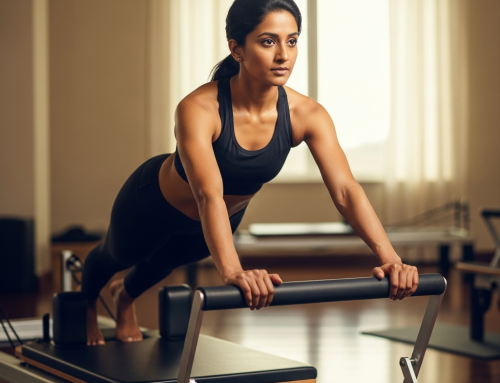
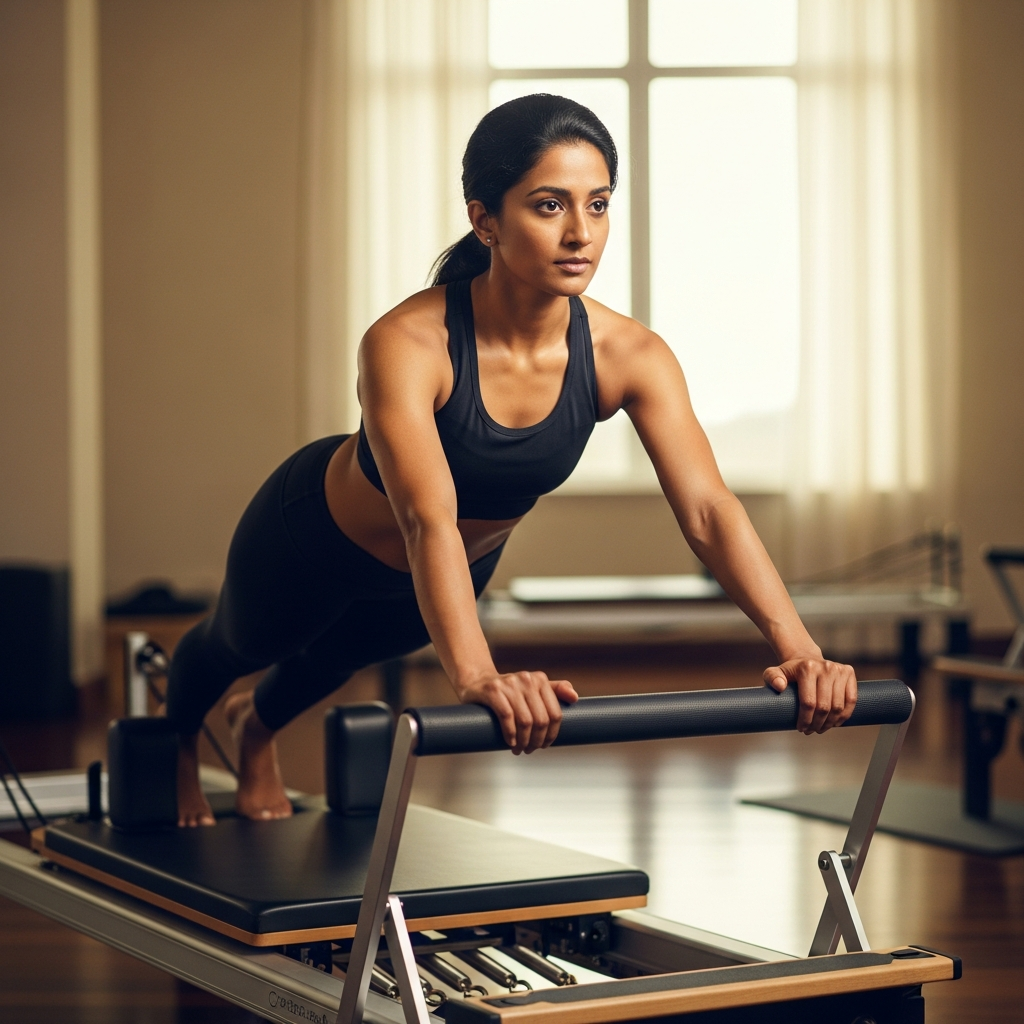
An essential part of Pilates is the use of specialized equipment invented by Joseph Pilates himself, such as the Reformer, Cadillac, and Wunda Chair. He designed these apparatuses to support the body in achieving and maintaining proper alignment, balance, and flexibility. The equipment, with its system of springs, levers, and pulleys, provides either resistance or support, depending on the needs of the individual.
Pilates exercises are mainly focused on postural improvement, muscle tone and strength, balance and joint mobility, as well as relieving stress and tension. It’s a versatile practice that can be tailored to individual needs making it suitable for all ages and fitness levels.
Comparatively, Yoga is an ancient practice that originated in India around 5,000 years ago. It incorporates spiritual, mental and physical elements with a focus on connecting the mind, body, and spirit. While Yoga also emphasizes breath control and flexibility like Pilates, its approach is more holistic encompassing meditation, ethical disciplines, and lifestyle considerations.
Yoga tends to be a more static practice where poses are held for a length of time to deepen stretches and increase flexibility. It also includes a broader range of components such as chanting, philosophy, and meditation. Yoga classes can vary greatly depending on the style (Hatha, Ashtanga, Kundalini, etc.), but all aim at promoting a sense of peace and wellbeing.
So, while both Pilates and Yoga offer physical and mental benefits such as improved strength and stress relief, they have different approaches. Pilates is more focused on physical conditioning and rehabilitation, emphasizing core strength, balance, muscle control, and overall body awareness. On the other hand, yoga is more holistic, aiming to unite the body, mind, and spirit through physical postures (asanas), breath control (pranayama), and meditation.
In conclusion, both Pilates and Yoga have unique strengths that can complement each other. Choosing between the two often depends on individual needs, fitness goals, and personal preferences. It’s not uncommon for individuals to incorporate both practices into their routine to enjoy the unique benefits each has to offer. Whether you choose Pilates, Yoga, or both, the most important thing is to listen to your body and choose a practice that suits your lifestyle and wellness goals.
The Distinction Between Pilates and Yoga: A Comprehensive Guide
Introduction
If you’re seeking a practice that offers both physical and mental benefits, you’ve likely considered both Pilates and yoga. These two disciplines, while having commonalities, are distinct in terms of their origins, goals, and practices. Understanding these differences can give you a better sense of which one might best suit your needs and preferences. In this guide, we’ll delve into the specifics of Pilates vs. yoga and provide some actionable advice on how to get started with each.
Definitions
Pilates is a physical fitness system developed in the early 20th century by Joseph Pilates, a German physical trainer. It focuses on improving flexibility, strength, balance, and body awareness without necessarily building bulk. Pilates can be performed on a mat or using specialized equipment like the Reformer.
On the other hand, Yoga is an ancient Indian practice that encompasses physical postures (asanas), breath control (pranayama), meditation, and ethical principles. Yoga aims to align and calm your mind, body, and spirit, and it’s often associated with improving flexibility and reducing stress.
Comparing Pilates vs. Yoga
1. Core Focus: One significant difference is that Pilates places a more considerable emphasis on the core muscles – the abdomen, obliques, lower back, inner and outer thigh, and so on. This focus makes Pilates an excellent choice for people looking to tone their core or improve posture. For instance, a typical Pilates class might include exercises like the ‘hundred’, where you lie on your back and lift your legs and head slightly off the mat while pumping your arms up and down.
2. Equipment Use: In comparison to yoga, Pilates often involves more equipment. Mat Pilates classes are available, but many exercises are performed on machines like the Reformer, which uses springs to create resistance. This feature makes Pilates adaptable to various fitness levels and needs. An example would be a Pilates class for seniors, where the Reformer’s resistance can be adjusted to provide a gentle yet effective workout.
3. Mind-Body Connection: While both disciplines promote mind-body awareness, yoga places a more substantial emphasis on spirituality and meditation. Yoga classes often include components of mindfulness and end with a relaxation period (Savasana). Conversely, Pilates focuses more on the physical aspect, with precise movements aimed at strengthening and toning the body.
Actionable Advice for Getting Started
1. Start with a Class: If you’re new to either practice, taking a class is an excellent place to start. Look for beginner-friendly classes in your area or online. Pay attention to how your body feels during and after the class. Remember, it’s not about being perfect but about finding what works best for your body.
2. Choose Based on Your Goals: If your goal is primarily physical, such as improving posture or core strength, Pilates may be your best bet. However, if you’re seeking stress relief or a practice that encompasses the mind-body-spirit triad, yoga could be more suitable.
3. Explore Different Styles: Both Pilates and yoga have multiple styles or variations. For instance, Vinyasa yoga is dynamic and involves flowing from one pose to the next, while Hatha yoga is slower-paced and focuses on holding poses for longer. Similarly, Mat Pilates is performed on a mat using body weight, while Reformer Pilates involves a machine and can be more challenging.
4. Listen to Your Body: Both Pilates and yoga emphasize body awareness. Pay attention to how your body responds to each practice. If something feels painful or uncomfortable, modify the pose or exercise.
5. Consistency is Key: Like any fitness program, results from Pilates or yoga come with consistency. Aim for at least a couple of sessions per week and remember that progress takes time.
Conclusion
Whether you choose Pilates, yoga, or a combination of both, the most crucial point is to find a practice that you enjoy and will stick to. Both can bring significant benefits to your physical and mental well-being, so give them a try and see what resonates with you.
Pilates vs Yoga: Demystifying Common Misconceptions, Challenges, and Best Practices
Pilates and yoga are two popular mind-body workout regimes that provide a plethora of health benefits. However, many misconceptions and questions surround these two practices. This article aims to clarify these ambiguities and offer expert tips to help you choose the right fitness path.
Pilates, named after its creator, Joseph Pilates, is a physical fitness system that emphasizes core strength, body flexibility, and awareness to support graceful movement. On the other hand, yoga is an ancient Indian practice that focuses on spiritual, mental, and physical wellbeing. It integrates breathing techniques, meditation, and poses designed to encourage relaxation and reduce stress.
One common misconception is that Pilates and yoga are only for flexible or fit people. Contrary to this belief, both practices can be adapted to suit individuals at all fitness levels. The beauty of these systems lies in their scalability and adaptability.
Challenges in Pilates and Yoga
1. Beginners often find it challenging to understand the subtleties of these practices’ movement and breathing patterns. Pilates requires precision and control with a focus on technique. Yoga demands holding poses for extended periods while concentrating on breath control.
2. Many people struggle with maintaining regular practice due to lack of time, motivation, or understanding of the benefits.
3. Some people feel intimidated to join classes due to the perceived competitiveness or fear of not being able to keep up with others.
Solutions:
1. As a beginner, consider starting with private lessons before joining group classes. This allows for personalized attention, ensuring you understand the fundamentals correctly.
2. Time management is crucial for regular practice. Schedule your sessions like any other important appointment and stick to it.
3. Set realistic goals and understand that everyone’s journey is unique. There’s no need to compare oneself with others.
Expert tips:
1. For Pilates, the quality of movement is more important than the quantity of repetitions. Focus on performing each exercise with precision.
2. If you are interested in core strength, muscle tone, and flexibility, Pilates is an excellent choice. For stress reduction, improved breathing, and increased mindfulness, consider yoga.
3. While Pilates classes are usually more structured, yoga offers more variations. The choice between the two should depend on your personal preference and fitness goals.
Best practices for Pilates:
1. Mat Pilates: This is an excellent way to start your Pilates journey. All you need is a Pilates mat and an experienced instructor, either in-person or online. Mat Pilates focuses on strengthening the core using your body weight as resistance.
2. Pilates Classes: Joining a Pilates class can be a game-changer. Not only will you have the guidance of a certified instructor, but you’ll also have access to specialized Pilates equipment like reformers and Cadillac machines.
3. Consistency is key in Pilates. Regular sessions (at least 2-3 times per week) can help improve posture, muscle tone, balance, and joint mobility.
In conclusion, while Pilates and yoga have their unique benefits, they are not mutually exclusive. Many people incorporate both into their fitness routines for a balanced approach to physical and mental wellness. Always remember to listen to your body, respect its limits, and gradually push those boundaries for improvement. It’s not about perfection but progress. Enjoy the journey!
Pilates vs Yoga: Understanding the Differences, What to Expect, and Your Next Steps
Pilates and yoga are both popular forms of exercise that are beneficial for improving flexibility, strength, and mental well-being. Despite their similarities, each practice has unique characteristics and benefits. If you’re trying to decide between Pilates and yoga, or perhaps you want to incorporate both into your fitness routine, this guide will help you understand the differences as well as what to expect, timelines, and your next steps.
Pilates is a physical fitness system developed in the early 20th century by Joseph Pilates. The focus of Pilates is on strengthening the body’s core, which includes the abdomen, lower back, hips, and buttocks. Additionally, Pilates exercises aim to promote balance, flexibility, endurance, and overall body strength.
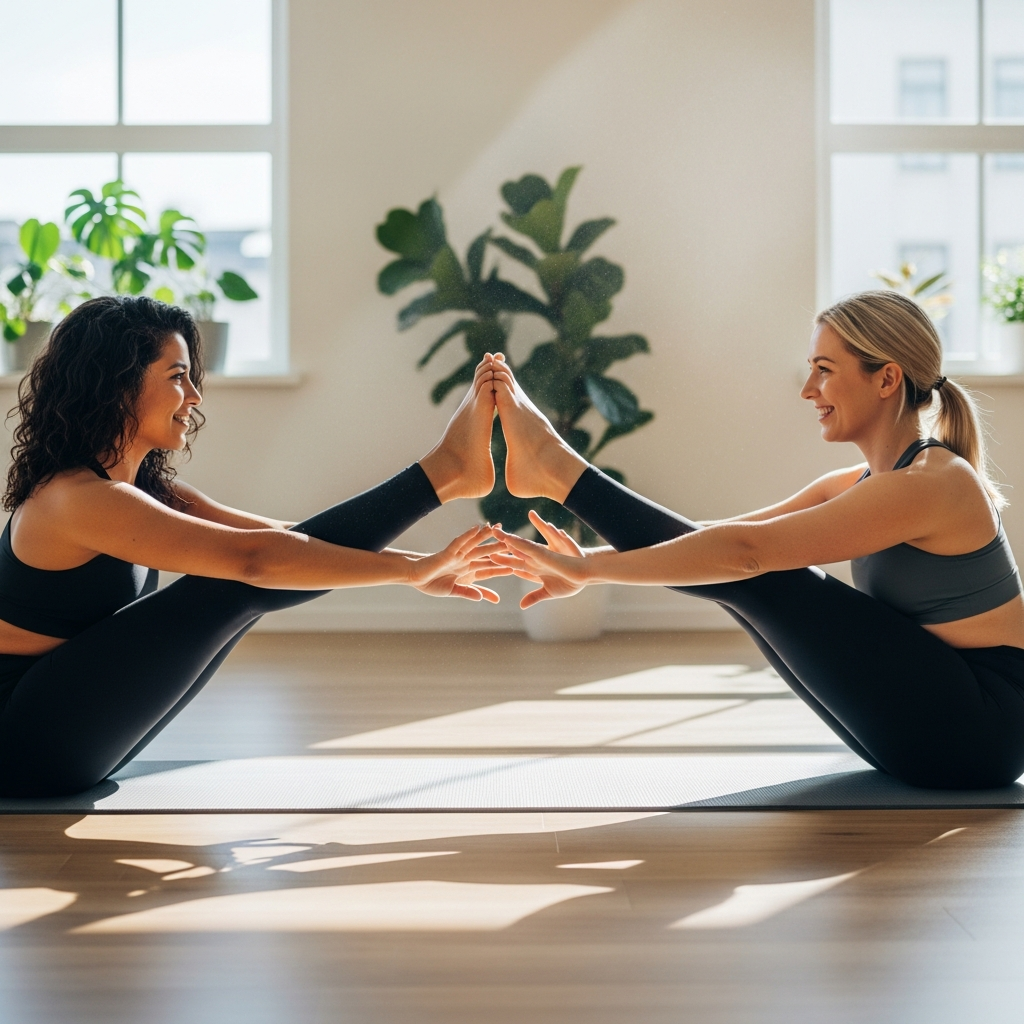
Mat Pilates, a common form of the exercise, is performed on a padded mat and uses your own body weight for resistance. Some Pilates exercises may also incorporate small equipment such as resistance bands or magic circles. Pilates classes can either be private or in a group setting and are often led by certified instructors who ensure that each exercise is performed with proper form and alignment.
In contrast, yoga originated in ancient India and has a more spiritual component, focusing on the union of mind, body and spirit. It combines physical postures (asanas), breathing techniques (pranayama), and meditation (dhyana) to promote flexibility, strength, relaxation, and inner peace.
Now that we understand the basic differences between Pilates and Yoga, let’s dive into what you can expect when starting either one of these practices.
Pilates Classes: What to Expect?
Your first Pilates class may be a bit challenging if you’ve never done such exercises before. The focus will be on precise movements that work your core and stabilize your body. Depending on the type of class, you may use a mat or Pilates reformer — a machine that adds resistance to the exercises. Don’t be discouraged if you struggle initially. It’s normal as your body is learning to move in new ways. Within a few weeks, you’ll notice improved strength, flexibility, and balance.
Yoga Classes: What to Expect?
During your first yoga class, you’ll likely start with warm-up stretches followed by various asanas. The class might end with a period of relaxation or meditation. Yoga is generally less intense compared to Pilates, but it still requires concentration and effort. With regular practice, you’ll see improvements in your flexibility, strength, posture, and stress levels.
Timelines:
The timeline for seeing results from Pilates or yoga varies depending on your current fitness level, how often you practice, and the intensity of your workouts. Generally, with consistent practice (about 2-3 times a week), you may start noticing changes in your body within a month or two. However, significant changes like weight loss, increased muscle tone, and improved flexibility can take several months. Remember, everyone’s body responds differently to exercise. Patience and consistency are key.
Next Steps:
Once you’ve decided which practice aligns best with your fitness goals, the next step is to find a class that suits your level of experience and schedule. Both Pilates and yoga classes are offered at various levels, from beginner to advanced. It’s recommended to start at a beginner level to understand the fundamental movements and principles.
Whether you choose Pilates, yoga or both, remember that the goal is not just physical fitness but also mental well-being. Listen to your body, take it at your own pace, and find enjoyment in the process. With time and consistency, you’ll reap the benefits of improved strength, flexibility, balance, and inner peace.
In summary, both Pilates and yoga offer unique benefits and can complement each other well. Whichever practice you choose to embark on, remember that it’s a personal journey. Enjoy the process and embrace the positive changes it brings to your life.
In conclusion, Pilates and yoga, while often grouped together due to their shared essence of mind-body connection, are significantly different in their methodology and objectives. Each offers a unique approach to physical fitness and mental well-being, reflecting the philosophical and cultural contexts in which they were developed. Understanding these differences can help you choose the best option for your personal health and wellness journey.
Yoga, with its origins rooted deep in ancient India, is a holistic practice which not only aims at strengthening the body but also focuses on spiritual enlightenment and peace of mind. It combines static postures, dynamic movements, breathing exercises, meditation, and ethical precepts. The substantive diversity within yoga styles caters to a broad array of interests – from gentle, meditative sequences to vigorous, physically challenging flows. Besides physical benefits such as improved flexibility and strength, yoga can also enhance mindfulness, reduce stress, and promote overall mental well-being.
On the other hand, Pilates, invented by Joseph Pilates in the early 20th century, is a methodical exercise regime aimed at strengthening the body with a strong emphasis on core strength. It helps improve posture, balance, and flexibility. Instead of holding postures as in yoga, Pilates involves a series of movements performed in a controlled manner, often using specific equipment. It is more focused on physical conditioning and rehabilitation, making it a popular choice among athletes and dancers. However, it also incorporates elements of mindfulness and breath control.
So how do you choose between Pilates and yoga? The answer depends on your personal goals and preferences. If you are keen on enhancing physical strength specifically around your core and improving your posture and balance, Pilates may be a good fit for you. If you want to increase your flexibility, manage stress effectively, or seek a practice with a spiritual angle, yoga could be your preference.
However, it’s also important to remember that yoga and Pilates are not mutually exclusive. Many practitioners find value in incorporating both into their fitness regimen. Yoga can provide the flexibility and mental tranquility to complement the muscular strength and stability gained from Pilates. Conversely, the core strengthening aspects of Pilates can enhance your yoga practice by improving balance and stability in various yoga postures.
In the end, both Pilates and yoga offer a myriad of benefits for both the mind and body. The choice between the two is less about one being superior to the other, and more about aligning with your personal fitness goals, interests, and desired approach towards a balanced lifestyle.
We hope that this comprehensive comparison between Pilates and yoga has provided you with a clearer understanding of these two popular physical fitness systems. But remember, the best way to truly understand and appreciate either practice is to experience it for yourself.
If you’re still unsure about which path to choose or if you’re interested in trying out both, we’re here to guide you every step of the way. Our team of certified instructors are ready to assist you in determining what best suits your needs and preferences. Whether you’re a seasoned athlete looking to enhance your training or a beginner seeking a gentle introduction to physical fitness, we are committed to helping you embark on a journey towards healthier living. Don’t hesitate to contact us for further information or to schedule an introductory session. Let’s start this journey together towards achieving your personal best in health and wellness.