Pilates vs Yoga – Discovering the Best Fitness Journey for You
Hook: Are you torn between the tranquil serenity of yoga and the dynamic energy of Pilates? It’s time to demystify the differences and benefits of these two popular fitness methods.
Context: In our fast-paced world, maintaining physical and mental health has become more crucial than ever. Exercise regimes like yoga and Pilates have garnered immense popularity for their holistic approach to fitness. They not only boost physical strength but also promote mental wellness. Despite their shared focus on mind-body connection, they differ in various aspects, from their origins to their objectives and methodologies.
This blog post is designed as a comprehensive guide for fitness enthusiasts who are curious about yoga and Pilates. We particularly focus on Pilates, mat Pilates, and Pilates classes while drawing comparisons with yoga. Our aim is to uncover the fascinating world of these workouts and help you make an informed decision about which one aligns best with your fitness goals and lifestyle.
What Will Be Covered: We will delve deep into the world of Pilates, exploring its history, philosophy, and the unique benefits it offers. We will also examine the fundamental differences between Pilates, specifically mat Pilates, and yoga. From the perspective of physical intensity, mental focus, benefits, equipment used, to class structure, we will unpack each aspect for a comprehensive comparison.
Mat Pilates is a form of exercise that has been gaining traction due to its versatility and effectiveness. We will explore how mat Pilates distinguishes itself from other types of Pilates and yoga. We will also provide insights into what you can expect during a mat Pilates class and how to prepare for it.
Furthermore, we will bring clarity to what Pilates classes generally involve. Whether it’s a beginner’s class or a more advanced session, we will give you an insider’s view into the flow of a typical Pilates class. Each component, from warm-ups, core exercises, to cool-downs, will be explained in detail.
Why This Matters: The choice between yoga and Pilates is not a matter of determining which one is superior. Instead, it’s about understanding their unique characteristics and assessing which one better suits your fitness aspirations, lifestyle, and personal preferences.
For some, the meditative tranquillity of yoga may offer the perfect respite from a hectic lifestyle. For others, the dynamic and structured workout of Pilates might be more appealing. Regardless of the choice you make, having a detailed understanding of both will ensure that your decision is well-informed and satisfying.
In a world where quick-fix diets and intense fitness fads seem to be the norm, yoga and Pilates offer refreshing alternatives. They promote a balanced and sustainable approach to fitness that is focused not only on physical strength but also on mental well-being. Understanding these exercises can open new doors to holistic health and wellness.
So, whether you’re a seasoned fitness enthusiast or someone just starting their journey, this guide can offer valuable insights. Get ready to dive into the fascinating comparison of Pilates vs yoga and discover the perfect fit for your fitness journey!
Pilates vs Yoga: Understanding the Fundamentals of Pilates
Pilates is a physical fitness system that was developed in the early 20th century by Joseph Pilates, a German anatomist, and trainer. Initially called “Contrology,” Pilates is a method of exercise that emphasizes the balanced development of the body through core strength, flexibility, and awareness to support efficient, graceful movement.
Pilates is centered around six principles: concentration, control, centering, precision, breath, and flow.
Concentration: Pilates demands intense focus. Every movement is deliberate and requires your full attention. The mind-body connection is crucial in Pilates; you must be mentally present to guide your body through each exercise.
Control: Every Pilates exercise is performed with control to ensure that your muscles are working against gravity and the resistance of the equipment. This helps build strength and prevents injury.
Centering: Pilates exercises are sourced from your center. Known as the “powerhouse,” this area—encompassing the abdomen, lower back, hips, and buttocks—is considered the focal point of the Pilates method.
Precision: Precision is key in Pilates. The goal is not to perform many repetitions, but to perform a few precise ones. This precision eventually becomes second nature and carries over into everyday life as grace and economy of movement.
Breath: Joseph Pilates emphasized using a very full breath in his exercises. He advocated for thinking of the lungs as bellows — use them strongly to pump the air fully in and out of the body. Proper breathing helps activate your muscles and keep you focused.
Flow: Each exercise in a Pilates workout should be performed with fluidity and grace. The goal is to create a flowing movement originating from a strong core, promoting better posture and increased flexibility.
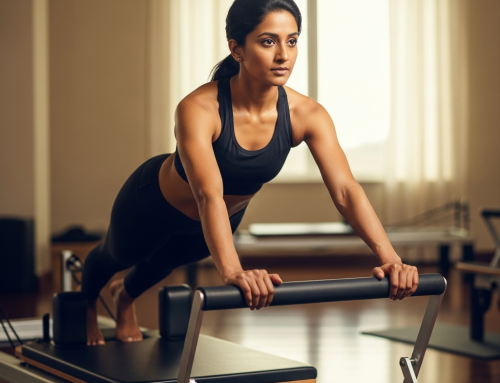
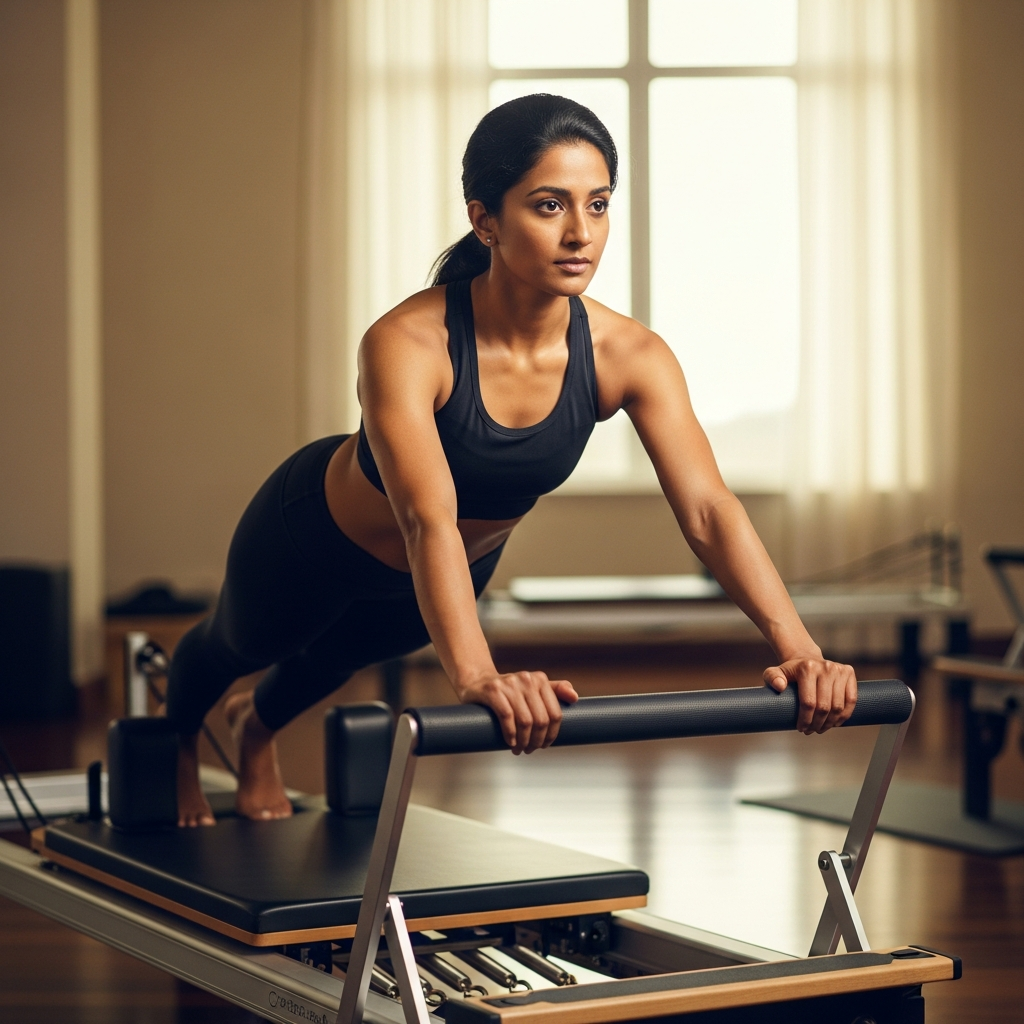
The Pilates method includes more than 500 exercises that can be performed on a mat or on specialized equipment such as the Reformer, Cadillac, and Wunda Chair. The Reformer is probably the best-known piece of resistance equipment that you can use to perform Pilates exercises. It’s a bed-like frame with a flat platform on it, called the carriage, which rolls back and forth on wheels. The carriage is attached to one end of the reformer by a set of springs that provide differing levels of resistance.
Pilates can be practiced by individuals of all fitness levels, including beginners. It’s particularly popular amongst athletes, dancers, and people recovering from injuries due to its low impact nature and focus on core strength.
Pilates differs from many other forms of exercise in that it’s not focused on sweating and calorie-burning. Instead, it’s about the mind-body connection, precise movements, alignment, control, and breathing. The goal is to strengthen the core, improve posture, and increase flexibility.
Pilates and yoga are often compared due to their focus on mind-body connection, but they are fundamentally different practices. While yoga aims to unite the mind, body, and spirit and includes elements of meditation and relaxation, Pilates primarily focuses on strength, muscle toning, body control, and flexibility. Its emphasis is on quality of movement rather than quantity, which makes one feel invigorated rather than exhausted after a session.
Pilates also places a greater emphasis on the core—every movement is initiated from the powerhouse and flows outward to the limbs. The result is a balanced, strong body less prone to injuries.
In conclusion, Pilates is a robust physical fitness system that emphasizes balanced development of the body through core strength, flexibility, and awareness. Its unique approach and principles make it distinct from other forms of exercise like yoga. Whether you choose Pilates or yoga—or both—depends on your individual fitness goals and preferences.
Pilates vs Yoga: A Comprehensive Comparison
If you’ve ever considered taking a fitness class, you’ve likely come across two popular options: Pilates and yoga. But which one is the right choice for you? In this article, we’ll explore the differences and similarities between these two practices, to help you make an informed decision.
Pilates and yoga both offer a range of benefits, including improved flexibility, strength, balance, and body awareness. However, their approach to achieving these benefits varies significantly.
Pilates is a physical fitness system developed in the early 20th century by Joseph Pilates. It focuses on core strength, flexibility, and overall body awareness. Pilates classes can be performed on a mat or on specialized equipment like the Reformer or Cadillac.
On the other hand, Yoga is an ancient practice that originated in India around 5,000 years ago. It emphasizes the mind-body connection, incorporating elements of meditation and breathwork alongside physical postures.
Let’s delve into specific scenarios where you might choose one over the other
1. Core Strength: If your primary goal is to build core strength, Pilates might be the better choice for you. Pilates exercises are designed to strengthen the core muscles – the abdominals, lower back, and hips. For example, a classic Pilates exercise like ‘The Hundred’ targets these areas by challenging your stability and endurance.
2. Flexibility: If you’re looking to improve flexibility, yoga could be your go-to. Yoga poses often involve deep stretches that can help increase flexibility over time. Poses like ‘Downward Dog’ and ‘Pigeon Pose’ are specifically designed to stretch and open tight muscles.
3. Mindfulness: While both practices promote mindfulness, yoga places a stronger emphasis on meditation and breathwork. If you’re seeking stress relief or a spiritual connection, a yoga class might offer more of what you’re looking for.
Now, let’s explore some actionable advice on how to get started with either practice
1. Try a Beginner’s Class: Whether you’re interested in Pilates or yoga, a beginner’s class is a great place to start. These classes will introduce you to the fundamentals of the practice in a welcoming, non-intimidating environment.
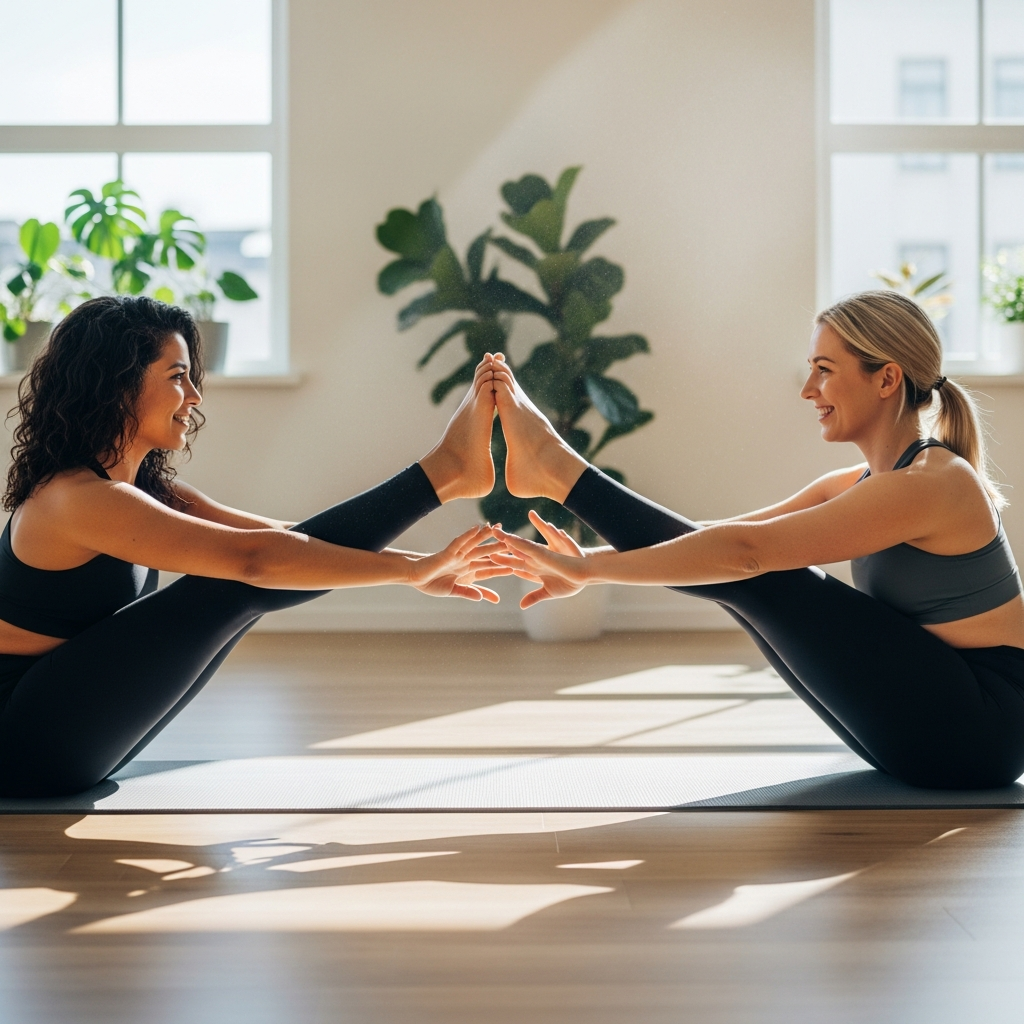
2. Consider Mat Pilates: If you’re interested in Pilates but are hesitant about the specialized equipment, consider trying a mat Pilates class. Mat Pilates uses your own body weight as resistance and can be just as challenging as an equipment-based class.
3. Explore Different Styles: Both Pilates and yoga come in various styles, each with its own unique focus and intensity. For example, Vinyasa Yoga is a dynamic, flow-style practice, while Hatha Yoga is more slow-paced and relaxing. Similarly, Classical Pilates follows the original sequencing and exercises of Joseph Pilates, whereas Contemporary Pilates incorporates modern fitness principles.
4. Listen to Your Body: Both Pilates and yoga encourage body awareness. Pay attention to how your body feels during and after each workout. If a certain pose or exercise doesn’t feel right, modify it or try a different one. Your instructor can provide suggestions and alternatives.
5. Stay Consistent: The benefits of both Pilates and yoga are cumulative, meaning they build over time. To see the best results, aim to practice consistently – ideally, 2-3 times per week.
By considering your personal goals and preferences, you can choose whether Pilates or yoga is the best fit for you. Remember, there’s no need to stick strictly to one or the other. Many people find that a combination of both practices offers the best of both worlds – core strength and flexibility from Pilates, combined with the stress relief and mindfulness of yoga.
Pilates vs Yoga: A Comprehensive Guide to the Common Challenges, Solutions and Expert Tips
Pilates and yoga are two popular fitness modalities that have been enhancing people’s physical and mental wellbeing for many years. When it comes to Pilates vs Yoga, it’s important to understand that both practices have their unique benefits and challenges, but they are not interchangeable. This guide will address common misconceptions, provide solutions to challenges, and offer expert tips related to Pilates, mat Pilates, and Pilates classes.
Misconceptions:
One common misconception is that Pilates is merely a series of exercises, while yoga is a holistic practice that incorporates spirituality. Although Pilates does focus more on physical conditioning, it also emphasizes the connection between the mind and body, much like yoga. Another misconception is that yoga is only for flexibility while Pilates is only for core strength. Truthfully, both practices improve flexibility, strength, balance, and body awareness.
Challenges:
1. Different Focus: While both practices improve overall fitness, yoga emphasizes flexibility and mindfulness, while Pilates focuses on strength, especially core strength and body alignment.
2. Intensity: Generally, Pilates can be more intense than yoga as it involves dynamic movements and resistance training with Pilates apparatus or bodyweight.
3. Learning Curve: Both practices have a learning curve. In Pilates, you need to master the art of controlling your body through precise movements. In Yoga, you need to learn different poses and their alignments.
Solutions:
1. Identify your Goals: If you aim to improve flexibility, manage stress or seek a spiritual path, yoga might be a better choice. However, if you want to enhance your core strength, posture or rehabilitate an injury, Pilates would be more beneficial.
2. Try Both: As both disciplines offer unique benefits, many fitness experts suggest incorporating both into your routine. For example, you can do Pilates for strength and body toning, and yoga for flexibility and relaxation.
3. Seek Professional Guidance: To overcome the learning curve, it’s helpful to attend professional classes or hire a certified trainer who can guide you through the correct techniques and postures.
Expert Tips:
1. Always Warm Up: Whether you’re doing Pilates or yoga, it’s crucial to warm up your body to prepare your muscles for the workout and prevent injuries.
2. Start with Basics: If you’re a beginner, start with basic exercises or poses. As you gain strength and flexibility, you can gradually move to more advanced techniques.
3. Listen to your Body: Pay attention to your body’s signals. If a movement causes pain or discomfort, modify the exercise or pose, or ask your instructor for an alternative.
4. Regular Practice: Consistency is key in both Pilates and yoga. Regular practice will lead to better results.
5. Hydrate and Eat Right: To fuel your workouts, stay hydrated and follow a balanced diet rich in proteins, healthy fats, and complex carbohydrates.
In the realm of Pilates, mat Pilates is a popular choice for many due to its convenience and versatility. This form of Pilates can be performed anywhere with just a mat and your bodyweight. However, it’s important to learn the correct postures and movements to prevent injuries and get the most out of your workout. Joining a mat Pilates class can be beneficial as it offers the guidance of a professional trainer and the motivation of a group setting.
In conclusion, while Pilates and yoga have different focuses, they complement each other well. The choice between the two should depend on your personal goals, preferences, and fitness level. By understanding the unique benefits of each practice, you can create a balanced fitness routine that caters to all aspects of your wellbeing.
Pilates vs. Yoga: Understanding the Differences, Benefits, and What to Expect
Undoubtedly, Pilates and yoga are two of the most renowned fitness systems in the world today, known for their ability to improve flexibility, strength, and mental well-being. However, it’s common for people to wonder about the differences between the two and which one might be more suitable for their personal fitness goals. So let’s dive into understanding Pilates vs. Yoga, what to expect, timelines, and the next steps.
Pilates and Yoga: The Basics
Pilates, invented by Joseph Pilates in the 20th century, focuses on controlled movements that build strength and stability, particularly in your core (the muscles around your back, stomach, and pelvis). Pilates exercises are usually done on a mat or using special equipment like a Reformer, a machine that offers resistance with a series of springs and ropes.
Yoga, on the other hand, has its roots in ancient India and is a holistic practice encompassing physical postures (asanas), breath control (pranayama), meditation, and philosophy. Yoga aims for a balance between mind, body, and spirit.
Similarities and Differences
Both Pilates and yoga can help to build strength, flexibility, balance, and mind-body awareness. However, their approaches differ. Pilates tends to be more dynamic and focuses more on muscle toning and core strengthening. It’s excellent for rehabilitation, improving posture, and enhancing athletic performance.
Yoga tends to be more static and is known for holding postures for longer periods. It’s excellent for increasing flexibility, reducing stress, improving breath control, and enhancing overall well-being.
Practical Guidance for Pilates
If you’ve decided to explore Pilates further, here’s what you need to know
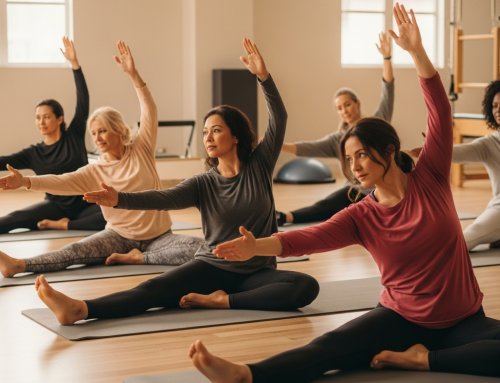
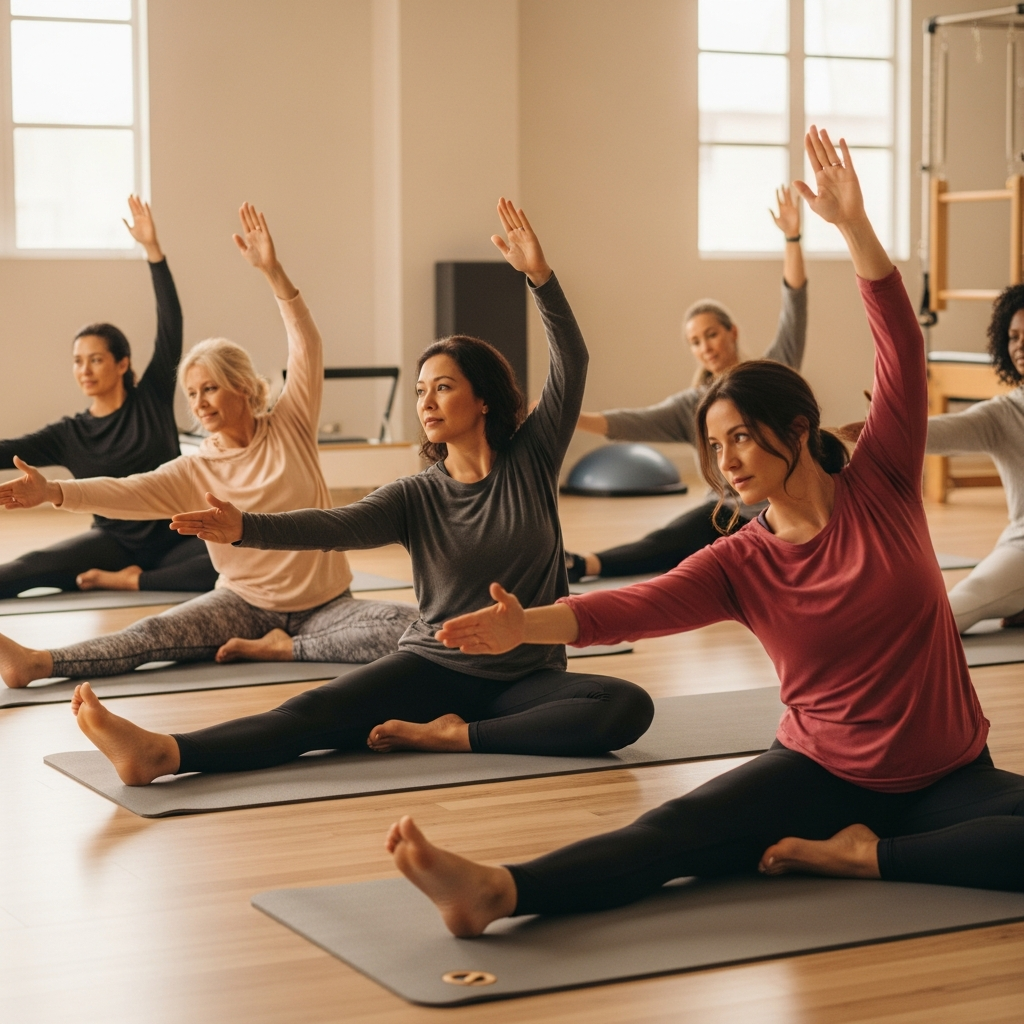
1. Mat Pilates: A great starting point for beginners is mat Pilates. These classes use your body weight and gravity to provide resistance, helping to build strength and stability. A typical mat Pilates class will include a series of exercises focusing on core control, breathing, body awareness, and flexibility.
2. Pilates Classes: Pilates classes can be group or individual, and some use machines such as the Reformer or Cadillac. These machines offer resistance to help strengthen your muscles. Pilates classes are a great way to get expert guidance and ensure you perform the exercises correctly.
3. Timelines: Results from Pilates can be seen in as little as a few weeks to a few months, depending on the frequency of your classes and your initial fitness level. Be consistent with your practice, ideally aiming for two to three sessions per week.
4. What to Expect: Initially, you may find it challenging to coordinate your movements with your breath. Don’t worry! This gets easier with time. Expect to feel taller and more aligned after your sessions, thanks to the emphasis on posture and core control.
Next Steps
If this comparison has sparked an interest in Pilates, here’s what you can do next
1. Find a Class: Look for local Pilates classes or online options. Ensure that the instructor is certified by a reputable organization.
2. Get the Gear: For mat Pilates, all you need is a comfortable, non-slip mat. For classes using machines, the studio will provide the equipment.
3. Start Slow: Don’t push yourself too hard initially. It’s crucial to learn the correct form and technique to prevent injuries.
4. Listen to Your Body: Rest when needed, and remember that progress takes time.
Whether you choose Pilates or yoga, both offer remarkable benefits for the mind and body. The best choice will depend on your personal fitness goals, preferences, and lifestyle. Remember that consistency is key in any fitness journey. Happy practicing!
In conclusion, both Pilates and Yoga are highly beneficial forms of exercise that can be incorporated into any fitness routine. They each have unique aspects that make them stand out and offer distinct benefits to the body and mind, and they can also complement each other very well.
Pilates is primarily focused on core strength, stability, and overall body conditioning. It emphasizes proper postural alignment, muscle balance, and core control. With its unique system of machines and props, Pilates provides a full-body workout that can be customized to cater to all fitness levels. Whether you are recovering from an injury, seeking to enhance athletic performance, or simply wanting to tone your body, Pilates is a versatile and practical choice.
Yoga, on the other hand, is an age-old practice with profound roots in spirituality. It focuses on flexibility, balance, and the connection between mind and body. Yoga classes typically involve a series of static poses combined with deep breathing exercises that work together to enhance physical strength and mental tranquility. For those seeking stress relief, improved flexibility, or a deeper sense of inner peace, yoga is a perfect choice.
When comparing Pilates vs yoga, it’s important to remember that it’s not about determining which one is ‘better’ – it’s about identifying which one aligns more closely with your personal goals and needs. You might even find that a combination of both offers you the balance you need in your fitness routine.
In the end, both practices offer a wealth of benefits including improved strength, flexibility, balance, posture, and stress relief. Both Pilates and Yoga can boost your physical health and elevate your mental wellbeing. They can reduce the risk of injury, enhance athletic performance, promote weight loss and create a greater sense of overall wellness.
So whether you choose Pilates for its focus on core conditioning and body toning, or yoga for its stress-relieving and flexibility-enhancing benefits, or decide to incorporate both into your fitness regime, you are making a valuable investment in your overall health and wellbeing.
Remember, the goal is not to choose one over the other, but to find a balance that suits your personal fitness objectives and holistic wellness needs. Both Pilates and Yoga are about promoting a healthier, more balanced lifestyle. They are not just forms of exercise, but entire philosophies of physical and mental wellness that can greatly enhance your quality of life.
We encourage you to explore both Pilates and Yoga, and to see how each one resonates with you. As you discover their unique benefits, you might find that they both have a valuable place in your fitness journey.
And if you need any assistance or guidance in choosing the right path for you, don’t hesitate to reach out to us. We have a team of experienced Pilates and Yoga instructors who would be more than happy to guide you. Whether you’re looking for a personalized workout plan, detailed insights into each practice, or simply want to learn more about Pilates and Yoga, we’re here to help.
At the end of the day, your fitness journey is deeply personal and unique to you. So take the time to explore, experiment, and find what resonates with you. And remember, whether it’s Pilates, Yoga, or a blend of both – it’s all about creating a healthier, happier you.
So why wait? Contact us today and let us guide you on your journey towards physical strength, mental clarity, and holistic wellness.