Unraveling the Power of Pilates: A Deep Dive into the Pilates Machine
If you’ve ever stepped into a Pilates studio, you may have been confronted by what looks like a contraption straight out of a science fiction movie. Long, sleek, and layered with springs, straps, and a rolling carriage, it might be hard to envision how this complex piece of equipment could possibly fit into your wellness journey. Fear not, for this very machine – known as the Pilates reformer – is your secret weapon to unlocking a stronger, more flexible, and healthier body.
Pilates, a brainchild of German physical trainer Joseph Pilates, is a fitness system that prioritizes balanced development of the body through core strength, flexibility, and awareness. It’s a method that has been refined over the last century and whose benefits have been celebrated by fitness enthusiasts worldwide. Whether you’re an experienced athlete or just someone searching for a new way to stay fit, Pilates is a versatile system that can be tailored to individual needs.
The magic of Pilates lies in its ability to blend mindfulness with physical exertion, creating a workout that benefits both the body and the mind. One can practice Pilates on a mat using their own body weight as resistance or use specialized equipment like the Pilates reformer for more targeted workouts. This article will delve deeper into the world of Pilates machines, particularly focusing on the Pilates reformer.
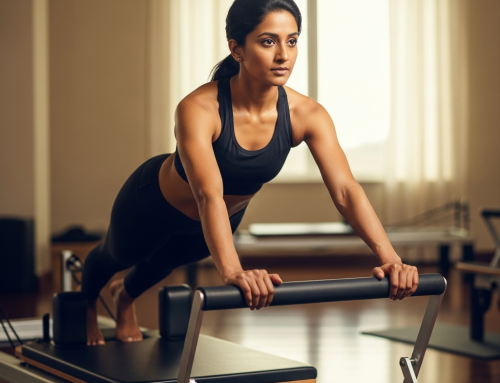
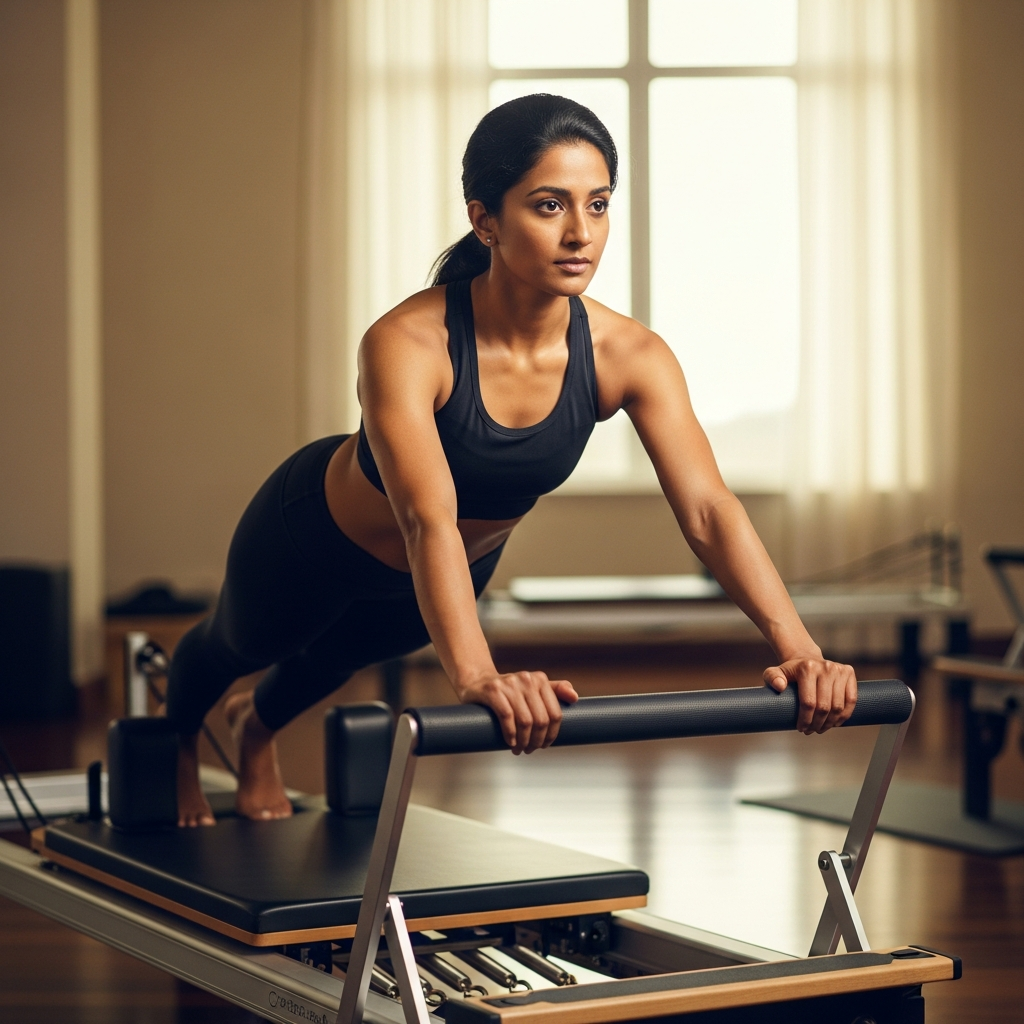
This machine is essentially a bed-like frame with a flat platform on it, called the carriage, which rolls back and forth on wheels within the frame. The carriage is attached to one end of the reformer by a set of springs which provide choices of differing levels of resistance as the carriage is pushed or pulled along the frame. The reformer also has long straps with handles on them that are attached to the top end of the frame. They can be pulled with legs or arms to move the carriage as well.
We will explore how this machine revolutionizes your Pilates experience, enhancing the intensity and efficacy of traditional mat exercises. We’ll outline the key uses of the reformer, its unique benefits, and who can benefit most from its use. In addition, we will guide you through what to expect during your first Pilates machine class, and how to incorporate it into your regular fitness routine.
This topic matters because as we grow more conscious of our health and wellness, understanding the tools available to us becomes crucial. The Pilates machine is a powerful tool that offers a diverse range of exercises to work out the entire body, improving muscular strength, flexibility and endurance without increasing bulk or stressing the joints. Furthermore, it offers rehabilitative benefits for those recovering from injuries and can enhance postural alignment and core strength, which is valuable for everyone.
By delving into the details of the Pilates machine, we hope to demystify this exceptional piece of equipment for you. Whether you’re a Pilates pro or a curious novice, knowing more about this machine will allow you to make an informed decision about whether its use can benefit your fitness journey.
So, if you’ve ever found yourself intrigued by the potential benefits of Pilates but intimidated by the complex-looking equipment, this article is for you. Let’s break down the barriers and uncover the power that lies within the Pilates machine. It may just be the missing piece in your fitness puzzle.
Pilates is a form of exercise that was developed in the early 20th century by Joseph Pilates, a German physical trainer. He designed a unique series of controlled movements that are performed on a specially designed apparatus, now widely known as the Pilates machine or Reformer. This unique exercise system is designed to stretch, strengthen and balance the body with particular emphasis on core strength, flexibility and awareness to support efficient and graceful movement.
A Pilates machine, or Reformer, provides the perfect framework for exercises that target every part of the body. The machine consists of a flat platform called the carriage, which moves along a track within a frame. The carriage is attached to one end of the Reformer by a set of springs that provide varying levels of resistance as the carriage is pushed or pulled along the track. The other end of the Reformer features an adjustable bar known as the footbar. Exercises can be done lying down, sitting, standing or perched on the footbar or shoulder blocks; they can be performed with straps, with the springs set at different levels of resistance, or none at all.
The beauty of the Pilates machine lies in its versatility. The adjustable parts allow it to be customized for people of all sizes, shapes, and levels of fitness. It’s a tool that can challenge or assist you, depending on your needs. The machine’s many attachments increase the range of modifications that can be made to the exercises, allowing people of all levels to achieve a range of motion that might not be possible otherwise.
The Pilates machine is often misunderstood as being just about resistance training, but it’s so much more than that. It’s a comprehensive system that works the body as an integrated whole. Core strength is the foundation of Pilates exercise. The core muscles are the deep, internal muscles of the abdomen and back. When these muscles are strong and working together efficiently, they work in tandem with the more superficial muscles of the trunk to support the spine and movement.
As you work on the Pilates machine, your body is challenged to both stabilize and mobilize: to keep some parts still while others move. This trains the body to move with efficiency and grace, developing functional fitness. It’s not about building muscle bulk, but about enhancing the harmony and efficiency of movement.
Moreover, the Pilates machine is a great tool for rehabilitation. It’s used by physiotherapists and exercise physiologists to help people recover from injuries and manage a range of health conditions. The nature of the machine means that exercises can be adapted to suit each person’s needs, making it suitable for people of all ages and abilities.
A key component of Pilates training on the machine is the emphasis on the quality of movement rather than the quantity. This means focusing on doing movements well instead of doing a lot of repetitions. In Pilates, the focus is on performing each exercise with utmost control and precision. This approach not only ensures that the exercises are done correctly and effectively, but also helps to prevent injury and promotes a greater sense of body awareness.
Furthermore, the Pilates machine can help improve posture, muscle tone, balance and joint mobility, as well as reduce stress and tension. It can complement training by developing whole-body strength and flexibility, and can help reduce the risk of injury by improving physical coordination and balance.
In conclusion, the Pilates machine offers a unique and versatile means of challenging the body to build strength, flexibility and endurance without adding bulk or stressing the joints. Whether you’re an athlete looking to enhance your performance, or simply someone seeking a healthier lifestyle, a Pilates machine can be an invaluable tool. Remember though, like any exercise regimen, it’s important to learn how to use the machine correctly – ideally under the guidance of a certified Pilates instructor – to ensure you reap the full benefits of this remarkable piece of equipment.
Mastering the Pilates Machine: A Comprehensive Guide
When one thinks of Pilates, images of people stretching on mats may come to mind. However, Pilates also incorporates the use of specialized machines to enhance workouts and strengthen the body.
One such apparatus is the reformer, a traditional Pilates machine that offers a dynamic and versatile workout experience. It’s composed of a sliding carriage, springs for resistance, and straps for holding onto or pushing against. The reformer can provide an array of exercises that tone muscles, boost flexibility, and improve overall body strength. But if you’re new to this machine, it can be intimidating.
So, where do you start?
1. **Understanding the Machine**
Before hopping onto the reformer, it’s important to understand its different components. The carriage is where you sit or lie during exercises. The footbar is used for pushing off or holding onto during various movements. The straps are used for arm or leg exercises, and the springs beneath the carriage adjust the resistance level. Familiarize yourself with these parts before your first session to feel more comfortable and safe.
2. **Starting Position**
A common starting position on the reformer is lying flat on your back on the carriage with your feet on the footbar. This helps align your body properly and prepares you for most exercises. Remember to keep your spine in a neutral position, engage your core muscles, and maintain a slight chin tuck to protect your neck.
3. **First Simple Exercise: Footwork**
Footwork on the Pilates reformer is a great starting point for beginners. Start by lying on the carriage with your feet on the footbar about hip-distance apart. As you exhale, press your feet against the footbar, extending your legs fully but without locking your knees. Inhale as you control the carriage back to the starting position. Repeat this 10-15 times. This exercise helps build strength and stability in your lower body and core.
4. **Progressing to More Advanced Moves**
Once you’re comfortable with the basics, you can progress to more complex exercises. For instance, the ‘hundred on the reformer’ is a challenging core workout. Start in the same lying position, but with your legs in tabletop position (knees bent at 90 degrees) and hands holding the straps above your chest. As you exhale, curl your head and shoulders off the carriage, stretching your arms forward while pumping them up and down. Inhale for five pumps, then exhale for five pumps, repeating this ten times to complete a ‘hundred’.
5. **Joining a Class**
As a beginner, joining a Pilates reformer class can be highly beneficial. You’ll have an expert instructor who can correct your form, adjust the machine’s settings to suit your level, and guide you through various exercises. Plus, there’s the added motivation that comes from working out in a group.
6. **Incorporating Mat Pilates**
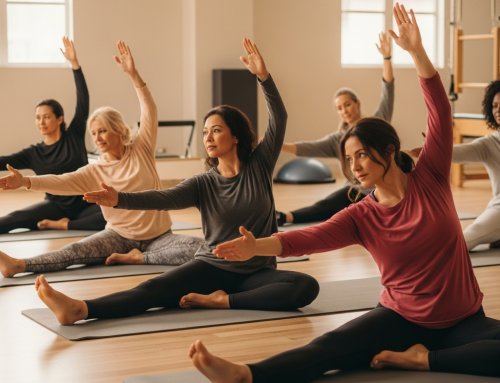
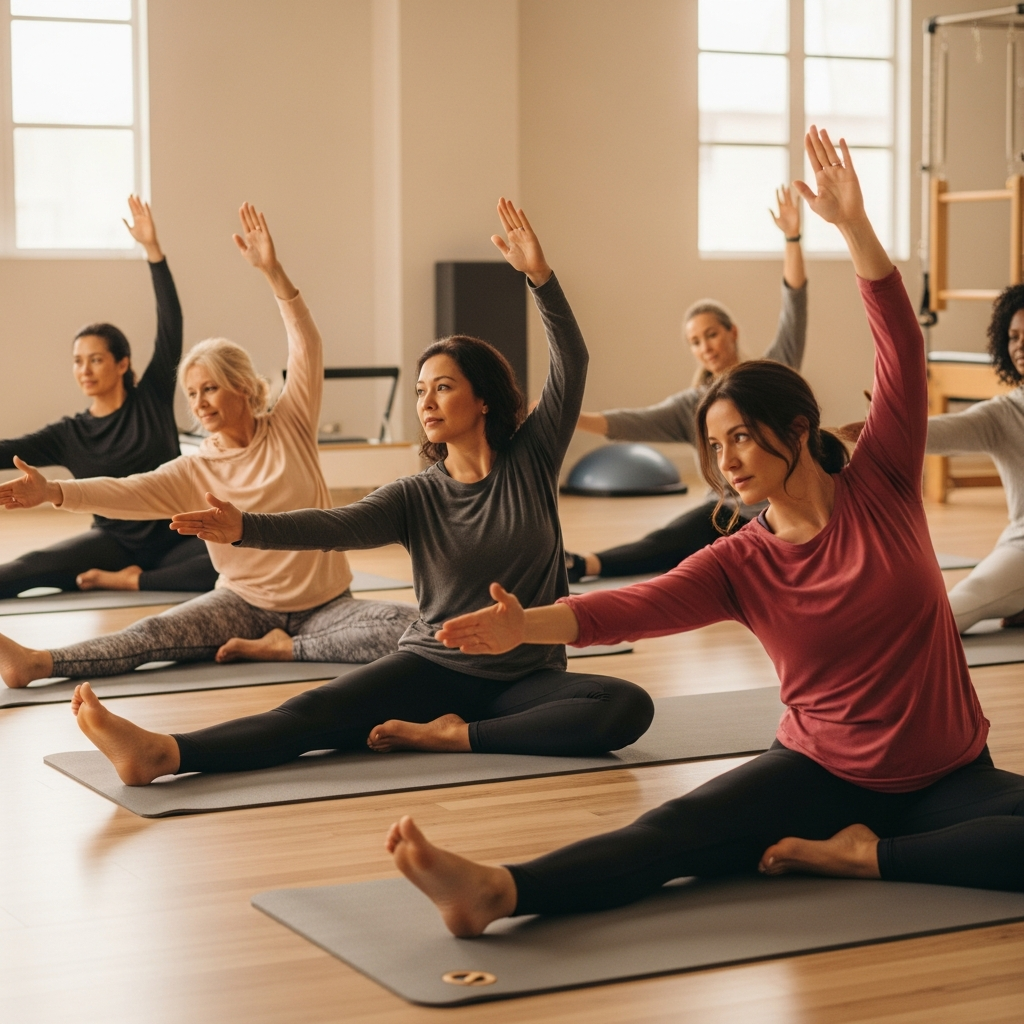
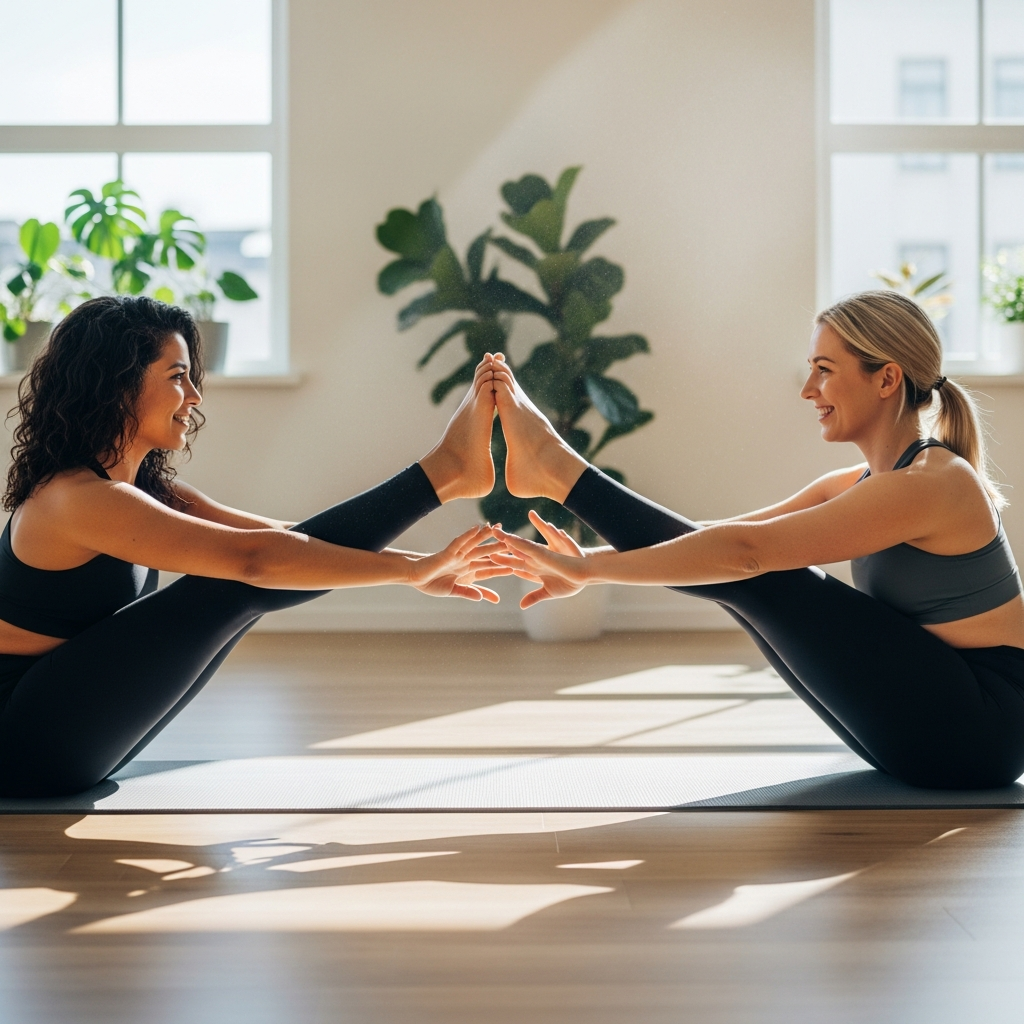
While the reformer offers a comprehensive full-body workout, don’t neglect mat Pilates. Mat exercises focus on controlled movements using your body weight for resistance and are excellent for developing core strength and flexibility. A balanced routine that incorporates both mat exercises and reformer workouts will give you the best results.
7. **Consistency is Key**
Like any fitness regimen, consistency is key in Pilates. Regular sessions on the reformer—ideally two to three times a week—will yield optimal results. Remember to listen to your body and adjust your workouts accordingly. Pilates is about control and precision, not speed and intensity.
8. **Safety Precautions**
Always warm up before hopping on the reformer to prepare your muscles for exercise and reduce the risk of injury. If you’re pregnant, have an injury, or any medical condition, consult with your doctor before starting Pilates. Moreover, always inform your instructor about any health issues so they can modify exercises for you.
In conclusion, the Pilates reformer is a highly versatile machine that offers a wide array of benefits from improved strength and flexibility to enhanced body awareness. With the right guidance and consistent practice, it can be a powerful tool in your fitness journey. Remember to take things at your own pace, listen to your body, and most importantly, enjoy the process. Pilates isn’t just a workout—it’s a lifestyle.
Pilates Machines: Common Challenges, Solutions, and Expert Tips
Introduction
Pilates is a widely acclaimed fitness regimen known for its ability to improve flexibility, strength, balance, and body awareness. The practice can be performed on a mat or using specialized equipment such as a Pilates machine. This article provides a comprehensive guide on the common challenges associated with Pilates machines, their solutions, and expert tips to optimize your Pilates experience.
Understanding Pilates Machines
Before we delve into the challenges and solutions, it’s important to understand what a Pilates machine is. The most common type is the Reformer, a sliding platform with adjustable resistance springs attached to one end. Other machines include the Cadillac, the Wunda Chair, and the Barrel. These machines use resistance to help increase strength and flexibility while providing a balanced workout.
Common Challenges and Solutions
1. Misunderstanding the Role of Pilates Machines
One of the biggest misconceptions about Pilates machines is that they are only for advanced practitioners. This misconception can deter beginners from exploring this beneficial aspect of Pilates. However, Pilates machines are designed for all levels of practitioners, providing resistance that can be adjusted according to your fitness level.
Solution: Get guidance from a certified Pilates instructor to understand how to use the machine effectively and safely at your own comfort level.
2. Fear of Injury
Pilates machines may seem intimidating due to their complex structure and fear of injury.
Solution: A properly supervised training session with a qualified instructor can mitigate this fear. They will ensure that you maintain proper form and technique to prevent injuries.
3. High Cost
The cost of Pilates machines can be a barrier for some people as they are more expensive than basic mats.
Solution: Consider joining a Pilates studio that offers classes with machine usage included in the membership fee. Alternatively, consider purchasing a used machine or opting for smaller devices like exercise bands or Pilates rings that are less expensive.
Expert Tips on Pilates Machines
1. Personalize Your Workout
The beauty of a Pilates machine is its adaptability. The resistance springs can be adjusted to increase or decrease the intensity of your workout. Take advantage of this feature to personalize your workout based on your fitness level and goals.
2. Focus on Form, Not Resistance
While resistance is essential in a Pilates workout, maintaining proper form and technique is even more important. Focus on performing each exercise with precision rather than increasing resistance.
3. Warm-Up
Before starting your session on a Pilates machine, ensure you warm up your body with some light cardio and stretching. This prepares your muscles for the workout ahead and helps prevent injuries.
4. Consistency is Key
Like any other fitness regimen, consistency is crucial in Pilates. Aim for at least two to three sessions per week to see noticeable improvements in your strength, flexibility, and overall fitness.
5. Seek Expert Guidance
Working with a certified Pilates instructor can drastically improve your understanding of the practice and how to effectively use the machines. They can guide you through each exercise, ensuring proper form and technique.
Conclusion
Pilates machines offer an effective way to increase strength, flexibility, and balance. While they present some challenges, understanding how to use them correctly and being consistent can yield profound benefits. Don’t let misconceptions deter you from exploring this rewarding aspect of Pilates. With the right approach and guidance, a Pilates machine can become an invaluable tool in your fitness journey. Remember, the goal of Pilates isn’t just about physical fitness, but also about creating harmony between the mind and body.
An In-Depth Look at the Pilates Machine: Expectations, Timelines, and Next Steps
Discovering the world of Pilates can be an exciting journey, especially when you start incorporating equipment like the Pilates machine into your routine. Often referred to as a Reformer, this versatile apparatus can revolutionize the way you approach your workouts, adding a new degree of intensity and variety. Here’s what you can expect, along with suggested timelines and next steps for diving into Pilates machine workouts.
## What to Expect
The Pilates machine, also known as the Reformer, is a bed-like frame with a flat platform on it, called the carriage. The carriage is attached at one end of the Reformer by a set of springs which provide differing levels of resistance as the carriage is pushed or pulled along the frame.
During a Pilates machine workout, you can expect to perform a wide range of exercises in varying positions – lying down, sitting, standing, or even perched on the shoulder blocks. The machine’s adjustable parts including the footbar, springs, and straps allow for a multitude of exercises and modifications, catering to all fitness levels.
Pilates machine workouts are designed to improve flexibility, strength, balance, and body awareness. While mat Pilates also promotes these benefits, the Reformer adds an element of resistance training that can enhance muscle tone and postural alignment faster.
## Timelines
Incorporating the Pilates machine into your routine will depend on your previous experience with Pilates and your current fitness level. If you’re new to Pilates altogether, it’s advisable to start with mat Pilates classes first. This will help you grasp fundamental concepts such as the Pilates breath, neutral alignment, and core activation.
After approximately 10-20 mat classes, or when you feel comfortable with the basic principles, you can consider transitioning to the machine. Initially, you might want to schedule one machine workout per week, while continuing your mat classes. As you become more comfortable and your strength increases, you can gradually increase this to two or three times per week.
It’s key to remember that everyone’s body is different, so timelines will vary. However, with consistent practice, you should start noticing improvements in your strength, flexibility, and posture within a few weeks.
## Next Steps
When you’re ready to explore machine Pilates, consider booking a private session with a certified instructor. They can provide a comprehensive introduction to the equipment, ensuring you understand how to adjust it for your body and how to perform exercises correctly and safely.
Once you’re comfortable with the machine, you can join group Reformer classes. These are typically smaller than mat classes, allowing for more personalized instruction. Many studios offer classes at different levels, so you can continue to challenge yourself as your skills evolve.
As with any new fitness regimen, it’s important to listen to your body. If an exercise doesn’t feel right, or if you’re experiencing pain beyond normal muscle fatigue, don’t hesitate to communicate this with your instructor. They can help modify exercises to suit your needs.
Incorporating the Pilates machine into your routine can be a game-changer. It adds variety, challenge, and fun into your workouts. With patience and consistent practice, you’ll likely find that Pilates machine workouts are a powerful tool for enhancing not just your physical fitness, but also your overall well-being.
Remember, the journey is just as important as the destination. Enjoy the process of learning, exploring, and growing stronger with each session. Embrace the Pilates principles of control, concentration, precision, centering, flow, and breath – and let them guide you on your path to a healthier, more balanced body.
As we conclude our in-depth exploration of the Pilates machine, several key takeaways stand out that are worth reiterating. Whether you’re a Pilates novice or an experienced practitioner, the Pilates machine, also known as the Reformer, holds a wealth of benefits and opportunities to enhance your fitness routine.
Firstly, the Pilates machine is designed to work the body holistically, encompassing strength, flexibility, balance, and coordination. The versatility of this apparatus allows for a wide range of exercises with varying difficulty levels, making it suitable for all fitness levels. The machine’s design also facilitates an emphasis on aligning the body correctly and performing movements with precision, thereby minimizing the risk of injury and promoting more efficient movement patterns.
Secondly, the Pilates machine is incredibly versatile and adaptable. With its complex system of springs, straps, bars, and a movable carriage, the Reformer can provide both resistance and support. This adaptability allows for modification of exercises to accommodate individual fitness levels, body types, and specific health conditions or injuries. Therefore, regardless of where you are in your fitness journey or what physical challenges you may be facing, the Pilates machine can be tailored to meet your unique needs.
Thirdly, the Pilates machine can help you attain your fitness goals faster and more effectively. It helps develop long, lean muscles without adding bulk. If weight loss is your goal, combining Pilates machine workouts with aerobic activities can boost calorie burn and fat loss. Additionally, the Reformer’s emphasis on core stability can lead to improved posture and reduced back pain.
Lastly, practicing Pilates on the machine can have psychological benefits too. The focus on breathing, body awareness, and precise movements can promote a state of mindfulness, helping you stay present in the moment and reducing stress. Thus, while you’re sculpting your body, you’re also nurturing your mind.
It’s important to remember that while the Pilates machine offers many benefits, its effectiveness largely depends on correct usage. Improper form or technique can lead to injuries and minimize the effectiveness of your workouts. Therefore, it’s highly recommended that beginners start their Pilates machine journey under the guidance of a certified instructor. Even experienced practitioners can benefit from periodic instruction to ensure their form is correct and to learn new exercises.
In conclusion, the Pilates machine is a valuable addition to any fitness regimen. Its ability to facilitate a comprehensive, adaptable, and efficient workout makes it an outstanding choice for those seeking a balanced approach to fitness. However, to fully harness the power of the Reformer, proper guidance is essential.
If you’re ready to embark on your Pilates machine journey or need assistance in refining your technique, don’t hesitate to reach out to us. Our team of certified instructors is committed to helping you achieve your health and fitness goals safely and effectively. We offer personalized instruction, as well as group classes, catering to all levels of experience and ability.
Remember, your journey towards better health and fitness is a marathon, not a sprint. Embrace the process, and celebrate every victory along the way. Pilates isn’t just about physical transformation; it’s also about enhancing your overall wellbeing. So take the first step today – contact us for a session and experience firsthand the transformative power of the Pilates machine.