The Perfect Pilates Start: Choosing the Best Type for Beginners
Are you feeling a little overwhelmed by the slew of boutique fitness classes on offer? Are you intrigued by the promise of a leaner, more toned physique and improved flexibility that Pilates offers? Or perhaps you’re simply looking for a new way to maintain physical and mental wellness, but don’t know where to start. If any of these scenarios ring true, then you’re in the right place! This blog post is designed to guide beginners as they embark on their Pilates journey.
Pilates, a method that promotes mind-body wellness, has risen in popularity over recent years. Known for its ability to improve core strength, flexibility, and coordination, Pilates is a versatile exercise method that can be adapted to individual needs and fitness levels. However, with several types of Pilates to choose from- mat Pilates, reformer Pilates, clinical Pilates, just to name a few — it can be challenging for beginners to know where to start.
Firstly, let’s provide some context. Developed by Joseph Pilates in the early 20th century, Pilates combines elements of yoga, martial arts, and Western forms of exercise. At its core, Pilates is all about controlled movements that can help improve your physical strength, flexibility, and endurance without risking injury or building excess bulk. The beauty of Pilates is that it caters to everyone — from fitness novices to seasoned athletes.
In this comprehensive guide, we’re going to delve deeper into the world of Pilates- specifically mat Pilates and Pilates classes. We’ll cover what each type entails, the benefits you can expect, and crucially, which type may be best suited for beginners. Whether you’re drawn to the convenience and simplicity of mat Pilates or the added challenge and functionality of equipment-based classes, this guide will help you make an informed decision.
Why does this matter? Well, choosing the right type of Pilates as a beginner can significantly impact your experience and results. The right choice can foster a positive relationship with exercise, encourage consistency, and help you reach your fitness goals more effectively. On the flip side, diving into a type of Pilates that’s too advanced or not aligned with your needs can lead to frustration, injury, and potential discontinuation.
So, whether you’re looking to improve your posture, rehabilitate an injury, enhance your athletic performance, or simply want to try something new, understanding the different types of Pilates and knowing which one is best for beginners is the first crucial step.
In this blog post, you’ll discover the key differences between mat Pilates and Pilates classes and how to determine which one is right for you. We’ll look at the benefits of each type, what a typical class might look like, and how to prepare for your first session. By the end of this post, you’ll have a clear idea of what to expect from your Pilates journey and feel confident in choosing a class that aligns with your fitness level and goals.
Ready to find your perfect Pilates match? Let’s dive in! From here on out, consider this guide as your go-to resource for all things Pilates for beginners. It’s time to roll out that mat (or not), strike a pose, and start reaping the many benefits this incredible exercise method has to offer.
Which Type of Pilates is Best for Beginners?
Pilates is a form of exercise that focuses on flexibility, muscular strength, and endurance. The movements involve precise, controlled exercises where the quality of motion is valued over the quantity of repetitions. This article aims to provide an in-depth understanding of Pilates and help you identify the best type of Pilates for beginners.
Background
Pilates was developed by Joseph Pilates in the early 20th century as a way to help injured dancers and soldiers recover from their injuries and maintain their health. Today, Pilates has evolved and branched into different styles, but all retain the essence of the original concept. The core principles of Pilates include concentration, control, centering, flow, precision, and breathing.
The concentration principle demands your full attention to the exercise in order to ensure that it is performed with maximum value. Control refers to the concept that your muscles should control the exercise instead of momentum. Centering involves focusing on the center of your body (the abdomen, lower back, and buttocks) which Joseph Pilates referred to as the ‘powerhouse’ of the body.
Flow or efficiency of movement is another fundamental principle of Pilates. Each exercise should flow into the next with grace and fluidity. Precision is vital in Pilates as correct form is essential to achieve the maximum benefits. Lastly, breathing is integral in supplying your muscles with the oxygen they need and should be done with control and precision.
Pilates for Beginners
For beginners, it is essential to grasp these principles before diving into the practical exercises. This foundational understanding will significantly impact your performance and results. Two primary types of Pilates are suitable for beginners: Mat Pilates and Reformer Pilates.
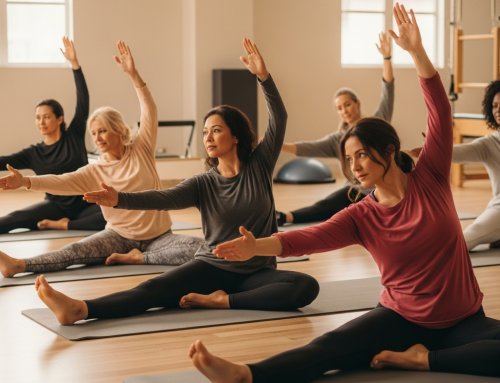
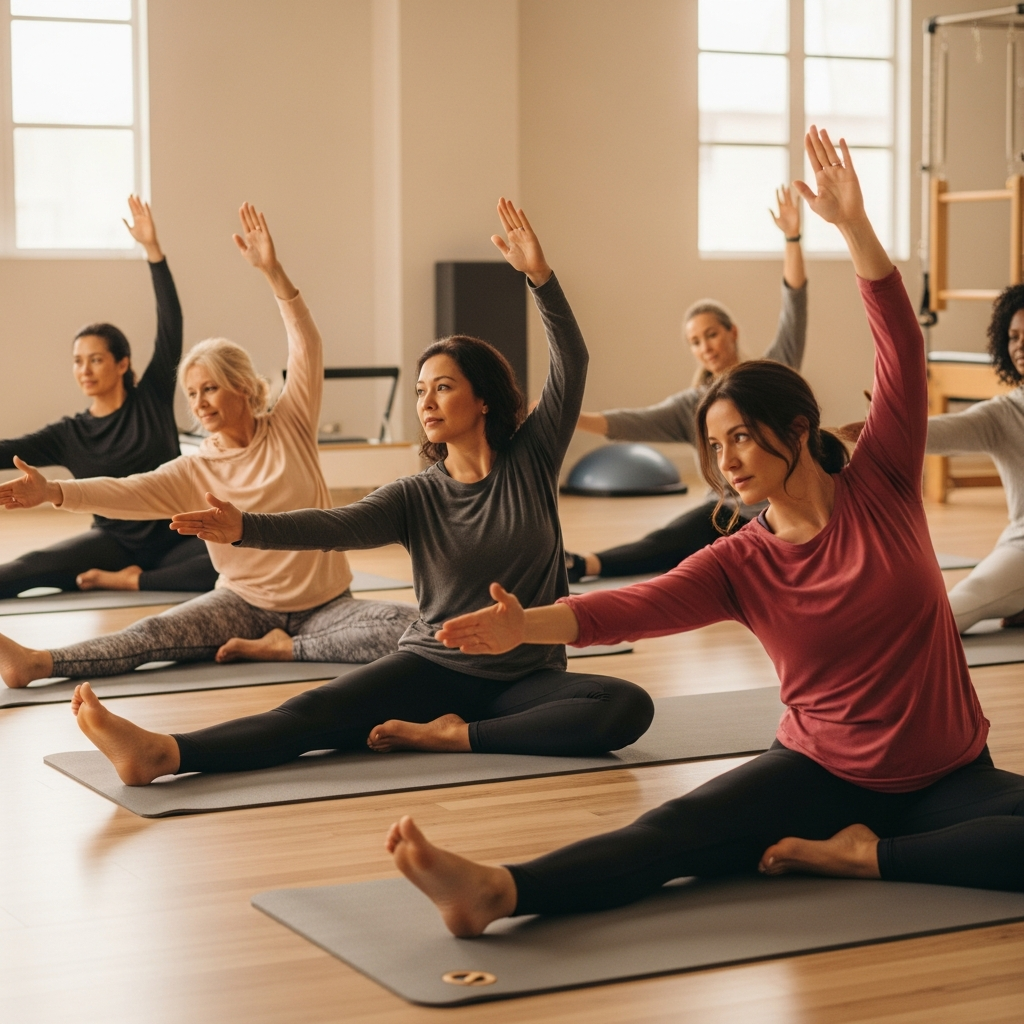
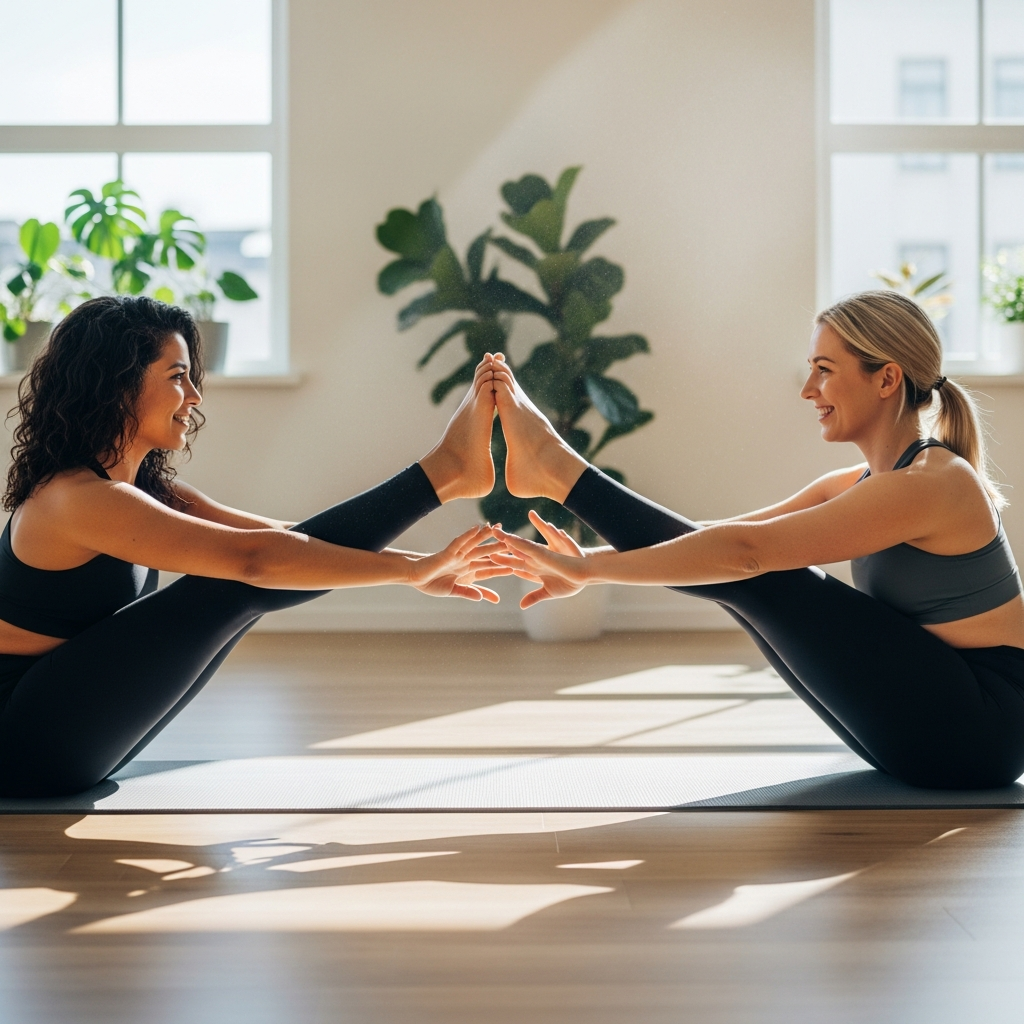
Mat Pilates: This type involves exercises performed on a mat, making it highly accessible and easy to incorporate into any lifestyle. Mat Pilates exercises are performed in a seated or lying position, focusing on controlled, precise movements. It is an excellent choice for beginners as it introduces the fundamental principles of Pilates at a manageable pace.
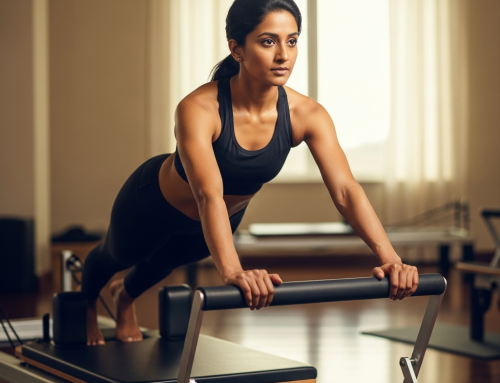
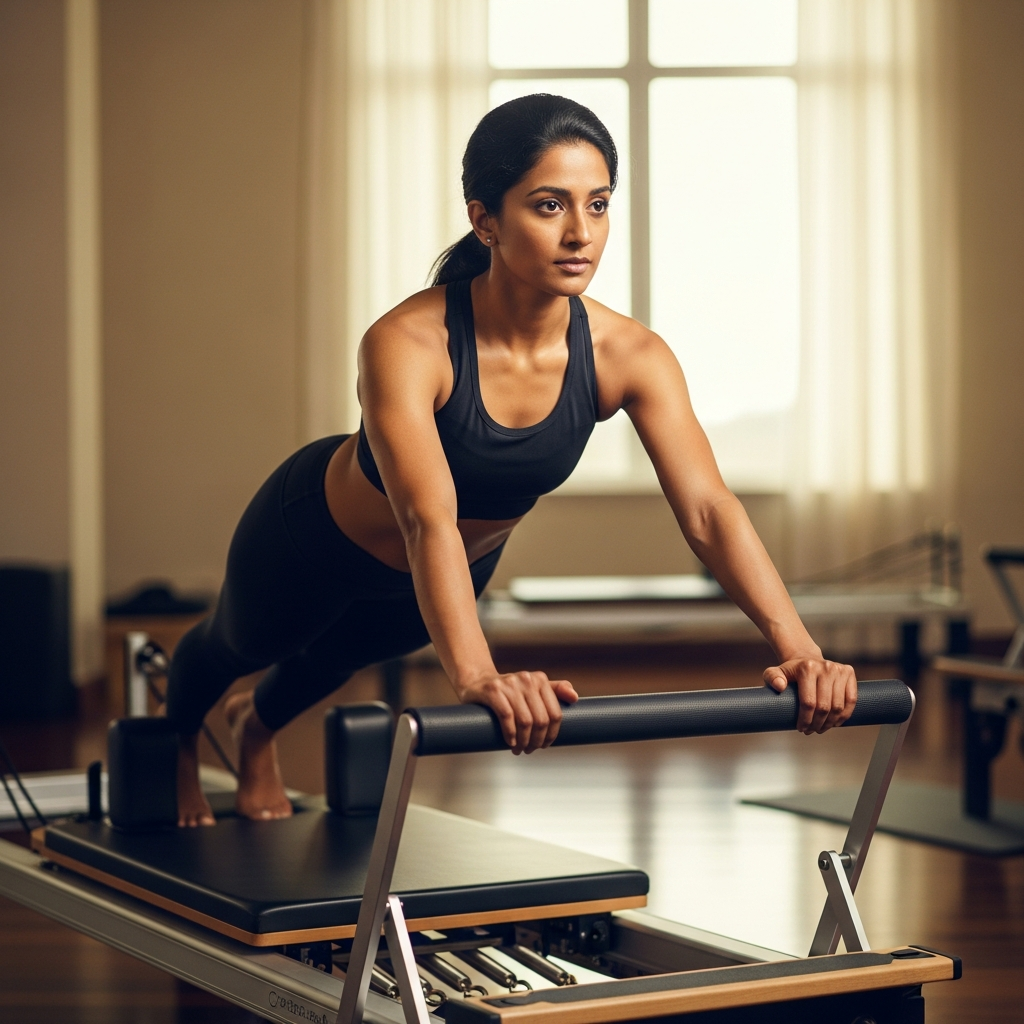
Reformer Pilates: This type is performed on a specially designed machine called a reformer, which consists of a sliding carriage rigged with springs, bars, and straps. The reformer provides a dynamic exercise environment that offers resistance and support for the exercises. Although it may seem intimidating at first, beginner-friendly classes introduce the reformer machine and exercises at a comfortable pace.
Both Mat and Reformer Pilates provide excellent starting points for newcomers. They offer an introduction to the basic principles of Pilates while delivering a full-body workout. However, the choice between Mat and Reformer Pilates depends on personal preference, availability of equipment, and individual fitness goals.
If you are seeking an easily accessible and cost-effective form of Pilates that can be performed anywhere, Mat Pilates will be a perfect choice. On the other hand, if you prefer a more structured environment with additional resistance, Reformer Pilates may be more suitable.
Regardless of the type of Pilates chosen by beginners, it is recommended to start with guided classes. An experienced instructor can provide valuable feedback on form and technique, helping to prevent injury and ensure the most benefit from the exercises.
In conclusion, Pilates is a versatile form of exercise adaptable to various fitness levels and goals. For beginners, understanding the fundamental principles of Pilates is crucial before starting practical exercises. Both Mat and Reformer Pilates provide excellent introductions to these principles and offer beginners a comprehensive full-body workout. The choice between these types depends on personal preference, accessibility, and individual fitness goals. As you embark on your Pilates journey, remember: patience and consistency are key to achieving your fitness goals.
Choosing the Right Pilates for Beginners – A Comprehensive Guide
Embarking on your fitness journey with Pilates can be exhilarating yet daunting. With a vast spectrum of styles and techniques, it’s crucial to choose the right type of Pilates that suits your beginner level. This guide will provide step-by-step guidance to help you make an informed decision.
Step 1: Understand What Pilates Is
Pilates is a low-impact exercise modality developed in the early 20th century by Joseph Pilates, emphasizing postural alignment, core strength, muscle balance, and flexibility. Its core principles include concentration, control, centering, flow, precision, and breathing.
Step 2: Identify Different Types of Pilates
The two primary forms are Mat Pilates and Reformer Pilates.
Mat Pilates is performed on a mat, using body weight for resistance. It focuses on strengthening the core (or ‘powerhouse’ as Joseph Pilates referred to it), enhancing flexibility and improving overall body strength.
Reformer Pilates involves a specialized machine with a sliding carriage rigged with springs, ropes and pulleys. This type provides a more challenging and varied workout than Mat Pilates.
Other types include Clinical Pilates (tailored to individuals with specific injuries or conditions), Stott Pilates (a modernized version with modifications for better posture), and Contemporary Pilates (a fusion of various styles).
Step 3: Assess Your Fitness Level and Goals
As a beginner, your physical condition and fitness goals play vital roles in determining the suitable type of Pilates.
If you’re entirely new to exercising or recovering from an injury, Mat Pilates is an excellent starting point. It introduces fundamental movements and principles at a manageable pace. For instance, ‘The Hundred’ – a classic Mat Pilates exercise – helps beginners develop core strength and stability.
If you’re looking for a more dynamic workout with resistance training, consider Reformer Pilates. Beginner-friendly exercises like ‘Footwork’ or ‘Leg Circles’ on the reformer can offer a full-body workout while focusing on alignment and control.
Step 4: Choose the Right Class
For beginners, joining a Pilates class can be beneficial. Trained instructors can guide through each exercise, correct form and alignment, and adjust exercises to your level.
A ‘Beginner Mat Class’ is ideal for novices, focusing on basic exercises and Pilates principles. As you progress, you can opt for ‘Intermediate’ or ‘Advanced Mat Classes’ or even specialized sessions like ‘Pilates for Seniors’, ‘Prenatal Pilates’ etc., depending on your needs.
‘Reformer Classes’ are also an option once you’re comfortable with the basics and ready for a more challenging workout. Remember, these classes often have different levels too, so start with a beginner’s class.
Step 5: Try a Private Session
If you’re apprehensive about joining a group class, consider a private session. It provides personalized instruction based on your fitness level, allowing you to learn at your own pace. This is particularly beneficial for individuals with specific health conditions or injuries.
In conclusion, the best type of Pilates for beginners often depends on one’s fitness level and goals. Generally, Mat Pilates is a safe and effective entry point, introducing the core principles and techniques of this exercise system. As you become more comfortable and proficient, you can explore other types like Reformer Pilates or Stott Pilates, gradually increasing the complexity and intensity of your workouts. Always remember to take things at your own pace, listen to your body, and consult with a qualified Pilates instructor to ensure you’re performing exercises correctly and safely. Enjoy your journey into the wonderful world of Pilates!
Unraveling Pilates: A Comprehensive Guide for Beginners
Many fitness enthusiasts are often caught in a quandary when deciding which type of Pilates is best suited for beginners. This confusion stems from the sheer diversity of Pilates styles and apparatuses that are available, such as mat Pilates, reformer Pilates, chair Pilates, and tower Pilates, among others. This article aims to dispel misconceptions, address common challenges, and offer expert solutions and tips to guide beginners in selecting the most suitable form of Pilates.
One of the most common misconceptions is that all forms of Pilates are similar. However, each type is unique in its approach, techniques, and benefits. For instance, mat Pilates mainly relies on body weight for resistance, while reformer Pilates uses a specialized machine to create resistance through springs.
A primary challenge faced by beginners is the complexity and intensity of certain Pilates types. Reformer Pilates, for instance, involves a steep learning curve due to the use of a complex machine. Similarly, advanced Pilates styles like tower or chair Pilates might be too intense for beginners who are yet to build core strength and flexibility.
Mat Pilates, on the other hand, is an excellent starting point for novices. It focuses on basic principles such as concentration, control, precision, breath, and flow. Mat exercises help build a strong foundation by targeting deep core muscles and enhancing overall body strength, flexibility, balance, and posture. It’s a misconception that mat Pilates is ‘easier’ than other types – it can be as simple or as challenging as needed, depending on the exercise variations used.
However, despite being beginner-friendly, mat Pilates isn’t without its challenges. The exercises demand a high degree of body awareness and control. Beginners often struggle with maintaining proper form and alignment. The solution lies in taking things slowly. Don’t rush progress; instead, focus on mastering the basic movements and principles.
Another challenge is staying motivated. Without the variety offered by machines, some beginners might find mat Pilates monotonous. To keep things interesting, try incorporating props like resistance bands, Pilates circles, or small weighted balls. These tools not only add variety but also increase the intensity of the workouts.
Now, onto expert tips. First and foremost, consider taking a few private or semi-private sessions before joining group classes. One-on-one sessions allow instructors to focus on your form, alignment, and specific needs, providing a solid foundation before you move to larger classes.
Secondly, listen to your body. Pilates isn’t about pushing through pain. If a movement causes discomfort, there’s a good chance you’re doing it incorrectly or it’s too advanced. Notify your instructor immediately so they can provide modifications or alternative exercises.
Lastly, consistency is key. Regular practice is essential for making progress in Pilates, so aim for at least two to three sessions per week. Remember, it’s not about how quickly you advance to more challenging exercises or types of Pilates; it’s about mastering control and precision.
In conclusion, while there’s no one-size-fits-all answer to which type of Pilates is best for beginners, mat Pilates is a popular and sensible starting point due to its focus on core principles and accessibility. As you gain strength and confidence, feel free to explore other types under the guidance of a certified instructor. Above all, remember that the journey to Pilates proficiency is a marathon, not a sprint. Enjoy each step of the way!
Choose Your Pilates Path: A Guide for Beginners
Pilates can be a transformative practice for individuals of all fitness levels. It offers a holistic approach to body wellness, working on core strength, flexibility, balance, and endurance. But for beginners, understanding where to start can be overwhelming. You might be asking “Which type of Pilates is best for beginners?” This guide provides detailed insights to help you navigate your Pilates journey.
Firstly, it’s essential to understand the two primary types of Pilates: Mat Pilates and Reformer Pilates. Both types have their unique benefits and are suitable for beginners, but your choice depends mainly on your fitness goals, comfort level, and accessibility.
Mat Pilates, as the name suggests, involves exercises done on a mat, much like yoga. The movements focus on strengthening the body’s core – the area from the abdomen to the lower back, also known as the ‘powerhouse’. Mat Pilates is excellent for beginners because it introduces the fundamental principles of Pilates at a manageable pace. It’s also incredibly accessible; all you need is a mat and enough space to lie down.
Reformer Pilates uses a machine called a Reformer, which looks like a bed frame with a sliding carriage rigged with springs, bars, and straps. The resistance provided by the Reformer challenges your body in unique ways compared to mat exercises. However, while it may seem intimidating, Reformer Pilates can also be beginner-friendly. The equipment provides support and resistance that can be adjusted according to your comfort and skill level.
So, which type is best for you as a beginner? Here are some factors to consider
1. Your Fitness Goals: If your goal is to gain overall strength, particularly in your core, and improve flexibility at your own pace, then Mat Pilates could be your best bet. However, if you’re looking to challenge yourself and work on specific muscle groups, or if you’re rehabilitating from an injury, Reformer Pilates may be more suitable.
2. Space and Equipment: Mat Pilates requires minimal equipment – a Pilates or yoga mat will suffice. Therefore, it can be done almost anywhere, from a spacious gym to your living room. Reformer Pilates, on the other hand, requires a sizable piece of equipment. While some gyms offer Reformer machines, you might find these classes are more expensive due to the cost of the equipment.
3. Instruction: Both types of Pilates benefit greatly from having a skilled instructor guide you, especially as a beginner. In a class setting, an instructor can correct your form and alignment, ensuring you’re getting the most out of the exercises and minimizing the risk of injury.
If you’re still uncertain, trying a few classes of each type can be beneficial. Many Pilates studios offer introductory classes for beginners where you can experience both Mat and Reformer Pilates.
Once you’ve decided which type to pursue, here’s what to expect next
1. Gradual Progress: Pilates is about control and precision, not speed and repetition. As a beginner, it’s essential to be patient with your progress. Celebrate small victories, like mastering a new move or noticing improved strength or flexibility.
2. Regular practice: Consistency is key in Pilates. Try to practice at least two to three times per week to see noticeable changes. Remember that every body is different, so progress may not look the same for everyone.
3. Continued Learning: Pilates is a journey. Even after you’ve mastered the basics, there’s always something new to learn, whether it’s an advanced move or a deeper understanding of your body’s capabilities.
Pilates is an incredibly rewarding practice that provides both physical and mental benefits. As a beginner, the most important thing is to find a type of Pilates that you feel comfortable with and enjoy. With commitment and patience, you’ll soon see why so many people have made Pilates a fundamental part of their fitness routine.
To conclude, Pilates is an excellent workout regime that caters to all types of individuals, from beginners to advanced practitioners. For those just starting, it’s important to choose the right type of Pilates that aligns with your fitness goals and physical condition.
The most beginner-friendly types of Pilates are Mat Pilates and Clinical Pilates. Mat Pilates, often seen as the foundation of all Pilates workouts, focuses on strengthening the body’s core. It uses your body weight as resistance and is usually guided by an instructor in a group setting. It is perfect for beginners as it allows you to understand and master the basic principles of Pilates: centering, concentration, control, precision, breath, and flow.
On the other hand, Clinical Pilates is ideal for individuals recovering from injuries or those with specific health conditions. It is a customized program designed by physiotherapists that focuses on rehabilitation and prevention of injuries. If you have any pre-existing medical conditions or are recovering from an injury, Clinical Pilates offers a safe and beneficial starting point.
However, irrespective of the style you choose, all forms of Pilates offer numerous benefits including improved flexibility, increased muscle strength and tone, enhanced muscular control, improved stabilization of your spine, improved posture, rehabilitation or prevention of injuries related to muscle imbalances, relaxation of your shoulders, neck and upper back, safe rehabilitation of joint and spinal injuries and increased lung capacity and circulation through deep breathing.
It’s important to note that no matter what type of Pilates you decide to begin with, a competent and experienced instructor is vital. They will ensure you are performing movements correctly and safely, helping you prevent injuries and making the most out of your workout.
Furthermore, remember that patience is key when starting any new exercise regimen. You won’t become an expert overnight. Every form of exercise takes time and consistent practice to master. Don’t get discouraged if certain exercises seem too challenging initially. With regular practice, you will see progress in your strength, flexibility, and overall health.
In addition, don’t forget to complement your Pilates workouts with a balanced diet and other forms of physical activity. Pilates is an effective form of exercise, but it is only part of the equation when it comes to leading a healthy lifestyle.
Finally, always listen to your body. If a particular movement causes discomfort or pain, stop doing it and seek guidance from your instructor. They can provide modifications or alternative exercises that can better suit your needs.
In closing, starting Pilates is a journey that requires time, patience, and dedication. But with the right guidance and mindset, it can be a rewarding exploration of your body’s capabilities and a stepping stone towards a healthier lifestyle.
We are here to guide you on your Pilates journey. Our experienced instructors are dedicated to helping you achieve your fitness goals through carefully curated Pilates programs. Don’t hesitate to reach out to us if you’re unsure about how to get started or if you have any questions or concerns about your Pilates journey. We’re just one call away from assisting you in taking that first step towards a healthier and stronger you. Contact us today and let’s embark on this rewarding journey together.