“Embrace Wellness: An Insightful Guide to Pilates for Beginners”
“Is your workout routine feeling a little stale? Are you looking for a fitness method that not only strengthens your body but also enhances your mind-body connection? If so, the world of Pilates may just be the perfect fit for you. Pilates is an innovative and versatile form of exercise that has been winning hearts for a century, and it’s high time you discovered why.
Pilates, a system of exercises designed to improve physical strength, flexibility, posture, and mental awareness, may seem daunting at first glance. However, everyone starts somewhere, and Pilates is no exception. This blog post is your comprehensive guide to understanding and getting started with Pilates. So, whether you’re a fitness enthusiast looking for a new challenge or someone who’s just getting started on their fitness journey, this guide has got you covered.
We’ll begin by delving into the intriguing history of Pilates, exploring its roots and understanding how it has evolved to become a globally recognized fitness regimen. This context is important as it will help you appreciate the depth and richness of the Pilates method, encouraging a deeper engagement with the practice.
Next, we’ll discuss the core principles of Pilates – concentration, control, centering, fluidity, precision, and breath. Each principle is a fundamental aspect of the practice and understanding them is key to mastering Pilates. We’ll explain each one in detail and provide practical ways you can incorporate them into your workout routine.
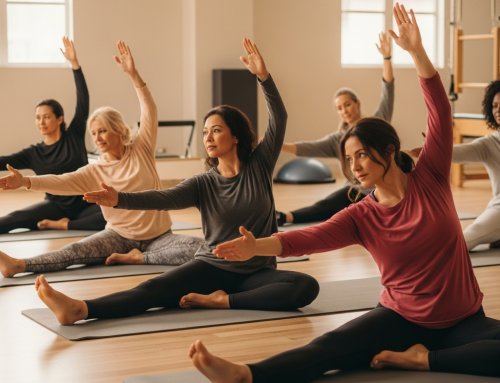
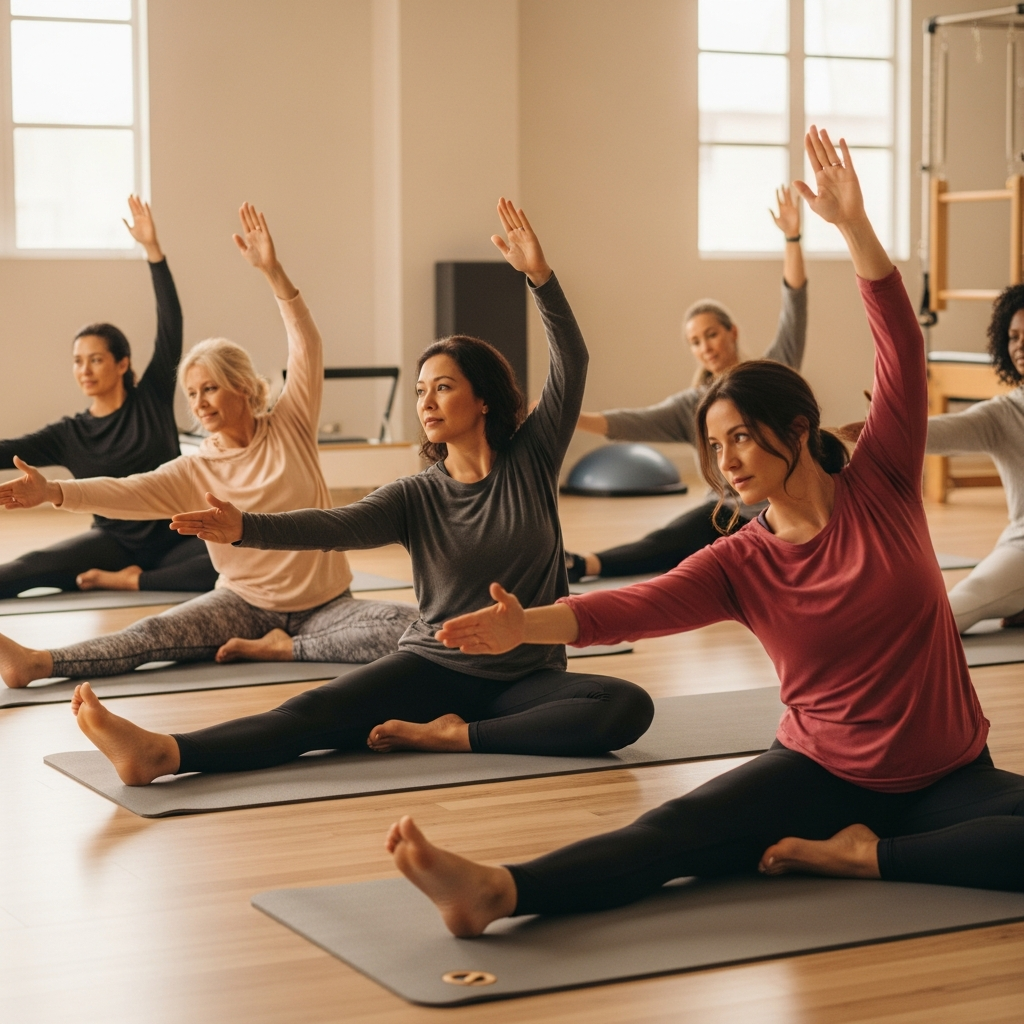
Of course, we can’t forget about mat Pilates – the heart and soul of the Pilates world. We’ll walk you through what a typical mat Pilates class looks like, what equipment you might need, and what exercises you can expect to do. We’ll also offer some tips and tricks to help you navigate your first mat Pilates class with confidence.
We’ll also touch on Pilates classes in general. Not all Pilates classes are created equal – some focus more on strength training, others on flexibility, and still, others are a blend of both. We’ll help you understand the different types of Pilates classes available, so you can find the one that best suits your fitness goals and needs.
Finally, we’ll address some common misconceptions about Pilates, as well as provide answers to frequently asked questions. This section will be particularly helpful for those who are new to Pilates or are considering giving it a try but have some reservations.
Why does this matter to you? Because Pilates is more than just a workout – it’s a lifestyle. It’s about developing a deeper sense of body awareness, improving your physical strength and flexibility, and nurturing your mental wellbeing. Whether you’re looking to enhance your athletic performance, recover from an injury, or simply improve your overall health, Pilates has something to offer.
In this fast-paced world where we often prioritize productivity over our own health and wellness, Pilates offers a much-needed break. It encourages us to slow down, to focus on our breath, and to connect with our bodies in a meaningful way. By the end of this post, we hope you’ll feel inspired to step onto the mat and experience the transformative power of Pilates for yourself.
So, if you’re ready to embark on a new fitness journey that promises not only physical transformation but also mental rejuvenation, then read on. Welcome to Pilates for beginners – your gateway to a healthier, stronger, and more balanced you.”
Pilates for Beginners: A Comprehensive Introduction
Pilates, a system of exercises designed to improve physical strength, flexibility, and posture, has been a popular fitness regimen since its development in the early 20th century. Its creator, Joseph Pilates, was a physical trainer from Germany who believed in the principle of a strong mind-body connection. His method, initially called Contrology, was designed to help injured dancers and soldiers during World War I. Today, Pilates is recognized worldwide for its numerous benefits, from improved core strength to better body awareness. But where should a beginner start? This guide will provide a comprehensive introduction to the fundamentals and framework of Pilates for beginners.
The first step in understanding Pilates is recognizing its core principles. These principles are central to every Pilates workout and provide the framework for the practice. They include Centering, Concentration, Control, Precision, Breath, and Flow.
Centering is about focusing on the center of the body – the area between the lower rib cage and pubic bone. All Pilates movements originate from this powerhouse area. Concentration means fully engaging the mind with what the body is doing. Control involves using appropriate muscle groups for each movement, avoiding unnecessary strain. Precision means each movement should be done with utmost accuracy for maximum effect. Breath is about coordinating your breath with each movement, promoting oxygen flow and relaxation. Lastly, Flow refers to the fluidity and grace of each movement, akin to a dance.
As a beginner in Pilates, understanding these core principles is crucial. They form an integral part of every exercise and class you’ll be part of. They’re not just a set of rules but a philosophy that guides the entire Pilates process.
Now, let’s discuss the fundamental exercises in Pilates. Even though there are over 500 exercises in this discipline, beginners often start with a few basic ones. The ‘hundred’ is the first exercise in many Pilates classes. This exercise involves lying on your back, lifting your legs and head off the floor, extending your arms by your side, and pumping them up and down in sync with your breath. The ‘roll-up’, another fundamental exercise, challenges your abdominal muscles as you slowly roll up from lying flat on your back to a sitting position. The ‘spine stretch’ is a seated exercise that promotes flexibility in the spine and helps to lengthen the body.
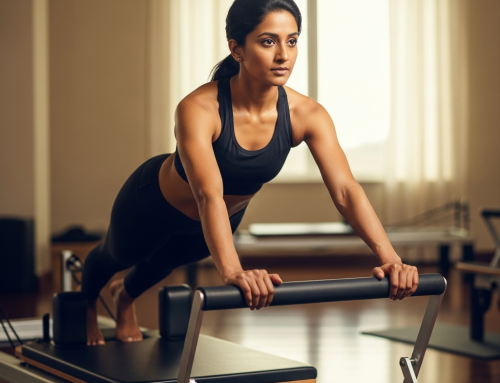
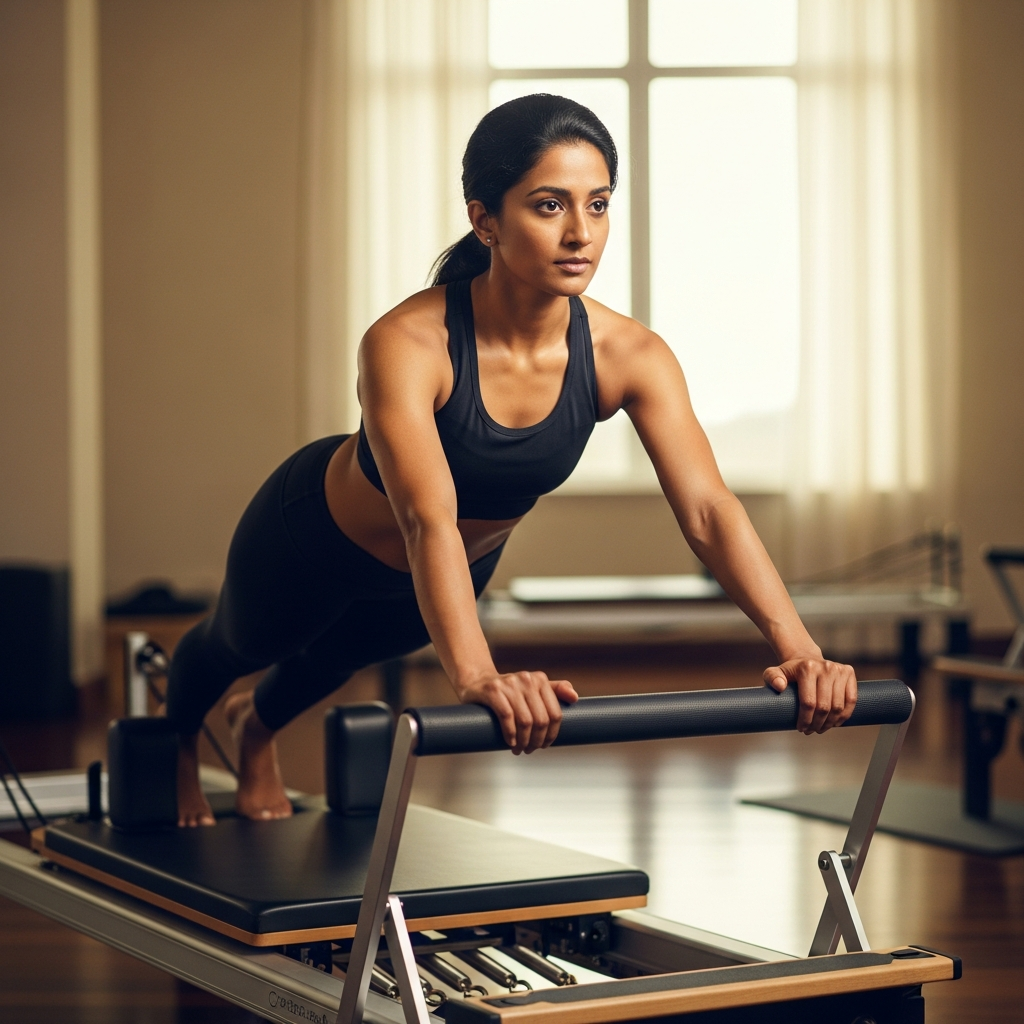
Pilates can be performed on a mat or on specialized equipment, including the Reformer, Cadillac, and Wunda Chair. As a beginner, you’ll likely start with mat exercises that utilize your body’s own weight for resistance before progressing to equipment-based exercises.
A beginner’s class in Pilates typically lasts about 45-60 minutes. During this time, you’ll be guided through a series of exercises that build core strength, improve flexibility, and promote body awareness. Remember that Pilates is not about speed or repetitions, but rather precision and control. It’s also essential to note that while Pilates is a low-impact exercise form, it can still be challenging. You may find some moves difficult initially, but with regular practice and proper instruction, you’ll steadily improve.
It’s normal to feel a little sore after your first few Pilates sessions – this is a sign that your body is adjusting to new movements and demands. However, if you experience persistent discomfort or pain, it’s essential to speak with a qualified professional.
In conclusion, Pilates for beginners is not just about learning a few exercises. It’s about understanding an approach to fitness that emphasizes the mind-body connection, precision, and control. It’s about developing body awareness and learning how to move efficiently and gracefully. It’s not easy, but with patience and perseverance, Pilates can be a rewarding and beneficial addition to your fitness routine.
Remember, everyone was a beginner at some point, and everyone progresses at their own pace. Don’t be discouraged if you struggle initially; instead, celebrate your progress and remember that every step forward is a step towards better health and well-being. Welcome to the world of Pilates!
### Pilates for Beginners: A Comprehensive Guide to Starting Your Journey
Often, starting a new fitness regime can feel intimidating, especially when it comes to Pilates. The unique combination of strength, flexibility, and mind-body awareness that Pilates offers can seem complex at first glance. But fear not, we’re here to break it down for you. This step-by-step guide will provide practical advice and real-world examples to help beginners navigate the world of Pilates with ease.
#### Step 1: Understand What Pilates Is
Pilates is a type of low-impact exercise that aims to strengthen muscles while improving postural alignment and flexibility. It targets the core but also works other areas of your body, offering a well-rounded workout. Unlike many forms of exercise, Pilates does not require any heavy equipment. All you need is a mat and your body!
#### Step 2: Choose the Right Class
If you’re a beginner, start with a basic Pilates class or try a class specifically designed for beginners. These classes typically focus on the fundamentals, providing an excellent foundation for your Pilates journey. Mat Pilates classes are an excellent choice as they are accessible for beginners and emphasize learning control and stabilization, which are central to Pilates.
#### Scenario
Consider Sarah, who was new to Pilates and felt overwhelmed by the plethora of classes available at her local gym. She opted for a beginner’s mat class, which taught her the basic principles, exercises, and proper form. This allowed her to build her confidence and skills before venturing into more advanced classes.
#### Step 3: Familiarize Yourself with Basic Pilates Exercises
There are several foundational exercises in Pilates that you’re likely to encounter in any class. These include ‘The Hundred’, ‘The Roll-Up’, ‘Leg Circles’, ‘Swan’, and ‘Pelvic Curl’. Familiarize yourself with these exercises by watching instructional videos or reading up on them. Having a basic understanding of these moves will make your first few classes less daunting.
#### Step 4: Learn the Pilates Principles
Pilates isn’t just about the physical movements; it’s also about the principles behind those movements. These include Centering, Concentration, Control, Precision, Breath, and Flow. Understanding these principles and incorporating them into your practice will help you get the most out of your Pilates experience.
#### Scenario
Take Tom, for example. He was struggling with his Pilates practice until he started focusing on the principles. By paying attention to his breath and concentrating on his movements, he started to see improvements in his form and overall performance.
#### Step 5: Dress Appropriately
Wear comfortable, form-fitting clothing that allows you to move freely. Avoid loose clothing as it can get caught in your body or on equipment. Most Pilates classes are done barefoot, so no need to worry about special footwear.
#### Step 6: Listen to Your Body
Pilates should not cause pain. If something hurts, stop doing it and seek advice from your instructor. Remember, it’s okay to modify exercises to fit your fitness level and body limitations.
#### Step 7: Consistency is Key
Like any other fitness regime, consistency is key in Pilates. A regular practice – at least two times a week – is necessary to start seeing and feeling the benefits.
#### Scenario
For instance, Emma started attending Pilates classes twice a week and noticed significant improvements in her posture, core strength, and flexibility after just a month. This encouraged her to keep up with her regular practice.
#### Step 8: Be Patient
Lastly, be patient with yourself. It takes time to learn new exercises and techniques. Progress might be slow, but it’s worth it. Celebrate small victories along the way and remember: everyone was a beginner once!
Pilates is an excellent form of exercise, offering benefits such as improved flexibility, increased muscle strength and tone, enhanced muscular control, improved posture, and more. With these steps in mind, you are well on your way to a successful start on your Pilates journey. So roll out your mat, take a deep breath, and get started!
Pilates for Beginners: Common Challenges, Solutions, and Expert Tips
Introduction
Pilates is a holistic exercise regimen that aims to increase body strength, flexibility, and mindfulness through low-impact movements. However, as a beginner, you might encounter certain challenges in understanding and performing Pilates. Don’t worry; it’s all part of the learning curve. This guide will help you navigate through these common issues, offering solutions and expert tips to help you get the best out of your Pilates experience.
Challenges and Solutions
1. Understanding The Basics: Many beginners find the principles of Pilates – concentration, control, centering, flow, precision, and breathing – somewhat overwhelming. However, understanding these principles is vital to performing the exercises correctly. Take time to learn these principles one at a time, focusing on each during your practice sessions until you can incorporate all simultaneously.
2. Difficulty in Performing Exercises: Movements in Pilates are precise and may be challenging initially. It’s essential not to rush but instead focus on mastering each exercise’s correct form before moving onto the next one. Remember, Pilates is not about quantity, but quality of movement.
3. Breathing Technique: Beginners often struggle with the Pilates breathing technique, which involves inhaling deeply through the nose and exhaling through a slightly open mouth. Practice this breathing technique even when you’re not exercising until it becomes second nature.
4. Core Control: Pilates emphasizes core strength, but many beginners have weak core muscles. Start with simple core-strengthening exercises like the ‘Pilates Hundred’ before progressing to more complex movements.
5. Limited Flexibility: Beginners may find certain Pilates stretches challenging due to limited flexibility. Don’t push your body beyond its limits; instead, work consistently on improving your flexibility over time.
Expert Tips
1. Start with Mat Pilates: Mat Pilates is a great starting point for beginners. It uses your body weight for resistance and focuses on core strength, flexibility, and overall body awareness. It’s also less intimidating than the Pilates machines, which can be introduced later as you progress.
2. Join a Pilates Class: A class setting provides expert guidance, ensuring you perform each exercise correctly. Additionally, the group setting can be motivating and make the learning process more enjoyable.
3. Warm-Up and Cool Down: Always include a warm-up and cool-down session before and after your Pilates workout to prepare your body for the workout and aid recovery afterward.
4. Consistency is Key: Like any new skill, mastering Pilates requires consistent practice. Aim for two to three sessions per week to see steady progress.
5. Listen to Your Body: If you feel any discomfort or pain during an exercise, stop immediately. Seek professional advice before continuing to ensure you’re not risking injury.
Misconceptions About Pilates
1. Pilates is Just for Women: While it’s true that Joseph Pilates’ first clients were dancers, mostly women, Pilates is equally beneficial for men. It improves flexibility, builds strength, and enhances posture – benefits everyone can enjoy.
2. Pilates is Easy: Pilates can be as challenging as you make it. The movements are low-impact but require precision, control, and core strength, making them intense and effective.
3. Pilates is Similar to Yoga: Although both promote flexibility, strength, and mind-body connection, they are distinct practices. Pilates focuses more on core strength, spinal alignment, and precise movements, while yoga emphasizes flexibility and spirituality.
Conclusion
Pilates is a rewarding practice that offers numerous health benefits. As a beginner, navigating through its principles may seem daunting, but with patience, consistency, and the right guidance, you’ll soon master the art of Pilates. Remember to listen to your body, focus on form, and enjoy the journey to a stronger, more flexible, and mindful you.
Pilates for Beginners: Expectations, Timelines, and Next Steps
A journey of a thousand miles begins with a single step, as does your journey into the world of Pilates. This form of exercise, renowned for its ability to strengthen the core, enhance flexibility, and promote overall body fitness and well-being, is an excellent choice for both novices and seasoned fitness enthusiasts alike. If you’re a beginner, you’ll likely have questions about what to expect, how long it takes to see results, and what the next steps are. This article aims to provide comprehensive insights into the Pilates journey for beginners.
**What to Expect**
Pilates classes can be conducted on a mat or with specialized equipment, with mat classes being more prevalent due to their ease of setup and lower cost. As you embark on your Pilates journey, here’s what to expect
1. **Core Strength and Stability:** The core is the powerhouse of the body in Pilates. Every movement originates from the core, which means you’ll be working on strengthening and stabilizing this area during your workouts.
2. **Mind-Body Connection:** Unlike some forms of exercise that encourage zoning out, Pilates requires full concentration. You must stay focused on your body and how it moves throughout the exercises.
3. **Controlled Movements:** In Pilates, it’s not about doing lots of repetitions, but doing a small number of movements with precision. This makes Pilates a safe and effective form of exercise.
4. **Flexibility:** Pilates exercises are designed to stretch the muscles and increase the range of motion in your joints.
5. **Breathwork:** Breathing is an integral part of Pilates. You’ll learn how to use your breath to enhance your movements.
**Timelines**
One of the most common questions beginners ask is: “How long will it take to see results?” The answer varies. Progress in Pilates is unique to each individual and depends on various factors such as frequency of practice, previous exercise experience, and dedication to the practice.
However, Joseph Pilates, the founder of the method, famously said, “In 10 sessions you’ll feel the difference, in 20 sessions you’ll see the difference, and in 30 sessions you’ll have a whole new body.” Taking this into consideration, if you practice Pilates 2-3 times per week, you can expect to feel improvements in your strength, flexibility, and posture within a month.
**Next Steps**
Starting a new fitness practice can be overwhelming. Here are some practical steps to get you started with Pilates
1. **Find a Class:** If you’re a complete beginner, it’s highly recommended to start with a beginner’s class. This could be at a local gym, a dedicated Pilates studio, or even online.
2. **Invest in a Mat:** For mat Pilates, all you really need is a good-quality Pilates mat. They’re thicker than yoga mats and provide cushioning for your spine.
3. **Dress Comfortably:** Wear comfortable clothing that allows you to move freely. Avoid extremely baggy clothing as it can hinder your instructor’s ability to assess your movements.
4. **Attend Regularly:** Consistency is key in Pilates. Aim to attend classes at least two times per week.
5. **Private Lessons:** If you’re finding it hard to master the basics in a group setting, consider taking a few private lessons.
6. **Patience:** Progress takes time. Be patient with yourself and remember that every small improvement is a step forward in your Pilates journey.
Pilates is an incredible exercise method that can bring numerous benefits to your life. As a beginner, remember that everyone starts somewhere. It’s not about perfection; it’s about progress. With consistency and patience, you’ll soon start to feel and see the changes in your body and overall well-being. Welcome to the world of Pilates!
In conclusion, Pilates for beginners is more than just a physical fitness program. It is a journey towards self-discovery, improved health, and overall well-being. By emphasizing controlled breathing, proper alignment, and focused concentration, Pilates stands out as an effective method for enhancing body awareness, building strength, increasing flexibility, and promoting balance and coordination.
For beginners, the first step in embarking on this journey is understanding the core principles of Pilates. These principles include centering, concentration, control, precision, breath, and flow. Each principle plays a significant role in ensuring that you get the most out of your workout. Remember to be patient with yourself as you are learning. Just like any new skill, it takes time to become proficient in Pilates.
Next, familiarize yourself with the basic Pilates exercises. These exercises are designed to work your entire body, with a particular focus on your core muscles. The Hundred, the Roll Up, the Saw, and the Single Leg Circles are just a few examples of beginner-friendly exercises that you can start with. It’s crucial to learn and master the correct form of these exercises to avoid injury and maximize results.
Moreover, consider investing in appropriate Pilates equipment. While many exercises can be done on a mat, certain equipment like the reformer, Cadillac, or Wunda chair can offer added resistance and versatility to your workouts. However, it is not necessary to purchase all these pieces of equipment at once. You can gradually build your home gym as you progress in your Pilates journey.
One of the most significant benefits of Pilates is its adaptability. Regardless of your age, fitness level, or physical condition, there’s a Pilates routine that’s suitable for you. Even if you’re recovering from an injury or dealing with chronic pain, Pilates can be modified to accommodate your needs. Just make sure to consult with a healthcare professional before starting any new exercise regimen.
Importantly, consistency is vital in Pilates. To reap the full benefits of Pilates, regular practice is crucial. Whether you choose to attend classes at a studio or follow along with online tutorials at home, aim for at least three sessions per week.
Finally, while learning Pilates on your own is possible, having a certified Pilates instructor guiding you can make a significant difference. They can provide personalized instruction, correct your form, and offer modifications to suit your abilities. Therefore, consider enrolling in a Pilates class or hiring a private instructor if you’re serious about mastering Pilates.
We hope this comprehensive guide has provided you with a solid foundation to start your Pilates journey. As you delve deeper into the world of Pilates, remember to listen to your body, enjoy the process, and celebrate every progress you make, no matter how small.
Here at our studio, we have a team of dedicated and experienced Pilates instructors who would love to assist you on your journey. Whether you need help with mastering the basics, creating a customized workout plan, or overcoming challenges in your practice, we are here for you. We believe that every individual is unique, and we are committed to providing personalized guidance to help you achieve your fitness goals.
So why wait? Begin your Pilates journey today. Get in touch with us to book your first session or to learn more about our services. Remember, your health and well-being are worth investing in. Let us assist you in taking that first step toward a healthier and fitter you. You’ve got this, and we’ve got you!