Why More Mesquite Residents Are Choosing Pilates Over Traditional Gyms
You know that feeling when you walk into a gym and immediately want to turn around and leave? Maybe it’s the intimidating rows of machines you’re not sure how to use, or the way everyone seems to know exactly what they’re doing while you’re standing there clutching your water bottle like a security blanket. Or perhaps it’s just the overwhelming noise – the clanking weights, the aggressive music, the grunting sounds that make you wonder if someone’s having a medical emergency.
Sarah Martinez felt exactly that way. She’d been a Mesquite resident for eight years, had tried three different gym memberships, and each time… well, let’s just say her good intentions lasted about as long as a Texas snowfall. The last straw came when she realized she’d been paying $60 a month for the privilege of feeling bad about herself. Sound familiar?
But here’s where Sarah’s story gets interesting – and why you might want to pay attention if you’re nodding along right now.
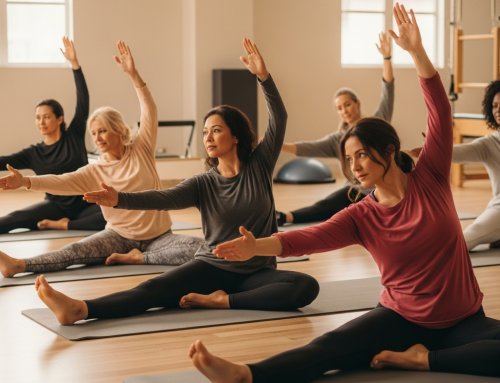
Last spring, almost on a whim (okay, her sister practically dragged her), Sarah tried a Pilates class at a small studio near Town East Boulevard. Nothing fancy – just a quiet room with some equipment she’d never seen before and an instructor who actually remembered her name after the second class. Fast forward ten months, and Sarah’s not just stronger than she’s been in years… she’s actually excited about working out. Who saw that coming?
Turns out, Sarah’s not alone. Something’s happening here in Mesquite that’s worth talking about. More and more of our neighbors are quietly closing their big-box gym memberships and discovering what feels like the fitness world’s best-kept secret. They’re trading treadmills for reformers, dumbbells for resistance springs, and – perhaps most importantly – they’re actually sticking with it.
Now, I’m not here to bash traditional gyms. They work wonderfully for some people, and if you’re thriving in that environment, more power to you. But if you’re like Sarah – if you’ve tried the gym thing and it just didn’t click, if you’re dealing with an injury that makes typical workouts feel impossible, or if you’re simply looking for something that doesn’t make exercise feel like punishment – then what’s happening in our community might be exactly what you need to hear.
See, there’s something almost magical about Pilates that’s hard to explain until you experience it. It’s not about lifting the heaviest weight or running the fastest mile. It’s about moving your body in ways that actually make sense – strengthening your core (and I mean really strengthening it, not just doing endless crunches), improving your posture so you stop feeling like you’re 90 years old by 3 PM, and building the kind of functional strength that helps you carry groceries, play with your kids, and sleep better at night.
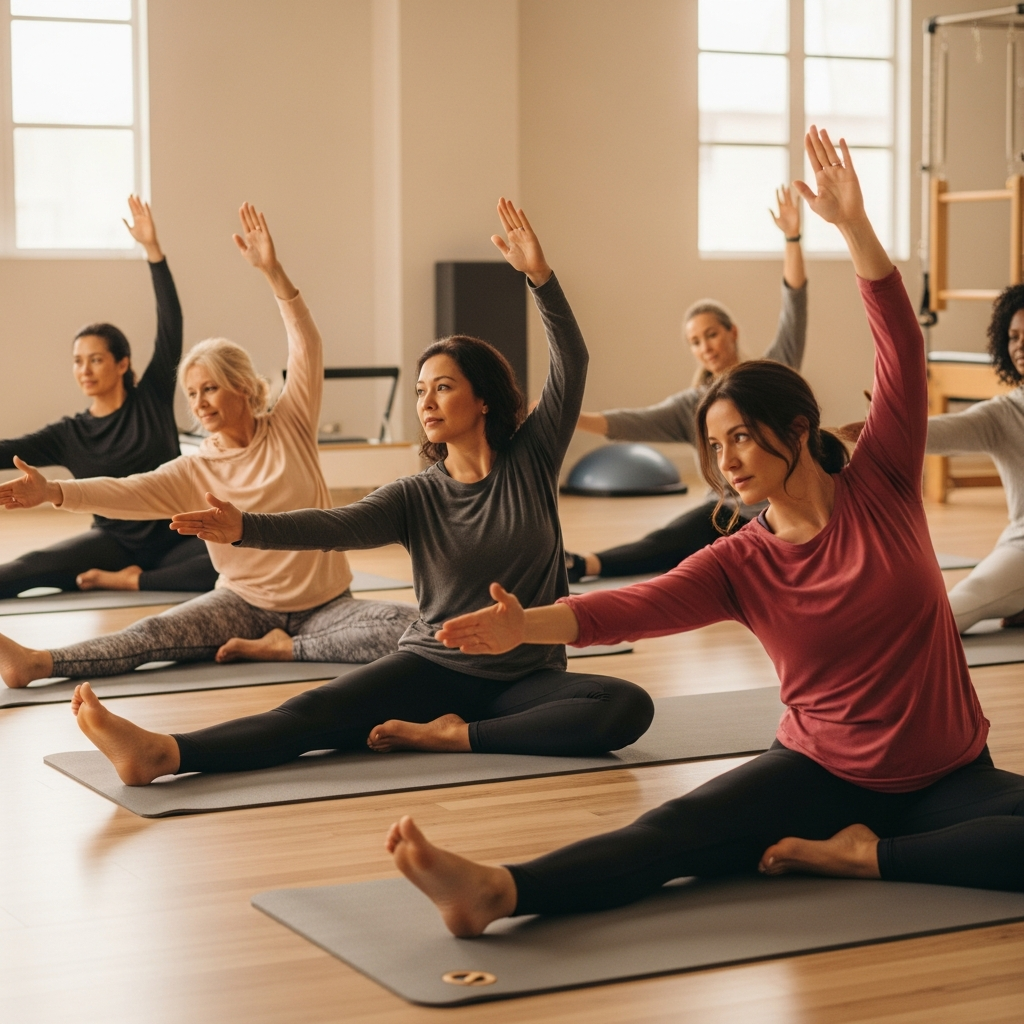
The studios popping up around Mesquite aren’t your typical fitness factories either. They’re smaller, more intimate spaces where instructors notice if you’re struggling with a movement and actually help you modify it instead of just shouting “feel the burn!” from across a crowded room. It’s personal attention without the personal trainer price tag.
But here’s what really caught my attention as I started talking to people making this switch: they’re not just getting stronger – they’re discovering they actually enjoy exercise for maybe the first time in their adult lives. That’s not nothing. That’s actually everything if you think about it.
Over the next few minutes, we’re going to explore why this shift is happening, what makes Pilates so different from your typical gym experience, and – most importantly – whether it might be the missing piece in your own wellness puzzle. We’ll look at the real costs (spoiler: it might surprise you), dive into what a typical class actually looks like (because let’s be honest, some of that equipment looks a little intimidating), and hear from local residents who’ve made the switch and are happy to tell you why.
Whether you’re frustrated with your current fitness routine, dealing with chronic pain that makes traditional workouts challenging, or simply curious about why your neighbor seems so much more energetic these days… well, you might just find some answers here.
What Exactly Is Pilates, Anyway?
Look, if you’re like most people in Mesquite, you’ve probably heard the word “Pilates” thrown around but aren’t entirely sure what it actually involves. Don’t worry – I was in the same boat until a few years ago.
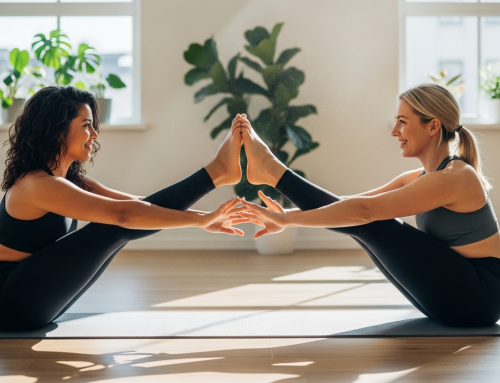
Think of Pilates as the methodical cousin of yoga. While yoga flows from pose to pose like a gentle river, Pilates is more like… well, imagine a master craftsman carefully shaping a piece of wood. Every movement is deliberate, controlled, and designed to build something specific.
Created by Joseph Pilates (yeah, that’s actually his last name) back in the early 1900s, this system focuses on what he called your “powerhouse” – basically everything from your ribcage to your hips. It’s not about sweating buckets or lifting the heaviest weights you can manage. Instead, it’s about precision, breath control, and building strength from the inside out.
The Mind-Body Thing That Actually Makes Sense
Here’s where Pilates gets interesting – and honestly, where it confused me at first. You know how people always talk about “mind-body connection” and it sounds like some mystical nonsense? Well, Pilates makes it surprisingly… real.
Every exercise requires you to think about multiple things simultaneously. You’re breathing in a specific pattern, engaging your core, aligning your spine, and moving your limbs – all while maintaining control and focus. It’s like patting your head and rubbing your belly, but for your entire body and brain.
This constant mental engagement is part of what makes people feel so different after a Pilates session. You’re not just physically tired (though you definitely can be) – you’re mentally refreshed. Kind of like how you feel after solving a challenging puzzle, but your abs are sore too.
Equipment vs. Mat Work – The Plot Thickens
Now, this is where things get a bit more complex, and frankly, where the intimidation factor kicks in for a lot of folks.
There’s mat Pilates – which is what you might see in group fitness classes. Just you, a mat, and maybe some small props like resistance bands or those squishy balls. Then there’s equipment-based Pilates, which involves… well, contraptions that look like they belong in either a physical therapy clinic or a medieval torture chamber, depending on your perspective.
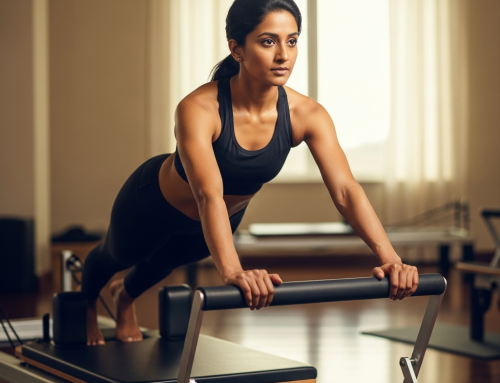
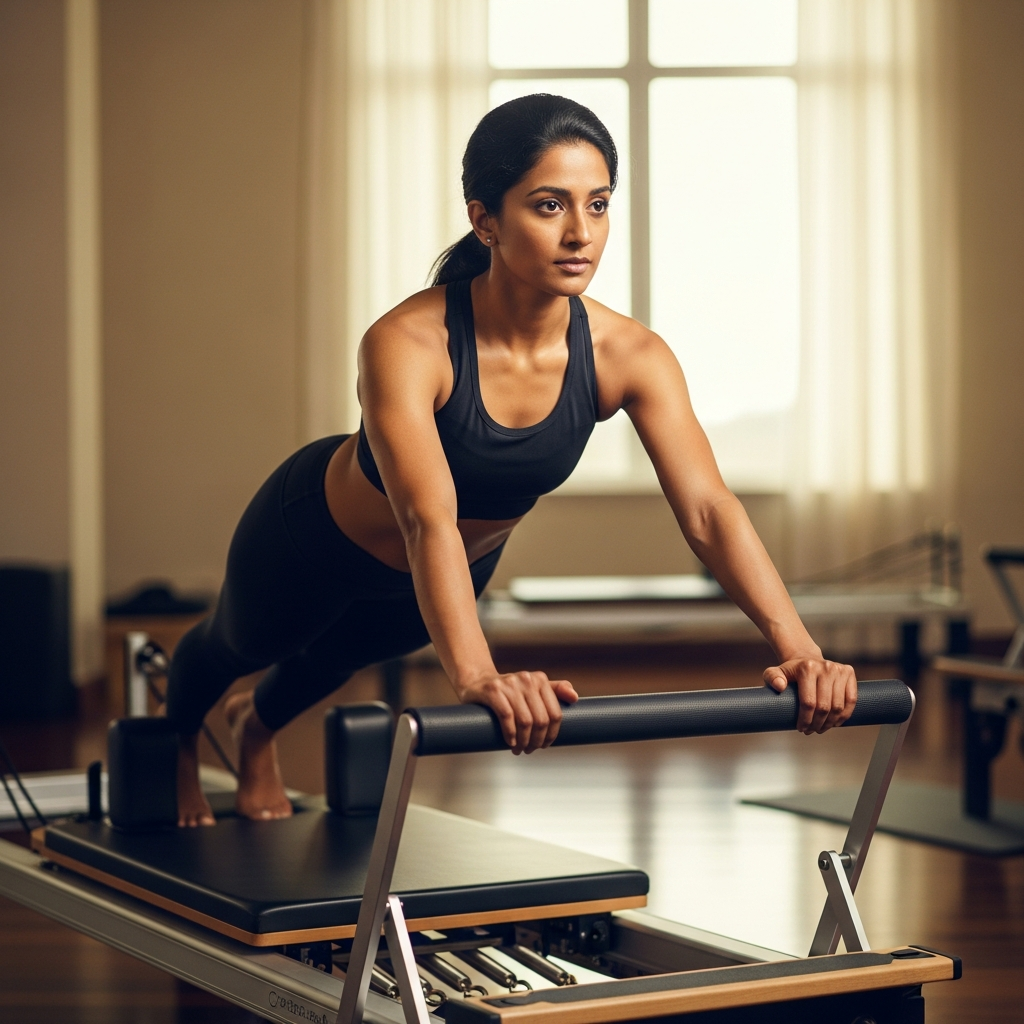
The most famous piece is called a Reformer – think of it as a sliding bed with springs, pulleys, and straps. Sounds terrifying? I thought so too. But here’s the thing: those springs actually make movements easier in some ways while making them harder in others. It’s counterintuitive, but the resistance helps guide your body into proper alignment while challenging your muscles in ways that feel almost sneaky.
Why Your Body Responds Differently
Traditional gym workouts often work in what I like to call “muscle isolation mode.” You’re on the leg press machine working your quads, then you move to the bicep curls, then the lat pulldown – each exercise targeting specific muscle groups like you’re checking items off a grocery list.
Pilates flips this approach entirely. Instead of isolating muscles, it integrates them. Your core is working while your arms are moving. Your legs are stabilizing while your spine is articulating. It’s like the difference between playing individual notes on a piano versus playing a full chord – both have their place, but one creates harmony.
This integration is why people often say they feel “longer” or “taller” after Pilates sessions. You’re not actually growing (sorry), but you’re learning to use your body as a connected system rather than a collection of separate parts.
The Intensity Paradox
Here’s something that throws people off: Pilates can be incredibly challenging without making you feel like you’re about to pass out. You might finish a session having barely broken a sweat, yet your muscles are shaking and you feel like you’ve been worked over by a very polite, very precise trainer.
It’s the difference between sprinting up a hill (intense, exhausting, over quickly) and carrying a moderately heavy suitcase for an hour (manageable moment to moment, but surprisingly taxing overall). Both are hard work – just in completely different ways.
This subtle intensity is actually one of the reasons it’s becoming so appealing to Mesquite residents who are tired of the “no pain, no gain” mentality that dominates traditional fitness culture.
Finding Your First Pilates Studio in Mesquite
Here’s the thing about choosing a Pilates studio – you can’t just Google “Pilates near me” and call it done. I’ve seen too many people walk into the wrong class and think Pilates isn’t for them when really… they just picked poorly.
Start by calling studios directly (I know, actual phone calls in 2024). Ask about their beginner programs. The good studios will have specific intro packages – usually 3-4 classes for newcomers. Avoid places that immediately try to sell you a year-long membership. Red flag territory.
Look for these green flags: instructors with comprehensive certification (not weekend workshop certificates), small class sizes (8-10 people max for group classes), and studios that ask about injuries or physical limitations before your first class. If they don’t ask… keep looking.
Making the Switch Without Breaking the Bank
Let’s talk money because – honestly – this is where most people get stuck. Yes, Pilates costs more per session than a gym membership, but you’re comparing apples to oranges here.
Try the “coffee shop math” I teach my clients. If you’re spending $6 daily on coffee, that’s $180 monthly. Most Pilates studios offer unlimited monthly packages between $150-220. Suddenly it doesn’t seem so crazy, right?
Here’s my favorite cost-cutting strategy: many studios offer work-study programs where you help with cleaning or front desk duties in exchange for classes. I’ve had clients cut their monthly costs in half this way. Plus, you get to know the community better – win-win.
Another insider tip? Studios often discount their less popular time slots. That 10 AM Tuesday class might be 30% cheaper than the packed 6 PM session, and you’ll get more personalized attention.
Your First Month Strategy (Because Jumping In Blind Never Works)
Don’t do what I did when I started – book seven classes in week one and then spend the next three weeks too sore to move. Smart approach? Two classes maximum per week for your first month.
Schedule your classes for the same days each week. Seriously. Tuesday/Thursday or Monday/Wednesday – pick your combo and stick with it. Your body adapts better with consistency, and you’re less likely to make excuses when it becomes routine.
Week 1-2: Focus on learning the basic positions. Don’t worry about looking graceful or keeping up perfectly. I tell my clients to think of it like learning a new language – you wouldn’t expect fluency after two lessons.
Week 3-4: Start noticing how your body feels between classes. This is when most people have their “aha” moment – that subtle strength building, the way your posture improves without thinking about it.
Transitioning Away from Your Gym Membership
Here’s something nobody tells you: you don’t have to quit your gym cold turkey. Actually, I don’t recommend it.
Keep your gym membership for another month or two while you establish your Pilates routine. Use the gym for cardio if you want (though many of my clients find they don’t need as much after starting Pilates), but avoid the weight room initially. Your body’s learning new movement patterns, and mixing too many different approaches can confuse things.
When you do cancel your gym membership, do it strategically. Most gyms require 30-day notice, so mark your calendar. And here’s a sneaky tip – call to cancel right before your renewal date. They’ll often offer you a discounted rate to stay, which you can politely decline, but it confirms you’re making the right choice when you realize… you don’t actually want the discount.
Building Your Home Practice (Because Life Happens)
Even the most dedicated studio-goers need backup plans. Travel, sick kids, work emergencies – life has a way of disrupting our best intentions.
Invest in a decent mat ($50-80 range) and maybe a few props – resistance bands, small ball, magic circle. Don’t go overboard though. I see people spend hundreds on equipment they never use.
Start with 10-15 minute home sessions, focusing on basic exercises your instructor has taught you. Think of it as reinforcement, not replacement for studio classes. YouTube has tons of Pilates content, but stick to instructors whose names you recognize from legitimate studios.
The goal isn’t to recreate your studio experience at home – it’s to maintain that mind-body connection between classes.
The Reality Check: What Nobody Tells You About Starting Pilates
Look, let’s be honest here – switching from a traditional gym to Pilates isn’t always smooth sailing. You might walk into that first class expecting some gentle stretching (maybe with wine involved?), only to discover your core muscles have apparently been on vacation for… well, possibly years.
The truth is, Pilates can humble you faster than trying to open a jar of pickles after arm day. Many Mesquite residents tell us they felt completely lost in those initial sessions. “I couldn’t even hold a plank for ten seconds,” admits Sarah, a local teacher. “Meanwhile, the person next to me looked like they were floating through the exercises.”
Here’s what actually happens: your body starts talking to you in ways it never has before. Muscles you forgot existed suddenly pipe up with complaints. That’s not failure – that’s awakening.
The Mental Game Gets Real
The biggest challenge? Your brain.
Traditional gyms let you zone out, blast music, and power through. Pilates demands you show up mentally. Every movement requires focus, breath control, and body awareness. It’s like the difference between driving on autopilot versus navigating a complex maze – suddenly you can’t just go through the motions.
Many people panic when they realize they can’t multitask their way through class. “I kept thinking about my grocery list during the first few sessions,” laughs Maria, who’s been practicing for eight months now. “My instructor had to keep reminding me to breathe. Apparently, I was holding my breath through entire sequences.”
The solution isn’t to fight this mental intensity – it’s to embrace it. Start with shorter sessions or beginner classes. Give yourself permission to be fully present for just that hour. Think of it as meditation that happens to make you stronger.
The Comparison Trap Hits Different
In regular gyms, you can kind of hide behind machines or stick to your own corner. But Pilates classes? You’re all doing the same movements, often in clear view of each other. And trust me, there’s always someone who makes it look effortless while you’re shaking like a chihuahua in a thunderstorm.
Here’s the thing though – that person struggling beside you might actually be working harder than the one who looks perfect. Pilates meets you where you are, and sometimes “where you are” involves some serious muscle trembling.
The fix? Focus on your own mat. Literally. Keep your eyes on your own form, your own progress. That woman who flows through movements like water? She was probably shaking too when she started. Progress in Pilates isn’t linear, and it’s definitely not Instagram-ready from day one.
When Your Body Rebels (And Your Schedule Does Too)
Let’s talk about the practical stuff nobody mentions. Pilates classes have set times – you can’t just show up whenever like at a 24-hour gym. Miss your Tuesday class? You might be waiting until Thursday for the next beginner session.
Plus, your body might revolt in unexpected ways. Some people get surprisingly sore in weird places (hello, muscles between your ribs). Others feel energized but oddly emotional after class. “I actually cried after my third session,” shares Jennifer, a marketing coordinator. “Not from pain – just… release? It was bizarre but kind of cathartic.”
The scheduling challenge has a few workarounds. Many Mesquite studios now offer virtual options or makeup classes. Some even have hybrid memberships that include both in-person and online sessions. As for the emotional release thing – just roll with it. Your body’s been holding tension you didn’t even know about.
Making It Stick When Life Gets Messy
The real test comes around week three or four. The novelty wears off, life gets hectic, and suddenly that Pilates class feels like another obligation rather than self-care.
This is where community becomes crucial. Find a class buddy – someone who’ll text you on Tuesday morning asking if you’re going. Many successful Pilates practitioners in Mesquite say their breakthrough moment came when they stopped treating classes as optional and started viewing them as non-negotiable appointments with themselves.
Start small, be patient with the learning curve, and remember – even instructors had to start somewhere. That perfect form you admire? It’s built on thousands of imperfect attempts.
What to Expect in Your First Few Weeks
Let’s be honest – you’re not going to walk into your first Pilates class and emerge looking like a fitness influencer. That Instagram-worthy transformation? It takes time, and that’s perfectly normal.
Most people notice they’re standing a little taller after just a few sessions. Your core starts to wake up (you know that feeling when you suddenly realize you have muscles you forgot about?). But the real changes – the ones that make you catch yourself in the mirror and think “oh, hello there” – those typically show up around the 6-8 week mark.
Here’s what’s realistic: after about 10 sessions, you’ll probably find everyday movements feel easier. Picking up your kids, carrying groceries, even sitting at your desk for hours… it all becomes less of a struggle. The beauty of Pilates is that it sneaks up on you like that.
The Learning Curve (Yes, There Is One)
Remember learning to drive? At first, you had to think about every single thing – hands at 10 and 2, check mirrors, signal, brake gently. Then one day, it all clicked and you could drive while having a conversation and thinking about what to make for dinner.
Pilates is similar. Those first few classes might feel overwhelming – there’s so much to remember about breathing, alignment, and engaging muscles you didn’t know existed. Your instructor will be calling out modifications, and you’ll be wondering if you’re doing it right.
You are. Even when it doesn’t feel like it.
Most Mesquite studios understand this completely. They’ll often suggest starting with beginner classes or private sessions to get your bearings. Don’t rush into advanced classes just because they fit your schedule better – trust me on this one.
Building Your Routine (Without Burning Out)
Here’s where a lot of people get tripped up… they go all-in immediately. Three classes the first week, four the next, then suddenly they’re exhausted and their enthusiasm fizzles out.
Start with 2-3 sessions per week if you can swing it, or even just once a week if that’s what works with your life right now. Consistency beats intensity every single time. It’s better to do one class a week for six months than to do five classes a week for three weeks and then quit.
And here’s something nobody talks about – you might feel sore in weird places. Not the “I just ran a marathon” kind of sore, but more like “I didn’t know I had muscles there” sore. Your deep abdominal muscles might ache a little, or your shoulders might feel like they’ve been working (because they have been).
What Success Actually Looks Like
Forget the dramatic before-and-after photos for a minute. Real Pilates success is more subtle… and honestly, more meaningful.
It’s sleeping better because your body isn’t fighting tension all day. It’s your lower back not screaming at you after sitting through a long meeting. It’s feeling stable and strong when you’re playing with your grandkids at the park.
Many of our Mesquite clients tell us the mental benefits surprise them the most. That hour of focused movement becomes their reset button – a break from emails, deadlines, and everything else demanding their attention.
Next Steps That Actually Stick
Don’t overthink this part. Seriously.
Find a studio that feels right – maybe it’s the one closest to your house, or the one with the friendliest front desk staff, or the one that has classes at times that work for your schedule. Sometimes the “best” studio is simply the one you’ll actually go to.
Most places offer trial packages or new client specials. Take advantage of these, but don’t feel pressured to commit to a huge package right away. Try different instructors if you can – each one brings their own style and energy.
And if you’re feeling nervous about that first class? Show up a few minutes early, introduce yourself to the instructor, and mention you’re new. They’ll keep an eye on you and offer modifications when needed.
The hardest part really is just showing up that first time. After that, you’re just building on what you’ve already started – and that’s pretty exciting when you think about it.
Your Mesquite Wellness Story Starts Now
You know what? After talking with so many folks here in Mesquite about their fitness experiences, there’s something really beautiful happening. People are finally giving themselves permission to move in ways that feel good – not just ways they think they *should* be moving.
It’s like watching someone discover they’ve been wearing shoes that are two sizes too small their whole life. Suddenly, walking becomes this completely different experience. That’s what happens when you find movement that actually works with your body instead of against it.
And honestly? The timing couldn’t be better. We’re all dealing with more stress, sitting more than we’d like, and – let’s be real – many of us are carrying some extra weight that’s making traditional workouts feel… well, pretty miserable. The idea of jumping back into a crowded gym where everyone seems to know exactly what they’re doing? That can feel overwhelming before you even walk through the door.
But here’s the thing that keeps coming up in conversations – Pilates doesn’t ask you to be anything other than exactly where you are right now. Dealing with back pain? There are modifications. Haven’t exercised in years? Perfect starting point. Feeling self-conscious about your fitness level? The focus on form over intensity means you’re not competing with anyone but yourself.
I’ve watched people transform not just their bodies, but their entire relationship with movement. Sarah from downtown Mesquite told me she used to dread exercise – now she actually looks forward to her sessions. That’s not about willpower or motivation… that’s about finding something sustainable that genuinely makes you feel better.
The weight loss piece? It happens almost as a side effect when you’re consistently moving in ways that challenge your muscles, improve your posture, and reduce stress. Your body starts functioning better, sleeping better, handling daily activities with more ease. The scale might move (and it usually does), but more importantly, you start feeling like yourself again – or maybe like a version of yourself you’ve never met.
Look, I get it if you’re still on the fence. Maybe you’re thinking, “This sounds great for other people, but I don’t know if it’s for me.” That little voice of doubt? It’s completely normal. Every single person who’s transformed their health started with that same uncertainty.
But what if this time could be different? What if instead of another failed attempt at a fitness routine you can’t stick with, you found something that actually fits into your life and makes you feel stronger, not defeated?
If any of this resonates – even a little bit – why not have a conversation about it? We’re here to answer questions, address concerns, and help you figure out if this might be the missing piece in your wellness puzzle. No pressure, no sales pitch… just real talk about what might work for your body and your life.
Your health matters. Your comfort matters. And finding movement that brings you joy instead of dread? That matters too. We’d love to help you explore what that might look like.