What First-Time Clients Should Know About Pilates Classes Near Arlington
You’re standing outside the studio door, water bottle clutched in one hand, yoga mat in the other, and honestly? You’re kind of terrified. Through the glass, you can see people doing these fluid, graceful movements that look like they require the flexibility of a pretzel and the core strength of a gymnast. Meanwhile, you pulled your back putting on socks this morning.
Sound familiar?
Look, we’ve all been there – that moment when you desperately want to try something new for your health, but you’re convinced everyone else will somehow *know* you’ve never done this before. With Pilates, it’s even trickier because… well, what exactly IS Pilates anyway? You’ve heard people rave about it (something about their core being “transformed”), but you’re not entirely sure if you’re walking into a gentle stretching session or some kind of medieval torture device situation.
Here’s the thing though – and I’m speaking as someone who’s helped hundreds of first-timers navigate this exact moment – that nervousness you’re feeling? It’s completely normal. Actually, it’s more than normal; it’s smart. You’re about to try something that could genuinely change how you move, how you feel, and honestly… how you think about your body’s capabilities.
But here’s what nobody tells you before your first Pilates class: you don’t need to be flexible, you don’t need to be strong, and you definitely don’t need to know the difference between a “roll-up” and a “roll-over.” (Though we’ll definitely cover that later because, trust me, there IS a difference, and confusing them can lead to some… interesting moments.)
What you DO need to know is what to expect – and more importantly, what NOT to expect. Because Pilates near Arlington isn’t just another fitness trend that’ll leave you sore and confused. When done right, it’s like having a conversation with your body that you never knew you needed to have.
The truth is, most people walk into their first Pilates class with completely wrong assumptions. They think it’s going to be like yoga (it’s not), or that it’s only for dancers and athletes (definitely not), or that they need to master some complicated breathing technique before they even start (nope, you’re already breathing – we’ll just… refine it a bit).
And then there’s the practical stuff that nobody really talks about. Like, what should you wear that won’t embarrass you when you’re upside down? Which studios around Arlington actually cater to beginners versus the ones where everyone looks like they could audition for Cirque du Soleil? How do you know if the instructor is actually good, or just really good at making those flowing movements look effortless?
I remember one of our clients – let’s call her Sarah – who came in convinced she was “too old” to start Pilates at 52. She’d been dealing with chronic lower back pain for years, tried everything from physical therapy to those weird inversion tables you see on late-night TV. Six months later, she’s teaching her grandkids how to do proper planks and hasn’t had a back flare-up since.
But Sarah’s success wasn’t magic – it was about walking into the right environment with the right expectations and, crucially, the right information.
That’s exactly what we’re going to give you. We’ll walk through everything from decoding that intimidating class schedule (what’s the difference between Mat Pilates and Reformer anyway?) to understanding why your instructor keeps mentioning something called your “powerhouse” like it’s the most important thing in the world.
You’ll learn how to spot a quality studio from a mile away, what questions to ask before you book that first class, and yes – we’ll even cover the slightly awkward topic of Pilates etiquette. Because apparently, there are unspoken rules about things like equipment sharing and where to put your water bottle, and nobody wants to be *that* person their first day.
Most importantly, you’ll understand why Pilates might be exactly what your body’s been asking for – especially if you’re tired of workout routines that leave you feeling beat up instead of built up.
Ready to turn that nervous energy into something powerful?
The Real Story Behind Those Graceful Movements
You’ve probably seen those Pilates videos on Instagram – you know, the ones where impossibly flexible people flow through movements that look like a cross between ballet and yoga, making it all appear effortless. Here’s what they don’t show you: Pilates is actually one of the most methodical, precise forms of exercise you’ll ever encounter.
Think of it like learning to drive a manual transmission. At first, you’re hyper-aware of every tiny movement – where’s the clutch? How much gas? When do I shift? But once your body learns the patterns… that’s when the magic happens.
Joseph Pilates (yes, it’s named after a person) developed this system back in the 1920s, originally calling it “Contrology.” The man was obsessed with precision and control – which honestly makes sense when you realize he was a boxer, gymnast, and martial artist all rolled into one. He wasn’t interested in mindless repetition or pushing through pain. Instead, he wanted every single movement to serve a purpose.
Your Core Isn’t What You Think It Is
Here’s where things get interesting – and frankly, a bit confusing at first. When most people think “core,” they picture abs. Six-pack muscles. The stuff you see in fitness magazines.
But Pilates treats your core like the foundation of a house. We’re talking about deep muscles you’ve probably never heard of (hello, transverse abdominis), your pelvic floor, your diaphragm, even muscles that run along your spine. It’s less about having a flat stomach and more about creating a stable center that supports literally everything else you do.
I like to think of it as the difference between a flimsy card table and a solid oak dining table. Both might hold your coffee cup, but which one would you trust with your grandmother’s china?
The Equipment Looks Medieval (But It’s Genius)
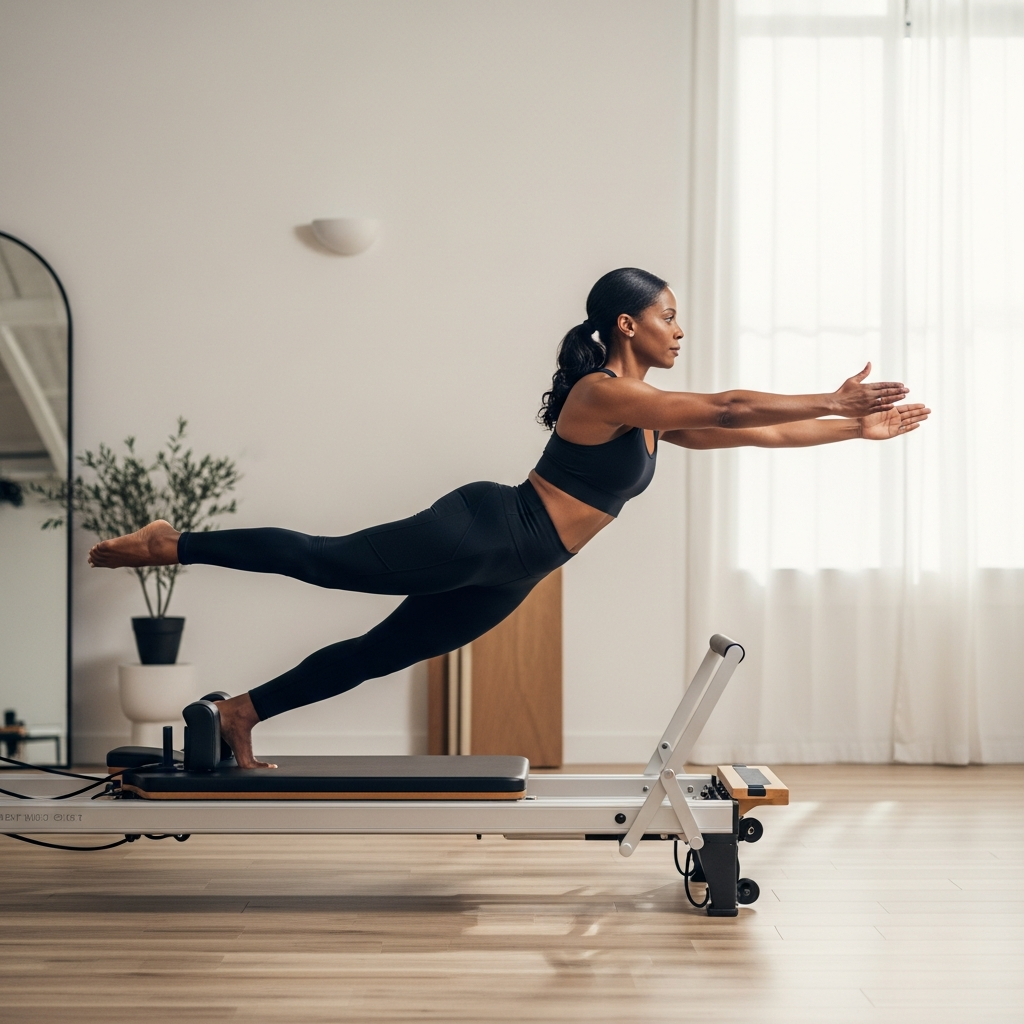
Walking into a Pilates studio for the first time can feel like stepping into a cross between a gym and a torture chamber. There’s the Reformer – this bed-like contraption with springs, pulleys, and straps that honestly looks like it belongs in a physical therapy clinic. Then you’ve got the Cadillac (which actually does look a bit like a four-poster bed), the Chair, the Barrel…
But here’s the thing – and this might be counterintuitive – all that equipment isn’t there to make things harder. It’s designed to help you find proper alignment and movement patterns. Those springs? They provide resistance, sure, but they also offer assistance when you need it.
It’s like having training wheels, except instead of taking them off eventually, you graduate to using them in more sophisticated ways. The equipment meets you where you are – whether you’re recovering from an injury or training for a marathon.
Mat Classes vs. Equipment: What’s the Difference?
This is probably the first decision you’ll face when looking at class schedules. Mat classes happen on… well, mats. Just you, the floor, and sometimes small props like resistance bands or magic circles (they’re not actually magic, unfortunately).
Equipment classes use those spring-loaded machines I mentioned. Generally speaking, mat work is more challenging in some ways – you’re working against gravity without mechanical assistance. But equipment classes let you explore movements that would be impossible on the mat.
If mat work is like cooking with just a knife and cutting board – simple tools, maximum skill required – then equipment work is like having a fully loaded kitchen. Both can create amazing results, but the experience is completely different.
The Breathing Thing Everyone Talks About
Okay, let’s address this because it trips up almost everyone at first. Pilates has very specific breathing patterns, and they might feel completely backward from what seems natural.
In most forms of exercise, you exhale on the effort – like breathing out when you lift a weight. Pilates… well, sometimes it follows this rule, sometimes it doesn’t. You might find yourself breathing in during what feels like the hardest part of a movement.
Don’t stress about getting it perfect right away. Your instructor will guide you, and honestly? Even people who’ve been doing Pilates for years sometimes get confused about the breathing. Focus on moving well first – the breath patterns will click eventually. It’s like learning to pat your head and rub your belly at the same time… challenging at first, then suddenly second nature.
What to Wear (and What Not to Wear)
Forget the fancy activewear for now – you don’t need to look like an Instagram fitness influencer on day one. Comfortable, form-fitting clothes work best because your instructor needs to see your alignment. Think yoga pants or leggings, not baggy shorts that’ll ride up during leg circles.
Here’s something most people don’t realize: grip socks are worth their weight in gold. Regular socks turn you into a slip-and-slide disaster, and bare feet can get sweaty (trust me on this). Most Arlington studios sell grip socks, but you’ll pay a premium – grab a pair online for half the price.
One thing I always tell first-timers? Skip the jewelry. That cute bracelet will dig into your wrist during planks, and rings can be uncomfortable during mat work. Keep it simple.
The Equipment Situation (Don’t Panic)
Walking into a Pilates studio can feel like entering a medieval torture chamber… all those springs and pulleys and mysterious contraptions. The good news? You probably won’t touch the fancy equipment – called reformers – in your first few classes.
Most beginner classes start on the mat with small props: resistance bands, small balls, maybe some light weights. The studio provides everything, so don’t stress about buying anything upfront. Actually, that’s kind of liberating, isn’t it?
If you do graduate to reformer classes (and you probably will – they’re oddly addictive), the instructor will walk you through every adjustment. Those machines look complicated but they’re designed to help, not hinder. Think of them as your supportive workout buddy, just… made of metal and springs.
Booking Your First Class Like a Pro
Here’s an insider tip most studios won’t advertise: call instead of booking online for your first class. I know, I know – who calls anymore? But speaking with someone lets you ask questions, get recommendations for the best beginner instructor, and sometimes snag spots in “full” classes.
Many Arlington studios offer new client specials – unlimited classes for your first month, discounted intro packages, that sort of thing. Don’t jump on the first deal you see. Ask about their cancellation policy (life happens), what happens if you get injured, and whether you can freeze your membership if you travel for work.
Book your first class for a time when you’re not rushed. You’ll want to arrive 15 minutes early to fill out paperwork and get oriented. Scheduling it right before a big meeting? Recipe for stress.
Managing Expectations (The Real Talk)
You’re going to feel muscles you forgot existed. That’s normal. What’s not normal is sharp pain or feeling dizzy – speak up immediately if either happens.
Don’t expect to nail everything in your first class. Pilates has this sneaky way of making simple movements incredibly challenging. That exercise that looks easy? It’s probably working tiny stabilizer muscles that have been on vacation for years.
Your instructor might give you modifications – take them. There’s no shame in the beginner version. Actually, sometimes the modifications are harder than the “advanced” version because they require more control and awareness.
The Unspoken Studio Etiquette
Arrive a few minutes early, but not too early – instructors often use the time between classes to set up. Five to ten minutes is the sweet spot.
Most studios have cubbies or small lockers for your belongings. Bring as little as possible – just your water bottle, phone, and maybe a small towel. Leave the gym bag at home.
Here’s something nobody tells you: it’s totally fine to take breaks during class. If you need water or just need to breathe, do it. Good instructors actually prefer students who listen to their bodies over those who push through everything.
And speaking of instructors – they’re there to help, not judge. That correction they’re giving you? It’s not criticism, it’s guidance. Most of them genuinely love seeing people discover what their bodies can do.
After Class Reality Check
You might feel energized, or you might feel like you’ve been hit by a very polite truck. Both reactions are completely normal. Some people leave their first Pilates class feeling taller (it’s a real thing – all that spine work), others feel like they need a nap.
Don’t schedule anything too physical afterward. Your body will be processing new movement patterns, and those deep stabilizing muscles might feel a bit wobbly.
Most importantly? Don’t decide after one class whether Pilates is “for you.” Give it three or four sessions. Your body needs time to adapt, and frankly, so does your brain.
The Stuff Nobody Warns You About (But Should)
Let’s be real – everyone talks about how amazing Pilates is, but nobody mentions that your first few classes might feel like you’re trying to solve calculus while doing yoga. And honestly? That’s completely normal.
The biggest shock isn’t the physical challenge (though your core will definitely have opinions about those hundred pulses). It’s the mental gymnastics. You’re trying to breathe in a specific pattern, engage muscles you forgot existed, and follow instructions that sound like they’re in a foreign language. “Draw your shoulder blades down your back while lengthening through the crown of your head” – what does that even mean when you’re just trying not to fall over?
Here’s what actually happens: you’ll spend half the class feeling lost, a quarter of it comparing yourself to the person next to you who clearly lives at the studio, and the remaining quarter having these little “aha!” moments that make it all worth it.
When Your Body Rebels Against Basic Instructions
Your instructor says “neutral spine,” and suddenly you can’t remember what a spine is supposed to do. This isn’t because you’re uncoordinated – it’s because most of us have been sitting at desks for years, training our bodies to forget their natural alignment.
The solution isn’t to push harder or get frustrated. Start smaller than you think you need to. If the class is doing single-leg circles, maybe just lift your leg a few inches. If everyone’s flowing through a complex sequence, pick one element and focus on that. Your body needs time to remember how to move intentionally.
I’ve seen people get so caught up in “doing it right” that they hold their breath for entire exercises. But here’s the thing – if you’re not breathing, you’re not really doing Pilates. Better to do a simpler version while breathing properly than to nail the advanced modification while turning purple.
The Comparison Trap (And Why It’s Pointless)
That person flowing effortlessly through teaser variations? They’ve probably been coming for two years. The one who makes everything look graceful and easy… well, they’re having their own struggles too, just with different exercises.
But knowing this intellectually doesn’t stop your brain from going there. When comparison strikes – and it will – shift your focus to something specific and internal. How does this movement feel in your left hip versus your right? Can you make your exhale one beat longer? These tiny redirects help you drop back into your own experience.
Also, remember that everyone’s body tells a different story. Maybe you’re naturally flexible but lack strength. Maybe you’re strong but tight from years of running. Maybe you’re dealing with an old injury or just had a baby or haven’t moved much in months. Your Pilates practice gets to be exactly what it needs to be for your body, right now.
Equipment Anxiety Is Real
Those reformer machines look like medieval torture devices, and honestly, the first time you lie down on one, it might feel that way too. The springs make weird noises, the carriage moves when you don’t expect it to, and there are straps and handles everywhere.
Start with mat classes if the equipment feels overwhelming. You’ll learn the basic movement patterns and Pilates vocabulary without having to figure out springs and pulleys. When you do try equipment classes, arrive early and ask your instructor to show you the basics – how to adjust the springs, where to put your feet, how to get on and off safely.
Don’t be embarrassed to ask questions that seem obvious. “Which way do I face?” is a perfectly reasonable question when you’re staring at a piece of equipment you’ve never seen before.
The Soreness That Sneaks Up on You
Pilates soreness is… different. It’s not the burning muscle fatigue you get from lifting weights. It’s more like your deep stabilizing muscles are writing you strongly worded letters about being ignored for so long.
This typically shows up 24-48 hours later, often in places you didn’t even realize you worked. Your deep abdominals might feel tender when you laugh (which can be disconcerting if no one warned you). Your glutes might protest when you stand up from your desk.
This is normal and temporary, but it’s also your body’s way of asking for gentle movement and adequate recovery. Light walking, stretching, or even another gentle Pilates class can help more than lying on the couch waiting for it to pass.
The good news? This intense soreness phase doesn’t last forever. Your body adapts pretty quickly to the new movement patterns, and soon you’ll miss that “I definitely worked out yesterday” feeling.
What to Expect in Your First Few Classes
Here’s the thing about Pilates – it’s going to feel weird at first. And that’s completely normal.
You’ll probably leave your first session thinking, “Wait, I barely broke a sweat, but my abs are screaming.” That’s Pilates for you. It works muscles you didn’t even know existed, often in ways that feel deceptively gentle until… well, until you try to laugh the next day and realize your core has opinions about that.
Most people need about 3-4 sessions before they stop feeling like they’re speaking a foreign language. You know that moment when the instructor says “engage your powerhouse” and you’re not entirely sure if that’s a muscle or a motivational slogan? Yeah, that confusion fades pretty quickly.
Don’t expect to nail every movement right away. Actually, scratch that – don’t expect to nail ANY movement right away. I’ve seen former athletes struggle with basic breathing patterns, and that’s not a reflection of their fitness level. Pilates has its own vocabulary of movement, and your body needs time to learn it.
Timeline for Real Progress (Not Instagram Progress)
Let’s talk realistic expectations here, because I’m not going to tell you that you’ll transform your entire physique in two weeks.
Weeks 1-2: You’re mostly figuring out what goes where. Your form will be rough, you might feel uncoordinated, and you’ll definitely discover muscles that have been on vacation for years. This is foundation time – boring but essential.
Weeks 3-6: Things start clicking. You’ll begin to feel the difference between “going through the motions” and actually engaging the right muscles. Your balance improves, though you might still wobble during single-leg exercises (everyone does).
Weeks 7-12: This is where it gets interesting. Your posture starts shifting – people might even comment that you look taller. Core strength becomes noticeable in daily activities. You know, like being able to get out of bed without that little grunt we all pretend we don’t make.
3-6 months: Real changes happen here. Better sleep, less back pain, clothes fitting differently. Your body starts to understand what “neutral spine” actually means, and you catch yourself sitting up straighter without thinking about it.
I always tell new clients that consistency beats intensity every single time. Two classes a week for three months will get you further than five classes a week for three weeks followed by… nothing.
Building Your Routine (Without Burning Out)
Start with twice a week if you can swing it. Once a week? You’ll maintain what you have, but progress will be glacial. Three times might be ambitious initially – your body needs recovery time to adapt.
Here’s something nobody talks about – the mental game. Around week 4 or 5, you might hit a wall where classes feel harder, not easier. That’s normal. Your instructor is probably adding complexity as your basic form improves. It’s like upgrading from multiplication tables to algebra – the concepts build on each other.
Don’t get caught up in comparing yourself to the person on the reformer next to you who looks like they were born doing Pilates. They probably started exactly where you are now… they just started six months ago.
When to Level Up (And When to Stay Put)
You’ll know you’re ready for intermediate classes when basic exercises feel automatic – not easy, but automatic. When you can maintain proper form while actually listening to the instructor’s cues instead of just trying to survive the movement.
Some people are ready in 8 weeks. Others need 6 months. There’s no shame in taking your time – actually, there’s wisdom in it. I’ve seen too many people rush into advanced classes and develop compensation patterns that take forever to undo.
Your instructor should be guiding this progression anyway. Trust their judgment, even when your ego wants to jump ahead.
Setting Yourself Up for Long-term Success
The clients who stick with Pilates long-term? They’re not the ones who came in expecting dramatic transformation in 30 days. They’re the ones who showed up consistently, listened to their bodies, and gave themselves permission to be beginners.
Find a schedule that works with your actual life, not your aspirational life. Better to commit to twice a week and stick with it than plan for daily classes and burn out by month two.
Remember – this isn’t just about getting stronger or more flexible. It’s about building a relationship with your body that’ll serve you for decades to come.
Taking That First Step (And Yes, It’s Perfectly Normal to Feel Nervous)
Look, I get it. Walking into any new fitness environment can feel a bit like showing up to a party where you don’t know anyone – except this party involves spandex and you’re not sure if you’ll accidentally fall over in front of strangers. But here’s what I’ve learned after years in the wellness space: that nervous flutter in your stomach? It’s actually excitement disguised as anxiety.
The Arlington Pilates community is genuinely welcoming. These aren’t the intimidating gym environments you might be picturing – you know, the ones where everyone seems to know exactly what they’re doing while you’re still figuring out which end of the equipment is up. Pilates studios tend to attract people who are more focused on their own growth than judging others. Actually, that reminds me… most first-time clients are surprised by how supportive other class members can be. There’s something about the shared experience of trying to hold a plank while your instructor cheerfully counts “just five more seconds!” that bonds people together.
And speaking of instructors – they’ve seen it all. The person who shows up in regular gym shorts (totally fine, by the way), the client who whispers “I have no idea what I’m doing,” the student who’s convinced they’re not flexible enough… they’ve guided thousands of people through those first few sessions. Your instructor wants you to succeed, not because it makes them look good, but because helping people discover what their bodies can do – that’s literally why they got into this field.
The beautiful thing about starting Pilates is that you don’t need to be anything other than willing to try. You don’t need perfect form, expensive gear, or years of fitness experience. You just need to show up. Your body will adapt, your confidence will grow, and those movements that feel impossible during week one? They’ll become second nature faster than you think.
Every single person who now flows effortlessly through advanced classes was once exactly where you are – staring at class schedules, wondering if they’re ready, questioning whether they’ll fit in. The difference between people who transform their relationship with fitness and those who stay stuck isn’t talent or natural ability… it’s simply taking that first step.
Ready to Start Your Own Story?
If you’ve been thinking about trying Pilates – whether you’re dealing with chronic pain, looking to build strength, or just curious about what all the fuss is about – you don’t have to figure it out alone.
Our team has helped hundreds of Arlington residents discover how Pilates can fit into their lives and support their health goals. We’re not here to pressure you or convince you that you need to commit to anything major right away. We’re here to answer questions, help you find the right starting point, and make sure you feel confident walking into that first class.
Give us a call or send us a message. Let’s talk about what you’re hoping to achieve and how we might help you get there. Because here’s the truth – you deserve to feel strong, capable, and comfortable in your own body. And sometimes, all it takes is one conversation to get that journey started.