Pilates Close to Oak Cliff: How to Find the Right Studio
You know that moment when you’re scrolling through Instagram at 10 PM, watching someone effortlessly flow through Pilates moves while you’re horizontal on your couch with a bag of chips? Yeah… we’ve all been there. You think to yourself, “I really should try Pilates,” then immediately spiral into all the reasons why it won’t work: *I’m not flexible enough. I don’t have the right clothes. What if everyone else is super advanced? What if I fall off those weird reformer machines?*
If you’re reading this from Oak Cliff – or anywhere nearby – chances are you’ve had this exact internal conversation. Maybe you’ve driven past those sleek studio windows with people stretching gracefully inside, feeling equal parts inspired and intimidated. Or perhaps you’ve already tried a class or two somewhere else and left feeling… well, not quite right about the whole experience.
Here’s the thing about Pilates (and I say this as someone who once thought it was just “fancy stretching for rich people”) – when you find the *right* studio, it’s like finding that perfect coffee shop where the barista remembers your order. Everything just clicks. The instructor gets your body’s quirks, the atmosphere feels welcoming rather than judgmental, and you actually look forward to showing up.
But finding that perfect fit? That’s where things get tricky.
The Oak Cliff area has seen this incredible wellness boom lately – which is fantastic – but it also means you’re faced with more choices than ever. There’s the boutique studio that looks like it belongs in a magazine but costs more than your car payment. The chain gym with Pilates classes that feel more like aerobics with fancy names. The hole-in-the-wall place that might be amazing but has a website from 2003 and you can’t tell if they’re even still open.
And then there’s the deeper stuff – the questions you probably haven’t even asked yourself yet. Like, what *type* of Pilates do you actually need? (Spoiler alert: there are several, and they’re not all created equal.) How do you know if an instructor is actually qualified, or just really good at looking the part? What should you expect to pay without getting ripped off or settling for bottom-barrel quality?
Maybe you’re dealing with a specific issue – that nagging lower back pain from your desk job, or you’re trying to rebuild strength after an injury, or you’re just tired of feeling disconnected from your body. Perhaps you’ve been told Pilates could help, but you have no idea where to start. Trust me, walking into the wrong studio when you’re already feeling vulnerable about your fitness level? That’s a special kind of frustrating.
I’ve been there. Actually, I’ve been to most of the studios in and around Oak Cliff – some multiple times, some… well, let’s just say once was enough. I’ve seen the good, the bad, and the “wait, are we actually doing Pilates or is this interpretive dance?”
What I’ve learned – sometimes the hard way – is that the right Pilates studio isn’t just about convenient location or pretty Instagram photos. It’s about finding a place where the instructors actually see *you*, not just another body in class. Where the equipment is well-maintained (because nobody wants a surprise spring malfunction mid-exercise). Where you feel challenged but not defeated, supported but not coddled.
In this piece, we’re going to walk through everything you need to know to find your Pilates home base in the Oak Cliff area. We’ll talk about red flags to avoid, green flags to look for, and all those practical questions like pricing, class formats, and what to expect in your first session. I’ll share some insider tips about what questions to ask before you commit, and yes – we’ll discuss specific studios and what makes each one unique.
Because here’s what I really want you to know: that Instagram-worthy Pilates practice? It’s absolutely achievable. You just need to find the right place to nurture it. And despite what your 10 PM couch-scrolling brain might tell you, you don’t need to be flexible, coordinated, or wearing $200 leggings to start.
You just need to know where to look.
What Exactly Is Pilates Anyway?
You know, if you’re scratching your head wondering what Pilates actually is – you’re not alone. I get this question constantly, and honestly? It’s one of those things that’s easier to experience than explain.
Think of Pilates like… well, imagine if yoga and physical therapy had a baby, and that baby was raised by a really precise German engineer. That’s Pilates. It’s all about controlled movement, breathing, and building what practitioners call your “powerhouse” – basically your core, but fancier.
Joseph Pilates (yes, it’s named after a person) developed this method back in the early 1900s. The guy was obsessed with the idea that physical and mental health were completely connected. Pretty revolutionary thinking for his time, actually. He called his method “Contrology” originally, which… okay, that name definitely wouldn’t have caught on today.
The Equipment Situation (It’s Not as Scary as It Looks)
Walk into any Pilates studio and you’ll probably feel like you’ve stumbled into some medieval torture chamber. Those contraptions with springs, pulleys, and leather straps? They look intimidating, but they’re actually your friends.
The Reformer is the big kahuna – it’s like a sliding bed with spring resistance. Sounds simple, right? But this machine can give you one of the most challenging workouts of your life while being incredibly gentle on your joints. It’s counterintuitive, I know.
Then there’s the Cadillac (also called a Trapeze Table), which looks like a four-poster bed that got into a fight with a jungle gym. The Chair appears innocent enough until you try to do a tricep press on it and realize your entire core has to work just to keep you stable.
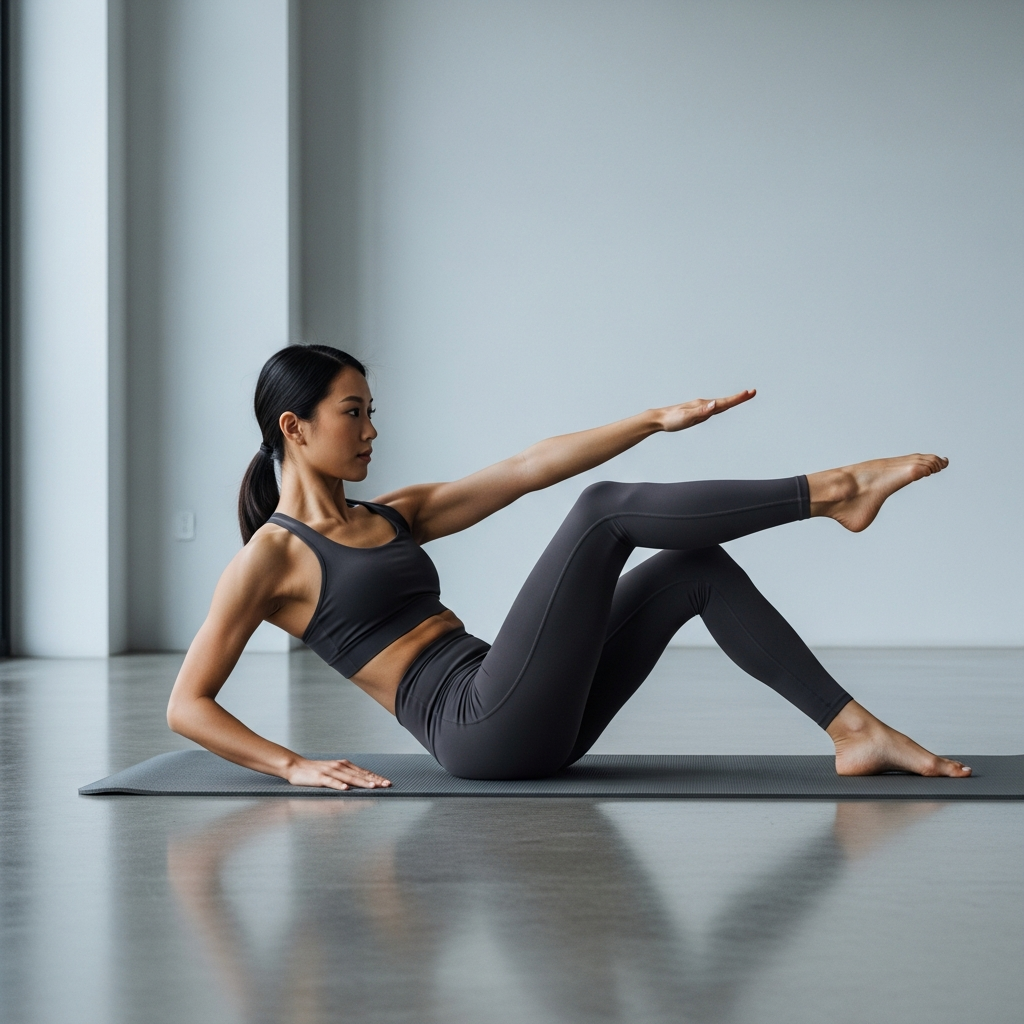
Mat classes use just… well, a mat. But don’t let the simplicity fool you. Some of the most challenging Pilates work happens on the ground with nothing but your body weight and gravity.
Why Your Body Craves This Stuff
Here’s what’s fascinating about Pilates – it works on something most of us have completely forgotten exists: proprioception. That’s your body’s ability to know where it is in space. You know how you can touch your nose with your eyes closed? That’s proprioception.
Modern life has kind of… broken this system for most of us. We sit hunched over computers, we rush through movements, we barely breathe properly. Pilates essentially hits the reset button on all of this.
The breathing alone is worth the price of admission. In Pilates, you breathe into your ribs laterally – imagine trying to expand your ribcage like an accordion. It’s weird at first, but once you get it? Game changer. Your nervous system actually starts to calm down.
The Mind-Body Thing (It’s Real, Even If It Sounds Woo-Woo)
Okay, I’m going to say something that might sound a bit out there, but stick with me. Pilates isn’t just about getting stronger or more flexible – though you’ll definitely get both. It’s about rewiring how your brain talks to your muscles.
Most of us go through life with certain muscles completely checked out while others are doing overtime. Your hip flexors might be tighter than a jar of pickles while your glutes are basically on vacation. Pilates wakes everything up and teaches it all to work together.
It’s like conducting an orchestra where half the musicians have been playing with earplugs and the other half have been playing too loud. Suddenly, everyone’s listening to each other and – boom – beautiful music.
Different Strokes for Different Folks
Not all Pilates is created equal, and that’s actually a good thing. Classical Pilates sticks religiously to Joseph Pilates’ original method – same exercises, same order, every time. It’s like learning a very specific language.
Contemporary Pilates takes those principles but adapts them. Maybe your instructor adds some physical therapy techniques or incorporates props like balls and bands. It’s more flexible, which can be great if you’re dealing with injuries or specific goals.
Then there’s Clinical Pilates, which is usually taught by physical therapists or specially trained instructors. This is the stuff that can help you recover from back surgery or manage chronic pain.
The thing is, you don’t need to decide which “type” you want before you start looking. A good instructor will adapt to what your body needs… which brings us to finding that perfect studio in Oak Cliff.
What to Look for During Your Studio Visit
Here’s the thing about Pilates studios – they all look pretty on Instagram, but you need to dig deeper. When you walk into a potential studio, forget the fancy lighting for a second and check out the equipment. Are the reformer springs properly maintained? Do the machines look like they’ve been serviced recently, or are they held together with hope and duct tape?
I always tell people to watch how instructors handle transitions between exercises. If they’re constantly fiddling with springs and straps during class… well, that’s time stolen from your workout. A well-run studio has equipment that flows smoothly, and instructors who know their machines inside and out.
Also – and this might sound weird – smell the place. Not in a creepy way, but studios that smell overly perfumed are usually covering something up. Fresh, clean air with maybe a hint of eucalyptus? That’s what you want.
The Real Questions to Ask Before You Sign Up
Don’t just ask about pricing (though obviously, do that too). Here are the questions that’ll separate the wheat from the chaff
“What’s your instructor training requirement?” Some studios hire people with weekend certifications. Others require 500+ hours of training. Guess which ones deliver better results?
“Can I modify exercises if I have limitations?” This reveals whether they actually understand bodies or just follow scripts. A good instructor should immediately start asking about your specific needs.
“What happens if I need to cancel or reschedule?” Life happens – sick kids, work emergencies, random Tuesday blues. Studios with rigid policies often lack empathy for real-world challenges.
Here’s a sneaky one: “What’s your busiest time?” Then book a trial class during that time. You’ll see how they handle crowds, whether equipment availability becomes an issue, and if instructors still give personal attention when things get hectic.
Reading Between the Lines of Class Descriptions
Studio websites love flowery language, but let me translate some common Pilates-speak for you
“All levels welcome” often means the class moves too fast for true beginners but bores intermediate students. Look for studios that clearly separate beginner, intermediate, and advanced classes.
“High-energy” usually translates to loud music and quick transitions – great if you love that vibe, exhausting if you prefer mindful movement.
“Traditional Pilates” might mean they stick rigidly to Joseph Pilates’ original methods… which were designed for men in the 1920s. Modern bodies need modern modifications.
The Money Talk – What’s Actually Worth Paying For
Here’s where I get a little controversial: the cheapest option isn’t always the worst, and the most expensive isn’t automatically the best. I’ve seen $200/month studios with poorly maintained equipment and $89/month places that were absolutely stellar.
What you should pay extra for: small class sizes (8 people max on reformers), proper instructor-to-student ratios, and equipment that doesn’t make scary noises. Those fancy towel services and kombucha on tap? Nice to have, but not deal-breakers.
Most Oak Cliff studios offer package deals, but here’s a secret – many will negotiate if you ask nicely. Especially if you’re willing to commit to off-peak hours or help them fill slower time slots.
Trust Your Gut (Literally and Figuratively)
You know that feeling when you walk into a space and just… know? Maybe it’s how the instructor remembers your name after one class, or the way other students chat naturally before sessions start. These intangible things matter more than perfect Instagram aesthetics.
Pay attention to how you feel during your trial class. Not just physically (though soreness the next day is normal), but emotionally. Do you feel supported or intimidated? Challenged or overwhelmed?
And here’s something nobody talks about – notice the other students. Are they a mix of ages and fitness levels, or does everyone look like they stepped out of an activewear catalog? Studios that cultivate real community tend to attract real people with real bodies and real goals.
The right Pilates studio should feel like a place you actually want to show up to, especially on days when your motivation is running on empty. Because let’s be honest – we all have those days.
When Your Body Feels Like It’s Speaking a Different Language
Let’s be honest – walking into your first Pilates class can feel like everyone else got a secret handbook you never received. The instructor’s calling out movements that sound like they’re from another planet, and somehow everyone else seems to know exactly what a “hundred” is (spoiler: it’s not as fun as it sounds).
Here’s what actually helps: most good studios in Oak Cliff offer beginner workshops or intro sessions. Take them. Seriously. I know it feels like you should just jump in – we’re all impatient that way – but learning the basic vocabulary and breathing patterns beforehand is like having a GPS when everyone else is navigating by the stars.
And that weird Pilates breathing? The one where you’re supposed to expand your ribcage while pulling your belly button to your spine? Yeah, that’s genuinely confusing at first. Practice it at home while watching TV. No judgment, no pressure, just you figuring out how your lungs actually work.
The Intimidation Factor (It’s Real, and It’s Okay)
You know that feeling when you peer through the studio windows and see people doing moves that look like they’re defying gravity? That knot in your stomach isn’t weakness – it’s completely normal.
The truth is, some studios do attract the super-advanced crowd, and that can feel… well, intimidating doesn’t even cover it. But here’s something most people don’t realize: those bendy, strong people were beginners once too. Most of them are actually excited to see new faces and will offer encouragement if you let them.
Still feeling overwhelmed? Look specifically for studios that advertise “beginner-friendly” classes or have level systems clearly marked. In Oak Cliff, many instructors will chat with you before class if you mention you’re new. They want you to succeed – your success is literally their job.
The Money Reality Check
Let’s talk about the elephant in the room – Pilates isn’t cheap. Between class packages, equipment rentals, and those cute workout clothes everyone seems to wear… it adds up fast.
But here’s what I’ve learned works: start with group classes instead of private sessions. Many Oak Cliff studios offer new student specials – like unlimited classes for your first month at a reduced rate. Use that time to figure out if you actually like it before committing to expensive packages.
Some studios also have work-study programs where you can clean equipment or help with administrative tasks in exchange for classes. It’s not glamorous, but it works. Community centers sometimes offer Pilates too, though the instruction quality can be hit-or-miss.
Dealing with Physical Limitations (Because Bodies Are Complicated)
Maybe you’ve got a cranky lower back, wonky knees, or shoulders that protest certain movements. The standard advice is always “tell your instructor about injuries” – but that doesn’t help when you’re not even sure what might be a problem until you’re in the middle of a movement.
Actually good instructors will offer modifications without making a big deal about it. They’ll quietly show you alternative positions or suggest props. But you have to speak up when something doesn’t feel right. That burning sensation in your muscles? Probably good. Sharp pain in your joints? Definitely not.
Look for studios that keep props easily accessible – blocks, straps, bolsters. That’s usually a sign they’re comfortable working with different body types and limitations.
The Consistency Trap
Here’s the thing nobody warns you about: Pilates works, but not after three classes. Your core won’t transform in two weeks, and you probably won’t feel that mind-body connection everyone raves about for at least a month.
The solution isn’t willpower – it’s lowering the bar initially. Instead of committing to four classes a week (which you’ll inevitably miss and then feel guilty about), start with one or two. Make it so easy you can’t fail.
Some Oak Cliff studios have online options too, which can help fill in gaps when you can’t make it to the physical location. It’s not the same as in-person instruction, but it keeps the momentum going.
The goal isn’t perfection – it’s showing up consistently enough that it becomes part of your routine rather than this big, dramatic thing you have to psych yourself up for every time.
Setting Realistic Expectations for Your Pilates Practice
Let’s be honest – you’re probably not going to walk out of your first Pilates class feeling like a graceful swan. More likely? You’ll discover muscles you forgot you had, and they’ll remind you of their existence for the next day or two.
That’s completely normal, by the way. Pilates works your body in ways that even regular gym-goers find surprising. The precise, controlled movements target deep stabilizing muscles that don’t get much attention in traditional workouts. So if you’re feeling a bit… well, wobbly after your first few sessions, you’re right on track.
Most people start noticing improvements in posture and core strength within 3-4 weeks of consistent practice – we’re talking twice a week here, not once a month. But here’s the thing about Pilates… it’s like learning a new language. You might understand the basic concepts quickly, but true fluency takes time.
Don’t expect to master the teaser or roll-up in your first month. Actually, don’t expect to master them in your first year – some of us are still working on that perfect teaser form after years of practice, and that’s perfectly fine.
What Normal Progress Actually Looks Like
In your first month, you’ll probably feel stronger and more aware of your posture. You know that moment when you catch yourself slouching and automatically straighten up? That’s Pilates working its magic on your body awareness.
Around month two or three, you might notice your back doesn’t ache as much after long days at your desk. Your balance might improve – maybe you don’t wobble quite as much when putting on your shoes while standing up.
By month six, if you’ve been consistent (and by consistent, I mean showing up even when you don’t feel like it), you’ll likely see more significant changes. Stronger core, better flexibility, improved coordination. That’s when people usually start telling you that you look taller or ask if you’ve been working out.
But here’s what I wish someone had told me when I started – progress isn’t always linear. Some weeks you’ll feel amazing, like you could hold a plank forever. Other weeks? You’ll struggle with exercises that felt easy the week before. That’s not regression; that’s just how bodies work. Stress, sleep, hormones, what you ate for lunch – it all affects your performance.
Your First Week Game Plan
Choose your studio and commit to at least 4-6 sessions over your first month. I know that sounds like a lot, but here’s why – Pilates has a learning curve, and spacing out your sessions too much means you’ll spend every class relearning the basics instead of building on them.
Most Oak Cliff studios offer beginner packages or trial memberships. Take advantage of these. It gives you a chance to figure out if the studio’s vibe matches yours without committing to a full membership right away.
Arrive 10-15 minutes early for your first class. Not just to fill out paperwork (though there’s always paperwork), but to chat with the instructor about any injuries, concerns, or goals you have. Trust me on this – good instructors want to know if your left shoulder’s been bothering you or if you’re hoping Pilates will help with your running.
Building Your Routine
After your first month, you’ll have a better sense of what works for your schedule and body. Some people thrive with back-to-back classes twice a week. Others prefer spreading sessions throughout the week.
The key is consistency over intensity. Two classes a week for six months will give you better results than five classes a week for six weeks followed by… well, nothing.
And here’s something nobody talks about enough – it’s okay to modify. Forever. I’ve been doing Pilates for years, and I still modify exercises based on how I’m feeling that day. A good instructor will never make you feel bad about taking the easier variation.
Consider keeping a simple log of how you feel after each session. Not anything elaborate – just a quick note about energy levels, what felt challenging, what felt good. You’ll be surprised how encouraging it is to look back and see your progress when you’re having one of those “am I even getting stronger?” days.
The bottom line? Give yourself at least three months of consistent practice before deciding whether Pilates is for you. That’s enough time for your body to adapt and for you to start seeing the benefits that keep people coming back to their mats week after week.
Finding the right Pilates studio in Oak Cliff doesn’t have to feel overwhelming – though I know it can seem that way when you’re scrolling through endless websites and reading reviews that all sound the same. The truth is, the “perfect” studio is really just the one that fits *your* life, your body, and your goals.
Trust Your Gut (Literally and Figuratively)
You know that feeling when you walk into a space and just… breathe easier? That’s what you’re looking for. Maybe it’s the way the instructor remembers your name after the second class, or how they modify movements without making you feel singled out. Could be something as simple as the studio smelling like eucalyptus instead of industrial cleaner.
Don’t overthink it too much. Your body will tell you what feels right – whether that’s the supportive hands-on adjustments, the challenge level that pushes without punishing, or simply the vibe that makes you actually *want* to show up twice a week.
Small Steps, Big Changes
Starting Pilates (or getting back into it) is like learning to drive in a new city. Everything feels unfamiliar at first, but then one day you realize you know exactly which lane to be in without thinking about it. The same thing happens with your body – those wobbly planks become steady, that core you couldn’t quite “find” suddenly shows up when you need it.
And here’s something nobody talks about enough… you don’t have to commit to being a Pilates person forever. Maybe you try it for three months and discover you prefer yoga. Or maybe it becomes the thing that finally helps your back stop aching after long days at your desk. Both outcomes are perfectly fine.
You’re Not Alone in This
I’ve worked with so many people who felt intimidated walking into their first Pilates class – worried they weren’t flexible enough, strong enough, or coordinated enough. (Spoiler alert: nobody is, at first.) What I’ve learned is that the best studios understand this completely. They’ve created spaces where you can wobble, ask questions, and even laugh at yourself when you fall out of a pose.
The Oak Cliff community has this wonderful way of supporting each other, and that extends to the fitness world too. You’ll likely find yourself chatting with the person next to you about everything except Pilates – weekend plans, restaurant recommendations, where to find the best tacos. It’s these little connections that often keep people coming back more than perfect form ever could.
Ready to Take That First Step?
Look, I could keep writing about all the benefits and considerations, but at some point you just have to try a class and see how it feels. Your future self – the one with better posture, less back pain, and maybe a little more confidence – is probably hoping you’ll take that leap sooner rather than later.
If you’re feeling stuck or have questions about how Pilates might work with your specific health goals (especially if weight management is part of the picture), we’re here. Sometimes it helps to talk through your concerns with someone who understands how movement and wellness all fit together. Reach out – we’d love to help you figure out the best path forward, whether that includes our clinic or just some friendly guidance toward the right Oak Cliff studio for you.