What Should Beginners Expect From Pilates Classes in Mesquite?
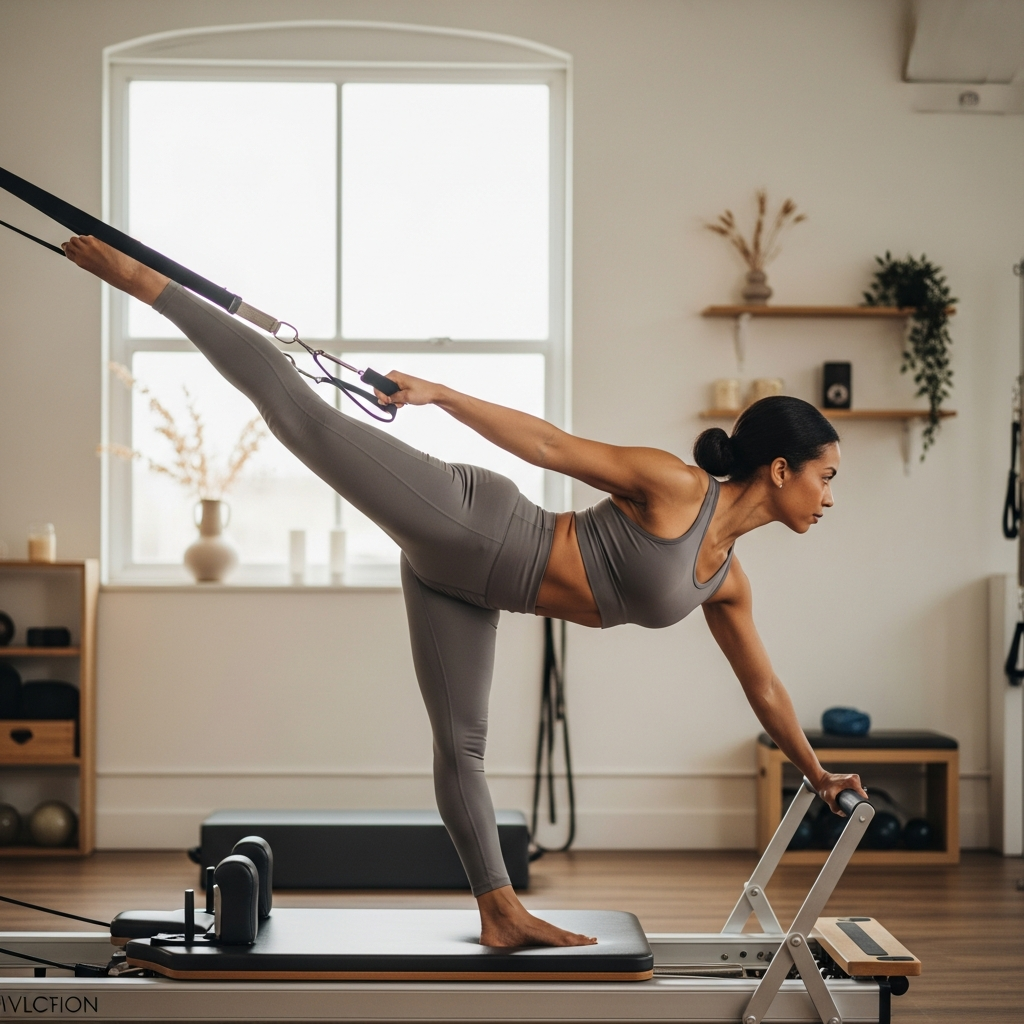
You’re standing outside the glass doors of that bright, airy studio on Town East Boulevard, watching through the windows as people twist themselves into pretzel-like positions on what look like medieval torture devices. Your palms are a little sweaty – and not from the Texas heat.
You’ve been thinking about trying Pilates for months now. Maybe your doctor mentioned it during your last visit, or your sister won’t stop raving about how it “changed her life” (she says this about everything from kombucha to crystal healing, but still…). Or perhaps you’re like most of us – you caught a glimpse of yourself in a store window and thought, “When did my posture get so terrible?”
Here’s the thing about Pilates in Mesquite – it’s having a moment. Drive down any major street and you’ll spot at least three studios that weren’t there two years ago. But unlike that spinning craze from 2019 that burned out faster than a Fourth of July sparkler, Pilates seems to be sticking around. And there’s a reason for that.
The problem is… nobody really talks about what those first few classes are actually like. Sure, your friend Jenny mentions she “loves her instructor” and something about “core strength,” but what does that mean for you? What should you wear? Will you be the only one who can’t touch their toes? And honestly – will you look completely ridiculous trying to figure out whatever contraption they put you on?
I get it. I’ve been there too. That mixture of excitement and mild terror when you’re about to try something new that everyone else seems to have mastered while you were busy binge-watching Netflix. It’s like showing up to a party where everyone knows the inside jokes except you.
But here’s what I wish someone had told me before my first class (and what I’m telling you now): Pilates isn’t about being perfect. It’s not about looking like those Instagram influencers who somehow make everything appear effortless. It’s about showing up, breathing through the movements, and discovering muscles you forgot you had.
The beautiful thing about Pilates studios in Mesquite? They get beginners. Really get them. These aren’t intimidating fitness temples where you need a certain look or level to walk through the door. Most instructors here understand that you might be coming from years of desk jobs, kid-chasing, or maybe you’re just tired of feeling disconnected from your own body.
What you’re about to read isn’t going to sugarcoat the experience – because let’s be real, your legs might shake during that first leg circle series, and you’ll probably discover muscles between your shoulder blades that you didn’t know existed. But it’s also not going to scare you away from something that could genuinely make you feel stronger, taller, and more confident in your own skin.
We’re going to walk through what actually happens in those first few classes. The good stuff – like how your instructor will modify exercises so you’re not dying five minutes in. The awkward stuff – like figuring out the difference between all those springs and straps. And the surprising stuff – like how focusing on your breath for an hour might be exactly what your stressed-out mind needs.
You’ll learn about the different types of classes (spoiler: not all Pilates is created equal), what to expect from your first session with those intimidating-looking reformer machines, and how to set realistic expectations that won’t leave you feeling defeated after week one.
Most importantly, we’ll talk about how to find the right fit for you in Mesquite’s growing Pilates scene – because the instructor who works miracles for your neighbor might not be your cup of tea, and that’s perfectly okay.
So take a deep breath. Put down that phone you’ve been clutching while googling “is Pilates hard?” for the hundredth time. You’re about to discover what thousands of people in Mesquite already know – that sometimes the best things happen when you step through those glass doors, even when your palms are sweaty.
What Actually Happens in a Pilates Class
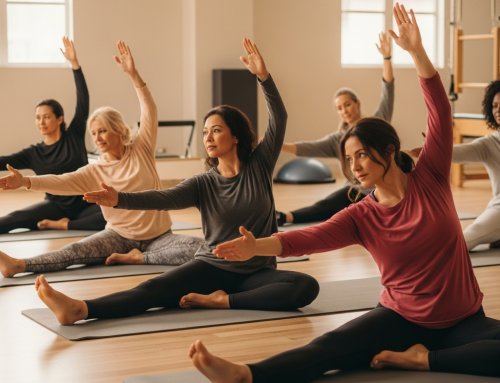
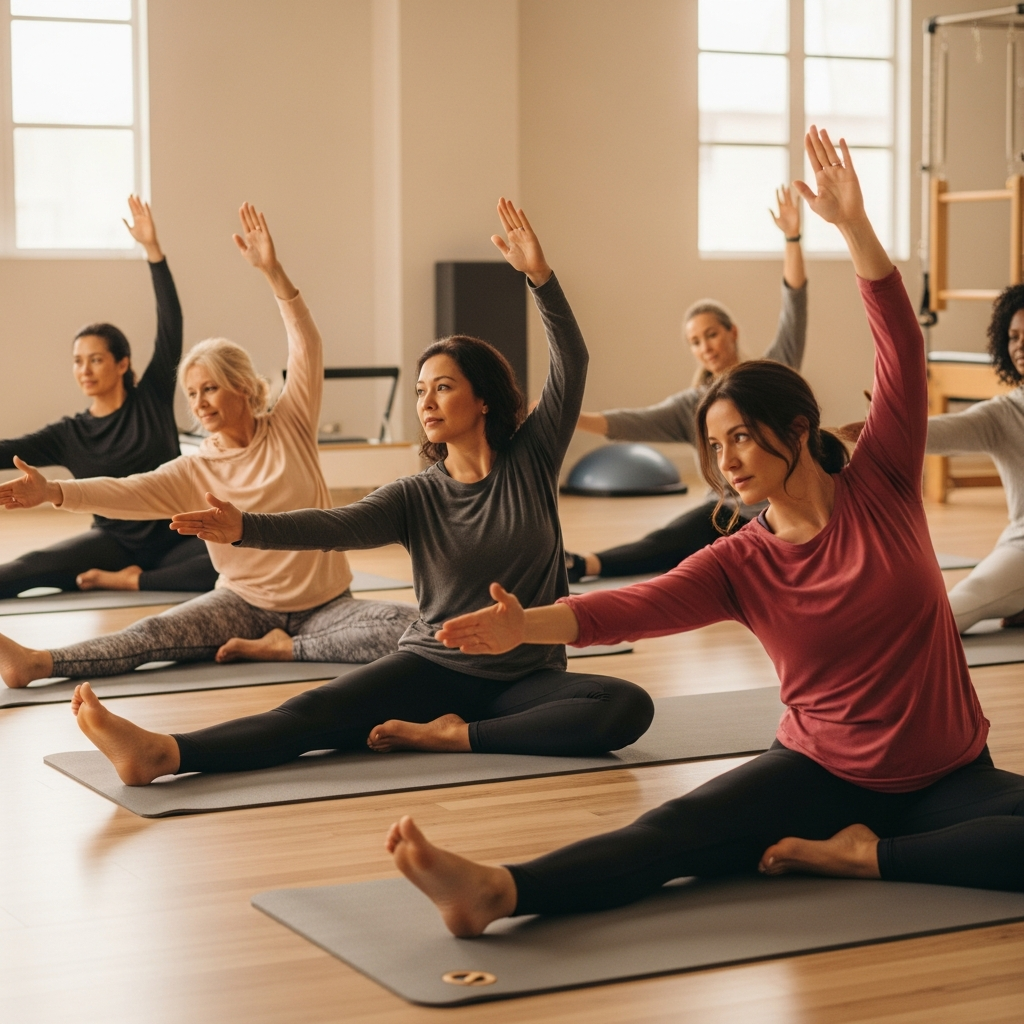
You walk into your first Pilates class and… it’s probably not what you pictured. Maybe you’re expecting something like yoga (it’s not, though there are similarities). Maybe you think it’ll be like a regular gym workout (nope, different animal entirely).
Here’s the thing – Pilates is kind of like learning to drive a manual transmission when you’ve only ever driven automatic. Everything feels deliberate, controlled, and honestly? A bit awkward at first.
Most classes start with what instructors call “centering” – which is just a fancy way of saying “let’s get your brain and body talking to each other.” You’ll lie on your back, maybe with your knees bent, and focus on your breathing while gently engaging your core. Think of it as warming up your internal engine before you start driving.
The Core Truth (And Why It’s Trickier Than You Think)
Everyone talks about Pilates and “core strength,” but here’s where it gets confusing – your core isn’t just your abs. I know, I know… that’s what we all thought too.
Your core is more like the foundation of a house. It includes your deep abdominal muscles (the ones you can’t see in the mirror), your back muscles, your pelvic floor, and even your diaphragm. It’s this whole support system that most of us have been ignoring for years.
In class, when your instructor says “engage your core,” they’re not asking you to suck in your stomach or crunch your abs. They want you to gently draw everything inward and upward – like you’re trying to zip up a pair of jeans that’s just a smidge too tight, but without holding your breath.
This feels weird at first. You might find yourself overthinking every movement, which is… actually kind of the point.
The Equipment Situation
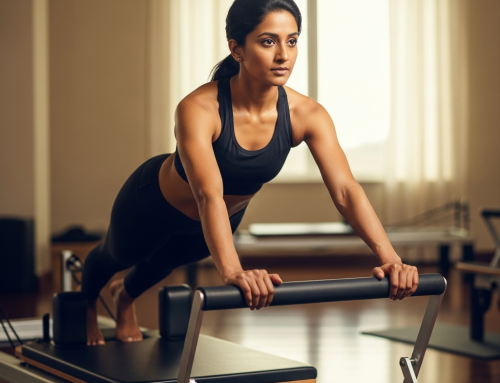
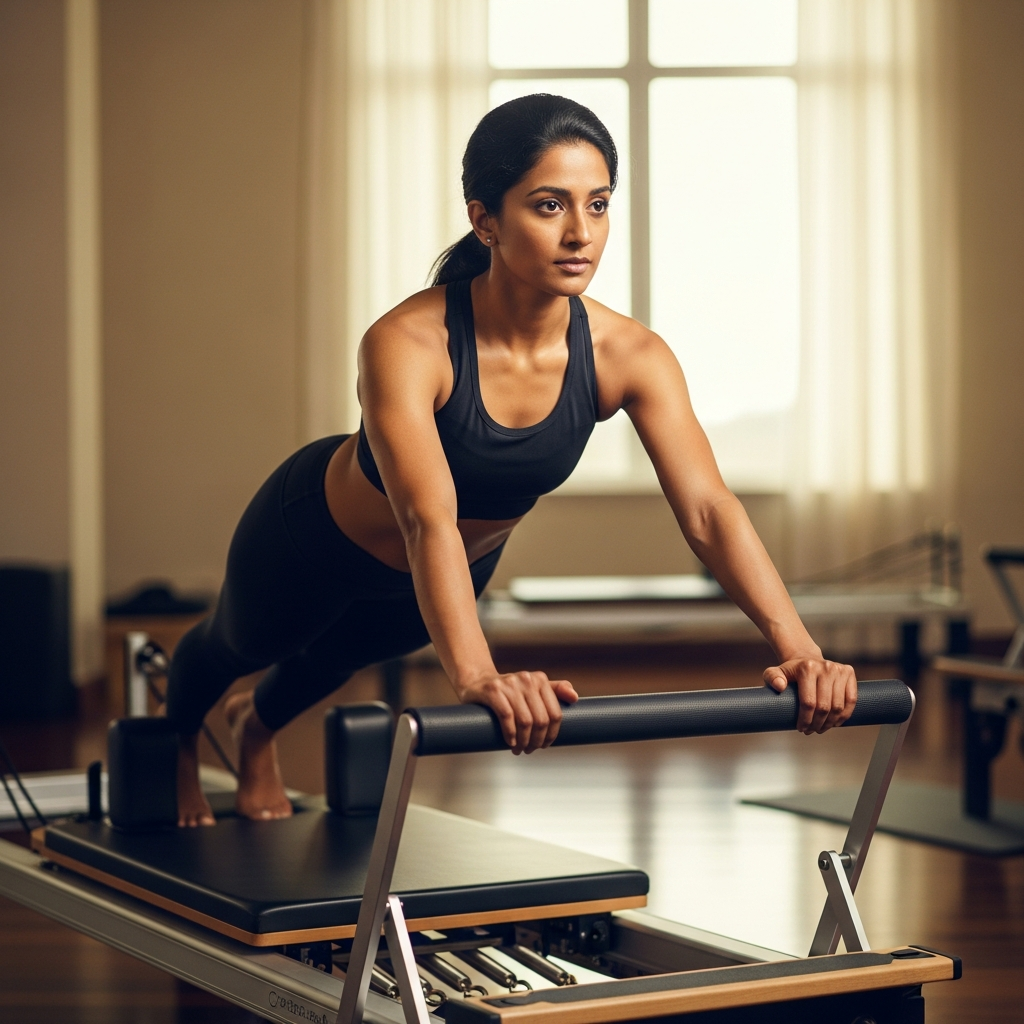
Now, about those intimidating-looking machines you might see – the Reformer, the Cadillac, the Chair. (Yes, they really call one of them the Cadillac, and no, I don’t know why.)
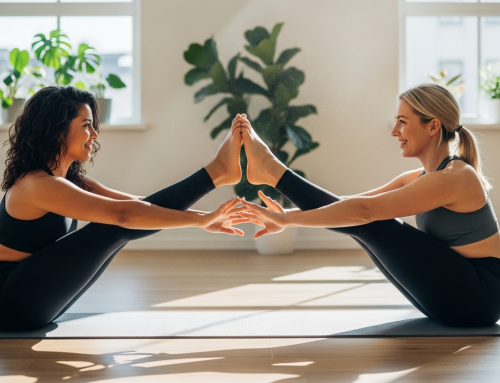
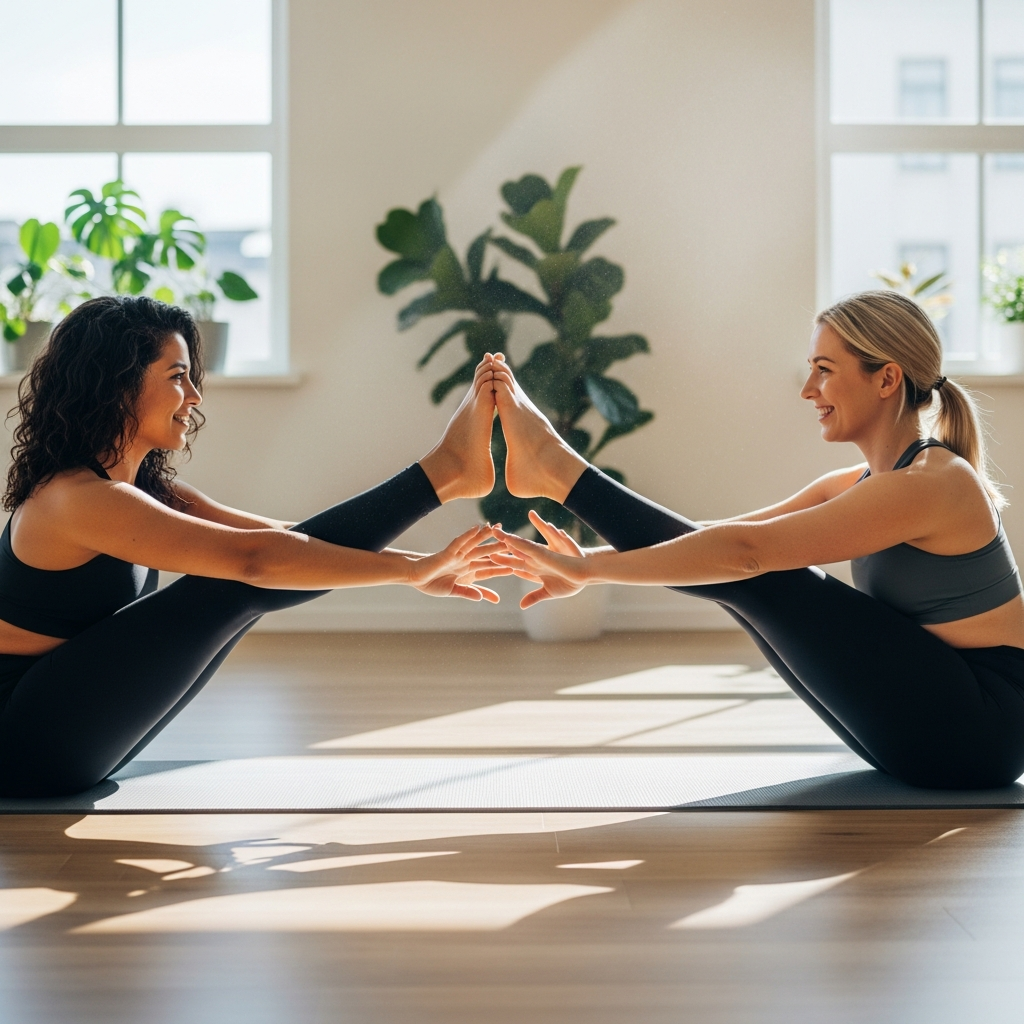
If you’re doing mat Pilates, you won’t need to worry about these contraptions right away. Mat classes use props like resistance bands, small balls, and magic circles (which are just flexible rings – nothing actually magical about them, unfortunately).
The equipment classes? That’s where things get interesting. The machines use springs for resistance, which creates this unique feeling – like you’re working against something that’s helping you at the same time. It’s resistance that gives you feedback, almost like having a training partner who’s always there to support you but never lets you slack off.
Movement Patterns That Make You Think
Here’s what caught me off guard when I started – Pilates movements aren’t about pumping out reps or going as fast as possible. It’s more like… choreography for your muscles.
Take the “Hundred,” probably the most famous Pilates exercise. You’re lying on your back, pumping your arms up and down while breathing in a specific pattern. Sounds simple, right? Wrong. You’re also keeping your legs in the air, maintaining neutral spine position, and coordinating your breathing with the arm movements. It’s like patting your head and rubbing your stomach, except your entire body is involved.
The movements have names that sound like dance moves or yoga poses – Roll Up, Single Leg Circle, Criss-Cross. Don’t let the gentle names fool you… these exercises will find muscles you forgot you had.
The Mind-Body Thing Everyone Talks About
You’ve probably heard people say Pilates is a “mind-body” practice, and honestly? That used to sound like wellness buzzword bingo to me. But there’s something to it.
Unlike running on a treadmill where you can zone out and watch TV, Pilates demands your attention. You’re constantly thinking about alignment, breathing, which muscles are working, how they’re working together… it’s like meditation, but with more sweating.
This mental engagement is actually part of what makes it effective. When you’re fully focused on how you’re moving, you start to notice things – that your left shoulder sits higher than your right, that you hold tension in your jaw when you’re concentrating, that your hip flexors are tighter than you realized.
It’s body awareness in real time, which sounds all zen-like but is actually pretty practical stuff.
What to Bring (And What to Leave at Home)
Most studios provide mats, but honestly? You’ll want your own eventually. There’s something about having that familiar grip under your hands and feet that makes all the difference. For now though, just bring a water bottle – and I mean a real one, not that tiny thing you grabbed from your car. You’re going to sweat more than you think.
Wear something fitted but not restrictive. Those baggy workout clothes might seem comfy, but when you’re doing rollbacks and your shirt is sliding everywhere… well, let’s just say it’s distracting. Think yoga pants or leggings, and a fitted top that won’t ride up when you’re upside down (yes, that happens).
Skip the shoes – most Pilates is done barefoot or with grip socks. And please, leave your phone in the car or at least on silent. I’ve seen too many people miss crucial form corrections because they were checking notifications.
Your First Class Reality Check
That “beginner” class? It might not feel beginner-level at all. Don’t panic. Everyone in that room has been where you are, even if they’re currently flowing through exercises like they were born on a reformer.
You’re going to discover muscles you forgot existed. That weird ache between your shoulder blades the next day? That’s your rhomboids saying hello after years of slouching at a desk. The gentle trembling in your abs during a simple hundred? Totally normal. Actually, it’s proof the method is working.
Here’s what nobody tells you – you might feel clumsy at first. Pilates requires this mind-body connection that takes time to develop. While your instructor is gracefully flowing through movements, you might feel like you’re trying to pat your head and rub your belly simultaneously. That awkward phase? It passes faster than you think.
Decoding Instructor Language
When your teacher says “engage your core,” they don’t mean suck in your stomach until you can’t breathe. Think more like you’re about to be playfully punched in the gut – that gentle drawing in and up. It’s subtle but powerful.
“Find your neutral spine” sounds fancy, but it’s really just about not tilting your pelvis too far forward or tucking it under too much. Imagine you’re balancing a small bowl of water on your lower back – you don’t want it spilling in either direction.
And when they mention “the powerhouse” – that’s not gym-speak. It’s everything from your ribs to your hips, front and back. Think of it as your body’s natural corset, supporting everything you do.
The Unspoken Etiquette
Show up five minutes early, not fifteen. Studios run tight schedules, and arriving too early just means you’re standing around awkwardly while the previous class finishes up.
If you need to leave early (life happens), let your instructor know beforehand and set up near the exit. Nothing disrupts a zen moment like someone army-crawling across the studio floor.
Don’t compare yourself to others – easier said than done, I know. That person next to you doing perfect roll-ups might have been practicing for three years. Or they might have a dance background. Or maybe they’re just having a really good day. Focus on your own mat, literally and figuratively.
Making the Most of Modifications
Here’s a secret: modifications aren’t consolation prizes. They’re smart training. When your instructor offers an easier version, take it without ego. Building strength properly means working within your current range, not pushing past it recklessly.
Can’t do a full push-up yet? Drop to your knees. Struggling with roll-ups? Keep your hands behind your thighs for support. These modifications are stepping stones, not permanent limitations. I’ve watched plenty of people progress from needing every modification to teaching classes themselves.
What Success Actually Looks Like
Forget dramatic before-and-after photos or instant six-pack abs. Real Pilates progress is sneakier. One day you’ll notice your back doesn’t ache after sitting all day. You’ll pick up groceries without thinking about your form – your body just naturally moves better.
Maybe you’ll sleep more soundly because your body isn’t fighting tension all night. Or you’ll catch yourself standing taller without consciously thinking about posture. These aren’t flashy victories, but they’re the ones that actually change your daily life.
The students who stick with it? They’re not necessarily the most naturally flexible or strongest. They’re the ones who show up consistently and trust the process, even when progress feels invisible.
The “I Look Like a Flailing Fish” Problem
Let’s be real – those first few Pilates classes can make you feel like you’re speaking a foreign language with your body. Everyone else seems to flow seamlessly from one movement to the next while you’re still figuring out which way is up. That instructor says “engage your core” and you’re thinking… what core? The one that’s been hiding under Netflix binges and stress eating?
Here’s the thing – everyone feels uncoordinated at first. Even that graceful person on the mat next to you was once wondering why their legs felt like overcooked spaghetti. The solution? Give yourself permission to be terrible. Really. I tell my clients to embrace the wobble, laugh at the confusion, and remember that muscle memory takes time to develop.
Try this: focus on just one thing per class. Maybe it’s keeping your shoulders away from your ears, or really feeling that breath pattern. Don’t try to master everything at once – that’s like trying to learn piano by playing Rachmaninoff on day one.
When Your Body Stages a Revolt
About three classes in, you might wake up discovering muscles you forgot existed. Your abs feel like they’ve been through a blender, and walking up stairs requires strategic planning. This isn’t a sign you’re doing something wrong – it’s actually proof you’re doing something right.
But here’s what trips people up: they panic and think they overdid it. Then they either push through pain (bad idea) or quit entirely (also not great). The sweet spot? Listen to the difference between “good sore” and “something’s wrong” sore. Good sore feels like you worked hard but could still function. Wrong sore is sharp, shooting, or makes normal movement impossible.
My advice? Start with just one class per week for the first month. I know, I know – you want results yesterday. But your body needs time to adapt to this new way of moving. Think of it like dating… you wouldn’t propose on the first date, right?
The Comparison Trap (It’s Real, and It’s Sneaky)
You walk into class and immediately spot *her* – the woman who’s been doing Pilates since the Mesozoic Era, flowing through advanced modifications while you’re still figuring out basic breathing. Cue the internal spiral: “I’ll never be that good,” “I’m too old/out of shape/inflexible to start,” “Everyone’s judging me.”
Stop. Right there.
That woman? She’s probably thinking about her grocery list or wondering if she remembered to feed the cat. People are way too focused on their own movements to scrutinize yours. Plus, every single person in that room was a beginner once – even the instructor who now makes everything look effortless.
Here’s your reality check: progress in Pilates isn’t always visible from the outside. Maybe you can’t do a full roll-up yet, but your posture has improved. Maybe you’re still modifying everything, but you’re sleeping better. Celebrate the small wins – they add up faster than you think.
The Frustration of Slow Progress
This might be the hardest part. We live in an instant-everything world, but Pilates works on a different timeline. You might not see dramatic changes in the first month, and that can feel… discouraging. Especially if you’re used to other workouts that leave you sweaty and exhausted (which somehow feels more “productive”).
But here’s what’s actually happening – your body is rewiring itself. Your nervous system is learning new movement patterns. Your deep stabilizing muscles are waking up from their long nap. This stuff takes time, and it’s happening even when you can’t see it.
Keep a simple log – not of reps or weights, but of how you feel. “Stood up from my desk without groaning today.” “Carried groceries without my back aching.” “Actually felt my abs working during that exercise.” These victories matter more than perfect form or advanced moves.
When Life Gets in the Way
You start strong, going twice a week, feeling great… then work explodes, the kids get sick, or life just happens. Missing a week turns into missing a month, and suddenly you feel like you’re starting over.
This is normal. Expected, even. The key is coming back without the guilt spiral. Your body remembers more than you think – muscle memory is real, and it kicks in faster the second (or third, or fourth) time around.
Don’t restart with the same intensity you left off with. Ease back in, maybe drop down a level for a class or two. Your ego might protest, but your body will thank you.
Your First Month: What’s Actually Going to Happen
Let’s be honest – you’re not going to walk out of your first Pilates class feeling like a graceful swan. More like a wobbly flamingo, and that’s completely normal. Most people feel a bit unsteady, maybe slightly sore in muscles they forgot they had, and probably wondering if everyone else was born knowing how to breathe properly while moving.
The first few classes are all about getting familiar with the basics. You’ll spend time learning proper alignment – which, trust me, is harder than it sounds when you’re trying to keep your shoulders down, engage your core, and remember to breathe all at the same time. It’s like patting your head while rubbing your belly, except your entire body is involved.
Don’t expect to master the “roll like a ball” exercise right away. Most beginners feel more like they’re falling backwards and hoping for the best. And that’s okay! Your instructor has seen it all before.
When Will You Actually Start Feeling Different?
Here’s the realistic timeline most people experience
Weeks 1-2: You’ll feel muscles you haven’t felt in years. Some soreness is normal – it’s your body saying “hey, we’re doing new things here!” You might notice you’re more aware of your posture throughout the day, which is actually a pretty big win.
Weeks 3-4: This is where things start clicking. You’ll begin to understand what “engage your core” actually means (it’s not just sucking in your stomach, by the way). The movements start feeling less foreign, more intentional.
Weeks 6-8: Now we’re talking. You’ll likely notice improved balance – maybe you don’t wobble as much when putting on your shoes. Your back might feel better after sitting at your desk all day. Sleep could improve too, though that might just be because you’re actually tired from using your muscles properly.
Month 3 and beyond: This is when people usually get hooked. You’ll start feeling stronger, more flexible, and – here’s the kicker – more confident in your body. You might catch yourself standing taller without thinking about it.
Building Your Routine (Without Overwhelming Yourself)
Start with once or twice a week. I know, I know – you want results yesterday, and going every day seems like the fastest route. But your body needs time to adapt, and honestly? You’ll burn out faster than a cheap candle if you overdo it.
Once you’ve been at it for about six weeks, you can consider adding a third class. Listen to your body though – some weeks you’ll feel ready to conquer the world, others you’ll need that extra recovery day. Both are fine.
What About Home Practice?
Your instructor might suggest simple exercises to do at home. Don’t feel pressured to create an elaborate routine. Even five minutes of basic breathing exercises or gentle stretches can make a difference. Think of it as maintenance between classes, not a full workout.
Actually, that reminds me – one of the best things about Pilates is how it starts sneaking into your daily life. You’ll find yourself sitting up straighter, lifting things with better form, maybe even walking with more awareness. It’s subtle but powerful.
Managing Expectations (The Real Talk)
You won’t see dramatic physical changes overnight. This isn’t a quick-fix situation – it’s more like tending a garden. Some benefits, like better posture and reduced stiffness, might show up relatively quickly. Others, like significant strength gains or major flexibility improvements, take months of consistent practice.
And here’s something nobody talks about enough: some days will feel harder than others. Maybe you had a rough night’s sleep, or you’re stressed about work, or you’re just having an off day. Your body will feel different class to class, and that’s completely normal.
Setting Yourself Up for Success
Keep a simple record of how you feel before and after classes. Not anything fancy – just mental notes about energy levels, aches and pains, or mood. You’ll be surprised how much you improve when you look back after a few months.
Most importantly, give yourself permission to be a beginner. Everyone in that studio was exactly where you are now at some point. Focus on showing up consistently rather than being perfect, and you’ll be amazed at what your body can learn to do.
You know what? Starting something new – especially when it involves your body and maybe some unfamiliar equipment – can feel pretty intimidating. I get it. You’re probably wondering if you’ll be the only one wobbling through those first few movements, or if everyone else will somehow look graceful while you’re just trying to figure out which way is up.
But here’s the thing about Pilates classes in Mesquite… they’re designed for real people. Not Instagram influencers or former dancers (though they’re welcome too). Just regular folks who want to feel stronger, move better, and maybe discover that their core is actually hiding somewhere under there.
Those first few sessions? They’re going to feel like a lot. Your instructor will probably give you modifications for half the exercises, and that’s completely normal. Actually, it’s perfect. You’re not supposed to nail everything on day one – that would be weird, honestly. The beauty of Pilates is that it meets you where you are and grows with you.
I love watching people’s faces change over their first month or two. There’s this moment – usually somewhere around week three or four – where something clicks. Maybe it’s finally engaging their deep abdominal muscles without holding their breath, or realizing they can balance on one leg without grabbing onto something. Those little victories? They add up faster than you’d think.
The soreness will ease up (promise), but that awareness of your body… that stays. You’ll start noticing how you sit at your desk, how you carry grocery bags, how you get out of bed in the morning. It’s like Pilates quietly rewires your movement patterns when you’re not looking.
And let’s be honest – if you’re dealing with weight concerns, you might be wondering if Pilates is “enough” or if it’s too gentle to make a real difference. The truth is, it’s different from high-intensity workouts, but different doesn’t mean less effective. Building strength from the inside out, improving your posture, reducing back pain… these changes support everything else you’re doing for your health.
The community aspect might surprise you too. Pilates classes tend to attract people who are genuinely interested in feeling better – not just looking a certain way. You’ll find yourself among others who understand that some days your body cooperates more than others, and that’s okay.
Here’s what I really want you to know: your body deserves this kind of attention. The careful, mindful movement. The focus on alignment and breath. The chance to build strength without beating yourself up. Whether you’re 25 or 65, whether you haven’t exercised in years or you’re adding Pilates to an existing routine – you belong in that class.
Starting your wellness journey can feel overwhelming when you’re trying to figure out all the pieces on your own. If you’re curious about how Pilates might fit into your overall health goals – or if you have questions about what approach might work best for your situation – we’re here to help. Sometimes it just takes a quick conversation to help everything click into place.
Give us a call when you’re ready. No pressure, no sales pitch – just real talk about what might work for you. Because honestly? Taking that first step is always the hardest part.