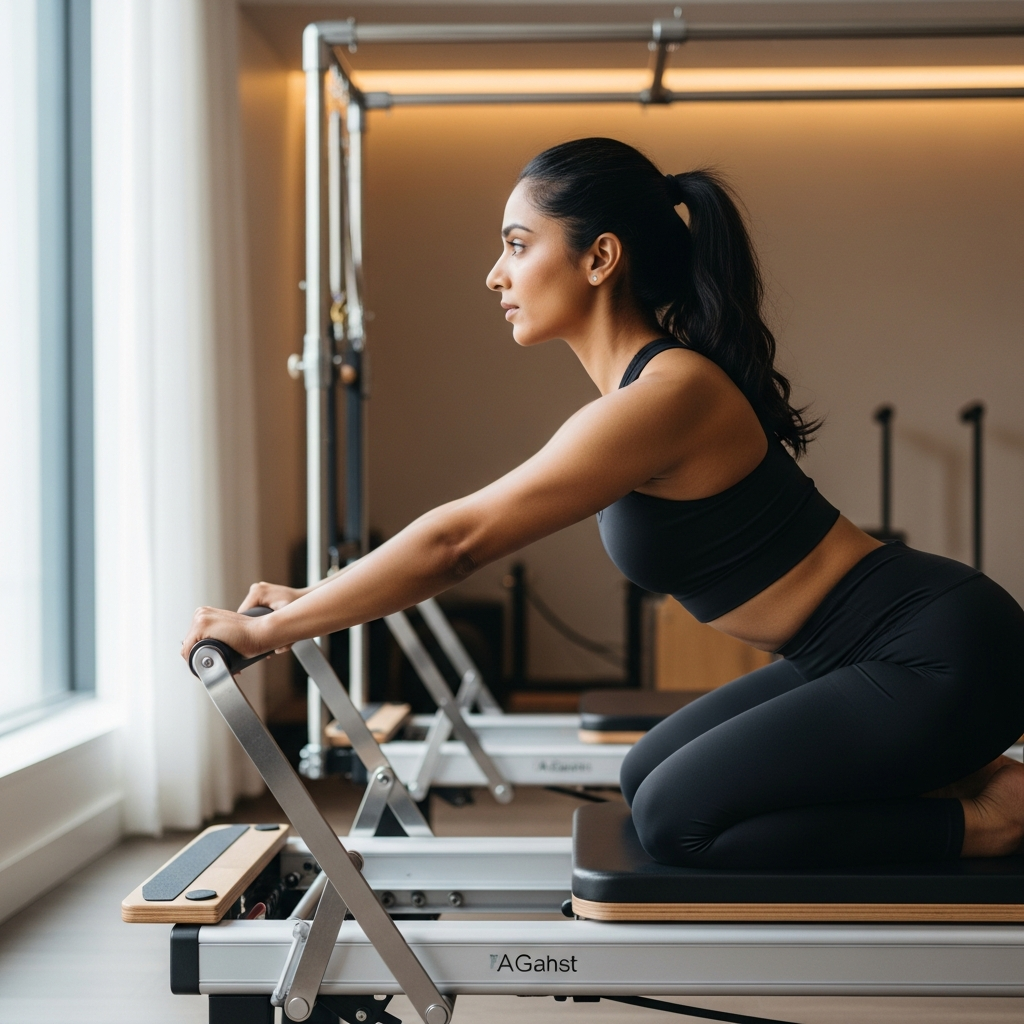
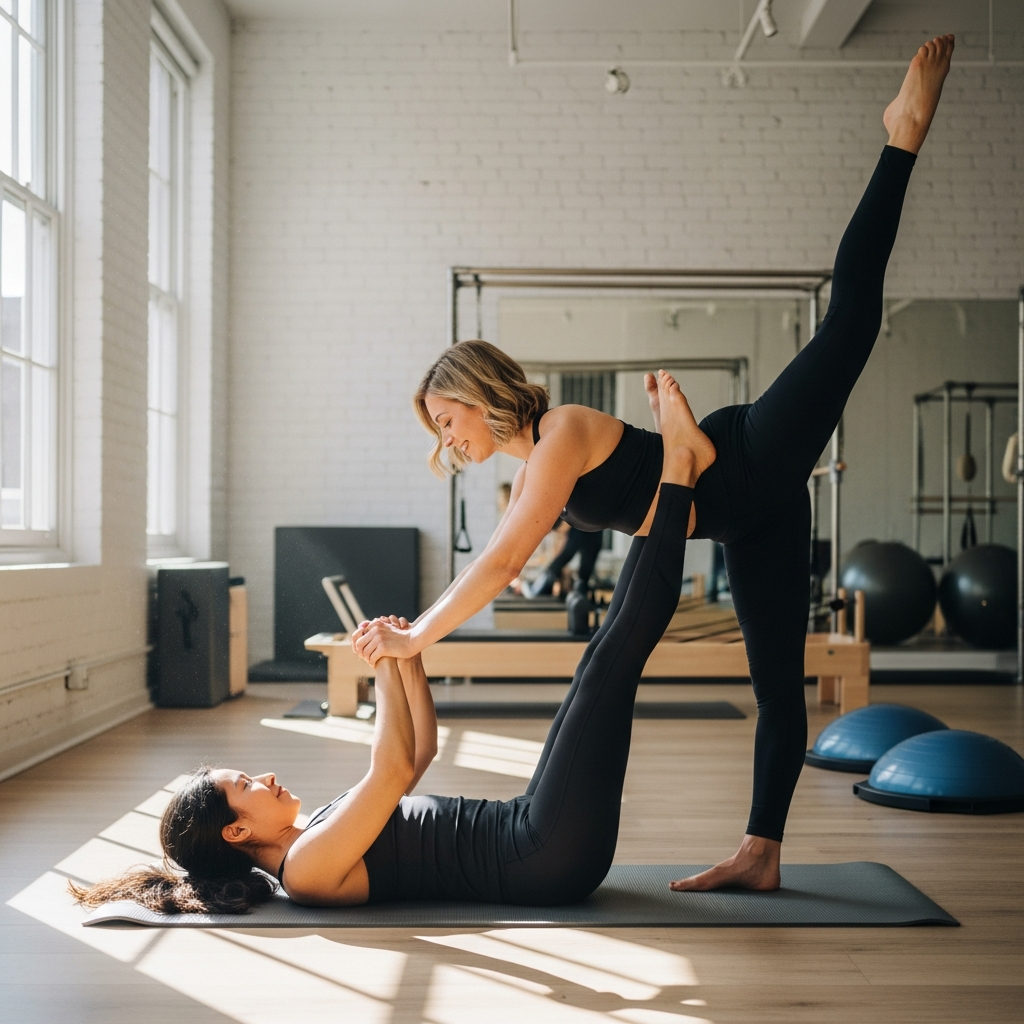
Why Pilates Is Gaining Popularity With Oak Cliff Locals
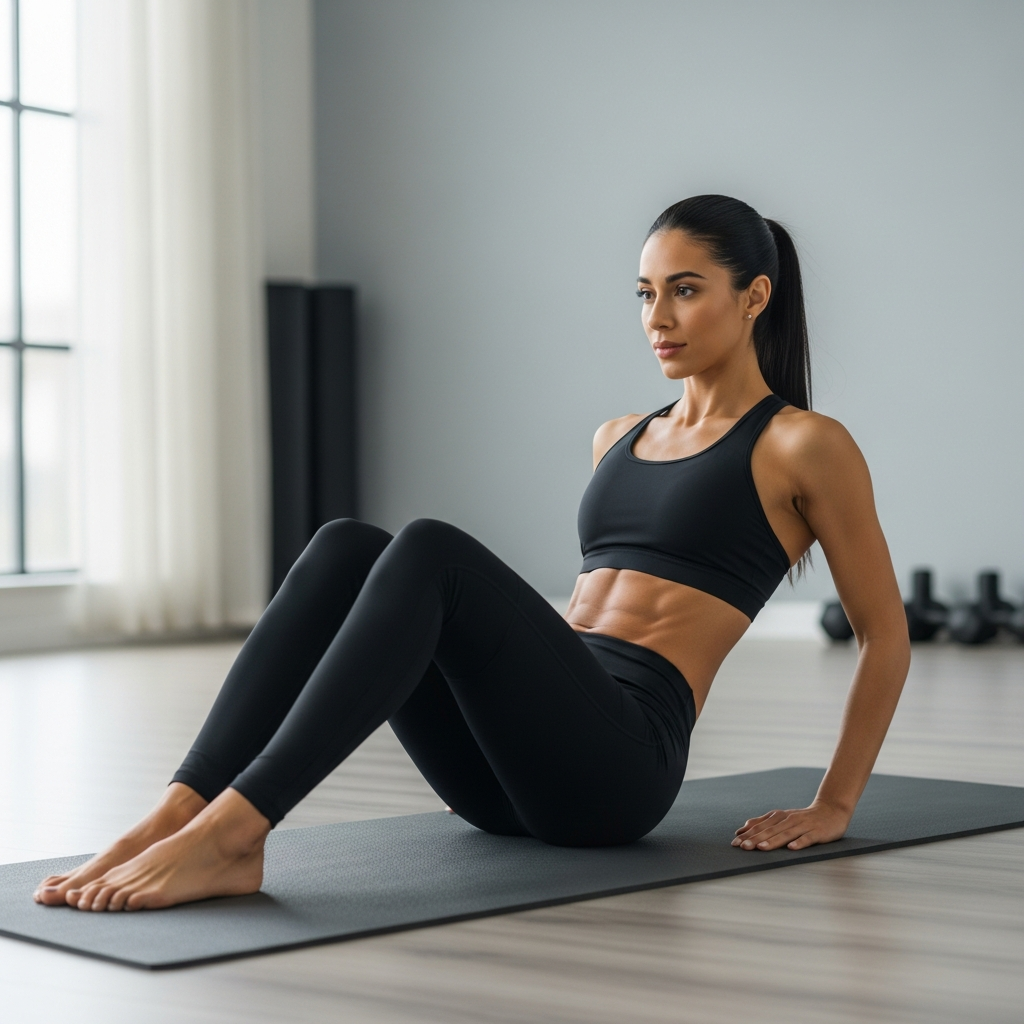
You know that moment when you’re walking up the stairs at Bishop Arts District after brunch, and halfway up you’re already breathing harder than you’d like to admit? Or maybe it’s bending down to pick up your kid’s toy at Kiest Park and feeling that familiar twinge in your lower back – the one that’s been your unwelcome companion for months now.
I get it. We all have those little wake-up calls that make us think, “Maybe I should do something about this whole fitness thing.” But here’s the problem – the gym feels intimidating (all those perfectly sculpted people doing things that look like they require an engineering degree), running makes your knees scream in protest, and yoga… well, let’s just say touching your toes shouldn’t be an Olympic sport, right?
That’s exactly why something interesting is happening in our Oak Cliff neighborhoods these days. Walk down Bishop Avenue or through the quieter streets near Sunset High School, and you’ll notice something – Pilates studios are popping up like coffee shops did in the early 2000s. And it’s not just the usual suspects signing up.
I’m talking about your neighbor who works double shifts at Methodist Dallas, finally finding an hour that doesn’t feel like punishment. The retired teacher from Winnetka Heights who thought her dancing days were over – until she discovered she could still move with grace and strength. Even that guy from Kessler Park who swore he’d never do anything that didn’t involve a barbell… he’s there too, quietly admitting that maybe flexibility matters more than he thought.
There’s something almost magical happening in these small studios tucked between taco shops and vintage stores. People are rediscovering what their bodies can do – not in spite of their age, their busy schedules, or their past injuries, but because of a method that actually works with real life instead of against it.
But let’s be honest for a second… you’ve probably heard the Pilates buzz before. Maybe you’ve even rolled your eyes a little (I don’t blame you – we’ve all been promised miracle fitness solutions before). So what makes this different? Why are Oak Cliff folks – people who appreciate authenticity and can spot BS from a mile away – genuinely embracing this particular form of movement?
Here’s the thing that surprised me most when I started looking into this trend: it’s not about perfect bodies or Instagram-worthy poses. The people flocking to these local studios aren’t chasing some impossible standard. They’re chasing something much more valuable – the ability to carry groceries without wincing, to play with their grandkids without feeling ancient, to stand a little taller during those long days at work.
And the results? Well, they speak for themselves. Sarah from Elmwood just told me she can finally sleep through the night without her chronic back pain waking her up. Marcus, who manages that popular restaurant on Jefferson, says he doesn’t feel completely wiped out after a twelve-hour shift anymore. These aren’t dramatic before-and-after transformations you’d see in a commercial – they’re the kind of quiet victories that actually matter.
What I love about this whole movement in Oak Cliff is how it reflects who we are as a community. We don’t do things just because they’re trendy – we do them because they make sense. And Pilates? It just makes sense for real people with real lives, real limitations, and real goals that have nothing to do with looking like a fitness model.
Throughout this article, we’re going to explore why this century-old practice is having such a moment in our neighborhoods right now. We’ll look at what makes Oak Cliff’s approach to Pilates unique (spoiler alert: it’s way more down-to-earth than you might expect), meet some locals whose lives have genuinely changed, and – most importantly – help you figure out if this might be the missing piece in your own wellness puzzle.
Because honestly? Life’s too short to spend it feeling uncomfortable in your own skin. And maybe, just maybe, those Oak Cliff neighbors of yours are onto something worth exploring.
What Makes Pilates Different From Everything Else You’ve Tried
You know that feeling when you’re explaining Pilates to someone and they get that glazed look? Yeah, I get it. It’s not exactly intuitive at first glance. Here’s this exercise method that looks deceptively simple – people lying on mats, moving slowly, making faces like they’re solving complex math problems.
But here’s the thing… Pilates isn’t about grinding through another brutal workout that leaves you crawling to your car. It’s more like rewiring your body’s software while strengthening the hardware at the same time.
Think of it this way: if your typical gym workout is like renovating your house room by room, Pilates is more like upgrading the foundation and electrical system. You’re not just building bigger muscles – you’re teaching your entire body to work as one coordinated unit. Which, honestly, sounds kind of boring until you realize how much better everything else feels when your body actually knows what it’s doing.
The Core Truth (And It’s Not What You Think)
Everyone talks about “core strength” these days, but most people think that means getting a six-pack and calling it done. That’s like thinking a car’s engine is just the hood ornament.
Your core – and this might surprise you – includes everything from your ribcage to your pelvis. Front, back, sides, deep internal muscles you’ve probably never thought about. It’s like having a natural corset made of muscle that supports your spine, helps you breathe better, and keeps everything stable when you’re moving around.
In Pilates, you’re not just doing crunches until your neck hurts. You’re learning to engage this whole system in a way that actually makes sense for how your body needs to function. It’s subtle work – the kind where you might not feel completely destroyed afterward, but you wake up the next day moving differently. Better.
Why Your Body Craves This Kind of Movement
Here’s something that took me way too long to understand: most of us are walking around with bodies that are basically held together with tension and hope. We sit hunched over computers, crane our necks at phones, and wonder why our backs hurt and our shoulders live somewhere near our ears.
Pilates works on the premise that your body wants to move well – it’s just forgotten how. Like a classic car that’s been sitting in a garage… all the parts are there, they just need some gentle coaxing to remember their job.
The method focuses on what Joseph Pilates (the guy who invented this whole thing back in the 1920s) called “contrology.” Basically, every movement should be deliberate, controlled, and coordinated. No flailing around or powering through with momentum. Which is actually harder than it sounds – try moving your arm slowly and smoothly while keeping your core stable and breathing properly. See what I mean?
The Mind-Body Thing Actually Makes Sense
I used to roll my eyes at the whole “mind-body connection” concept. Sounded like wellness marketing fluff. But here’s what I’ve learned: when you’re doing Pilates properly, you literally cannot zone out and think about your grocery list.
Your instructor might ask you to lengthen your spine while drawing your shoulder blades down, engage your deep abdominals without holding your breath, and reach your arms in opposition – all at the same time. Your brain has to stay present just to coordinate everything. It’s like meditation, but for people who can’t sit still.
And that’s actually the point. In our world of constant distraction, Pilates forces you to tune into your body for a solid hour. No scrolling, no multitasking, just you and your body figuring things out together.
Why It Works When Other Things Don’t
The beauty of Pilates is that it meets you where you are. Can’t touch your toes? No problem – work within your range. Recovering from an injury? The method was literally developed in a hospital setting. Feeling strong and want a challenge? Trust me, there are variations that will humble you quickly.
It’s progressive in a way that makes sense – you build on basics rather than jumping from random exercise to random exercise. And unlike some fitness trends that come and go, Pilates has been quietly working for people for nearly a century. That staying power isn’t an accident.
Finding Your Perfect Pilates Fit in Oak Cliff
Here’s what most people don’t realize – not all Pilates studios are created equal, especially when you’re dealing with weight management goals. I’ve seen too many folks get discouraged because they walked into the wrong class on day one.
Start with beginner-friendly reformer classes if possible. Yes, they’re pricier than mat classes, but the reformer’s spring resistance actually makes movements easier to control when you’re carrying extra weight. Trinity Groves has two studios offering intro packages, and honestly? The investment pays off when you’re not struggling to keep up or feeling self-conscious about modifications.
Mat classes can be brutal if you’re not ready. Your core might not be strong enough yet to support proper form, which leads to back pain and… well, you just stop going. Been there, seen that happen dozens of times.
Timing Your Sessions for Real Results
Most Oak Cliff studios offer early morning classes around 6 AM – and I know, I know, that sounds awful. But here’s the thing: morning Pilates before your day gets crazy actually works better for weight loss. Your cortisol levels are naturally higher in the morning, which means better fat burning potential.
Plus, you’ll have that accomplished feeling all day. No more 6 PM internal negotiations about whether you’re too tired to exercise.
If mornings are absolutely impossible, aim for classes that end at least three hours before bed. Pilates might look gentle, but it’s activating your nervous system more than you think.
What to Eat (and When) Around Your Sessions
This is where people mess up constantly. Don’t eat a full meal within two hours of class – you’ll feel queasy during those rolling movements. But don’t go completely empty either, especially if you’re in a caloric deficit for weight loss.
About 45 minutes before class, try half a banana with a tablespoon of almond butter. Or Greek yogurt with berries. Something that gives you steady energy without sitting heavy in your stomach.
After class? Within 30 minutes, get some protein in you. Your muscles are primed to rebuild stronger, and if you’re trying to lose weight while maintaining muscle mass, this timing matters more than most people realize.
Building Your Home Practice (Without Breaking the Bank)
Look, studio classes are great, but they add up fast. The Oak Cliff folks I’ve worked with who see the best long-term results? They supplement with home practice 2-3 times per week.
You don’t need fancy equipment right away. A resistance band (get the fabric ones, not the latex – they’re gentler on skin and last longer) and a small pillow for hip support during floor work. That’s it. Maybe $25 total.
YouTube has some solid beginner sequences, but here’s my insider tip: most studios offer virtual class packages way cheaper than in-person sessions. You get the guidance of your actual instructor without the commute or schedule constraints.
Realistic Expectations for Weight Loss Timeline
I’m going to be straight with you – Pilates alone won’t create the dramatic weight loss you might be hoping for. It’s not that kind of calorie burn. What it does is build lean muscle mass, improve your posture (hello, instantly looking 5 pounds lighter), and create body awareness that helps you make better food choices.
Most people notice clothes fitting differently around week 4-6, actual scale changes around week 8-10 if they’re combining it with proper nutrition. The real magic happens around month 3 when your core strength allows you to progress to more challenging variations.
Making It Stick When Motivation Fades
This always happens… around week 3, the novelty wears off and you start finding excuses. Here’s what works: commit to just 10 minutes on tough days. Seriously. Ten minutes of basic breathing exercises and gentle stretches.
It sounds too simple, but it keeps the habit loop intact without the all-or-nothing pressure that derails most people. Some Oak Cliff studios even offer 20-minute express classes specifically for this reason.
Find an accountability buddy if possible. The Bishop Arts area has a informal Pilates meetup group that practices together on weekends in Kessler Park – free, social, and surprisingly motivating.
Remember, consistency beats intensity every time. Better to show up imperfectly three times a week than to burn out trying to be perfect twice a week.
The Reality Check: What Actually Makes Pilates Hard
Let’s be honest here – Pilates isn’t some magical fitness unicorn that works effortlessly for everyone. I’ve seen plenty of Oak Cliff folks walk into our clinic excited about starting Pilates, only to hit some very real roadblocks along the way.
The biggest one? That whole mind-body connection thing everyone raves about. Sounds lovely in theory, but when you’re lying on a mat trying to “engage your core while lengthening your spine and breathing deeply,” it can feel like trying to pat your head and rub your belly while reciting the alphabet backwards. Your instructor’s saying something about your transverse abdominis, and you’re just hoping you don’t fall off the reformer.
Here’s what actually helps: start with the basics and don’t try to be perfect. Focus on one thing at a time – maybe just the breathing for the first few sessions. The fancy coordination stuff? That comes later. Your body needs time to learn this new language.
The Intimidation Factor (It’s Real)
Walking into a Pilates studio for the first time can feel like entering some exclusive club where everyone else speaks fluent “neutral pelvis” and you’re still figuring out where your pelvis even is. The equipment looks medieval, the terminology sounds medical, and everyone else seems to flow through movements while you’re over there looking like a confused pretzel.
This intimidation thing hits especially hard in Oak Cliff because… well, we’re a community that values authenticity. We can spot pretension from a mile away, and sometimes Pilates studios can feel a bit too precious, you know?
The solution isn’t to fake it till you make it. Find a studio or instructor who explains things in plain English – someone who says “tighten your stomach muscles” instead of “activate your powerhouse.” Look for beginner-friendly classes that actually cater to beginners, not just advanced students moving slowly.
When Your Body Doesn’t Cooperate
Here’s something nobody talks about enough: Pilates can be frustrating when you’re dealing with weight loss or haven’t moved your body in a while. Some positions are genuinely harder when you’re carrying extra weight. Your flexibility might be limited. You might not have the strength yet to hold certain poses.
I’ve had patients tell me they felt embarrassed because they couldn’t do a roll-up or their legs shook during leg circles. That’s not failure – that’s your starting point. Every single person who’s now gracefully flowing through advanced Pilates started somewhere, and for many of us, that somewhere included wobbly legs and modified everything.
The key is finding modifications that actually work for your body right now, not someday. Use props without shame. Take breaks when you need them. Build strength gradually instead of forcing positions your body isn’t ready for yet.
The Consistency Challenge
Pilates isn’t like other workouts where you can skip two weeks and jump right back in. Miss a few sessions, and your body seems to forget everything – that delicate balance, the specific muscle activation patterns, even which way to breathe during certain movements.
For Oak Cliff locals juggling work, family, and everything else life throws at us, this consistency requirement can feel overwhelming. You’re finally getting somewhere with your practice, then life happens, and suddenly you feel like you’re starting over.
Actually, that reminds me of something one of my patients figured out… She started treating Pilates like brushing her teeth – non-negotiable, but also not this huge production. Even if she could only manage 15 minutes at home with a YouTube video, she did something. Those short sessions kept her body familiar with the movements, so when she got back to class, she wasn’t completely lost.
Making It Work in Real Life
The truth is, Pilates doesn’t have to be perfect to be beneficial. You don’t need expensive equipment or hour-long sessions every day. What you need is consistency and patience with yourself.
Start with what you can actually maintain – maybe that’s one class a week plus some basic mat work at home. Build from there instead of trying to become a Pilates devotee overnight. And remember, every body responds differently. Your Pilates practice will look different from your neighbor’s, and that’s exactly as it should be.
The Oak Cliff spirit is about finding what works for real people with real lives. Apply that same practical wisdom to your Pilates practice, and you’ll find your rhythm.
What to Expect in Your First Few Weeks
Let’s be real – starting Pilates isn’t like flipping a magical switch. You’re not going to walk out of your first class feeling like a graceful swan (though you might feel like a newborn giraffe… and that’s perfectly normal).
Most Oak Cliff residents we work with notice small changes around the two-week mark. Maybe it’s standing a little taller at your desk job, or realizing your back doesn’t ache after grocery shopping at Tom Thumb. The big “wow” moments? Those typically show up around 6-8 weeks of consistent practice.
Here’s what actually happens in those early sessions: you’ll probably shake during planks, forget to breathe (seriously, why is coordinated breathing so hard?), and wonder if your instructor has X-ray vision because they keep correcting your form before you even realize it’s off. This is all completely normal – actually, it means you’re doing it right.
The Reality Check You Need
We’ve seen too many people get discouraged because they expected instant transformation. Your body is essentially learning a new language, and just like when you took Spanish in high school, it takes time to become fluent.
Some days you’ll feel amazing – strong, centered, like you could conquer Bishop Arts in one afternoon. Other days? Your muscles might feel like jello, or that move you nailed last week suddenly feels impossible. This isn’t regression; it’s your body adapting and strengthening at different rates.
Think of it like learning to drive stick shift. At first, you’re just trying not to stall at every red light. But gradually – without even noticing – you start shifting gears smoothly, handling hills, even parallel parking like a pro. Your body’s doing the same thing with Pilates.
Building Your Oak Cliff Pilates Routine
The sweet spot for most people? Two to three classes per week. Less than that, and you’re basically starting over each time (trust me, we’ve all been there). More than that, and you might burn out – especially if you’re also trying to balance work, family, and maybe catching a show at the Kessler Theater on weekends.
Start with beginner classes, even if you run marathons or lift weights. Pilates uses muscles you probably didn’t know existed, and it’s better to master the basics than struggle through advanced moves with poor form. Plus, there’s something satisfying about actually understanding what your instructor means when they say “engage your powerhouse.”
Many local studios offer intro packages – usually something like four classes for a discounted rate. It’s a smart way to test the waters without committing to a full membership right away. You’ll also get a feel for different instructors’ styles… because yes, there’s definitely a difference between the instructor who speaks in zen koans and the one who counts reps like a drill sergeant.
Making It Stick (Because We Know You Want To)
Here’s where it gets real: the biggest predictor of success isn’t your fitness level or natural flexibility. It’s showing up consistently, even when you don’t feel like it.
Schedule your classes like appointments you can’t cancel. Put them in your phone calendar. Ask a friend to join you – there’s nothing like a little gentle peer pressure to get you out the door on those “I’d rather binge-watch Netflix” evenings.
And here’s something we don’t talk about enough: progress isn’t always linear. Some weeks you’ll feel stronger, more balanced, like you’re finally getting it. Other weeks… well, let’s just say your body might have other plans. Maybe you’re stressed about work, didn’t sleep well, or your hormones are doing their monthly dance. That’s life, not failure.
What Success Really Looks Like
After a few months of consistent practice, most people notice they stand differently – shoulders back, core naturally engaged. You might find yourself automatically fixing your posture throughout the day, or realizing you can carry all those grocery bags from your car to your apartment without your back screaming in protest.
The mental benefits often sneak up on you too. That mind-body connection you keep hearing about? It starts showing up in unexpected ways – better focus at work, sleeping more soundly, feeling more centered when life gets chaotic (and if you live in Oak Cliff, you know how quickly things can get interesting around here).
Don’t rush the process. Your body is getting stronger, more flexible, and more aware with each class – even when it doesn’t feel like it.
You know what strikes me most about talking with folks here in Oak Cliff? It’s how Pilates has quietly woven itself into so many people’s lives – not as some trendy fitness fad, but as something that actually makes sense for real people with real lives.
Maybe it’s because we’re all tired of feeling like we need to be fitness superheroes to see results. Or maybe it’s because Pilates meets us where we are, whether you’re dealing with that nagging back pain from sitting at your desk all day, or you’re a busy parent who needs something that works in 30 minutes… or honestly, just someone who’s tired of workouts that leave you feeling beaten up instead of built up.
Finding Your Own Path Forward
Here’s the thing I’ve learned from watching people transform their relationship with movement: it’s rarely about the perfect workout plan or the most intense routine. It’s about finding something that feels sustainable – something that makes you feel stronger instead of smaller, more capable instead of defeated.
That’s what I keep hearing from Oak Cliff residents who’ve embraced Pilates. They’re not talking about dramatic before-and-after photos or crushing fitness goals. They’re talking about sleeping better, feeling more balanced (literally and figuratively), and having the energy to keep up with their kids or grandkids. They’re talking about feeling at home in their own bodies again.
And honestly? That resonates so deeply because it connects to something we talk about a lot in medical weight loss – the idea that lasting change happens when we stop fighting our bodies and start working with them instead.
The Ripple Effect
What I find fascinating is how Pilates seems to create this ripple effect. People start because their physical therapist recommended it, or their neighbor wouldn’t stop raving about their instructor. But then they stay because… well, because it changes how they think about movement entirely. It becomes less about punishment and more about celebration.
That mindset shift? It’s everything when you’re thinking about your overall health and wellness. Because sustainable weight loss – the kind that actually sticks – isn’t about forcing your body into submission. It’s about creating harmony between what you need and what you’re capable of giving.
You Don’t Have to Figure This Out Alone
Look, I get it if you’re reading this thinking “That sounds great, but I don’t even know where to start.” Maybe you’ve tried fitness routines before and they didn’t stick. Maybe you’re dealing with health challenges that make traditional exercise feel impossible. Maybe you’re just… tired of feeling disconnected from your own body.
Here’s what I want you to know: you don’t have to navigate this alone. Whether it’s finding the right Pilates class, figuring out how movement fits into a medical weight loss plan, or just wanting someone to talk through what might work for your specific situation – we’re here.
We understand that every person’s path looks different, and we’re genuinely excited to help you figure out what yours might look like. No pressure, no judgment – just real conversation about real solutions that actually fit into your real life.
Ready to explore what’s possible? Give us a call. Let’s talk.