Fort Worth Pilates Near Me: What to Look For
You know that moment when you’re scrolling through your phone at 11 PM, promising yourself you’ll finally start working out tomorrow? Yeah, me too. Except this time, instead of bookmarking another “30-day transformation” video you’ll never actually do, you typed “Pilates near me” into Google.
Smart choice, honestly.
Maybe your back’s been screaming at you after too many hours hunched over your laptop. Or perhaps you caught a glimpse of yourself in a store window and thought, “When did I start walking like that?” Could be your doctor mentioned something about core strength at your last checkup, and you nodded knowingly while having absolutely no idea what that actually means in real life.
Here’s the thing about Pilates – it’s not just another fitness trend that’ll have you sweating buckets while some impossibly perky instructor shouts motivational quotes at you. It’s more like… physical therapy disguised as exercise. The kind of movement that makes your body remember what it felt like to stand up straight without wincing.
But here in Fort Worth, you’ve got options. Lots of them. Strip malls with neon signs promising “Total Body Transformation!” Studio spaces that look like they belong in a luxury spa. Community centers with folding chairs pushed against mirrors that have seen better days. And then there’s that place your neighbor swears by – you know, the one who somehow went from complaining about her hip pain to hiking trails every weekend.
The problem? Not all Pilates studios are created equal. Some will have you doing movements that would make a contortionist nervous, while others might be so gentle you wonder if you’re actually exercising or just expensive stretching. Some instructors have been teaching since before Pilates was cool (and yes, there was a time when it wasn’t), while others just finished their certification last month and are still figuring out the difference between your transverse abdominis and your… well, any other muscle group, really.
I’ve seen people bounce between studios for months, never quite finding their groove. There’s Sarah, who tried three different places before realizing she needed someone who understood her post-pregnancy body wasn’t going to bounce back like a rubber band. And Mike – poor Mike spent weeks in classes that felt more like advanced yoga before finding an instructor who actually explained what all those weird muscle names meant.
The truth is, finding the right Pilates studio in Fort Worth isn’t just about convenience or price (though let’s be honest, those matter too). It’s about finding a place where you actually want to show up. Where the instructor remembers that you tweaked your shoulder last week and adjusts accordingly. Where you don’t feel like you need a PhD in anatomy just to understand what’s happening to your body.
Because here’s what nobody tells you about starting Pilates: the first few weeks are weird. Your muscles will remind you they exist in ways you never imagined. You’ll discover that “engaging your core” is apparently different from just sucking in your stomach (who knew?). And you might find yourself standing a little taller at the grocery store checkout, wondering if this is what “good posture” feels like.
But When you find the right place? That’s when the magic happens. When Pilates stops being this intimidating thing you’re supposed to do and starts being something you actually look forward to. When your lower back stops sending angry messages during your morning commute. When you realize you’ve been carrying groceries upstairs without that familiar ache between your shoulder blades.
So before you commit to that introductory package or sign up for unlimited classes, let’s talk about what actually matters when choosing a Pilates studio in Fort Worth. Not the Instagram-worthy aesthetic or the fancy equipment (though both can be nice) – but the stuff that determines whether you’ll still be going six months from now, feeling stronger and moving better than you have in years.
Because you deserve a place that gets it. That gets you.
What Actually Is Pilates, Anyway?
You know how everyone talks about Pilates like it’s this magical cure-all exercise? Well… they’re not entirely wrong, but it’s also not what most people think it is.
Here’s the thing – Pilates isn’t just fancy stretching with expensive equipment (though, let’s be honest, some of that equipment does look pretty intimidating). It was actually created by a guy named Joseph Pilates back in the early 1900s. He was a bit of a fitness obsessive who combined elements from gymnastics, boxing, and yoga into this systematic approach to movement.
Think of it like this: if your body were a house, most workouts focus on remodeling the rooms you can see – the biceps, the abs, the glutes. Pilates? It’s more like rewiring the electrical system that makes everything work properly.
The Core Truth (And It’s Not What You Think)
Everyone thinks Pilates is about getting killer abs. That’s… sort of true? But also missing the bigger picture entirely.
Your “core” isn’t just your six-pack muscles – it’s this complex network of deep stabilizing muscles that wrap around your torso like a natural corset. These muscles are what keep your spine happy when you’re hunched over your laptop for eight hours straight, or when you’re lifting that awkwardly heavy Amazon package off your doorstep.
Most of us have cores that are about as functional as a car with three flat tires. We can still get around, but it’s not pretty and something’s going to break down eventually. Pilates teaches these deep muscles how to do their job again – which, honestly, can feel weird at first because you’re using muscles you forgot you had.
Mat vs. Reformer: The Great Pilates Divide
This is where things get a little confusing, and if you’re scratching your head about the difference, you’re definitely not alone.
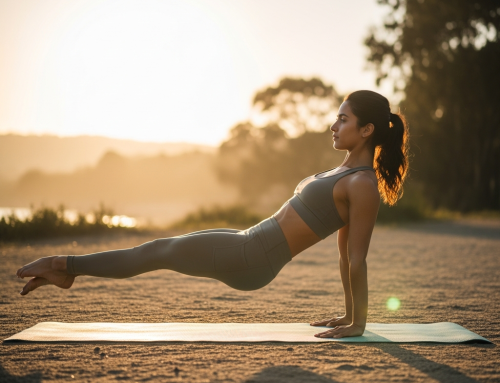
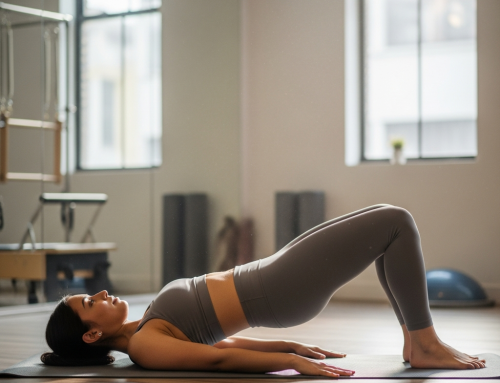
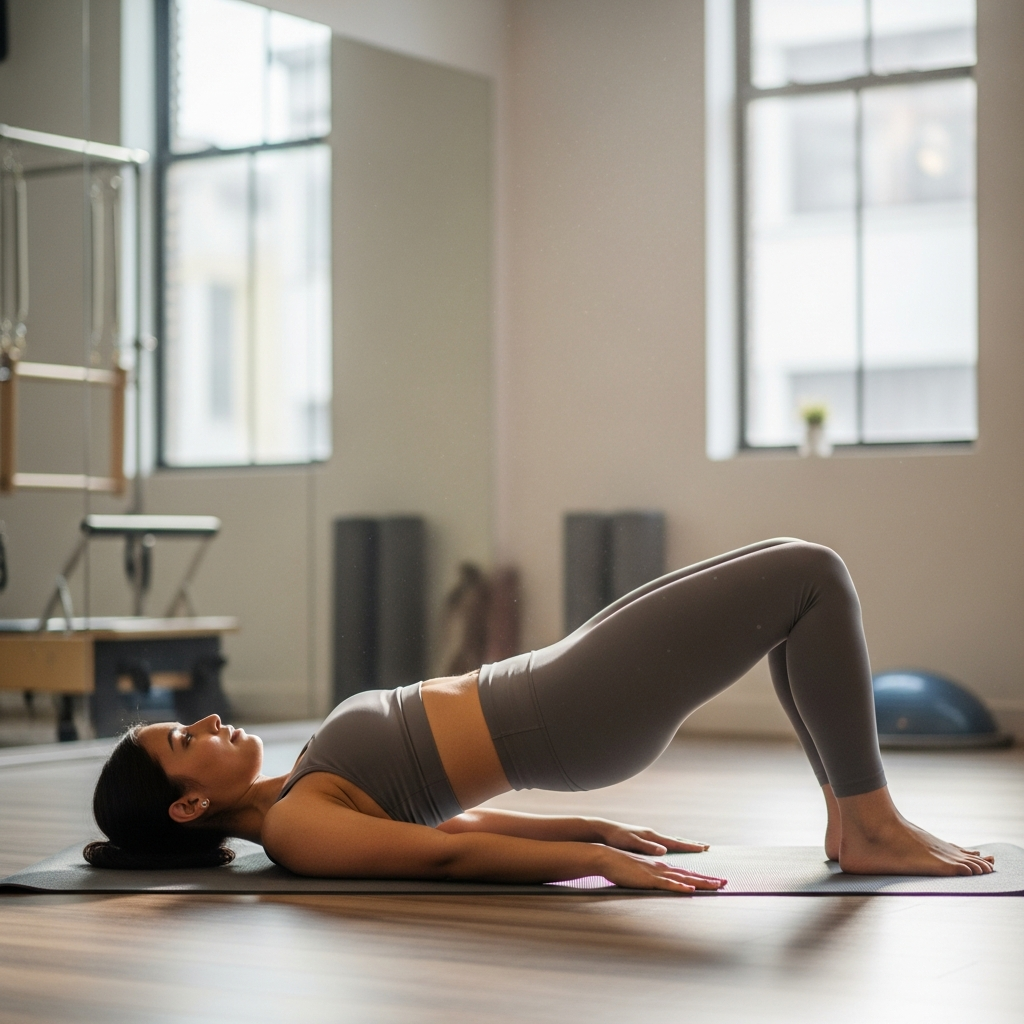
Mat Pilates is exactly what it sounds like – exercises done on a mat using just your body weight and maybe some small props like resistance bands or balls. It’s like the acoustic guitar of Pilates – stripped down, pure, and surprisingly challenging.
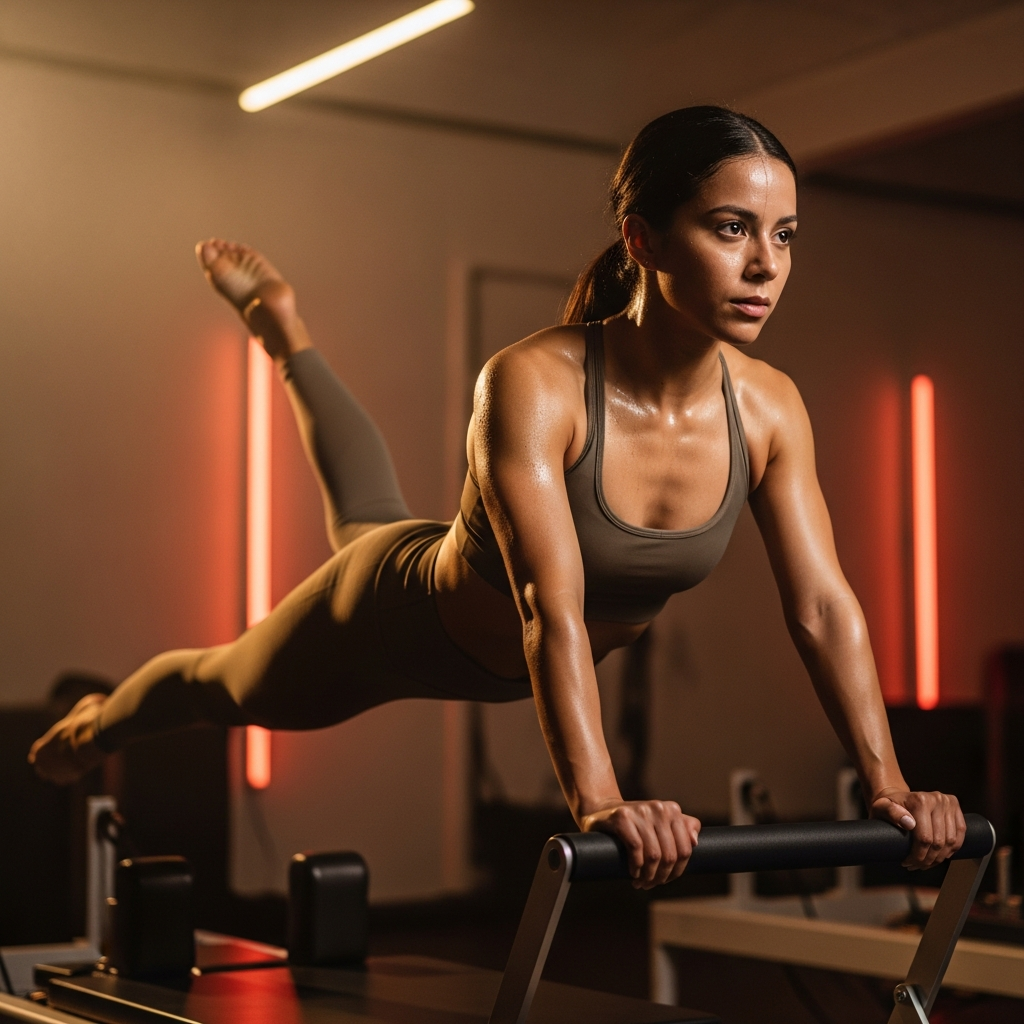
Reformer Pilates uses this contraption that looks like a medieval torture device had a baby with a piece of gym equipment. The reformer has springs, pulleys, and a moving carriage that provides resistance in all directions. It’s more like having a full orchestra at your disposal – you can create more complex movements and adjust the difficulty with surgical precision.
Here’s what’s counterintuitive though – the reformer isn’t necessarily “harder” than mat work. Sometimes those springs actually make things easier by supporting your body weight. Other times? They make a simple movement feel impossible. It’s like having a dance partner who’s either helping you glide across the floor or actively trying to trip you up.
Why Your Body Might Hate You at First
Let’s be real for a minute – your first Pilates class might feel… underwhelming? You might walk out thinking, “That’s it? I barely broke a sweat.”
Then you wake up the next morning feeling like you got hit by a truck driven by a very precise, methodical truck driver who knew exactly which muscles to target.
This happens because Pilates works your stabilizer muscles – the ones that rarely get attention in traditional workouts. It’s like suddenly asking your non-dominant hand to write a novel. Those muscles exist, they’re just not used to being the star of the show.
The Mind-Body Thing (And Why It Actually Matters)
You’ll hear Pilates instructors talk about the “mind-body connection” a lot, and honestly? It can sound pretty woo-woo if you’re just trying to get stronger and maybe fit into last year’s jeans.
But here’s what they actually mean – Pilates requires you to think about what you’re doing while you’re doing it. You can’t just zone out and go through the motions like you might on a treadmill. You have to actively coordinate your breathing, engage specific muscles, and maintain proper alignment all at the same time.
It’s like learning to drive a manual transmission while someone’s giving you directions to a place you’ve never been. Your brain has to juggle multiple tasks simultaneously, which is actually pretty great training for… well, life in general.
The beauty is that this focused attention often carries over into how you move throughout your day. You start noticing when you’re slouching, or how you’re lifting things, or the way you’re breathing when you’re stressed.
The Red Flags Most People Miss (But You Won’t)
You walk into a studio and the instructor immediately starts pushing expensive packages or premium memberships before you’ve even tried a class. Run. Good Pilates instructors want to see if you’re a fit for each other first – it’s like dating, honestly.
Another warning sign? The instructor doesn’t ask about injuries or physical limitations during your first session. I’ve seen people get hurt because an instructor assumed they could handle advanced movements right out of the gate. A quality instructor will spend at least 10 minutes getting your movement history before you touch a single piece of equipment.
And here’s something that might surprise you – if the studio is completely silent during classes, that’s actually not great. You want to hear gentle corrections, modifications being offered, and yes, even some light conversation. Dead silence often means the instructor isn’t really teaching.
The Equipment Test That Tells You Everything
Walk over to the reformers and give them a gentle shake. They shouldn’t wobble or creak like an old rocking chair. The springs should move smoothly – if they’re rusty or making grinding noises, the studio isn’t maintaining their equipment properly.
Check the foot bars too. They should adjust easily and lock securely in place. I can’t tell you how many times I’ve seen people struggle with sticky, hard-to-move foot bars because the studio skimped on maintenance. Your safety depends on properly functioning equipment, and frankly, it’s not asking too much to expect it to work correctly.
The reformer beds should be clean (obviously), but also look for wear patterns. Some wear is normal, but if the upholstery is completely worn through or stained… well, let’s just say that tells you something about their standards.
Questions That Separate the Pros from the Pretenders
Here’s what to ask during your initial consultation – and pay attention to how they answer. “What’s your approach to modifications?” A good instructor should light up at this question and give you specific examples. They might say something like, “Well, if someone has lower back issues, I’ll use the short box differently and maybe add a pillow for support.”
Ask about their training too, but don’t just accept “I’m certified.” Where did they train? How many hours? Do they do continuing education? The Pilates world has some excellent programs (Romana’s Pilates, BASI, Stott Pilates) and some… less rigorous ones. You don’t need to become an expert, but 200+ hours of initial training is a good baseline.
The Class Size Sweet Spot
This might be controversial, but I’m going to say it anyway – if a reformer class has more than 8 people, you’re probably not getting enough individual attention. Yes, I know smaller classes cost more. But think about it this way: would you rather pay a bit more for actual instruction or pay less to essentially work out alone in a crowded room?
For mat classes, the numbers can be a bit higher – maybe 12-15 people max. But still, you should feel like the instructor knows you’re there and can see what you’re doing.
The Money Talk Nobody Wants to Have
Here’s the thing about Pilates pricing in Fort Worth – you’ll see everything from $25 drop-in classes to $200+ private sessions. The sweet spot for group reformer classes? Usually somewhere between $35-45 per class, with package deals bringing it down to maybe $28-35.
But here’s what’s more important than the price – the value. A $30 class where you get real instruction and leave feeling energized and aligned? That’s worth every penny. A $25 class where you’re basically renting equipment time? Not so much.
Ask about trial packages or first-time specials, but be wary of deals that seem too good to be true. Quality instruction and well-maintained equipment cost money. Studios that are drastically undercutting everyone else are usually cutting corners somewhere – and it’s often in ways that affect your experience.
Trust Your Gut (It’s Usually Right)
After all the practical considerations, sometimes it comes down to feel. Do you leave feeling accomplished but not destroyed? Does the instructor remember your name by your third visit? Do other students seem happy to be there, or are they just going through the motions?
You know that feeling when something just clicks? That’s what you’re looking for. Your body will tell you if a place is right for you – you just have to listen.
The “I Don’t Belong Here” Feeling
Let’s be real – walking into a new Pilates studio can feel intimidating as hell. You’re surrounded by people who seem to effortlessly flow through movements while you’re trying to figure out which end of the reformer goes where. That voice in your head starts up: “Everyone’s staring. I’m too out of shape. I should’ve practiced at home first.”
Here’s the thing though – literally everyone felt that way on their first day. Even that graceful woman who makes the hundred look easy was once fumbling with the foot bar, wondering if she’d accidentally signed up for advanced torture.
The solution? Show up anyway. Most Fort Worth studios offer beginner-friendly classes or intro packages specifically designed for newbies. Call ahead and ask when their gentlest classes are scheduled. Some studios even offer “foundation” workshops that teach the basics without the pressure of keeping up with a full class.
The Money Reality Check
Pilates isn’t cheap. There, I said it. When you’re comparing a $20 gym membership to $30+ per class, the sticker shock is real. And if you’re looking at private sessions or small group training… well, let’s just say your wallet might need its own recovery day.
But here’s where the math gets interesting – think cost per meaningful workout, not cost per month. Would you rather pay $20 for unlimited gym access you never use, or invest in 4-6 Pilates sessions monthly that actually change how you move and feel?
Many Fort Worth studios offer package deals that bring the per-class cost down significantly. Some have community classes at reduced rates, early bird specials, or work-study programs. Don’t be shy about asking – studios want to keep you coming, and they’re often willing to work within your budget.
Schedule Juggling (The Eternal Struggle)
Life happens. Kids get sick, work runs late, traffic on 35 decides to be extra dramatic… and suddenly that 6 PM class you booked becomes impossible. The guilt is real, especially when you’re already stressed about money and consistency.
Most studios have cancellation policies (usually 12-24 hours notice), but here’s what they don’t always tell you – many instructors understand that life is messy. If you’re a regular who occasionally needs to cancel last-minute due to genuine emergencies, a quick text explaining the situation often goes a long way.
The real solution? Book classes like appointments with yourself. Put them in your calendar, set reminders, and treat them as non-negotiable. Also, look for studios with multiple locations or online options – having backup plans makes consistency so much easier.
Physical Limitations and Fear of Injury
Maybe you’ve got a cranky lower back, creaky knees, or that shoulder that’s never been quite right since… well, you can’t even remember when. The fear of making things worse is paralyzing, but staying sedentary isn’t exactly helping either.
This is where a good instructor becomes worth their weight in gold. During your studio search, ask specifically about experience with modifications and injuries. The best instructors won’t just say “do what feels good” – they’ll actively offer alternatives and keep an eye on your form.
Don’t hide your limitations during that initial consultation. A quality studio will see them as puzzles to solve, not problems to avoid. And honestly? Pilates was literally developed for rehabilitation – your body’s quirks aren’t disqualifiers.
The Progress Plateau Problem
You’ve been going consistently for months, maybe even a year… but lately, it feels like you’re just going through the motions. That initial excitement about getting stronger has faded into routine. You’re not necessarily bored, but you’re not challenged either.
This is where having an instructor who knows you becomes crucial. They should be noticing your progress and suggesting progressions or variations. If they’re not – speak up. Ask for harder variations, request feedback on your form, or inquire about moving to a more advanced class.
Sometimes the plateau is mental, not physical. Consider setting new goals that aren’t just about strength – maybe focus on balance, coordination, or simply showing up during particularly stressful periods in your life.
The studios that thrive are the ones that grow with you, not just take your money month after month.
What to Expect in Your First Few Sessions
Let’s be honest – your first Pilates class isn’t going to transform you into a graceful swan overnight. You’ll probably feel muscles you forgot existed (hello, deep abdominal muscles), and you might find yourself shaking during exercises that look deceptively simple.
That’s completely normal, by the way.
Most people feel a bit overwhelmed during their first session. There are springs, straps, and equipment that looks like it belongs in a medieval torture chamber… but trust me, it’s all designed to help your body move better. Your instructor will guide you through everything, and you don’t need to memorize it all on day one.
You might feel energized afterward – that post-workout glow is real – but don’t be surprised if you’re also a bit sore the next day. It’s different from gym soreness, though. More like your body saying “Oh, we’re using *these* muscles now? Interesting.”
Timeline: When You’ll Actually Notice Changes
Here’s where I need to manage expectations a bit. Those dramatic before-and-after photos you see online? They didn’t happen in two weeks.
Weeks 1-2: You’re mostly just figuring out what everything is called and how to breathe properly during movements. Don’t worry about looking graceful yet.
Weeks 3-6: This is when things get interesting. You’ll start noticing better posture throughout your day, maybe less back pain if that’s been an issue. Your core will feel… well, like it actually exists.
2-3 months: Now we’re talking real changes. Better balance, improved flexibility, and that subtle but noticeable shift in how you carry yourself. Friends might start asking if you’ve been working out.
6 months and beyond: This is where Pilates really shines. Long, lean muscle tone, incredible body awareness, and strength that doesn’t just show up in the studio but in everyday activities.
I always tell my clients that consistency beats intensity. Two sessions a week for three months will serve you better than daily classes for three weeks followed by… nothing.
Building Your Routine (Without Overwhelming Yourself)
Start with one or two classes per week – seriously, that’s plenty. I know you’re excited and want to dive in headfirst, but your body needs time to adapt. Plus, you’ll want to see how you feel after each session.
If you’re dealing with weight management goals, Pilates works beautifully alongside other healthy habits. It’s not going to burn calories like a spin class, but it’s building the foundation for everything else you do. Better posture means more confidence. Stronger core means better workouts elsewhere. Improved body awareness means… well, you start making better choices without even thinking about it.
Consider mixing group classes with occasional private sessions, especially in the beginning. Group classes are motivating and cost-effective, but private sessions let your instructor really fine-tune your form and address your specific needs.
Red Flags to Watch For
Not all studios are created equal, and unfortunately, some prioritize profit over your progress.
Be wary if instructors push you too hard too fast, ignore your concerns about pain (good muscle challenge vs. actual pain – there’s a difference), or seem more interested in selling you packages than understanding your goals.
Also, if a studio promises dramatic results in unrealistic timeframes or makes you feel bad about your current fitness level… that’s not your people. The right instructor will meet you where you are and help you progress safely.
Making It Sustainable
The best Pilates routine is the one you’ll actually stick with. Maybe that’s early morning classes before work, or evening sessions to decompress. Maybe it’s a Saturday morning ritual with a friend.
Don’t feel pressured to commit to expensive packages right away. Most reputable studios offer trial periods or introductory rates. Use them to figure out what works for your schedule, your body, and your budget.
Remember – this isn’t about achieving some perfect form or keeping up with the person on the reformer next to you. It’s about building a stronger, more balanced you, one session at a time.
And honestly? That’s pretty exciting when you think about it.
You know what? Finding the right Pilates studio in Fort Worth doesn’t have to feel like searching for a needle in a haystack. Sure, there are a lot of options out there – and honestly, that’s a good thing. It means you’ve got choices, and you can be picky about what works for your body, your schedule, and your goals.
The truth is, the “perfect” studio isn’t necessarily the one with the fanciest equipment or the most Instagram-worthy interior (though let’s be real, a clean, welcoming space definitely matters). It’s the place where you feel seen – where the instructors remember your name, know about that cranky shoulder of yours, and actually care whether you’re making progress.
Maybe you’re someone who thrives in that high-energy reformer class with twelve other people… or maybe you’re more of a “let me figure this out slowly in a semi-private session” kind of person. There’s no wrong answer here. What matters is that you find your fit – the instructors who get your sense of humor, the class times that don’t make you feel like you’re constantly rushing, the pricing that doesn’t make your wallet cry.
And here’s something I’ve noticed after years of helping people with their wellness journeys: the studios that really make a difference aren’t just teaching you exercises. They’re teaching you how to move through life differently. How to stand taller at your desk, how to pick up your kids without your back screaming at you, how to feel strong and capable in your own skin.
Don’t get too caught up in overthinking this decision, though. Sometimes you just need to try a place and see how it feels. Most good studios offer trial classes or introductory packages for exactly this reason – they want you to test the waters before diving in completely.
Your Next Step Forward
If you’re reading this and thinking, “Okay, but I still feel overwhelmed about where to start” – I get it. Sometimes having all the information in the world doesn’t make the decision any easier. Actually, it can make it harder.
That’s where we come in. At our medical weight loss clinic, we work with people every day who are trying to build sustainable, healthy habits that actually stick. We understand that movement – whether it’s Pilates, walking, or dancing in your kitchen – is just one piece of a much bigger puzzle.
We’re not going to pressure you into anything or try to sell you on some miracle solution. What we will do is listen to where you are right now, help you figure out what realistic next steps look like, and support you as you build the kind of healthy lifestyle that actually fits your real life.
If you’d like to chat about how movement fits into your overall wellness goals – or if you just want someone to help you sort through all these Pilates options – give us a call. We’re here to help you figure this out, one conversation at a time. Because honestly? You deserve to feel strong, confident, and supported in whatever path you choose.