Mat Pilates vs Yoga – Unlocking the Mysteries of Movement
Hook: You’ve heard about Mat Pilates and Yoga, two of the most popular fitness modalities around the world. But have you ever wondered which one is right for you? If you’re looking to improve your flexibility, strength, or overall wellness, keep reading to discover the unique benefits and differences of these two practices.
Context: Mat Pilates and Yoga are both body-mind exercises that enhance strength, flexibility, balance and body awareness. However, they are distinct in their origins, principles, and techniques. While Yoga originated in ancient India as a holistic discipline integrating physical postures, meditation, and breathing exercises, Pilates was developed in the early 20th century by Joseph Pilates as a method of rehabilitation and body conditioning. The latter focuses on core strength, body alignment and muscle balance. Despite their differences, both practices offer a wealth of benefits that can complement each other beautifully.
In this article, we will delve deep into the world of Mat Pilates and Yoga. We’ll cover their history, principles, benefits, and differences. We’ll also touch on Reformer Pilates, a more advanced variation of Pilates that uses a specialized machine for a more intense workout. Whether you’re a seasoned practitioner wanting to expand your knowledge or a fitness newbie trying to figure out where to start, this comprehensive guide is for you.
What Will Be Covered:
1. An exploration of the origins and principles of Mat Pilates and Yoga. 2. A detailed comparison between Mat Pilates and Yoga in terms of their techniques, benefits, and suitability for different fitness levels and goals. 3. An insight into Reformer Pilates, its unique benefits, and how it differs from Mat Pilates. 4. Practical tips on how to choose between Mat Pilates, Reformer Pilates, and Yoga based on your specific needs and preferences.
Why This Matters to Readers: Given the multitude of exercise options available today, deciding which one to pursue can be overwhelming. Knowledge is power- understanding the nuances of different fitness modalities will empower you to make informed decisions about your wellness journey. Whether you’re seeking to enhance core strength, improve flexibility, manage stress, or rehabilitate from injury, understanding the differences and similarities between Mat Pilates, Reformer Pilates, and Yoga can help you choose the method that aligns best with your goals.
Regardless of your choice, remember that both Mat Pilates and Yoga are more than just physical workouts. They are holistic practices that foster not only physical fitness but also mental well-being. They teach us mindfulness, body awareness, and the power of breath – invaluable tools for navigating the challenges of our modern lives. So, let’s dive into the fascinating worlds of Mat Pilates and Yoga, and explore how they can enhance your health and wellness journey.
Mat Pilates vs Yoga: The Fundamentals and Framework
Understanding the Differences and Similarities
Pilates and yoga, two of the most popular forms of mind-body fitness disciplines, have swept across the globe, captivating the hearts of fitness enthusiasts, athletes, and wellness seekers alike. Although they share some commonalities, they each have unique characteristic features that set them apart. However, our focus will be on Mat Pilates and how it compares to yoga.
Mat Pilates: An Overview
Pilates, named after its creator Joseph Pilates, is a physical fitness system developed in the early 20th century. Joseph Pilates designed this exercise regimen during World War I with the intention to improve the rehabilitation program for veterans returning from war. The method evolved to become one of the most versatile fitness regimes suitable for people of all age groups and fitness levels.
Mat Pilates is a type of Pilates that involves performing a sequence of movements using your own body weight and gravity as resistance. It primarily focuses on strengthening the core muscles, including the abdominals, lower back, hips, and buttocks (collectively referred to as the ‘powerhouse’), but also works on other parts of the body. Mat Pilates exercises are typically performed in a slow, controlled, precise manner and require an intense focus. The movements are designed to align the spine and strengthen the body’s deep postural muscles.
The Principles of Mat Pilates
Mat Pilates is grounded in six key principles: concentration, control, centering, flow, precision, and breathing. These principles not only form the basis of many Pilates exercises but also differentiate it from other forms of exercise like yoga.
Concentration in Mat Pilates requires the individual to stay mentally present during each movement, focusing on what they are doing at all times. Control involves using precisely controlled movements to execute each exercise correctly and safely. The principle of centering refers to the concept of focusing on the body’s core (the ‘powerhouse’) during each exercise. Flow is about ensuring that the exercises are performed in a smooth, continuous manner. Precision refers to performing each movement with maximum accuracy. Lastly, breathing is an integral part of Mat Pilates, and it’s believed to help cleanse the body and mind.
Mat Pilates: The Benefits
Mat Pilates offers a plethora of benefits ranging from improved flexibility and muscle tone to better posture and core strength. It can also help enhance mind-body awareness, reduce stress, improve balance and coordination, increase circulation, and boost overall fitness levels.
Moreover, Mat Pilates can be adapted to suit everyone from beginners to advanced practitioners. The movements are low-impact, meaning they’re gentle on the joints, and can be modified to accommodate various fitness levels and physical conditions.
Mat Pilates vs Yoga: The Comparison
While both Mat Pilates and yoga are mind-body disciplines that can improve strength, flexibility and stress management, they have distinct differences. Yoga often focuses on flexibility and broad muscle groups, while Pilates exercises tend to focus more on the core, including the back, stomach, and pelvic muscles.
Moreover, yoga often incorporates a spiritual aspect, with emphasis on meditation and relaxation. On the other hand, while Mat Pilates can be calming and provide stress relief, it does not incorporate spirituality into its practice. Instead, it focuses more on the physical aspect of movement and core strength.
In terms of equipment, yoga requires little more than a mat, with props like blocks and straps optional. Mat Pilates can also be done with just a mat but may sometimes incorporate small equipment like resistance bands or Pilates circles.
In conclusion, both Mat Pilates and yoga offer unique benefits and can complement each other well in a balanced fitness regimen. It’s always recommended to consider personal fitness goals, preferences, and individual physical condition when choosing between these two forms of exercise.
Mat Pilates vs Yoga: An In-depth Comparison and Guidance
When it comes to body-mind exercises, two practices often come to mind: Yoga and Pilates. Both these practices have gained considerable popularity over the years, owing to their numerous health benefits. However, many people are often left wondering about the differences between the two, particularly Mat Pilates and Yoga.
Firstly, let’s understand what Mat Pilates and Yoga are.
1. Mat Pilates
Mat Pilates is a strengthening and lengthening form of exercise that focuses on your core (trunk) muscles while also training your arms and legs. Mat Pilates exercises are performed on the floor using an exercise mat and your own body weight. It was developed by Joseph Pilates in the early 20th century as a method of conditioning for the German army, before being adopted by dancers and gymnasts.
2. Yoga
Yoga, on the other hand, is a holistic approach that originated in ancient India. It focuses on improving physical, mental, and spiritual well-being through a series of postures (asanas), breathing exercises (pranayama), and meditation.
Now, let’s delve into the differences between Mat Pilates and Yoga.
1. Focus
Yoga is a holistic approach to wellness, incorporating physical postures, breath control, meditation, and ethical disciplines. The purpose of yoga is not just to improve physical fitness, but also to achieve a balanced mind-body-spirit connection.
Mat Pilates, on the other hand, primarily targets physical conditioning, specifically focusing on core strength. It aims to improve flexibility, build strength, develop control and endurance in the entire body.
2. Breathing Techniques
In yoga, breath control or pranayama is considered as important as the asanas. Different types of breathing techniques are employed to stimulate the body’s energy flow or prana.
In Mat Pilates, breathing is used more as a technique to provide the muscles with the energy they need to exercise effectively. The emphasis is on lateral thoracic breathing, where you breathe deep into the back and sides of your rib cage.
3. Equipment
Yoga can be practiced with just a yoga mat and perhaps a yoga block for some poses.
Mat Pilates requires only an exercise mat, while Reformer Pilates would need the use of a Reformer machine, which offers resistance to help tone the body.
4. Class Structure
A typical yoga class begins with a warm-up, moves through a series of asanas of varying difficulty, and ends with a period of relaxation or meditation.
A traditional Mat Pilates class usually begins with a warm-up, followed by a series of exercises performed on the mat, and finishes with a cool-down period.
So, should you choose Mat Pilates or Yoga? The answer depends on your personal fitness goals. If you’re looking for a more holistic approach that incorporates spirituality, stress relief, and overall well-being, Yoga might be your best bet. However, if your goal is building core strength, improving posture, and increasing flexibility, Mat Pilates would be more suitable.
Remember, there’s no rule against trying both and seeing which one you prefer or even incorporating both into your fitness regimen for a well-rounded approach. For example, consider doing Yoga in the morning for a peaceful start to the day followed by Mat Pilates in the evening for an invigorating workout.
In conclusion, while Mat Pilates and Yoga may seem similar, they each have unique benefits and emphases. By understanding these differences, you can make an informed decision about which practice best suits your personal health and fitness goals.
Mat Pilates vs Yoga: Common Challenges, Expert Solutions, and Best Practices
When it comes to choosing a workout routine that enhances body strength, flexibility and mental well-being, both mat Pilates and yoga instantly come to mind. However, deciding between these two practices can be challenging due to the misconceptions that often surround them. This comprehensive guide will help you navigate through the common challenges of mat Pilates and yoga, their solutions, and expert tips to maximize your workout benefits.
Mat Pilates and Yoga: A Basic Understanding
While both mat Pilates and yoga target body flexibility, balance, and strength, they differ in their core philosophies and methodologies. Yoga, an ancient practice, aims at harmonizing the body, mind, and spirit through various asanas (poses), pranayama (breathing techniques), and meditation. On the other hand, Pilates, invented by Joseph Pilates in the 20th century, focuses on core strength, posture alignment, muscle balance, and overall body toning.
Common Challenges in Mat Pilates and Yoga
1. Perception of Difficulty: One common misconception is that both mat Pilates and yoga are easy because they don’t involve heavy equipment or high-intensity movements. This often leads to underestimating the difficulty levels these workouts can reach.
2. Misunderstanding the Practices: Many people often think mat Pilates is just another type of yoga. They fail to recognize the unique focus of Pilates on core-strengthening exercises and its application in physical rehabilitation.
3. Physical Challenges: Both practices demand flexibility, balance, and muscular strength. Beginners might find certain poses or exercises challenging or even impossible at first.
Solutions to Overcome Challenges
1. Gradual Progression: Start with beginner-level classes before progressing to intermediate or advanced levels. This way, your body gets used to the movements gradually, reducing the risk of injury.
2. Understanding the Difference: Educate yourself on the primary focus of each practice. For instance, while yoga might emphasize spiritual well-being and flexibility, Pilates focuses more on core strength and body toning.
3. Consistent Practice: Consistency is key to mastering any fitness regime. Regular practice will gradually enhance your flexibility, balance, and strength, making the poses or exercises easier to perform.
Expert Tips for Mat Pilates and Yoga
1. Best Practices for Mat Pilates
– Use a thick mat: Mat Pilates exercises often involve rolling movements that can be hard on your spine. A thick mat provides the necessary cushioning for these exercises.
– Engage Your Core: Always remember to engage your core while performing Pilates exercises. This will help you maintain correct posture and prevent injuries.
– Breathe Properly: Controlled breathing is central to Pilates. Make sure you are inhaling and exhaling at the correct moments during your workout.
2. Best Practices for Yoga
– Warm-Up: Always start with a warm-up session to prepare your body for the yoga asanas.
– Use Props: If you find certain poses challenging, don’t hesitate to use props like yoga blocks or straps.
– Listen to Your Body: Pushing your body too hard can lead to injuries. If a pose causes discomfort or pain, modify it or try an alternative pose.
Reformer Pilates vs Mat Pilates
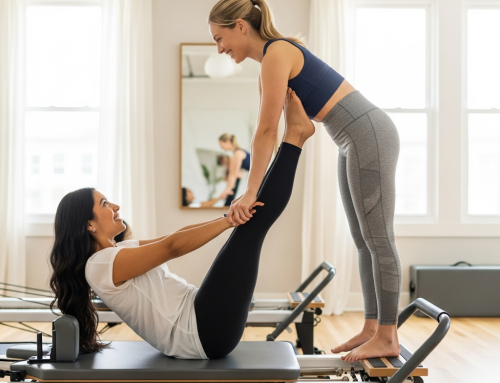
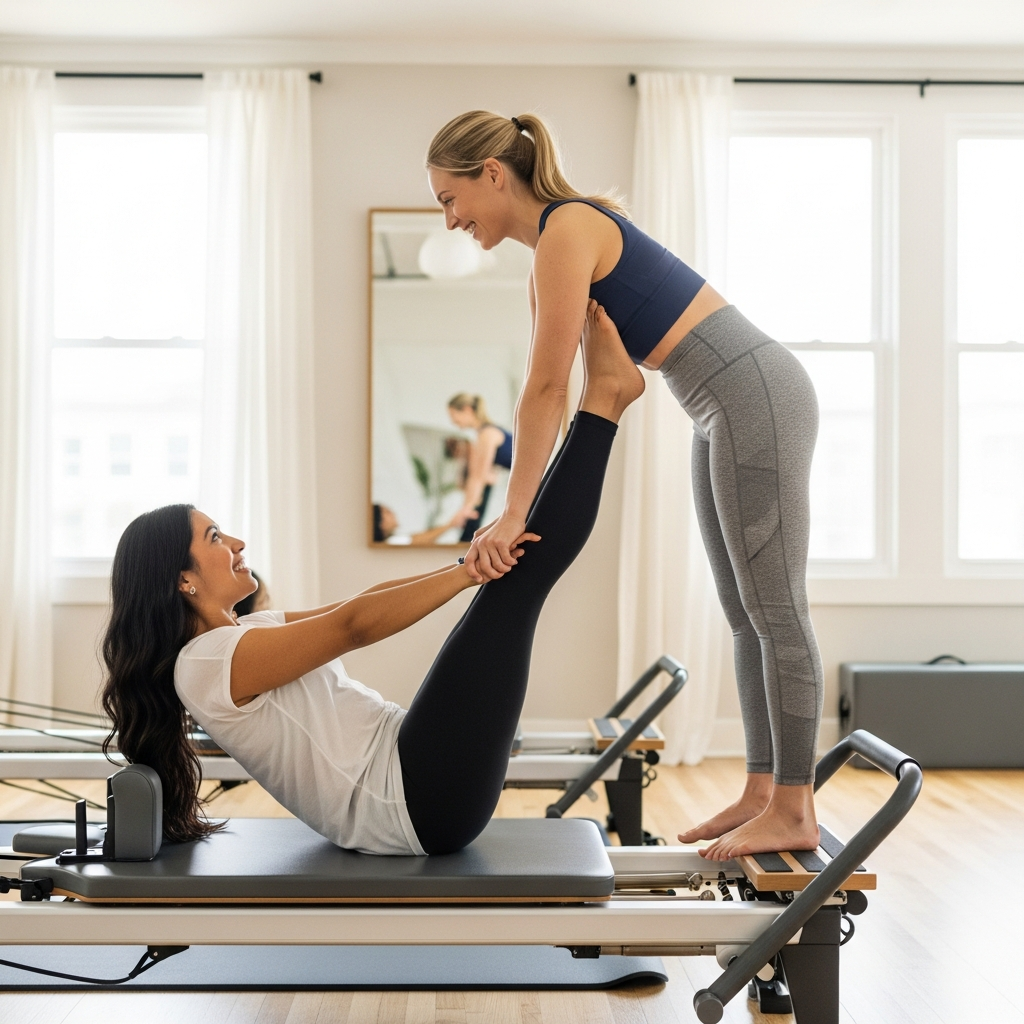
While mat Pilates uses the body’s own resistance and gravity to strengthen muscles, reformer Pilates involves a specially designed machine that offers resistance through springs. Reformer Pilates can provide a more intense workout, targeting more muscle groups than mat Pilates. However, it requires professional supervision to ensure proper form and prevent injuries.
In conclusion, both mat Pilates and yoga offer unique benefits that contribute to overall physical and mental health. The choice between the two depends on individual fitness goals and personal preferences. Whether you choose yoga for its holistic approach to well-being or Pilates for its focus on core strength and body toning, remember to practice consistently and mindfully. With time, you’ll notice improvements not just in your physique, but also in your mental clarity and stress levels.
Mat Pilates Vs. Yoga: What to Expect, Timelines, and Next Steps
In the realm of body-mind fitness, two practices often stand out – Yoga and Pilates. While both offer impressive benefits like improved flexibility, strength, and mental clarity, they are distinctly different in their approach and outcomes. For those sitting on the fence, it’s important to understand these differences before you decide which mat to unroll. This article will guide you through what to expect, timelines, and next steps for Mat Pilates compared to Yoga.
Mat Pilates vs Yoga: What to Expect?
Mat Pilates and Yoga might seem similar on the surface, with both performed on a mat and involving bodyweight exercises. However, the focus, movements, and ultimate goals vary significantly.
Mat Pilates focuses on forming a solid ‘powerhouse’ or core. The exercises target the deep muscles of the abdomen and spine, fortifying your body’s center. It emphasizes precise and controlled movements that require mental concentration and physical balance. Mat Pilates classes also involve a series of repetitive movements, which can help to tone and sculpt your body.
On the other hand, Yoga is an age-old practice that aims to unify the body, mind, and spirit. It involves various postures (“asanas”) coupled with deep breathing techniques. Yoga classes often include meditation and relaxation techniques, promoting a balanced internal environment.
Timelines: How Long Does It Take To See Results?
The timeline to see results varies from person to person and depends on factors like consistency, diet, current physical condition, and more.
In general, with consistent practice of Mat Pilates (2-3 times a week), you may start noticing improvements in strength, flexibility, and posture in as little as 1-2 months. For more visible toning and sculpting effects, it might take around three to six months.
Similarly, regular practice of Yoga can lead to noticeable improvements in flexibility, balance, and stress levels within a few weeks. However, for more profound benefits like increased strength and significant weight loss, regular practice over several months is necessary.
Next Steps: Practical Guidance
1. Identify Your Goals: Are you aiming for a strong and toned body or a peaceful mind with enhanced flexibility? While both Yoga and Mat Pilates can offer these benefits, Pilates typically provides quicker results for body toning, while Yoga excels in promoting relaxation and overall flexibility.
2. Try Out Both: The best way to decide between Mat Pilates and Yoga is to try them out. Attend a few classes or try online tutorials to get a feel for each practice. Pay attention to how you feel during and after the session.
3. Consider Equipment: Mat Pilates can be performed with minimal equipment – just a mat. However, to increase challenge and resistance, small apparatus like magic circles, resistance bands, or Pilates balls can be used. Yoga also requires minimal equipment but may include props like blocks, straps, or bolsters for certain poses.
4. Find Qualified Instructors: Whether it’s Mat Pilates or Yoga, it’s beneficial to learn from certified professionals who can guide you through the correct postures, breathing techniques, and help prevent injury.
5. Consistency is Key: Regardless of the practice you choose, consistency is crucial. Regular practice will help you reap the benefits faster and maintain them.
6. Listen to Your Body: Each body is unique and responds differently to different exercises. Always listen to your body and modify exercises as needed. If something doesn’t feel right, stop and seek professional advice.
Whether you opt for Mat Pilates or Yoga, remember that both are powerful practices that can greatly enhance your physical health and mental wellbeing. The best choice depends on your personal preferences, goals, and lifestyle. By understanding what to expect, timelines, and the next steps, you’re now equipped to make an informed decision and embark on a fulfilling fitness journey.
In conclusion, both Mat Pilates and yoga are highly beneficial practices that can contribute significantly to your overall physical health, mental wellness, and quality of life. While they share some similarities, such as the use of mats and the emphasis on mind-body connection, they also have distinct differences that make them unique.
Mat Pilates, named after its founder Joseph Pilates, is primarily a physical fitness system that focuses on core strength, flexibility, balance, posture, and body awareness. The exercises are designed to strengthen the body’s “powerhouse,” the muscles of the abdomen, lower back, and hips, which are crucial for good posture and healthy movement. Mat Pilates exercises often involve precise movements and specific breathing techniques. They require concentration and control, with a focus on quality over quantity. The end result is a stronger, more balanced body and a quieter mind.
Yoga, on the other hand, has its roots in ancient India and incorporates spiritual, mental, and physical practices. Its main objective is to unify the mind, body, and spirit. Yoga includes a much broader range of practices compared to Mat Pilates – including meditation, ethical principles, and specific dietary guidelines. In terms of exercise, yoga tends to place more emphasis on flexibility and relaxation, with positions held for longer periods. It also promotes a sense of inner peace and mindfulness.
Choosing between Mat Pilates and yoga will depend on your individual needs, preferences, and goals. If your primary goal is to improve your core strength, posture, and overall fitness, Mat Pilates might be the best choice for you. If you are more interested in stress relief, flexibility, and holistic wellness approach, yoga could be the most suitable practice.
However, who says you have to choose? Many people find that combining both practices gives them the best of both worlds: the core strengthening and body toning benefits of Pilates along with the flexibility enhancing and mind-calming benefits of yoga. They complement each other well and can be practiced on alternate days or even within the same session.
Remember that both Mat Pilates and yoga should ideally be learned under the guidance of a qualified instructor to ensure correct form and prevent injury. If you’re new to these practices, it’s a good idea to start with beginner-level classes and gradually work your way up as your strength and flexibility improve.
We are here to assist you in your wellness journey. Our team of experienced and dedicated professionals are ready to guide you, whether you choose Mat Pilates, yoga, or a combination of both. We offer a range of classes to suit all levels, as well as private sessions tailored to your specific needs and goals.
Don’t hesitate to contact us to discuss your options, ask questions, or book a class. Whether you’re a complete beginner or looking to deepen your practice, we’re here to support you every step of the way. Trust us to help you achieve your fitness and wellness goals and experience the transformative power of Mat Pilates and yoga. Feel the difference they can make in your life – stronger body, calmer mind, and a healthier, happier you. Reach out today and embark on your journey towards holistic wellness with us.