Pilates vs. Yoga: Unraveling the Mystique of Two Powerful Disciplines
Introduction:
Have you ever found yourself standing at the crossroads of fitness, unsure whether to dive into the tranquil world of Yoga or stride into the dynamic realm of Pilates? If so, you’re definitely not alone. Both Pilates and yoga have surged in popularity over recent years, leaving many fitness enthusiasts in a dilemma over which path to follow. After all, both practices promise improved flexibility, strength, and mental well-being. But how are they different? Which one is better? Which one is right for you? Let’s delve deeper and demystify these intriguing mind-body practices.
The purpose of this blog post is to shed light on the differences and similarities between Pilates and yoga, with a particular focus on Pilates – both mat and reformer variations. We’ll delve deep into what each practice entails, its benefits, and how they complement each other. By understanding the unique attributes of both disciplines, you’ll be better equipped to make an informed decision about which is most suited to your lifestyle and fitness goals.
In the upcoming sections, we will uncover the origins and philosophies behind Pilates and yoga, exploring their core principles and the physical and mental benefits they offer. We’ll delve into the world of mat Pilates, a form of exercise that leverages body weight and gravity to challenge your strength, flexibility, and endurance. Then we’ll shift gears and explore reformer Pilates, a dynamic practice utilizing a specialized machine to introduce resistance training into the mix.
But why does this matter to you? Well, understanding these two practices is more than just quenching your curiosity. It’s about discovering the fitness regime that resonates with you on a deeper level. It’s about finding a practice that aligns with your fitness level, personal goals, and even your philosophical outlook towards life. It’s about understanding that, while they may seem similar on the surface, Pilates and yoga each have unique characteristics that make them distinct.
In the world of fitness, knowledge is power. The more you understand about different practices, the better you can tailor your workouts to meet your specific needs. Whether you’re a seasoned fitness enthusiast or a beginner seeking to embark on a fitness journey, this post will provide comprehensive insights into Pilates and yoga that could be instrumental in shaping your fitness trajectory.
So, let’s embark on this enlightening journey together and unravel the mystique surrounding Pilates and yoga. Whether you’re looking to build strength, improve flexibility, enhance your focus, or find inner peace, read on to discover which of these powerful practices is your perfect match. Prepare to transform your view of fitness as we dive into the captivating worlds of Pilates and yoga.
Stay tuned as we unravel the mind-body connection in a whole new light, breaking down complex concepts into digestible information that will empower you to take charge of your fitness journey. Whether it’s the precision and control of Pilates or the meditative tranquillity of yoga that appeals to you, by the end of this post, you’ll have all the information you need to make an informed choice. So, are you ready to dive in? Let’s begin.
Remember, the journey of a thousand miles begins with a single step. In our case, it starts with understanding the unique and profound practices of Pilates and yoga. Let’s step forward together into this intriguing exploration of body, mind, and spirit.
The Fundamentals of Pilates Vs Yoga: A Comprehensive Comparison
In the realm of body-mind fitness, two practices have emerged as popular choices worldwide – Pilates and Yoga. While both share some similarities, they each have unique characteristics that cater to different fitness and wellness needs. This article focuses primarily on Pilates, its fundamental principles, and how it compares to Yoga.
Pilates, named after its creator Joseph Pilates, is a comprehensive system of exercise that emphasizes the balanced development of the body through core strength, flexibility, and awareness to support efficient, graceful movements. Originally dubbed ‘Contrology,’ Pilates was designed in the early 20th century as a rehabilitative tool and was later adopted by dancers and athletes for its inherent ability to strengthen, elongate muscles, and improve postural alignment.
At its core, Pilates is anchored on six fundamental principles: concentration, control, centering, flow or efficiency of movement, precision, and breathing.
Concentration: Pilates promotes mind-body awareness. Each movement requires mental focus to engage specific muscle groups accurately.
Control: Unlike other workouts that encourage vigorous movement, Pilates is about control. Every exercise is performed with purpose and control to avoid injury and ensure maximum benefit.
Centering: The ‘powerhouse’ or the center of the body (abdomen, lower back, hips, and buttocks) is the focal point of all Pilates exercises. Strengthening this area provides a solid foundation for the rest of the body.
Flow or Efficiency of Movement: This principle is about creating smooth, flowing movements. The goal is to connect one move to the next seamlessly, enhancing overall grace and efficiency.
Precision: In Pilates, accuracy is paramount. Each movement has a purpose and must be performed correctly for optimal benefits.
Breathing: Pilates utilizes full breaths during each movement. This not only oxygenates the muscles but also assists in maintaining focus and precision.
Pilates exercises can be performed on a mat or on specialized equipment, like the Reformer, Cadillac, or Wunda Chair. The equipment, designed with springs for resistance, helps deepen the exercises’ impact and can be adjusted to cater to individual needs or progression levels.
In comparison, Yoga is an ancient practice that originated in India over 5,000 years ago. It focuses on harmonizing the body with the mind and breath through the means of various breathing techniques (pranayama), yoga postures (asanas), and meditation.
While both Pilates and Yoga focus on breath and movement, their objectives and techniques differ significantly. Yoga aims at uniting mind, body, and spirit, achieving a state of peace and spiritual enlightenment. It incorporates meditation and deep relaxation to reduce stress and improve mental well-being. On the other hand, Pilates primarily concentrates on physical conditioning, emphasizing core strength, flexibility, balance, and body awareness to improve physical performance.
Yoga involves holding poses for long periods, improving flexibility, muscle tone, and strength along with mindfulness and stress reduction. Pilates, conversely, is more dynamic, involving a series of movements performed with control and precision to target the whole body, especially the ‘powerhouse’.
In terms of equipment, traditional Yoga requires little more than a mat. Some forms may use props like blocks or straps to aid in achieving or deepening poses. In contrast, Pilates can be equipment-based (using devices like the Reformer) or mat-based. The equipment adds resistance to the exercises, providing a more challenging workout.
In conclusion, while Pilates and Yoga may seem similar at first glance, their focus and approach to mind-body wellness are different. Pilates stands out for its emphasis on physical conditioning – core strength, flexibility, balance, and body awareness. It’s an ideal choice for those looking to improve posture, athletic performance, or rehabilitate from injuries. However, the choice between Pilates and Yoga ultimately depends on your personal fitness goals, preferences, and needs.
Pilates vs. Yoga: Understanding the Difference and Finding Your Fit
As activities that promote physical fitness and mental well-being, Pilates and yoga often get lumped together. While they may seem similar on the surface, there are fundamental differences in purpose, approach, and benefits. To help you determine which path to wellness best suits your needs, let’s delve into a comparative analysis of Pilates vs. yoga.
Firstly, let’s understand their origins. Yoga, an ancient practice that originated in India over 5,000 years ago, integrates physical postures (asanas), breathing exercises (pranayama), and meditation to achieve harmony between mind, body, and spirit. On the other hand, Pilates, named after its creator Joseph Pilates, is a 20th-century invention designed to rehabilitate injured soldiers during World War I. It concentrates on improving physical strength, flexibility, posture, and mental awareness.
Yoga focuses on flexibility and broad muscle groups while promoting relaxation and stress reduction. It encourages you to hold poses for a long time, enhancing flexibility and mental resilience. There are multiple yoga styles, from the more relaxed Hatha Yoga to the physically demanding Ashtanga Yoga.
Pilates, meanwhile, targets core strength and stability while incorporating breathing techniques. The exercises are performed in a controlled, precise manner with a focus on technique and alignment. Pilates can be broken down into two main categories: Mat Pilates and Reformer Pilates.
Mat Pilates is performed on a mat, using body weight as resistance. It’s an excellent starting point for beginners due to its emphasis on learning control and stabilization. For example, the ‘Pilates Hundred’ is a classic Mat Pilates exercise that focuses on core strength and stability. It involves lying on your back on the mat, lifting your legs and head slightly off the ground, and pumping your arms up and down while engaging your core and maintaining controlled breathing.
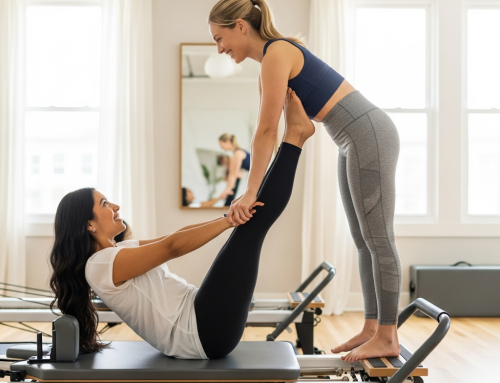
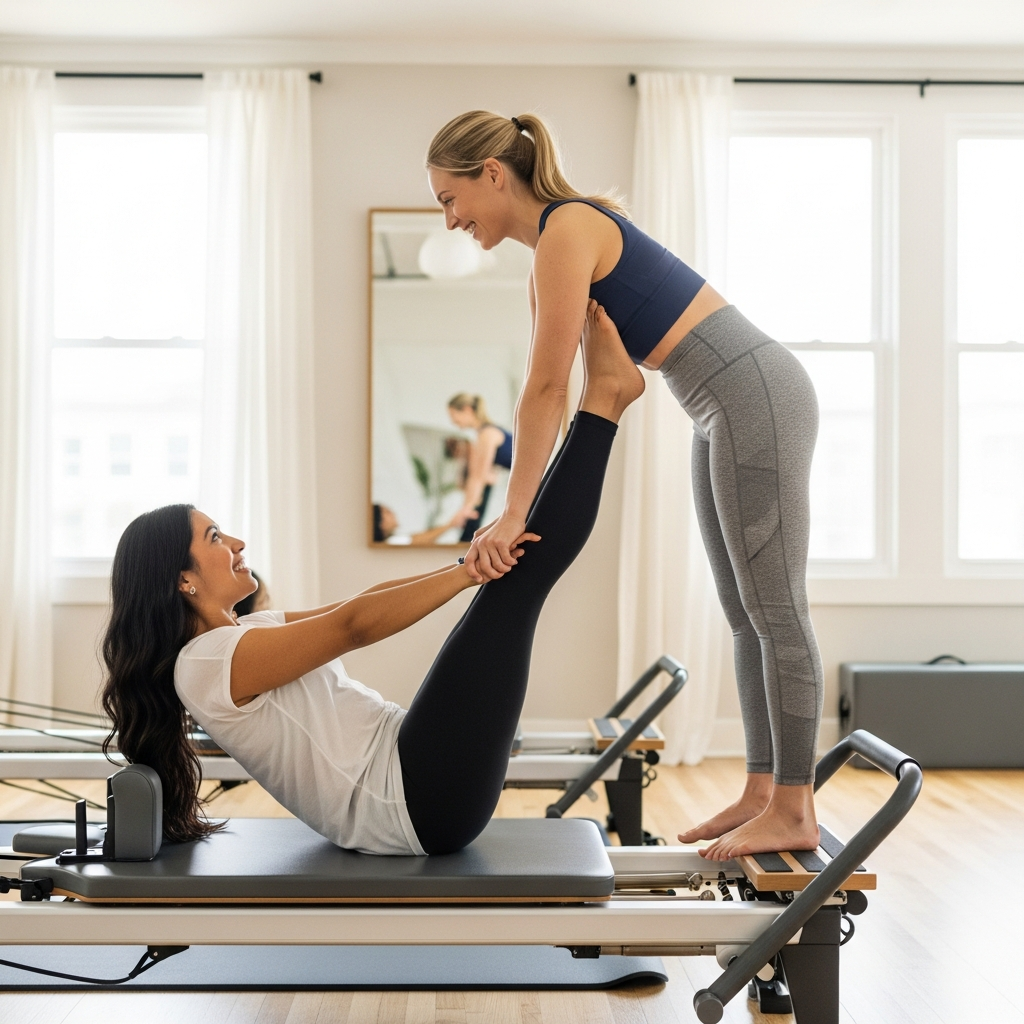
Reformer Pilates uses a specially designed machine called a Reformer, equipped with springs, ropes, and a sliding platform. The Reformer adds resistance to the exercises, providing a more challenging strength and endurance workout. An example of a typical Reformer exercise is the ‘Footwork’ series, which targets the lower body by pushing against the resistance of the springs using different foot positions.
Now, let’s consider specific scenarios to help you decide between Pilates and yoga. If you’re dealing with back pain, Pilates might be a better option due to its focus on core strength and spine alignment. The ‘Pelvic Curl’ or ‘Bridge’ exercise in Pilates, for instance, can strengthen your lower back and alleviate pain.
However, if you’re seeking stress reduction and mental tranquility, yoga might be more suitable. Practices like mindful breathing and meditation during a yoga session can help manage stress and anxiety. The Savasana, or ‘Corpse Pose’, at the end of a yoga class offers deep relaxation and calm.
In terms of weight loss, both Pilates and yoga can contribute to a healthy weight loss regimen along with proper diet. However, Reformer Pilates, with its added resistance, could provide a more intensive workout leading to higher calorie burn.
In conclusion, choosing between Pilates and yoga depends on your personal goals and preference. Sample both practices; join a beginner’s class or try online tutorials to get a feel for each. Whether you choose Pilates for its core-strengthening benefits or yoga for its holistic approach towards wellness, both will contribute significantly to your physical fitness and mental well-being.
Pilates vs Yoga: A Detailed Comparison
Pilates and yoga are both popular forms of exercise that improve strength, balance, flexibility, and mind-body connection. However, their approaches are distinctly different from their origins to their techniques and benefits. Whether you’re new to these practices or experienced but still unsure about the differences, this article will help dispel misconceptions and highlight the unique aspects of Pilates, Mat Pilates, and Reformer Pilates versus yoga.
##Origins and Philosophy
Pilates was developed in the early 20th century by Joseph Pilates, a physical trainer from Germany. His method, originally called “contrology”, was about controlling the body with the mind, emphasizing balance, strength, flexibility, and coordination. It’s a systematic practice that requires concentration and precision with a strong focus on technique.
Yoga, on the other hand, originated in ancient India over 5,000 years ago. It’s more than just a physical practice; it’s a philosophical system that encourages the unity of mind, body, and spirit. Yoga involves a series of poses (asanas) combined with breathing techniques (pranayama) and meditation to cultivate physical strength, relaxation, and mindfulness.
##Techniques and Practices
Pilates exercises are performed in a flowing sequence with attention to precision and control. You’ll find two main types: Mat Pilates and Reformer Pilates. Mat Pilates is performed on the ground using a yoga mat. It focuses on developing core strength, improving posture, and increasing flexibility.
Reformer Pilates uses a specific piece of equipment—a sliding carriage with springs for resistance— to enhance the workout’s intensity. It’s ideal for anyone looking to step up their Pilates game as it offers a broader range of exercises than Mat Pilates.
Yoga encompasses a wide variety of styles from gentle Hatha yoga, which emphasizes slow movements and relaxation, to more intense styles like Ashtanga or Power Yoga, which focus on strength and endurance.
##Benefits and Challenges
Both Pilates and yoga offer tremendous health benefits. Pilates is excellent for building a strong core, improving posture, enhancing flexibility, and preventing injuries. It’s often recommended for rehabilitation because of its low-impact exercises that target smaller stabilizing muscles.
Yoga also promotes flexibility and strength but goes beyond the physical benefits to include stress reduction and improved mental wellbeing. Certain styles of yoga can also aid in weight loss and cardiovascular fitness.
However, beginners might find certain aspects of both practices challenging. In Pilates, maintaining the level of concentration and precision needed for correct form can be difficult. In yoga, some poses can be challenging for people with limited flexibility or strength.
##Expert Tips and Best Practices
For Pilates:
1. Start with a beginner’s class or private session to get familiar with the movements. 2. Don’t rush through the exercises. Pilates is about control and precision. 3. Engage your core in every exercise. This not only strengthens your abdominal muscles but also supports your spine.
For Yoga:
1. Listen to your body. If a pose feels uncomfortable, adjust it or try a modified version. 2. Practice regularly. Consistency is key in yoga. 3. Use props like blocks and straps to help you achieve correct alignment in poses.
###Conclusion
In conclusion, Pilates and yoga are both excellent forms of exercise with unique benefits. While Pilates emphasizes core strength, precision, and body control, yoga focuses more on relaxation, flexibility, and the unity of mind, body, and spirit. Your choice between the two should depend on your fitness goals, personal preference, and the kind of mental engagement you want from your workout.
It’s essential to remember that both practices demand patience, commitment, and the right technique for you to reap their benefits fully. Whether you choose Pilates or yoga, you’re on your way to a healthier, stronger, and more flexible body.
Pilates vs Yoga: Expectations, Timelines, and Next Steps
When it comes to low-impact exercises that improve flexibility, strength, and mental wellness, Pilates and yoga stand out as popular choices. However, these two disciplines are distinct from each other, each offering unique benefits and experiences. Let’s dive deep into understanding the differences between Pilates and yoga, and how you can embark on either journey.
Pilates, invented by physical trainer Joseph Pilates in the early 20th century, focuses on core strength, body control, flexibility, and balance. It involves low-impact flexibility moves, muscular strength and endurance movements using your body weight or special equipment like a reformer. Pilates exercises concentrate on postural alignment, core strength and muscle balance.
Yoga, on the other hand, is an ancient practice with its roots in Indian philosophy. It is more than a physical workout; it’s a mental and spiritual discipline that seeks unity between the mind, body, and spirit. Yoga involves a series of static postures, coupled with breathing techniques, meditation and principles of morality.
Now that we understand these definitions let’s delve into the practical aspects of starting with either Pilates or yoga.
Pilates exists in two primary forms: Mat Pilates and Reformer Pilates. Mat Pilates is performed on a mat, using your body weight for resistance. This form is excellent for beginners because it focuses on control and precision, with a focus on the core. Reformer Pilates is done using a machine called a reformer, which provides resistance via springs. This can be adjusted to increase or decrease difficulty.
When starting with Mat Pilates, you may find the initial sessions challenging as they require precise movements and significant core strength. The average class lasts between 45 minutes to an hour. You can expect to see improvements in your posture, muscle tone, balance, and joint mobility within 8 to 10 weeks of regular sessions.
Reformer Pilates is more intensive and versatile. It’s suitable for everyone from athletes to rehabilitation patients. The resistance created by the pulley and spring system can provide a more challenging strength and endurance workout than mat Pilates. It may take longer to see improvements, typically 10 to 12 weeks with regular sessions.
Starting with yoga involves choosing among its many styles, from gentle Hatha yoga to more physically demanding Ashtanga or Power yoga. A beginner’s class usually lasts between 60 to 90 minutes, focusing on learning basic postures and correct alignment, coupled with breathing techniques. Yoga is a lifelong practice, and while you may start noticing increased flexibility and reduced stress levels within a few weeks, yoga’s profound effects on mental clarity and spiritual growth are long-term benefits.
The next steps involve choosing a training environment that suits your preference. Both Pilates and yoga classes are widely available at fitness centers, dedicated studios, or online platforms. It is essential to start with beginner-level classes under certified instructors who can guide you through correct postures and movements, minimizing the risk of injury.
Finally, remember that both Pilates and yoga are not about ‘perfect’ performance but rather consistent practice. Listen to your body, respect its limitations, and gradually push your boundaries. Whether you choose Pilates for its focus on core strength and flexibility or yoga for its holistic approach to wellness, both disciplines can offer immense benefits for your physical health and mental wellbeing.
In conclusion, Pilates and yoga are both powerful practices that can enhance your fitness level and overall quality of life. Understanding their differences will help you choose the one that aligns best with your fitness goals and lifestyle preferences. Stay committed, be patient with your progress, and most importantly, enjoy the journey towards improved health and wellness.
In conclusion, Pilates and yoga, although similar, offer unique approaches to mind-body fitness. Both emphasize breath control, flexibility, alignment, and strength, but they differ in their core philosophies and benefits.
Yoga is an ancient practice rooted in Indian philosophy that uses postures, deep breathing, and meditation to unite the body, mind, and spirit. It focuses on flexibility and broad muscle groups, promoting relaxation, reducing stress, and enhancing spiritual growth. Yoga is also an excellent way to improve balance and coordination.
On the other hand, Pilates, designed by Joseph Pilates in the early 20th century, focuses more on physical conditioning. It targets the body’s powerhouse – the abdomen, lower back, hips, and buttocks – to build strength from within. Pilates concentrates on the quality of movements rather than the quantity, which leads to improved body awareness, posture, muscle tone, balance, and joint mobility. It can be particularly beneficial for those recovering from injuries or with specific physical conditions.
So how do you decide which is right for you? The answer depends on your personal fitness goals. If you are seeking a practice that ties in spirituality and deep relaxation with physical exercise, yoga may be the right fit. However, if you want a workout that focuses more on core strength, muscle tone, and body control without the spiritual aspects, Pilates might be your best option.
It’s important to note that you don’t have to choose between Pilates and yoga. Many people benefit from incorporating both into their fitness routines. They complement each other well; yoga can enhance the flexibility and relaxation aspects of your routine while Pilates can improve your strength and control. This combination can create a well-rounded fitness regimen that touches on all aspects of body, mind, and spirit wellness.
Remember that both Pilates and yoga are adaptable to different fitness levels and needs. Whether you’re a seasoned athlete or just beginning your fitness journey, you can find classes and routines that will challenge you in a positive, nurturing manner. It’s not about being the best or doing the most advanced poses or exercises; it’s about improving your own fitness, health, and well-being.
At the end of the day, the best exercise is the one you enjoy and will stick with. Try out both Pilates and yoga, and see which one resonates more with you. You may find that you enjoy the deep stretching and relaxation of yoga one day, and the next day, you prefer the muscle toning and strengthening aspect of Pilates.
We hope that this comparison has provided some clarity on Pilates vs yoga. Both offer numerous benefits and can be a wonderful addition to a balanced fitness regimen.
If you’re still unsure about which practice to choose or how to get started, we’re here to help. Our team of experts is ready to guide you towards your fitness goals. We can assist you in understanding more about each practice, recommend classes suitable for your level, and even provide personal training services tailored to your specific needs.
Don’t hesitate to reach out and get started on your path towards improved health and wellness. Whether it’s Pilates, yoga, or a mix of both – we’re here to support your journey every step of the way. Contact us today – let’s embark on this exciting journey together!
Because remember, it’s not just about fitness, it’s about a lifestyle of health, strength, flexibility, and inner peace. Start your journey today!