Unraveling the Enigma: Pilates vs. Mat Pilates
In the fitness universe, one name that has steadily gained momentum over the years is Pilates. But did you know there’s more than one type of Pilates? Yes, you read that right. Pilates divides into various types, and today, we’re going to delve into the fascinating world of Pilates and Mat Pilates.
So, if you’ve been wondering about “What is the difference between Pilates and Mat Pilates?” or “Which type of Pilates is right for me?”, then you’ve landed on the right page. This blog post will serve as your ultimate guide to understanding the subtleties that distinguish these two forms. We will walk you through the origins, structure, benefits, and the necessary equipment for both Pilates and Mat Pilates.
The world of fitness and wellness is as vast as it is varied. It offers an array of practices and techniques to achieve that perfect balance between mind, body, and spirit. Among these, Pilates stands out for its unique blend of strength, flexibility, and mindfulness. But there’s a twist in the tale – not all Pilates are created equal. There’s a difference between general Pilates (often referred to as Reformer Pilates) and Mat Pilates – a difference that can significantly affect your workout routine and the results you can achieve.
The concept of Pilates was conceived by Joseph Pilates in the early 20th century. It was designed as a low-impact exercise regimen to strengthen muscles while improving postural alignment and flexibility. Over time, it evolved into different forms, each with its unique emphasis and benefits.
In this post, we’ll dive deep into the realms of Pilates and Mat Pilates. We’ll start by exploring their origins, then move on to their basic structure and principles, and finally dissect their differences in equipment use. We’ll also shed light on the benefits that each form of Pilates brings to the table. By the end of this post, you’ll gain a holistic understanding of both these forms, empowering you to make an informed decision about which is best suited for your fitness goals.
Why does this distinction matter? The answer lies in the fact that the type of Pilates you choose can significantly shape your workout experience and outcomes. For instance, if you’re someone who is just starting their fitness journey, Mat Pilates might be a better fit for you with its focus on basic movements and principles. On the other hand, if you’re looking for a more challenging workout that utilizes specialized equipment and offers more resistance, Reformer Pilates could be your go-to option.
With the growing popularity of Pilates, it’s essential to understand what you’re signing up for. The nuances between Pilates and Mat Pilates can mean the difference between a workout routine that you enjoy and one that doesn’t quite hit the mark.
So, whether you’re a seasoned fitness enthusiast or a curious beginner, this post will equip you with the knowledge you need to navigate the fascinating world of Pilates. Read on as we unravel the mystery behind these two popular fitness regimes and help you determine which one aligns best with your fitness aspirations.
In the upcoming sections, we will dive into the specifics of Pilates and Mat Pilates. We will learn about the unique equipment used in each type, understand how each form contributes to flexibility, strength, and balance, and explore how they can be adapted for different fitness levels.
Stay tuned for an enlightening journey that promises to enhance your understanding of these two dynamic forms of exercise. Get ready to unlock a new level of awareness about your body, your fitness, and your potential. The world of Pilates awaits!
Understanding the Difference: Pilates vs Mat Pilates
Pilates has gained substantial popularity over the past few years as an effective way to build strength, improve flexibility, and cultivate a deep sense of mind-body connection. This holistic approach to physical fitness was developed in the early 20th century by Joseph Pilates, a German physical trainer. His method, originally termed “Contrology,” emphasized that physical health is closely linked to mental and emotional wellbeing.
Joseph Pilates designed a series of movements that primarily focus on core strength—encompassing the muscles in your abdomen, lower back, hips, and buttocks—regarded as your body’s powerhouse. These exercises also support proper posture and efficient movement patterns. The goal of Pilates is to foster improved health and fitness through balanced muscle development, better coordination, and increased self-awareness.
In understanding Pilates, it’s essential to grasp two primary classifications: Equipment-based Pilates and Mat Pilates. The distinction lies in the use (or non-use) of specialized apparatuses designed by Joseph Pilates himself.
Equipment-based Pilates utilizes a variety of unique machines which include the Reformer, Cadillac (also called Trapeze Table), Wunda Chair, and more. These machines use spring-loaded resistance to challenge the body in a multitude of ways. The versatility of these apparatuses allows for hundreds of exercises ranging from beginner to advanced levels. The adjustable settings on these machines cater to individual needs, accommodating various body types and fitness levels.
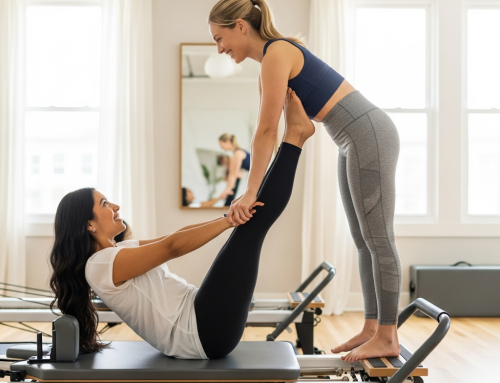
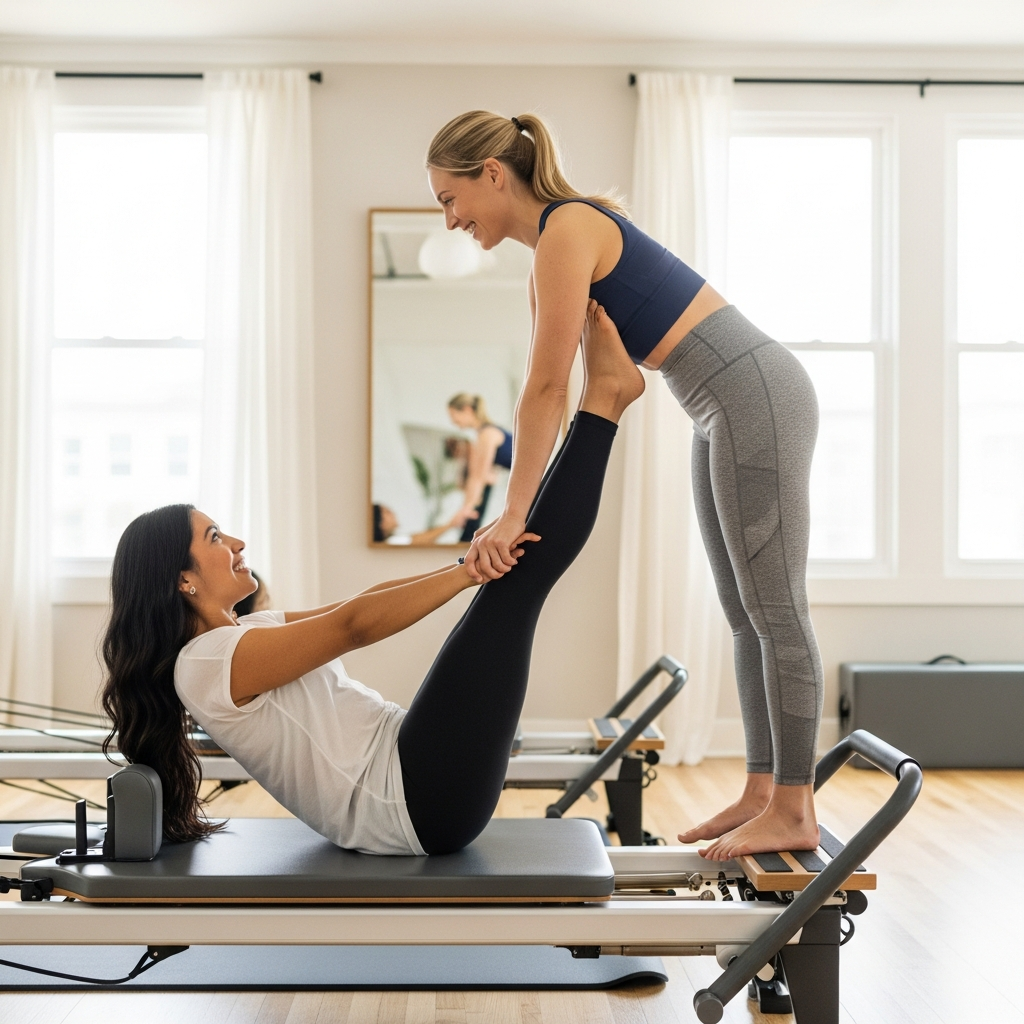
The Reformer, one of the most widely recognized Pilates apparatuses, is a flat platform that moves back and forth within a frame. The individual can sit, stand, kneel, or lie down on the carriage, and use the attached straps or footbar to move it along the tracks using controlled movements. This allows for exercises that can work muscles in a different way than traditional weight-bearing exercises.
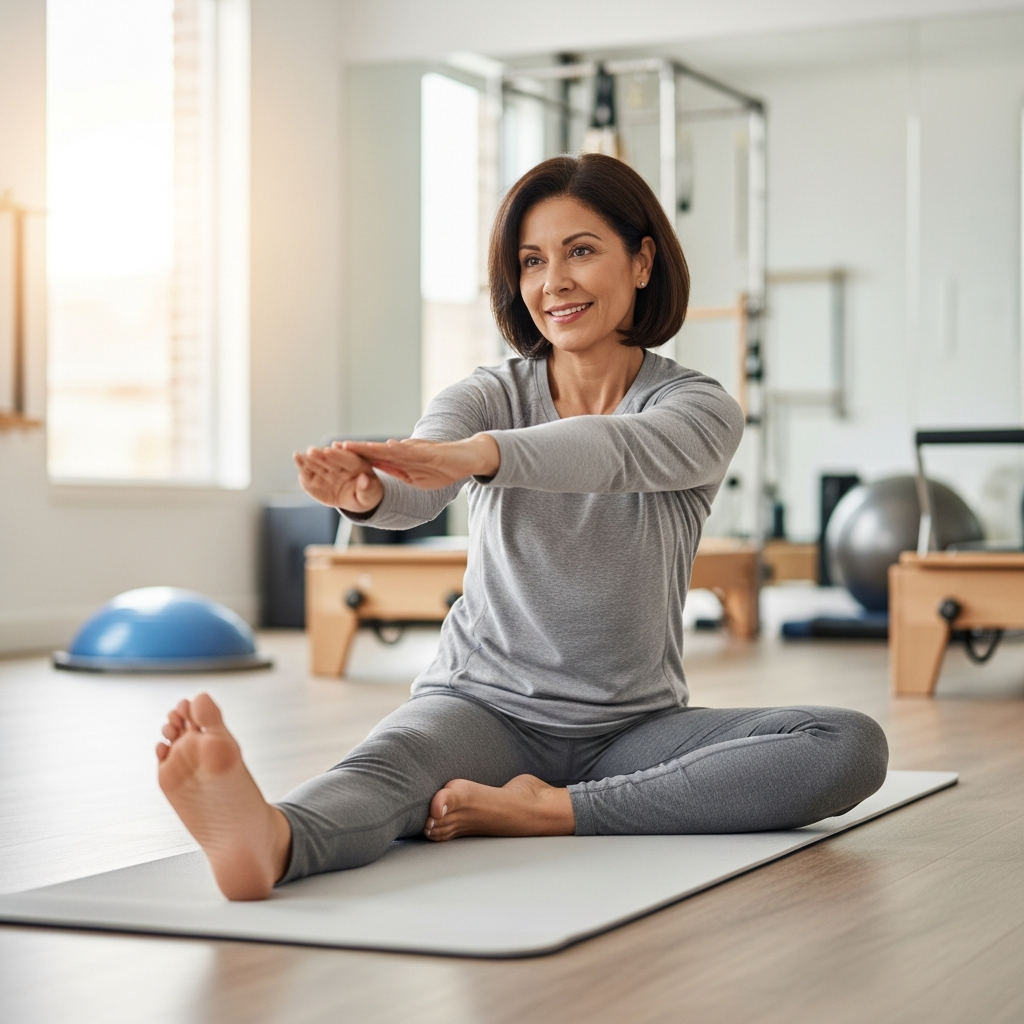
On the other hand, Mat Pilates requires no equipment beyond a simple cushioned mat. In Mat Pilates, your body weight provides the resistance against gravity as you work through a series of movements. Mat Pilates focuses on the core principles of Pilates—centering, concentration, control, precision, breath, and flow—but in a streamlined and accessible way. This form of Pilates is often recommended for beginners as it introduces the fundamental movements and principles that form the basis of the practice.
However, Mat Pilates is not just for beginners. The challenge in Mat Pilates lies in the fact that you must control and move your body without the assistance or resistance of the machines. This can be more demanding on your powerhouse muscles and requires a high degree of strength, balance, and coordination.
While Mat Pilates may initially seem less intense than its equipment-based counterpart, it is by no means a lesser workout. The exercises are designed to stretch and strengthen muscles while improving overall body alignment, flexibility, and balance. The absence of machines means that you focus more on using your body’s own strength and resources to achieve each movement.
Both Mat and Equipment-based Pilates share the common goal of enhancing overall physical fitness and developing a deep sense of body awareness. They both emphasize precision and control over mindless repetitions, making every movement count. The choice between the two often comes down to personal preference, goals, and available resources.
In conclusion, while Pilates and Mat Pilates may seem similar at first glance, understanding their differences can help you decide which one suits your individual needs best. Whether you choose Mat Pilates or Equipment-based Pilates, both offer a comprehensive approach to mind-body fitness that can enhance strength, flexibility, and overall wellbeing.
Distinguishing Pilates: Mat Pilates vs. Reformer Pilates
Introduction
Pilates, a physical fitness system developed in the early 20th century by Joseph Pilates, has grown into a popular form of exercise worldwide. Its focus on strength, flexibility, and balance makes it an ideal workout for individuals of all fitness levels. Often, you’ll find two primary forms of Pilates: mat Pilates and reformer Pilates. Each offers unique benefits and challenges, making them distinct from each other. This article aims to clarify the differences between mat and reformer Pilates and provide actionable advice for incorporating both into your workout routine.
Mat Pilates
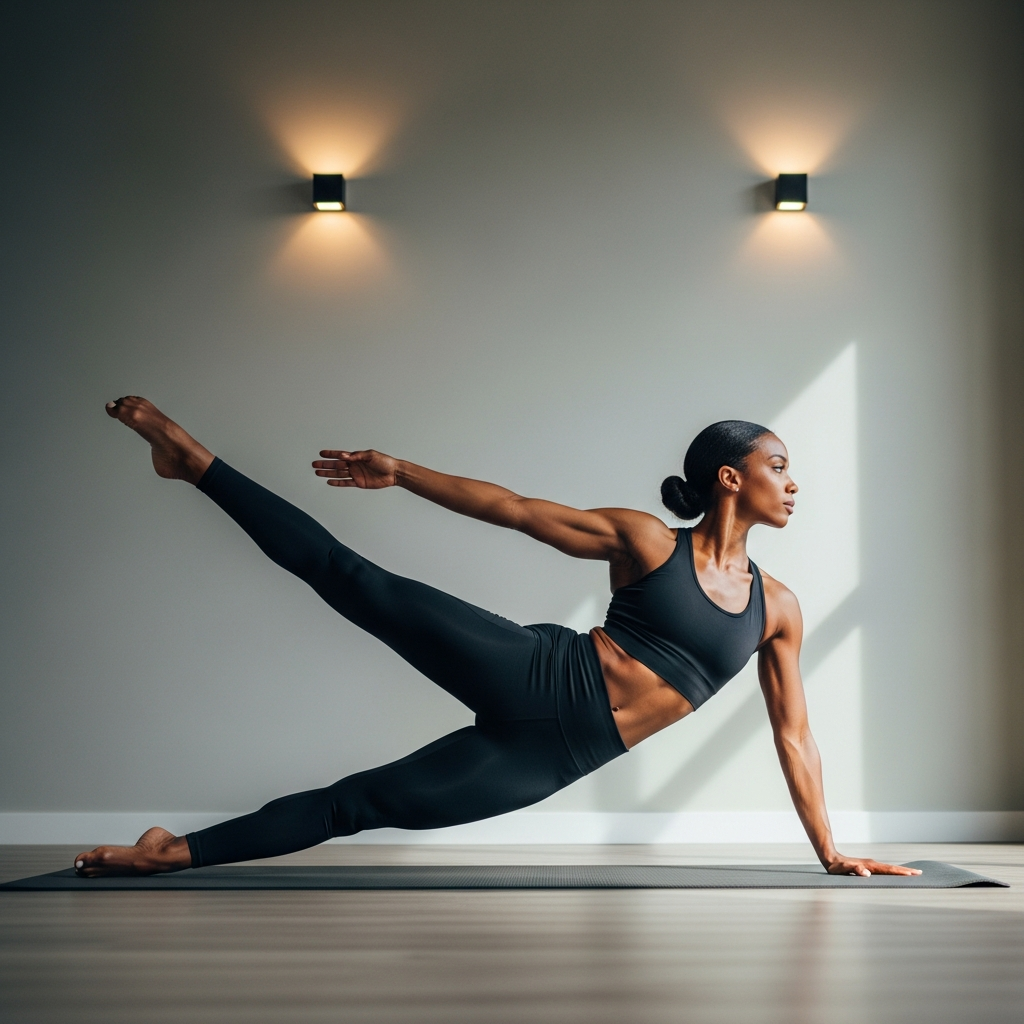
Mat Pilates is the most common form of Pilates performed in fitness studios and homes worldwide. It requires minimal equipment – just a yoga or Pilates mat. Mat Pilates focuses on using your body as resistance and engages your core muscles to perform various exercises.
Mat Pilates exercises often involve movements that require balance and stability, such as the ‘hundred,’ ‘roll-up,’ and ‘scissors.’ These exercises require a great deal of strength and control over your body’s movements, making mat Pilates an excellent choice for individuals looking to improve their core strength and stability.
An example scenario of a mat Pilates session could be a beginner’s class where the instructor guides participants through basic exercises like the ‘pelvic curl’ or ‘the swan.’ These exercises help develop strength, flexibility, and control over one’s movements.
Reformer Pilates
On the other hand, Reformer Pilates involves a special machine designed by Joseph Pilates himself. The reformer offers more resistance and support than mat Pilates, thanks to its springs, ropes, and carriage system.
Reformer Pilates presents a more challenging workout because of the added resistance offered by the machine. This resistance can be adjusted to match each individual’s strength levels, making it suitable for beginners and advanced practitioners alike.
For example, in a group reformer class, you might find yourself performing exercises like ‘footwork’ or ‘the teaser’ on the reformer machine. These exercises challenge your strength, flexibility, and balance in ways that mat Pilates may not.
Comparing Mat and Reformer Pilates
The main difference between mat Pilates and reformer Pilates lies in the equipment used and the level of resistance they provide. Mat Pilates relies primarily on body weight for resistance, while reformer Pilates uses a machine to offer adjustable resistance levels.
Due to this difference, reformer Pilates tends to provide a more intense workout than mat Pilates. This does not mean that one is superior to the other; instead, they complement each other well. Mat Pilates can help build a strong foundation of core strength and stability, which can enhance your performance on the reformer.
Actionable Advice
For beginners, starting with mat Pilates can be beneficial. It allows you to learn the basics and build a strong foundation before moving on to the more challenging reformer exercises. Once you feel comfortable with the mat exercises, incorporating reformer Pilates into your routine can help you challenge your body in new ways and continue your fitness progression.
For those already familiar with Pilates, alternating between mat and reformer workouts can provide a well-rounded fitness routine. You could, for instance, perform mat Pilates exercises at home during weekdays and attend a reformer class at a studio over the weekend.
Remember, no matter which form of Pilates you choose, consistency is key. Regular practice will yield better results in terms of strength, balance, and flexibility.
In conclusion, both mat and reformer Pilates offer unique benefits and challenges. Understanding the differences between them can help you choose the right form of Pilates for your fitness goals and lifestyle. With regular practice, both can contribute to improved overall fitness and well-being.
Unraveling the Mystique: Pilates vs. Mat Pilates
Pilates, a fitness regime rooted in enhancing strength, flexibility, and body awareness, has gained global popularity over the past century. Yet, with the emergence of various subcategories within this discipline, there remains confusion around the differences between Pilates and Mat Pilates. This article aims to dispel misconceptions while offering insightful knowledge about these distinct forms of exercise.
## Understanding Pilates
To comprehend the distinctions between Pilates and Mat Pilates, one must first understand what Pilates itself encompasses. Developed by German-born Joseph Pilates in the 1920s, this fitness methodology focuses on strengthening the core, improving posture, and enhancing muscle tone and elasticity. It incorporates both free-body exercises and workouts using specialized equipment, like the Reformer, Cadillac, or Wunda Chair.
## Mat Pilates: A Closer Look
Mat Pilates is one of the most widely practiced forms of Pilates, primarily because it doesn’t require any special equipment. As its name suggests, Mat Pilates involves performing exercises on a mat, much like yoga. The movements are primarily focused on strengthening the body’s core muscles—the powerhouse—encompassing the abdomen, lower back, hips, and buttocks.
The misconception often lies in assuming that all Pilates is Mat Pilates, which isn’t the case. Mat work is merely a segment of the broader Pilates system. It’s an excellent starting point for beginners due to its focus on mastering control and form before introducing more complicated apparatus.
## The Role of Reformer Pilates
Another prominent form of this discipline is Reformer Pilates—a more equipment-intensive form of workout that utilizes a unique machine called a Reformer. This sliding platform with a stationary foot bar and adjustable springs provides varying levels of resistance during exercises. Reformer Pilates challenges balance, strength, and stability more dynamically than Mat Pilates, making it a preferred choice for advanced practitioners or those seeking to intensify their workouts.
## Common Challenges
The common challenges that beginners face when starting with Pilates or Mat Pilates include understanding the correct form and alignment, building core strength, and learning the complex lingo associated with these workouts.
In Reformer Pilates, the initial difficulty lies in navigating the Reformer machine. Its cords, straps, and springs can be overwhelming for novices. Also, it offers a greater resistance level, which can be challenging for those transitioning from Mat Pilates.
## Solutions and Expert Tips
1. **Guidance is Key:** Whether you’re doing Mat Pilates or using the Reformer, it’s essential to have a certified instructor guide you through the process. They can correct your form and posture, ensuring effective workouts and reducing the risk of injury.
2. **Master the Basics:** Before diving into complex exercises, spend time mastering basic movements. Understand your body’s alignment, learn to engage your core effectively, and familiarize yourself with the Pilates breathing technique.
3. **Use Props:** In Mat Pilates, props like fitness balls, rings, or resistance bands can add variety and challenge to your routine. They can also aid in performing exercises correctly.
4. **Patience and Consistency:** Rome wasn’t built in a day, and neither is a Pilates-perfect body. Be patient with your progress and stay consistent with your workouts.
5. **Transition Gradually:** If you’re planning to move from Mat Pilates to Reformer Pilates, do it gradually. Allow your body to adapt to the new challenges that the Reformer provides.
In conclusion, while both Pilates and Mat Pilates are rooted in the same principles of core strength, flexibility, and body awareness, they offer different pathways to achieve these fitness goals. Mat Pilates is an accessible entry point into this discipline, while Reformer Pilates provides a more challenging and dynamic workout. Regardless of the form you choose, remember that understanding and respecting your body’s limits is the key to a successful and sustainable Pilates journey.
Understanding the Difference Between Pilates and Mat Pilates
Pilates as a workout regimen has gained substantial popularity over the years for its ability to improve core strength, balance, coordination, and flexibility. However, some confusion often arises when differentiating between Pilates and Mat Pilates. While they both originate from the same body conditioning system developed by Joseph Pilates in the early 20th century, there are notable differences worth understanding.
Pilates is a holistic exercise system that includes a series of controlled movements designed to engage your mind and body. There are two primary categories of Pilates: Mat Pilates and Reformer Pilates.
Mat Pilates is a type of Pilates performed on a mat, similar to a yoga mat but thicker for better support. It primarily focuses on exercises that use your own body weight and gravity to provide resistance. The main goal of Mat Pilates is to strengthen the powerhouse muscles – the abdominals, lower back, hips, and buttocks. However, it also works other muscle groups, offering a full-body workout.
Reformer Pilates, on the other hand, involves the use of a specialized piece of equipment known as the Pilates Reformer. This machine uses springs to create resistance, and features a moving carriage and adjustable foot bar. Reformer Pilates allows for more varied workouts because of the machine’s versatility, enabling you to perform a wider range of exercises compared to Mat Pilates.
Practical Guidance on Mat Pilates and Reformer Pilates
When deciding between Mat Pilates and Reformer Pilates, your choice should depend on your fitness goals, level of experience, and available resources. Here are some points to consider
1. Accessibility: Mat Pilates requires minimal equipment – just a mat – making it more accessible and easier to practice at home or while traveling. In contrast, Reformer Pilates requires access to the reformer machine, which is generally found in professional Pilates studios.
2. Difficulty Level: While both types offer beginner to advanced workouts, Reformer Pilates can be more challenging due to the added resistance from the machine. However, the reformer can also provide support for difficult moves, making it a good option for those with injuries or limited mobility.
3. Variety: Reformer Pilates offers more variety in terms of exercises, which can make your workouts more engaging.
4. Cost: Mat Pilates tends to be less expensive since it requires less equipment. Most Reformer Pilates classes are smaller and require specialized equipment, which can make them more costly.
5. Personal Goals: If your goal is to improve core strength and flexibility with an accessible and cost-effective workout, Mat Pilates may be your best bet. If you’re looking for a more challenging workout with greater variety and don’t mind the extra expense, you might prefer Reformer Pilates.
Timelines and Next Steps
For beginners, it’s often recommended to start with Mat Pilates to master the fundamentals before moving on to Reformer Pilates. This progression can help you build a strong foundation and familiarity with Pilates movements, which can be beneficial when transitioning to the more complex exercises performed on the Reformer.
In terms of frequency, Joseph Pilates himself suggested that doing Pilates three times per week was ideal for seeing results. However, each person’s body is different, and it’s essential to listen to your body and adjust your workout schedule accordingly.
As a next step, consider trying out a beginner’s class in both Mat and Reformer Pilates to see which suits your preference and lifestyle best. Remember that regardless of the type you choose, consistency is key. Over time, you’ll likely notice improvements in your core strength, flexibility, posture, and overall mind-body connection.
In conclusion, both Mat Pilates and Reformer Pilates offer unique benefits and can contribute to a balanced fitness regimen. The choice between the two will depend on your personal fitness goals, preferences, and resources.
In conclusion, understanding the difference between Pilates and mat Pilates is crucial in determining the best workout routine that suits your needs. Although they share the same foundational principles, their execution, equipment used, and benefits vary.
Pilates, in a general sense, is a mind-body workout that focuses on strengthening the core, enhancing flexibility, improving posture, and promoting overall body fitness. It incorporates the use of specialized equipment such as reformers, Pilates chairs, and Cadillac, among others. The equipment often comes with springs that add resistance, making the workout more challenging and enabling you to work on different muscle groups. On the other hand, mat Pilates is a type of Pilates performed on a mat, just like yoga. It mainly uses your body weight for resistance, and might occasionally incorporate small equipment like magic circles or resistance bands.
While both forms will give you a good workout, they cater to different needs. Mat Pilates is a great starting point for beginners due to its focus on mastering control and movement. It’s perfect for those who want to enhance their flexibility, improve muscular endurance and stability, especially in the abdominal and back muscles.
On the flip side, Pilates with equipment offers a more intensive workout making it ideal for individuals looking for a challenging exercise routine to tone up, build strength or for rehabilitation purposes. The equipment allows for more diverse exercises which can target muscles from various angles and intensities.
Regardless of the method you choose, both Pilates and mat Pilates offer numerous benefits including improved strength, balance, flexibility and posture, increased body awareness, enhanced athletic performance, injury prevention, and even stress relief. Moreover, they are both adaptable to many fitness levels and needs. However, it’s important to note that the effectiveness of either method heavily relies on performing the exercises with precision and control rather than intensity or repetition.
In making your choice between Pilates and mat Pilates, consider your personal fitness goals, accessibility to equipment, budget, and preference for individual or group workouts. Remember that consistency is key in any workout regimen. Therefore, choose the method you enjoy most as this will increase your likelihood of sticking with it.
It’s also worth noting that the guidance of a professional Pilates instructor is invaluable, especially for beginners. They will ensure that you maintain the right form, avoid injuries, and achieve your fitness goals effectively.
In light of this, we encourage you to reach out to us as your first step towards your Pilates journey. Our team of experienced instructors is ready to guide you through either method, ensuring a personalized, safe, and effective workout regimen. Whether you are a beginner looking to understand the basics or an advanced practitioner seeking to take your workout to the next level, we are here to assist. Contact us today and let us help you experience the transformative power of Pilates.