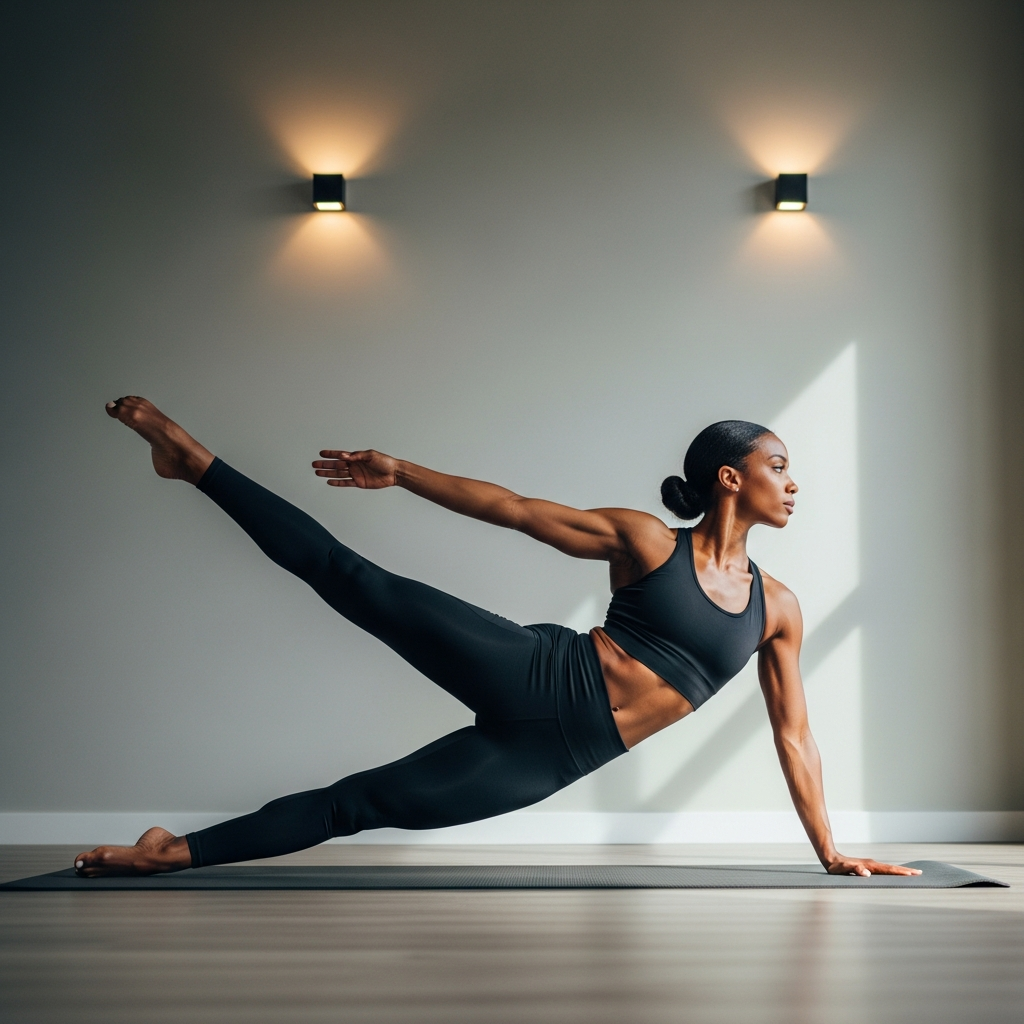
Mat Pilates Exercises: Unravel Your Path to Fitness
Ever wondered how celebrities maintain their sculpted body shapes while juggling their busy schedules? Ever wished you could enjoy the benefits of a full-body workout that tones your muscles, improves flexibility, and boosts your overall health without having to invest in expensive equipment or gym memberships? If you’ve been nodding in agreement, then Mat Pilates might just be the answer you’re looking for.
Mat Pilates, a remarkable fitness regimen born from the brilliant mind of Joseph Pilates, is a form of exercise that focuses on strengthening the core, improving posture, and enhancing muscle tone and flexibility. It’s a regimen that offers a host of benefits that extend beyond the visible physical transformation, providing an avenue for mental clarity and stress relief as well.
In this comprehensive guide, we will delve into the fascinating world of Mat Pilates exercises and demystify the difference between Mat Pilates and its cousin, Reformer Pilates. We’ll walk you through the versatile and comprehensive exercises you can perform on a mat right in your home, exploring each movement’s benefits and technique. Whether you’re a fitness enthusiast looking to switch things up or a beginner on a journey towards better health, this guide will equip you with the knowledge you need to kickstart your Pilates journey.
Why should you care? Because Pilates isn’t just another fleeting fitness trend. It’s a lifestyle change that promotes mind-body synergy, strength, and flexibility. It’s about empowering yourself to lead a healthier life, no gym required.
We will begin by exploring the history and principles behind Pilates, helping you understand its foundation. We’ll then move onto the specifics of Mat Pilates — what it is, its advantages, and how it compares to Reformer Pilates. From there, we’ll guide you through a series of Mat Pilates exercises designed for different levels of fitness. These exercises, complete with detailed instructions and illustrations, will help you properly execute each movement and maximize your workout’s benefits.
We also understand that starting a new fitness regimen can be intimidating, which is why we’re committed to making this journey as accessible and enjoyable as possible. We’ll provide modifications for each exercise, ensuring that everyone from beginners to advanced practitioners can benefit from this guide.
Finally, we’ll offer some practical tips on how you can incorporate Mat Pilates into your daily routine. We’ll even share some success stories to inspire and motivate you towards achieving your fitness goals.
Pilates, particularly Mat Pilates, is a unique exercise method that focuses on quality over quantity. It’s about understanding your body, listening to its needs, and working with it rather than against it. And the best part? All you need is a mat, some space, and this guide to start your journey towards a healthier you.
So, get ready to roll out your mat and join us as we dive into the transformative world of Mat Pilates exercises. Trust us; your body (and mind) will thank you!
The Fundamentals and Framework of Mat Pilates Exercises
Mat Pilates, originating from the holistic fitness system developed by Joseph Pilates in the 20th century, stands as a fascinating blend of strengthening, flexibility, and balance training. This systematic approach to fitness offers a myriad of benefits, from improved muscle tone and balance to enhanced core strength and overall body awareness.
Pilates as a fitness discipline was initially developed with the rehabilitation of wounded soldiers in mind during World War I. Joseph Pilates, its founder, was a nurse who integrated his knowledge of Western exercises with Eastern discipline, such as yoga and martial arts, to create a unique exercise regimen. He believed in the concept of a strong mind-body connection and emphasized controlled movements and breathing techniques.
Mat Pilates is one of the two primary forms of Pilates, the other being Reformer Pilates which involves specialized equipment. Mat Pilates exercises are performed on a mat, just like in yoga. The mat work exercises are designed to strengthen the body’s core by making use of one’s body weight as resistance. It focuses on the ‘Powerhouse’ – a term coined by Joseph Pilates that includes the muscles of the abdomen, lower back, hips, thighs, and buttocks – to improve coordination, balance, and posture.
Mat Pilates follows a framework that is methodical and systematic. A typical session begins with warm-up exercises followed by a series of exercises that work on the whole body. Each exercise series is crafted to sequentially flow from one movement to another. This practice is not just about physical exertion but also involves mental concentration. Joseph Pilates called his method ‘Contrology,’ referring to the complete coordination of body, mind, and spirit.
The Mat Pilates exercises are categorized into Beginner, Intermediate, and Advanced levels, each progressively challenging than the previous one. The Beginner level focuses on mastering the basic movements and building core strength. The Intermediate level introduces more complicated exercises that require a higher degree of strength, flexibility, and balance. The Advanced level is for practitioners who have mastered the earlier levels and are ready for challenging movements that require greater strength, flexibility, and control.
The six key principles of Pilates – Centering, Concentration, Control, Precision, Breath, and Flow – are integral to Mat Pilates. These principles guide the performance of each exercise, ensuring that every movement is purposeful and effective.
1. Centering: This principle emphasizes the focus on the ‘Powerhouse’ of the body. It promotes physical energy from the center, radiating outwards to the extremities. 2. Concentration: Pilates believed that “the mind guides the body.” Thus every exercise in Mat Pilates requires full attention to ensure it is performed correctly. 3. Control: Control, not momentum, is key in Pilates. Every movement should be deliberate and controlled to gain maximum benefit and avoid injury. 4. Precision: Precision is essential in Pilates. It’s not about the quantity of repetitions but the quality of each movement. 5. Breath: Proper breathing is vital in Pilates. It oxygenates the blood, helps to activate the muscles and enables better control over movements. 6. Flow: The flow in Pilates refers to the smoothness and grace with which the exercises are performed. The transitions between movements should be seamless.
Mat Pilates is a versatile exercise system that can be adapted to meet individual needs. Whether you’re a beginner looking to improve fitness or an athlete aiming to enhance performance, Mat Pilates can be tailored to suit your fitness level and goals. Its emphasis on control, precision, and a strong mind-body connection makes it a holistic approach to physical fitness.
In conclusion, Mat Pilates exercises embody the philosophy of Joseph Pilates, focusing on strength, flexibility, and mind-body awareness. By following the principles of Centering, Concentration, Control, Precision, Breath, and Flow, individuals practicing Mat Pilates can enjoy enhanced physical fitness and mental well-being.
Mat Pilates is a stimulating and low-impact way to develop strength, flexibility, balance, and mind-body awareness. Mat Pilates exercises are performed on the floor using an exercise mat and leverage your body weight and resistance to engage your muscles. These exercises are designed to strengthen the body’s core, which includes the muscles of the abdomen, back, hips, and pelics.
Let’s delve into some step-by-step guidance for Mat Pilates exercises.
1. **The Pilates Hundred**: This is a classic Pilates mat exercise. It is named for the 100 beats of the arms made while holding your legs extended and your head and shoulders off the mat.
– Start by lying down on your mat with your knees bent and your feet flat on the floor. – Lift your head and shoulders off the mat as you extend your legs to a 45-degree angle. – Pump your arms up and down at your sides approximately six inches off the mat. – Inhale for five beats, then exhale for five beats. Repeat this cycle for a total of 100 beats.
2. **Roll Up**: The Roll Up is an excellent exercise for developing core strength.
– Begin by lying on your back on the mat with your arms extended over your head. – Exhale and pull your belly button toward your spine as you roll up into a sitting position, reaching towards your toes. – Inhale as you begin to roll back down one vertebra at a time. – Repeat this movement five times.
3. **Single Leg Stretch**: This exercise is wonderful for developing pelvic stability and strengthening the abdominals.
– Begin by lying on your back with your knees bent and pulled into your chest. – Extend one leg out to a 45-degree angle while keeping the other knee pulled into your chest. – Switch legs, pulling one knee into your chest while extending the other. – Keep your head and shoulders lifted off the mat and your lower back pressed into the mat. Repeat this exercise ten times on each side.
4. **Double Leg Stretch**: This is a more advanced exercise that challenges your abdominals and your pelvic stability.
– Start by lying on your back with both knees pulled into your chest and your head and shoulders lifted off the mat. – Inhale as you reach your arms overhead and extend your legs to a 45-degree angle. – Exhale as you circle your arms around and pull your knees back into your chest. Repeat this exercise five times.
5. **Spine Stretch Forward**: This exercise is excellent for improving flexibility and stretching the spine.
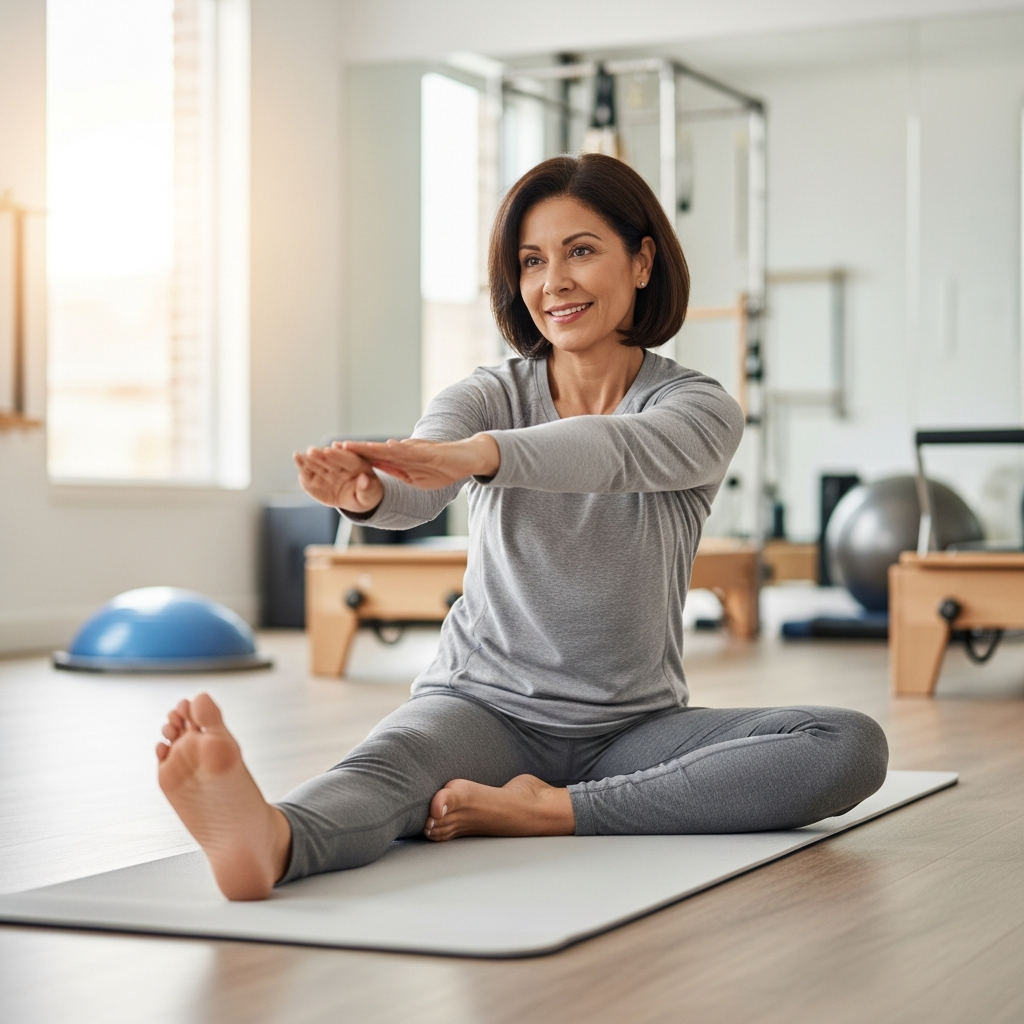
– Begin by sitting up straight on your mat with your legs extended in front of you a little wider than hip-distance apart. – Inhale as you reach your arms out in front of you at shoulder height. – Exhale as you reach forward, rounding your spine and sliding your hands along the mat towards your feet. – Inhale as you stack your spine back up to a sitting position. Repeat this exercise five times.
While Mat Pilates is effective, there’s also Reformer Pilates, which uses a specialized piece of equipment that provides added resistance. Reformer exercises can be more challenging than their mat counterparts, but they also can be more effective for people looking for a more intense workout.
However, remember that regardless of whether you prefer Mat or Reformer Pilates, consistency is key. Regular practice will help you see improvements in strength, flexibility, and overall body awareness. Always consult with a certified Pilates instructor to ensure that you are performing exercises correctly and safely. Getting the right form is more beneficial than rushing through exercises.
Remember, Pilates is not about perfection—it’s about progress. Enjoy the journey as you improve your strength, flexibility, and overall health.
Unraveling the Magic of Mat Pilates: Challenges, Solutions, and Expert Tips
Mat Pilates is a versatile and accessible form of exercise that has gained significant popularity over the years. It provides a low-impact workout that can be modified to suit individuals of all fitness levels. However, like any fitness regimen, it comes with its unique set of challenges. Here, we delve into these challenges, offer solutions, and provide expert tips to help you maximize the benefits of your Mat Pilates exercises.
Challenges with Mat Pilates
1. Lack of Understanding: One of the most common challenges individuals face is a lack of understanding about Mat Pilates itself. Many assume it’s similar to yoga or merely a form of stretching, which is not entirely accurate. Pilates is a full-body workout that improves posture, core strength, flexibility, and overall body awareness.
2. Difficulty in Maintaining Proper Form: Maintaining the correct form during Mat Pilates exercises is crucial. However, without the guidance of an expert or the feedback from equipment (like in Reformer Pilates), it can be challenging to ensure you’re performing the movements correctly.
3. Progression Limitations: Some practitioners find Mat Pilates limiting in terms of progress. While equipment-based Pilates (such as Reformer Pilates) allows for more resistance and varied exercises, Mat Pilates relies primarily on bodyweight.
Solutions & Expert Tips
1. Education: The first step in overcoming the misconceptions about Mat Pilates is educating yourself. Read about Joseph Pilates, the inventor of this technique, and understand the principles behind it: centering, concentration, control, precision, breath, and flow. Know that this exercise form is designed to balance strength and flexibility while emphasizing correct posture.
2. Professional Guidance: To ensure proper form and avoid potential injuries, consider taking classes from a certified Pilates instructor. They can provide corrections and modifications to suit your fitness level. As you become more familiar with the exercises, you’ll be able to self-monitor your form better.
3. Variety & Progress: While it’s true that Mat Pilates is limited to bodyweight, there are numerous exercises and variations to explore. Additionally, using accessories like resistance bands, Pilates rings, or small weights can add challenge and variety to your routine.
Best Practices
1. Warm-Up: Always start your session with a warm-up to prepare your body for the exercises ahead. It could be a simple set of stretches or a few minutes of cardio.
2. Consistency: Consistency is key in seeing progress with Mat Pilates. Aim for at least 2-3 sessions per week, and remember, it’s not about the quantity but the quality of your movements.
3. Listen to Your Body: Pilates is about body awareness. Pay attention to how your body feels during and after each exercise. If something doesn’t feel right, modify it or skip it altogether.
4. Breathing: Proper breathing is integral to Pilates. It helps engage your core and supports your movements. Each exercise has a specific breathing pattern – learn and follow it.
5. Patience: Progress in Pilates is slow but sure. Be patient with yourself and enjoy the journey towards a stronger, more flexible, and balanced body.
In conclusion, Mat Pilates, while seemingly straightforward, offers a depth of benefits that extend beyond a traditional workout. It challenges both your body and mind, helping you develop strength, flexibility, and a heightened sense of body awareness. By understanding its principles and best practices, overcoming its challenges, and employing the expert tips shared above, you can make the most out of your Mat Pilates sessions.
Mat Pilates is a type of exercise that focuses on utilizing the body’s core, including the abdominals, lower back, hips, and buttocks. It’s a great way to improve flexibility, build strength and develop control and endurance in the entire body. The emphasis is on alignment, breathing, developing a strong core, and improving coordination and balance.
Mat Pilates exercises are performed on a mat, similar to a yoga mat, hence the name. The exercises are typically performed in a specific order, each one followed by the next with minimal rest. This format is designed to keep your muscles engaged and working throughout the entire class, which typically lasts between 45 minutes to an hour.
When you first start out with Mat Pilates, it’s common to feel a little overwhelmed. The movements are specific and controlled, requiring a level of focus and concentration that may be new to you. But don’t be discouraged. The beauty of Mat Pilates is that you can progress at your own pace. The exercises can be modified to cater to your fitness level and gradually increased in difficulty as your strength and flexibility improve.
A typical Mat Pilates class begins with a warm-up to prepare your body for the work ahead. This usually includes some basic stretching and mobilization exercises. Following the warm-up, the bulk of the class is spent performing a series of Pilates exercises. These exercises are designed to target specific muscle groups, particularly those in the core.
Some of the key Mat Pilates exercises you can expect include
1. **The Hundred**: This exercise gets its name because you hold the exercise for 100 beats. It targets the abdominals and increases circulation.
2. **The Roll Up**: This exercise focuses on spinal articulation and targets the deep core muscles.
3. **Leg Circles**: This exercise helps to improve hip mobility and control while also targeting the lower abdominal muscles.
4. **The Saw**: This is a great exercise for improving flexibility in the spine and hamstrings.
5. **The Side Kick Series**: This series of exercises targets the muscles in the hips and thighs, strengthening and toning these areas.
After the main part of the class, there will usually be a cool-down period. This could involve more stretching to help your muscles recover and to improve flexibility.
In terms of timelines, it’s important to remember that progress with Mat Pilates, like with any form of exercise, can vary greatly from person to person. Some people may start to notice improvements in their strength and flexibility within a few weeks, while for others it might take a bit longer.
As a general rule, if you’re new to Pilates, aim to attend class 2-3 times per week. This will give your body time to recover between sessions but is also frequent enough that you will start to see progress. Once you become more experienced and your body is used to the exercises, you might choose to increase this to 3-4 times per week.
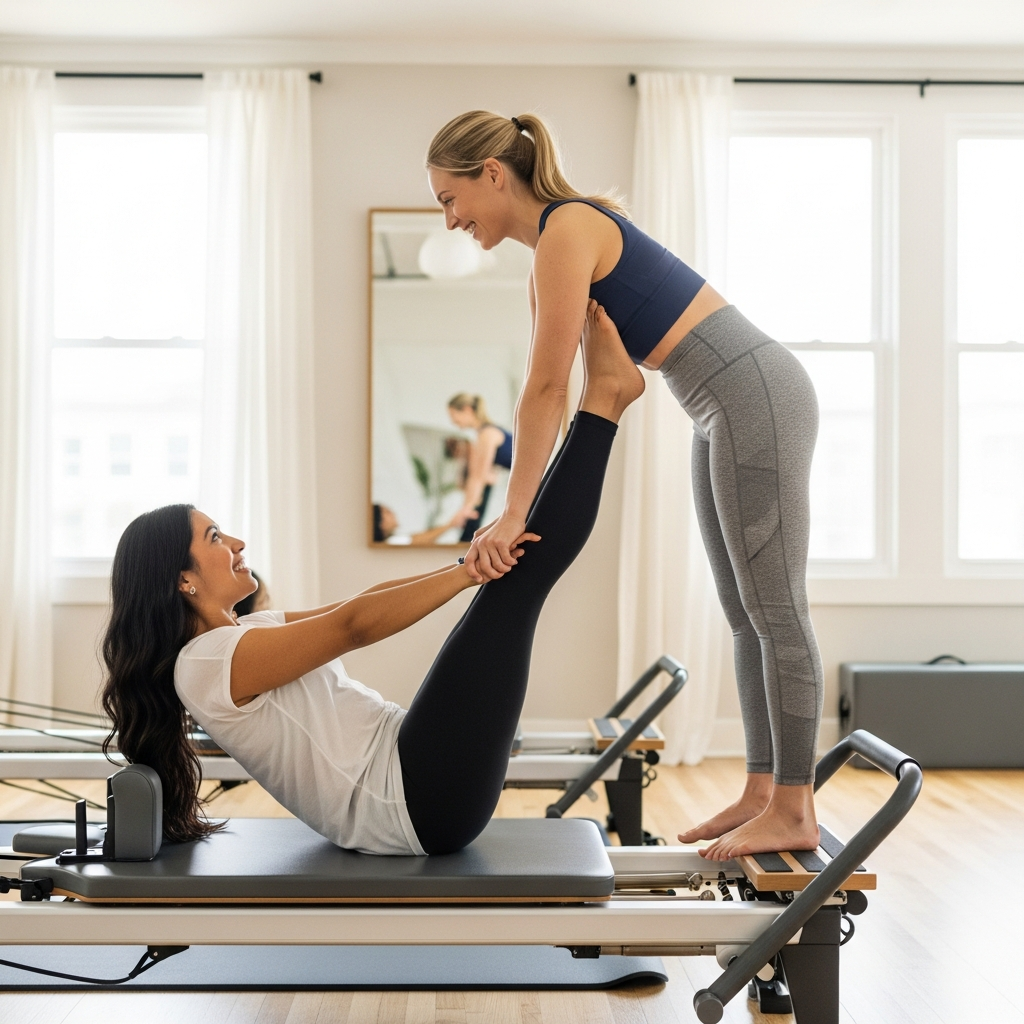
If you’re already familiar with Mat Pilates and are interested in trying something new, you might want to look into Reformer Pilates. This form of Pilates involves using a machine called a ‘reformer’, which adds resistance to the exercises through the use of springs. It can be a great way to add an extra challenge to your Pilates routine.
In conclusion, Mat Pilates is a versatile and accessible form of exercise that can provide numerous benefits for individuals of all fitness levels. Whether you’re looking to improve your core strength, increase your flexibility, or just try something new, Mat Pilates is worth considering.
In conclusion, mat Pilates is an accessible and versatile form of exercise that caters to everyone, from beginners to fitness enthusiasts. It offers a wealth of physical and mental benefits that can be obtained from the comfort of your own home or in a Pilates studio. This form of exercise focuses on developing core strength, flexibility, balance, and mind-body connection. Its unique blend of strength, flexibility, and awareness makes it an effective workout regimen for those seeking holistic health improvement.
One key takeaway from our exploration of Mat Pilates is its emphasis on core strength. As the powerhouse of the body, a strong core is critical for overall physical health. It supports your spine, enhances your balance, and improves your posture. By focusing on this area, Mat Pilates delivers both aesthetic benefits such as a toned abdomen and health benefits such as reduced back pain.
Flexibility is another significant aspect of Mat Pilates. Unlike other forms of exercise that can shorten and tighten the muscles, Pilates lengthens and stretches them. This elasticity reduces the risk of injury, increases range of motion, and improves physical performance in daily activities or other sports.
Mat Pilates also places a strong focus on the mind-body connection. Concentration, control, precision, flow, and breath are essential principles that enhance this connection. By focusing on these principles during your workout, you cultivate mindfulness and awareness of your body. This mindfulness extends beyond the mat into daily life, helping you to move more efficiently and live more consciously.
Moreover, the versatility of Mat Pilates makes it perfect for individuals with different fitness levels and goals. Whether you’re a beginner looking to get started on your fitness journey or an athlete seeking to enhance your performance, there is a Mat Pilates exercise suitable for you. Additionally, it’s convenient and cost-effective. All you need is a mat and enough space to move around – no expensive equipment or gym memberships required.
Finally, remember that consistency is key in experiencing the full benefits of Mat Pilates. Regular practice will enable gradual improvement in strength, flexibility, and awareness. It’s not a race, but a journey of self-discovery and self-improvement. As Joseph Pilates once said, “Patience and persistence are vital qualities in the ultimate successful accomplishment of any worthwhile endeavor.”
However, to get the most out of your Mat Pilates practice, it is essential to learn and perform the exercises correctly. Incorrect technique can lead to injury and diminished results. While there are numerous resources available online, nothing beats the personalized guidance of a professional Pilates instructor.
We invite you to contact us for assistance in your Mat Pilates journey. Our team of highly skilled and certified Pilates instructors is dedicated to helping you achieve your fitness goals safely and effectively. Whether you’re looking for advice on getting started, guidance on technique, or personalized workout plans, we’re here to support you every step of the way.
In a world where health and wellness are becoming increasingly important, Mat Pilates offers an approachable and sustainable path towards improved physical health and mental well-being. So why wait? Embark on your Mat Pilates journey today – your body and mind will thank you for it.