Unraveling the Riddle of Fitness: Mat Pilates vs. Reformer – Which Is Right for You?
Hook:
In the world of fitness, Pilates has emerged as a renowned exercise regimen that promises strength, balance, and flexibility. However, as you delve deeper, you encounter two distinct branches – Mat Pilates and Reformer Pilates. The question then arises, which one should you choose?
Context:
Pilates, a fitness system developed in the early 20th century by Joseph Pilates, has been embraced globally for its focus on core strength, posture, balance and flexibility. The beauty of Pilates lies in its adaptability to various fitness levels and needs, making it a popular choice among athletes, seniors, pre and postnatal women, and those undergoing physical rehabilitation. However, Pilates isn’t one-size-fits-all. As you embark on your Pilates journey, you have to make a decision – Mat or Reformer?
Mat Pilates is considered the ‘classic’ form of Pilates. It is performed on the floor using a yoga or Pilates mat and utilizes your own body weight as resistance. On the other hand, Reformer Pilates is performed on a specialized piece of equipment known as a ‘Reformer’ and incorporates a system of springs and pulleys to provide varying levels of resistance.
What Will Be Covered?
In this comprehensive guide, we will delve into the differences between Mat and Reformer Pilates. We’ll explore their unique benefits, understand the challenges each presents and shed light on which might be the right fit for your fitness goals. We’ll discuss aspects like cost, space, versatility of exercises, the intensity of workouts, and the potential results from each type. We will also incorporate expert opinions and scientific studies to ensure you make an informed choice.
Why This Matters to Readers? Choosing the right fitness regimen can significantly impact your journey towards health and wellbeing. As Pilates becomes increasingly popular, it’s vital to understand the nuances of its different forms. Both Mat Pilates and Reformer Pilates have their unique strengths and knowing these can help you choose a routine that aligns best with your fitness goals, budget, space constraints, and personal preferences.
Whether you’re a fitness enthusiast looking to spice up your routine, a beginner embarking on your fitness journey, or someone seeking physical rehabilitation through exercise, understanding the Mat vs. Reformer debate will help you harness the power of Pilates effectively.
With insights from fitness experts, tips from seasoned practitioners, and backed by scientific research, this guide aims to demystify Mat and Reformer Pilates for you. By the end of this post, you’ll have a comprehensive understanding of their differences, benefits, and challenges, equipping you with the knowledge to make an informed choice in your fitness journey. So let’s dive in and unravel the riddle of Mat vs. Reformer Pilates!
Mat Pilates vs Reformer: A Comprehensive Guide to Pilates Fundamentals
Pilates, a physical fitness regimen developed in the early 20th century by Joseph Pilates, is a unique blend of strength training, flexibility enhancement, and body awareness. It is renowned worldwide for its effectiveness in improving overall fitness, posture, and muscle tone. Pilates exercises are typically performed on a mat or a specialized apparatus known as a reformer.
Understanding the fundamentals of Pilates requires a grasp of its six guiding principles: concentration, control, center, flow, precision, and breathing. These principles form the core of all Pilates exercises, whether they are performed on a mat or a reformer.
Concentration is essential because every exercise in Pilates requires focused attention. Control is important because all movements should be executed with utmost precision. The center, often referred to as the ‘powerhouse’, includes the abdomen, lower and upper back, hips, buttocks, and inner thighs. All Pilates exercises originate from this powerhouse. Flow ensures that all movements are smooth and integrated. Precision is required to perform each exercise accurately. Lastly, proper breathing is crucial to supply the body with the necessary oxygen while performing these exercises.
Now, let’s delve deeper into the two major forms of Pilates: Mat Pilates and Reformer Pilates.
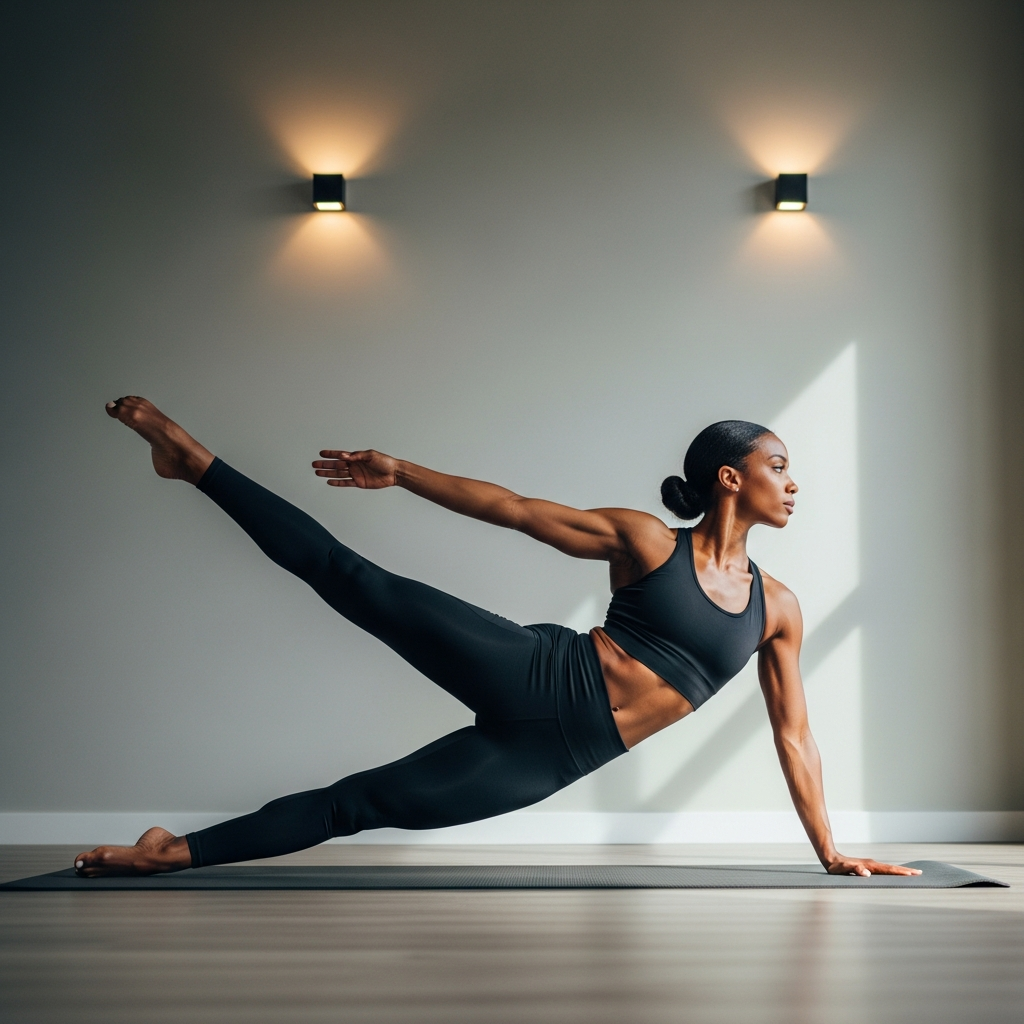
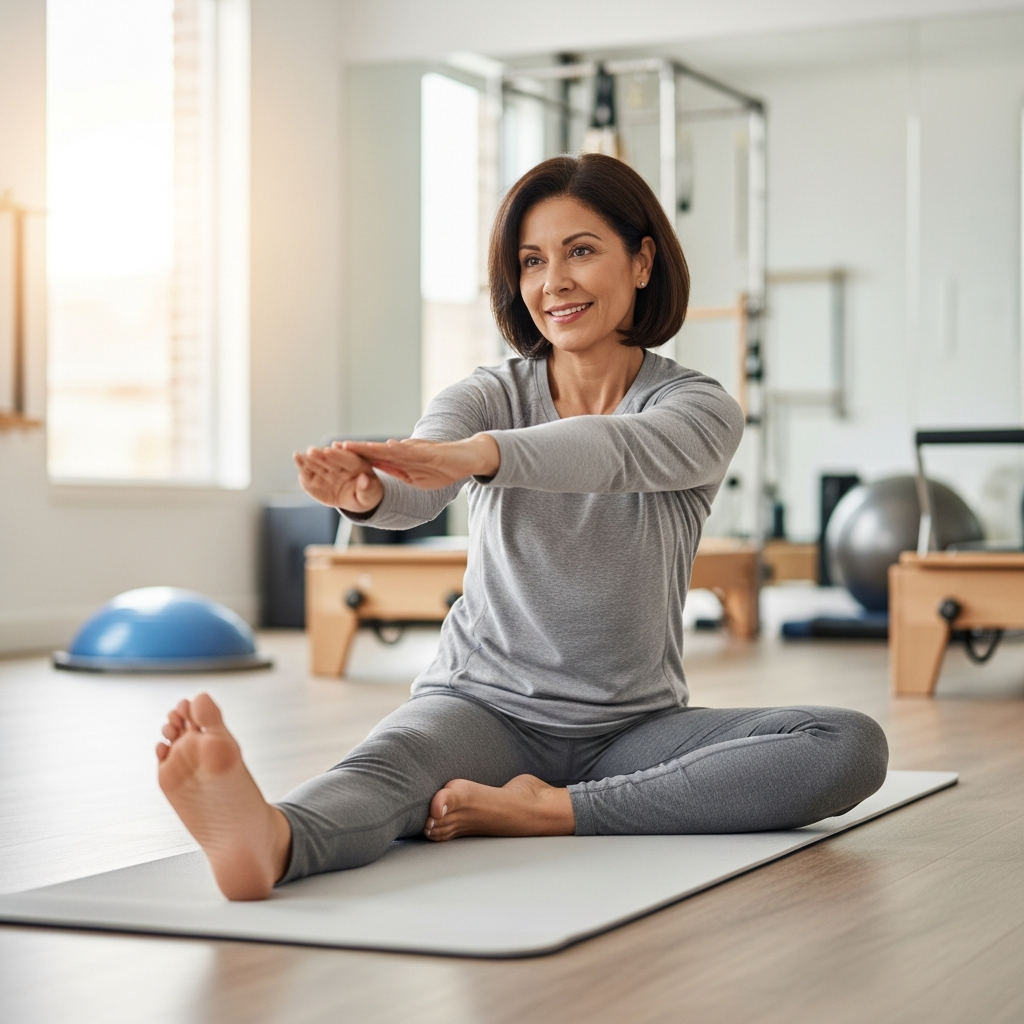
Mat Pilates is the most widely known form of Pilates. As the name suggests, these exercises are performed on a mat, similar to a yoga mat but typically thicker to cushion pressure points. Mat Pilates exercises primarily focus on strengthening the body’s core. They are designed to increase flexibility and improve balance by engaging specific muscle groups. Mat exercises are often performed using one’s body weight for resistance, although small props like resistance bands, magic circles, or balls may be incorporated to add variety and challenge.
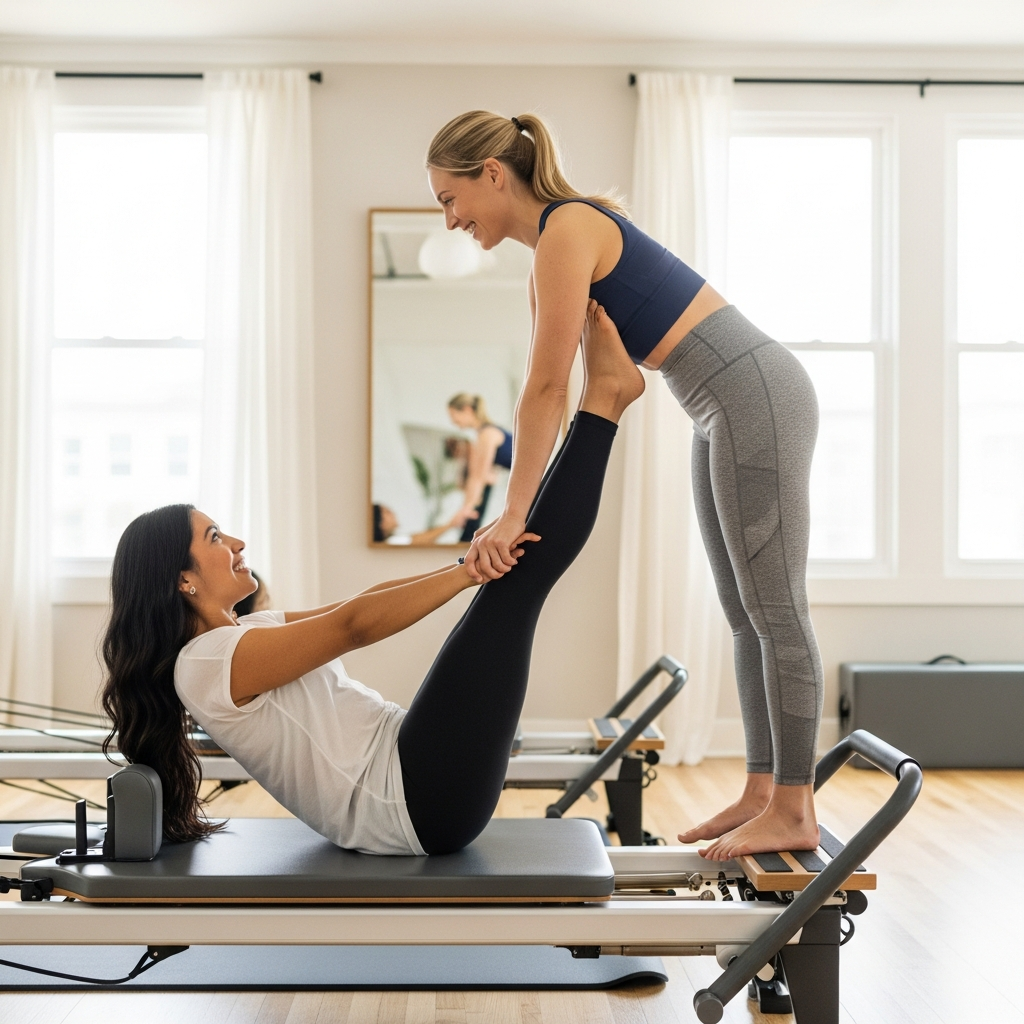
Reformer Pilates, on the other hand, involves a specialized machine invented by Joseph Pilates himself. The reformer is a bed-like frame with a flat platform that rolls back and forth on wheels within the frame. The platform is attached to one end of the reformer by a set of springs that provide differing levels of resistance as the platform is pushed or pulled along the frame. The machine also has straps with handles that can be pulled with arms or legs to move the platform. The reformer offers a significantly more varied range of exercises compared to mat Pilates as it allows for movements in multiple planes of motion.
The reformer provides resistance that can be adjusted to cater to an individual’s strength level, making it suitable for people of all fitness levels. It is particularly beneficial for those recovering from physical injuries as it allows them to exercise in a controlled environment. On the other hand, Mat Pilates is weight-bearing and typically involves more complex motions, making it more challenging for beginners or those with physical limitations.
In terms of benefits, both Mat and Reformer Pilates can enhance strength, flexibility, coordination, balance, and body awareness. However, the reformer can provide additional aerobic conditioning and can be more effective for targeted strength building because it allows you to adjust the resistance level. Mat Pilates, being heavily centered on using your own body weight, is excellent for developing overall body strength.
To summarize, both Mat Pilates and Reformer Pilates offer a unique approach to body conditioning and strength training. Choosing between the two often depends on individual goals, needs, and preferences. Mat Pilates is simpler, more accessible, and focuses on core strength and flexibility. On the other hand, Reformer Pilates offers a more dynamic and versatile workout that can be tailored to an individual’s needs and abilities. Both forms adhere to the principles of concentration, control, center, flow, precision, and breathing that form the foundation of the Pilates method.
Pilates’ emphasis on mindful movement and body awareness makes it more than just another exercise regimen. It is a holistic approach to health and well-being that integrates the mind, body, and spirit. Whether you choose Mat Pilates or Reformer Pilates, the regular practice of this discipline can bring about significant improvements in your physical fitness and overall quality of life.
Mat Pilates vs Reformer Pilates: A Comprehensive Guide
Pilates is a mind-body exercise that emphasizes the importance of beginning movement from a central core of stability, namely the abdomen, lower and upper back, hips, buttocks, and inner thighs. It is a highly versatile form of exercise and can be performed on a mat or using specialized equipment like a reformer. These two forms – mat Pilates and reformer Pilates – each have their unique benefits and challenges. This article will guide you through the key differences and help you decide which one could be ideal for your fitness goals.
1. Understanding Mat Pilates
Mat Pilates is the most common form of Pilates, mainly because it requires little to no equipment, making it easily accessible. It focuses on training the body’s “powerhouse,” or core, and improving overall stability and balance.
Mat exercises are performed in a sequence of controlled movements, either sitting or lying down, that flow into one another. This method uses one’s body weight as resistance and focuses on precision and control with a strong emphasis on technique.
Scenarios for Mat Pilates:
– If you’re a beginner: Mat Pilates is often recommended for beginners because it introduces the principles of Pilates at a comfortable pace. Exercises are simple and can be modified to suit individual needs.
– If you’re on a budget: Since mat Pilates requires minimal equipment, it’s a cost-effective way to incorporate Pilates into your fitness routine.
– If you’re traveling: Mat Pilates can be done anywhere—hotel room, beach, or your living room—making it perfect for those always on the go.
Actionable advice:
– Always start with a warm-up: Before jumping into mat exercises, ensure you perform a warm-up routine to prepare your muscles and reduce the risk of injury.
– Focus on form: Pay attention to your body alignment and breathe control. It’s better to do fewer repetitions with correct form than many with poor technique.
2. Understanding Reformer Pilates
Reformer Pilates, on the other hand, involves a unique piece of equipment known as the reformer. This machine consists of a flat platform called the carriage, which moves back and forth along tracks within a frame. The carriage is attached to one end of the reformer by a set of springs, which provide differing levels of resistance.
Reformer Pilates provides a more challenging and varied workout than mat Pilates due to the addition of resistance from the reformer’s springs. This means you can make exercises more challenging or easier as needed, making it suitable for people of all fitness levels.
Scenarios for Reformer Pilates:
– If you’re seeking variety: The reformer provides a vast array of exercises that you can perform lying down, sitting, standing, pulling the straps, pushing the footbar, and more.
– If you’re rehabilitating an injury: The reformer’s ability to adjust resistance levels makes it an excellent tool for rehabilitation. It allows you to strengthen weak areas without putting too much strain on them.
– If you’re aiming for faster results: The added resistance from the reformer can lead to noticeable results more quickly than mat Pilates.
Actionable advice:
– Get professional guidance: Due to the complexity of the equipment, it’s advisable to start reformer Pilates under the supervision of a certified instructor to ensure correct form and prevent injuries.
– Start slow: Begin with light resistance to get a feel for the movement before gradually increasing it.
In conclusion, both mat and reformer Pilates provide excellent workouts but cater to different needs and preferences. Mat Pilates is fantastic for beginners or those wanting a more accessible and affordable way to practice Pilates. In contrast, reformer Pilates offers a more dynamic and intense workout that can be adjusted according to individual fitness levels. As with any exercise regimen, it’s essential to listen to your body and choose what suits your needs best.
Mat Pilates Vs Reformer Pilates: A Comprehensive Guide
Pilates, a system of exercises designed to improve physical strength, flexibility, and posture, is a versatile and adaptable form of exercise that can be modified to suit anyone from beginners to advanced practitioners. It is often categorized into two types: mat and reformer Pilates. Both offer numerous benefits, but they also present unique challenges. This article aims to dispel misconceptions and provide best practices to help you make an informed choice between mat Pilates and reformer Pilates.
Mat Pilates is typically performed on a padded mat, using your body weight as resistance. It is commonly recognized for its focus on core strengthening, flexibility, balance, uniform development, and efficient movement patterns. Mat Pilates can be done virtually anywhere you have the space to lay out a mat. However, it also presents its own set of challenges, requiring a high degree of control and precision.
One common challenge in mat Pilates is maintaining proper alignment and form. Without the guidance of equipment like the reformer, it can be difficult to know if you are performing the exercises correctly. This can be addressed by working with a certified Pilates instructor to ensure correct technique and alignment.
Another challenge is that mat Pilates relies heavily on core strength. For beginners, or those with weak core muscles, some exercises may prove difficult. The solution is to start with modified versions of exercises and gradually work up to the full versions as strength and flexibility improve.
Reformer Pilates, on the other hand, involves a specialized machine with a flat platform that moves back and forth along a carriage. The resistance provided by the machine’s springs and pulleys provides a more challenging strength and endurance workout than mat-based Pilates.
A common misconception about reformer Pilates is that it’s only for advanced practitioners. In reality, the reformer can be an excellent tool for beginners because it helps establish correct form and alignment. The machine provides a controlled environment which can be tailored to individual needs, making it ideal for people recovering from injuries or with specific physical conditions.
However, reformer Pilates can also be challenging. The cost and availability of the machines can be a hurdle – they are typically found in specialized studios and are more expensive than a simple mat. Also, the complexity of the machine can be intimidating. The solution here is to start with a qualified instructor to learn how to use the equipment safely and effectively.
When comparing mat and reformer Pilates, it’s important to remember that neither is superior to the other – they simply offer different paths to the same overall goals of improved strength, flexibility, and body awareness.
Here are some expert tips for practitioners
1. Consistency is key: Like any form of exercise, consistency is key in Pilates. Whether you’re practicing on a mat or a reformer, make sure to maintain a regular schedule.
2. Listen to your body: Pilates is about connecting with your body. Pay attention to how your body feels during and after workouts and adjust accordingly.
3. Quality over quantity: Pilates emphasizes proper form over the number of repetitions. Focus on performing each exercise with precision.
4. Patience is a virtue: Progress may seem slow at times, but with patience and perseverance, you’ll see improvement in your strength, flexibility, and overall fitness level.
5. Personalize your practice: What works for one person might not work for another. Work with a certified instructor to tailor a program that suits your unique needs and goals.
In conclusion, both mat Pilates and reformer Pilates offer unique benefits and challenges. The choice between the two often comes down to personal preference, goals, and circumstances. Whether you choose mat or reformer Pilates – or a combination of both – the key is to practice regularly, mindfully, and with attention to form and alignment to reap the full benefits of this versatile exercise system.
Mat Pilates vs. Reformer: What to Expect, Timelines, and Next Steps
If you are considering taking up Pilates for better body strength, flexibility, and balance, you might have come across terms like Mat Pilates and Reformer Pilates. Understanding the difference between these two types of Pilates and determining which one is right for you can often be a daunting task, especially if you are new to this form of exercise. This guide aims to provide you with detailed insights into what to expect, timelines, and the next steps for both.
Mat Pilates and Reformer Pilates are two distinct forms of the same fitness system developed by Joseph Pilates in the early 20th century. Both focus on the principles of concentration, control, centering, flow, precision, and breath.
Mat Pilates is performed on a mat and uses your own body weight as resistance. It is a great starting point for beginners as it introduces them to the basic Pilates principles. Mat work is primarily focused on strengthening the body’s core muscles— abdominals, lower back, hips, and buttocks— referred to as the ‘powerhouse’ in Pilates terminology.
On the other hand, Reformer Pilates involves the use of a unique piece of equipment called the Reformer, designed by Joseph Pilates himself. This equipment has a flat platform that can slide back and forth, and uses springs for resistance. The Reformer provides a more challenging workout compared to Mat Pilates as it introduces an element of instability that your body has to overcome to stay balanced.
Now that you understand the basics let’s delve deeper into what you can expect from each type and the timelines for progress.
**Mat Pilates**
Mat classes are usually 45-60 minutes long and begin with gentle warm-up exercises before progressing into a series of movements that work various muscle groups. Expect to engage your core muscles continuously throughout the session. The exercises often involve controlled, precise movements designed to improve flexibility and build strength.
The timeline for progress with Mat Pilates can vary depending on several factors, including your fitness level, frequency of practice, and dedication. However, Joseph Pilates himself famously said, “In 10 sessions, you’ll feel the difference, in 20 sessions you’ll see the difference, and in 30 sessions you’ll have a whole new body.”
**Reformer Pilates**
Reformer classes typically last for about an hour. The Reformer machine adds an extra level of resistance to the Pilates workouts, providing more challenging strength and endurance exercises than mat work. You can expect to perform a diverse range of exercises that may involve lying down, sitting, standing, pulling straps, or pushing the footbar.
Progress timeline with Reformer Pilates is usually quicker than Mat Pilates due to the added resistance. However, it’s important to remember that every individual’s body responds differently to exercise. Consistent practice is key to seeing results.
**Next Steps**
If you are new to Pilates, starting with Mat classes is a great way to familiarize yourself with the principles and movements. Once you are comfortable with the basic exercises and want more challenge, you can consider moving on to Reformer classes.
Remember to listen to your body and progress at your own pace. It’s not a race, so don’t rush. Consider hiring a qualified Pilates instructor who can guide you through each movement and ensure you are performing them correctly. This will help you get the most out of your workouts and avoid injuries.
Whether you choose Mat Pilates or Reformer Pilates, consistency is crucial. Aim for at least two sessions per week to start seeing improvements in your strength, flexibility, and overall body awareness.
In conclusion, both Mat Pilates and Reformer Pilates offer unique benefits and challenges. The choice between the two depends on your personal goals, physical condition, and preferences. Whichever you choose, Pilates is a rewarding practice that will help you build a stronger, more flexible, and balanced body.
In conclusion, the debate of Mat Pilates vs. Reformer Pilates isn’t about which method is better, but rather, which one suits your individual needs and fitness goals better.
Mat Pilates is a great starting point for beginners as it focuses on mastering the basics and understanding how to engage your core muscles. The exercises are designed to be adaptable and are perfect for those who want a flexible routine that can be done at home or on-the-go. It emphasizes bodyweight exercises, making it less intimidating for novices. However, this doesn’t mean Mat Pilates isn’t challenging! Even experienced practitioners can find themselves sore after a rigorous mat session.
On the other hand, Reformer Pilates involves the use of a specialized machine that adds resistance to the exercises through springs. This offers a broader variety of exercises and allows for more specific adjustments, making it suitable for all levels of fitness. The reformer can target specific muscle groups more intensively, making it an excellent option for those who wish to enhance strength, flexibility, and balance. It also has the added benefit of being easier on the joints, making it a great choice for those recovering from injuries or those with chronic conditions.
Both Mat and Reformer Pilates focus on the principles of concentration, control, centering, flow, precision, and breathing. They both offer a full-body workout that improves posture, muscle tone, flexibility, and balance. Regardless of the method you choose, consistent practice is key in seeing results.
Consider your personal fitness goals when deciding between Mat and Reformer Pilates. If you’re looking for a convenient and affordable option that you can do from anywhere, Mat Pilates might be your best choice. However, if you want a more tailored experience with more options for progression and specificity, Reformer Pilates could be the right fit for you.
Remember that there’s no hard and fast rule that you must stick to one type. Many Pilates enthusiasts enjoy incorporating both Mat and Reformer workouts into their fitness regimen for a well-rounded approach. The beauty of Pilates lies in its adaptability to different fitness levels, goals, and preferences.
As with any fitness program, it’s essential to consult with a professional to ensure you’re performing the exercises correctly and safely. This is where we come in. Our team of certified Pilates instructors are dedicated to helping you achieve your fitness goals, whether they lie with Mat, Reformer, or a combination of both.
We encourage you to reach out to us for assistance in deciding which method is best for you. We offer personalized consultations and classes tailored to your individual needs and fitness levels. Our goal is to guide you through your Pilates journey, ensuring that you’re getting the most out of each workout while prioritizing your safety and well-being.
In conclusion, whether you choose Mat Pilates, Reformer Pilates, or a mix of both, the key is to start moving, stay consistent, and enjoy the process. Whichever path you choose in the world of Pilates, you’re on the right track to improved strength, flexibility, and overall wellness.
Contact us today and let’s embark on this exciting Pilates journey together. Your stronger, more flexible and balanced self awaits!