Pilates for Flexibility and Strength: A Garland Perspective
Picture this: You reach down to grab something off the bottom shelf at the grocery store, and there’s this moment – just a split second – where your body kind of… protests. Maybe your lower back sends up a little flare. Maybe your hamstrings feel weirdly tight for someone who is just *reaching for cereal*. You straighten up, glance around to make sure nobody noticed, and quietly think “when did this happen?”
If that sounds familiar, you’re not alone. And honestly? It’s one of the most common things we hear from people who walk through our doors here in Garland.
The thing is, most of us don’t lose our flexibility or strength all at once. It’s gradual – so gradual you barely notice until one day you’re winded climbing stairs, or you realize you haven’t been able to touch your toes in… actually, you can’t even remember when. Life gets busy, we sit more than we should, and somewhere between work deadlines and weekend errands, our bodies quietly start borrowing from tomorrow’s mobility to get through today.
That’s where Pilates comes in. And before you picture a room full of people in matching athleisure doing moves that look physically impossible – let’s slow down. Because the version of Pilates we’re talking about isn’t intimidating, and it’s not just for a certain *type* of person. It’s for the 52-year-old Garland resident who wants to keep up with their grandkids at Audubon Park. It’s for the desk worker whose shoulders have basically become one with their ears. It’s for the weekend warrior who keeps tweaking the same muscle because their core never really caught up with their ambition.
Why Garland Residents Are Paying Attention
There’s something worth noticing about the way people in this area approach their health. North Texas living is active – we’re outdoors when the weather cooperates (and sometimes when it doesn’t), we’re social, we want to *do* things. But that lifestyle also comes with its share of wear and tear. And when people start looking for something that addresses both flexibility *and* strength at the same time, without the punishment of high-impact workouts, Pilates keeps rising to the top of the conversation.
It’s not a trend, either. Joseph Pilates developed this method nearly a century ago, originally to help injured dancers and athletes rehab their bodies. What he figured out – and what research has continued to confirm – is that most of our movement problems come back to the same handful of issues: weak stabilizing muscles, poor posture, and bodies that have learned to compensate in ways that quietly cause damage over time.
Sound annoyingly familiar?
What You’re Actually Going to Learn Here
This article is meant to be genuinely useful – not just inspiring in that vague way where you feel motivated for twenty minutes and then forget about it. We’re going to talk about what Pilates actually does to your body, mechanically and physiologically, and why that matters specifically for flexibility and strength (which, by the way, are more connected than most people realize).
We’ll get into who benefits most, what to expect if you’re brand new to it, and how it fits into a broader picture of health – especially if you’re already working on weight loss or managing a chronic condition. We’ll also address the practical stuff, because “this sounds great in theory” only gets you so far.
There’s real science behind this. There are also real people in Garland whose lives have shifted because they started showing up for their bodies in this particular way. We’ll touch on both.
One more thing worth saying upfront: Pilates isn’t a magic fix. Nothing is. But it’s one of those rare approaches that tends to meet people exactly where they are – whether that’s recovering from an injury, trying to move better at 60 than you did at 40, or simply wanting to feel less like your body is working *against* you every day.
Because here’s what we know for certain. Your body is remarkably adaptable. It responds to the right kind of attention. And it’s genuinely never too late to start giving it some.
Let’s talk about how Pilates might be exactly that kind of attention.
What Pilates Actually Is (Not What You Think)
Here’s the thing most people get wrong – Pilates isn’t just fancy stretching, and it’s not really a gym workout either. It sits in this interesting middle space that honestly took Joseph Pilates himself years to explain. He called it “Contrology,” which sounds a little intimidating but basically means using your mind to control your muscles with intention. Think of it less like a workout and more like a conversation between your brain and your body. A conversation most of us have been ignoring for years.
Joseph Pilates developed this system in the early 20th century – partly while working with injured dancers and partially (this is the part people forget) while he was interned during World War I and had to figure out how to keep bedridden patients moving. That context matters, because Pilates was never designed for elite athletes alone. It was designed for people who needed to rebuild. Sound familiar?
The Core Isn’t What You Think It Is
Okay, here’s where it gets a little confusing, and I want to be upfront about that. When most of us hear “core,” we immediately picture crunches and six-pack abs. But in Pilates, the core – sometimes called the “powerhouse” – includes your deep abdominal muscles, your pelvic floor, the muscles around your spine, and even your hip stabilizers. It’s basically a corset wrapping around your entire midsection.
And here’s the counterintuitive part: strengthening this deep core actually creates flexibility, not rigidity. When your spine is properly supported by those stabilizing muscles, your outer muscles can finally let go. They don’t have to grip and brace constantly. Think of it like a well-supported bridge – the structure doesn’t need to be stiff everywhere because it’s strong in exactly the right places.
For people in Garland carrying extra weight or dealing with joint stress, this is genuinely good news. You’re not fighting against your body here. You’re giving it the support it’s been asking for.
Flexibility and Strength as a Package Deal
Most fitness approaches treat flexibility and strength like they’re on opposite ends of a spectrum. You either do yoga or you lift weights, right? Pilates kind of laughs at that idea.
The method builds what exercise scientists call “functional strength” – the kind that helps you reach overhead, twist to back out of a parking space, or carry groceries without tweaking something. Meanwhile, the controlled, full-range movements lengthen muscles as they work, which is why longtime Pilates practitioners tend to look… different. Leaner, somehow. More at ease in their bodies.
Actually, that reminds me of a good analogy. Think about a rubber band versus a rope. A rope is strong but rigid – it doesn’t give. A rubber band has both elasticity and real tensile strength. Pilates is basically training your muscles to be the rubber band.
Breath Is Doing More Work Than You’d Expect
This part surprises almost everyone. Breathing in Pilates isn’t just calming background noise – it’s mechanically connected to every movement. The method uses what’s called lateral thoracic breathing, where you breathe wide into your ribcage rather than just puffing your belly out. This keeps your core engaged while still allowing full, oxygenating breaths.
Why does this matter? Because for many people – especially those managing weight or dealing with stress – breathing is actually shallow and tight. The chest barely moves. Pilates essentially retrains your respiratory pattern as a side effect, which has real downstream benefits for energy, stress levels, and even posture.
Why Garland’s Climate Actually Plays Into This
This might seem like a weird aside, but hear me out. North Texas heat is brutal for a big chunk of the year, which means high-impact outdoor exercise just… isn’t always realistic. Pilates is a climate-controlled, low-impact option that doesn’t require you to be dripping sweat before you’ve even started.
For anyone who’s tried to build a consistent movement habit and kept getting derailed by the weather, or by joint pain, or by the feeling that most fitness spaces aren’t really designed for where you are right now – Pilates offers a genuinely different entry point. Not easier, necessarily. But more accessible. There’s a difference, and it matters more than most people realize.
Start With the Reformer, But Don’t Be Intimidated By It
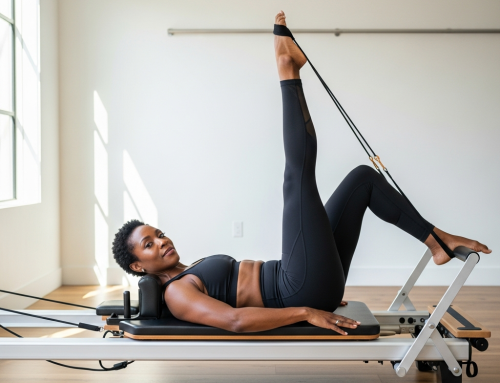
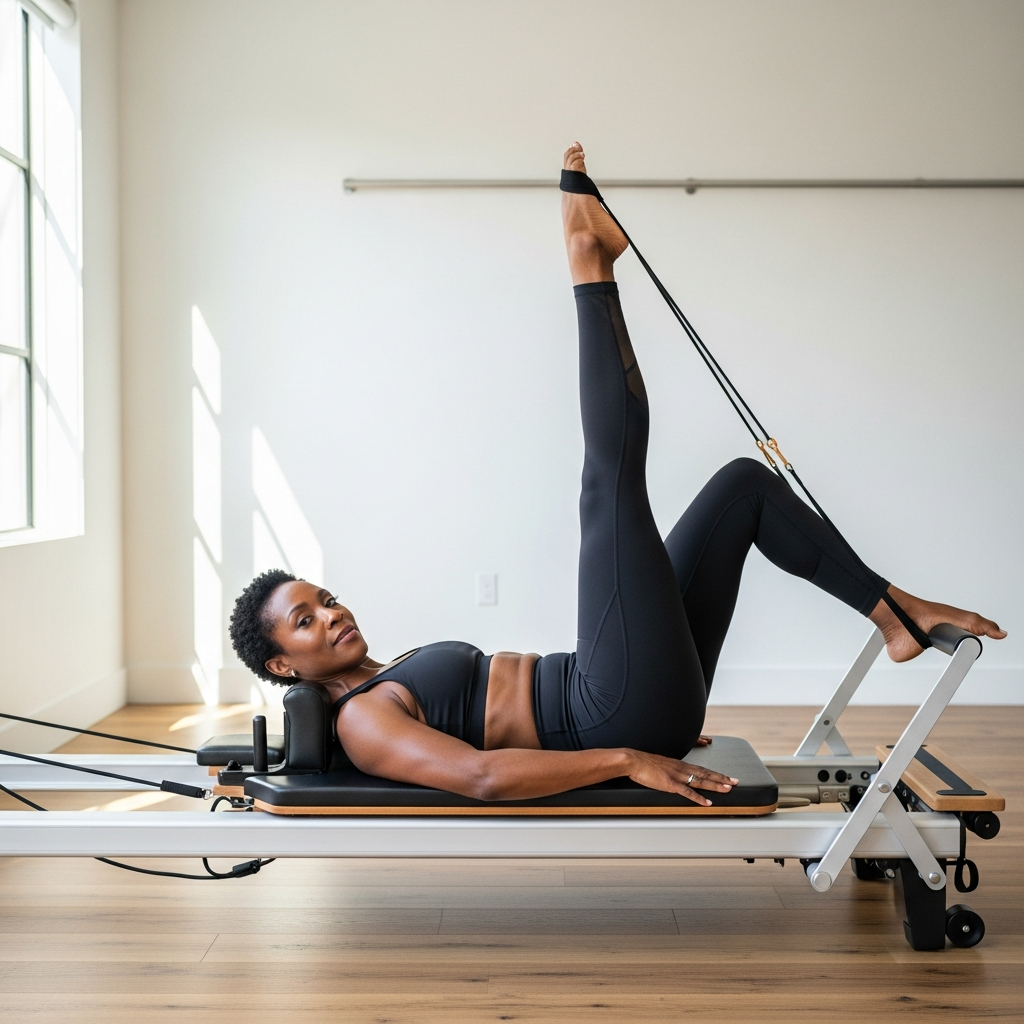
Okay, here’s something instructors don’t always tell beginners: the reformer machine looks way more complicated than it actually is. If you’re in the Garland area and walking into a studio for the first time, you might feel like you’ve stumbled into some kind of sophisticated torture device situation. You haven’t. Give it two sessions – just two – and the spring tension system will start to feel intuitive.
The real secret with reformer work is starting lighter than you think you need to. Most newcomers load up the springs because they want a “real” workout. Lighter resistance actually demands more from your stabilizing muscles, which is exactly where Pilates earns its reputation for building functional strength. Go light, go slow, feel everything working.
The 10-Minute Morning Routine That Actually Changes Things
Here’s what nobody tells you about flexibility gains: it’s not the hour-long class that does the heavy lifting. It’s the consistent, almost boring daily practice. Ten minutes every morning, before your coffee even finishes brewing, can genuinely transform how your body moves over 6-8 weeks.
Try this sequence specifically:
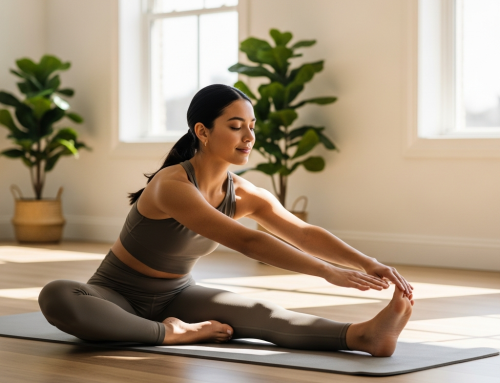
– Cat-cow with breath matching (8 reps) – the exhale on the arch matters more than most people realize – Standing hip circles (10 each direction) – slower is harder, do slower – Seated spinal twist holding 30 seconds per side – Chest opener against a wall – just stand arms out, press gently back
That last one is particularly valuable if you’re sitting at a desk in an office park somewhere in Garland doing what most of us do for 8 hours a day. Rounded shoulders are basically an epidemic at this point.
What “Engaging Your Core” Actually Means (Because It’s Not What You Think)
Every instructor will say it. “Engage your core.” And honestly? Most beginners interpret this as “suck in your stomach really hard,” which is… not it.
The real cue – the one that unlocks everything else – is imagining you’re gently zipping up a very delicate zipper from your hip bones upward. Light tension, not a death grip. You should still be able to breathe fully. If you’re holding your breath to maintain it, you’ve gone too far.
This subtle engagement is what protects your lower back during leg circles, what makes the hundred actually work, and what eventually gives you that “longer” appearance that Pilates practitioners always talk about. It takes a few weeks to find it genuinely. Be patient with yourself.
Pairing Pilates With Your Weight Loss Goals
If you’re here because weight management is part of the picture – completely valid, and actually really smart – here’s the honest truth about how Pilates fits in. It’s not primarily a calorie-torching workout. That’s not its role. Think of it more like the structural renovation happening underneath while other efforts handle the surface work.
What Pilates does extraordinarily well is build the muscle density and postural alignment that makes everything else feel better and work more efficiently. People who add two Pilates sessions weekly alongside their other exercise often report that their walks, their strength training, their daily movement all feel cleaner. Less compensating. Less pain.
And reduced pain, by the way, means you actually want to move more. It’s a cycle worth starting.
Finding the Right Studio in the Garland Area
Not all Pilates is created equal – this genuinely matters. Look for instructors with either BASI or Balanced Body certifications, or the more intensive Pilates Method Alliance credential. These require actual hours of supervised practice, not just a weekend workshop.
A few practical things worth asking before you commit: Does the studio offer a genuine introductory session where the instructor watches *you* specifically move? Do classes stay small (under 8 people for equipment-based work)? Is there any intake process that asks about injuries or physical limitations?
If a studio just books you straight into a group class without any kind of assessment… keep looking. A good instructor will want to know about that old knee thing, your tight hips, whatever’s going on. That information shapes everything.
Start with three sessions close together – within the same week if possible. Your nervous system learns movement patterns faster with repetition that’s spaced close initially, then spreads out. You’ll feel the difference going into week two.
When Your Body Just Won’t Do the Thing
Let’s be real for a second. You’ve seen those Pilates videos where someone effortlessly flows through a hundred reps with their core engaged, their spine perfectly neutral, their expression serene. And then you get on the mat and your hamstrings are screaming, your lower back is doing something it definitely shouldn’t be doing, and you’re pretty sure you’re holding your breath through the whole thing.
That gap between what Pilates looks like and what it actually feels like at first? That’s where most people quietly give up. And it’s a shame, because the struggle is actually completely normal – especially here in Garland, where a lot of folks are juggling long commutes, desk jobs, and genuinely demanding schedules that don’t leave much room for a graceful learning curve.
So let’s talk about what actually trips people up.
Tightness That Makes Basic Moves Feel Impossible
This one’s huge. If you’ve spent years sitting at a desk (and honestly, who hasn’t), your hip flexors are probably shortened, your hamstrings are tight, and your thoracic spine – that’s the middle part of your back – is about as mobile as a garden gate that hasn’t been opened since 2015.
When you try to do something like a roll-up or a spine stretch and your body just… refuses, it’s not a sign you’re doing it wrong. It’s a sign your body has adapted to the position it spends most of its time in.
The solution isn’t to push harder. It’s actually to back off and modify. Good Pilates instructors will give you prop alternatives – a band around your feet for the roll-up, a folded blanket under your hips for seated work. If your instructor doesn’t offer these without you asking, ask. You’re not being difficult. You’re being smart.
The Core Engagement Mystery
Everyone says “engage your core” and almost nobody explains what that actually means. It’s not sucking your stomach in as hard as you can. It’s not bracing like you’re about to get punched. It’s more subtle than that – a gentle drawing in and up, like you’re trying to zip up a pair of jeans that are just slightly too snug.
Here’s the honest truth: most beginners can’t feel this properly for weeks. Sometimes months. And that’s okay. The neuromuscular connection – your brain learning to talk to those deep stabilizing muscles – takes time to develop. If you’re not feeling it yet, you’re not broken. You’re just new.
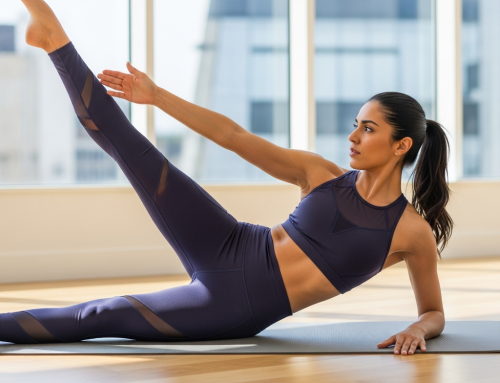
A practical trick? Try lying on your back and placing one hand on your lower belly. Breathe out slowly and notice that subtle drawing-in that happens naturally at the end of your exhale. That’s the sensation you’re looking for. Start there.
Consistency Is Actually the Hardest Part
Garland traffic is no joke. Life is busy. You miss a week, then two, and suddenly it’s been a month and you feel like you’re starting over. This is probably the most common challenge, and it’s also the one that gets the least honest treatment.
The platitude version: “Just stay committed to your practice!”
The real version: two sessions a week is genuinely enough to see progress, especially when you’re starting out. Three is better, but two beats zero every single time. If you can’t make it to a studio, a 20-minute mat session at home counts. It doesn’t have to be perfect or complete or Instagram-worthy.
Actually, that reminds me – if you’re trying to build consistency, pairing Pilates with something you already do can help enormously. Some people in our clinic do it right after their lunch break. Others go Saturday morning before the weekend gets away from them. Find the slot that has the least resistance in your life and protect it.
When Progress Feels Invisible
Strength and flexibility gains from Pilates are sneaky. You won’t suddenly lift something dramatic. You’ll just notice one day that you picked up a bag of dog food without wincing, or that you sat through a three-hour drive and your back wasn’t wrecked afterward.
Track the small stuff. Can you reach further into your back seat? Does getting off the floor feel easier? Those are real, meaningful wins – even if they don’t look impressive in a fitness app.
The progress is happening. It’s just happening quietly, underneath the surface, which is pretty much exactly how Pilates works.
What to Actually Expect (Honest Talk)
Let’s be real for a second – because you’ve probably seen those before-and-after transformation posts that make it look like a few Pilates classes turned someone into a pretzel-shaped athlete in three weeks. That’s… not how this works. And setting realistic expectations isn’t about dampening your enthusiasm. It’s about keeping you in the game long enough to actually see results.
Most people in Garland who start Pilates – whether at a studio or through one of the many community fitness programs around town – notice something interesting first. It’s not flexibility. It’s not even strength, not yet. It’s awareness. Suddenly you’re noticing how you hold your shoulders at a red light on Garland Road, or how you’ve been breathing shallowly at your desk for the past six years. That shift in body awareness usually kicks in within the first two to four sessions. And honestly? That’s huge. It means the practice is working.
Flexibility changes come more slowly than most people want them to. We’re talking weeks to months, not days. Your connective tissue – the fascia, tendons, and ligaments – is stubborn stuff. It doesn’t remodel overnight. A good rule of thumb is to give yourself a solid eight to twelve weeks of consistent practice before you make any real assessments about your flexibility gains. Consistent meaning two to three sessions per week, not one class followed by three weeks of “I’ll get back to it.”
The Strength Side of Things
Strength is a bit more forgiving in terms of timelines, which is encouraging. Pilates builds what’s often called “functional strength” – the kind that makes you better at being a human, not just better at Pilates. You might notice after four to six weeks that climbing the stairs doesn’t leave you as winded, or that carrying groceries from the car feels easier. These small wins matter more than you might think.
Core strength specifically? That tends to show up around weeks six through ten for most beginners. And it shows up in sneaky ways – your lower back aches less after sitting through a long workday, or you’re standing taller without consciously thinking about it. Your body is essentially rebuilding its scaffolding from the inside out.
What’s Normal (And What Isn’t)
Some muscle soreness in the first few weeks is completely normal, especially in the deep abdominals and inner thighs – muscles that most people genuinely haven’t talked to in years. That kind of soreness typically peaks around 24-48 hours after a session and fades as your body adapts.
What’s not normal is sharp pain, particularly in the joints. If something hurts – not burns, not aches, but *hurts* – that’s your body asking you to pause and check in with an instructor or your healthcare provider. Pilates is remarkably low-impact, but it’s not injury-proof if you’re pushing past your actual limits.
Progress also isn’t linear. Some weeks you’ll feel like you’ve cracked some secret code and your body is moving beautifully. Other weeks you’ll feel like you’ve somehow gotten worse. You haven’t. This is just how physical adaptation works – two steps forward, a shuffle sideways, then forward again.
Your Next Steps in Garland
If you’re ready to start, a few practical thoughts. Look for a certified instructor – credentials from organizations like BASI Pilates, Balanced Body, or the PMA (Pilates Method Alliance) are worth paying attention to. The Garland area has a growing number of qualified instructors, so you’ve got options.
Consider starting with a mat class before committing to reformer work, especially if budget is a consideration. Mat Pilates is genuinely effective and gives you a foundation that makes everything else click better later. Actually, that reminds me – a lot of people skip mat entirely and jump straight to reformer because it looks more impressive. Don’t be that person. The fundamentals matter.
Talk to your doctor if you have any existing conditions – particularly back issues, osteoporosis, or recent injuries. Pilates can often be adapted beautifully for these situations, but your instructor needs that information to keep you safe.
Give it three months. Not three weeks – three months. Show up consistently, communicate with your instructor about what you’re feeling, and try to release your grip on the idea that progress should be dramatic and fast. The people who stick with Pilates tend to do so because somewhere around that three-month mark, they realize quietly and without fanfare that they simply feel better. That’s the whole point.
So here’s what it really comes down to – Pilates isn’t some trendy fitness phase that’s going to disappear when the next workout craze rolls through. It’s a method that’s been quietly working for nearly a century, building bodies that are both strong *and* supple in ways that most people genuinely don’t expect when they walk into their first class.
And for those of us living and moving around Garland? We’ve got real advantages here. Whether you’re sitting at a desk in one of the corporate parks off I-30, chasing kids around a backyard in Sachse, or just trying to keep up with the physical demands of everyday Texas life, the kind of functional strength and flexibility Pilates builds actually matters. It’s not gym-mirror strength. It’s carry-the-groceries, reach-the-top-shelf, wake-up-without-lower-back-pain strength. That’s the stuff that changes your daily life in ways you feel every single morning.
What tends to surprise people most – and honestly, it surprises me every time someone mentions it – is how quickly they start noticing the changes. Not dramatic, Instagram-transformation changes. More like… one Tuesday you realize you bent down to tie your shoes without bracing yourself for the usual tightness. Or you made it through a three-hour drive without arriving completely seized up. Small wins. But they stack.
The flexibility piece and the strength piece aren’t separate goals in Pilates, either. That’s actually the magic. Most fitness approaches treat them like you’re choosing a lane – you’re either lifting heavy or you’re stretching. Pilates just kind of refuses to accept that false choice. You’re building both, at the same time, through the same movements. Your muscles learn to lengthen *while* they work. Which is, when you think about it, exactly what they need to do in real life.
Now, it’s worth saying honestly – Pilates is wonderful, but it’s also one piece of a bigger picture when it comes to your health. If you’re carrying extra weight that’s making movement uncomfortable, or if you’ve got health conditions that are getting in the way of doing the things you want to do, flexibility and strength work only go so far on their own. Sometimes the most supportive thing you can do for your body is to address multiple pieces together.
That’s where we’d genuinely love to talk with you. Not with a sales pitch – more like a real conversation. At our clinic, we work with people right here in the Garland area who are trying to feel better in their bodies, move more freely, and find approaches that actually fit their lives. If you’ve been curious about how medical weight loss support might complement the active lifestyle you’re building – or trying to build – we’re here for that conversation.
You can reach out whenever you feel ready. No pressure, no judgment. Just a team that understands this stuff is personal, and that everyone’s starting point looks different.
Because the goal isn’t perfection. It’s just feeling a little more like yourself – strong, flexible, capable – in the everyday moments that actually make up your life. And that? That’s absolutely worth working toward.