Discover the Power of Pilates Exercises: An In-Depth Look at Mat and Reformer Pilates
Are you looking for a fitness regimen that not only tones your body but also enhances your mental well-being? Or perhaps, you’re seeking an exercise routine that can strengthen your core, improve your flexibility, and correct your posture all at once? If yes, then the exciting world of Pilates exercises might be just what you need.
Pilates, a unique blend of strength-building and stress-reducing exercises, is a comprehensive workout routine that aims at enhancing overall physical fitness while promoting a sense of mental calmness. Whether you’re a fitness enthusiast, a professional athlete, or someone merely looking for ways to stay active, Pilates is a versatile workout routine that caters to all.
In this comprehensive guide, we’ll dive deep into the world of Pilates and explore its two most popular forms: mat Pilates and reformer Pilates. We will walk you through the differences between these two types, the benefits each one offers, and how to decide which one is right for you. We’ll also delve into some easy-to-follow Pilates exercises that you can incorporate into your fitness routine.
Why should this matter to you? Well, in our fast-paced world that often leaves us stressed and constantly juggling between multiple tasks, it’s essential to have a fitness routine that not only keeps us physically fit but also helps manage stress levels. And that’s precisely where Pilates shines! It’s not just about working out; it’s about creating a healthy, balanced lifestyle.
In the first part of this guide, we’ll discuss mat Pilates. Originated by Joseph Pilates in the early 20th century, mat Pilates primarily focuses on core strength, body flexibility, and awareness of breath and body. We’ll delve into how mat Pilates can help you achieve a toned body, improve your posture, and enhance your mind-body connection.
Next, we’ll explore reformer Pilates, a dynamic and more challenging version of Pilates that uses a special piece of equipment known as the ‘reformer.’ We’ll explain how the reformer amplifies the benefits of traditional Pilates exercises and suits a variety of fitness levels. From building stronger muscles to improving athletic performance, reformer Pilates has a lot to offer.
Moreover, we’ll also shed light on some common misconceptions about Pilates and provide factual information to debunk them. We believe that understanding Pilates’ true essence is crucial in optimizing its benefits and making it a part of your lifestyle.
Whether you’re new to the world of Pilates or are looking to deepen your existing knowledge, our comprehensive guide is designed to provide you with all the information you need. So, are you ready to transform your body and mind with the power of Pilates? Dive right in and discover how Pilates exercises can be your secret to improved fitness and enhanced well-being.
The Fundamentals and Framework of Pilates Exercises
Pilates, a system of low-impact exercises aimed at strengthening muscles while improving postural alignment and flexibility, has become a popular method of achieving physical fitness and well-being. Developed by a German anatomist and physical-culturist Joseph Pilates in the early 20th century, this efficient exercise routine focuses on core strength, body balance and mindfulness.
Pilates exercises are based on six fundamental principles: Concentration, Control, Centering, Flow, Precision, and Breathing. Each principle is an essential component of every Pilates workout and contributes to its effectiveness.
1. Concentration: Pilates requires a high level of focus and concentration. Each movement demands your full attention to create a strong mind-body connection which is crucial in achieving the maximum benefits from the exercises.
2. Control: Each Pilates exercise is not about repetitions or speed but rather control. The movements are performed with control over the muscles involved, thus promoting the effective use of the body’s power and preventing potential injury.
3. Centering: In Pilates, the ‘center’ refers to the group of muscles in the middle of the body – encompassing the abdomen, lower back, hips, and buttocks. Often referred to as the ‘powerhouse,’ these muscles work together to control movement and stabilize the body.
4. Flow: Flow ensures smooth, graceful, and seamless transitions between movements in a continuous and controlled manner. This principle promotes efficiency, fluidity and elegance in movement.
5. Precision: Precision is key in Pilates. Every movement is purposeful and needs to be performed accurately to achieve the desired results. Precise movements result in proper alignment, balance, and control.
6. Breathing: Proper breathing techniques are integral to Pilates exercises. Breathing helps activate the muscles, focus the mind, and oxygenate the body for better health and vitality.
Pilates exercises are versatile and can be modified to meet individual needs, making it suitable for all fitness levels. The exercises can be performed on a mat using your body weight, or with the help of various equipment like reformers, Pilates circles, resistance bands, and balls.
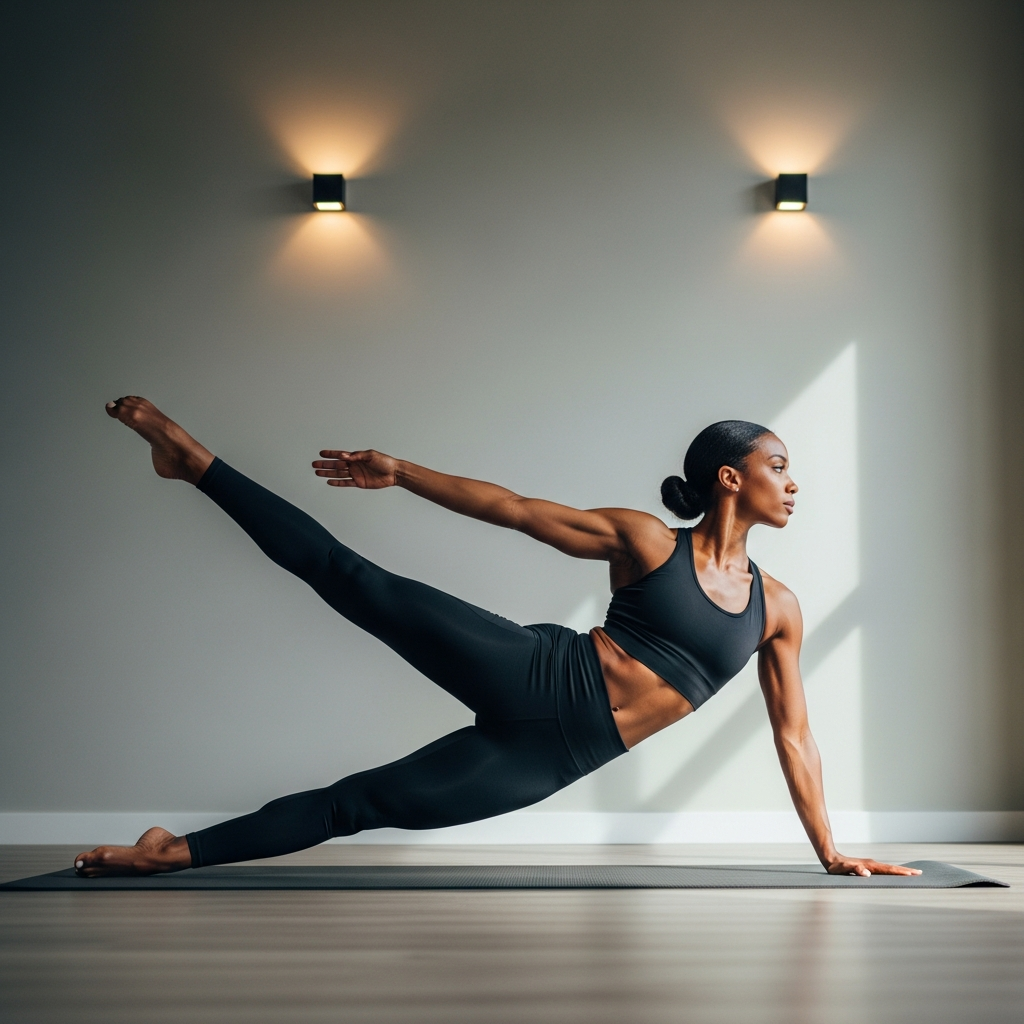
There are two main types of Pilates – Mat Pilates and Reformer Pilates. Mat Pilates is performed on a mat and primarily involves using your own body weight as resistance. These exercises help improve flexibility, muscle tone, body balance, spinal support, low back health, and body-mind awareness.
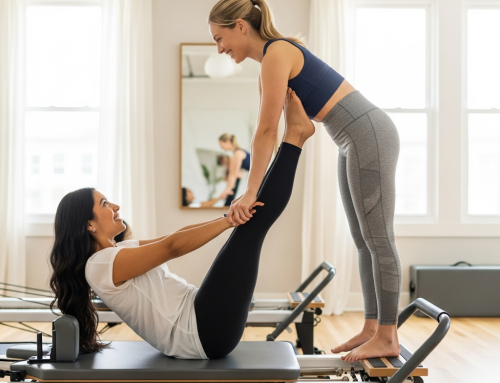
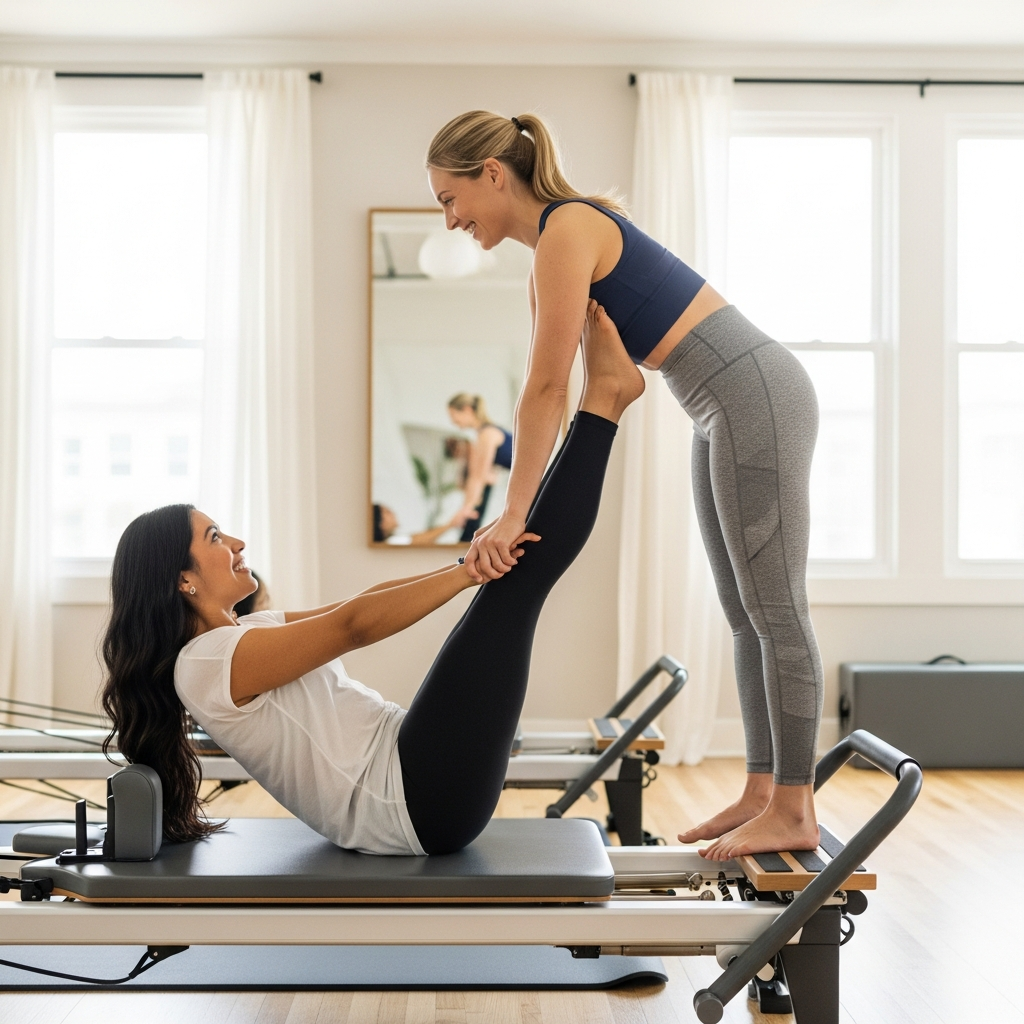
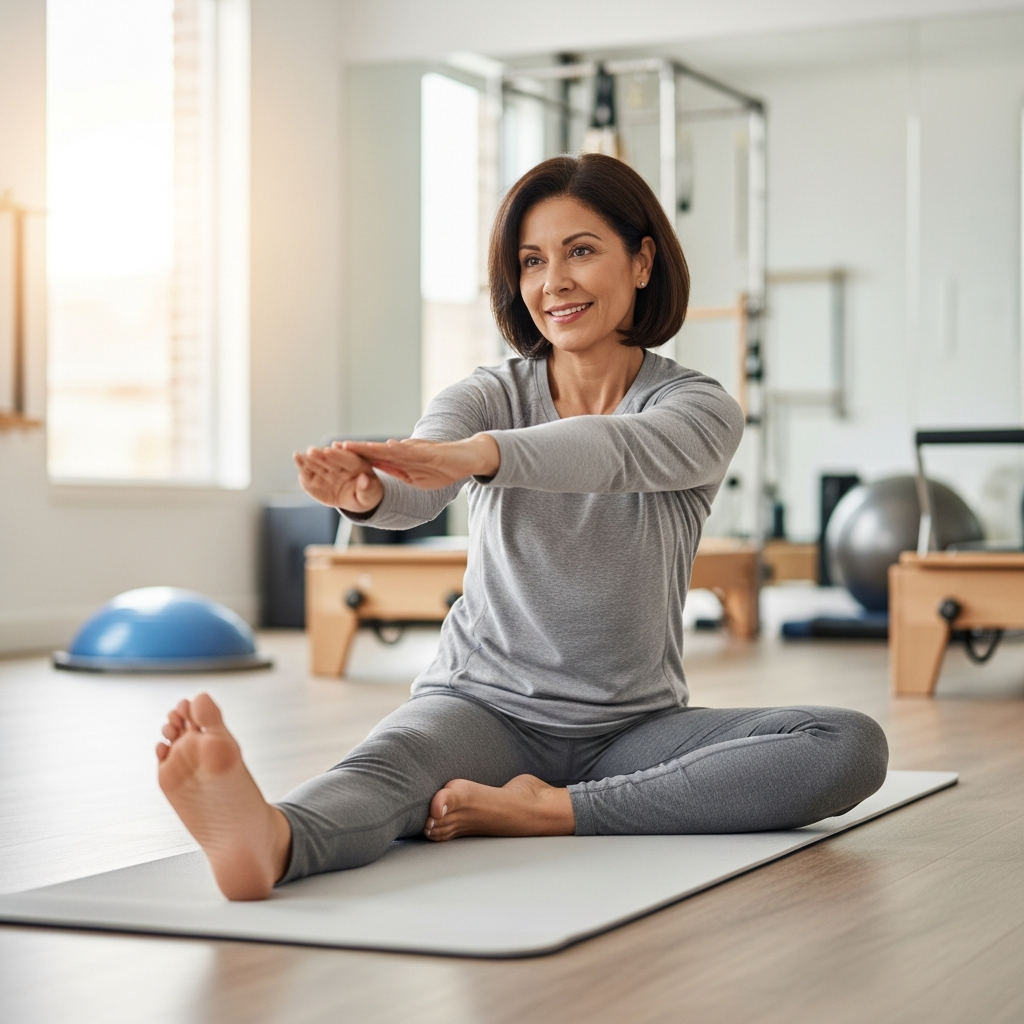
Reformer Pilates involves the use of a machine called a ‘Reformer’. The reformer is a bed-like frame with a flat platform on it, called the carriage, which moves back and forth on wheels. The carriage is attached to one end of the reformer by a set of springs that provide differing levels of resistance. The exercises performed on the reformer are dynamic and challenging, providing a full-body workout that improves strength, flexibility, and coordination.
Pilates offers numerous benefits; it strengthens the core, improves muscle tone and flexibility, enhances body awareness, promotes better posture, boosts cardiovascular fitness, and reduces stress. It is also popular among athletes for its injury prevention and rehabilitation benefits.
In conclusion, Pilates exercises offer a holistic approach to fitness and well-being. The combination of mental concentration and physical control required in Pilates not only strengthens the body but also relaxes the mind. Whether you’re an athlete looking to enhance your performance, recovering from an injury, or simply looking for a low-impact exercise to stay fit and healthy, Pilates could be the perfect choice for you.
The Practical Guide to Pilates Exercises
Pilates is a physical fitness system developed by Joseph Pilates in the early 20th century. It focuses on enhancing muscular strength, flexibility, balance, and mindfulness. There are hundreds of exercises in Pilates, which are performed either on a mat or on specialized equipment like a reformer. Let’s dive into a step-by-step guide to some Pilates exercises, specifically mat Pilates and reformer Pilates.
Before we begin, please remember that Pilates should be performed under the guidance of a certified trainer, especially if you are a beginner or have any health conditions. The following exercises are general recommendations and may not be suitable for everyone.
**Mat Pilates**
Mat Pilates exercises are performed on a mat and mainly use the body’s own weight as resistance. Here are a few exercises to get you started
1. **The Hundred:** Start by lying down on your back on the mat. Lift your legs off the mat at a 45-degree angle, keeping them straight. Now lift your head and shoulders off the mat while extending your arms by your side, palms facing down. Pump your arms up and down while breathing in and out through your nose for five counts each, keeping your abdominal muscles pulled in. Repeat this ten times to complete a hundred.
2. **Roll-Up:** Lying on your back, extend your arms overhead and your legs straight out on the mat. Inhale as you bring your arms up toward the ceiling and then start curling your upper body off the mat, reaching for your toes. Exhale as you slowly roll back down. Repeat this 8-10 times.
**Reformer Pilates**
Reformer Pilates exercises are done on a piece of equipment called a reformer. This machine uses springs to provide resistance. Here are a couple of exercises you can try
1. **Footwork:** Lay on the reformer with your head on the headrest and hands by your side. Place your feet hip-width apart on the footbar. Push out until your legs are straight, then slowly return back to the starting position. Repeat this 10-15 times.
2. **Leg Circles:** Hook one foot in the reformer strap and extend that leg up towards the ceiling, keeping the other foot on the footbar. Circle your extended leg out to the side, down, and then back up in a controlled manner. Perform 8-10 circles in each direction.
**Real-world Scenarios and Actionable Advice**
1. **Scenario:** You’re a busy professional who doesn’t have time to hit the gym.
**Advice:** Mat Pilates can be an excellent choice for you. It requires minimal equipment and can be done at home. To start, dedicate 20-30 minutes a day, three days a week, to performing mat Pilates exercises. As you get stronger and more flexible, you can increase the duration and frequency of your workouts.
2. **Scenario:** You’re recovering from an injury and need low-impact exercises.
**Advice:** Reformer Pilates can be highly beneficial for injury rehabilitation due to its low impact nature and ability to target specific muscle groups without adding unnecessary strain. Be sure to work with a certified Pilates instructor who can customize exercises according to your needs.
3. **Scenario:** You’re looking to lose weight and tone up.
**Advice:** Combine both mat and reformer Pilates for a comprehensive workout routine. The resistance provided by the reformer will help build lean muscle mass while mat exercises will improve your core strength and flexibility. Also, remember to maintain a balanced diet alongside your workout regime.
Pilates is not just a set of exercises; it’s a way of life that promotes overall well-being. Whether you choose mat or reformer Pilates, be patient with your progress. It is a journey of building a stronger, healthier body from the inside out.
Pilates Exercises: Common Challenges, Solutions, and Expert Tips
Pilates is a method of exercise that focuses on balance, flexibility, strength, and mind-body connection. Despite its numerous benefits, many people encounter challenges when starting or advancing their Pilates practice. This article aims to explore these challenges, provide solutions, and offer expert tips for both mat and reformer Pilates.
**Common Challenges**
1. **Difficulty in maintaining proper form**: This is one of the most common challenges faced by beginners. Pilates involves precise movements and alignment, which can be difficult to master initially.
2. **Inadequate core strength**: Pilates exercises require a strong core. Beginners, or those with a weaker midsection, may struggle with exercises that demand significant abdominal strength.
3. **Limited flexibility**: Some Pilates exercises, particularly those on the reformer, require a certain level of flexibility that can be a challenge for beginners or those with limited mobility.
4. **Misconception that Pilates is easy or only for women**: Many people underestimate the intensity of Pilates and assume it’s a light form of exercise meant primarily for women. This misconception can lead to underestimating the effort required, leading to potential discouragement when the exercises prove challenging.
**Solutions & Best Practices**
1. **Proper Instruction**: One of the best ways to overcome the challenge of maintaining proper form is to take classes from a certified Pilates instructor. They can provide real-time feedback and adjustments to ensure correct alignment and execution.
2. **Consistent Practice**: Core strength and flexibility are developed over time through consistent practice. Start with basic exercises and gradually incorporate more advanced moves as your strength and flexibility improve.
3. **Patience**: Recognize that progress takes time. You may not be able to perform all exercises initially, but with patience and consistency, you’ll see improvement.
4. **Education**: Spread awareness about the intensity and benefits of Pilates for all genders and fitness levels. Encourage people to try a class to experience it firsthand.
**Expert Tips**
1. **Quality over Quantity**: Pilates is about performing movements with control and precision, not about how many repetitions you can do. Concentrate on doing each exercise correctly rather than rushing through them.
2. **Breathing**: Breathing is integral to Pilates. In general, you exhale on the effort (or the hardest part of the exercise) and inhale on the release. Proper breathing helps engage your muscles, particularly your core, and increases the effectiveness of the workout.
3. **Regular Practice**: The more regularly you practice Pilates, the quicker you’ll see results. Aim for at least 2-3 sessions per week.
4. **Incorporate both Mat and Reformer Pilates**: Mat Pilates uses your body weight for resistance, while Reformer uses springs to add resistance. Incorporating both into your routine provides a balanced workout.
5. **Listen to your Body**: Avoid pushing yourself to the point of pain during your practice. If you feel discomfort beyond normal muscle fatigue, modify the exercise or take a break.
**Mat Pilates vs Reformer Pilates**
Mat Pilates is often seen as more accessible because it requires no special equipment. However, it can be quite challenging as you’re using your body weight for resistance. Mat exercises mainly target the core but also work other muscle groups.
Reformer Pilates involves a machine that uses springs to create resistance. This can provide a more intense workout and can target specific muscle groups more effectively. It also allows for a greater range of motion, which can be beneficial for individuals with limited mobility.
Both Mat and Reformer Pilates have their unique advantages and can complement each other well in a balanced fitness routine. It’s important to remember that both types require proper form and controlled movements for maximum benefit.
In conclusion, while Pilates comes with its set of challenges, the benefits it offers in terms of improved strength, flexibility, balance, and overall body awareness make it worth the effort. With proper instruction, patience, consistent practice, and attention to form and breathing, you can overcome these challenges and reap the full benefits of this versatile form of exercise.
Navigating the Pilates Path: Exercises, Timelines, and Next Steps
Pilates is a full-body exercise system that emphasizes body alignment, core strength, and muscle balance. It was developed by Joseph Pilates in the 1920s as a way to improve his health and physical performance. Today, millions of people worldwide practice this exercise method for its numerous benefits, including improved posture, increased flexibility, and enhanced mental awareness. This article will provide an in-depth look at what to expect from Pilates exercises, timelines for progress, and next steps for those interested in this transformative fitness regime.
What to Expect from Pilates Exercises Pilates can be done on a mat using body weight or with the help of various apparatuses like the Reformer, Cadillac, and Wunda Chair to provide resistance. A typical Pilates session lasts about 45 to 60 minutes and is usually comprised of a series of controlled movements that engage both your mind and body.
Mat Pilates is the most common form practiced by beginners. It involves performing exercises on a mat that focus on developing core strength, flexibility, balance, and endurance. The Hundred, the Roll-Up, and the Saw are some classic Mat Pilates exercises that work your whole body.
Reformer Pilates, on the other hand, involves using a machine named ‘Reformer’. This equipment has a flat platform that moves back and forth along a carriage. Resistance is provided by the exerciser’s body weight and by springs attached to the carriage. Exercises on the Reformer are diverse and offer more intense workouts than Mat Pilates. They can target every muscle group in your body and enhance your strength, coordination, and balance.
Timelines for Progress
The timeline for progress in Pilates varies from person to person based on various factors such as fitness level, frequency of practice, lifestyle factors, and individual goals. However, Joseph Pilates himself stated that you would feel better in 10 sessions, look better in 20 sessions, and have a completely new body in 30 sessions.
Generally, it’s recommended to practice Pilates 2-3 times a week for optimal results. After about a month of consistent practice, you will likely notice improvements in your overall strength, flexibility, and posture. You may also experience better core stability and a more toned body.
Next Steps
After getting a handle on the basics of Pilates, you may want to up your game by trying advanced exercises or incorporating props like magic circles, resistance bands, and Pilates balls into your routine for added challenge and variety.
Continuing with Mat Pilates is a great way to maintain and improve your strength and flexibility. However, if you’re looking for additional resistance or want to target specific muscle groups more intensely, moving on to Reformer Pilates could be an excellent choice.
If you’re serious about advancing your Pilates practice, consider enrolling in classes under a certified Pilates instructor. They can provide you with personalized guidance and corrections to ensure you’re performing each exercise safely and effectively.
In conclusion, Pilates is a versatile exercise system that can be tailored to meet anyone’s fitness goals. Whether you choose to stick with Mat Pilates or venture into Reformer Pilates, this method can offer significant physical and mental benefits when practiced consistently. As you continue your Pilates journey, remember to listen to your body, challenge yourself appropriately, and enjoy the process of building a stronger, more balanced body.
In wrapping up our discourse on Pilates, it’s crucial to recapitulate the key points that underline the immense value this practice holds for both the body and mind. Pilates is a unique exercise regimen that focuses on strengthening the core, improving flexibility and balance, enhancing body awareness, and promoting overall health. Its benefits are wide-ranging, from physical fitness enhancements to mental clarity and stress relief.
The origins of Pilates dates back to the early 20th century, created by Joseph Pilates. His principles revolve around concentration, control, centering, flow, precision, and breathing. These principles serve as a guide not just for carrying out the exercises, but they also echo into various aspects of daily life. Pilates is not just an exercise form but a lifestyle that encourages discipline, mindfulness, and a balanced approach to health.
Pilates exercises are predominantly low-impact, making them accessible to individuals across different fitness levels and ages. They can be modified to meet individual needs and capabilities, allowing everyone from beginners to advanced athletes to benefit from the practice. Whether you’re seeking to improve your posture, alleviate back pain, enhance sports performance, or simply maintain overall health, Pilates offers a structured approach to meet these goals.
One of the standout features of the Pilates method is its emphasis on the core – or the ‘powerhouse,’ as Joseph Pilates referred to it. Strengthening the core is fundamental for improved body stability and balance. Moreover, a strong core can help prevent injuries and promote better functionality in daily activities.
Beyond physical strength and flexibility, Pilates also facilitates better body awareness. It encourages a connection between the mind and body, fostering focused attention on movements and breath. This mindfulness aspect can lead to reduced stress levels, improved focus, and enhanced mental well-being.
It’s important to note that while Pilates is a beneficial exercise method, realizing its full benefits requires consistency, precision, and correct technique. This is where professional guidance comes in. Just as you wouldn’t attempt to learn a musical instrument without a teacher, diving into Pilates without proper instruction may limit your progress and potentially lead to injury.
Whether you’re considering Pilates as a standalone fitness regimen or as a complementary practice to your existing routine, it’s essential to remember that every body is unique. What works for one person may not work for another. Listen to your body, respect your limits, and gradually push your boundaries under the supervision of a trained professional.
In conclusion, Pilates is a comprehensive exercise method that offers holistic benefits for the body and mind. Its focus on core strength, flexibility, balance, and mindfulness makes it a truly valuable practice for anyone seeking to enhance their physical fitness and mental well-being.
If you’re ready to embark on your Pilates journey or wish to deepen your existing practice, don’t hesitate to reach out to us. Our team of certified Pilates instructors is ready to provide personalized guidance tailored to your fitness level, needs, and goals. We welcome you to experience the transformative power of Pilates and look forward to assisting you on your path to better health and wellness. Remember, the first step towards improvement is taking action. Contact us today!