6 Signs You’ve Found the Right Pilates Studio in Mesquite
You walk into yet another fitness studio, and that familiar knot forms in your stomach. The instructor barely glances up from her phone. The equipment looks like it’s seen better days – probably around 2015. And don’t even get me started on that overwhelming smell of industrial cleaner mixed with… something else you can’t quite identify.
Sound familiar?
If you’re nodding along, you’re definitely not alone. I’ve heard this story countless times from clients who’ve bounced from studio to studio in Mesquite, searching for that elusive perfect fit. You know what I’m talking about – that place where you actually *want* to show up, where the instructor knows your name (and your lower back issues), and where you leave feeling energized instead of defeated.
Here’s the thing about Pilates studios… they’re not all created equal. Not even close.
I learned this the hard way when I first moved to the area. I was so excited to find a studio within walking distance of my apartment that I signed up for a month without even taking a trial class. Big mistake. Huge. The classes were overcrowded, the instruction was generic at best, and I spent more time feeling confused than connected to my body. Three weeks in, I was already making excuses to skip sessions.
But here’s what I wish someone had told me back then – and what I’m telling you now: the right Pilates studio can completely transform not just your fitness routine, but how you feel about movement itself.
Think about it. You’re not just looking for a place to exercise. You’re looking for a sanctuary where you can decompress from your day, challenge your body safely, and maybe – just maybe – find that mind-body connection everyone keeps talking about. You want instructors who actually see you as a person, not just another body in the room. And honestly? You deserve equipment that works properly and doesn’t make you wonder about your tetanus shot status.
The difference between the right studio and the wrong one isn’t just about convenience or price (though those matter too). It’s about whether you’ll actually stick with Pilates long enough to experience those incredible benefits – the stronger core, better posture, reduced back pain, and that weird but wonderful way Pilates makes you more aware of how you move through the world.
I’ve been in this wellness space for years now, and I’ve seen people completely give up on Pilates because their first experience was at the wrong studio. That breaks my heart because Pilates, when done right and in the right environment, is absolutely transformative. I’ve watched clients go from chronic pain to pain-free living. I’ve seen stressed-out professionals find their zen. I’ve witnessed people discover strength they never knew they had.
But finding that right studio? It’s trickier than you might think.
Mesquite has no shortage of options these days. Strip mall studios, boutique spots, big chains, places that focus on classical Pilates, others that blend it with yoga or barre… the choices can feel overwhelming. And let’s be honest – most of us don’t have the time or budget to try every single one until we find “the one.”
That’s exactly why I wanted to put together this guide. After working with hundreds of people on their wellness journeys, I’ve noticed some very clear patterns in what separates the studios that create lifelong Pilates lovers from the ones that send people running back to their couches.
We’re going to walk through six specific signs that indicate you’ve found a studio worth your time, energy, and investment. These aren’t just my opinions – they’re based on what I’ve seen work for real people with real lives, real schedules, and real budget constraints.
Some of these signs might surprise you. Others will seem obvious once I point them out (but trust me, they’re easy to miss when you’re caught up in the excitement of trying somewhere new). And a few… well, let’s just say they’ll save you from some seriously awkward situations I’ve witnessed over the years.
Ready to find your Pilates home base?
What Makes Pilates Different (And Why Your Studio Choice Actually Matters)
Here’s the thing about Pilates – it’s not just fancy stretching with expensive equipment, though I get why people think that. When you’re trying to lose weight or get stronger, every movement needs to count. And honestly? The studio you choose can make or break whether those movements actually work for you.
Think of Pilates like learning to drive a manual transmission car. Sure, you could probably figure it out on your own in an empty parking lot… but wouldn’t you rather have someone who actually knows what they’re doing sitting next to you? Someone who can tell you why the car keeps stalling and how to find that sweet spot with the clutch?
That’s what a good Pilates studio does – they’re your co-pilot while you figure out how to make your body work more efficiently.
The Foundation Philosophy That Changes Everything
Real Pilates isn’t about crushing yourself with impossibly difficult moves (though Instagram might make you think otherwise). Joseph Pilates – yeah, there was actually a guy named Pilates who invented this – built his method around six core principles: concentration, control, centering, flow, precision, and breathing.
I know, I know… that sounds like wellness word salad. But here’s what it really means: every single movement should be intentional. You’re not just going through the motions – you’re training your brain and body to work together like they’re supposed to.
This is actually pretty counterintuitive if you’re coming from a traditional gym background. We’re so used to thinking “more weight, more reps, more sweat” equals better results. But Pilates is more like… well, imagine trying to thread a needle while someone’s shaking your arm. The harder you try to force it, the worse it gets. Sometimes precision beats power.
Why Equipment Isn’t Just Fancy Furniture
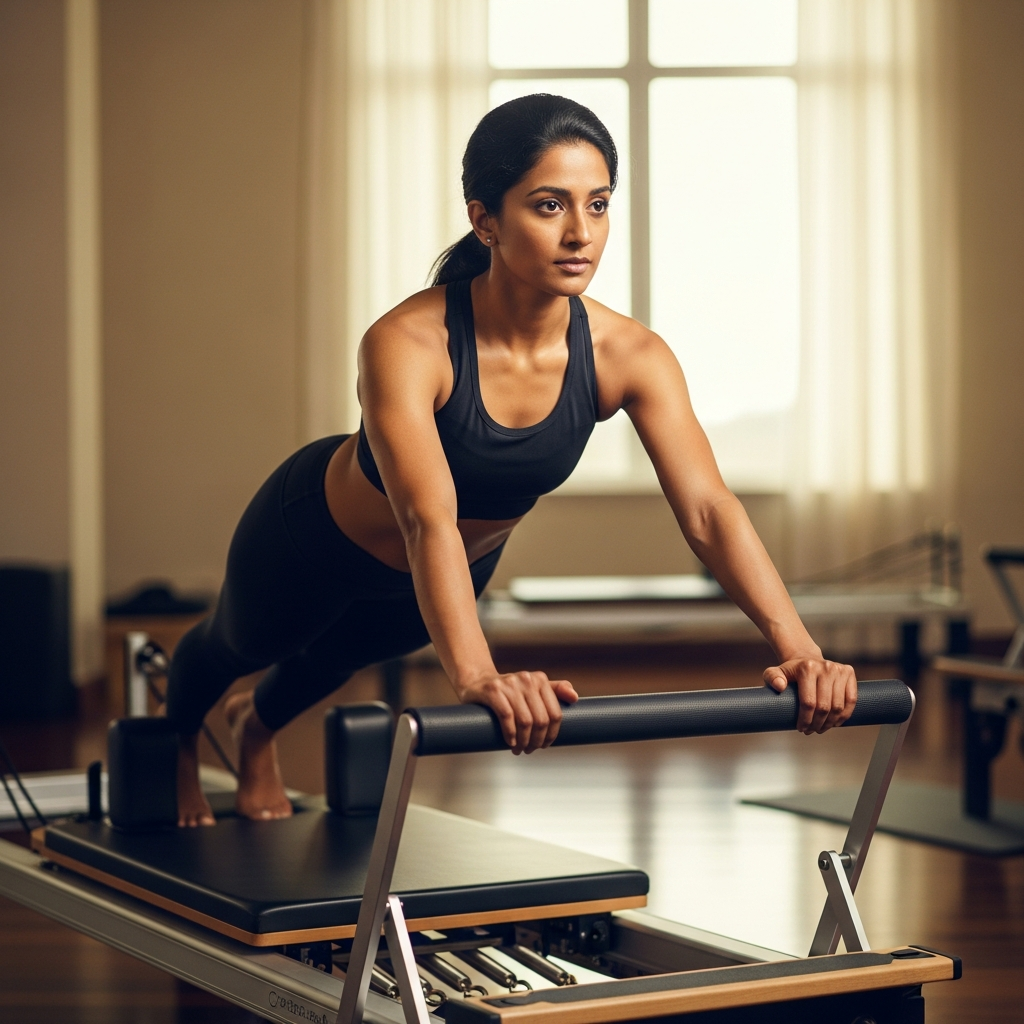
Walk into a proper Pilates studio and you’ll see these medieval-looking contraptions called Reformers, along with Cadillacs, Chairs, and Barrels. (And no, the Cadillac won’t drive you anywhere – trust me, I asked.)
These aren’t just expensive ways to make you feel intimidated. The equipment uses springs and pulleys to create what’s called “assistive resistance” – which is basically a fancy way of saying it helps and challenges you at the same time. It’s like having a workout partner who knows exactly when to help you up and when to let you struggle a bit.
The springs can make movements easier when you’re learning or recovering, then gradually make them more challenging as you get stronger. It’s brilliant, really – like having adjustable training wheels that you never fully take off, just keep adjusting.
The Instructor Factor (This Is Where Things Get Tricky)
Here’s where shopping for a Pilates studio gets complicated… not all instructors are created equal. And I don’t just mean some are nicer than others – though that matters too.
Pilates certification programs range from weekend workshops to comprehensive 600+ hour training programs. It’s like the difference between someone who watched a few YouTube videos about fixing cars and an actual mechanic with years of training. Both might be able to help you with simple stuff, but when things get complicated – or when you’re dealing with an injury or specific weight loss goals – you want the real deal.
A well-trained instructor can spot compensation patterns (that’s when your body cheats by using the wrong muscles), modify exercises for your specific needs, and progress you safely. They’re part teacher, part therapist, part detective figuring out why your left shoulder keeps hiking up during certain moves.
The Mind-Body Connection Isn’t Just Woo-Woo
This might sound a little out there, but stick with me… Pilates is as much about retraining your brain as it is about strengthening your muscles. When you’ve been carrying extra weight or dealing with chronic pain, your body develops some pretty creative – and not always helpful – movement patterns.
It’s like when you sprain your ankle and start limping. Even after it heals, you might still favor that side without realizing it. Pilates helps you become aware of these patterns and slowly, methodically, teaches you better ones.
For weight loss specifically, this awareness piece is huge. You start noticing how you move through space, how you hold tension, how your posture affects your energy levels throughout the day. It’s not magic – it’s just paying attention in a way most of us never learned to do.
What Questions to Ask During Your Studio Tour
Don’t just nod along during your visit – this is your chance to get the real scoop. Ask about their certification requirements (any instructor worth their salt should have at least 500 hours of training, though honestly… many of the best ones have way more). Here’s what I always tell people: “What’s your policy if I need to modify an exercise?” The answer tells you everything.
A good studio will light up talking about modifications. They’ll mention props, alternative positions, maybe even share a quick story about helping someone with a tricky shoulder. If they look blank or just say “we accommodate everyone” – that’s corporate speak for “we haven’t really thought about it.”
Also ask about their equipment maintenance schedule. I know, I know – not exactly thrilling stuff. But those reformer springs lose tension over time, and wobbly equipment isn’t just annoying… it’s potentially dangerous. Studios that can tell you exactly when they last serviced their machines? That’s attention to detail you want on your team.
The Trial Class Strategy That Actually Works
Here’s something most people get wrong – they try one class and make their decision. But honestly? That first class is always weird. You’re nervous, everything feels foreign, and you’re probably comparing yourself to the person next to you who’s been coming for three years.
Instead, try this: book classes at different times of day with different instructors. The Tuesday morning crowd has a completely different vibe than the Thursday evening group. Maybe you’re more of a quiet, focused morning person, or perhaps you thrive in that slightly chaotic after-work energy.
Pay attention to how the instructor remembers you in your second class. Do they check in about how you felt after the first session? Do they remember that your left knee was being finicky? These little touches matter more than fancy equipment or Instagram-worthy interiors.
Red Flags That Should Send You Running
I’ve seen people stick with studios that were clearly wrong for them because they’d already bought a package or felt guilty about leaving. Don’t be that person. If the instructor spends more time on their phone than watching form, that’s not a studio – it’s expensive babysitting.
Watch out for the hard sell too. Yes, most studios will offer package deals (and honestly, they usually are better value), but if someone’s pressuring you to sign up for a year-long commitment before you’ve even tried a second class… just walk away.
And here’s a big one – if they can’t clearly explain their pricing structure, something’s off. Hidden fees, confusing cancellation policies, or that weird thing where they won’t tell you prices until you give them your contact info? These are tactics designed to trap you, not serve you.
Making the Financial Piece Work
Let’s be real – Pilates isn’t cheap. But here’s what I’ve learned after years in this space: the most expensive studio isn’t always the best, and the cheapest option usually costs you more in the long run through injuries or lack of progress.
Look for studios that offer new client specials – but read the fine print carefully. Some require you to use all sessions within a month (unrealistic for most people), while others give you a reasonable timeframe. The best studios often have sliding scale options or work-study programs where you can help with cleaning or front desk duties in exchange for classes.
Building Your Support Network
This might sound cheesy, but the community aspect of Pilates is huge for long-term success. Notice if people chat before and after class, if there are social events, or if the front desk staff knows everyone’s names. You don’t need to become best friends with everyone, but having that sense of belonging makes showing up so much easier on days when motivation is low.
Some studios have private Facebook groups or group chats where people share wins, ask questions, or organize carpools. Others host workshops on nutrition or stress management. These extras aren’t just nice-to-haves – they’re signs that the studio sees you as a whole person, not just a monthly payment.
The right studio feels like finding your people. You’ll know it when you walk in and think, “Yeah, I could see myself here three times a week.” Trust that feeling.
The Reality Check: What Makes Most People Quit
Here’s the thing nobody tells you upfront – about 70% of new Pilates students stop showing up within the first month. It’s not because they don’t want to get stronger or feel better. It’s because they hit predictable roadblocks that no one prepared them for.
The biggest culprit? That voice in your head during week two that whispers, “Everyone else seems to know what they’re doing, and I’m still struggling with basic moves.” You’re not wrong – some people DO seem to glide through exercises effortlessly. But here’s what you don’t see: they’ve been practicing for months (or years), and they started exactly where you are now.
A good studio acknowledges this reality. They’ll tell you straight up during your first class that feeling lost is completely normal. Better yet, they’ll pair you with someone who started recently, not their most advanced student who can practically levitate during the hundred.
When Your Body Rebels Against the Schedule
Let’s be honest about the scheduling nightmare. You signed up for Tuesday evening classes because that’s when you felt motivated during the tour. But real life? Tuesday evenings become the day your boss schedules last-minute meetings, your kids need help with projects, or you’re just… tired.
This is where you learn whether you’ve chosen the right studio. The inflexible places will shrug and tell you to figure it out. The good ones understand that life happens. They’ll work with you to find backup class times, offer makeup sessions, or even suggest shorter sessions when you’re swamped.
Actually, that reminds me of something crucial – if you’re starting a weight loss journey, energy levels can be unpredictable. Some days you’ll feel ready to conquer the world. Others, you’ll feel like you’re moving through molasses. A studio that gets this will adjust expectations, not make you feel guilty about it.
The Equipment Learning Curve (It’s Steeper Than You Think)
Nobody warns you that Pilates equipment can feel like trying to operate a spacecraft at first. The reformer alone has springs, straps, foot bars, and settings that seem designed by someone who clearly enjoyed making things complicated.
You’ll spend your first few classes less focused on your core and more focused on not getting tangled in the straps. This is… completely normal, though it doesn’t feel that way when you’re the only one asking, “Wait, which spring tension again?”
The right studio builds equipment familiarity into their beginner program. They don’t throw you onto a reformer on day one and expect miracles. They start with mat work, introduce one piece of equipment at a time, and – this is key – they give you permission to ask the same question multiple times without making you feel dense.
The Comparison Trap (And How to Escape It)
Here’s something uncomfortable but true: you WILL compare yourself to others. The person next to you flows through movements while you’re still figuring out which way is up. It’s human nature, and anyone who tells you to “just focus on yourself” is giving advice that’s technically correct but practically useless.
Better studios actually address this head-on. They’ll point out different body types, experience levels, and even mention that some people are naturally more flexible or coordinated. Not to make excuses, but to normalize the learning process.
The solution isn’t pretending comparisons don’t happen – it’s reframing them. Instead of “Why can’t I do what she’s doing?” try “What can I learn from watching her form?” It’s a subtle shift, but it changes everything.
When Progress Feels Invisible
Weight loss and fitness progress rarely happen on your timeline. You might feel stronger internally but not see visual changes for weeks. Or you might nail a movement that was impossible last month, but your scale hasn’t budged.
This is where many people bail – not because they’re not improving, but because improvement doesn’t always look like what we expect. The right studio helps you recognize progress in forms you might miss: better posture, less back pain, sleeping better, or simply feeling more confident in your body.
They’ll also be realistic about timelines. Real change takes months, not weeks. If someone’s promising dramatic transformation in 30 days, they’re either lying or they’ve never actually worked with real people dealing with real life challenges.
The studios worth your time will celebrate small wins with you – and help you see them when you can’t.
What to Expect in Your First Few Weeks
Let’s be honest – walking into any new fitness space feels a bit like the first day of school. You’re not going to master the hundred on day one, and that’s perfectly fine. Most people need about three to four sessions just to get comfortable with the basic movements and equipment.
Your body’s going to feel… different. Maybe a little sore in places you didn’t know existed (hello, deep abdominals). That’s your core waking up after years of your back doing all the heavy lifting. Give yourself at least six weeks before making any major judgments about how Pilates is working for you.
The right studio will check in with you during this adjustment period. They’re not just taking your money and hoping for the best – they genuinely want to see you succeed. If you’re not hearing from your instructor about your progress or concerns after the first couple weeks, that might be a red flag.
Setting Realistic Goals (Without Crushing Your Dreams)
Here’s the thing about Pilates – it’s not a magic bullet, but it’s pretty darn close to one when done consistently. You’ll likely notice better posture and less back tension within the first month. Actual strength changes? That takes about 8-10 weeks of regular practice.
I always tell people to think of it like learning a musical instrument. You wouldn’t expect to play Mozart after a few piano lessons, right? Same principle applies here. The movements might look simple (spoiler alert: they’re not), and building that mind-body connection takes time.
Don’t get caught up in dramatic before-and-after stories you see on social media. Real change happens gradually – so gradually that you might not notice it until your jeans fit better or you realize you haven’t had that nagging shoulder pain in weeks.
Building Your Practice Schedule
Most successful Pilates students start with 2-3 sessions per week. That’s the sweet spot where your body can adapt without burning out. If you’re coming from a completely sedentary lifestyle, even twice a week might feel like a lot initially… and that’s okay.
Your studio should help you create a realistic schedule that fits your actual life – not some idealized version where you have unlimited time and energy. Maybe you’re a morning person who loves 6 AM classes, or perhaps you need that after-work session to decompress. The right place will work with your preferences, not against them.
Consider mixing group classes with occasional private sessions, especially in the beginning. Think of privates as your tune-up appointments – they help correct any habits before they become ingrained patterns.
When to Level Up
You’ll know you’re ready for more challenging classes when the current ones stop making you think so hard about every movement. Usually happens around the 3-4 month mark, though everyone’s timeline is different.
Don’t rush this progression. I’ve seen people jump into advanced classes too quickly and end up frustrated or injured. Your instructor should guide this transition – they’re watching your form and consistency more closely than you realize.
Building Community (If That’s Your Thing)
Not everyone wants to become best friends with their workout buddies, and that’s totally fine. But many people find that the social aspect of group classes helps with accountability. You’re more likely to show up when Sarah from Tuesday morning class asks where you were last week.
Give yourself permission to be the quiet one in the corner if that’s more your style. Or chat away if you’re naturally social. The right studio attracts all personality types and doesn’t force a particular vibe on anyone.
Red Flags to Watch For
If your studio starts pushing expensive packages or supplement sales in your first month, that’s concerning. Good studios focus on your movement quality and comfort level first – the business stuff comes later, naturally.
Also watch out for instructors who never offer modifications or seem annoyed by questions. Learning Pilates involves lots of questions, and the best teachers welcome them as opportunities to help you understand your body better.
Moving Forward with Confidence
Remember – you chose this studio for specific reasons. Trust that decision while staying aware of how you feel in the space. Your gut instinct about whether this feels right usually proves accurate over time.
Most importantly? Don’t compare your week three to someone else’s year three. Focus on how you feel compared to when you started, not compared to the person effortlessly flowing through exercises next to you.
You know what? Finding the right Pilates studio isn’t just about checking boxes on a list. It’s about finding a place where you feel genuinely supported in your wellness goals – and honestly, that feeling is something you’ll know pretty quickly when you walk through the door.
Trust Your Gut (It’s Usually Right)
When you find that studio where the instructors remember your name, where they ask about your lower back without you having to bring it up every single time, where you actually look forward to your sessions… that’s when you know you’ve found something special. It’s like finding a hairdresser who just *gets* your hair – you don’t want to mess with a good thing.
The right studio will never make you feel like just another monthly payment. Instead, you’ll feel seen, heard, and genuinely cared for. Your instructor will notice when you’re having an off day (we all have them) and adjust accordingly. They’ll celebrate your small wins – and trust me, in Pilates, those small wins add up to pretty big transformations.
Your Body Will Thank You Later
Here’s something I’ve noticed working with clients over the years: when people find the right fit, their entire relationship with movement changes. Suddenly, exercise isn’t this dreaded obligation on your calendar. It becomes this… anchor in your week, actually. A place where you can breathe, focus, and do something genuinely good for yourself.
And let’s be honest – that ripple effect touches everything else in your life. Better posture means less back pain during those long work days. Improved core strength makes everyday activities easier. That mind-body connection you develop? It helps with stress management in ways you might not even realize at first.
Making the Move Forward
Look, I get it if you’re still feeling a bit hesitant. Maybe you’re worried about looking silly (spoiler alert: everyone feels that way at first). Maybe you’re concerned about the cost, or whether you’ll actually stick with it this time. Those feelings? Completely normal. Every single person who’s ever started Pilates has felt exactly the same way.
But here’s the thing – your health and well-being are worth investing in. And when you find the right studio with the right people, it doesn’t feel like an investment you’re making reluctantly. It feels like a gift you’re giving yourself.
The beautiful thing about Pilates is that it meets you wherever you are right now. Dealing with chronic pain? There’s a path forward. Recovering from an injury? We can work with that. Just wanting to feel stronger and more confident in your body? That’s exactly what we’re here for.
You Don’t Have to Figure This Out Alone
If you’re feeling ready to explore what Pilates might do for you – or if you’re still on the fence and have questions rattling around in your head – I’d love to chat with you. No pressure, no sales pitch, just a real conversation about your goals and concerns.
Because here’s what I really want you to know: you deserve to feel strong, capable, and comfortable in your own skin. And sometimes, finding the right support system is the missing piece that makes all the difference.