10 Common Myths About Pilates Classes in Mesquite
You’re scrolling through class schedules at your local gym, and there it is again – Pilates. You’ve walked past that studio door maybe fifty times, caught glimpses of people lying on mats doing… something that looks both impossibly graceful and slightly intimidating. Part of you is curious – especially since your back’s been acting up and your friend Sarah swears Pilates changed her life. But then that little voice starts up: *Isn’t that just for dancers? Won’t everyone be way more flexible than me? Do I need to buy those weird reformer machines?*
Sound familiar?
If you’re here in Mesquite, you’ve probably noticed Pilates studios popping up everywhere. And honestly? That’s created a lot of confusion. When something becomes trendy, myths spread faster than gossip at a high school reunion. Suddenly everyone’s an expert, sharing half-truths they picked up from their cousin’s yoga instructor or that one article they skimmed three years ago.
The thing is, these myths aren’t just harmless misconceptions – they’re actually keeping people from discovering something that could genuinely improve their lives. I’ve watched too many folks walk away from Pilates because they believed it was “too easy” or “only for women” or “impossible without perfect flexibility.” And you know what breaks my heart? Some of those same people come back months or years later, dealing with chronic pain or struggling with mobility issues that Pilates could have helped prevent.
Here’s the truth: Pilates isn’t this mysterious, exclusive practice that requires you to be a certain type of person. It’s not about touching your toes or looking like a Instagram fitness influencer (though if that’s your thing, more power to you). At its core, Pilates is about helping your body work better – whether you’re 25 or 75, whether you’re recovering from an injury or training for a marathon.
But let’s be real for a second. Walking into any new fitness class feels vulnerable. You’re wondering if you’ll be the only one who can’t do whatever everyone else makes look effortless. You’re worried about wearing the wrong clothes or not knowing the terminology. And when you add all these swirling myths about what Pilates is “supposed” to be? No wonder people hesitate.
That’s exactly why we need to clear the air about what Pilates actually is – and what it definitely isn’t.
Over the years, I’ve heard just about every misconception you can imagine. Some make me laugh (like the idea that Pilates will instantly give you a “long, lean dancer’s body” – as if our genetics work that way). Others frustrate me because they’re keeping people from trying something that could genuinely help their quality of life. And some? Well, some are so persistent that even fitness professionals sometimes believe them.
The reality is that Pilates – when you understand what it actually involves – is one of the most adaptable, practical forms of exercise out there. It meets you where you are. Can’t touch your toes? That’s fine – we’ll work on that. Dealing with a cranky lower back? Perfect – that’s exactly what Pilates was designed to help. Think you’re not strong enough? Here’s the beautiful thing: strength comes from practice, not from walking in the door already having it.
What we’re going to do here is tackle the ten most stubborn myths I hear about Pilates classes, especially here in our Mesquite community. We’ll dig into why these misconceptions exist in the first place (because they didn’t just appear out of nowhere), and more importantly, what the reality actually looks like.
You’ll learn why that friend who insists Pilates is “just stretching” has probably never taken a proper class… and why your neighbor who claims it’s “too hard for beginners” might have jumped into an advanced session without building foundation skills first. We’ll talk about cost, time commitment, body types, age limits – all those practical concerns that actually matter when you’re deciding whether to give something new a try.
Because here’s what I want you to know: whatever’s been holding you back from trying Pilates? There’s probably a myth at the root of it. And once we clear those up, you might just discover that this thing you thought wasn’t “for you” is exactly what you’ve been looking for.
What Actually Happens in a Pilates Class
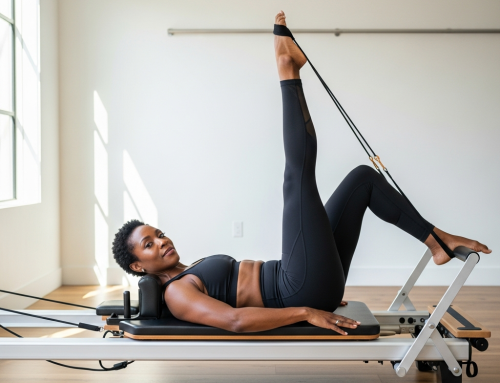
Let’s be honest – if you’ve never done Pilates, walking into that studio can feel like entering a foreign country where everyone speaks in mysterious terms like “hundred” and “teaser.” You’re looking around at these strange contraptions that look like medieval torture devices (spoiler alert: they’re not), and wondering if you accidentally signed up for something way more intense than you bargained for.
Here’s the thing about Pilates – it’s simultaneously simpler and more complex than most people think. At its core, it’s movement. Controlled, intentional movement that makes your body work as one cohesive unit instead of a collection of random parts doing their own thing.
Think of it this way: most of us go through life like a car with wheels slightly out of alignment. We function, sure, but there’s this subtle wobble that throws everything else off balance. Pilates is basically taking your body to the mechanic for a full tune-up.
The Mind-Body Connection That Actually Matters
Now, I know “mind-body connection” sounds like wellness buzzword bingo, but stick with me here. In Pilates, your brain isn’t just along for the ride – it’s the GPS, the engine, and the steering wheel all rolled into one.
Every movement starts with intention. Before you lift that leg or roll up from the mat, you’re thinking about which muscles should fire first, how your spine should move, where your breath fits into the equation. It’s like conducting an orchestra where you’re both the conductor and every single musician.
This is where it gets counterintuitive, though. You’d think all this mental work would make the physical stuff easier, right? Actually… it often makes things feel harder at first. Your brain is working overtime to coordinate things that used to happen automatically. It’s like suddenly having to think about every step when you’re walking down stairs.
The Breathing Thing Everyone Gets Wrong
Okay, let’s talk about breathing – because apparently, we’ve all been doing it wrong our entire lives. Or at least, that’s how it feels when you first start Pilates.
In regular life, breathing just… happens. You don’t think about it any more than you think about your heart beating. But in Pilates? Suddenly breathing becomes this whole production with specific timing and patterns that seem to defy logic.
The basic idea is that you exhale on effort – when you’re doing the work part of the movement. Think of it like blowing up a balloon while carrying groceries upstairs. The effort of carrying gets paired with the effort of exhaling. But here’s where it gets weird… sometimes the “effort” phase isn’t what you’d expect. Rolling down slowly? That’s effort, even though it looks like relaxing.
I’ll admit it – I spent my first month of Pilates holding my breath during the hard parts and gasping during the easy ones. Completely backwards. And you know what? That’s totally normal.
Your Core Isn’t What You Think It Is
When most people hear “core work,” they picture endless crunches and that burning sensation right down the middle of their abs. But your core in Pilates terms? It’s more like the foundation of a house – it includes everything from your ribs to your hips, front to back, deep muscles you can’t even see.
Imagine your torso as a soup can. The label on the outside? That’s your six-pack abs – visible but not necessarily the most important part. The real magic happens with the metal of the can itself – the deep, supportive muscles that keep everything stable and aligned.
This is why you might do a Pilates class and walk out thinking, “That didn’t feel that hard,” only to wake up the next day feeling muscles you forgot you had. Those deep stabilizers are working overtime, even when the movements look gentle.
The Equipment Isn’t Trying to Kill You
Those machines – the Reformer, the Cadillac, the Chair – they look intimidating, sure. But they’re actually designed to make things easier, not harder. The springs provide assistance and resistance, kind of like having a really sophisticated workout partner who knows exactly how much help to give you.
Think of it like learning to ride a bike with training wheels, except these training wheels can be adjusted throughout your ride to challenge you in different ways. Sometimes they’re supporting you, sometimes they’re adding resistance, sometimes they’re just keeping you honest about your form.
The mat work, on the other hand? That’s you versus gravity with nothing but your own strength and control. Sometimes the “easier” option is actually the hardest one.
What to Actually Expect in Your First Class
Here’s the thing nobody tells you – that “beginner-friendly” class you signed up for? You’re still going to feel like a pretzel trying to untangle itself. And that’s completely normal.
Most studios in Mesquite will start you with basic movements on the mat before introducing any intimidating equipment. You’ll spend time learning how to breathe properly (yes, there’s actually a technique to it), finding your “neutral spine” position, and figuring out what instructors mean when they say “engage your core.” Spoiler alert: it’s not just sucking in your stomach really hard.
Bring a water bottle – you’ll need it more than you think. Wear fitted clothing that won’t ride up when you’re inverted, because nothing kills your zen faster than constantly adjusting your shirt. And here’s a secret from the regulars… arrive 10 minutes early. Not just for check-in, but because those few minutes of quiet stretching help you mentally transition from your hectic day.
How to Choose the Right Studio Without Breaking the Bank
Let’s talk money, because everyone’s thinking it but nobody wants to ask. Most Mesquite studios offer trial packages or drop-in rates – take advantage of these before committing to monthly memberships.
Look for studios that actually explain their pricing structure upfront instead of making you hunt for it on their website. Red flag? If they pressure you to sign up for a year-long contract during your first visit. Quality instructors want you to feel comfortable, not cornered.
Here’s my insider tip: Ask about their cancellation policy before your first class. Life happens – kids get sick, work runs late, your back decides to act up. Studios with reasonable cancellation windows (at least 12 hours) tend to be more understanding overall.
Visit during different times of day if possible. That 6 AM class might feel completely different from the evening crowd. Some studios have a more athletic vibe in the mornings, while evenings tend to be more relaxation-focused.
Making Friends with the Equipment (It’s Not Out to Get You)
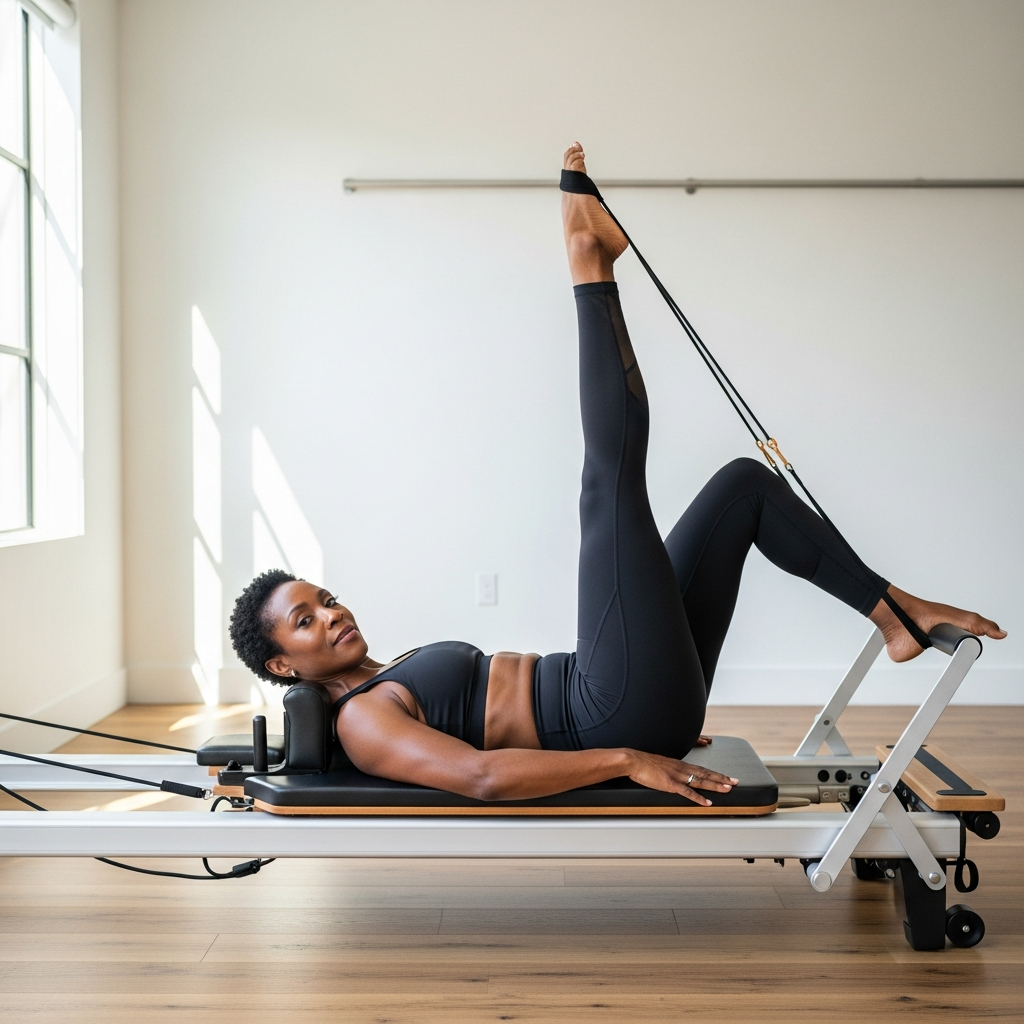
The reformer looks like medieval torture device had a baby with a gym machine, I get it. But honestly? It’s going to become your best friend once you understand how it works.
Start by thinking of the springs as your workout buddy – they provide just enough resistance to challenge you without overwhelming your muscles. Unlike weights that rely purely on gravity, these springs adjust to your strength throughout the entire movement. Pretty clever, actually.
When you first hop on, don’t worry about looking graceful. Focus on understanding how the carriage moves and how your body weight affects the resistance. The foot bar isn’t just for your feet – sometimes you’ll use it for your hands, and sometimes you’ll ignore it completely while working with the straps.
Here’s what nobody mentions in those glossy studio photos: you’ll probably make weird faces. You might grunt a little. Your legs might shake during certain exercises. This isn’t a sign you’re doing something wrong – it’s your muscles waking up and getting stronger.
Dealing with Intimidation and Comparison
Walking into a room full of people who seem to effortlessly flow through movements while you’re still figuring out which way is up… yeah, that’s rough. But here’s what I’ve learned after years of watching new students: everyone was exactly where you are at some point.
That person gracefully extending into a perfect teaser? They probably spent their first month convinced they’d never understand what “lengthen through the crown of your head” actually meant. The regular who makes every transition look seamless definitely had moments of feeling completely lost.
The comparison trap is real, but here’s your escape route: focus on your own body’s feedback instead of watching others. How do your shoulders feel? Are you holding your breath? Can you feel your abs working? These internal cues matter way more than whether you can lift your legs as high as the person next to you.
Most instructors will offer modifications throughout class – use them. They’re not consolation prizes; they’re smart training tools that help you build proper form and strength progressively.
Building Your Home Practice (Without Going Overboard)
You don’t need to transform your living room into a mini studio, despite what Instagram might suggest. A simple mat and maybe some resistance bands will get you pretty far.
Focus on the basic exercises you’ve learned in class rather than trying to recreate complex reformer work at home. Those fundamental movements – the hundred, roll-ups, planks with proper form – they’re actually the building blocks of everything else you’ll learn.
The Real Talk About What Makes Pilates Tricky
Look, I’m not going to sugarcoat this – Pilates can feel overwhelming at first. You know that feeling when everyone else seems to magically know what a “teaser” is while you’re still figuring out which way is up? Yeah, that’s normal.
The biggest challenge most people face isn’t actually the physical difficulty (though your abs might disagree tomorrow). It’s the mental game. Pilates demands this weird combination of strength, flexibility, and mind-body awareness that can feel… well, like trying to pat your head and rub your belly while reciting the alphabet backwards.
When Your Brain and Body Aren’t Speaking the Same Language
Here’s what nobody tells you: Pilates is essentially learning a new language. Your instructor says “engage your core” and your brain goes “Sure! Wait… how exactly?” Meanwhile, you’re lying there wondering if you’re doing it right or just holding your breath like you’re underwater.
The good news? This confusion is temporary. Start with one thing at a time. Instead of trying to perfect your form, breathing, and alignment all at once, pick one element each class. Maybe today you focus on breathing. Next time, it’s keeping your shoulders away from your ears. Your body will start connecting the dots – it just needs time to figure out this new coordination puzzle.
Actually, that reminds me of something one of my clients said last week. She’d been coming for two months and suddenly had this lightbulb moment during a simple roll-up. “Oh! THAT’S what you mean by using my core!” It doesn’t happen overnight, but when it clicks… it really clicks.
The Equipment Intimidation Factor
Let’s be honest – walking into a Pilates studio can feel like entering a medieval torture chamber. The reformer looks like something NASA might use for astronaut training, and don’t even get me started on the Cadillac (yes, that’s really what it’s called).
But here’s the thing about all that scary-looking equipment: it’s actually designed to help you, not break you. The springs provide assistance and resistance exactly where you need it. Think of them as really sophisticated training wheels that you never have to give up.
Solution: Start with mat classes if the equipment feels overwhelming. You’ll learn the fundamental movements and principles without feeling like you need an engineering degree. Once you’re comfortable with basic Pilates concepts, the equipment becomes less intimidating and more… well, kind of fun, actually.
The Comparison Trap (It’s a Big One)
There’s always that person in class who makes everything look effortless. Their legs are perfectly straight, they’re breathing like a zen master, and they probably look good doing it too. Meanwhile, you’re shaking like a leaf trying to hold a plank for thirty seconds.
Stop looking at them. Seriously.
Pilates isn’t about looking perfect – it’s about feeling the work happening in your body. That person who seems so graceful? They’ve probably been doing this for years. Plus, they might be struggling with something you find easy. The beauty of Pilates is that it challenges everyone differently.
When Progress Feels… Invisible
Weight loss shows up on the scale. Running gets you faster times. But Pilates progress? It’s sneaky. You might not notice that your back doesn’t ache after sitting at your desk all day, or that you’re standing taller, or that carrying groceries upstairs doesn’t wind you anymore.
Keep a simple journal – not about reps or weights, but about how you feel. “Slept better.” “Didn’t have that usual shoulder pain.” “Felt stronger walking up the hill.” These small wins add up to something pretty significant.
The Breathing Thing Everyone Talks About
Yes, we talk about breathing a lot in Pilates. No, it’s not because we think you’ve forgotten how to do something you’ve been doing since birth. It’s because conscious breathing is completely different from automatic breathing.
Don’t stress if you can’t coordinate breath with movement at first. Just breathe. Even if it’s not the “right” breath pattern, even if you’re holding your breath during the hard parts (we’ve all been there). Your breathing will naturally improve as you get more comfortable with the movements.
The real secret? Most instructors care more about you showing up and trying than getting everything perfect. We’ve seen it all, and honestly? We’re just excited you’re here, working on feeling stronger and more connected to your body.
What to Really Expect When You Start
Here’s the thing about starting Pilates – and I’m going to be completely honest with you because you deserve that. You’re not going to walk out of your first class feeling like a graceful swan. You might actually feel a bit… well, confused.
That’s totally normal. Actually, it’s more than normal – it’s practically guaranteed.
Your first few classes are going to be a learning curve. You’ll spend half the time figuring out where your arms are supposed to go while the instructor’s talking about “engaging your powerhouse” (that’s your core, by the way). You might look around and wonder how everyone else seems to know what they’re doing. Spoiler alert: they were exactly where you are not that long ago.
Most people start feeling more comfortable around their fourth or fifth class. That’s when the movements begin clicking together, when you stop thinking so hard about every single muscle. But real strength changes? Those take time – usually 6-8 weeks of consistent practice before you notice significant improvements in your stability and control.
Setting Yourself Up for Success
The studios here in Mesquite are genuinely welcoming places. I’ve seen instructors spend extra time with newcomers, adjusting equipment and offering modifications without making anyone feel singled out. But here’s what’ll make your experience even better…
Show up about 10 minutes early for your first few classes. This isn’t just about punctuality – it gives you time to get familiar with the equipment without feeling rushed. Those reformer machines can look intimidating at first (they’re really not, but I get it).
Wear something you can move in comfortably. You don’t need special Pilates clothes – just avoid anything too loose that might get caught in the equipment. And yes, you can absolutely wear socks. In fact, most people do.
Don’t eat a huge meal beforehand. Trust me on this one. Some of those exercises… well, let’s just say your stomach will thank you for keeping things light.
The Reality of Progress
I wish I could tell you that you’ll see dramatic changes in two weeks. But that wouldn’t be honest, and honestly? Quick fixes usually don’t stick anyway.
Here’s what actually happens: In your first month, you’ll notice improvements in your awareness of how your body moves. You’ll start understanding what it means to “pull your navel to your spine” (another instructor favorite). Your balance will get better – maybe not dramatically, but you’ll notice.
Around the 6-8 week mark is when things get interesting. Your posture starts improving without you thinking about it. Climbing stairs feels easier. You might find yourself automatically engaging your core when lifting groceries. These aren’t flashy changes, but they’re the ones that actually matter for your daily life.
The strength gains? Those keep building gradually. Some people see significant improvements in 10-12 weeks. Others take a bit longer, especially if they’re dealing with previous injuries or haven’t been active in a while.
Moving Forward at Your Own Pace
Here’s something the fitness industry doesn’t always tell you – there’s no prize for rushing. The people who stick with Pilates long-term (and see the best results) are usually the ones who approached it as a practice, not a quick fix.
Start with 2-3 classes per week if you can manage it. That gives your body time to adapt without overwhelming it. Some weeks you might only make it to one class – that’s life, and it’s still better than nothing.
Most studios offer package deals that work out better than drop-in rates. But don’t feel pressured to buy a massive package upfront. Start with something manageable and see how it fits into your life.
And here’s a little secret… the instructors want you to succeed. They’re not judging your form or wondering why you can’t do something perfectly. They’re thinking about how to help you get stronger safely. So ask questions. Ask for modifications. Let them know if something doesn’t feel right.
You don’t need to become a Pilates devotee overnight. You just need to show up and be patient with the process. Your body will thank you for it – maybe not immediately, but definitely eventually. And really, isn’t that the kind of change worth waiting for?
Finding Your Way Forward
Look, I get it – there’s a lot of conflicting information out there about Pilates, and honestly? That can make anyone feel a bit overwhelmed. You might be sitting there wondering if those myths you’ve heard are actually true, or if Pilates is really something that could work for your life, your body, your goals.
Here’s what I want you to know: every single person who’s ever walked into a Pilates studio for the first time has had doubts. They’ve wondered if they’re flexible enough (spoiler alert – flexibility comes with practice, not before it). They’ve worried about keeping up with everyone else. Maybe they’ve even talked themselves out of trying because they thought it was “just stretching” or “only for dancers.”
But here’s the beautiful thing about Pilates – it meets you exactly where you are. Your body, your fitness level, your current challenges… none of that disqualifies you from getting started. Actually, it’s quite the opposite. Pilates was literally designed to help people rebuild strength and mobility, which means it’s particularly brilliant for anyone dealing with weight management, chronic pain, or just feeling disconnected from their body.
And let’s be real for a moment – if you’re working on weight loss, you’re probably already doing the hard work of examining old beliefs and trying new approaches. Adding movement that actually makes you feel stronger and more confident? That’s not just good for your body; it’s good for your whole mindset.
I’ve seen people transform not just their physical strength, but their entire relationship with exercise through Pilates. People who used to dread working out suddenly find themselves looking forward to that hour of focused movement. People who thought they’d never be “good at” fitness discover they’re actually quite capable when they’re working with their body instead of against it.
The truth is, those myths we talked about – they’re often just fear dressed up as facts. Fear that we’re not ready, not strong enough, not flexible enough. But readiness isn’t a prerequisite for starting something new. It’s what develops along the way.
Your body is capable of more than you might think right now. And honestly? It’s probably hungry for the kind of mindful, strengthening movement that Pilates provides. Whether you’re dealing with back pain, working on weight management, or just tired of exercise feeling like punishment… there’s room for you here.
Ready to Give It a Try?
If any of this resonates with you, I’d love to chat about how Pilates might fit into your wellness goals. We’re not here to pressure you or convince you of anything – we’re here to answer your real questions and help you figure out if this feels right for you.
Give us a call or stop by when you’re ready. We’ll talk through what you’re hoping to achieve, address any concerns you might have, and if you decide to try a class, we’ll make sure you feel supported every step of the way.
Because here’s what I know: taking that first step toward something new for your health? That’s always worth celebrating.