What to Look for When Choosing Pilates Classes in Grand Prairie
You know that feeling when you’re standing outside a new fitness studio, peering through the windows like you’re scoping out a restaurant menu? Your heart’s doing this weird flutter thing – part excitement, part terror. You’ve finally decided to try Pilates (good for you!), but now you’re faced with… well, a lot of choices. And honestly? They all kind of look the same from the sidewalk.
Maybe you’ve been putting this off for months. Your back’s been complaining more lately, or your friend Sarah won’t stop raving about how Pilates “changed her life” (Sarah tends to be dramatic, but still). Or perhaps your doctor mentioned something about core strength during your last visit, and you nodded along while secretly having no clue what that really means for your day-to-day life.
Here’s the thing though – walking into the wrong Pilates class is like showing up to a dinner party where everyone’s speaking a different language. Suddenly you’re lying on some contraption that looks like medieval torture equipment while an instructor cheerfully calls out moves you’ve never heard of. “Teaser into rolling like a ball!” they chirp, and you’re just… there. Confused. Maybe a little sweaty. Definitely questioning your life choices.
I get it. I’ve been there – we all have. That moment when you realize you’re in way over your head, and everyone else seems to know exactly what they’re doing. But here’s what I wish someone had told me years ago: not all Pilates classes are created equal, especially here in Grand Prairie where options range from bare-bones community center offerings to luxury studios with equipment that costs more than your car.
The truth is, choosing the right Pilates class isn’t just about convenience or price (though those matter too). It’s about finding a place where you actually want to show up. Where the instructor remembers your name and doesn’t make you feel like an idiot when you can’t figure out which way is “neutral spine.” Where you leave feeling energized instead of defeated.
Because let’s be honest – you’ve probably tried the whole fitness thing before. Maybe you had a gym membership that you used exactly three times. Or you bought those workout DVDs that are now collecting dust next to your blender (also collecting dust, if we’re being real). This time feels different though, doesn’t it? Maybe because Pilates seems… gentler? More doable? Less likely to leave you unable to walk up stairs the next day?
You’re not wrong about that, by the way. But – and this is important – gentle doesn’t mean ineffective. Good Pilates will challenge you in ways you didn’t expect. It’ll make you aware of muscles you forgot you had. And yes, you might be a little sore, but it’s that good kind of sore that makes you feel accomplished rather than broken.
The problem is figuring out which classes in Grand Prairie will give you that experience versus the ones that’ll leave you frustrated, injured, or just plain bored. Some instructors treat Pilates like an exclusive club where you need years of training just to understand the vocabulary. Others water it down so much that you’re basically doing expensive stretching. Neither extreme is going to help you reach your goals.
And speaking of goals… you probably have some floating around in your head, right? Maybe you want to finally address that nagging lower back pain that flares up every time you sit at your desk too long. Or you’re hoping to feel stronger, more balanced – literally and figuratively. Perhaps you’ve heard Pilates can help with posture, and you’re tired of catching your reflection in windows and thinking, “When did I start looking like a question mark?”
Whatever brought you to this point, you deserve to find a Pilates class that meets you where you are. Not where some fitness influencer thinks you should be, not where your overachieving coworker started, but where YOU are right now. Today. With your specific body, your particular limitations, your unique goals and concerns.
That’s exactly what we’re going to figure out together. No intimidation tactics, no fitness industry jargon that requires a translation app. Just practical, honest guidance to help you find the Pilates class in Grand Prairie that’ll actually work for your life.
Understanding the Pilates Landscape
Here’s the thing about Pilates – it’s not just one thing. I know, I know… that sounds confusing when you’re trying to pick a class, but stick with me here.
Think of Pilates like cooking. You’ve got your basic techniques (the knife skills, if you will), but then there are dozens of different styles and approaches. Some instructors are like French chefs – precise, technical, focused on perfect form. Others are more like your favorite home cook – warm, adaptable, making sure everyone feels comfortable while still getting great results.
The foundation of Pilates comes from Joseph Pilates himself, who developed this system back in the early 1900s. He called it “Contrology” – which honestly sounds way more intimidating than it needs to. The guy was basically obsessed with precise movement and mind-body connection, and you know what? He was onto something.
Mat vs. Reformer Classes (And Why It Matters)
This is where it gets interesting – and where a lot of people get overwhelmed.
Mat Pilates is exactly what it sounds like: you’re on a mat, using your body weight and maybe some small props. It’s like the acoustic guitar version of Pilates. Pure, accessible, and you can do it pretty much anywhere. These classes tend to be larger and more budget-friendly, which makes them perfect for dipping your toe in the Pilates waters.
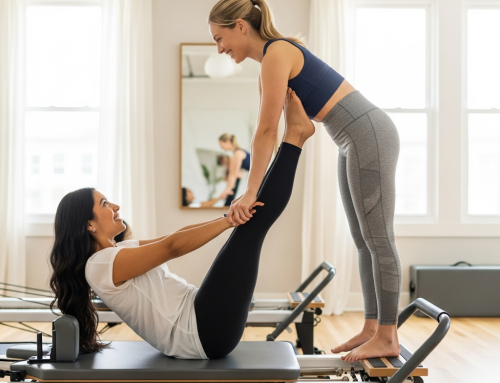
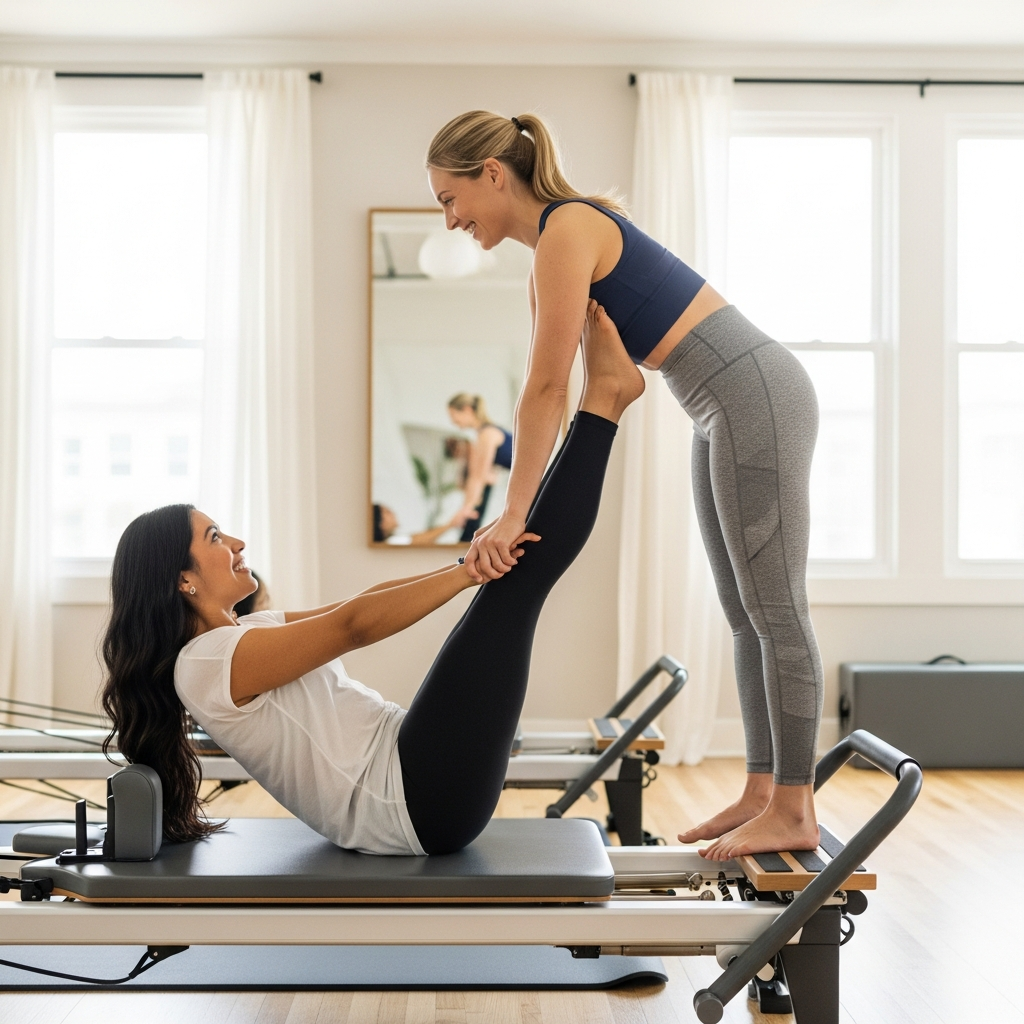
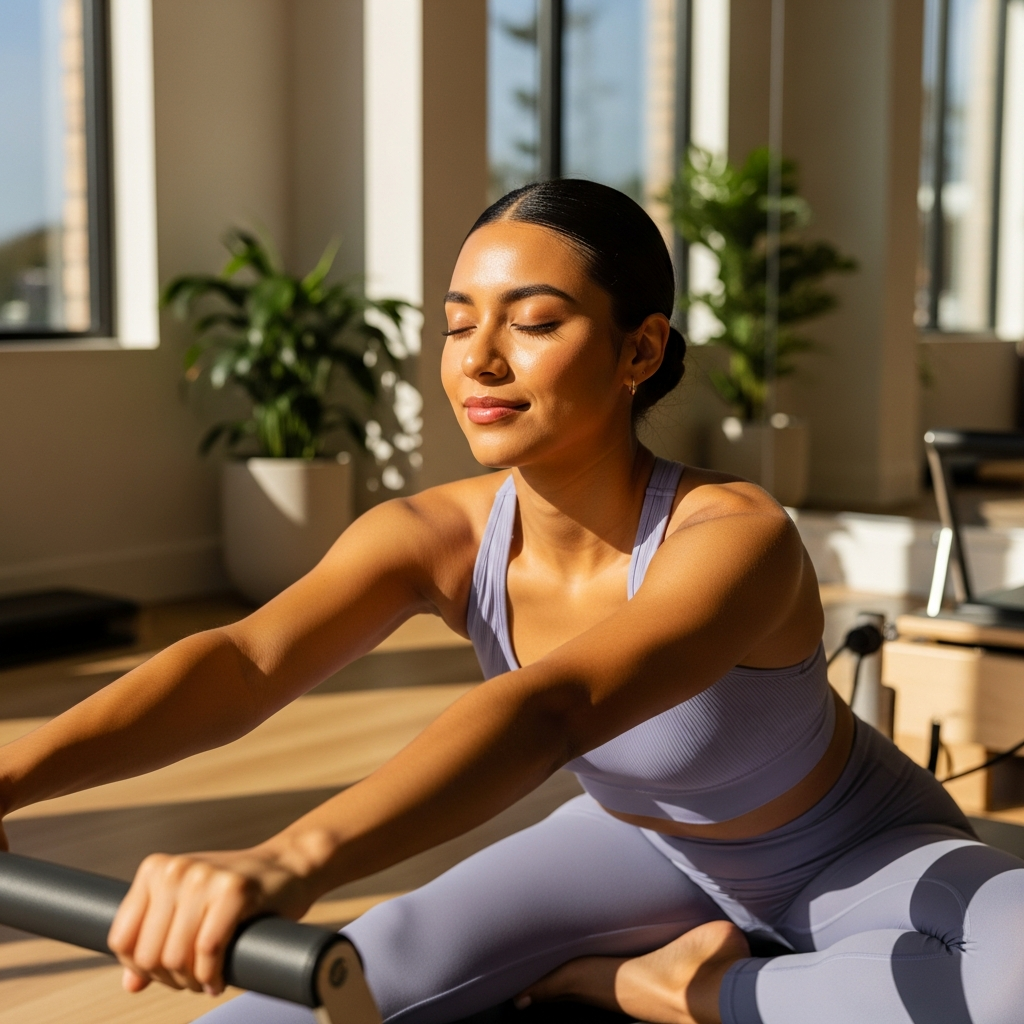
Reformer Pilates uses this fascinating contraption that looks like a cross between a bed and a torture device (don’t worry, it’s not as scary as it looks). The reformer uses springs and pulleys to create resistance – think of it as having a very sophisticated workout buddy who’s always there to help or challenge you, depending on what you need.
Actually, that reminds me… a lot of people think reformer classes are automatically “better” or “harder,” but that’s not really true. It’s more like comparing a bicycle to a car – they’ll both get you where you’re going, just in different ways.
Classical vs. Contemporary: The Great Pilates Divide
Okay, this is where things get a bit… well, passionate in the Pilates world. And honestly? It can feel overwhelming when you’re just trying to find a good class.
Classical Pilates sticks closely to Joseph Pilates’ original method. Think of it as the original recipe – no substitutions, no modern tweaks. The order of exercises follows a specific sequence, and there’s a real emphasis on precision. Some people love this structure; others find it a bit rigid.
Contemporary Pilates takes those foundational principles and… well, it gets creative. Instructors might incorporate modern understanding of anatomy, add variations for different fitness levels, or blend in elements from physical therapy or other movement practices. It’s like taking grandma’s famous recipe and updating it for today’s dietary needs.
Neither approach is wrong – it’s really about what resonates with you. Some folks thrive on the tradition and consistency of classical. Others appreciate the adaptability of contemporary methods.
The Certification Question (It’s More Complicated Than You’d Think)
Here’s where I need to be honest with you: the world of Pilates certifications is… a lot. There’s no single governing body, so you’ll see instructors with different credentials from various schools and organizations.
Some of the well-respected certification programs require hundreds of hours of training – we’re talking months of intensive study. Others might be weekend workshops. And then there are instructors who’ve been teaching for decades but might have different credentials than someone who just graduated from a comprehensive program.
It’s kind of like asking which cooking school makes the best chefs. The paper matters, but so does experience, natural talent, and – this is crucial – whether they can actually connect with their students.
Finding Your Pilates Personality Match
This might sound touchy-feely, but hear me out: the instructor’s teaching style might matter more than their specific certification or the exact type of Pilates they teach.
Some instructors are detail-oriented coaches who’ll adjust your position three times during one exercise. Others focus more on the flow and feeling of movement. Some use lots of anatomical terms (which can be helpful if you’re into that), while others rely on imagery and metaphors.
The best instructor for you? The one who makes you feel challenged but not overwhelmed, corrected but not criticized, and – this is key – actually excited to come back next week.
Start with a Trial Class (Or Three)
Here’s what most studios won’t tell you upfront – that first class is basically a blind date. You’re both trying to figure out if this is going to work. But honestly? One class isn’t enough to know if you’ve found your fitness home.
Ask about trial packages. Many Grand Prairie studios offer three-class deals that give you a real taste of their teaching style, equipment quality, and – this is crucial – how you feel walking out the door. Some days you’ll be energized, others you might feel like you got hit by a very polite truck. That’s normal… but you should never feel ignored or overwhelmed.
Check the Instructor-to-Student Ratio
This one’s huge. If there are twelve people crammed into a reformer class with one instructor, you’re basically paying for expensive group therapy with springs attached.
A good reformer class? Six people max. Mat classes can handle a few more, but even then, eight to ten is the sweet spot. You want your instructor actually seeing what you’re doing – catching that shoulder that’s creeping up to your ear, noticing when your form starts falling apart during the challenging bits.
Equipment Quality Matters More Than You Think
Those reformers aren’t just fancy torture devices (though they can feel like it). Walk around the studio before your first class. Do the machines look well-maintained? Springs should move smoothly, carriage shouldn’t sound like it needs WD-40.
Here’s a insider tip: check the foot straps. If they’re cracked, fraying, or look like they’ve seen better decades, that tells you something about how the studio maintains their equipment. Good studios replace these regularly because… well, nobody wants a foot strap snapping mid-exercise.
Ask About Class Progression and Modifications
Every body is different – stating the obvious, I know, but you’d be surprised how many studios treat everyone like they’re training for Cirque du Soleil. A quality instructor should be asking about injuries, limitations, or concerns before class starts.
Watch how they handle modifications during your trial. Do they offer alternatives for tricky moves, or do they just say “do your best” and move on? You want someone who can scale exercises up *or* down depending on what your body needs that day.
The Vibe Check Is Real
This might sound touchy-feely, but the studio atmosphere matters tremendously. Are people chatting before class, or does it feel like a library? Is the front desk friendly when you have questions, or do they act like you’re interrupting their day?
Some people thrive in ultra-serious, boot-camp-style environments. Others need encouragement and gentle guidance. There’s no wrong preference – just make sure the studio’s personality matches yours. You’re more likely to stick with something that feels welcoming.
Pricing Transparency (And Hidden Fees)
Ah, the money talk. Most studios in Grand Prairie range from $20-35 per class, with package deals bringing costs down. But here’s where things get sneaky…
Ask about cancellation policies upfront. Some places require 24-hour notice, others want 12 hours. Miss the deadline? You might lose that class credit entirely. Also check about freezing memberships – life happens, and a good studio understands that.
Watch out for “promotional” packages that automatically renew. Read the fine print. Actually read it. I know, boring, but you don’t want to discover you’re locked into a year-long commitment when you thought you were trying a month.
Location and Schedule Flexibility
This seems obvious until you’re three weeks in and realize the 6 AM class sounded great in theory but feels impossible in practice. Look at their full schedule – do they offer times that actually work with your life?
Consider traffic patterns too. That studio might be close to home, but if it takes thirty minutes to get there during rush hour, you’ll start making excuses. Trust me on this one.
The Final Reality Check
After a few classes, ask yourself: Are you looking forward to going back? Do you feel stronger, more flexible, or at least like you’re moving in the right direction?
Sometimes the “perfect” studio on paper just doesn’t click, and that’s okay. Your body will tell you what works – you just have to listen to it.
When Your Body Doesn’t Cooperate (Yet)
Let’s be real – that first Pilates class can feel like trying to pat your head and rub your belly while solving calculus. Your instructor makes it look effortless, demonstrating a move that seems simple enough… until you try it and suddenly your core feels like jello and your legs are doing their own thing entirely.
Here’s what actually happens: Pilates wakes up muscles you forgot you had. Those deep stabilizers that have been napping while your bigger muscles did all the work? They’re suddenly expected to show up for duty. It’s like asking someone who’s been sitting at a desk for years to run a marathon – things are going to feel wobbly at first.
The solution isn’t to push through or pretend you’ve got it. Find instructors who understand this learning curve. Good teachers will offer modifications for literally everything – and I mean everything. Can’t hold a plank? Try it on your knees. Struggling with the hundred? Keep your legs bent. The goal isn’t to look like everyone else in class; it’s to work within your body’s current capabilities while gradually expanding them.
The Intimidation Factor (And Why Everyone Else Looks So Put-Together)
Walk into some Pilates studios and you might feel like you’ve accidentally wandered onto the set of a fitness magazine. Everyone’s wearing matching athletic wear, they know exactly which spring tension to use, and they’re casually chatting about their “reformer routines” like it’s no big deal.
Here’s the thing nobody talks about – most of those people were exactly where you are now at some point. The woman who looks like she was born to do the teaser? She probably couldn’t touch her toes when she started. That guy who flows through the exercises like water? He likely spent his first month figuring out which way was up on the reformer.
Look for studios that feel welcoming to beginners. You’ll know them when you see them – the front desk staff takes time to explain things instead of rushing you through, there’s a mix of body types and ages in classes, and instructors check in with new students without making a big show of it. Some studios even offer “Absolute Beginner” workshops where everyone’s in the same boat.
The Equipment Overwhelm
Reformers, Cadillacs, towers, chairs… walking into a fully equipped Pilates studio can feel like entering a medieval torture chamber designed by someone with a PhD in engineering. All those springs, pulleys, and moving parts – it’s enough to make you want to back away slowly.
I’ve seen people stand frozen next to a reformer, afraid to touch anything because they’re convinced they’ll break something or launch themselves across the room. (Though honestly, that mental image always makes me chuckle – reformers are pretty forgiving, actually.)
Start with mat classes if the equipment feels overwhelming. There’s absolutely nothing wrong with building your foundation on the mat first. You’ll learn the fundamental movements, understand what your body’s supposed to be doing, and develop that mind-muscle connection without worrying about spring tensions and carriage positions.
When you do move to equipment, ask for a quick orientation. Most studios are happy to spend a few minutes showing you the basics – how to adjust the foot bar, where the springs go, what all those straps are for. It’s not a sign of weakness; it’s smart preparation.
The Scheduling Juggling Act
This one’s particularly brutal in Grand Prairie, where traffic can turn a 15-minute drive into a 30-minute ordeal… especially if you’re trying to make that 6 PM class after work. You sign up with the best intentions, then life happens – meetings run late, kids need pickup, or you’re just too wiped out to contemplate coordinating your limbs in complex patterns.
Look for studios with flexible policies. Some allow you to book and cancel online up to a certain point. Others offer package deals that don’t expire quickly – because let’s face it, some months you’ll make it to class twice a week, and others you’ll be lucky to show up twice total.
Consider studios with multiple locations or online options too. Having backup plans means you’re less likely to throw in the towel when your regular routine gets disrupted. And trust me, it will get disrupted – that’s just life being life.
The key is finding a place that works with your reality, not against it.
Setting Your Expectations: What Pilates Really Feels Like
Let’s be honest here – if you’re expecting to walk out of your first Pilates class feeling like a graceful swan, you might be in for a surprise. More likely? You’ll discover muscles you forgot you had, and they’ll be having a little chat with you the next day.
That’s completely normal. Actually, it’s a good sign.
Most people feel a bit wobbly after their first few sessions. Your core might shake during a simple exercise that looks effortless when the instructor demonstrates it. You might struggle to keep up with the breathing patterns while trying to figure out which way your leg is supposed to move. This isn’t failure – it’s your body learning a completely new language.
The real changes? They take time. We’re talking months, not weeks. Your posture might start improving after about 6-8 weeks of consistent practice (that’s 2-3 times a week, by the way – once weekly won’t cut it). Strength gains become noticeable around the same timeframe, but the deep core stability that Pilates is famous for… that’s more of a 3-6 month development.
I know, I know – patience isn’t exactly our strong suit in a world of quick fixes and instant everything.
Your First Month: The Reality Check
Week one through four is all about survival and basic coordination. You’re not trying to perfect anything yet – you’re just getting familiar with the movements and the studio environment. Some days you’ll feel strong, other days you might feel like your body forgot everything from the previous session.
This is where that instructor relationship we talked about earlier becomes crucial. A good teacher will check in with you, modify exercises when you need it (and yes, you will need modifications), and remind you that everyone was a beginner once.
Don’t be surprised if you feel more tired than energized initially. Your body is working in new ways, creating new neural pathways. Think of it like learning to drive – remember how exhausting those first few lessons were, even though you were just sitting in a car?
Building Your Practice: Months Two and Three
Here’s where things start getting interesting. You’ll begin to feel the exercises in your body rather than just going through the motions. That whole “powerhouse” concept – the idea that all movement initiates from your core – starts making sense instead of sounding like mystical fitness jargon.
You might find yourself automatically engaging your core when you’re walking to your car or reaching for something on a high shelf. That’s your body applying what it’s learned. Pretty cool, right?
This is also when you might hit your first plateau. Don’t panic. Plateaus are normal – they’re actually your body consolidating the progress you’ve made. Keep showing up consistently, and you’ll break through.
Beyond the Basics: Months Three to Six
If you’ve stuck with it this long, congratulations – you’re officially past the honeymoon phase and into real relationship territory with Pilates. Your body starts craving the sessions instead of dreading them.
This is when you might consider advancing to intermediate classes or trying different styles within your studio. Maybe you started with mat classes and you’re ready for reformer work, or vice versa. Your instructor can guide these transitions – don’t feel pressured to advance faster than feels right for your body.
Making It Sustainable: Your Long-Term Strategy
Here’s the thing about Pilates – it’s not a sprint, it’s more like… well, it’s like tending a garden. You show up regularly, you’re consistent with your care, and over time you see the results of that steady attention.
Plan for 2-3 sessions per week if you want real progress. Yes, that’s a time commitment. But think about it this way – that’s maybe 3-4 hours out of your entire week dedicated to feeling better in your body.
Cost-wise, budget for this as an ongoing investment rather than a short-term experiment. Most studios offer package deals that make regular attendance more affordable than drop-in rates. If budget’s tight, look for community classes or newer instructor training programs that often need practice students.
The studios with good retention rates? They’re usually doing something right. Ask about their community – do people stick around for years, or is there constant turnover? Long-term practitioners are a good sign that the instruction is solid and the environment supportive.
Remember, you’re not just signing up for exercise classes. You’re investing in how your body feels when you get out of bed each morning, how you carry yourself through your day, and how you move through the world.
You know what? Finding the right Pilates class doesn’t have to feel like solving a puzzle with half the pieces missing. Sure, there are a lot of moving parts – the instructor’s experience, class size, studio atmosphere, equipment quality – but when you break it down, it really comes down to one thing: finding a place where you feel comfortable enough to focus on getting stronger.
And here’s something I’ve learned after years of helping people navigate their wellness choices… that “gut feeling” you get when you walk into a studio? Trust it. Your body knows when it feels safe to be challenged. It knows when an instructor genuinely cares about your progress versus just going through the motions. You’ll sense whether other students are there to support each other or just check another workout off their list.
The beautiful thing about Pilates is that it meets you exactly where you are. Whether you’re dealing with back pain that’s been nagging you for months, trying to rebuild strength after an injury, or simply wanting to feel more confident in your own skin – there’s a class structure and instructor style that’ll work for you. Maybe you thrive in smaller, more intimate settings where the instructor can really watch your form. Or perhaps you prefer the energy of a larger group class where you can blend in while you’re still figuring things out.
Don’t get caught up in the idea that you need to be “ready” for Pilates, either. I hear this all the time – people thinking they need to get in shape before they can start getting in shape. That’s like saying you need to be clean before you take a shower! The whole point is that Pilates will help you build that foundation of strength and mobility you’re looking for.
One last thought… and this might sound a bit unconventional coming from someone in the wellness field – it’s okay to shop around. You wouldn’t buy the first car you test drove, right? Take advantage of trial classes, ask questions that matter to you, and pay attention to how you feel walking out of each studio. Your future self will thank you for taking the time to find the right fit rather than settling for “good enough.”
The thing is, when you’re working toward any health goal – whether it’s managing your weight, building strength, or just feeling better in your body – having the right support system makes all the difference. And sometimes that means having someone in your corner who understands not just the physical aspects of wellness, but the emotional and practical challenges too.
If you’re feeling a bit overwhelmed by all the options out there, or if you’d like to chat about how Pilates might fit into your broader wellness goals, I’m here. Really. Not to sell you anything or push you in any particular direction – just to help you think through what might work best for your life right now.
You can always reach out to our team for a conversation about where you are and where you’d like to be. Sometimes it just helps to talk it through with someone who gets it, you know?