Wedgewood Pilates Classes: How to Get Started
You’re scrolling through Instagram again, aren’t you? There’s another impossibly graceful person flowing through some elegant movement that looks like a cross between ballet and… well, you’re not quite sure what. The caption says something about Pilates, and honestly? You’ve been curious for months now.
Maybe it started when your back began protesting after those long days hunched over your laptop. Or perhaps it was that moment when you realized you got winded walking up two flights of stairs – when did that happen, exactly? Could’ve been when your friend Sarah mentioned how much stronger she feels since starting her Pilates practice, or when you caught yourself in a mirror and thought, “When did my posture get so… slouchy?”
Here’s the thing about Pilates – and specifically about getting started at Wedgewood Pilates – it’s not what you think it is.
I know, I know. You probably imagine rooms full of impossibly flexible people who’ve been doing this since they were five years old. You’re picturing yourself struggling through movements that everyone else makes look effortless while trying not to fall off some medieval-looking contraption called a Reformer.
But that’s not how this works. Not at all.
The truth is, most people who walk through those doors for the first time are exactly where you are right now. They’re dealing with tight shoulders from stress, lower backs that ache more than they should, or bodies that just don’t move the way they used to. Some are recovering from injuries. Others are finally ready to do something kind about their relationship with movement after years of punishing gym sessions that left them feeling worse, not better.
What makes Wedgewood Pilates different – and why I’m genuinely excited to walk you through getting started – is how they approach beginners. They actually get it. The instructors there understand that your body has a story, and they’re not trying to erase that story or pretend it doesn’t matter. Instead, they work with where you are right now.
You might be wondering if you need to be flexible already (nope), if you’ll be embarrassed by how out of shape you are (definitely not – everyone’s focused on their own practice), or whether Pilates will actually help with whatever’s bothering you physically. These are completely normal concerns, and honestly? They’re exactly the kinds of questions I had before my first class too.
See, Pilates isn’t really about becoming a pretzel-flexible Instagram star (though if that’s your goal, no judgment). It’s about building the kind of strength that actually serves your daily life. The kind that helps you pick up your groceries without wincing, or sit at your desk without your shoulders creeping up toward your ears, or sleep through the night without your lower back staging a revolt.
The beautiful thing about starting at Wedgewood is that they’ve figured out how to make something that can seem intimidating feel… accessible. Their beginner programs aren’t dumbed-down versions of the “real” thing – they’re carefully designed progressions that meet you where you are and build from there.
And let’s be honest about something else – you don’t need to commit to becoming a Pilates devotee to benefit from this. Maybe you try it for a few weeks and decide it’s not your thing. But maybe – and this happens more often than you’d think – you discover that this is exactly what your body has been asking for.
What you’re about to learn isn’t just the logistics of signing up for your first class (though we’ll definitely cover that). We’re going to talk about what to actually expect when you walk in, how to choose the right starting point for your body, what to wear (spoiler: it’s simpler than you think), and how to navigate those first few sessions when everything feels new and slightly awkward.
Most importantly, we’re going to address the real stuff – the fears, the doubts, the practical concerns about cost and time and whether this is worth trying when you’ve got a million other things on your plate.
Because here’s what I’ve learned: the hardest part isn’t the Pilates itself. It’s just showing up for that first class.
What You Really Need to Know About Wedgewood’s Approach
What Exactly Is Pilates, Anyway?
You’ve probably heard people rave about Pilates – maybe your neighbor who suddenly has amazing posture, or that friend who swears it changed her life. But if you’re like most people, you’re not entirely sure what it actually *is*. Don’t worry… we’ve all been there.
Think of Pilates as strength training’s more mindful cousin. While traditional workouts often focus on moving heavy things from point A to point B, Pilates is more like learning to conduct an orchestra – every muscle has a role, and the magic happens when they all work together in perfect harmony.
Joseph Pilates (yes, that was his actual name) developed this method nearly a century ago. He was kind of a Renaissance man – boxer, gymnast, bodybuilder – who got obsessed with the idea of total body conditioning. What he created was this unique blend of strength, flexibility, and mental focus that… well, honestly, it’s hard to explain until you experience it yourself.
The Core Truth (And Why Everyone Gets This Wrong)
Here’s where things get a bit confusing. Everyone talks about Pilates being a “core workout,” and technically that’s true. But when most people hear “core,” they picture endless crunches and six-pack abs. That’s like saying a car is just an engine – technically accurate but missing the bigger picture.
Your core in Pilates terms is more like the foundation of a house. It includes your deep abdominal muscles, sure, but also your back muscles, pelvic floor, diaphragm… basically everything that keeps you stable and upright. It’s less about looking good in a bikini (though that can happen) and more about moving through life without your back screaming at you.
I always tell people to think of their core like a natural corset – not the restrictive Victorian kind, but an internal support system that holds everything together while still allowing you to breathe and move freely.
Mind-Body Connection: Not as Woo-Woo as It Sounds
Now, this is where some people start rolling their eyes. The whole “mind-body connection” thing can sound pretty New Age-y, but stay with me here. It’s actually quite practical.
In most workouts, you might zone out – watch TV, listen to podcasts, let your mind wander while your body goes through the motions. Pilates? Not so much. You’re constantly thinking about how you’re moving, where you feel the work, what muscles you’re engaging. It’s like the difference between driving on autopilot versus navigating a tricky parking garage – suddenly you’re *present* in your body.
This isn’t about chanting or crystals… it’s about developing what I like to call “body intelligence.” You start noticing when your shoulders creep up to your ears during stress, or how you’re favoring one side when you walk. Pretty useful stuff, actually.
The Equipment Question (It’s More Fun Than It Looks Scary)
Walk into a Pilates studio and you might feel like you’ve stumbled into some medieval torture chamber. All those springs and pulleys and contraptions that look vaguely intimidating… what’s that about?
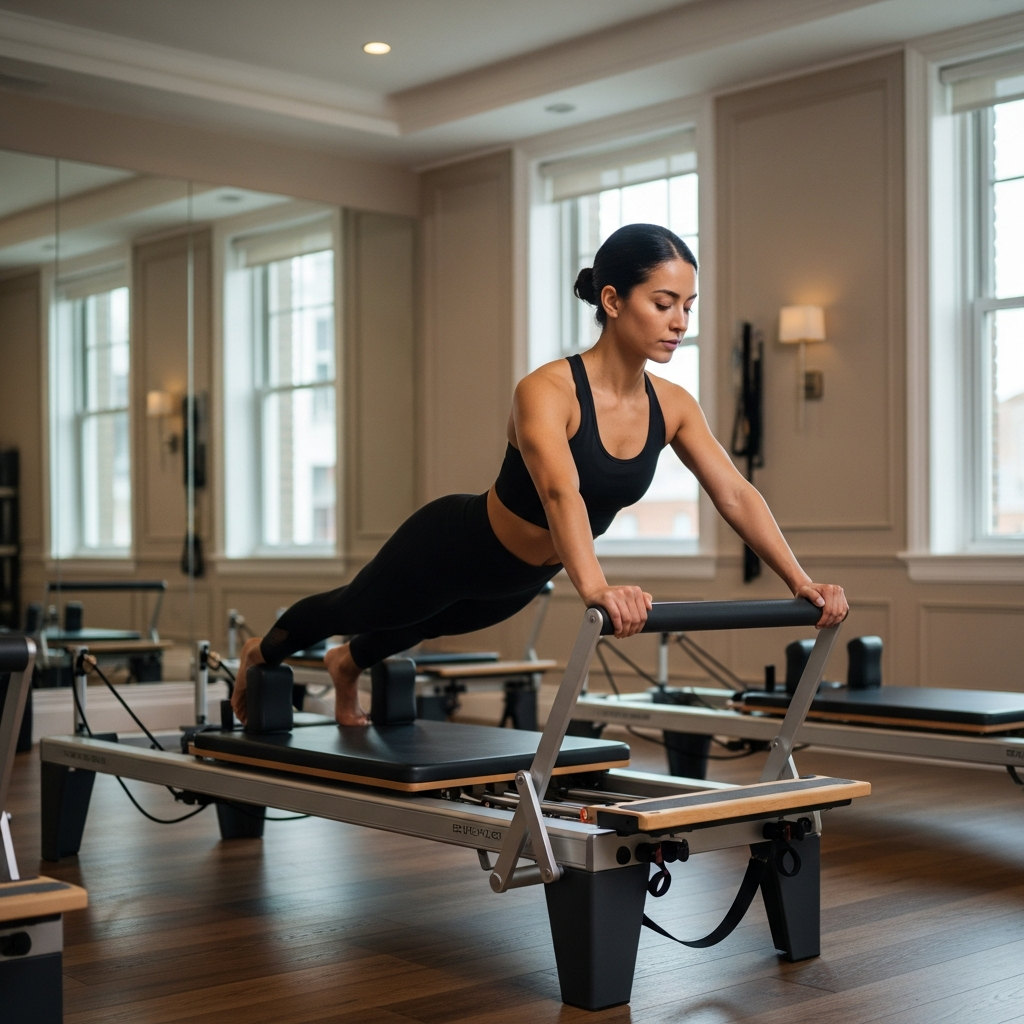
The main piece of equipment – the Reformer – is actually genius in its simplicity. Imagine a bed that slides back and forth on tracks, with springs providing resistance. It sounds weird, but those springs are like having a really smart workout partner who knows exactly how much help or challenge you need at any given moment.
The beauty of the spring system is that it works with your body rather than against it. Unlike lifting weights where gravity always pulls down, springs can provide resistance in any direction. Need help standing up? The springs can assist. Want more challenge? They’ve got you covered there too.
Mat vs. Equipment: What’s the Real Deal?
Here’s something that confuses a lot of people: you can do Pilates on just a mat, or you can use all that fancy equipment. So which is “real” Pilates?
Both, honestly. Mat Pilates is like playing acoustic guitar – stripped down to the essentials, relying on your body weight and gravity for resistance. Equipment Pilates is more like having a full band – more options, more support, but also more complexity.
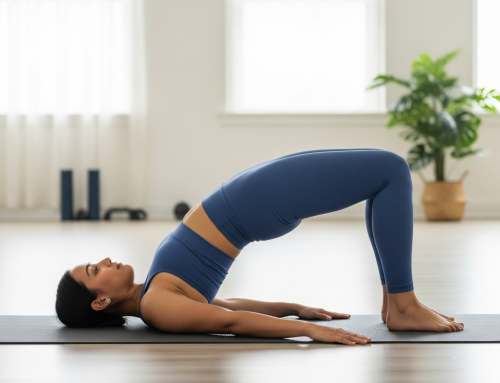
Mat classes are great for beginners because there’s less to figure out. No springs to adjust, no moving parts – just you, the mat, and gravity. But don’t let the simplicity fool you. Some of the most challenging Pilates exercises happen on the mat, where you can’t rely on springs or straps for assistance.
The equipment, on the other hand, can make certain movements more accessible while making others incredibly challenging. It’s like having training wheels and rocket boosters all in one system.
What to Actually Bring (And What to Skip)
Here’s the thing – most studios tell you to “bring comfortable clothes and water,” which is about as helpful as saying “breathe while exercising.” Let me give you the real scoop.
You’ll want form-fitting clothes, but not yoga-tight. Think fitted t-shirt and leggings that won’t ride up when you’re doing leg circles. I learned this the hard way during my first class when my baggy shorts kept getting caught on the reformer springs… not my most graceful moment.
Skip the fancy grip socks for your first class – seriously. The studio probably has them for rent (usually $3-5), and you’ll want to try different brands before investing. Some people swear by Bombas, others prefer Barre3’s thicker sole. It’s like finding the perfect jeans – very personal.
Water bottle? Absolutely. But here’s what they don’t tell you: bring one with a straw or sport cap. You’ll be lying flat, sideways, upside down – trying to drink from a regular bottle opening while inverted is… well, let’s just say it’s not happening.
Decoding the Class Schedule Like a Pro
Those class names aren’t just fancy marketing – they actually mean something specific. “Beginner” or “Intro” classes move slower and focus on form. Perfect for getting your bearings.
“Mixed Level” sounds approachable, but honestly? It often means the instructor will give modifications while half the class flows through advanced sequences. You might feel a bit lost.
Here’s an insider tip: call and ask which instructor is most patient with beginners. Every studio has that one teacher who genuinely loves helping newbies figure out which end of the reformer does what. Find them. Book them. Thank me later.
Morning classes tend to be quieter and more focused – think professionals squeezing in workouts before work. Evening classes can be chattier but also more energetic. Pick based on your personality, not just your schedule.
Your First Class Game Plan
Show up 15 minutes early – not 5, not 10, but 15. You’ll need to fill out paperwork (yes, even though you probably did it online), get a quick studio tour, and adjust the equipment. Rushing in last minute puts you behind before you even start.
When the instructor asks about injuries or limitations, speak up. That tweaky lower back from sitting at your desk all day? Mention it. That shoulder that sometimes acts up? Say something. Good instructors are like movement detectives – they need all the clues to keep you safe.
Here’s something nobody tells you: it’s totally fine to just… watch… for the first few exercises. Seriously. If everyone’s moving and you’re still trying to figure out which strap goes where, just observe. The reformer isn’t going anywhere, and neither is the class.
Managing Expectations (The Real Talk)
You know how Pilates always looks so graceful and controlled in those Instagram videos? Yeah, that’s not happening on day one. Or week one, honestly.
Your legs will probably shake during simple exercises – this is completely normal. Your brain will feel like it’s trying to pat your head and rub your belly while riding a unicycle. Also normal.
The whole “mind-body connection” thing that Pilates people always talk about? It starts as more of a mind-body argument. Your brain says “lift your leg,” your leg says “which one?” and your core says “I’m out.” Give it time.
Most people feel pleasantly worked after their first class, not destroyed. If you’re hobbling to your car, something went wrong. Pilates should challenge you, not break you.
Building Your Practice Without Breaking the Bank
Look, I get it – Pilates isn’t cheap. But there are ways to make it work without eating ramen for the rest of the month.
Many studios offer new client specials – like three classes for $75 or unlimited first month deals. These are actually good investments if you’re serious about trying it out. Don’t buy a huge package right away though… what if you hate it?
Ask about class cards that don’t expire. Some studios offer 10-class packages that you can use over several months. Much more forgiving than monthly unlimited when you’re just starting out.
And here’s a secret: many studios need help with cleaning, social media, or front desk coverage in exchange for free classes. It never hurts to ask – the worst they can say is no.
The Reality Check: What Actually Makes People Want to Quit
Let’s be honest – those Instagram videos make Pilates look graceful and serene, but your first few classes might feel more like… well, like you’re trying to pat your head and rub your stomach while balancing on a tightrope. That’s completely normal, by the way.
The biggest shock? Your brain feels like it’s short-circuiting. You’re trying to breathe (apparently there’s a specific way to do this?), engage your core (where exactly IS your core?), and remember if your right leg goes up while your left arm goes… somewhere. Meanwhile, the instructor’s saying something about your powerhouse, and you’re pretty sure they’re not talking about the electrical grid.
Here’s what nobody warns you about – Pilates is as much mental as it is physical. You’re literally rewiring how you think about movement. That cognitive overload you’re feeling? It’s your brain building new pathways. Give it time.
“I Can’t Keep Up” (And Why That’s Actually Perfect)
Every single person in that room has felt like they’re drowning in modifications. The instructor says “roll down vertebra by vertebra,” and you’re thinking, “I have vertebrae? How many? Are they numbered?”
Here’s your game plan: Forget about keeping up. Seriously. Focus on doing ONE thing well each class. Maybe today it’s just breathing properly. Tomorrow, maybe you’ll nail that pelvic tilt thing everyone keeps talking about.
Most Wedgewood instructors are masters at reading the room – they know when half the class is struggling. Don’t be afraid to make eye contact when you’re confused. A good instructor will either come over or offer a clearer explanation. They’ve seen it all, trust me.
The Equipment Intimidation Factor
Walking into a Pilates studio for the first time can feel like entering a medieval torture chamber. What ARE all those springs and pulleys for? And why does that table have a tower attached to it?
The reformer – that sliding bed contraption – seems particularly menacing. You’re convinced you’ll either launch yourself across the room or get tangled in the springs like some kind of workout-themed spider web.
Reality check time: The equipment is actually designed to help you, not hurt you. Those springs? They provide resistance AND assistance. Sometimes they make exercises harder, sometimes easier. The instructors spend serious time learning how to adjust everything for different bodies and abilities.
Start with mat classes if the equipment feels overwhelming. You’ll learn the basic movement patterns and Pilates vocabulary without worrying about springs and straps. Plus, mat work is often more challenging anyway – you don’t have the machine helping you out.
The Flexibility Myth (And Why Being Stiff Might Actually Help)
You know what’s funny? Some of the most flexible people struggle the most in Pilates. Being bendy doesn’t equal being strong or stable. I’ve watched yoga teachers shake like leaves trying to hold a simple Pilates position because they’re finally working muscles they didn’t know existed.
If you’re on the stiffer side – welcome to your advantage. You’ll probably feel the work more quickly and see strength gains faster. That tight hip flexor that makes you curse every morning? Pilates is going to become your new best friend.
The solution isn’t stretching more (shocking, I know). It’s building strength through your available range of motion first. Flexibility without strength is just… floppy. And nobody wants to be floppy.
When Your Body Rebels in Weird Ways
Two weeks in, you might notice you’re sore in places you forgot existed. Your ribs hurt. Your feet are tired. You’re walking differently, and you’re not sure if that’s good or concerning.
This is your body reorganizing itself – think of it like renovating a house while you’re still living in it. Things get messy before they get better. You might feel less coordinated for a while, or notice that your usual workouts feel different.
Listen to your body, but don’t panic at every sensation. Muscle fatigue in new places? Normal. Sharp pains? Time to talk to your instructor. The key is learning the difference between “good” discomfort (muscles working) and “bad” discomfort (something’s wrong).
Most people need about 6-8 classes before things start clicking. Some need more, some less. Your timeline isn’t everyone else’s timeline – and that’s exactly as it should be.
What to Expect in Your First Few Classes
Let’s be honest – your first Pilates class might feel like you’re learning a foreign language while trying to balance on one foot. And that’s completely normal.
You’ll probably spend the first session figuring out which way is “neutral spine” (spoiler alert: it’s not as obvious as it sounds) and wondering why everyone else seems to know instinctively how to “engage their powerhouse.” Don’t worry… we’ve all been there. Even that person who looks like they were born doing the hundred? They once stared blankly at an instructor too.
Most people start feeling more comfortable around the third or fourth class. That’s when the basic movements begin clicking, and you stop feeling like you need a translator for every cue. By week six or eight, you’ll probably catch yourself naturally pulling your shoulders away from your ears – which, honestly, is a pretty big win in today’s hunched-over-our-phones world.
Timeline Reality Check
Here’s what actually happens (not the Instagram version)
Weeks 1-2: You’re learning the basics and probably feeling muscles you forgot existed. Your coordination might feel… well, let’s just say “developing.” This is normal. Really normal.
Month 2: Things start flowing a bit better. You’re not constantly looking around to see what everyone else is doing. The breathing patterns make more sense.
Month 3: This is often when people have their “aha” moment. Suddenly that mind-body connection everyone talks about isn’t just wellness buzzwords – it’s actually happening.
Months 3-6: You’ll notice real changes in how you move throughout your day. Better posture, less back pain, maybe even improved balance when you’re rushing to catch the bus.
The thing is, Pilates isn’t a quick fix – and honestly? That’s part of what makes it so effective. It’s building something sustainable, not just burning calories for an hour.
Building Your Routine (Without Overwhelming Yourself)
Most instructors will tell you twice a week is ideal, but let’s be realistic about your actual life. If you can consistently show up once a week, that’s infinitely better than planning for three sessions and then feeling guilty when life gets in the way.
Start with what feels manageable. Maybe that’s one class a week for the first month. Or perhaps you’re excited enough to jump in with two sessions right away. Trust your instincts here – you know your schedule and energy levels better than anyone.
Some people love the accountability of the same class time each week. Others prefer mixing it up… Tuesday morning one week, Saturday afternoon the next. There’s no perfect formula, just what works for you.
When to Progress (And When Not To)
You might notice other people using different equipment or doing variations you haven’t tried yet. Here’s the thing – Pilates has this beautiful way of meeting you exactly where you are. Those fancy moves on the Cadillac? They’ll still be there in six months.
Your instructor will gradually introduce new challenges as your body adapts. Sometimes that means adding a prop, sometimes it’s changing your hand position to make an exercise harder, and sometimes it’s just holding a position for an extra breath or two.
Don’t feel pressured to advance quickly. I’ve seen people rush into intermediate work before their foundation was solid, and it usually leads to frustration or injury. The fundamentals in Pilates are… well, fundamental. Even advanced practitioners regularly return to basic exercises because they’re that effective.
Dealing with Doubts and Plateaus
Around week four, you might hit a wall. The initial excitement wears off, and you’re not seeing dramatic changes yet. This is so common that instructors almost expect it.
Remember – Pilates works on deep postural muscles and movement patterns that took years to develop. Your body is literally rewiring itself, which takes time. That subtle shift in how you sit at your desk? The way you don’t automatically grab your lower back when you get out of bed? Those are real changes, even if they’re not as obvious as losing ten pounds.
Moving Forward
The beautiful thing about starting Pilates is that there’s always something new to discover. Whether you stick with mat classes, eventually try equipment, or decide to explore different instructors’ styles – you’re building a practice that can evolve with you.
For now, just focus on showing up consistently and listening to your body. The rest will follow naturally.
Here’s the thing about starting something new – it always feels a bit overwhelming at first, doesn’t it? Whether you’re lacing up running shoes for the first time in years or walking into a Pilates studio wondering if you belong there. But that’s exactly where everyone begins… even the graceful instructor who makes those movements look effortless once stood exactly where you’re standing now.
What I love most about Pilates is how it meets you wherever you are. Dealing with back pain that’s been nagging you for months? There’s gentle movement for that. Wanting to build core strength after having kids? Perfect. Just need something that helps you move better and feel more confident in your body? That’s what this is all about.
You Don’t Have to Figure It Out Alone
The beautiful thing about choosing Wedgewood classes is that you’re not just signing up for workouts – you’re joining a community that actually gets it. These instructors understand that some days your hip feels tight, or your shoulder’s acting up again, or maybe you’re just feeling intimidated because it’s been forever since you’ve exercised consistently.
They’ve seen it all, honestly. The woman who hasn’t worked out since college. The guy recovering from surgery who needs to rebuild strength slowly. The busy parent who can only make it to class twice a week and feels guilty about that (spoiler alert: twice a week is fantastic).
You know what’s really encouraging? Most people find that within just a few weeks, something shifts. Not necessarily dramatic weight loss or suddenly being able to do advanced moves – though those things might happen too. It’s more like… you start noticing you’re standing taller. Or your back doesn’t ache after sitting at your desk all day. Small things that add up to feeling genuinely better in your own skin.
Taking That First Step
Look, I get it if you’re still hesitating. Maybe you’re worried about keeping up, or whether you’ll feel out of place, or if this is really the right time to start something new. But here’s what I’ve learned from talking to countless people who’ve taken this step – the “perfect” time never really comes. Life stays busy, schedules remain complicated, and there’s always something else competing for your attention.
What makes the difference is having support when you need it most. And that support doesn’t have to come from some intimidating fitness expert who makes you feel worse about yourself. It can come from someone who genuinely understands where you’re starting from and wants to help you succeed.
If you’re reading this and thinking, “Maybe this could work for me,” trust that instinct. You don’t have to commit to anything huge right away. You don’t need special equipment or perfect workout clothes or even a completely clear schedule.
What you need is just one conversation – maybe a quick call or email – with someone who can answer your specific questions and help you figure out what makes sense for your situation. Whether that’s finding the right class level, working around an old injury, or just getting a realistic picture of what to expect.
We’re here when you’re ready to take that step. No pressure, no sales pitch – just real people who want to help you feel stronger and more confident, starting exactly where you are today.