How Pilates Classes Help Grand Prairie Residents Build Consistency
You know that feeling when you sign up for a gym membership in January, go three times, and then somehow never make it back? The membership card sits in your wallet for months – maybe years – quietly judging you every time you reach for your debit card. You tell yourself you’ll go “next week” until next week becomes next month becomes… well, you know how this goes.
Most of us don’t struggle with *wanting* to get healthy. We struggle with actually showing up. Consistently. Week after week, when life in Grand Prairie is pulling you in seventeen different directions – between commuting on 360, getting the kids to their activities at Lynn Creek Park, and somehow squeezing in a real dinner before 8pm. The intention is there. It’s the follow-through that gets slippery.
Here’s what’s interesting, though. Talk to people who’ve found something they actually stick with – not for two weeks, but for months and years – and a surprising number of them aren’t running marathons or grinding through bootcamp classes. They’re doing Pilates. And when you dig into *why* they keep coming back, it’s almost never what you’d expect.
It’s Not About Willpower (Really, It’s Not)
We’ve been sold this idea that consistency is a character trait. Like some people just *have* it and others don’t. If you’ve struggled to maintain a fitness routine, maybe you’ve internalized that story about yourself – that you’re someone who starts things but doesn’t finish them. That’s a heavy thing to carry around.
But here’s a different way to look at it. Consistency isn’t something you summon from some deep reservoir of discipline. It’s something that gets *built* – through the right environment, the right structure, and honestly, the right kind of movement that your body actually wants to do again. When something doesn’t feel like punishment, you don’t have to white-knuckle your way through showing up.
Pilates, for a lot of people, turns out to be that thing.
Why Grand Prairie Specifically?
Now, you might wonder why we’re talking about this through a Grand Prairie lens – and that’s fair. But there’s something worth acknowledging about this community specifically. Grand Prairie residents are busy in a particular way. It’s a city that’s grown fast, with families and working adults who often have long commutes, real financial considerations, and not a lot of patience for fitness trends that promise everything and deliver nothing.
People here tend to be practical. They want something that works, fits into their real life – not some idealized version of it – and doesn’t require them to become a completely different person just to participate. That practicality, actually, is part of why Pilates tends to land differently here than, say, a high-intensity class that leaves you dreading your next session two days later.
What You’re Actually Going to Learn Here
In everything that follows, we’re going to get into the real mechanics of why Pilates builds consistency in ways that other fitness modalities often don’t. Not in a vague, inspirational-poster kind of way – but specifically. We’ll talk about how the low-impact nature of Pilates means your body recovers differently, so you’re not spending three days hobbling around your office after every class. We’ll get into the community aspect, because it turns out showing up for *people* is a much more reliable motivator than showing up for abs.
We’ll also look at how the gradual progression built into Pilates – the way you’re always working toward something slightly harder, slightly more refined – keeps your brain engaged in a way that flat-line routines just don’t. And we’ll be honest about the medical weight loss angle, too, because building a consistent movement practice is one of the most powerful foundations for sustainable weight management. Not because Pilates is some magic calorie-torching machine, but because consistent movement changes your relationship with your body over time.
Here’s what we’re really talking about, underneath all of it: finding something that feels less like forcing yourself and more like choosing yourself. Regularly. Without the guilt spiral when life interrupts – because it will.
If you’ve tried and “failed” at fitness routines before, none of that means what you think it means. Let’s figure out what might actually work.
Why Consistency Is Actually the Hard Part (Not the Exercise Itself)
Here’s something most fitness advice glosses over: the workout itself is rarely the problem. Most people know *how* to exercise. They’ve done it before. They’ve had good stretches – sometimes months of solid effort – and then life happened. Work got crazy, a kid got sick, motivation evaporated somewhere between Tuesday and Thursday, and suddenly it’s been six weeks since they’ve moved intentionally.
The real challenge isn’t finding an exercise that works. It’s building something that *sticks*.
This is where Pilates does something genuinely interesting, and it’s not just because of the movements themselves.
What Makes Pilates Different From Most Workouts
Pilates was developed in the early 20th century by Joseph Pilates – a guy who was, honestly, pretty ahead of his time. His core idea was that the mind and body needed to work together deliberately, not just go through motions. Every movement has a purpose. Every breath is intentional. You’re not zoning out to a podcast while your legs do something on autopilot.
That sounds intense, but here’s the thing: it actually makes the hour go faster. When your brain is engaged, you’re present. And when you’re present, you’re not watching the clock.
The method itself focuses on controlled movement, core stability, breath coordination, and building strength from the inside out – starting with the deep stabilizing muscles that most gym routines completely ignore. Think of it like renovating a house. Most workouts repaint the walls and add furniture. Pilates fixes the foundation.
The “Beginner’s Mind” Problem (And Why Pilates Solves It)
One thing that trips people up with group fitness is that terrifying moment of feeling like everyone else knows exactly what they’re doing and you’re the only confused person in the room. You know that feeling. It’s awful.
Pilates classes – especially good ones – tend to have a different culture around this. Because the exercises themselves require learning a specific technique, everyone is always somewhat in the process of figuring it out. Even people who’ve been doing it for years are still refining. There’s no point where you’ve “mastered” it and you’re just going through the motions. That’s actually counterintuitive when you first hear it, but it ends up being really motivating. You always have something to work toward.
How Your Nervous System Gets Involved
Okay, this part gets a little science-y, but stick with it because it genuinely explains a lot.
When you repeat a movement pattern consistently – especially one that requires focus and coordination – your nervous system starts to expect it. You build what exercise scientists call motor patterns, essentially grooves in your neurological pathways. This is why athletes talk about “muscle memory,” though technically it’s the nervous system doing the remembering.
The practical upshot? The more consistently you attend Pilates, the more natural the movements feel, and the more your body actually starts to *crave* the routine. It’s not willpower at that point. It’s just… what you do on Tuesday mornings.
This is a fundamentally different mechanism than forcing yourself to the gym through sheer motivation – which, let’s be honest, is an exhausting way to live.
The Role of Structure (And Why It Matters More Than You Think)
There’s a reason people brush their teeth every day without agonizing over it. It’s scheduled, it’s habitual, and the barrier to entry is basically zero. Fitness consistency works the same way when the right structures are in place.
Pilates classes provide external structure that a self-directed gym session simply can’t replicate. There’s an instructor. There’s a scheduled time. Other people are there. You signed up – maybe even paid in advance. These aren’t small things. Research on habit formation consistently shows that environmental design matters more than motivation when it comes to long-term behavior change.
For Grand Prairie residents specifically, having a class structure that fits around real life – commutes, kids, unpredictable work schedules – is often the difference between a fitness phase and an actual lifestyle shift. When the class times work and the location isn’t inconvenient, suddenly the excuses thin out considerably.
That’s not a small thing to underestimate.
Make the Class Format Work *For* Your Brain, Not Against It
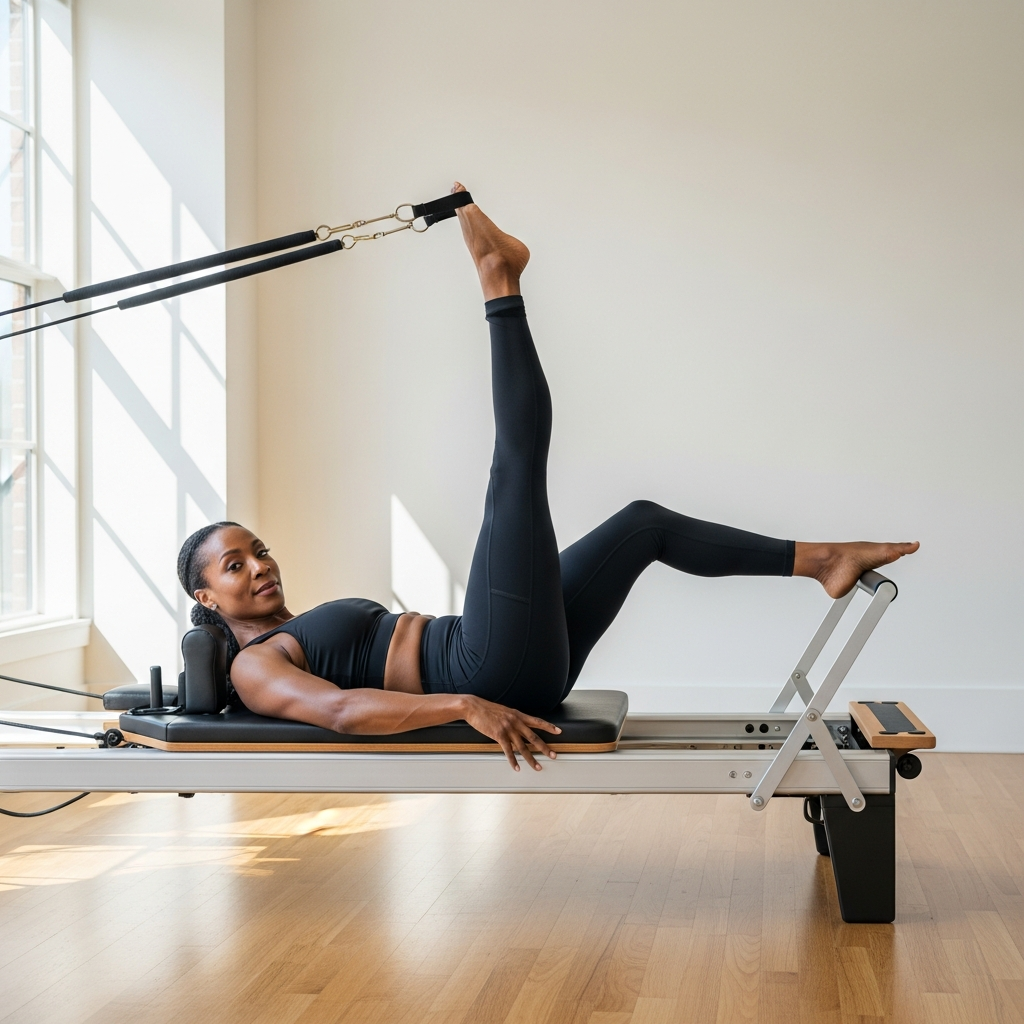
Here’s something most people don’t realize about Pilates – the structure of a class actually does a lot of the heavy lifting for you (pun intended). When you show up to a reformer class at a Grand Prairie studio, someone else has already made every decision. The music, the sequence, the timing. Your only job is to walk through the door.
And honestly? That’s the secret. Decision fatigue is real, and it kills more fitness routines than any injury ever has. So stop trying to “figure out” your workout and just… show up. Let the instructor carry that mental weight.
To make this work practically, pick one class time and treat it like a dentist appointment – non-negotiable, already on the calendar, slightly inconvenient to cancel. Tuesday evenings at 6:30pm at a studio near Carrier Parkway, for example. Same time, same place, same instructor if you can manage it. Your brain starts to automate it after about four weeks, and then it stops feeling like discipline and starts feeling like just… Tuesday.
Find Your “Accountability Anchor” at the Studio
This is something fitness apps will never tell you, because they can’t replicate it. Find one person at your regular class – a fellow student, not even necessarily a friend yet – and just… acknowledge them. Learn their name. Say “see you Thursday.” That’s it.
That tiny social thread? It’s surprisingly powerful. Suddenly you’re not just canceling a workout when you skip. You’re standing someone up. Most people will drag themselves to class on a tired Wednesday just to avoid that awkward “oh, where were you?” conversation. Use that psychological quirk to your advantage.
Grand Prairie’s Pilates community tends to be genuinely welcoming – smaller studios especially have that neighborhood gym feel where regulars look out for each other. Don’t isolate yourself in the back corner and bolt after class. Linger a little. It pays dividends in consistency you won’t find anywhere else.
Stack Pilates onto Something You Already Do
Habit researchers call this “habit stacking” and it’s genuinely one of the most underrated tricks in the book. The idea is simple – you attach a new behavior to an existing one so your brain doesn’t have to work hard to remember it.
Think about your current routine. Maybe you already pick up kids from school near SH-360 on Wednesday afternoons. Is there a studio on that route? Perfect – Pilates becomes part of that errand, not a separate thing you have to “find time for.” Or maybe you already grab coffee every Saturday morning. Book the 9am class, get coffee after. Boom. The class is now part of Saturday coffee, not in competition with it.
The specifics matter here. Don’t just vaguely think “I’ll go after work.” Decide: which exit off I-20, where you’re parking, what you’re wearing. Pre-make those micro-decisions and you remove every little friction point that gives your tired brain an excuse to bail.
Track Progress in Ways That Actually Feel Good
Here’s where a lot of people go wrong – they track weight on the scale and then feel crushed when Pilates (which builds lean muscle, remember) doesn’t move that number dramatically in week two. So they quit. Please don’t do this.
Instead, track things like: how many classes you’ve attended this month, whether you can now hold a teaser position for longer than you could three weeks ago, whether your lower back ache has quieted down. These are real wins. Write them in the notes app on your phone or grab a cheap paper journal – whatever you’ll actually use.
Actually, that reminds me – some Grand Prairie studios post monthly class attendance on their member apps. Screenshot your streak. Protect it like you’d protect a Wordle streak. It sounds silly but it genuinely works.
Give Yourself a “Restart Plan” Before You Need One
Life happens. You’ll miss a week. Maybe two. Kids get sick, work goes sideways, the car needs something expensive. This is not failure – this is just life in Grand Prairie in 2024.
The mistake people make is having no plan for the gap. So write this down somewhere: *”If I miss more than two classes in a row, I will book back in within 48 hours, no guilt, no big restart speech.”* That’s your whole policy. A quick return beats a dramatic comeback every single time.
When Life Gets in the Way (Because It Always Does)
Let’s be real for a second. Starting Pilates is the easy part. Showing up that third week when work exploded, your kid got sick, and you’re running on four hours of sleep? That’s where most people quietly disappear from class rosters.
And honestly? Nobody talks about this enough. We celebrate the success stories, but we skip over the part where everyone – including the people who eventually stuck with it – had moments where they almost quit.
So let’s actually talk about what trips people up.
The “I’ll Make Up for It Later” Trap
Missing one class turns into missing two. Two turns into three weeks. Suddenly you’re telling yourself you’ll “restart Monday” – and Monday keeps moving further away.
This is probably the most common consistency killer, and it happens because people treat their fitness routine like a bank account where you can make deposits and withdrawals whenever you feel like it. You can’t really. Consistency doesn’t work that way.
The honest solution here is to stop trying to make up for lost sessions and just… return. Walk back in. One missed class doesn’t erase your progress. Three weeks away doesn’t either, truthfully. Your body remembers more than you think. The real damage isn’t physical – it’s the story you start telling yourself about having already failed.
Scheduling Chaos Is Real, Not an Excuse
Grand Prairie residents aren’t making excuses when they say life is busy. Traffic on 360 is genuinely brutal. Kids have genuinely unpredictable schedules. Work genuinely doesn’t respect your 6pm class reservation.
What actually helps here – and this feels almost too simple – is treating your Pilates class exactly like a doctor’s appointment. You don’t blow off your doctor because something came up. You reschedule, but you don’t just… not go.
Book a consistent time slot each week instead of hunting for openings as they come. Early morning classes before the day develops opinions about your schedule tend to have the best attendance rates among people who’ve figured this out. Also, having two or three time slots you could attend each week gives you flexibility without giving you an escape hatch.
The Plateau Problem Nobody Warned You About
Around weeks six through eight, something frustrating happens. Progress slows. That exhilarating feeling of everything being new and your body responding dramatically? It quiets down. You start wondering if Pilates is “working” anymore.
This is completely normal and almost everybody hits it. It’s also when the dropout rate spikes.
Here’s what’s actually happening – your body has adapted to the baseline work, which is genuinely a sign of progress. The solution isn’t to quit. It’s to communicate with your instructor. A good Pilates teacher will modify your practice, increase challenge through equipment work, or shift focus to areas you haven’t been targeting. The plateau isn’t a stopping point. It’s a signal to evolve.
Feeling Behind Everyone Else in the Room
This one doesn’t get discussed openly enough. Walking into a class where everyone seems to know exactly what they’re doing while you’re quietly panicking about which way your feet should point – that’s genuinely intimidating. Some people stop coming specifically because of this.
The truth is, everyone in that room had a first class. Most of them still have moves they quietly dread. Pilates isn’t really a competitive environment the way some fitness spaces can feel, but self-consciousness doesn’t care about that.
Actually, that reminds me – this is one reason small group classes or semi-private sessions are worth considering when you’re starting out. Less visibility, more instructor attention, lower stakes emotionally.
When Motivation Vanishes Completely
Here’s something counterintuitive: waiting until you feel motivated to go to class is a terrible strategy. Motivation follows action, not the other way around. You rarely feel like going. You almost always feel better after you’ve gone.
Build the habit architecture around something that doesn’t require motivation – a standing appointment, a class buddy who’ll notice if you’re absent, a instructor who knows your name. Accountability beats inspiration every single time.
The people who’ve been coming to Pilates consistently for years aren’t unusually disciplined or motivated. They’ve just built systems that make not going harder than going. That’s genuinely the whole secret, as unglamorous as it sounds.
What to Actually Expect in Your First Few Weeks
Let’s be honest with each other for a second. If you’ve tried to build a fitness habit before – and most of us have – you probably started strong, hit a wall somewhere around week three, and then quietly stopped going. That’s not a character flaw. That’s just how habit formation works, and Pilates is no different.
The first two weeks feel a little awkward. You’re learning how to breathe differently, how to engage muscles you’ve basically ignored your entire adult life, and how to show up somewhere new on a schedule. Your brain is doing a lot of work even when your body feels like it isn’t. Don’t mistake “this feels manageable” for “this isn’t working.” That’s actually the sweet spot.
You probably won’t feel dramatically different after one class. Or five. And that’s completely normal.
The Timeline Nobody Talks About
Here’s a more realistic picture than what most fitness marketing will tell you.
Weeks 1-3: You’re mostly just getting familiar. You’re figuring out parking, which instructor you click with, where to put your mat, how to modify that one move that your hips absolutely refuse to cooperate with. This phase feels slow. It is slow. That’s fine.
Weeks 4-6: This is where something quiet shifts. You might notice you’re sleeping a little better, or that you caught yourself standing up straighter while waiting in line at the grocery store. The changes at this stage are subtle – easy to dismiss, honestly – but they’re real. Your nervous system is learning new patterns.
Months 2-3: Now we’re getting somewhere. Most people start feeling noticeably stronger in their core, more mobile in their hips and spine, and – this is the big one – more *likely to show up*. The habit is starting to stick because your brain has started associating the class with feeling good rather than feeling like an obligation.
Meaningful change in body composition, posture, and movement quality? That usually takes three to six months of consistent attendance. Not two weeks. Anyone telling you otherwise is selling something.
When You Miss a Week (Because You Will)
Life in Grand Prairie – or anywhere, really – doesn’t pause for your wellness goals. Kids get sick. Work gets chaotic. You’ll miss a class, then maybe two, and that little voice will start whispering that you’ve already fallen off track so why bother.
Don’t listen to it.
Missing a week doesn’t erase the neural pathways you’ve been building. It doesn’t delete the postural awareness you’ve been developing. One gap in your schedule is just that – a gap, not a failure. The research on habit formation is actually pretty clear that it’s resuming after a lapse that matters most, not maintaining a perfect streak.
Actually, this is one of the underrated advantages of a structured class environment. When you have a standing Tuesday morning slot at a studio where the instructor knows your name, coming back after a week off feels a lot easier than trying to re-motivate yourself alone in your living room.
Setting Realistic Goals for the First Three Months
Rather than fixating on a number on the scale – which is influenced by about a thousand variables that have nothing to do with how consistently you’re moving – try thinking about process goals instead.
Can you commit to two classes per week for the next six weeks? That’s it. Just show up twice a week. Don’t worry about being perfect at the exercises. Don’t stress if the person next to you seems more flexible than a freshly cooked noodle while you’re over there barely reaching your shins.
Show up. Do the work. Notice how you feel walking out.
If you’re working with a medical weight loss clinic alongside your Pilates practice, keep that team in the loop. Physical activity affects how your body responds to everything – nutrition protocols, medication, sleep – and the more context your providers have, the better they can support you.
Your Actual Next Step
Pick one class. Not a class you’ll maybe attend someday when things settle down – because things never really settle down, do they? One specific class, at one specific time, this week.
That’s it. That’s the whole plan. Everything else gets figured out from there.
Building a consistent movement habit is genuinely one of the hardest things to do – especially when life in Grand Prairie keeps throwing curveballs. Between the commutes, the family obligations, the days when motivation just… evaporates… it’s a lot to ask of yourself to show up again and again.
But here’s what’s kind of beautiful about what Pilates does for people: it doesn’t demand perfection. It just asks you to show up. And slowly, quietly, without you even fully noticing, those Tuesday and Thursday classes start feeling less like something on your to-do list and more like something you actually *want*. That shift – from obligation to anticipation – is where real, lasting change lives.
And consistency? It’s not really about willpower. (Honestly, anyone who’s told you that just hasn’t struggled enough yet to know better.) It’s about finding movement that feels good enough to return to, a community that makes you feel seen, and a structure that fits your actual life – not some idealized version of it. Pilates tends to check all three boxes in a way that, say, forcing yourself onto a treadmill at 5am probably doesn’t.
The Bigger Picture Worth Remembering
For Grand Prairie residents working toward weight loss or better health overall, Pilates doesn’t exist in a vacuum. It works beautifully *alongside* other supportive pieces – good nutrition, adequate sleep, stress management, and sometimes, medical guidance that helps you understand what your body actually needs right now. Some people find that once they’ve got their movement consistency locked in, they’re ready to look more closely at the other parts of the picture. That’s a really natural progression.
The point is, you don’t have to figure all of that out at once. Actually, please don’t try to figure all of that out at once. Start with showing up to class. Let the rest unfold.
You Don’t Have to Navigate This Alone
If you’ve been reading this and thinking *yes, but I still don’t know where to start* – that’s completely okay. That feeling is normal, and it’s not a sign that you’re doing anything wrong. It just means you might benefit from a little extra support and a clearer roadmap.
That’s exactly what we’re here for. Our team genuinely loves helping Grand Prairie residents figure out what consistency looks like *for them* – not a generic plan pulled from the internet, but something that accounts for your health history, your goals, your schedule, and yes, your real life with all its messiness.
If you’re curious about how a medically supported approach to weight and wellness could complement the consistency you’re building (or trying to build), we’d love to just… talk. No pressure, no hard sell. Just a real conversation about where you are and where you’d like to be.
Reach out to our clinic whenever you’re ready. We’re not going anywhere, and neither is our belief that you’re more capable of building sustainable habits than you probably give yourself credit for.
You’ve got this – and when the days come where it feels like you don’t, we’ve got you.