Pilates Near Me Searches: What Grand Prairie Clients Are Looking For
You know that feeling when you’re scrolling through your phone at 10pm, a little frustrated, a little hopeful, typing “pilates near me” into the search bar and then just… staring at the results? Maybe you’ve done this. Maybe you did it last Tuesday. You get a wall of options, a bunch of generic studio names, some reviews that don’t tell you much, and you’re left wondering which of these places is actually going to be worth your time, your money, and honestly – your vulnerability. Because showing up somewhere new to work on your body? That takes courage.
Here in Grand Prairie, people are searching for pilates in record numbers. And that’s not just a random stat – it reflects something real that’s shifting in how our community thinks about fitness, weight management, and feeling good in their own skin. But here’s the thing that most studios and wellness centers miss entirely: what people type into that search bar and what they’re actually hoping to find are two very different things.
“Pilates near me” sounds simple. It’s three words. But behind those three words is usually a whole story.
Maybe it’s someone who’s been told by their doctor that low-impact exercise would help with a chronic condition, and they’re finally ready to actually do something about it. Maybe it’s a busy Grand Prairie mom who has exactly 45 minutes to herself on Tuesday and Thursday mornings and needs something that fits like a puzzle piece into that window. Maybe it’s someone who’s been walking, or doing the treadmill thing, or trying to motivate themselves with workout videos that pile up on their watch-later list – and they’re ready to try something different. Something that actually sticks.
Or – and this one comes up more than people admit – maybe it’s someone who’s working with a medical weight loss program and has been told that building core strength and improving flexibility would complement their treatment plan. They’re not just looking for a “fitness class.” They’re looking for a partner in something bigger.
What’s fascinating, and what we’re going to unpack here, is that Grand Prairie clients searching for pilates tend to fall into a few distinct groups, each with their own very specific needs, hesitations, and goals. And when a studio or wellness center actually understands those needs – rather than just hoping people show up – the results are genuinely different. Better outcomes. More consistency. The kind of progress that doesn’t evaporate after six weeks.
So this isn’t just an article for pilates studios trying to decode their Google analytics (though if you’re one of them, hi, stay with us – this matters to you too). This is really for you – the person who’s been curious, maybe skeptical, maybe a little intimidated by the idea of pilates, and wants to know whether it’s actually worth looking into.
We’re going to talk about what Grand Prairie residents are really searching for when they go looking for pilates. The practical stuff, like scheduling and pricing, yes – but also the deeper things. The questions people don’t always say out loud, like “will I feel judged?” and “is this actually going to help me lose weight?” and “I have a bad back, can I even do this?”
Actually, that last one is probably the most common question we hear, and the answer might surprise you.
We’ll also get into how pilates fits into a broader wellness picture – particularly for people who are managing their weight, dealing with hormonal changes, recovering from injury, or just trying to build a sustainable movement practice that doesn’t feel like punishment. Because that matters here. Grand Prairie isn’t a city full of people who have unlimited time and perfect knees. It’s a real community with real lives, and the right pilates experience should meet people exactly where they are.
By the time you’re done reading, you’ll have a much clearer picture of whether pilates makes sense for you right now, what to actually look for when comparing your options, and – maybe most importantly – why that late-night search might be pointing you toward something genuinely worth pursuing.
Let’s get into it.
Why People Are Searching Differently Now
Something shifted in how people look for fitness help – and honestly, it happened pretty quietly. It used to be that you’d ask a friend, maybe flip through a phone book (remember those?), or just drive past a gym and think “eh, good enough.” Now? People are typing incredibly specific things into their phones while standing in their own kitchens. “Pilates near me for bad knees.” “Beginner Pilates Grand Prairie.” “Reformer Pilates classes with childcare.”
That specificity matters. It tells us something important about what Grand Prairie residents are actually hoping to find – not just a studio with equipment, but a place that gets *their* particular situation.
What Pilates Actually Is (Without the Eyeroll)
Here’s where things get a little counterintuitive, because Pilates has a bit of a branding problem. Some people picture ultra-flexible women in expensive leggings doing things that look physically impossible. Others think it’s just stretching with extra steps. Neither is really accurate.
Think of Pilates more like learning to drive a car properly – after years of just… winging it. Most of us go through daily life completely unaware of how we’re holding our bodies, compensating for old injuries, or relying on the wrong muscles to do basic things. Pilates essentially teaches you how your body was designed to move. It’s corrective. It’s intentional. And yeah, it’s harder than it looks.
The method was developed by Joseph Pilates – a fascinating guy, honestly – who originally called it “Contrology.” The whole premise was that controlled movement, focused breathing, and core stability could transform how your body functions. Not just how it looks. How it *works*.
Mat vs. Reformer: The Question Everyone Has
This comes up constantly, so let’s just address it. When Grand Prairie searchers type “Pilates near me,” many of them don’t even know there are fundamentally different types they might be looking for.
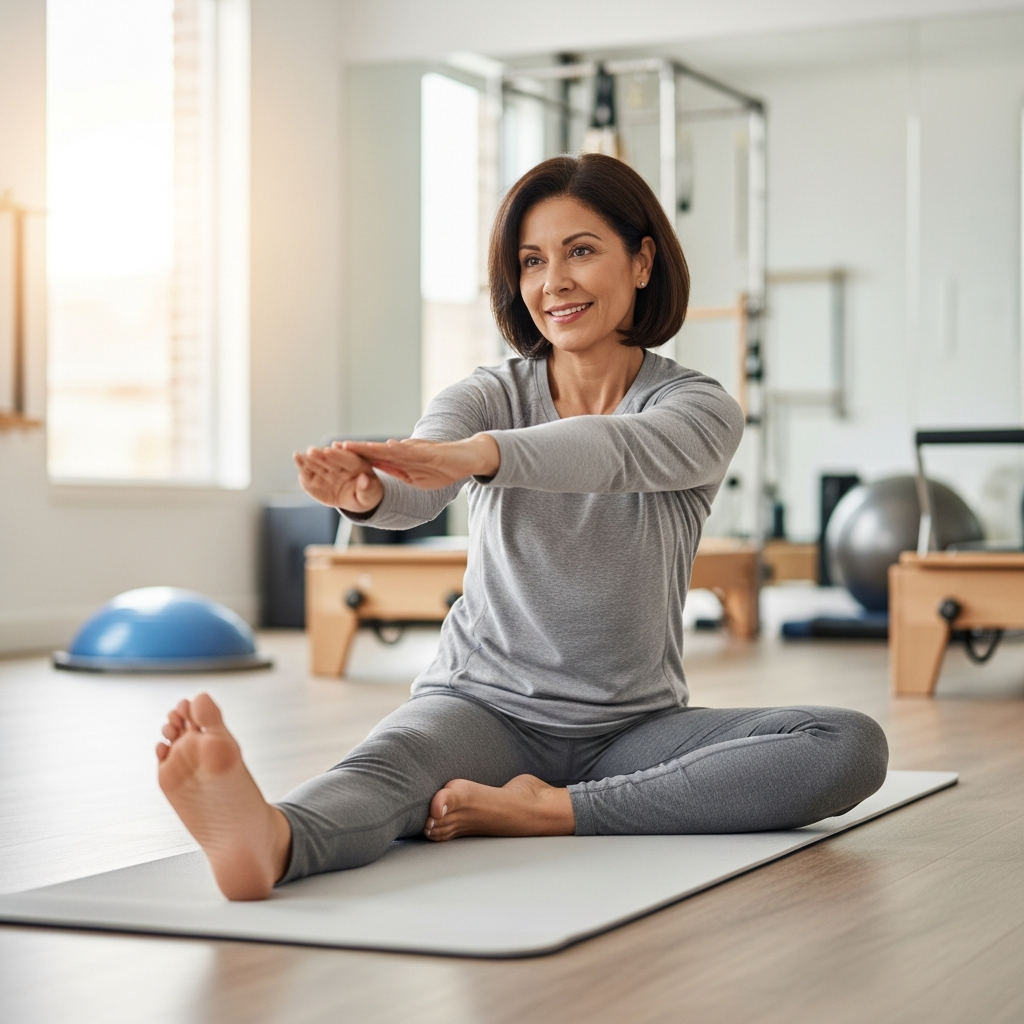
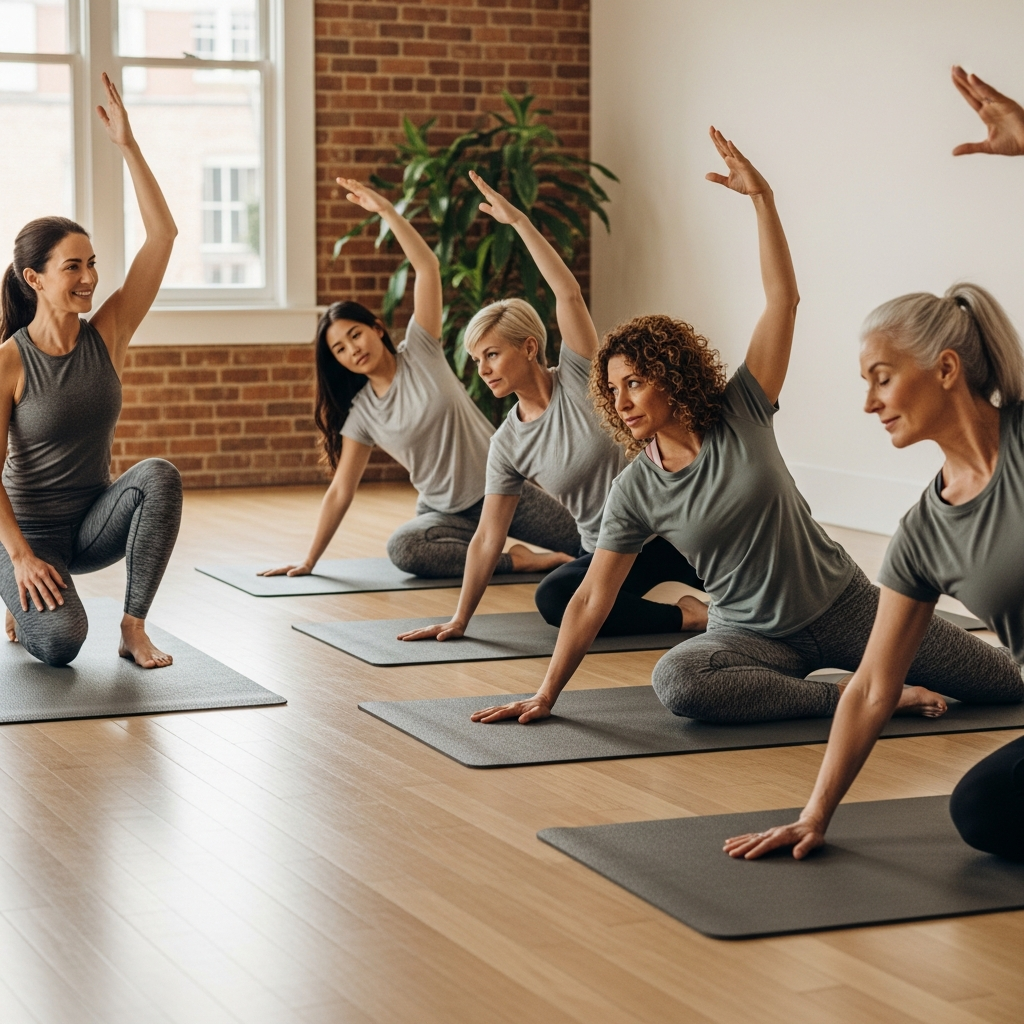
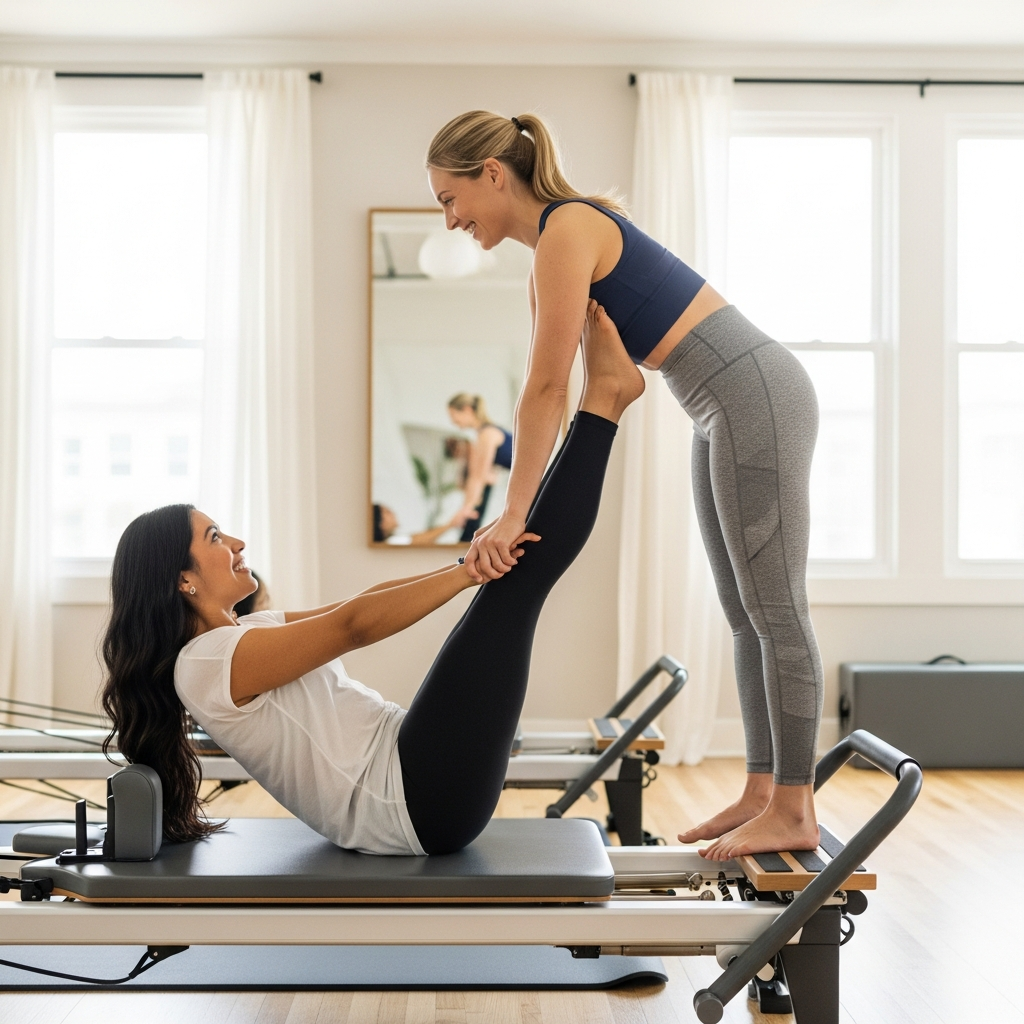
Mat Pilates is exactly what it sounds like – you on a mat, using your own bodyweight. It’s accessible, it travels with you, and a good mat class is genuinely challenging. The reformer, on the other hand, is that sliding bed-like apparatus with springs and straps that looks either fascinating or terrifying depending on your personality. The springs provide both resistance and assistance, which is actually brilliant – it means the reformer can make exercises easier *or* harder, which is why it works so well for rehabilitation and for athletes in the same breath.
Here’s the thing people don’t expect: sometimes the reformer makes exercises easier to learn at first, because the machine gives you feedback your body can actually feel. Then you add resistance and suddenly – oh. Oh, that’s a workout.
Why “Near Me” Means More Than Just Distance
This is worth sitting with for a second. When someone searches “Pilates near me” in Grand Prairie, they’re not just calculating miles on a map. Proximity is really a stand-in for a whole bundle of things they need.
They need it to fit into a Tuesday at 6pm. They need parking that won’t make them want to abandon the whole endeavor before they even walk in the door. They need a class that runs on a schedule that works around school pickup, or a shift that ends at 4, or a lunch break that’s never quite as long as it’s supposed to be. Convenience isn’t laziness – it’s the realistic difference between a habit that sticks and one that quietly dies by February.
Grand Prairie specifically sits in an interesting position geographically, sandwiched between Dallas and Fort Worth with its own distinct communities, commute patterns, and daily rhythms. What works for someone near Lynn Creek Park looks different from what works for someone closer to the 360 corridor. People know this about their own lives, even if they don’t articulate it that way when they’re searching.
The Health Piece That Often Gets Overlooked
Here’s something that surprises people: Pilates shows up repeatedly in clinical research as genuinely useful for things like chronic low back pain, posture problems, and recovery from injury. It’s not alternative medicine or wishful thinking – it’s been studied seriously enough that physical therapists frequently recommend it.
For a weight loss clinic’s clients especially, this matters. When joint pain, mobility limitations, or post-injury anxiety are part of the picture – and for so many people, they are – having a low-impact option that’s actually *effective* changes everything. It means movement becomes possible again. And possible is where everything starts.
What Grand Prairie Residents Actually Want From Pilates (And It’s Not What Studios Are Advertising)
Here’s something most Pilates studios won’t tell you upfront: the majority of people searching “Pilates near me” in Grand Prairie aren’t looking for a workout. Not really. They’re looking for a solution. A bad back. Stubborn belly fat that won’t budge no matter what they try. A knee that’s been grumpy since that incident two summers ago. The search bar is just the starting point – what people actually want is relief and results.
So if you’re hunting for the right fit, stop searching like you’re picking a gym and start searching like you’re interviewing a specialist.
How to Filter Your Search Results Like a Pro
When those studio listings pop up, most people click the one with the best photos or the most reviews. Understandable. But here’s what to actually look for first – the instructor credentials. In Texas, Pilates instructors don’t need a state license, which means the barrier to entry is… low. Like, really low.
Look specifically for instructors certified through BASI, Stott, or Peak Pilates – these programs require 500+ hours of training. A weekend certification is not the same thing. At all.
Ask these specific questions before you book a single session:
– Do you have experience with clients managing chronic pain or weight loss goals? – What’s your cancellation policy? (A studio that won’t budge on this is a red flag for customer experience overall) – Is your equipment Balanced Body or Gratz? (This matters more than the color of the walls) – Do you offer any kind of movement assessment before the first class?
That last one is important. A studio that throws you straight into a group class without understanding your body history is essentially guessing. And your lower back deserves better than guessing.
The Grand Prairie Geography Problem (And How to Solve It)
Grand Prairie is a sprawling city – you’ve got folks near the Epic Central area, others closer to the Mountain Creek Parkway corridor, and everything in between. A studio that looks “close” on Google Maps can easily be a 25-minute drive when you factor in 161 traffic during evening rush hour.
Here’s a practical trick most people skip: before committing to a membership or package, drive to the studio at the same time you’d actually attend class. Not on a Sunday afternoon. Tuesday evening at 5:45pm. That commute reality will tell you everything you need to know about whether this habit is going to stick.
Because that’s the thing with Pilates – consistency is literally everything. Three sessions a week at an okay studio beats one session a week at a perfect studio every single time.
When Pilates Pairs With Medical Weight Loss
This is where things get genuinely interesting for a lot of Grand Prairie clients. If you’re working with a medical weight loss program – whether that involves GLP-1 medications, a structured nutrition plan, or both – Pilates isn’t just a nice add-on. It’s actually strategic.
Here’s why. When you’re losing weight through medical intervention, you want to preserve muscle while losing fat. Pilates, particularly reformer-based work, is exceptional for this. It builds functional strength without the cortisol spike that comes from high-intensity training, which can actually interfere with weight loss progress for some people.
What to tell your Pilates instructor upfront: Let them know you’re on a medical weight loss program. A good instructor will modify exercises, pay attention to your energy levels session to session, and avoid pushing through fatigue the way a bootcamp class might. This isn’t weakness – it’s smart training.
Making Your First Session Count
Don’t wear brand new workout clothes to your first class. Weird tip, I know – but it’ll make you self-conscious and distracted. Wear something you’ve moved in before. Also, eat something light 90 minutes beforehand. Not nothing (you’ll feel dizzy during the hundred), not a full meal (you’ll feel terrible during spinal rotation).
Come with questions written down. Most instructors actually love this – it tells them you’re serious.
And honestly? Lower your expectations for the first session. It’s going to feel awkward. Your body won’t know what it’s doing. That’s completely normal and has nothing to do with whether Pilates will work for you. Give it four sessions before you make any decisions. By then, you’ll know if it’s clicking – and your core will already be quietly changing, whether you feel it yet or not.
When Real Life Gets in the Way of Good Intentions
Let’s be honest about something. Most people who search “Pilates near me” in Grand Prairie aren’t doing it on a Tuesday morning with a clear schedule and perfect motivation. They’re doing it at 11pm after a long day, a little frustrated with how they feel, wondering if *this time* they’ll actually stick with something. And that’s… completely normal.
The challenges people run into aren’t signs of failure. They’re just the predictable friction points that come with trying to add something new to a life that’s already pretty full.
Finding a Time That Actually Works
Grand Prairie is a working city. People commute to Dallas or Fort Worth, juggle kids at school, work shifts at the airport. The classic advice – “just schedule it like a meeting!” – sounds great until your meeting gets moved and your whole week falls apart.
What actually helps is being honest with yourself about your *real* availability, not your aspirational availability. If 6am sounds heroic but you’ve never once been a morning person, a studio with evening classes matters more than one that’s five minutes closer. Look for studios offering multiple class times throughout the day, and ask specifically whether they have a waitlist system – some Grand Prairie studios let you grab last-minute spots when your schedule opens up unexpectedly.
Also worth knowing? Many studios offer 25 or 30-minute express formats now. Not every session has to be an hour.
The “I’m Too Out of Shape” Spiral
This one comes up constantly, and it’s genuinely heartbreaking because it’s backwards. People avoid starting Pilates because they feel like they’re not fit enough to start Pilates. It’s the fitness equivalent of avoiding the doctor because you’re sick.
Here’s the truth: Pilates was literally designed for rehabilitation. Joseph Pilates developed his method working with injured and bedridden people. A good instructor has seen every body type, every limitation, every “I can’t do that” – and knows how to adapt.
The real question to ask a studio before you sign up isn’t “will I be able to keep up?” It’s “how do you modify for beginners and people with injuries?” If they give you a vague answer, keep looking. If they get specific about modifications and instructor training, that’s your place.
The Cost Conversation Nobody Wants to Have
Studio Pilates – especially with equipment like reformers – costs more than a basic gym membership. That’s just true, and glossing over it doesn’t help anyone. A single session can run $25-$45, and some Grand Prairie studios require class packages upfront.
What trips people up is buying a big package out of enthusiasm before they know if they like the studio, the instructor, or the format. Then they feel locked in – or worse, guilty about unused credits.
A smarter approach: take advantage of intro offers, which most studios run specifically so you can test things out. Go to three or four different sessions before committing to anything larger. And actually – ask about membership options versus drop-in rates. If you’re going twice a week, a monthly membership almost always saves money, but only if you’ll actually use it consistently.
When Progress Feels Invisible
Pilates progress is sneaky. You won’t necessarily see dramatic changes in the mirror after two weeks. What you *will* notice – if you’re paying attention – is that you’re standing differently at the grocery store. Your lower back isn’t tight after sitting at your desk. You slept better on Tuesday.
These are real changes. But because they’re not the kind you can photograph, people sometimes think nothing is working.
The fix here is partly expectation-setting and partly tracking. Keep a simple note on your phone after each session. Just one or two observations – how you felt, what was hard, what surprised you. Looking back at those notes after six weeks is genuinely motivating in a way that scale numbers often aren’t.
Instructor Fit Is Underrated
This might be the most overlooked factor of all. The *best* studio in Grand Prairie – nicest equipment, most convenient location – won’t work for you if you dread seeing your instructor. Chemistry matters. Communication style matters. Whether they remember your name and your bad knee matters.
Most studios let you try different instructors. Do it. Finding the right person can be the difference between showing up consistently and finding excuses not to.
What to Actually Expect in the First Few Weeks
Let’s be honest about something right upfront – most people searching “Pilates near me” are hoping for some kind of transformation. Better posture, a flatter stomach, maybe that elusive “core strength” everyone talks about. And Pilates can absolutely deliver on all of that. Just… not in two weeks.
The first few sessions are often humbling. You’ll discover muscles you genuinely didn’t know existed, and they will make themselves very known the next morning. That’s normal. What’s also normal is feeling slightly confused about the breathing, unsure whether your form is right, and wondering if you’re the only person who can’t quite figure out the footbar. You’re not. Everyone goes through this phase.
Most Grand Prairie clients start noticing something shift around weeks three to four – not dramatic weight loss, but a subtle awareness of their body. They’re standing differently at the grocery store. Their lower back doesn’t ache after sitting at a desk all day. Small stuff. Meaningful stuff.
The Timeline Nobody Wants to Hear
Here’s the honest version: visible physical changes from Pilates typically take eight to twelve weeks of consistent practice. And by consistent, we mean two to three times per week – not once every ten days when life allows.
That doesn’t mean nothing is happening before week eight. Strength improvements often show up within four to six weeks. Flexibility changes can come even faster. But if you’re hoping to see significant body composition changes, you’re looking at a longer runway. That’s not a failure of Pilates – it’s just how the human body works.
Weight loss specifically? Pilates alone, without attention to nutrition, is unlikely to move the scale dramatically. It’s a fantastic complement to a medical weight loss program because it builds the lean muscle that supports your metabolism, improves your relationship with movement, and helps manage stress (which, by the way, plays a bigger role in weight than most people realize). But it’s one piece of a bigger picture.
Setting Yourself Up for Success
A few things that actually matter when you’re starting out
Communicate with your instructor. Seriously, tell them about your bad knee, your C-section scar, the hip thing that flares up. Pilates is incredibly adaptable, but only if your instructor knows what they’re working with. A good studio near you should be asking these questions in an intake process anyway.
Don’t compare your session one to someone else’s session one hundred. The person flowing effortlessly through reformer exercises has been doing this for years. They also looked exactly like you when they started.
Mix your sessions strategically. If you’re doing mat classes and reformer work, they complement each other well. Mat builds foundational strength. Reformer adds resistance and variety. If budget is a concern – and it usually is – starting with mat classes and adding reformer sessions gradually is a completely valid approach.
Actually, that reminds me of something worth mentioning: a lot of people in Grand Prairie are working within real budget constraints while also paying for medical weight loss support. There’s no shame in being strategic. Many studios offer intro packages specifically for this reason.
Questions Worth Asking Before You Commit
When you find a studio through your search, don’t just book and show up. Ask a few things that’ll tell you a lot about whether it’s the right fit
– Do they offer any health history intake before your first session? – Are instructors certified through a recognized program (BASI, Stott, and Peak Pilates are a few reputable ones)? – What’s the cancellation policy? Life happens, and a rigid studio can get expensive fast. – Do they have experience working with clients in weight loss programs, or with specific physical limitations?
The answers will tell you a lot about how much they actually care about your progress versus just filling spots on the schedule.
A Realistic Picture of Progress
Six months from now, if you show up consistently, you’ll likely feel stronger in ways that surprise you. Your posture will probably be noticeably better. You may find that other workouts feel easier because your foundation is more solid. Those are real, lasting changes.
What you probably won’t have is a completely transformed physique from Pilates alone. That takes a broader approach – nutrition, medical guidance if needed, sleep, stress management. Pilates is genuinely powerful, but it works best as part of something bigger, not as a standalone magic solution.
And honestly? That’s okay. Starting somewhere real is always better than waiting for perfect.
Finding the right fit for your body and your goals – especially when you’re already navigating a health challenge or trying to lose weight – can feel overwhelming. There’s so much noise out there. So many studios, so many methods, so many promises. And honestly? Most people searching “Pilates near me” at 11pm on a Tuesday aren’t looking for another sales pitch. They’re looking for something real.
What Grand Prairie residents are really searching for, when you peel back all the layers, is someone who gets it. They want movement that actually works with their body instead of against it. They want to feel stronger without dreading every session. They want results that stick around – not just until the next vacation photo, but long-term, sustainable changes that make everyday life feel better. Carrying groceries up the stairs, keeping up with the grandkids, standing at work without that familiar ache in your lower back… that’s what this is really about.
Pilates, when it’s done thoughtfully and matched to where you actually are right now, can be a genuinely powerful piece of that puzzle. It’s not magic – nothing is – but there’s something remarkable about building core strength and body awareness that tends to ripple out into everything else. People sleep better. They move more confidently. They start making other small choices that support how good they’re starting to feel. It kind of snowballs, in the best way.
You Don’t Have to Figure This Out Alone
Here’s what we’ve learned from working with people across Grand Prairie and the surrounding area: most folks wait way longer than they need to before asking for help. They spend months researching, second-guessing, wondering if they’re a “Pilates person” or whether their knees are too bad or their schedule is too chaotic. And then they finally come in, and they wish they’d come in sooner.
You don’t need to have it all figured out before you reach out. That’s literally what we’re here for.
Whether you’re brand new to Pilates, coming back after an injury, managing your weight, or just curious about whether this could work for your specific situation – those are exactly the conversations we love having. No pressure, no judgment, no agenda beyond actually helping you find what works.
We’d Love to Hear From You
If something in this article resonated with you – even a little flicker of *maybe this could be for me* – we’d genuinely encourage you to reach out. Not because we’re trying to sell you something, but because you deserve to have real information tailored to your real life, not just general advice from a search engine.
Come talk to us. Ask your questions. Tell us what’s worked before, what hasn’t, what scares you a little, what you’re hoping for. We’re good listeners, and we promise we’ll be straight with you.
Grand Prairie is full of people quietly hoping to feel better in their bodies. You might be one of them. And if you are, you don’t have to keep searching alone at 11pm – we’re right here, ready when you are.