How EBODY Pilates Serves the Mesquite Community With Personalized Classes
You know that feeling when you walk into a new fitness class and immediately want to turn around and walk right back out? The instructor is calling out moves you’ve never heard of, everyone else seems to know exactly what they’re doing, and you’re standing there wondering if you accidentally wandered into some kind of advanced athlete convention.
I’ve been there. We’ve all been there.
Maybe it was that yoga class where the teacher assumed everyone could naturally flow from crow pose into some pretzel-like position you’re pretty sure requires circus training. Or the spin class where the music was so loud you couldn’t hear the instructions, and by the time you figured out what “add resistance” meant, everyone else was already three moves ahead.
Here’s the thing – and this might surprise you – even people who look super confident in fitness classes often feel completely lost inside. That woman effortlessly flowing through Pilates moves? She probably spent her first few sessions feeling like a confused flamingo trying to follow along.
But what if… what if there was a place where feeling lost wasn’t part of the deal?
That’s exactly what’s happening right here in Mesquite, where EBODY Pilates is quietly revolutionizing how we think about fitness classes. And I don’t mean revolutionizing in some flashy, Instagram-worthy way – I mean in the kind of meaningful way that actually changes people’s lives.
See, most fitness studios operate on what I call the “one-size-fits-all-hope-for-the-best” model. They design a class, teach it the same way every time, and if you can’t keep up… well, that’s kind of your problem to figure out. It’s like trying to fit everyone into the same pair of jeans and wondering why some people are uncomfortable.
EBODY Pilates flipped that entire script.
Instead of expecting you to adapt to their classes, they adapt their classes to you. Revolutionary? Maybe not in theory. But in practice – especially in a fitness world that often feels intimidatingly uniform – it’s pretty remarkable.
I started digging into what makes this place different because, honestly, I was skeptical. Every studio claims to be “welcoming” and “beginner-friendly.” But when I talked to actual members, heard their stories, and watched how the instructors work… that’s when I realized something special is happening here.
Take Sarah, for instance – a busy mom who hadn’t exercised regularly in years and was dealing with chronic back pain. Or Mike, a former athlete whose knee surgery left him feeling disconnected from his body. Or Elena, who loved the idea of Pilates but felt intimidated by those sleek, mirror-filled studios where everyone seemed to move with dancer-like grace.
Different people, different challenges, different goals. But they all found something at EBODY that they couldn’t find elsewhere: classes that actually worked for their real lives, their real bodies, their real schedules.
And here’s what I found fascinating – it’s not just about modifying exercises (though they definitely do that). It’s about creating an entire environment where personalization isn’t an afterthought; it’s the whole point.
But how exactly does that work? What does “personalized” actually mean when you’re talking about group classes? How do you balance individual needs with the energy and motivation that comes from working out with others?
Those are the questions I wanted answered – not just for the sake of curiosity, but because I think most of us are looking for exactly this kind of approach to fitness. We want to feel challenged but not overwhelmed. Supported but not coddled. We want to see progress without feeling like we’re constantly comparing ourselves to everyone else in the room.
Over the next few sections, we’re going to explore how EBODY Pilates has figured out this balance. We’ll look at their approach to assessment and goal-setting, how they modify classes in real-time, what their instructors do differently, and honestly… whether this model actually delivers on its promises.
Because at the end of the day, we’ve all heard great marketing before. What matters is whether the experience lives up to the hype – and whether it might be exactly what you’ve been looking for.
What Makes Pilates Different From Your Average Workout
You know that feeling when someone asks you to explain Pilates and you’re like… “Well, it’s kind of like yoga but not really?” Yeah, we’ve all been there. The truth is, Pilates sits in this interesting middle ground between strength training and mindfulness practice – think of it as the Swiss Army knife of fitness.
Created by Joseph Pilates back in the 1920s (originally called “Contrology,” which honestly sounds way more intimidating), this method focuses on what happens when you engage your core while moving with intention. It’s not about grinding through reps until you can barely stand. Instead, it’s about quality over quantity – imagine the difference between scarfing down fast food and savoring a home-cooked meal.
The Core Connection That Actually Makes Sense
Here’s where things get interesting, and maybe a little confusing at first. When Pilates instructors talk about “the core,” they’re not just talking about getting six-pack abs. They’re referring to what they call the “powerhouse” – your deep abdominal muscles, pelvic floor, diaphragm, and the small muscles that support your spine.
Think of it like the foundation of a house. You can have the most beautiful exterior, but if that foundation isn’t solid, everything else becomes wobbly. Your powerhouse works the same way – it’s the central command center that supports literally everything else you do, from carrying groceries to… well, carrying yourself through daily life.
What’s counterintuitive is that strengthening these deep muscles often means moving slower and with more control, not faster and harder. It’s like learning to whisper loudly, if that makes sense. The power comes from precision, not from force.
Why Personalization Changes Everything
This is where most group fitness classes fall short, honestly. Picture trying to teach everyone in a room to drive using the exact same instructions – same foot pressure, same hand position, same mirrors adjusted to the same height. Sounds pretty ridiculous, right?
Your body is unique. Maybe you’ve got tight hip flexors from years of desk work. Maybe your left shoulder sits a little higher than your right from carrying bags on one side. Maybe you’re dealing with lower back pain, or you’re recovering from an injury, or you’re just starting to explore what movement feels like again after years of… not moving much.
A personalized approach means your instructor actually sees you – not just as another body in the room, but as someone with specific needs, goals, and limitations. They can spot when you’re compensating with your neck muscles instead of engaging your core (guilty as charged for most of us), or when you need a modification that challenges you without overwhelming you.
The Mind-Body Thing Isn’t Just Wellness Fluff
Okay, let’s address the elephant in the room. When fitness instructors talk about “mind-body connection,” it can sound like… well, like wellness word salad. But here’s the thing – there’s actually something real happening here.
Pilates requires you to think about what you’re doing while you’re doing it. You can’t just zone out and let muscle memory take over like you might on a treadmill. You’re constantly making micro-adjustments, checking in with your alignment, breathing intentionally. It’s like the difference between driving on autopilot versus navigating a new city – you have to be present.
This mental engagement does something interesting to your nervous system. It helps you develop what movement specialists call “proprioception” – basically, your body’s ability to sense where it is in space. Better proprioception means better balance, fewer injuries, and movements that feel more coordinated and confident.
Building Strength That Transfers to Real Life
Here’s what I love about Pilates – it doesn’t just make you stronger in the studio. The strength you build actually shows up in everyday activities. That controlled movement you practice on the reformer? It translates to getting out of bed without your back screaming at you. Those breathing patterns? They help you stay calm during stressful moments.
It’s functional fitness without the intimidating terminology. You’re not just building muscles; you’re building movement patterns that serve you whether you’re reaching for something on a high shelf or playing with your kids on the floor.
Finding Your Perfect Class Time (Because Life Is Complicated Enough)
Let’s be honest – you’re already juggling work, family, and that never-ending mental load of daily decisions. The last thing you need is to stress about when to squeeze in Pilates. Here’s what actually works: start by looking at your energy patterns, not just your schedule.
Are you a morning person who feels unstoppable at 7 AM? Perfect. Those early classes at EBODY often have smaller groups, which means more personalized attention. But if you’re like me and need at least two cups of coffee before forming complete sentences… well, that 6 PM slot might be your sweet spot.
Pro tip: book your spot the night before. I know it sounds obvious, but there’s something psychological about having that commitment locked in. It’s like pre-ordering your motivation.
What to Actually Expect in Your First Session
Forget everything you’ve seen on Instagram. Your first Pilates class won’t involve perfect splits or impossible poses that make you question your life choices. At EBODY, they get it – you’re starting somewhere, and that somewhere is perfectly fine.
You’ll begin with basic movements that feel deceptively simple. Don’t let that fool you. That “simple” exercise engaging your core? It’s doing more work than you realize. The instructor will watch how you move, where you compensate, what feels challenging – and here’s the thing – they’re not judging. They’re gathering information to help you succeed.
Wear something you can move in comfortably. Skip the brand-new workout outfit that makes you feel self-conscious. This isn’t a fashion show; it’s about connecting with your body and learning what it can do.
The Real Deal on Equipment (It’s Not Scary, Promise)
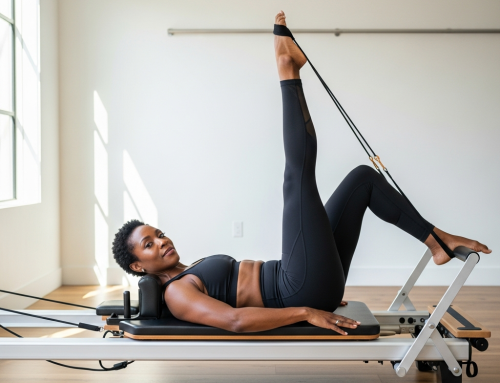
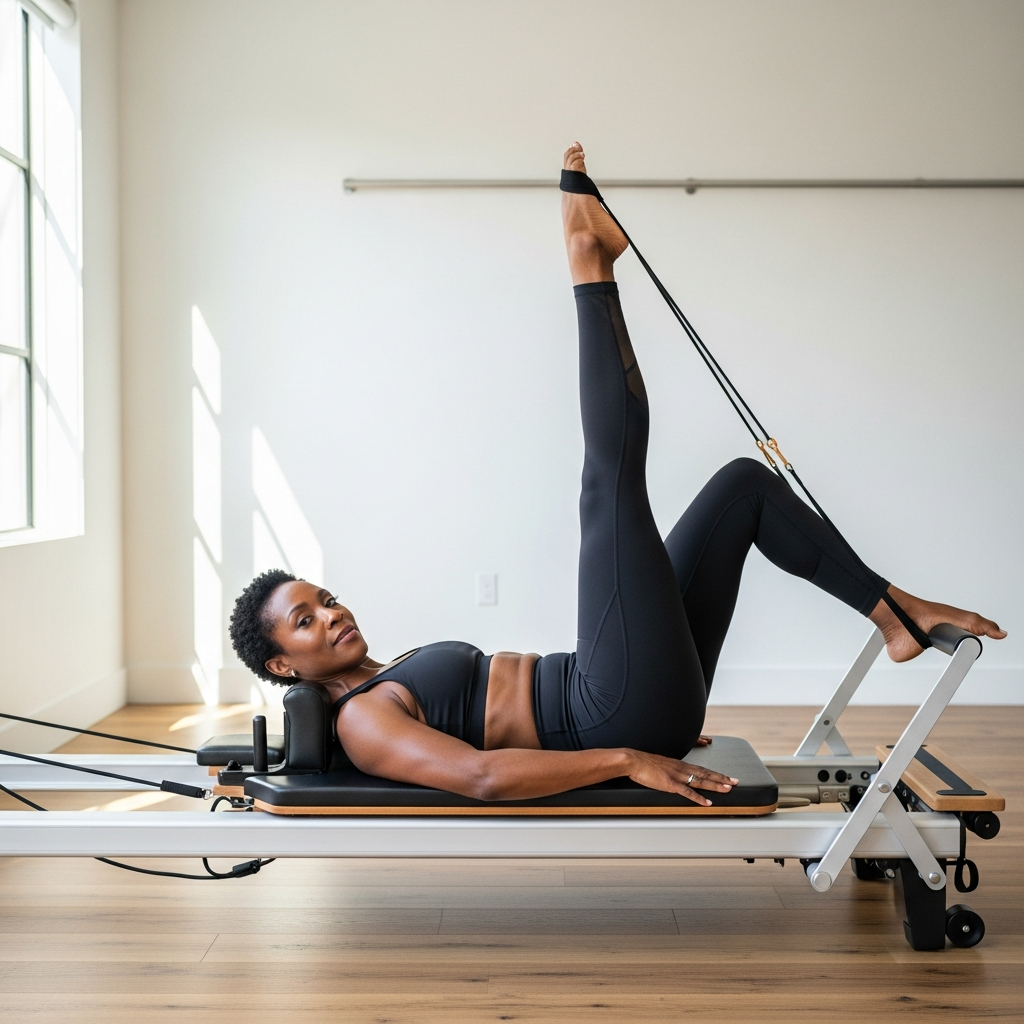
Those reformer machines might look intimidating – all springs and pulleys and mysterious attachments. But think of them as your supportive friend, not some medieval torture device. The resistance actually makes movements easier in some ways, guiding your body through proper alignment.
Don’t worry about not knowing which spring tension to use or how to adjust the foot bar. That’s literally what the instructors are there for. They’ll set everything up based on your height, flexibility, and strength level. Your job? Just show up and breathe.
The mat classes use smaller props – resistance bands, balls, magic circles. These aren’t just random accessories; they’re tools that help you feel the work in the right places. That little ball between your knees during those bridge exercises? It’s teaching your inner thighs to activate properly.
Building Your Routine Without Burning Out
Here’s what nobody tells you about starting Pilates – consistency matters more than intensity. Going twice a week for two months will serve you better than cramming four classes into your first week and then disappearing for three weeks because you’re too sore to move.
Start with once or twice weekly. Notice how your body responds. Some people feel energized after Pilates; others feel like they need a good night’s sleep. Both are normal. Your body is learning new movement patterns, and that takes energy – mental and physical.
Track how you feel before and after classes, not just physically but mentally too. Many EBODY members mention sleeping better, feeling less stressed, standing taller without thinking about it. These subtle changes often show up before the obvious physical ones.
Making the Most of Instructor Feedback
Your instructor might mention things like “draw your shoulders away from your ears” or “think about lengthening through the top of your head.” This isn’t criticism – it’s real-time coaching to help you get the most from each movement.
Don’t try to fix everything at once. Pick one or two cues per session to really focus on. If they mention engaging your core, spend that class really thinking about what that feels like. Next time, maybe you’ll work on that shoulder position.
And please – ask questions. “I don’t feel that where you said I should” is valuable feedback, not a failure. Good instructors want to know this stuff. It helps them help you better.
Creating Your Support System
The Mesquite community at EBODY tends to be welcoming – you’ll likely see familiar faces after a few weeks. Don’t feel pressured to become best friends with everyone, but don’t isolate yourself either.
Having a workout buddy can be incredibly helpful, but choose wisely. You want someone who shows up consistently, not someone who texts you at the last minute asking to skip class for happy hour. Again.
Remember, you’re not just building strength and flexibility – you’re creating a sustainable practice that fits into your actual life, not some idealized version of it.
When Your Body Doesn’t Feel Like Your Own Anymore
Let’s be real – stepping into any fitness class when you’re carrying extra weight can feel like walking into a room where everyone’s speaking a different language. You’re watching these people flow through movements that look simple enough on paper, but when you try them? It’s like your body’s having a completely different conversation.
At EBODY Pilates, we see this deer-in-headlights moment all the time. That split second when someone realizes the “beginner” class still assumes you can get up and down from the floor without strategy… or that your balance isn’t what it used to be.
Here’s what actually helps: starting where you are, not where you think you should be. The instructors here don’t pretend that being 50 pounds heavier doesn’t change how your body moves – because it does, and that’s perfectly normal. They modify everything from day one. Can’t get down on the mat? No problem – half the class can be done standing or sitting on the edge of the reformer.
The Equipment Intimidation Factor (It’s Real)
Those reformer machines? Yeah, they look like medieval torture devices had a baby with a jungle gym. I get it. You walk in and think, “There’s absolutely no way I’m getting on that thing without breaking it… or myself.”
But here’s the thing about Pilates equipment that nobody tells you upfront – it’s actually designed to support your body, not challenge it into submission. The springs aren’t there to make things harder; they’re there to help you find your strength gradually.
The instructors spend real time – not just a quick 30-second overview – showing you how everything works. Where to put your hands so you feel stable. How the springs actually make certain movements easier, not harder. And yes, they’ve absolutely seen every body type imaginable work successfully with this equipment.
One solution that works: ask for a private session first. Seriously. It’s not about being high-maintenance – it’s about getting familiar with the equipment when you’re not also trying to keep up with a class.
When Everyone Else Seems So… Coordinated
You know that moment when the instructor says something like “engage your deep abdominal muscles while extending your spine” and you’re thinking… my what now? Meanwhile, the person next to you is flowing through movements like they’ve got some internal GPS system you weren’t issued.
This coordination thing trips up almost everyone, but it’s especially frustrating when you’re already feeling disconnected from your body. Your brain knows what it wants to do, but there’s this weird delay between intention and action.
The truth is, this gets better with time – but not in the way you might expect. It’s not about becoming more graceful or suddenly discovering perfect balance. It’s about your nervous system slowly remembering how to talk to your muscles again. After years of moving less, sitting more, maybe dealing with pain or discomfort… your body just needs time to wake up.
EBODY’s approach helps because they break everything down into smaller pieces. Instead of “flow through this sequence,” it’s “lift your leg… now hold it… feel that muscle working? Good.” Baby steps, literally.
The Comparison Trap (And How to Sidestep It)
Here’s where things get psychologically tricky. You’re in class, working hard, feeling pretty good about finally touching your toes… and then you notice someone beside you who’s practically folding in half. Or worse – they’re chatting casually while doing movements that have you breathing like you just ran a marathon.
This comparison thing? It’ll sabotage your progress faster than anything else. And honestly, most fitness places just ignore this reality. They’ll throw out some generic “focus on your own practice” advice and call it good.
But at EBODY, they actually address this head-on. The classes are structured so you’re working at your own intensity level – the person next to you might be using different spring tensions, different positions, even completely different exercises. It’s personalization in action, not just in theory.
When Progress Feels Invisible
Maybe the hardest part of all this – you’ve been coming consistently for weeks, you feel stronger, but the scale isn’t moving much and your clothes fit about the same. It’s enough to make you want to quit and just accept that this is how your body is now.
But strength changes happen before size changes. Always. Your posture improves before your pants size drops. You stop getting winded going up stairs before you lose the first ten pounds. These victories matter, even when they’re not the ones you originally wanted.
The instructors here celebrate these wins because they know – from years of watching bodies change – that everything builds on everything else. Better posture leads to better movement. Better movement leads to more confidence. More confidence leads to making better choices outside the studio.
It’s not linear, it’s not always visible… but it’s happening.
What to Expect in Your First Few Weeks
Let’s be honest – starting something new always feels a bit awkward at first. Walking into EBODY Pilates for the first time, you might wonder if everyone else somehow knows secret moves you don’t… They don’t. We’ve all been there.
Your first session will feel like a gentle introduction rather than a workout boot camp. Most people are surprised by how much they can accomplish without feeling completely destroyed afterward. That’s intentional. We’re building your foundation here, not trying to create a viral “I can barely walk” story for your social media.
You’ll probably notice some muscles you’d forgotten you had – nothing dramatic, just a gentle reminder that your core has been quietly waiting for some attention. Some clients describe it as feeling “pleasantly awakened” rather than sore. Think less “I got hit by a truck” and more “I actually used my body today.”
The Reality of Progress (It’s Not Instagram-Perfect)
Here’s what nobody talks about enough: real progress is messy. It doesn’t happen in neat weekly increments, and it definitely doesn’t look like those before-and-after photos where someone transforms completely in 30 days.
In your first month, you might notice you’re standing a little taller – not because someone told you to, but because it just feels natural now. Maybe you’ll realize you’ve been carrying your shoulders differently, or that getting up from a low chair doesn’t require the same strategic planning it used to.
By month two or three, the changes become more obvious. Your balance improves (goodbye, wobbling while putting on shoes). Your back might stop sending you those daily reminder pings. Sleep often gets better too, though we can’t promise Pilates will solve your neighbor’s barking dog situation.
The strength gains? They’re real, but they build gradually. We’re talking about functional strength here – the kind that helps you carry groceries without thinking about it, not necessarily the kind that impresses people at parties.
Realistic Timelines for Real People
Everyone wants to know: “How long until I see results?” It’s like asking how long until you feel like a local in a new city – it depends on so many factors.
Most people start feeling different within 2-3 weeks. Not dramatically different, just… steadier. More connected to their body. By 6-8 weeks, others might start commenting that you look taller or seem more confident.
The deeper changes – significant strength improvements, noticeable posture shifts, that “I feel strong in my own skin” confidence – typically show up around the 3-4 month mark. Some people get there faster, others take longer. Your body has its own timeline, and frankly, it’s probably smarter than any schedule we could create.
Building Your Sustainable Routine
Here’s where most fitness plans fall apart: they assume you’re going to become a completely different person overnight. That you’ll suddenly love waking up at 5 AM or meal prepping every Sunday like some wellness influencer.
At EBODY, we start with where you actually are. If you can realistically commit to twice a week, that’s our starting point. Consistency beats intensity every single time – and we’ve seen the proof in hundreds of clients over the years.
Your instructor will help you figure out a schedule that works with your actual life. You know, the one with work deadlines and family obligations and the occasional Netflix binge night. We’re not here to judge your choices; we’re here to help you make sustainable ones.
Your Next Steps (Keep It Simple)
Ready to start? Here’s what we recommend: schedule a consultation. Not because we want to give you a hard sales pitch (honestly, we’re not great at those anyway), but because it helps us understand what you’re hoping to achieve.
During this chat, we’ll talk about any physical concerns, your experience level, and what kind of schedule makes sense for your life. No pressure to sign up for anything immediately – sometimes people need to think about it, and that’s perfectly fine.
If you decide to move forward, we typically suggest starting with our beginner-friendly classes or semi-private sessions. You’ll get more individual attention while you’re learning the basics, which honestly makes the whole experience more enjoyable.
The best part? You can always adjust as you go. This isn’t a marriage contract – it’s just Pilates.
You know what strikes me most about EBODY Pilates? It’s not just the perfectly aligned equipment or the thoughtfully designed studio space – though those things matter. It’s the way Sarah and her team have created something that feels genuinely rare in our wellness world: a place where you’re not just another body moving through generic routines.
I’ve watched so many fitness studios come and go in communities like Mesquite, and honestly… most of them miss the mark. They focus on the flashy stuff – the latest trends, the Instagram-worthy moments, the one-size-fits-all approach that looks good on paper but falls apart when real people with real lives (and real limitations) walk through the door.
But here’s what EBODY gets that others don’t: your Tuesday morning might look completely different from your Friday afternoon. Maybe your back’s acting up because you spent the weekend helping your daughter move. Or perhaps you’re dealing with that nagging shoulder thing that flares up when work stress peaks. The instructors here? They actually adjust for that stuff.
It’s like having a conversation with your body instead of shouting orders at it.
And let’s be honest about something else – starting any new movement practice can feel intimidating, especially if you’ve been away from exercise for a while. There’s this voice in your head wondering if you’ll be the slowest person in class, if you’ll be able to keep up, if everyone will notice you struggling with moves that seem to come naturally to others.
That voice gets pretty quiet at EBODY, though. Not because they ignore the challenges or pretend everything’s easy – but because they’ve built an environment where those struggles are part of the process, not something to hide from.
I think about Maria, one of their longtime members, who started coming after her doctor recommended Pilates for chronic back pain. She was terrified that first day, convinced she’d embarrass herself. Six months later, she’s not just managing her pain better – she’s rediscovered parts of her body she’d forgotten about. That transformation didn’t happen because someone pushed her harder or gave her more advanced exercises. It happened because someone listened.
The Mesquite community deserves this kind of attention. You deserve instructors who remember that your left hip tends to be tight, who notice when you’re favoring one side, who celebrate the small victories alongside the big ones.
Starting something new for your health doesn’t have to feel overwhelming or like you’re diving into the deep end alone. Sometimes the best first step is simply reaching out and having a conversation about what you’re hoping to achieve – and more importantly, what’s been holding you back.
If you’ve been curious about Pilates but weren’t sure if it was right for you, or if you’ve been looking for movement that actually fits into your real life rather than some idealized version of it… maybe it’s worth making that call. Sarah and her team at EBODY aren’t going to pressure you into anything – they’re going to listen to where you are right now and help you figure out what makes sense for your body, your schedule, your goals.
Your future self might just thank you for picking up the phone.