Pilates Near Me: How Grand Prairie Studios Compare to Big Gyms
You walk into that gleaming big-box gym with the best of intentions. You know, the one with the towering glass windows and enough equipment to outfit a small army. The monthly membership seemed like such a deal when you signed up – especially with that “limited time” offer the salesperson practically begged you to take.
But here’s what they didn’t tell you…
Three months later, you’re wandering around those endless rows of machines like you’re lost in a fitness warehouse. The Pilates classes? They’re packed tighter than a rush-hour subway car, with forty people crammed into a space meant for twenty. The instructor – bless their heart – is shouting instructions over a sea of heads, trying to correct form for someone three rows back while you’re in the corner wondering if you’re doing that roll-up correctly or just… rolling around.
And don’t even get me started on trying to book that reformer class. You set your alarm for 6 AM on a Tuesday just to snag a spot for the following week, only to find yourself on a waitlist longer than the line at your favorite coffee shop on Monday morning.
Sound familiar? You’re definitely not alone in this.
Here’s the thing about fitness – and life, really – sometimes bigger isn’t better. Sometimes what you need isn’t the gym with the most square footage or the flashiest marketing budget. Sometimes you need the place where the instructor actually knows your name… and remembers that your left shoulder gets cranky during certain movements.
If you’re living in or around Grand Prairie, you’ve probably noticed something interesting happening. While those massive chain gyms keep expanding like fitness empires, smaller, specialized Pilates studios are quietly building something different. Something that feels less like a membership number and more like… well, a community.
But here’s where it gets tricky – how do you even begin to compare these options? The big gym has that reassuring corporate polish and enough amenities to make your head spin. They’ve got pools, saunas, juice bars, and probably a small city’s worth of equipment. The local studios? They might look modest by comparison, but they’re doing something those mega-gyms simply can’t replicate.
It’s like comparing a bustling chain restaurant to that little family-owned place around the corner. Both serve food, sure – but the experiences are completely different animals.
The truth is, your choice between a Grand Prairie Pilates studio and a big gym isn’t just about where you’ll work out for the next few months. It’s about what kind of fitness relationship you want to build. Do you thrive in the anonymous energy of a crowded space, or do you prefer the focused attention that comes with smaller classes? Are you motivated by having endless options, or do you actually perform better with curated, intentional programming?
And let’s be honest here – your time is precious. Between work, family, and everything else demanding your attention, the last thing you need is to waste months (and money) at a place that isn’t actually helping you reach your goals.
That’s exactly what we’re going to figure out together. We’ll take a real, honest look at what Grand Prairie’s local Pilates studios bring to the table – from class sizes and instructor attention to equipment quality and community feel. Then we’ll stack that up against what the big chains offer, without any of the marketing fluff or sales pitch nonsense.
You’ll discover which option actually delivers on those promises of “personalized fitness” (spoiler alert: the answer might surprise you). We’ll talk about costs – the real costs, not just what’s on the price sheet – and help you understand what you’re actually getting for your investment.
Most importantly, you’ll walk away knowing exactly which environment will set you up for success. Because here’s what I’ve learned after years in this industry: the “best” gym isn’t the one with the most impressive lobby or the longest list of amenities. It’s the one where you’ll actually show up, week after week, and leave feeling stronger than when you walked in.
Ready to find out where that place might be for you?
What Makes Pilates Different from Your Average Gym Workout
You know that feeling when you walk into a big box gym and everything’s just… loud? The clanking weights, the grunting, the rows of treadmills with people staring at screens. Pilates is kind of the opposite of all that noise.
Think of traditional gym workouts like using a sledgehammer – they’re great for breaking down walls (building muscle mass, burning calories fast), but they’re not exactly precision tools. Pilates? That’s more like working with a scalpel. Every movement is deliberate, controlled, and designed to target specific muscle groups you probably didn’t even know you had.
The whole thing started with Joseph Pilates back in the early 1900s. He was this interesting guy who combined elements from yoga, martial arts, and gymnastics into something entirely new. What he created focuses on what he called your “powerhouse” – basically your core, but not just those six-pack muscles everyone obsesses over. We’re talking about deep stabilizing muscles that support your spine and pelvis.
The Equipment Situation – It’s Not What You’d Expect
Here’s where things get a bit confusing if you’re new to this world. When most people hear “Pilates,” they picture mat classes with people doing slow, controlled movements on the floor. And yes, that’s definitely part of it. But then there’s this whole other side with equipment that looks like medieval torture devices… in the best possible way.
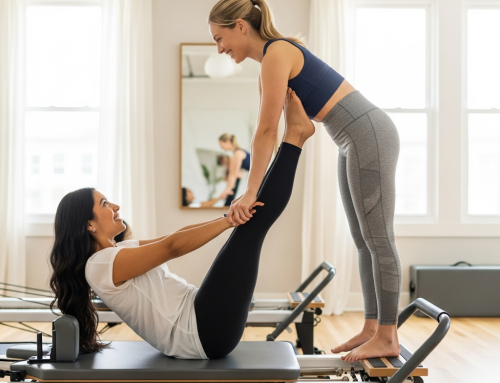
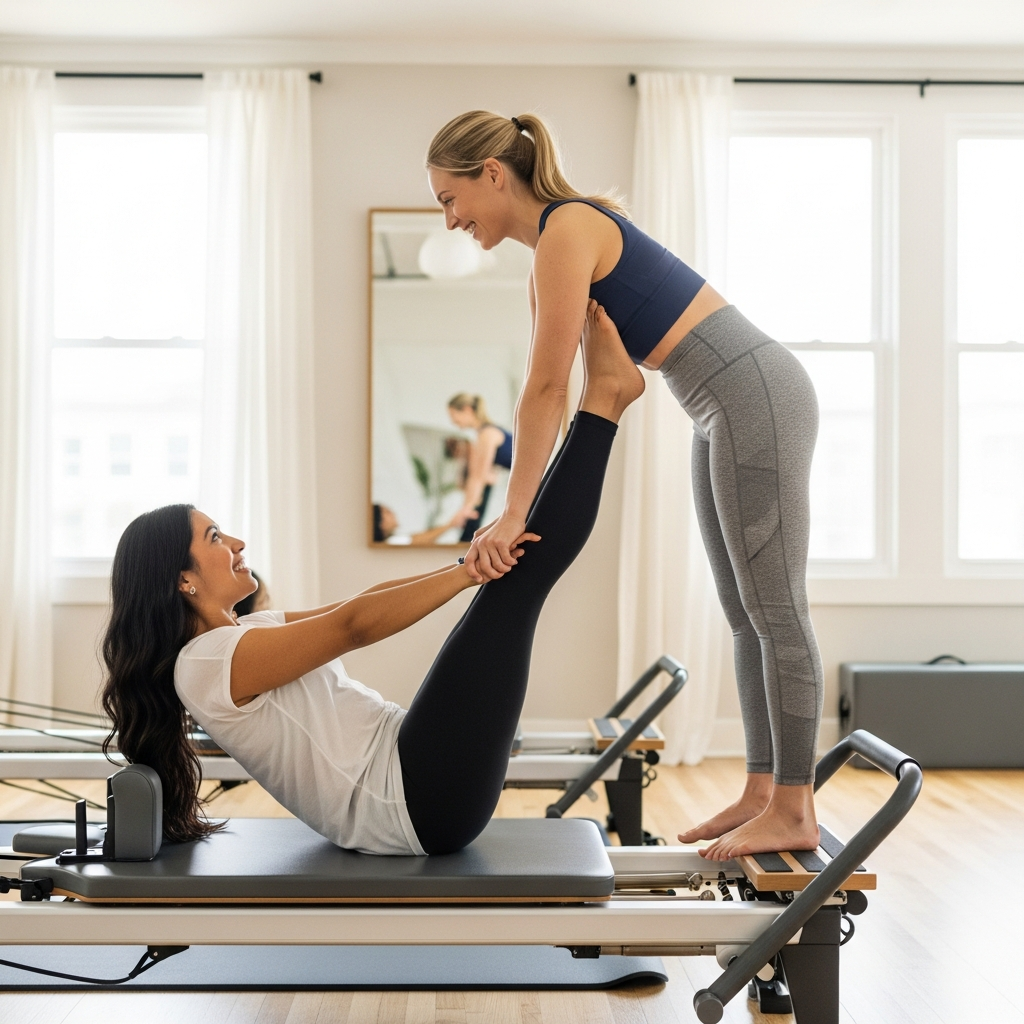
The Reformer is probably the most famous piece – it’s essentially a sliding carriage with springs, straps, and pulleys. Sounds intimidating? It kind of is, at first. But those springs aren’t there to make things harder necessarily; they’re there to provide just the right amount of resistance and assistance. Sometimes the springs help support your movements, other times they challenge them.
Then you’ve got the Cadillac (yes, like the car), the Wunda Chair, and various other contraptions that Joseph Pilates invented. Each one targets your body differently, and honestly… it’s pretty brilliant once you understand how they work.
Why Your Body Responds Differently to This Stuff
Your typical gym workout often focuses on isolation – work your biceps here, your glutes there, maybe throw in some cardio to burn calories. Pilates takes a completely different approach that can feel weird at first if you’re used to that mentality.
Everything in Pilates is about integration. When you’re doing a movement on the Reformer, you’re not just working your legs or your arms – you’re engaging your entire core system while your brain has to coordinate multiple moving parts. It’s like the difference between playing a single note on the piano versus playing a complex chord that requires all your fingers working together.
This is why people often say Pilates is harder than they expected. You might be incredibly strong in the gym, able to deadlift impressive amounts, but then you get on a Pilates machine and suddenly you’re shaking during what looks like a simple movement. That’s not because you’re weak – it’s because you’re asking your muscles to work together in ways they’re not used to.
The Mind-Body Connection Thing (Yes, It’s Real)
Okay, I know this sounds a bit woo-woo, but stick with me here. In most workouts, you can kind of zone out. Pop in your earbuds, watch TV, let your body go through the motions while your mind wanders to your grocery list or that work deadline.
Pilates doesn’t really let you do that. The movements require constant attention – you’re thinking about your breathing, the alignment of your spine, how your ribs are positioned, whether you’re gripping with muscles that should be relaxed. It’s like meditation in motion, except instead of sitting quietly, you’re challenging your body in very specific ways.
This constant mental engagement is actually part of what makes it so effective. When your brain is fully connected to what your body is doing, the quality of movement improves dramatically. And better movement quality means better results – whether that’s improved posture, reduced pain, or yes, even weight loss.
The whole experience can be surprisingly intense mentally, which is something most people don’t expect when they first try it.
What to Actually Look For During Your Studio Visit
When you walk into that first Pilates studio, don’t just focus on the shiny equipment or Instagram-worthy aesthetic. Sure, those reformers should look well-maintained – not held together with duct tape and hope – but here’s what really matters: Watch how instructors interact with current students. Are they giving personalized cues? I once visited a studio where the instructor called out the same “pull your belly button to your spine” for 45 minutes straight. That’s… not helpful.
Pay attention to class sizes too. If there are twelve people crammed around six reformers, you’re basically paying premium prices for a group fitness experience. In Grand Prairie’s smaller studios, you’ll typically see 4-6 people max in reformer classes. That means the instructor can actually see if you’re about to launch yourself off the carriage (it happens).
The Big Gym Reality Check
Here’s something most people don’t realize about those big box gyms offering Pilates – their instructors often teach 8-10 classes per day across multiple formats. Spin at 6 AM, Pilates at noon, yoga at 7 PM. They’re fitness Swiss Army knives, which sounds great until you realize your “Pilates” class feels suspiciously like bootcamp with props.
The equipment situation? Well, let’s just say those reformers have seen some things. I’ve witnessed springs that sound like wounded animals and carriages that stick halfway through movements. Not exactly the smooth, controlled experience Pilates is supposed to be.
That said – and this might surprise you – some big gyms in Grand Prairie actually do Pilates right. LA Fitness and 24 Hour Fitness have stepped up their game recently, investing in proper equipment and requiring additional certifications for their Pilates instructors. But you’ll need to do your homework to find the good ones.
Questions That Separate Pros from Pretenders
When you’re touring studios, ask about instructor training hours. A weekend certification doesn’t cut it for teaching Pilates safely. Look for instructors with at least 450-500 hours of training from recognized programs like Romana’s Pilates, BASI, or Stott Pilates.
Here’s a sneaky good question: “What happens if I have lower back issues?” A qualified instructor should ask follow-up questions about your specific situation, not just hand you a waiver and point toward the reformers. They should also mention modifications – lots of them.
Ask about their equipment maintenance schedule too. Quality studios service their reformers quarterly and replace springs regularly. If they look at you blankly when you ask about spring tension consistency… that tells you everything.
The Money Talk Nobody Wants to Have
Let’s be real about pricing because this stuff adds up fast. Boutique studios typically run $25-35 per class, while big gyms include Pilates in monthly memberships around $30-60. But here’s the catch – those gym memberships often come with hidden enrollment fees, cancellation nightmares, and classes that get cancelled last minute.
Many Grand Prairie studios offer package deals that actually make financial sense if you’re serious about consistency. Some have punch cards that never expire (seriously, ask about this), and others offer unlimited monthly packages that break even around 8-10 classes.
Pro tip: Most studios let you try a week or even a month before committing. Use this time wisely – don’t just attend classes, observe the culture. Are people chatting and laughing, or does everyone look miserable?
Reading the Room (Literally)
The vibe tells you everything. Quality studios feel… calm but energized? It’s hard to describe, but you know it when you feel it. People aren’t checking phones constantly, instructors aren’t watching the clock, and there’s this focused-but-relaxed energy.
Also, notice the little things. Are towels provided or do you need to BYOT? Is there a water fountain that actually works? Storage for your stuff? These details matter when you’re sweating through your third class of the week.
The temperature should be comfortable – not arctic cold (your muscles need warmth to move properly) but not tropical either. And please, for the love of proper spinal alignment, make sure they require grip socks. Nothing says “amateur hour” like letting people slide around reformers in regular athletic shoes.
Trust your gut on the overall experience. If something feels off during your trial period, it probably is.
The Real Talk About Starting Pilates (And Why Most People Quit)
Let’s be honest – about 70% of people who sign up for Pilates classes never make it past their third session. It’s not because Pilates is terrible or they’re lazy… it’s because nobody warns them about the stuff that actually trips you up.
The biggest shock? You’re going to feel completely lost for the first few weeks. I’m talking deer-in-headlights, everyone-else-seems-to-know-a-secret-language kind of lost. Your instructor will cheerfully say “engage your powerhouse while articulating through your spine” and you’ll be like… what now?
In big gyms, this feeling gets amplified because classes are packed and instructors can’t give individual attention. You’re basically swimming upstream while everyone around you flows through movements like they were born doing hundred pulses. Grand Prairie’s smaller studios solve this by capping class sizes – typically 8-12 people versus 25-30 in chain gyms. That means when you’re struggling to figure out what “neutral pelvis” means, someone’s actually there to help.
Your Body Will Rebel (And That’s Normal)
Here’s something nobody mentions in those glossy Pilates brochures: you’re going to be sore in places you didn’t know existed. Not just muscle soreness – though your deep abdominal muscles will definitely have words with you – but that weird achiness that comes from using your body in completely new ways.
The solution isn’t to push through pain or pretend you’re not struggling. It’s finding instructors who actually understand anatomy – not just the pretty poses. Local studios often employ instructors who’ve done extensive teacher training (200+ hours versus the weekend certifications you sometimes see). They know the difference between “good sore” and “something’s wrong sore.”
At larger chains, you might get an instructor who learned Pilates last month and is still reading cues off index cards. Not exactly confidence-inspiring when your lower back is questioning all your life choices.
The Intimidation Factor Is Real
Walking into a new fitness space feels vulnerable – especially when everyone else seems to know exactly what they’re doing. This hits differently at big gyms where the Pilates studio is tucked between the weight room (filled with people who look like they bench press small cars) and the spin studio (where everyone’s wearing matching athletic wear that costs more than your car payment).
Smaller Grand Prairie studios create a different energy. Think neighborhood coffee shop versus Starbucks during morning rush. You’ll see the same faces week after week, which means less performing and more actual learning. Plus, many local studios offer “foundations” classes or new student orientations – something corporate gyms often skip because, well, turnover keeps the business model humming.
Schedule Reality Check
Corporate gyms love to advertise “over 50 classes per week!” What they don’t mention? Half of those are at 6 AM or 2 PM on Tuesday – times that work for precisely nobody with an actual job.
Local studios typically offer fewer total classes but think more strategically about timing. They know their community works 9-to-5 jobs, has kids to pick up, lives real lives. So you’ll find 6:30 PM classes that actually happen consistently, weekend options that don’t disappear during “low attendance” periods.
The flip side? Less flexibility if your schedule changes. That 7 PM Thursday class might be your only option, so if you miss it… you’re waiting until next week.
The Investment Question Everyone’s Dancing Around
Let’s talk money – because it’s usually the elephant in the room. Local studios cost more per class, sometimes significantly more. We’re talking $25-35 per drop-in versus $15-20 at chain gyms.
But here’s the math that matters: if you actually stick with it (and you’re more likely to at a smaller studio), cost per effective session is often lower. Plus, many Grand Prairie studios offer packages, unlimited monthly deals, or even sliding scale options for community members.
That said – be realistic about your budget. Better to do two classes monthly at a place where you’ll actually learn than sign up for unlimited classes you’ll never use because you’re stressed about the money.
Making It Stick When Everything Else Has Failed
The real solution to most Pilates challenges? Start smaller than feels reasonable. One class per week for a month. Same instructor if possible. Same time slot. Boring? Maybe. Effective? Absolutely.
Your goal isn’t to become a Pilates person overnight – it’s to become someone who does Pilates sometimes, then more often, then consistently. That progression works better in environments where people notice when you show up… and when you don’t.
What to Expect in Your First Few Weeks
Let’s be honest – walking into any new fitness space feels a bit like the first day of school. You’re not sure where anything is, everyone else seems to know exactly what they’re doing, and you’re wondering if your workout clothes are somehow… wrong?
Here’s the thing about Pilates – it’s sneaky. You might leave your first session thinking, “That wasn’t so bad,” only to wake up the next morning discovering muscles you forgot existed. Don’t worry, that’s completely normal. Your deep stabilizing muscles (the ones that’ve been on vacation while you sit at a desk all day) are finally getting back to work.
Most studios in Grand Prairie will start you with beginner classes or private sessions. Actually, that reminds me – if you’re comparing costs and thinking private sessions are too expensive, consider this: would you rather spend $80 on one focused session where you learn proper form, or $20 each on four group classes where you develop bad habits that take months to unlearn?
The first month is really about building awareness. You’ll probably feel uncoordinated – we all do initially. Your instructor might say “engage your core” about fifty times, and you’ll nod along while secretly thinking, “I have no idea what that actually means.” That confusion? It fades faster than you’d expect.
Timeline Reality Check (Because Instagram Lies)
Social media makes it look like people transform in 30 days. Let’s talk reality instead.
Weeks 1-2: You’re learning the language. Pilates has its own vocabulary, and “neutral spine” isn’t something you learned in high school gym class. You might feel sore in weird places, but you’ll also notice you’re sleeping better. Stress levels often drop pretty quickly – there’s something about focusing on precise movements that quiets the mental chatter.
Month 1: Your posture starts improving without you really thinking about it. Friends might ask if you’ve been working out. You’re still wobbly in some exercises (single-leg stretches, I’m looking at you), but you’re starting to understand what your instructor means when she talks about “moving from your center.”
Months 2-3: This is where it gets interesting. You’ll notice real strength changes – carrying groceries feels easier, your back doesn’t ache after long meetings, and you might catch yourself standing taller. The movements that felt impossible six weeks ago? You’re doing them. Maybe not perfectly, but you’re doing them.
Month 6 and beyond: Now you’re in Pilates convert territory. You understand why people get slightly evangelical about it. Your body feels different – longer, stronger, more balanced. You’ve probably convinced at least one friend to try a class.
Choosing Between Studios and Making the Commitment
Here’s what I’ve learned from talking to hundreds of people about their Pilates experiences: the “best” studio isn’t necessarily the fanciest one or the cheapest one. It’s the one where you actually show up.
If you’re comparing a boutique studio to a big gym’s Pilates program, ask yourself these questions – and be brutally honest with your answers. Do you need the accountability of smaller classes and instructors who know your name? Or do you prefer the anonymity of larger spaces where you can slip in and out without anyone noticing if you skip a week?
Some people thrive with the personal attention you get at smaller studios. Others find it overwhelming and prefer to blend into the background while they build confidence. There’s no wrong answer – just the wrong answer for you.
Your Next Steps (The Practical Stuff)
Start with three classes in two weeks. I know, I know – you want to go every day because you’re motivated. Resist that urge. Your body needs time to adapt, and overdoing it early on leads to burnout faster than you can say “hundred exercise.”
Most Grand Prairie studios offer introductory packages – usually something like three classes for $60 or unlimited classes for a month at a reduced rate. Take advantage of these. Try different instructors if it’s a larger studio. Everyone teaches differently, and you might connect better with one teaching style over another.
And here’s something no one tells you: it’s okay to feel completely lost for the first few sessions. Actually, if you don’t feel at least a little confused, the class probably isn’t challenging enough. Pilates is meant to make you think, not just sweat.
The goal isn’t perfection – it’s progress. And progress, in Pilates world, sometimes looks like finally figuring out how to breathe and move at the same time.
You know what? After talking through all of this, I keep coming back to one simple truth – the “best” studio isn’t necessarily the fanciest one or the cheapest one. It’s the place where you actually *want* to show up.
And that’s different for everyone. Some people thrive in the energy of a bustling gym where there’s always something happening. Others – and I see this so often in our practice – need that quieter, more intimate space where they can focus without feeling self-conscious. There’s no right or wrong here, just what works for *you*.
Finding Your Sweet Spot
The beautiful thing about Grand Prairie is that you’ve got options. Real options. Those boutique studios we talked about? They’re not just trying to be different for the sake of it. They genuinely understand that when you’re working on your health – especially if weight management is part of your goals – feeling comfortable and supported makes all the difference.
I’ve watched people transform not just their bodies but their entire relationship with movement when they find the right environment. Sometimes it’s because they finally got the personalized attention they needed to master proper form (goodbye, back pain!). Other times it’s simply because they found a community that gets it.
The Real Investment
Here’s something worth considering as you weigh your options… yes, smaller studios often cost more upfront. But think about it this way – if you actually use your membership consistently because you love going there, isn’t that better value than a cheaper membership that collects dust?
We see this pattern all the time in our weight loss work. The clients who succeed aren’t necessarily the ones who pick the most aggressive plan or the cheapest option. They’re the ones who choose something sustainable, something that fits their real life, not their fantasy life.
What Matters Most
At the end of the day, the best Pilates experience is the one that makes you feel stronger, more confident, and genuinely excited about taking care of yourself. Whether that happens in a cozy studio with eight people or a dynamic gym with dozens… that’s your call to make.
But here’s what I want you to remember – you deserve to feel good in your body. You deserve to move without pain, to feel strong and capable, and to have support along the way. That’s not asking too much. That’s just… human.
We’re Here When You Need Us
If you’re reading this and feeling a little overwhelmed by all the choices – or if you’re dealing with weight concerns that make starting any fitness routine feel daunting – please know you don’t have to figure this out alone.
Sometimes the missing piece isn’t finding the perfect studio, it’s addressing the underlying health factors that make movement challenging in the first place. Our team understands how frustrating it can be when your body doesn’t cooperate with your good intentions, and we’re here to help you work through those barriers.
Feel free to reach out – no pressure, no sales pitch. Just real people who get it, ready to listen and help you find your way forward. Because everyone deserves to feel at home in their own body.