Pilates Close to Me: Exploring Studio Options Around Oak Cliff

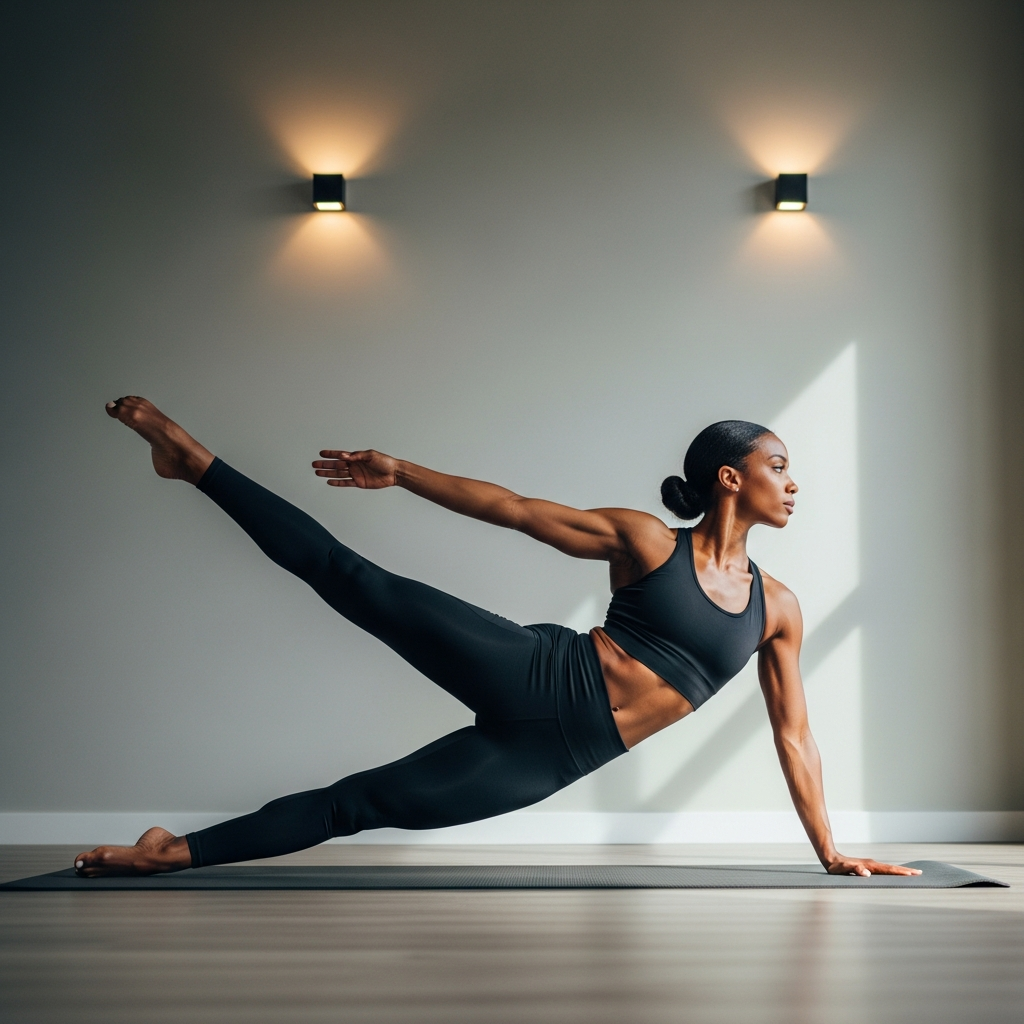
You’re scrolling through Instagram at 10 PM, and there she is again – that friend who somehow manages to look effortlessly toned while juggling three kids and a demanding job. Her secret? She keeps posting these serene photos from her Pilates class, looking zen and strong and… well, like she’s got her life together in a way you definitely don’t.
Sound familiar?
Here’s the thing though – you’ve been thinking about trying Pilates for months now. Maybe it was that lower back twinge that won’t quit, or the way you feel winded walking up the stairs at work. Or maybe you just want to find something that doesn’t feel like punishment for eating that extra slice of pizza last weekend. (We’ve all been there, trust me.)
But every time you actually consider signing up somewhere, the same questions start swirling around in your head. Where do you even start looking? What if you show up and can’t do a single move without looking like a confused pretzel? And honestly… what if the instructor is one of those intimidatingly perfect people who uses words like “engage your powerhouse” while you’re still trying to figure out which way is up?
If you’re living in or around Oak Cliff, you’re actually in luck – this neighborhood has quietly become something of a Pilates haven. I know, I know… you probably think of Oak Cliff and picture trendy coffee shops and vintage stores (which, fair enough, there are plenty of those). But tucked between the hip restaurants and local boutiques, there’s a whole network of Pilates studios that cater to everyone from complete beginners to people who’ve been practicing for years.
The beautiful thing about Pilates – and something I wish more people understood – is that it meets you exactly where you are. Dealing with a cranky shoulder from hunching over your laptop all day? There’s a modification for that. Haven’t exercised consistently since… well, let’s not put a date on it? That’s totally fine too. The best instructors (and Oak Cliff has some really good ones) know how to make everyone in the room feel capable and challenged, without making anyone feel left behind.
But here’s what nobody tells you when you’re considering Pilates: not all studios are created equal. Some focus on classical Pilates with all the traditional equipment that looks slightly medieval but works absolute magic on your body. Others blend Pilates with yoga or dance elements. Some are all about that high-energy, music-pumping vibe, while others cultivate a more meditative, slow-burn atmosphere.
And then there’s the practical stuff that matters way more than anyone wants to admit. Like… can you actually park there without circling the block seventeen times? Do they offer classes at times that work with your schedule – you know, the one that includes school pickup and that conference call that always runs late? Are the instructors the kind of people who make you feel welcomed, or do they make you feel like you’re interrupting their perfect workout?
Living in Oak Cliff gives you options – which is both exciting and a little overwhelming. You’ve got intimate boutique studios where the instructor knows your name and remembers that your right hip gets cranky. There are larger spaces with more class variety and flexible scheduling. Some studios focus specifically on rehabilitation and working with injuries, while others are all about building serious strength and flexibility.
The trick is finding the one that clicks with your personality, your goals, and yes – your budget. Because let’s be real, some of these places charge what you used to spend on groceries for a week. But here’s the good news: many Oak Cliff studios offer intro packages, community classes, or sliding scale pricing because they actually want this to be accessible.
Over the next few sections, we’re going to walk through the landscape of Pilates options right here in your neighborhood. We’ll talk about what makes each type of studio special, how to figure out what you’re actually looking for (spoiler: it might not be what you think), and most importantly – how to take that first step without overthinking it to death.
Because honestly? That Instagram friend didn’t start out looking effortlessly strong. She just started.
What Actually Is Pilates, Anyway?
Look, I’ll be honest – for the longest time, I thought Pilates was just fancy stretching for people who drink green smoothies. Boy, was I wrong. It’s actually this brilliant system of movement that Joseph Pilates developed back in the 1920s, originally calling it “Contrology.” The guy was onto something pretty revolutionary – he figured out that when you control your movements with precision and breathe properly, your body starts working like a well-oiled machine instead of… well, whatever the opposite of that is.
Think of it this way: if regular exercise is like taking a sledgehammer to your fitness goals, Pilates is more like using a precise surgical instrument. You’re not just moving your body – you’re retraining it to move better, stand taller, and honestly? Feel more like the person you want to be.
The Core Connection (And Why Everyone Gets This Wrong)
Here’s where things get interesting, and frankly, a bit confusing at first. When people hear “core,” they immediately think abs. Six-pack. Crunches until you can’t breathe. But Pilates core work? It’s like… imagine your torso is a soda can, and instead of just working the front label, you’re strengthening the entire cylinder.
We’re talking about your diaphragm up top, your pelvic floor down below, and all those deep muscles that wrap around your spine like a natural corset. These are the muscles that keep you upright when you’re carrying groceries, prevent your back from screaming at you after a long day at your desk, and – this is the part that surprised me – actually help you breathe better.
It’s counterintuitive, really. You’d think that focusing on such a small area wouldn’t make that much difference, but it’s like tuning the engine in your car. Suddenly everything else runs smoother.
Mat vs. Reformer (The Great Pilates Divide)
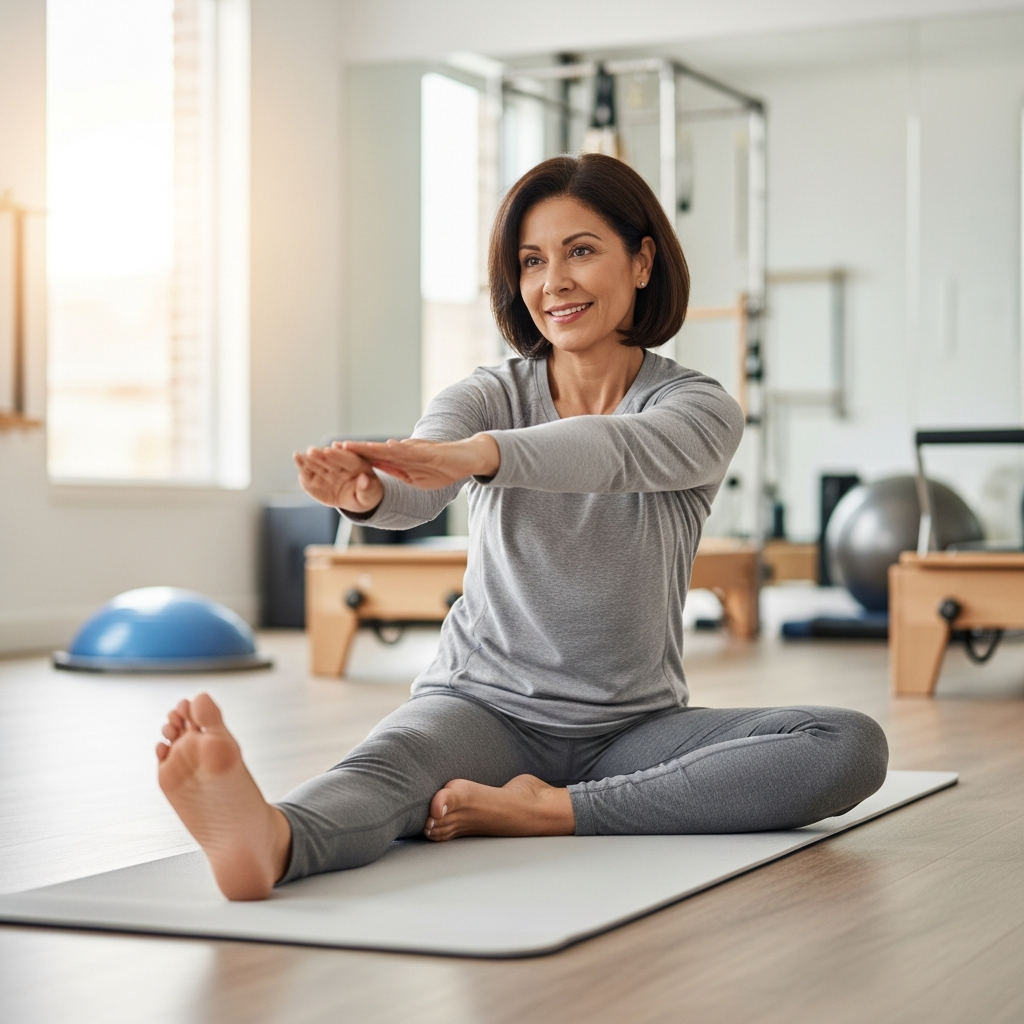
Now, this is where things get… well, let’s just say there are strong opinions. You’ve got mat Pilates, which happens on the floor with maybe some props – think resistance bands, small balls, those foam rollers that feel like medieval torture devices. Then there’s reformer Pilates, which involves this contraption that looks like it belongs in either a gym or a very specific type of museum.
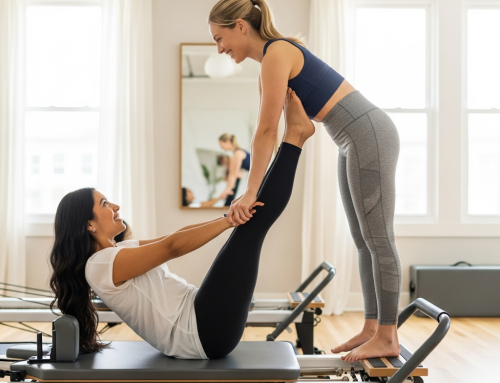
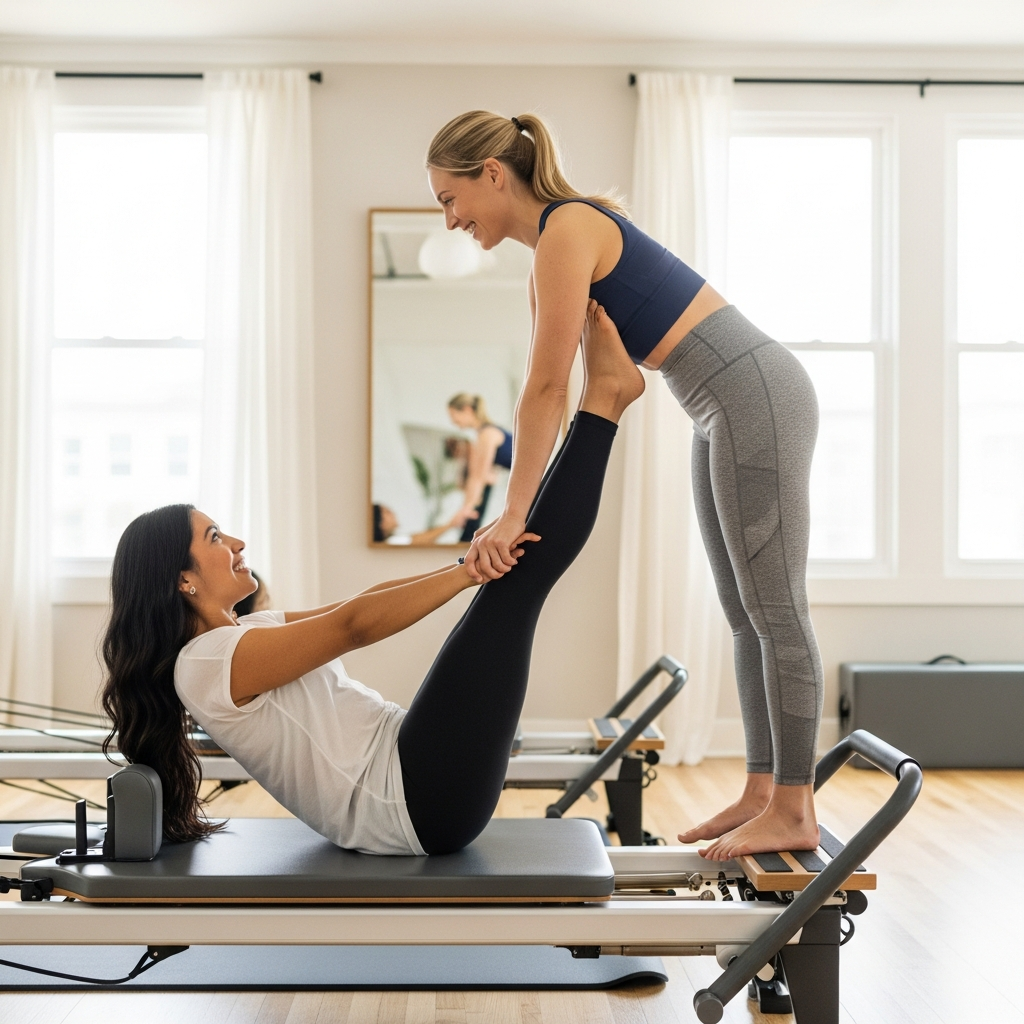
The reformer is basically a sliding carriage with springs and pulleys, and before you ask – no, it’s not as intimidating as it looks. Actually, that’s not entirely true. It IS intimidating the first time you see it, but then you realize it’s like having a really smart spotter who never gets tired and always knows exactly how much resistance you need.
Mat work tends to be more accessible – lower cost, you can do it anywhere, and honestly, some of the most challenging Pilates exercises happen right there on the floor. But the reformer? That’s where things get really interesting. The spring resistance gives you feedback, supports you when you need it, and challenges you in ways that gravity alone just can’t match.
The Mind-Body Thing (Yes, It’s Real)
Here’s something that might sound a bit woo-woo, but stick with me. Pilates isn’t just about making your muscles stronger – though it absolutely does that. It’s about creating this conversation between your brain and your body that maybe hasn’t been happening for a while.
You know that feeling when you’re walking and suddenly realize you’ve been slouching for the past three blocks? Pilates basically turns that awareness up to eleven. You start noticing how you sit, how you stand, how you move through your day. It’s like developing a really good internal GPS system for your posture and movement patterns.
I’ve had clients tell me they suddenly realized they’d been holding their breath for most of their adult life, or that they never knew their left shoulder was practically glued to their left ear. These aren’t earth-shattering revelations, but they’re the kind of small changes that add up to feeling significantly better in your own skin.
The breathing component is huge here, too. Not the dramatic, Instagram-worthy deep breathing – just steady, controlled breathing that actually helps your nervous system chill out a bit. Which, let’s face it, most of us could use more of these days.
What to Actually Look for During Your Studio Visit
Here’s the thing most people don’t realize – you can tell everything you need to know about a Pilates studio within the first five minutes of walking through the door. Seriously.
First, check out the equipment. I’m not talking about whether it’s shiny and new (though that’s nice), but whether it’s well-maintained. Run your hand along the reformer rails – they should be smooth, not gritty. The springs should move quietly, and the foot bar should adjust easily. If you hear squeaking or see rust… well, that tells you something about their attention to detail.
But here’s what really matters: watch how the instructors interact with current students. Are they actually watching form, or just calling out generic cues while scrolling their phone? (Yes, I’ve seen this happen.) A good instructor should be making small adjustments, offering modifications, and – this is key – remembering names and previous injuries.
The Money Talk Nobody Wants to Have
Let’s be honest about pricing in Oak Cliff. You’re going to see everything from $25 drop-in classes to $200+ monthly unlimited packages. But here’s my insider tip: ask about their new student specials, and then ask if they’ll honor that rate if you decide to continue after your trial period ends.
Most studios have some wiggle room, especially if you’re upfront about budget concerns. I’ve seen places offer work-study programs, off-peak pricing (think 10am Tuesday classes), or even bartering arrangements. One studio I know lets a graphic designer handle their social media in exchange for classes.
And here’s something they won’t advertise – many studios will let you freeze your membership for legitimate reasons without penalty. Moving? Injury? Just started a crazy new job? Ask about their freeze policy before you sign up.
Reading Between the Lines of Class Descriptions
“All levels welcome” usually means it’s actually pretty challenging – they just don’t want to scare people away. “Beginner friendly” is more honest about the actual difficulty level.
If you see lots of classes called things like “Pilates Flow” or “Fusion,” that studio probably leans more toward the fitness side than classical Pilates. Not necessarily bad, but know what you’re getting into. Classical Pilates tends to have more straightforward names – “Mat Pilates,” “Reformer Level 1,” that sort of thing.
Here’s a red flag: if every class description sounds exactly the same or uses vague language like “strengthen and lengthen,” they might not have instructors who really understand the method’s nuances.
The Scheduling Reality Check
This is huge, and nobody talks about it enough. Look at their actual schedule, not just what’s available right now. Do they offer the same class times consistently week to week? Or are you going to show up next Tuesday expecting your usual 6pm class only to find out it’s been moved to Thursday at 9am?
Peak times (early morning, right after work) fill up fast in Oak Cliff. If you need those slots, ask about their cancellation policy. Some places let you get on a wait list, others use a “first come, first served” system that means you’re basically racing other people to book online when the schedule opens.
Trust Your Gut About the Vibe
You know that feeling when you walk into a place and immediately sense whether it’s “your people” or not? That’s not superficial – it matters for your long-term success.
Some studios feel like exclusive fitness clubs where everyone’s in matching Lululemon. Others feel more like community centers where people chat about their kids and weekend plans. Neither is wrong, but one probably fits your personality better.
Pay attention to the changing area situation too. Is there actually space to change, or are you going to be awkwardly maneuvering around three other people in a closet-sized room? Are there cubbies for your stuff, or will you be guarding your keys and wallet during class?
The Trial Period Strategy
Most studios offer some kind of introductory deal. Here’s how to maximize it: try different instructors, different times of day, and different class types if they offer them. Don’t just stick with the first teacher you like – what happens when they’re on vacation or leave for another studio?
Ask about their sub policy while you’re at it. Do they just cancel classes when the regular instructor can’t make it, or do they have reliable subs who actually know the students and their modifications?
And honestly? If a studio won’t let you try a class before committing to a package, that’s usually a red flag. Confidence in their product shows.
The Real Talk: What Actually Stops People from Sticking with Pilates
Let’s be honest – you’ve probably already googled “Pilates near me” about seventeen times. You know it’s good for you. You’ve seen those Instagram posts of people looking impossibly graceful on reformers. But something keeps holding you back from actually walking through that studio door, right?
Here’s what I hear most often from folks in Oak Cliff who are hesitating about Pilates… and more importantly, what actually works to get past these roadblocks.
“I’m Too Out of Shape” (Spoiler Alert: That’s Literally the Point)
This one makes me want to shake people gently by the shoulders. You wouldn’t skip the mechanic because your car’s broken – that’s exactly why you need to go! But I get it. Walking into a room full of bendy people when you can barely touch your toes feels intimidating.
The truth? Every single person in that class started somewhere. That instructor who makes it look effortless? She probably couldn’t do a roll-up without grabbing her legs for the first six months.
Most Oak Cliff studios offer beginner classes or private sessions to ease you in. Start there. Not because you’re not ready for the “real” classes, but because building that foundation properly will make everything else so much better. Think of it like learning to drive – you don’t start on I-35 during rush hour.
The Money Thing (Because We’re All Thinking It)
Let’s just put this on the table – Pilates isn’t cheap. Those reformer classes can run $25-35 per session, and that adds up faster than your Netflix subscriptions. When you’re already budgeting for groceries and gas, it feels like a luxury you can’t justify.
But here’s what I’ve learned from watching people succeed: you don’t have to go all-in immediately. Many studios offer new client specials – like three classes for $99 or unlimited first month deals. Take advantage of these to figure out what works for your schedule and budget.
Consider mixing it up too. Maybe you do one private session monthly to keep your form sharp, then supplement with mat classes or even online sessions at home. The goal isn’t perfection – it’s consistency with what you can actually afford.
Schedule Tetris (AKA Real Life Gets in the Way)
You know what’s funny? Everyone says they want morning classes until they actually have to get up at 5:45 AM. Then suddenly those evening slots look appealing… until work runs late, or the kids need help with homework, or you’re just too tired to think about your core strength.
Here’s what actually works: book classes like appointments with yourself. Put them in your calendar. Set reminders. And here’s the kicker – choose times that work for your actual life, not your aspirational life. If you’re not a morning person, stop signing up for 6 AM classes and then feeling guilty when you skip them.
Many Oak Cliff studios now offer virtual options too. Not the same as being there in person, but it’s better than nothing when life gets crazy.
The Intimidation Factor (Those Machines Look Like Medieval Torture Devices)
The reformer does look intimidating – all those springs and straps and moving parts. I totally get why people prefer mat classes at first. But here’s the secret: the machine is actually there to help you, not hurt you. Those springs provide assistance and resistance exactly where you need it.
If the equipment makes you nervous, ask for a studio tour before your first class. Most instructors are happy to explain how everything works. You can even show up a few minutes early to your first session – they’ll walk you through the setup.
Finding Your People (Because Going Solo Gets Old)
Working out alone can feel… lonely. Especially when you’re already stepping outside your comfort zone. But finding your Pilates crew takes time, and that’s totally normal.
Try different class times and instructors until you find your vibe. Some people love the quiet, focused energy of morning classes. Others prefer the social atmosphere of evening sessions. There’s no wrong choice – just what feels right for you.
And honestly? Don’t worry about making friends immediately. Focus on showing up consistently first. The connections happen naturally when you’re not trying so hard.
The bottom line is this: every challenge you’re facing is normal, fixable, and absolutely not a reason to give up before you start. Start small, be patient with yourself, and remember that everyone in that studio was once exactly where you are now.
What to Expect in Your First Few Classes
Let’s be real here – your first Pilates class isn’t going to transform you into a graceful swan overnight. Actually, you might feel more like a confused flamingo trying to figure out which leg goes where.
Most people walk into their first session expecting to either nail every move (unlikely) or completely embarrass themselves (also unlikely). The truth? You’ll probably land somewhere in the middle, and that’s perfectly normal. Your instructor will modify exercises for your fitness level, so don’t worry about keeping up with the person next to you who’s been doing this for three years.
Here’s what typically happens: You’ll spend the first 10-15 minutes learning basic breathing patterns and core engagement. It sounds simple, but your brain might feel like it’s juggling flaming torches while riding a unicycle. That coordination between breath and movement? It takes time to click.
The Reality of Progress Timelines
I wish I could tell you that you’ll see dramatic changes after a week, but that would be doing you a disservice. Most Oak Cliff studios will tell you the same thing – consistency trumps intensity every single time.
You might notice improved posture and core awareness after 3-4 sessions. That’s usually when people say, “Oh, I can feel my abs engaging when I walk upstairs now.” Real strength gains and flexibility improvements? Plan on 6-8 weeks of regular practice.
Here’s what’s realistic:
– Weeks 1-2: Learning the basics, figuring out studio etiquette, remembering to breathe – Weeks 3-4: Starting to feel stronger, movements becoming more fluid – Weeks 6-8: Noticing changes in daily activities – better posture at your desk, less back pain – Month 3 and beyond: This is where the magic happens… improved balance, increased flexibility, that “Pilates glow” people talk about
Navigating Studio Packages and Memberships
Most Oak Cliff studios offer introductory packages – and honestly, these are usually your best bet for getting started. A typical new client special might include 3-4 classes for around $60-80, which gives you a chance to try different instructors and class styles without committing to a monthly membership.
Speaking of memberships… here’s where it gets interesting. Unlimited monthly packages usually range from $120-180 in this area, while class packs might run $25-35 per session. Do the math based on how often you realistically think you’ll attend. (And I mean *realistically* – not your optimistic Sunday-planning-mode self.)
Some studios offer hybrid packages that include both mat and reformer classes, which can be a great way to explore different types of Pilates without buying separate packages.
Building Your Routine
Here’s something nobody tells you – starting with twice a week is actually better than jumping into daily classes and burning out by week three. Your body needs time to adapt, and honestly, your schedule does too.
I’ve seen people get excited and sign up for unlimited classes, then feel guilty when life gets in the way and they can’t make it every day. Start with a sustainable schedule. Maybe Tuesday evenings and Saturday mornings, or whatever works with your Oak Cliff commute and life situation.
Questions to Ask Your Studio
Before you commit to any package, have a quick chat with the front desk or your instructor. Ask about
– Their policy for making up missed classes – Whether you can freeze your membership if you travel – How they handle injuries or modifications – If they offer any community classes or workshops
Most Oak Cliff studios are pretty flexible – they want you to succeed, not stress about contract details.
When Things Don’t Feel Right
Sometimes a studio just doesn’t click, and that’s okay. Maybe the teaching style doesn’t match your learning preferences, or the class schedule doesn’t work with your life. Don’t force it.
The beauty of having multiple options in Oak Cliff is that you can find your fit. Some people thrive in larger group classes with high energy, while others prefer smaller, more intimate settings. Neither is wrong – it’s about what keeps you coming back.
Trust your gut. If you leave class feeling energized and looking forward to the next one, you’ve found your spot. If you’re dreading it… well, life’s too short for dreaded workouts.
You know what? Finding the right Pilates studio really isn’t just about proximity – though let’s be honest, having something close by definitely makes it easier to stick with it when motivation runs low on a Tuesday evening.
What strikes me most about the Oak Cliff area is how diverse the options are. You’ve got everything from those intimate, boutique studios where the instructor knows your name and remembers that you tweaked your shoulder last month… to larger facilities with all the bells and whistles. Some focus purely on classical Pilates (Joseph Pilates would be proud), while others blend in contemporary approaches that might include resistance bands, stability balls, or even some cardio elements.
Finding Your Perfect Match
The thing is – and I see this all the time with our clients – the “best” studio isn’t necessarily the fanciest one or even the closest one. It’s the place where you feel comfortable enough to show up consistently. Maybe that means finding an instructor who gets your sense of humor, or a class time that actually works with your crazy schedule, or even just a studio that doesn’t make you feel self-conscious about being a beginner.
I remember one client telling me she drove past three closer studios to get to her favorite one because the instructor there never made her feel rushed or judged. That extra ten-minute drive? Totally worth it for her peace of mind.
The Bigger Picture
Here’s something that might surprise you – Pilates can actually be a fantastic complement to medical weight loss efforts. The core strengthening, improved posture, and mind-body connection you develop… they all work together to support your overall wellness goals. It’s not just about burning calories (though you definitely will), it’s about building a stronger foundation – literally and figuratively.
When your core is strong and your posture improves, daily activities become easier. You might find yourself walking more, standing longer, even sleeping better. These seemingly small changes can create ripple effects that support your weight loss journey in ways you might not expect.
You Don’t Have to Figure This Out Alone
Look, I get it. Starting something new can feel overwhelming, especially when you’re already working on big health changes. Maybe you’re wondering if Pilates is right for your fitness level, or if it’ll actually help with your specific goals, or honestly… if you’ll even enjoy it.
That’s completely normal, and you’re not alone in feeling that way.
If you’re curious about how Pilates might fit into your wellness plan – or if you have questions about anything we’ve discussed – I’d love to chat with you. Sometimes it helps to talk through your goals and concerns with someone who understands both the fitness side and the medical weight loss side of things.
You can always reach out to us here at the clinic. We’re not going to pressure you into anything – we just want to help you find what works for your unique situation. Because at the end of the day, the best exercise program is the one you’ll actually stick with… and enjoy.
Your health journey is exactly that – yours. We’re just here to support you along the way.