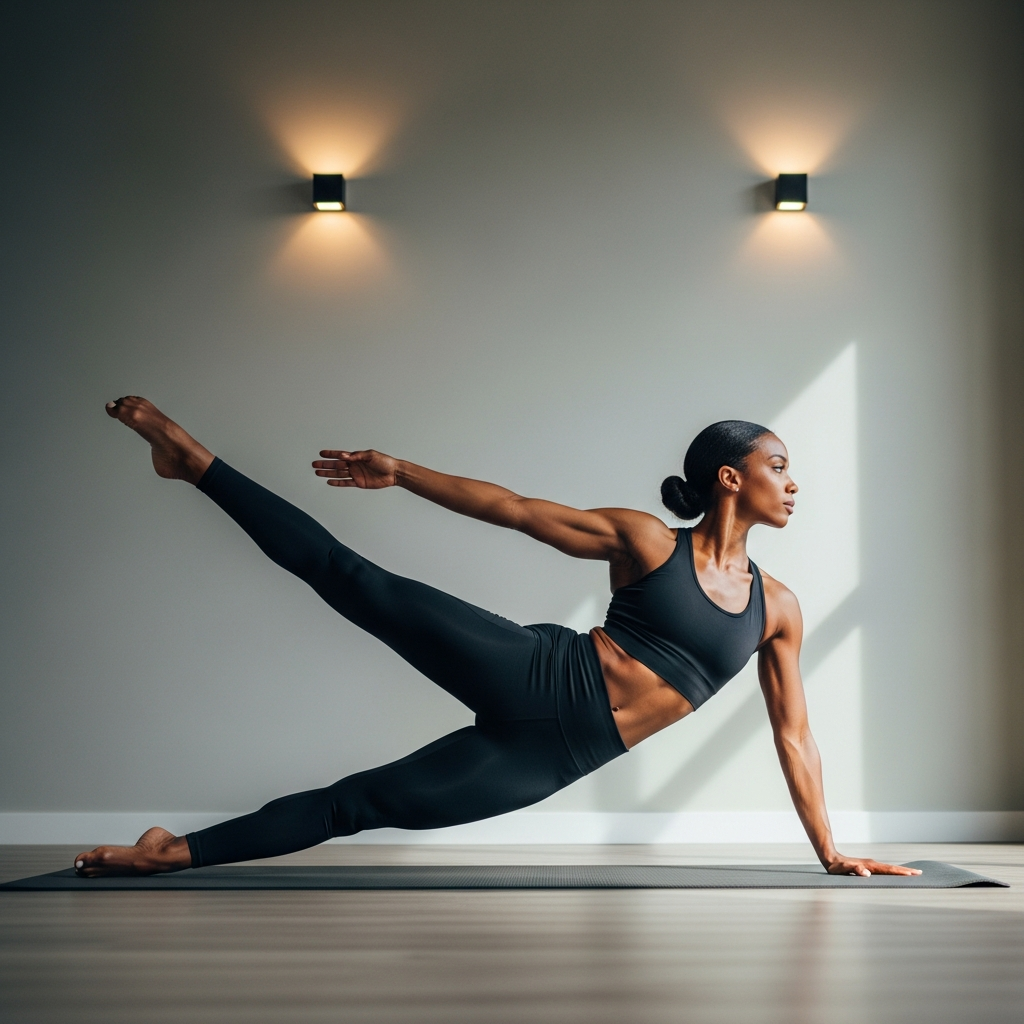
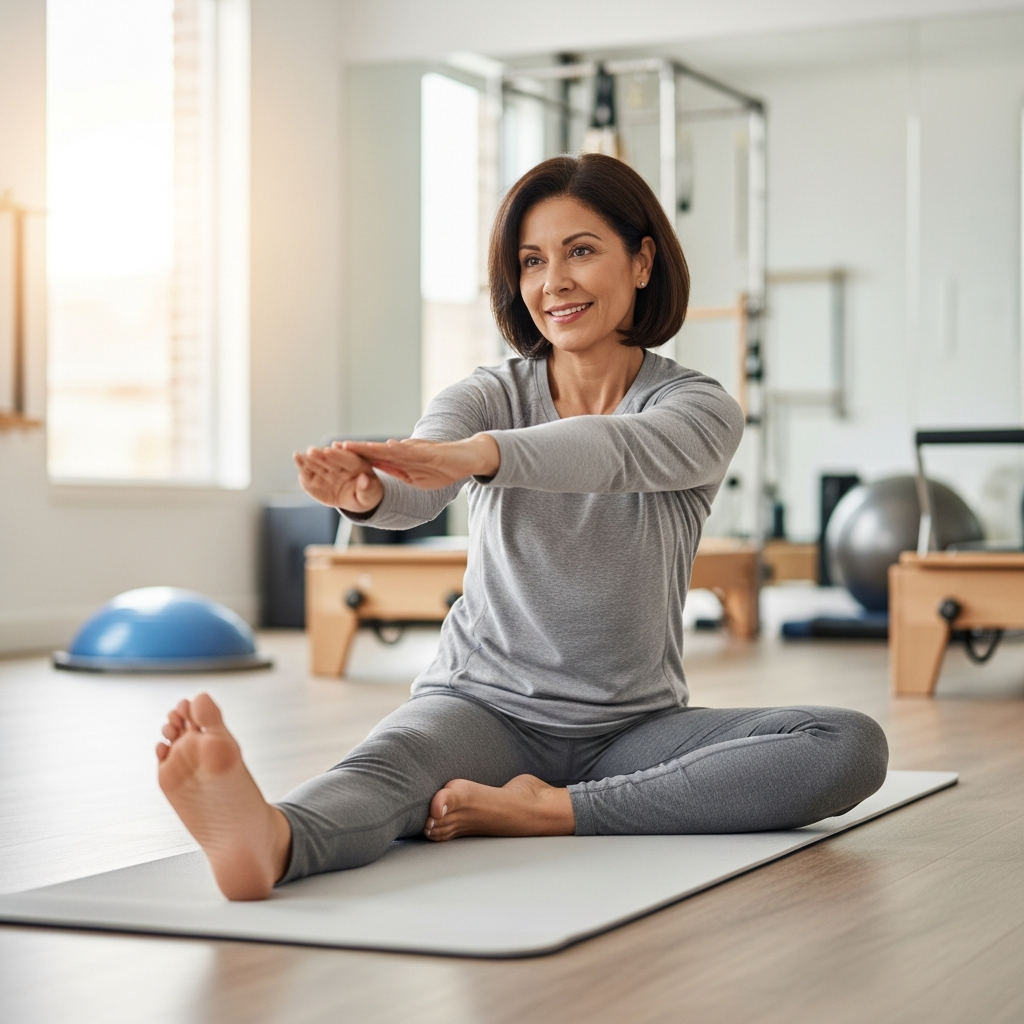
8 Benefits of Mat Pilates for Irving Beginners
You’ve probably had that moment. You know the one – you’re scrolling through your phone at 11pm, and you stumble across a video of someone moving through these slow, controlled exercises on a simple mat, and something just… clicks. It looks doable. It looks like something *you* could actually do. Not the acrobatic circus stuff you’ve seen other people post, just quiet, intentional movement that seems almost meditative. And you think, “maybe I should try that.”
Then the next morning comes, and the motivation has dimmed a little, and you talk yourself out of it because – well, where do you even start? Is it hard on your knees? Do you need special equipment? Will you be the only person in the room who can’t touch their toes? (Spoiler: you won’t be.)
If that sounds familiar, you’re in good company. Here in Irving, we talk to people every single day who are curious about movement – genuinely curious – but feel quietly intimidated by fitness options that seem designed for people who are already fit. Which, honestly, is one of the more frustrating things about the wellness world. It can feel very chicken-and-egg.
Mat Pilates is different, though. And we’re not just saying that.
Why Irving Beginners Keep Coming Back to This
There’s something happening in Irving right now that’s worth paying attention to. People are moving away from the punishing, “no pain no gain” approach to exercise – the kind that leaves you dreading every session – and gravitating toward something more sustainable. Something that actually feels good while you’re doing it, not just in the mythical “after” that you’re supposed to push toward.
Mat Pilates fits that shift perfectly. It was actually developed over a century ago by a man named Joseph Pilates, who – and this is interesting – originally designed it for rehabilitation. For people who were injured or recovering. So it has this built-in gentleness that never really went away, even as it evolved into the mainstream fitness world.
And the “mat” part matters more than people realize. No reformer machine, no special springs, no equipment you need to budget for or figure out. Just you, a mat, and gravity. That accessibility isn’t a consolation prize – it’s actually one of the things that makes it so effective, because you’re working with your own body weight in ways that build real, functional strength.
What You’re Actually Going to Learn Here
This article is going to walk you through eight specific benefits of mat Pilates – and we mean *specific*. Not vague promises like “you’ll feel better” (though you probably will). We’re talking about what actually happens in your body, your joints, your posture, your core, and yes, your mental state, when you commit to showing up on that mat regularly.
Some of these benefits will probably surprise you. Most people come in thinking Pilates is just about getting a flatter stomach – which, sure, it can help with that – but the full picture is so much richer than that. We’ll talk about what it does for your back pain (a big one for a lot of people), how it affects your balance and coordination in ways that matter for everyday life, and why it tends to work particularly well for people who are also on a weight loss path and want to protect their progress without burning themselves out.
We’ll also be honest with you. Mat Pilates isn’t magic, and it’s not a replacement for everything. But as a starting point – especially if you’ve felt like traditional exercise just isn’t built for where your body is *right now* – it might be exactly the kind of low-pressure, high-reward entry point you’ve been looking for.
So if you’re in Irving and you’re curious, or you’ve already been curious for a while and just needed a little nudge to actually learn more? Keep reading. We think by the time you get to the end of this, you’ll have a really clear sense of whether mat Pilates belongs in your life.
And honestly? We have a feeling it does.
What Even Is Mat Pilates, Anyway?
If you’ve ever walked past a Pilates class and peeked in – maybe at one of the studios near Las Colinas or somewhere off MacArthur Boulevard – you might have thought it looked… easy? A bunch of people lying on the floor, moving slowly, not a barbell in sight. And honestly, that’s a fair first impression. It’s also completely wrong, but we’ll get to that.
Mat Pilates is a form of exercise developed in the early 20th century by Joseph Pilates, a German-born fitness enthusiast who was, by most accounts, genuinely obsessed with the human body’s potential. He called his method “Contrology” – the study of control over your own movement. The “mat” part simply means you’re working on the floor rather than on the specialized Pilates machines (called reformers) that you might see in fancier, pricier studios. Just you, a mat, your body, and about six inches of core activation that you didn’t know was possible.
The Core Thing – And It’s Not What You Think
Here’s where people get confused, and it’s worth clearing up right away. When Pilates instructors talk about “the core,” they’re not just talking about your six-pack muscles. They’re referring to what Joseph Pilates called the “powerhouse” – essentially a cylinder of deep muscles wrapping around your midsection, including your pelvic floor, your deep spinal muscles, your diaphragm, and yes, those abs too.
Think of it like the foundation of a house. You can have beautiful walls and a gorgeous roof, but if the foundation is shaky? Everything else is compromised. A lot of us – especially people who’ve spent years at desk jobs or carrying extra weight – have foundations that need some serious attention. Mat Pilates is, in many ways, a system specifically designed to rebuild that foundation.
The counterintuitive part? You’ll often work *harder* moving slowly with control than you would just cranking out fast, sloppy reps at the gym. Slow is not the same as easy. First-timers are often genuinely surprised by this.
How It’s Different From Yoga (People Always Ask This)
Yes, both involve a mat. Yes, both emphasize breathing. But they come from very different philosophies. Yoga is rooted in ancient spiritual traditions and tends to emphasize flexibility, stillness, and mind-body connection in a more meditative sense. Pilates is fundamentally about precision and controlled movement – it’s almost more mechanical in its thinking, which some people find refreshing.
Actually, that reminds me of a good way to think about it: yoga is like learning to be still in a storm, while Pilates is like learning to move efficiently through one. Neither is better. They’re just different tools.
For beginners – particularly those in Irving who might be dealing with joint discomfort, weight-related mobility challenges, or haven’t exercised in a while – Pilates can sometimes feel more accessible because you’re not asked to fold yourself into complex poses. The movements have a logical, progressive structure to them.
Why “Beginner Friendly” Actually Means Something Here
The word “beginner” gets thrown around a lot in fitness, usually as marketing fluff. With mat Pilates, it genuinely means something specific. The foundational exercises – things like the Hundred, single leg circles, or basic bridging – can be modified almost infinitely. Bad knees? There’s a version for that. Limited range of motion? Also covered.
This matters a lot in a clinical context, which is why medical weight loss programs often incorporate Pilates principles or recommend mat classes as a starting point. When you’re working on weight loss – especially significant weight loss – you need movement that builds strength without beating up your joints. Something that creates what researchers call a “neuromuscular connection,” which is basically just a fancy way of saying your brain gets better at talking to your muscles.
And that communication? It turns out it’s been pretty quiet for a lot of us for a long time.
The Breathing Piece (Don’t Skip This)
Pilates has a very specific approach to breathing that feels weird at first. You breathe laterally – expanding your ribcage out to the sides rather than puffing your belly up. It’s designed to keep your core engaged while still allowing full lung capacity.
It’s a bit like learning to breathe all over again, which sounds dramatic but is honestly kind of freeing once it clicks.
What to Actually Expect in Your First Few Classes
Let’s be honest – your first mat Pilates class will probably feel a little awkward. You’ll look around the room wondering why everyone else seems to know what a “neutral spine” is, and you’ll discover muscles you genuinely didn’t know existed (hello, deep hip flexors). That’s completely normal. The learning curve is real but it’s also surprisingly short.
Most beginners find that weeks two and three feel dramatically different from week one. Stick it out past that first session.
Finding the Right Class in Irving
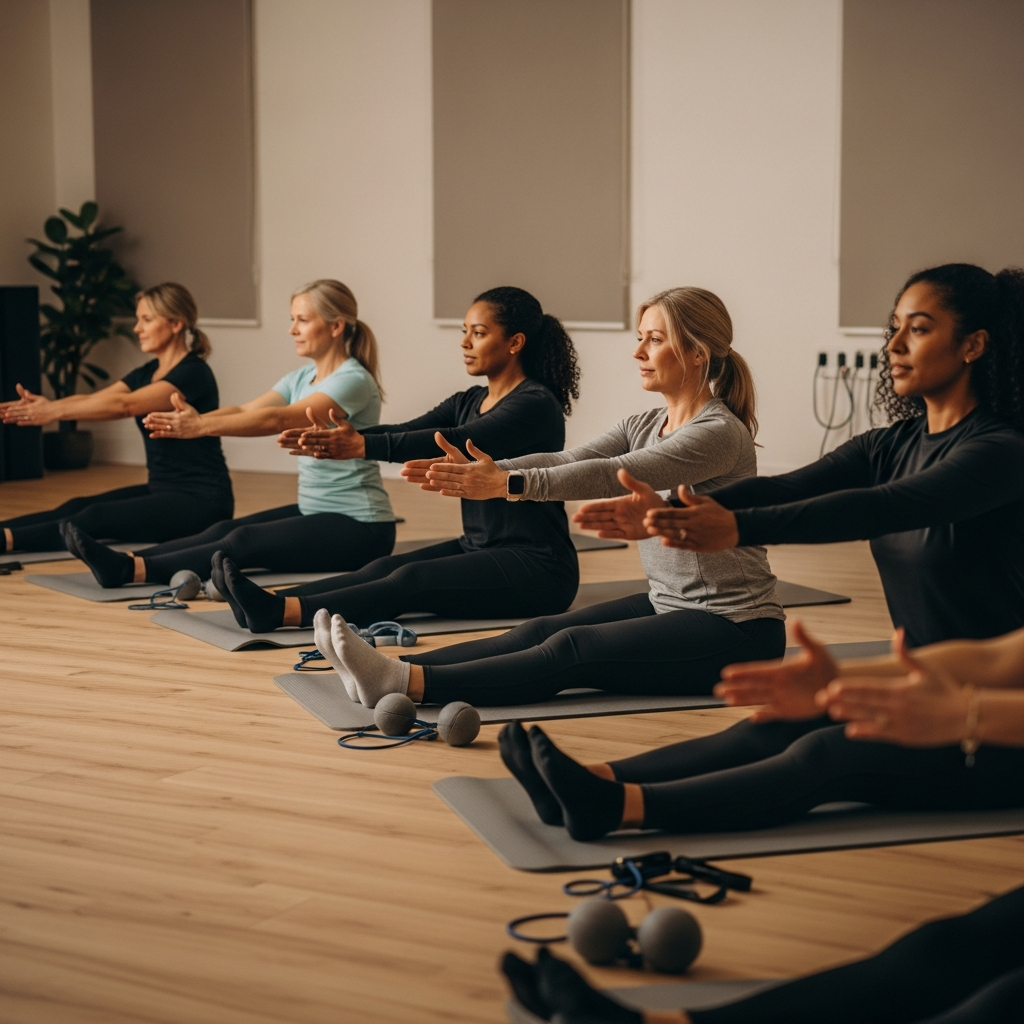
Not all mat Pilates classes are created equal, and this matters more than people realize. Irving has a solid mix of options – community recreation classes through the Irving Parks and Recreation Department tend to be gentler and cheaper, while dedicated Pilates studios offer smaller class sizes and instructors who’ll actually watch your form.
For true beginners, look specifically for classes labeled “foundational,” “intro,” or “level 1.” Avoid anything marketed as “Pilates fusion” or “cardio Pilates” until you’ve got the basics down. Those hybrid classes move fast and assume you already understand the core principles – which, at week one, you don’t yet. And that’s fine.
One practical tip: call the studio before you book and tell them your experience level. A good instructor will tell you honestly whether the class is right for you. If they just say “oh everyone’s welcome!” without asking any questions, that’s mildly telling.
The Gear You Do (and Don’t) Need
Here’s the thing about mat Pilates – you need almost nothing to start. Seriously. A mat, comfortable clothes that don’t restrict your hips, and bare feet or grippy socks. That’s it.
The grippy socks thing isn’t just aesthetic. On a smooth studio floor, your feet will slide during certain exercises, and that tiny bit of instability completely changes how the movement feels. You can find decent pairs for around $12-15 at Target or any athletic store near the Irving Mall. Don’t spend $40 on fancy ones yet.
If you’re practicing at home between classes – which, honestly, you should be – a mat with at least 6mm thickness will save your spine. The ultra-thin yoga mats that are fine for stretching are genuinely uncomfortable for Pilates work on hard floors.
The Breathing Thing Is Weird At First – Stick With It
Pilates breathing is lateral rib breathing, which means you’re expanding your ribcage sideways rather than letting your belly puff out. This feels completely unnatural for about three weeks. You’ll probably hold your breath at exactly the wrong moment and exhale when you should inhale and vice versa.
Don’t get frustrated by this. The breathing pattern actually activates your deep core muscles in ways that regular breathing doesn’t – it’s not just something instructors made up to sound fancy. Just keep trying. Your body figures it out eventually, almost without you noticing.
Making Progress Without Overdoing It
One mistake beginners make constantly: treating mat Pilates like a competitive sport. You’ll see someone in class bending into positions that seem impossible and you’ll either push too hard trying to match them, or decide you’re “not flexible enough” for Pilates. Both reactions miss the point entirely.
Form over range of motion, every single time. A small, controlled movement done correctly does more for your body than a big, sloppy one. Your instructor should be reinforcing this – if they’re not, speak up or find a different class.
Two to three classes per week is the sweet spot for beginners building a foundation. More than that and you’re not giving your stabilizer muscles time to recover and strengthen. Less than twice a week and the movement patterns don’t quite get a chance to stick.
A Practical Home Practice to Start With
Between classes, spend just 10 minutes a few times a week on these three fundamentals: the pelvic curl (it teaches you spinal articulation better than anything), the dead bug (awkward name, incredible core control builder), and the single-leg stretch. YouTube has solid free tutorials from instructors like Merrithew or STOTT Pilates – those are reputable sources, not random fitness influencers doing questionable form.
Keep a small note on your phone after each class – just one thing that clicked or one correction your instructor gave you. You’ll thank yourself two months in when you can actually see how much your body awareness has shifted.
When It Gets Frustrating (And It Will)
Let’s be real for a second. You’re going to show up to your first few mat Pilates classes feeling like everyone else got a secret memo you didn’t receive. People around you will seem to breathe at exactly the right moment, find their “neutral spine” on command, and hold a hundred without turning purple. You’ll be lying there wondering if your core even exists.
That’s completely normal. And honestly? It means it’s working.
Here are the things that actually trip beginners up – and what to do about them.
Your Brain and Body Aren’t Talking Yet
The biggest frustration most beginners hit isn’t physical weakness. It’s the disconnect between what your instructor says and what your body actually does. “Scoop your abdominals.” Okay… what does that mean? “Imprint your spine.” Sure. How?
This is a coordination challenge, not an intelligence problem. Your nervous system is literally building new movement patterns from scratch. It takes time – sometimes several weeks – before these cues click.
The solution is embarrassingly simple: don’t try to do everything at once. Pick one cue per class to really focus on. Just the breathing this week. Just the hip alignment next week. You’re not falling behind. You’re building a foundation.
The Floor Is Harder Than It Looks
Here’s something nobody warns you about. The mat is unforgiving. Lying on a thin piece of foam while trying to concentrate on your powerhouse engagement means you’re also noticing that your tailbone is pressing into the ground, your neck is getting stiff, and your lower back is staging a quiet protest.
Especially here in Irving, where so many of us spend the majority of our days sitting in cars or at desks, tight hip flexors and a compressed lower back are just… kind of the default setting. Mat work exposes all of it immediately.
So bring a slightly thicker mat if you need one – genuinely, there’s no prize for suffering on a quarter-inch of padding. And tell your instructor about any specific discomfort before class. A good teacher will offer modifications that let you still get the work in without grinding through pain.
“I Can’t Feel My Core”
This one is so common it should probably be on the new student welcome form. You’re doing the exercise, you’re concentrating, and you genuinely cannot tell if your abs are engaged or just… there.
What’s actually happening is that you’ve likely been compensating with other muscles for years – your hip flexors, your neck, your shoulders. They’ve been doing the heavy lifting while your deep core muscles quietly took a long vacation.
A trick that actually helps: try placing one hand on your lower belly during exercises. You’re not grading yourself, you’re just getting information. Over time, that tactile feedback helps your brain find what it’s looking for. It feels a little strange at first. Do it anyway.
Comparing Yourself to the Person on the Next Mat
You knew this was coming. Someone nearby is going to look effortless. Maybe they’ve been doing this for years, or maybe they just have naturally good body awareness – some people do. Comparing your week two to their year two is the fastest way to talk yourself into quitting something that’s actually helping you.
Irving has a genuinely active fitness community, which is wonderful, but it can also make beginners feel like they should already be further along. You don’t need to be. Progress in Pilates is almost always invisible before it’s visible – you’ll feel the difference in how you carry yourself, how your back feels after a long workday, before you ever see dramatic changes.
The Consistency Problem
Maybe the hardest challenge of all. Life in a busy city doesn’t pause for your wellness goals. Work gets hectic, the commute eats your evening, and that 6am class starts looking less appealing when your alarm goes off.
Two or three sessions a week is genuinely ideal when you’re starting out – but one session, consistently, beats three sessions occasionally every single time. Find a class time that fits your actual life, not your aspirational life. The instructor who teaches Thursday at noon might be exactly right for your schedule, even if you wish you were a Saturday morning person.
Start where you are. Adjust as you go. That’s the whole thing, really.
What to Actually Expect When You’re Just Starting Out
Let’s be honest with each other for a second. If you’ve read this far, you’re probably excited – maybe even picturing yourself with noticeably better posture and a stronger core by next month. And listen, those things *will* happen. Just… maybe not as fast as the Instagram highlight reel suggests.
Most beginners feel a difference in body awareness within the first two or three sessions. That’s not a typo. Even just learning how to properly engage your deep core muscles – the ones you’ve probably been ignoring for years – creates this subtle but real shift in how you carry yourself. You’ll notice it first when you’re sitting at your desk or standing in line at the grocery store. Something just feels… different.
Visible changes take longer. That’s the honest truth.
A Realistic Timeline (Because You Deserve One)
The old Pilates saying is “ten sessions to feel the difference, twenty to see the difference, thirty to have a new body.” Joseph Pilates actually said that – and while “new body” is a bit dramatic, there’s real wisdom in it. Don’t measure your progress against the person next to you in class who’s been doing this for two years. That way lies frustration.
Here’s a rough, realistic breakdown
Weeks 1-2: You’re learning the vocabulary. Your brain is working overtime trying to remember what a “neutral spine” even means. You’ll probably feel awkward, maybe a little sore in places you didn’t expect (hello, deep hip flexors), and that’s completely normal. Don’t quit here.
Weeks 3-6: Things start clicking. The cues your instructor gives stop feeling like a foreign language. You’re moving with slightly more intention, and that post-class feeling of being “wrung out but good” becomes something you look forward to.
Months 2-3: This is where most people first notice real changes – better posture, improved balance, maybe that nagging lower back tension isn’t quite so loud. Your core is genuinely getting stronger, even if the mirror hasn’t caught up yet.
Weight loss, if that’s part of your goal? That’s a longer conversation, and it works best when mat Pilates is part of a bigger picture – paired with how you’re eating, your sleep, and ideally, support from healthcare providers who actually understand your body and history.
The Soreness Question Everyone Has
You will probably be sore after your first couple of sessions, just not where you expect. Most newcomers are surprised that their abs feel fine but their inner thighs or the muscles along their spine are quietly screaming. That’s because Pilates targets stabilizing muscles – the supporting cast your body has been letting coast for years.
This kind of soreness is normal. Actual pain – sharp, joint-related, or anything that doesn’t ease up within a day or two – is worth paying attention to. Listen to your body on that one.
Setting Yourself Up for Success in Irving
If you’re in the Irving area and thinking about getting started, a few things worth knowing: look for classes specifically labeled as beginner or foundational level. Not all mat Pilates classes are created equal, and dropping into an intermediate class when you’re brand new is a fast track to feeling lost and discouraged. You deserve a proper introduction to the method.
Commit to at least two sessions per week if you can manage it. Once a week will still benefit you, but twice a week is where the learning really sticks – your nervous system needs repetition to build those new movement patterns.
Actually, that reminds me of something important – bring a water bottle and wear form-fitting clothes if you have them. Baggy clothes make it genuinely hard for an instructor to see your alignment and help you. It’s a small thing, but it matters more than you’d think.
The Bigger Picture
Mat Pilates isn’t a quick fix. It’s a foundation. It’s the kind of thing that quietly improves everything else you do – other workouts, how you recover from a long day, how your body holds up as you get older. The benefits we covered earlier in this article don’t arrive all at once, and they don’t announce themselves with dramatic fanfare.
But one day you’ll pick something up off the floor and realize your back didn’t complain. Or you’ll catch your reflection and notice you’re actually standing tall.
That moment makes the slow start completely worth it.
So there you have it – eight genuinely good reasons why rolling out a mat and giving Pilates a try might be one of the best decisions you make for your body this year. And honestly? If even two or three of those benefits resonated with you, that’s more than enough reason to start.
Here’s what I want you to take away from all of this. Mat Pilates isn’t some trendy workout that promises the world and disappears in six months. It’s been around for over a century because it *works* – quietly, steadily, without beating your body up in the process. For beginners especially, that matters more than people realize. You don’t need to already be fit to start. You don’t need to be flexible, coordinated, or own any special equipment. You just need a mat and a willingness to show up.
What tends to surprise people most – and this comes up again and again – is how *connected* they feel to their own bodies after just a few sessions. Not in a woo-woo way, but in a very practical “oh, that’s where I hold tension” kind of way. Irving is a busy place. Life here moves fast. And most of us have spent years completely ignoring the signals our bodies are sending. Pilates has this way of slowing that down, even just for forty-five minutes, and letting you actually check in with yourself.
The other thing worth mentioning? The benefits stack. Better core strength supports your posture. Better posture reduces your back pain. Less back pain means you’re moving more freely throughout your day. More movement supports your overall wellness goals. It’s all connected – which is kind of the whole point of Pilates in the first place.
Now, if you’re also working on your weight or navigating some health challenges alongside starting a new movement practice, that’s where having a little extra guidance can make a real difference. Sometimes the missing piece isn’t motivation or effort – it’s just having someone in your corner who understands the full picture of your health.
That’s exactly what we’re here for.
If you’ve been curious about how to build a wellness plan that actually fits your life – one that might include Pilates, nutrition support, medical guidance, or just a conversation about where to start – we’d genuinely love to hear from you. No pressure, no hard sell. Just a real conversation with people who care about helping you feel better in your body.
Reach out to our team whenever you’re ready. Whether that’s today or three months from now after you’ve been quietly building your mat Pilates habit in your living room – we’ll be here. Irving has some wonderful people in it, and we’re lucky to be part of this community.
You deserve to feel strong, capable, and comfortable in your own skin. And honestly? You’re already closer to that than you think.