Powering Up with Pilates Reformer: Your Comprehensive Guide to Total Body Fitness
Do you often find yourself scrolling through fitness pages, fascinated by the lean, muscular bodies of Pilates enthusiasts and wondering how you too can achieve that level of fitness? Are you intrigued by the mysterious-looking machine known as the Pilates Reformer, with its springs, straps, and sliding carriage? If so, then you’ve stumbled upon the right place. This comprehensive guide is designed to demystify the world of Pilates Reformer and help you understand how it can revolutionize your fitness journey.
Pilates, a distinctive method of physical and mental conditioning invented by Joseph Pilates in the early 20th century, has been transforming bodies and minds for over a century. It works on the principle of muscle control, precision movements, full concentration, fluid movements, and rhythmic breathing. Most people are familiar with Mat Pilates, which is performed on a padded mat with small accessories. However, the world of Pilates goes beyond just mat exercises. Enter the Pilates Reformer – a versatile piece of equipment that takes Pilates to a whole new level.
The Pilates Reformer is a sophisticated machine that looks somewhat like a single bed frame but is equipped with a sliding carriage rigged with springs, bars, and straps. This unique setup provides resistance and support for a multitude of exercises that can be performed on it. While it might seem intimidating at first, once mastered, the Reformer can become your best ally in achieving total body fitness.
In this blog post, we will explore the Pilates Reformer in detail. We will cover its history, how it works, and what sets it apart from Mat Pilates. We’ll delve into the benefits of using a Reformer and how it can transform your body and enhance your overall well-being. We will also guide you through what to expect from a typical Pilates Reformer class and provide tips on how to make the most out of your Reformer workout sessions. Whether you are a seasoned fitness enthusiast or a beginner looking to venture into the world of Pilates, this guide will provide valuable insights for everyone.
Why should this matter to you? If you have been looking for a workout that offers more than just burning calories – a workout that helps improve your posture, flexibility, and strength while being gentle on your joints – then Pilates Reformer might just be what you need. Furthermore, if you are already a fan of Mat Pilates and want to up your game, learning about the Reformer will open a new world of possibilities.
In the increasingly busy and stressful world we live in, it’s more important than ever to look after our physical and mental well-being. Pilates Reformer not only provides a highly effective total-body workout but also promotes mind-body connection, helping you become fitter, stronger, and more balanced both physically and mentally.
So, are you ready to dive into the dynamic world of Pilates Reformer? Let’s embark on this exciting journey towards a healthier, stronger you.
The Fundamentals and Framework of Pilates Reformer
Pilates Reformer is one of the most acclaimed exercise apparatuses in the world of Pilates, widely celebrated for its versatility and effectiveness in providing a full body workout. Understanding the foundations and framework of this unique piece of equipment is immensely beneficial for anyone interested in embarking on a Pilates journey.
To comprehend the essence of Pilates Reformer, it’s essential to begin with the originator, Joseph Pilates. Born in Germany in 1883, Joseph Pilates was a physical trainer and innovator who designed a series of exercises and innovative equipment to enhance physical strength, flexibility, posture, and mental awareness. One such apparatus was the Pilates Reformer, created in the 1920s to rehabilitate injured soldiers during World War I. The machine was designed to provide precise resistance and support, helping to align the body and strengthen muscles without adding bulk.
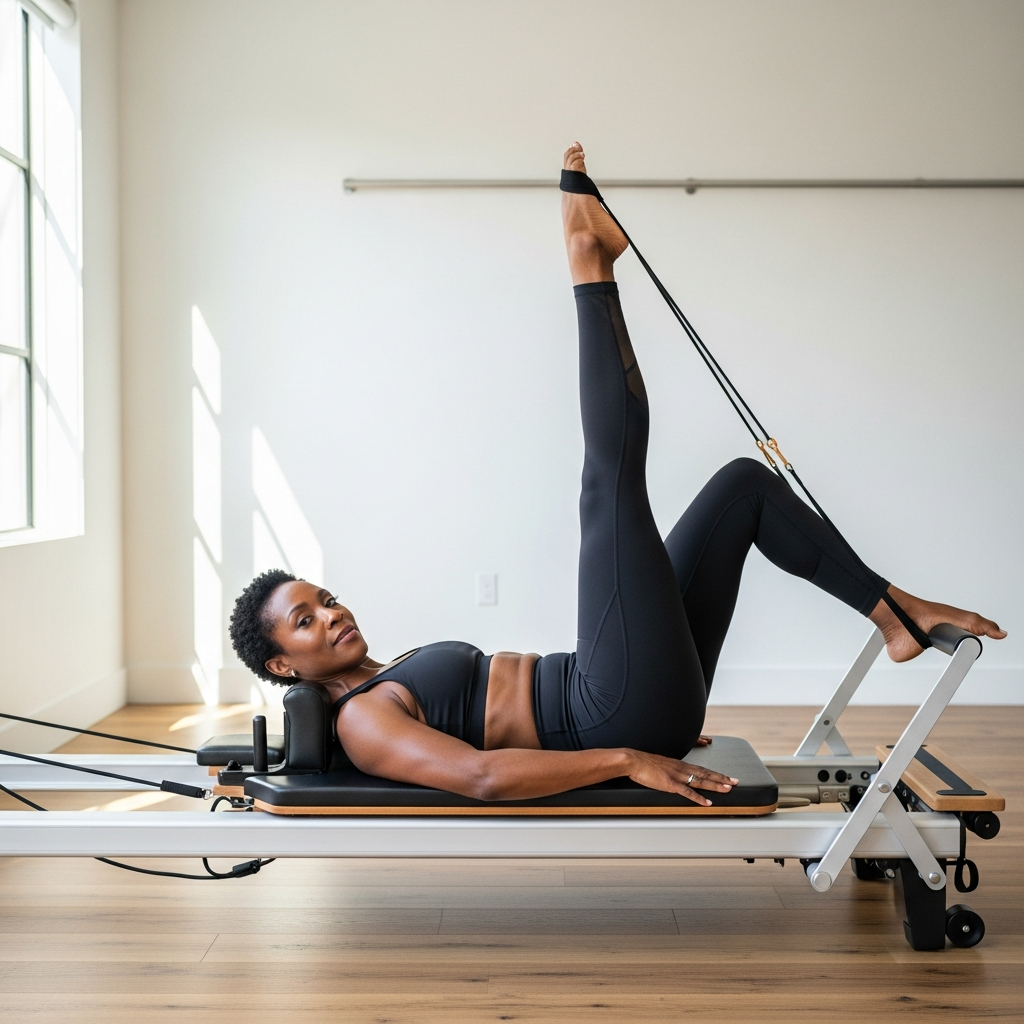
The Pilates Reformer comprises a bed-like frame with a flat platform called the carriage, which rolls back and forth on wheels within the frame. The carriage is attached to one end of the reformer by a set of springs, which offer different levels of resistance as the carriage is pushed or pulled along the frame. The structure also includes a foot bar at the spring end of the machine and long straps with handles that can be pulled with arms or legs.
Pilates principles are at the core of every exercise performed on a Pilates Reformer. These principles: centering, concentration, control, precision, breath, and flow, provide the framework for all Pilates work. Centering refers to the concept that all movements originate from the core or ‘powerhouse’ of the body. Concentration and control mean that each exercise is done with full attention and deliberate muscular control. Precision is about performing each movement accurately to benefit from the exercise fully. Breath involves using specific breathing patterns to supply the body with essential oxygen while aiding in movement control. Flow is about ensuring that each exercise flows smoothly into the next, creating a sense of rhythm and balance.
The Pilates Reformer offers a wide range of exercises that can be performed, from basic moves for beginners to advanced workouts for seasoned practitioners. Its design allows for a multitude of exercises to be performed in different positions, including lying down, sitting, standing, and even upside down.
One of the main advantages of the Pilates Reformer is its adaptability. The adjustable springs allow for progressive resistance, which helps to enhance strength, flexibility, and endurance progressively and safely. Moreover, the machine can cater to people of different fitness levels and can be customized to address specific weaknesses or goals.
Pilates Reformer exercises aim to engage the whole body. They focus not just on the core muscles but also on the arms and legs, providing a balanced workout that strengthens, tones, and increases flexibility. This emphasis on balanced development helps improve posture and balance, reduces risk of injury, and supports efficient and graceful movement in daily life.
The Pilates Reformer also provides feedback to the user. If an exercise is not performed correctly, the machine’s response – such as the carriage not moving smoothly – can help the user or instructor identify and correct the issue. This ability to provide immediate feedback makes the Pilates Reformer a powerful tool for learning correct form and alignment.
In conclusion, understanding the fundamentals and framework of the Pilates Reformer is not merely about knowing how the machine works. It’s about appreciating the depth and breadth of Joseph Pilates’ vision: a holistic approach to physical well-being that combines strength, flexibility, control, and mindfulness. With its versatile design and ability to provide a balanced full-body workout that caters to different fitness levels, the Pilates Reformer truly embodies these principles.
Unveiling the Power of Pilates Reformer: A Comprehensive Guide
Pilates is globally recognized for its transformative effects on body fitness, posture, flexibility, and overall wellness. However, if you are new to this realm or even an experienced enthusiast, one term you may often encounter is ‘Pilates Reformer.’ If you’re wondering what exactly this refers to and how it can benefit your fitness journey, this article is for you.
The Pilates Reformer is a bed-like frame with a flat platform, known as the carriage, which rolls back and forth on wheels. It’s an incredible machine that enhances your Pilates workout by providing resistance through springs, straps, and the carriage itself.
Now, let’s delve into a practical guide on how to leverage the Pilates Reformer for maximum benefits.
Step 1: Get Familiar with the Reformer
Before you jump into a workout, familiarize yourself with the Pilates Reformer parts: the footbar, the springs (for resistance), shoulder blocks to keep you from sliding, and straps that you can hold with your hands or attach to your feet.
Step 2: Start with a Warm-Up
Begin your session with Footwork on the Reformer. Sit on the carriage with your feet placed on the footbar. Push out until your legs are straight and then resist the carriage as it comes back in. This will help you connect with your core, warm up your muscles and joints, and prepare your body for a more intensive workout.
Step 3: Incorporate Core Exercises
Try exercises like ‘The Hundred’ on the Reformer. Lying down with your head on the headrest and hands in straps, pump your arms up and down while engaging your core. This exercise works wonders for enhancing core strength and endurance.
Step 4: Work On Your Lower Body
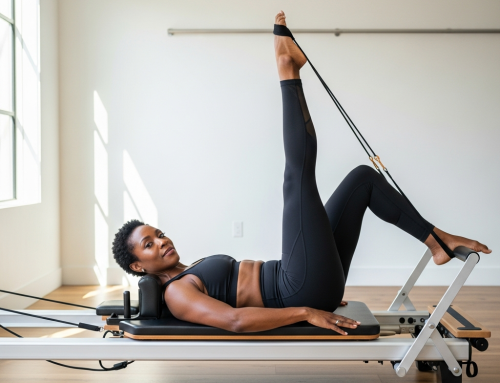
Add exercises like ‘Feet in Straps’ or ‘Frog and Leg Circles’ for lower-body strength and flexibility. In these exercises, you lie down on your back and place your feet in straps attached to the Reformer’s springs, providing resistance while moving your legs.
Step 5: Don’t Forget Your Upper Body
Incorporate exercises such as ‘Arm Circles’ or ‘Chest Expansion’ to work your upper body. These exercises are performed with the straps in hands, working against the resistance provided by the springs.
Step 6: Cool Down
Just like any other workout, ensure you cool down at the end of your session. You can do a series of stretches on the Reformer to ease your muscles and bring your heart rate down.
Remember, just like mat Pilates, form and control are key in a Reformer workout. It’s not about how quickly you can move the carriage or how heavy a spring you can use. It’s about control, precision, and mindfulness. If you’re new to the Reformer, start with a beginner’s class or private session to ensure you’re using the equipment correctly and safely.
In specific scenarios, such as dealing with an injury or during pregnancy, using a Reformer can be especially beneficial. The reformation allows for modification of exercises and provides support, making it possible for safe workouts in these conditions. However, always consult with a healthcare professional before beginning any new exercise regimen.
The Pilates Reformer is a versatile and effective tool that adds an extra dimension to your Pilates workout. Whether you’re a seasoned Pilates enthusiast or a beginner looking to diversify your workout routine, give the Reformer a try.
And remember, as with all forms of exercise, consistency is key. So stick with it, enjoy the journey, and watch as the transformative power of Pilates works its magic on your body and mind!
Pilates Reformer: Challenges, Solutions, and Expert Tips
Pilates is a unique and holistic exercise regimen that focuses on core strength, flexibility, balance, and overall body awareness. This practice can be done using just a mat or with various pieces of equipment. One such piece of equipment is the Pilates Reformer, a bed-like frame with a flat platform that rolls back and forth on wheels. This article will delve into common challenges faced by practitioners, solutions to these challenges, and expert tips for the Pilates Reformer.
1. Understanding the Pilates Reformer
A common misconception is that Pilates, specifically the Reformer, is only for the advanced and elite athletes. However, the beauty of Pilates and the Reformer lies in its versatility. It can be modified to accommodate beginners, rehabilitation needs, and advanced levels. The Reformer uses springs to provide varying levels of resistance that can be adjusted to suit each individual’s ability and progress.
2. Common Challenges
The first challenge many face when starting on the Reformer is the initial intimidation factor. With its straps, springs, and sliding carriage, the Reformer can seem daunting. The second challenge comes with learning to control the carriage’s movement. Mastery over this requires strength, balance, and coordination. Lastly, aligning the body correctly during workouts is another common challenge.
3. Solutions
To overcome intimidation, take beginner classes or private sessions to familiarize yourself with the machine. As you learn how to adjust the springs and use the straps, your confidence will grow. To gain control over the carriage’s movement, practice consistently. Start with lighter resistance to focus on proper form and gradually increase as your strength improves. For correct alignment, work with a certified Pilates instructor who can guide you on proper positioning.
4. Expert Tips
a) Start Slowly: Don’t rush into advanced classes or heavier resistance. Begin with the basics, focusing on form and technique.
b) Utilize a Certified Instructor: They can provide individualized instruction and correct any misalignments or improper movements, preventing potential injuries.
c) Consistency is Key: Regular practice will help you gain strength, improve coordination, and become comfortable with the Reformer.
d) Listen to Your Body: Each day is different, and so is your body’s capability. Some days you might be able to push harder; other times, you might need to ease up.
e) Breathing: Pilates breathing is essential in controlling movements and aiding in core engagement. Inhale deeply through the nose and exhale forcefully through the mouth.
f) Mind-Body Connection: Pilates isn’t just a physical exercise; it’s also a mental workout. Focus on the muscles you’re working on—this connection can enhance your performance and results.
5. Pilates Reformer vs. Mat Pilates
Mat Pilates and Reformer Pilates both offer fantastic benefits. Mat Pilates primarily uses body weight as resistance and focuses on core strength. In contrast, Reformer Pilates provides versatility with adjustable resistance, making it suitable for a wider range of individuals. The choice between Mat and Reformer Pilates should depend on personal fitness goals, availability of resources, and preference.
6. Pilates Classes
Pilates classes are an excellent way to learn proper technique and form under the supervision of certified instructors. These classes can range from beginner to advanced levels, with some focusing solely on mat work, others incorporating equipment like the Reformer.
In conclusion, the Pilates Reformer is a versatile tool that can amplify your Pilates practice. Remember, the key is to start slowly, focus on technique, and be consistent. With time, practice, and possibly the guidance of a certified instructor, you can harness the full potential of the Pilates Reformer.
An Insight into Pilates Reformer: Expectations, Timelines, and Next Steps
Pilates Reformer, the brainchild of Joseph Pilates, offers an innovative and dynamic approach to the traditional Pilates workout. Unlike regular mat Pilates, the Reformer employs a unique machine that increases the intensity of the workout, helping to improve flexibility, strength, and balance, while also promoting better posture. Here’s a comprehensive guide on what you can anticipate when embarking on your Pilates Reformer journey, along with realistic timelines and suggested next steps.
The Reformer machine consists of a flat platform called the carriage that slides back and forth along tracks within a frame. The carriage is attached to one end of the Reformer by a set of springs that provide differing levels of resistance as the carriage is pushed or pulled along the tracks. The machine also includes a foot bar at one end and long straps with handles at the other, which can be used for a variety of exercises.
**What to Expect**
Going into your first Pilates Reformer class, it’s vital to come in with an open mind and be prepared to engage muscles you didn’t even know you had. The class typically starts with a warm-up on the Reformer machine, which includes simple, low-resistance movements to get your body accustomed to the equipment. Following this, your instructor will guide you through a series of exercises targeting specific muscle groups.
Expect to perform exercises in various positions – lying down, sitting, standing, pulling the straps, pushing the footbar, perched on the footbar, perched on the shoulder blocks, with extra equipment (like a box or pole), and more. The versatility of the machine allows for an endless variety of movements.
Additionally, expect some degree of challenge. The Reformer can be adjusted to provide varying levels of difficulty, making it suitable for beginners through to advanced practitioners. However, its ability to provide resistance and support simultaneously means you can safely try exercises that might feel too challenging on a mat.
**Timelines**
The timeline for seeing results from your Pilates Reformer workouts can vary based on several factors, including your starting fitness level, the frequency of your workouts, your diet, and more.
As a general rule, after about 10-12 consistent sessions, you should start to notice improvements in overall strength, flexibility, and balance. Many people report feeling a difference in their body (like improved posture and increased core strength) before they see physical changes. After about 20 sessions, you may start to see changes in your body shape and tone.
**Next Steps**
Once you get the hang of Pilates Reformer workouts, you can start to increase the intensity and complexity of your exercises under the guidance of your instructor. You can incorporate more advanced movements or increased resistance to continue challenging your body and progressing in your fitness journey.
Furthermore, consider integrating your Reformer workouts with mat Pilates classes. While the Reformer machine provides an enhanced full-body workout, mat Pilates helps to strengthen the core and improve flexibility, which are integral aspects of any balanced fitness regime.
Lastly, remember that consistency is key. Try to attend classes regularly (at least twice or thrice a week) and maintain a balanced diet to maximize the benefits from your Pilates Reformer workouts.
In conclusion, Pilates Reformer presents an engaging and unique approach to fitness that can yield remarkable results when practiced consistently and correctly. Whether you are a seasoned athlete or a fitness novice, this versatile workout regime can be adapted to suit your individual needs and help you achieve your personal fitness goals.
In conclusion, the Pilates Reformer is an exceptional piece of equipment that provides a unique and effective method for enhancing physical fitness, improving posture, and promoting overall well-being. The Reformer is designed to challenge and engage the body in different ways than traditional workouts, using springs, pulleys, and your own body weight to create resistance. This ingenious piece of machinery, attributed to Joseph Pilates, takes the principles of his original Matwork and elevates them to a new level of intensity and versatility.
The Reformer is a game changer when it comes to core strength. The exercises performed on this machine target not only the superficial muscles but also the deep core muscles. This holistic approach to core strengthening builds stability and balance, reducing the risk of injury and aiding in daily tasks. Furthermore, the Reformer can be adjusted to accommodate individual needs and fitness levels – from beginners to advanced practitioners, everyone can benefit from its use.
Beyond strength training, Pilates Reformer workouts are known for enhancing flexibility. By promoting lengthening and stretching of the muscles, it allows for a greater range of motion. This is not just beneficial for athletes or dancers – everyone can enjoy the benefits of increased flexibility, including improved performance in other sports, reduced muscle tension and enhanced relaxation.
One of the most distinguishing aspects of the Pilates Reformer is its emphasis on mind-body connection. Pilates is not simply a physical exercise; it is a practice that brings together the body and the mind. The precision required in executing each movement encourages mindfulness and concentration. This focus on mental engagement during physical activity helps reduce stress, enhance mental clarity, and promote a sense of inner tranquility.
The Reformer also offers a fantastic method for rehabilitation. Whether recovering from an injury or surgery, or dealing with chronic pain conditions, the adjustability and low impact nature of the Reformer makes it an excellent tool for safely regaining strength and mobility. It’s no surprise that many physiotherapists and rehabilitation centers have incorporated Pilates Reformer into their programs.
As we’ve explored, the Pilates Reformer is a versatile and powerful tool that offers a wide range of benefits. However, as with any fitness regimen, it’s important to receive proper instruction and guidance to ensure safe and effective workouts. Professional guidance will not only help you avoid injury but also ensure that you’re getting the most out of your workouts.
For those intrigued by the potential benefits of the Pilates Reformer, why not take the next step? Whether you’re a seasoned Pilates enthusiast or a curious beginner, our team of certified instructors is here to guide you on your journey. We offer personalized classes tailored to your individual needs, fitness level, and goals. Our dedicated professionals are eager to share their knowledge and passion for Pilates with you.
Don’t hesitate! Your path to improved strength, flexibility, and mindfulness is just a call or an email away. Contact us today to schedule your first Pilates Reformer session. Experience firsthand how this unique approach to fitness can enhance your physical health, mental well-being, and overall quality of life. Your body and mind will thank you!