The Beginner’s Guide to Mat Pilates: A Safe and Effective Start to Your Fitness Journey
Introduction:
Are you looking to kick-start your fitness journey but are unsure of where to begin? Or perhaps you’re a seasoned gym-goer exploring new ways to spice up your fitness routine? Either way, you might be asking yourself: Is mat Pilates okay for beginners? Spoiler alert: Absolutely, yes! But just like any other form of exercise, you need a comprehensive understanding of it to reap the maximum benefits. Welcome to our all-inclusive guide that will pave your way into the transformative world of mat Pilates!
Mat Pilates, a popular form of exercise that focuses on core strength, flexibility, balance, and endurance, is a fantastic choice for beginners. Joseph Pilates, the founder of this practice, once famously said, “In 10 sessions, you feel better, 20 sessions you look better, 30 sessions you have a completely new body.” Imagine feeling stronger, more flexible, and magically more aligned in less than a month – that’s the magic of Pilates!
In this guide, we will deep dive into mat Pilates – what it is, its benefits, how it differs from other forms of Pilates, and most importantly, why it’s a safe and effective choice for beginners. We’ll also provide some handy tips to help you get the most out of your mat Pilates sessions.
Why does this matter to you? As a beginner, the world of fitness can seem daunting with countless exercise regimes and advice floating around. Choosing the right workout that suits your needs can make or break your fitness experience. Mat Pilates is not only beginner-friendly but also incredibly beneficial for your body and mind. But don’t take our word for it! This guide will provide you with all the information you need to make an informed decision about starting mat Pilates.
We’ll begin by laying out the basics – what exactly is mat Pilates? From there, we’ll delve into the myriad benefits of this form of exercise – from improving core strength and flexibility to enhancing body awareness and promoting mental wellbeing. We’ll also discuss the differences between mat Pilates and other forms of Pilates, such as reformer Pilates, so you can understand which best aligns with your personal fitness goals.
We will then address the elephant in the room – is mat Pilates truly suitable for beginners? We’ll talk about the common apprehensions beginners may have and dispel any myths surrounding mat Pilates. Additionally, we’ll provide some useful tips for those starting out – from choosing the right class and instructor to what to wear and expect in your first class.
Whether you’re a fitness newbie or a seasoned athlete, mat Pilates has something to offer everyone. It’s more than just an exercise; it’s a holistic approach to health. This guide aims to equip you with all the knowledge you need to kickstart your mat Pilates journey confidently. So if you’re ready to transform your body, boost your health, and enhance your overall wellbeing, keep reading – your mat Pilates journey begins here!
Understanding the Fundamentals of Mat Pilates for Beginners
Mat Pilates is a low-impact exercise routine that was established in the 20th century by Joseph Pilates, a German physical trainer. It is a comprehensive fitness system that focuses on body balance, strength, flexibility, and mindfulness. As a beginner exploring different fitness options, you might wonder if mat Pilates could serve as your starting point. The answer to this question is a resounding yes. Mat Pilates is not only acceptable for beginners, but it is also highly recommended due to its focus on learning control and stabilization in a low-risk, controlled environment.
When embarking on your Pilates journey, it’s essential to understand the fundamental principles that underpin this holistic exercise method. These principles include concentration, control, centering, precision, breath, and flow.
Firstly, concentration is crucial in Pilates because this exercise regimen requires an intense focus on what you’re doing. Every movement in Pilates has a purpose, and you must pay attention to your body and how it reacts to each motion.
Control is another critical principle in this fitness system. In Pilates, you’re not looking to do the fastest or most repetitions, but instead to execute each motion with the highest level of control. This control is often achieved through the use of specific stabilizing muscles, which are engaged throughout the exercises.
Centering refers to the concept of focusing on the center of your body (the abdomen, lower and upper back, hips, buttocks, and inner thighs), which Pilates professionals often call the “powerhouse.” All Pilates exercises originate from this powerhouse and flow outwards to the limbs.
The principle of precision goes hand-in-hand with control. In Pilates, the goal is to carry out each exercise with the utmost precision. This precision eventually becomes second nature, leading to the grace and efficiency of movement that is often associated with regular Pilates practitioners.
Breath is another fundamental principle in Pilates. Joseph Pilates espoused the belief in vigorous, full breaths, and he incorporated breathing instructions into his exercise routines. Correct breathing helps oxygenate the blood, reduces tension in the upper neck and shoulders, and promotes better focus and concentration.
Finally, flow is the principle that ties all other Pilates principles together. Each exercise is performed with the smoothness and grace of a dancer. Every movement is linked to the next, resulting in efficient, fluid motions.
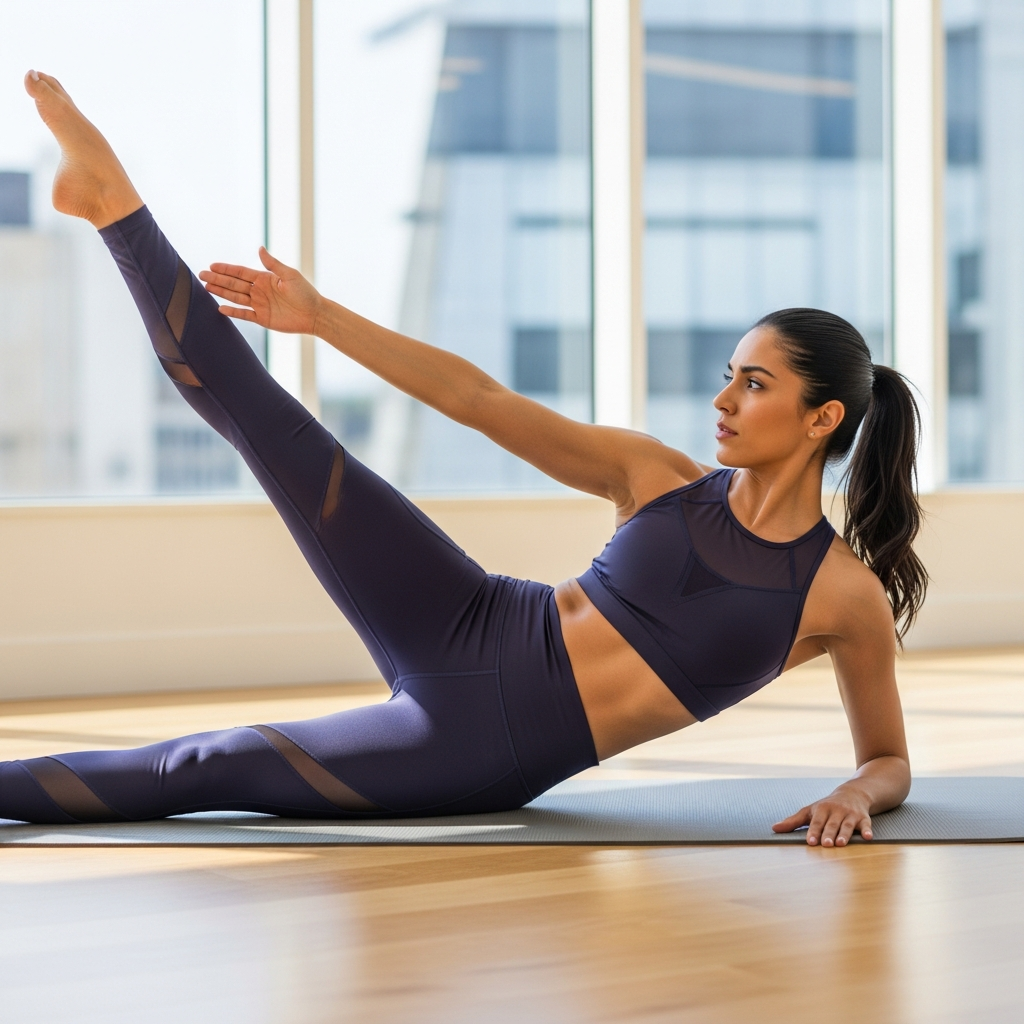
Mat Pilates, as the name suggests, is performed on a mat – similar to yoga. However, unlike yoga, it emphasizes your body’s core — including the abdomen, obliques, lower back, inner and outer thigh, butt, and so on. The mat exercises are performed in a specific order, one right after another. The movements have names, like “the 100,” criss-cross,” the “elephant,” and the “swan.”
As a beginner, mat Pilates offers several advantages. It’s straightforward to get started with; all you need is a Pilates mat (thicker than a standard yoga mat to provide cushioning for the spine) and comfortable clothing. Mat Pilates classes are widely available at fitness centers, community centers, or even online platforms for those who prefer to exercise at home.
Furthermore, with mat Pilates, you’re using your body weight as resistance, which makes it an extremely flexible exercise routine. You can modify the exercises to make them more or less challenging based on your comfort level and gradually increase the intensity as your strength and flexibility improve.
In conclusion, if you’re a beginner considering trying out Pilates, starting with mat Pilates is an excellent choice. You’ll learn the fundamental principles of this fitness system while improving your strength, flexibility, and mind-body awareness in a low-risk environment. As you progress, you can explore other variations of Pilates, such as reformer Pilates, which introduces equipment to provide a more challenging workout. Remember, the key to a successful Pilates journey is to remain patient, consistent, and mindful of your body’s signals.
Is Mat Pilates Suitable for Beginners?
Mat Pilates is not just okay for beginners; it’s actually ideal. As a low-impact exercise with a focus on body awareness, flexibility, and core strength, it provides an excellent foundation for a healthy fitness journey. This article will provide step-by-step guidance on how beginners can get started with mat Pilates.
Step 1: Understand What Mat Pilates Entails
Before jumping into Pilates, it’s crucial to understand what it involves. Mat Pilates is a series of exercises performed on a mat, utilizing your body weight and gravity to provide resistance. The movements are designed to strengthen your core (the muscles around your hips, abdomen, lower back, and pelvis), improve your flexibility, enhance your balance, and promote mind-body harmony.
Step 2: Get the Right Equipment
The primary equipment you need for mat Pilates is a high-quality Pilates mat. Unlike yoga mats, Pilates mats are typically thicker (about ½ inch) to provide adequate cushioning for your spine during floor exercises. You may also want to invest in a few props like resistance bands, Pilates rings, or small weighted balls to add variety and challenge to your workouts as you progress.
Step 3: Find a Beginner’s Class or Online Tutorial
For beginners, it’s recommended to start with a class or online tutorial specifically designed for novices. An instructor can guide you through the basic principles of Pilates such as proper alignment, breath control, and precision of movement. They can also modify exercises to suit your current fitness level and ensure you’re performing movements correctly to avoid injury.
Consider this scenario: Sarah, a complete beginner with no prior experience in any form of exercise, decided to try mat Pilates. She joined a local beginner’s class where the instructor patiently explained every movement, ensuring Sarah understood how to correctly engage her muscles.
Step 4: Start with Basic Movements
Begin with simple, foundational exercises like the Pilates breathing, pelvic curl, spine twist, and chest lift. These exercises will help you develop core strength and learn the principle of mind-body connection, which is central to Pilates.
Take, for example, the Pilates breathing exercise. This basic movement involves deeply inhaling through the nose, allowing the ribcage to expand sideways, and then exhaling forcefully through the mouth, drawing the navel towards the spine. Practicing this can help you tune into your body and prepare it for more complex exercises.
Step 5: Go at Your Own Pace
Remember, everyone’s fitness journey is unique. Don’t be disheartened if you find some exercises challenging initially. It’s perfectly okay to modify movements or take breaks as needed. The key is consistency and gradual progression.
For instance, Tom found the ‘Roll Up’ exercise difficult when he first started mat Pilates. Instead of forcing his body into the move, he modified it by bending his knees and using his hands for support. Over time, his core strength improved, and he was able to perform the full exercise.
Step 6: Practice Regularly
Like any form of exercise, consistency is key in mat Pilates. Aim for two to three sessions per week to start with. As your strength and endurance improve, you can increase the frequency or duration of your workouts.
In conclusion, mat Pilates is an excellent choice for beginners due to its low-impact nature and focus on core strength and flexibility. By understanding what it involves, getting the right equipment, finding a beginner’s class or tutorial, starting with basic movements, going at your own pace, and practicing regularly, you can embark on a rewarding Pilates journey. Remember, the goal isn’t to achieve perfection but to enhance your overall health and well-being.
Mat Pilates for Beginners: Challenges, Solutions, and Expert Tips
If you’re new to the world of fitness or are looking to switch up your routine, you might be considering mat Pilates. This low-impact exercise method focuses on core strength, flexibility, and overall body awareness. But as a beginner, you might be wondering, “Is mat Pilates okay for me?” The answer is a resounding yes! However, like with any new fitness regimen, there can be challenges. Here’s a comprehensive guide to understanding and overcoming these obstacles, and some expert tips to make the most of your mat Pilates journey.
Challenges Faced by Beginners in Mat Pilates
1. Difficulty in Understanding the Basics: The foundational principles of Pilates – centering, concentration, control, precision, breath, and flow – can be difficult for beginners to grasp initially. They form the basis of all Pilates workouts and their correct application determines the effectiveness of the exercises.
2. Physical Challenges: As a beginner, you may find certain exercises challenging due to lack of flexibility or core strength. This can make it hard to perform the movements correctly and could lead to frustration or even injury.
3. Misconceptions: One common misconception about mat Pilates is that it’s easy and not as effective as other workout methods. On the contrary, it is a comprehensive full-body workout that requires strength, flexibility, and control.
Solutions and Best Practices
1. Understand the Fundamentals: To overcome initial difficulties, take the time to understand the six principles of Pilates. Consider starting with a beginner’s class or hiring a certified instructor who can guide you through these principles.
2. Start Slowly: Don’t rush into advanced exercises. Start with basic moves and gradually progress to more complex ones as your flexibility and strength improve. Remember, the quality of movement is more important than quantity in Pilates.
3. Educate Yourself: To dispel misconceptions, educate yourself about the benefits and effectiveness of mat Pilates. Remember, every body is different and what works for one person might not work for another.
Expert Tips for Beginners
1. Focus on Your Breath: Breathing is a key element of Pilates. Proper breath control can help engage your core and make exercises more effective. Inhale deeply through your nose, filling your lungs from the bottom up, and exhale fully through your mouth.
2. Listen to Your Body: Pay attention to how your body responds to different exercises. If a movement causes pain or discomfort, stop immediately and consult your instructor. Never force your body into positions it’s not ready for.
3. Be Consistent: Consistency is key in Pilates. Regular practice not only helps improve strength and flexibility, it also helps develop muscle memory, making the exercises easier over time.
4. Use Props: Props like Pilates balls, rings, and bands can be very helpful for beginners. They can provide support, enhance your workouts, and boost your confidence.
5. Dress Comfortably: Wear comfortable, stretchy clothing that allows you to move freely. Avoid loose clothing as it can get in the way of movements, and avoid wearing shoes as Pilates is usually done barefoot.
In conclusion, mat Pilates is not only okay for beginners, it’s a great way to introduce your body to a new form of fitness that focuses on strength, balance, flexibility, and mind-body connection. Overcoming initial challenges might take time and patience, but with consistent practice, guidance from a certified instructor, and adherence to the principles of Pilates, you’ll soon start to see – and feel – the benefits.
An Introduction to Mat Pilates for Beginners
If you’re just beginning your journey into the world of fitness or seeking a new way to stay active, mat Pilates is an excellent place to start. This low-impact exercise routine strengthens the core, improves flexibility, and can help improve overall body strength and balance.
What is Mat Pilates?
Mat Pilates is a type of Pilates performed on a mat, instead of the reformer machines often associated with this fitness method. It focuses on controlled movements that engage your mind and body. The exercises are designed to strengthen the body’s core – the abdomen, obliques, lower back, inner and outer thigh, bottom, and so on.
Is Mat Pilates Suitable for Beginners?
Absolutely! Mat Pilates is not only suitable for beginners but is also a great foundation for any fitness journey. The beauty of this exercise lies in its adaptability. The exercises can be modified to match any fitness level, from absolute beginners to seasoned athletes. This flexibility ensures that everyone can benefit from mat Pilates without the risk of injury or undue strain.
What to Expect:
If you’re considering mat Pilates, here’s what you can expect
1. Mind-Body Engagement: Mat Pilates is not just about physical strength; it’s also a mental workout. You’ll learn to focus on your body’s movements, aligning your breathing with each exercise.
2. Core Focus: Expect a lot of core work! Mat Pilates emphasizes strengthening the ‘powerhouse’ of your body – your abdominals, lower back, hips, and glutes.
3. Improved Flexibility: Through controlled, flowing movements, mat Pilates helps increase flexibility and range of motion.
4. Better Posture: Mat Pilates increases awareness of body alignment, leading to improved posture over time.
Timelines:
As with any fitness regimen, consistency is key. While you may start to notice slight improvements in strength and flexibility within a few weeks, significant changes will take longer. Generally, it takes about 8 to 12 weeks of regular (3-4 times a week) mat Pilates workouts to see noticeable changes in your body shape and posture.
Next Steps:
1. Find a Class: Look for beginner mat Pilates classes at local fitness studios or gyms. Many places offer a trial class, so you can see if it’s right for you before committing.
2. Get the Gear: The only equipment you really need for mat Pilates is a good quality mat. Choose one that’s thick enough to provide comfort but firm enough to support your movements.
3. Learn the Basics: Familiarize yourself with the basic Pilates principles – centering, concentration, control, precision, breath, and flow. These principles will guide all your workouts.
4. Start Slow: Don’t rush into advanced exercises. Start with the basics, focus on mastering the correct form, and gradually move on to more challenging workouts.
5. Listen to Your Body: Mat Pilates is about control and precision, not speed or repetitions. Listen to your body and do only as much as you can handle without straining.
In conclusion, mat Pilates is certainly okay for beginners. It offers a safe and effective way to improve strength, flexibility, and balance. Whether you’re new to fitness or just looking for something a bit different, why not give mat Pilates a try? With patience and consistency, you’ll soon start to see the benefits it offers.
In conclusion, the question of whether mat pilates is suitable for beginners has been explored thoroughly, and the answer is a resounding yes. Mat Pilates is not just okay for beginners; it’s practically tailor-made for them. This fitness discipline is highly customizable and can accommodate individuals of all fitness levels, including those who are just starting their fitness journey.
The ability to modify exercises in Pilates is one of the key features that make it so beginner-friendly. As a new participant, you won’t be expected to fully execute complex moves right away. Instead, modifications are available to help you build up your strength, flexibility, and balance gradually. Over time, as your proficiency grows, so does the intensity and complexity of the exercises. This means you will continually be challenged, preventing plateaus in progress and keeping the workouts exciting.
We also discussed how Pilates focuses on controlled movements rather than rapid, high-intensity ones. This slower pace is ideal for beginners as it allows them to learn proper form and technique which are crucial for effectiveness and injury prevention. Moreover, the focus on deep breathing and mental concentration that Pilates emphasizes can help beginners cultivate a mind-body connection that can enhance their overall wellness.
A significant advantage of mat Pilates is its accessibility. You don’t need expensive equipment or a large space to practice it. A mat and your own body weight are all you need to start doing Pilates at home. This convenience makes it easier for beginners to incorporate Pilates into their daily routine.
Along with physical benefits like improved strength, flexibility, balance, and posture, mat Pilates offers mental benefits such as stress relief and improved focus. These are benefits that everyone can enjoy, regardless of their fitness level or experience.
However, like any new fitness regimen, it is important for beginners to approach Pilates carefully. Listening to your body and not pushing beyond your limits is crucial to avoid injury. Also, learning from a certified Pilates instructor initially is highly recommended to ensure you’re doing the exercises correctly and safely. They can provide the guidance and modifications necessary for a beginner’s level of fitness.
In essence, mat Pilates is a versatile and adaptable exercise method that’s perfect for beginners. It’s a low-impact, yet effective way to improve physical strength, flexibility, balance, and mental wellbeing. While it offers enough challenge to keep you engaged, its focus on control, precision, and technique means it’s a safer choice for those new to fitness.
If you’re interested in starting your Pilates journey, don’t hesitate to contact us. Our team of certified Pilates instructors is ready to help you understand the basics of mat Pilates and guide you through your first steps. Whether you prefer one-on-one sessions or being part of a group class, we have options that will cater to your needs.
Remember, every fitness journey begins with a single step. Why not make that step a Pilates one? Contact us today and let us help you kickstart your journey toward better physical health and mental clarity through the art of mat Pilates.