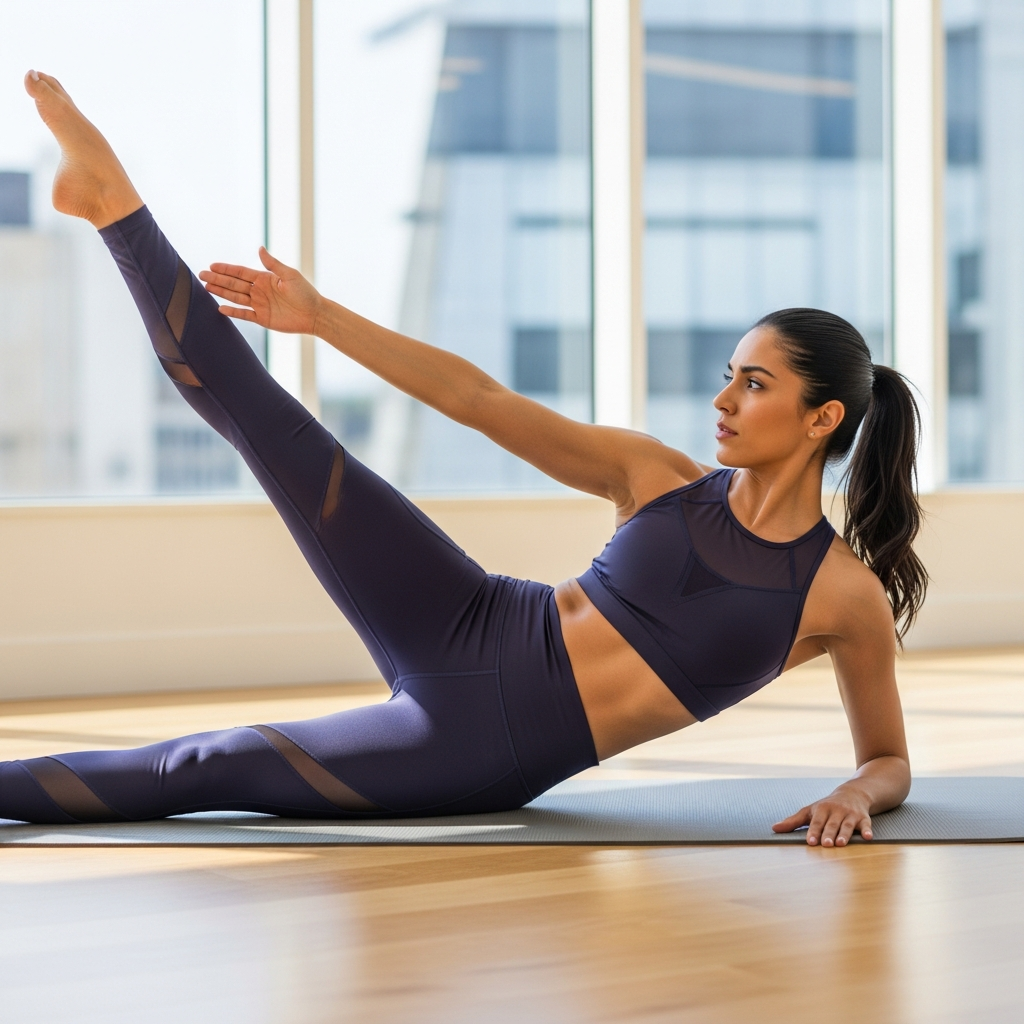
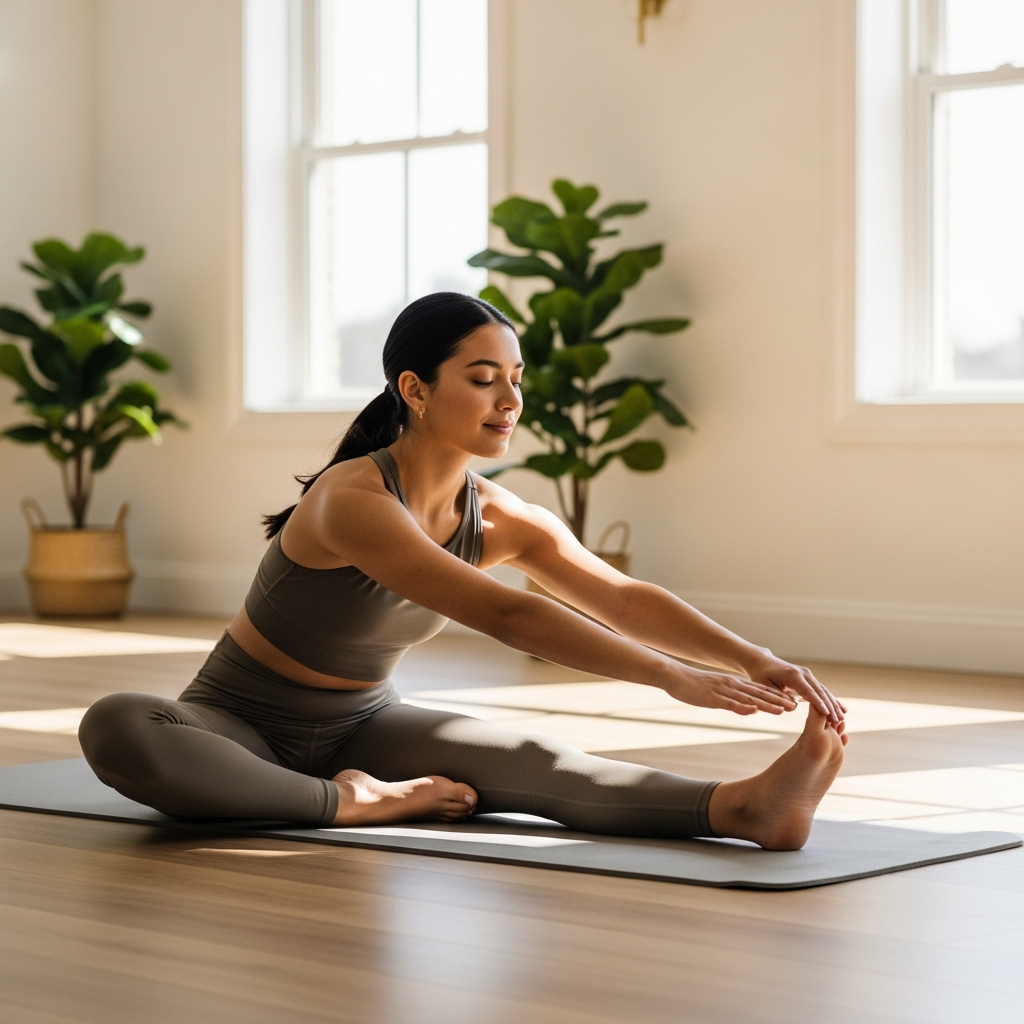
“Is Mat Pilates Harder Than Yoga? A Comprehensive Comparison”
Introduction
Imagine this: You’ve just walked into your local fitness studio, lured by the promise of a new, engaging workout routine. Two classes have caught your attention – mat Pilates and yoga. You’re left wondering, is mat Pilates harder than yoga? If you’ve found yourself grappling with this question, then you’ve arrived at the right place.
In today’s world, where health and fitness are gaining increasing importance, many people are turning their focus towards exercise regimes like Pilates and yoga. Both practices have gained immense popularity owing to their myriad health benefits including enhanced flexibility, improved strength, better balance and coordination, and stress relief. Yet, there’s an ongoing debate about which one is more challenging – mat Pilates or yoga? This blog post aims to dispel your doubts by providing an in-depth comparison between the two.
In this comprehensive guide, we will explore what exactly mat Pilates and yoga entail, their key differences, benefits, and challenges. We’ll delve deeper into the intensity of both practices, examining their physical and mental components. We will also look at the different elements that could influence how challenging you find each class – from your current fitness level to your personal goals. By gaining a better understanding of these two disciplines, you’ll be better equipped to make an informed decision about which class aligns best with your fitness journey.
The question ‘Is mat Pilates harder than yoga?’ is not merely a matter of curiosity. The answer holds significant implications for anyone looking to incorporate either of these practices into their fitness regime. Understanding the level of difficulty can help you set realistic expectations, choose a practice that suits your fitness level, and tailor your workout routine to meet your individual health goals.
Whether you’re a seasoned fitness enthusiast or a beginner looking to dip your toes in the world of fitness, knowing the comparative difficulty of mat Pilates and yoga can influence your workout choices. As we unravel the complexities of both practices, you may discover that one aligns more closely with your personal fitness goals and preferences.
Why does this matter? Identifying the right workout routine is more than just a trial-and-error process. It’s about understanding your body, acknowledging your capabilities, and pushing your boundaries. With the right information at your disposal, you can choose a practice that not only challenges you but also ensures you enjoy the journey towards a healthier, fitter you.
So, are you ready to embark on this explorative journey? Whether you’re leaning towards the calming stretches of yoga or the rigorous strength-building exercises of mat Pilates, this guide is here to help you navigate your fitness path. Let’s dive into the world of mat Pilates and yoga, and find out which one presents a harder challenge.
Stay tuned, because the answer might surprise you.
The Fundamentals and Framework of Mat Pilates vs. Yoga: A Comparative Analysis
Pilates is a form of low-impact exercise designed to improve physical strength, flexibility, and posture while enhancing mental awareness. It was developed in the early 20th century by Joseph Pilates, a physical trainer from Germany, who named it ‘Controlology’. Pilates incorporates elements of yoga, martial arts, and Western forms of exercise. Mat Pilates, a subset of this fitness regime, is performed on a mat and relies heavily on body weight resistance.
Mat Pilates is a methodical, focused exercise routine where precision and control are paramount. Its essence lies in controlled and precise movements, with an emphasis on alignment, breathing and developing a strong core or ‘powerhouse’ as Joseph Pilates termed it. The powerhouse is a complex series of muscles in your trunk that work to control your spine, pelvis and shoulder girdle.
In mat Pilates, each movement has a purpose. Every exercise is performed with attention to the breath, proper form and efficient movement patterns. Mat Pilates strengthens all aspects of your core unlike other exercises that may only target one area. It is not just about doing repetitions; instead, it is about doing movements with control and precision to benefit the whole body.
The exercises in mat Pilates are performed in a specific order, each one setting up the body for the next. They are designed to flow into each other to build strength and stamina. Mat Pilates can be tailored to work for a wide range of people – athletes, seniors, pregnant women, people at various levels of fitness, and people who are at various stages of physical rehabilitation.
While it shares similarities with yoga in terms of emphasizing mind-body connection and focusing on breath control, there are key differences that distinguish mat Pilates from yoga. Yoga is an ancient practice with spiritual origins that aims to unite the body, mind, and spirit. It involves various physical postures or ‘asanas’, meditation, and breath control techniques. Yoga not only focuses on improving flexibility and strength but also aims to promote inner peace and self-realization.
On a physical level, yoga postures often involve more static holds compared to Pilates which focuses more on dynamic, flowing movements. Also, while both practices emphasize the importance of breath control, they approach it in different ways. In yoga, practitioners are taught to breathe through the nose with the mouth closed, which slows down the breath and helps to relax the body. In contrast, Pilates instructs to inhale through the nose and exhale through the mouth, which helps to engage the core muscles during each exercise.
Mat Pilates could be perceived as harder than yoga as it places a stronger emphasis on core strength and stability. Each exercise is designed to challenge the body’s powerhouse, requiring not just physical strength but also mental focus and control. However, the difficulty of both practices can greatly vary depending on the complexity of the poses or exercises and the individual’s fitness level.
In conclusion, mat Pilates is a comprehensive body workout that places a particular emphasis on the core. It shares similarities with yoga but distinguishes itself through its focus on dynamic movements, its systematic order of exercises, its approach to breath control, and its strong emphasis on precision and control. Both practices offer unique benefits and can complement each other well in a balanced fitness regime. The perceived difficulty of mat Pilates over yoga may vary from individual to individual based on personal fitness levels, flexibility, and familiarity with each practice.
Is Mat Pilates Harder Than Yoga? A Comprehensive Look
Mat Pilates and yoga are two popular forms of exercise that have been widely embraced by fitness enthusiasts worldwide. While they both involve a mat and focus on improving flexibility, strength, and mind-body connection, they have distinct differences. There’s a common question that often pops up in fitness circles: Is mat Pilates harder than yoga? Let’s delve into the characteristics of these two disciplines to provide you with some insightful answers.
Both mat Pilates and yoga offer different variations, intensities, and styles. Hence, the level of difficulty can vary greatly depending on the specific class or routine you choose. However, if we consider traditional mat Pilates and classic Hatha yoga, which is a more gentle style of yoga, some might argue that Pilates tends to be more challenging.
Mat Pilates primarily focuses on strengthening the core, or what Joseph Pilates called the “Powerhouse” – the muscles of the abdominals, lower back, hips, and buttocks. It involves a sequence of controlled, precise movements that require significant concentration and body awareness. One notable aspect of mat Pilates is the emphasis on quality of movement over quantity.
For instance, let’s take the Pilates move “The Hundred”. This exercise requires you to maintain your legs in a lifted position, engage your core, and do small pumping movements with your arms for 100 counts. It demands significant core strength and endurance which can be quite challenging for beginners or those with less core strength.
On the other hand, yoga aims to unite the mind, body, and spirit. It incorporates a blend of stretching, strengthening, balancing postures, and meditation. Yoga not only builds flexibility and strength but also promotes relaxation and stress relief. It’s more than just physical postures; it’s a holistic practice that includes breath control and meditation.
Let’s consider a basic yoga pose, the “Downward-Facing Dog”. It stretches the entire body, strengthens the arms and shoulders, and promotes calmness. While it can be challenging for beginners, it’s generally considered less intense compared to some Pilates exercises.
However, it’s crucial to note that both Pilates and yoga have advanced levels that can be extremely challenging. For instance, Ashtanga or Power Yoga classes involve complex sequences and poses that demand strength, flexibility, and stamina. Similarly, advanced Pilates classes may incorporate more dynamic movements and props that significantly increase the difficulty level.
In conclusion, determining whether mat Pilates is harder than yoga depends on several factors such as your fitness level, flexibility, core strength, and the specific style or class you choose. If you are a beginner, you might find mat Pilates more challenging due to its emphasis on core strength and precise movements. In contrast, if you lack flexibility, you might find yoga poses quite hard.
Here are some actionable pieces of advice
1. Assess Your Fitness Level: Before choosing between mat Pilates and yoga, assess your current fitness level, strength, and flexibility. Understand your body’s needs and capabilities.
2. Try Both: Attend beginner classes for both mat Pilates and yoga. This will give you a firsthand experience of both practices, allowing you to determine which one you find more challenging and enjoyable.
3. Listen to Your Body: Pay attention to your body during and after the workouts. This will help you understand which practice suits your body better.
4. Seek Expert Advice: Consult with fitness professionals or instructors. They can guide you about the suitability of mat Pilates or yoga based on your health history, fitness level, and goals.
Remember, whether it’s mat Pilates or yoga, the goal is not to find the hardest workout but to find a practice that resonates with you and helps you achieve your fitness goals while promoting overall wellbeing.
Is Mat Pilates Harder than Yoga? – Debunking Misconceptions and Providing Best Practices
Mat Pilates and Yoga are two popular physical fitness systems that have gained a significant following worldwide. However, a common query among fitness enthusiasts is: Is mat Pilates harder than yoga? The answer, in essence, is subjective as it largely depends on the individual’s physical abilities, fitness goals, and personal preferences. Let’s delve deeper into this question, challenging misconceptions and providing best practices for both disciplines.
### Understanding Mat Pilates and Yoga
Mat Pilates is a series of exercises inspired by calisthenics, yoga, and ballet that focuses on low-impact flexibility, muscular strength, and endurance movements. It emphasizes the alignment of the spine and pelvis, breathing, concentration, and improving coordination and balance.
On the other hand, Yoga is a holistic discipline originating from ancient India. It integrates physical postures (asanas), breathing exercises (pranayama), meditation, and ethical principles to promote overall well-being.
### Common Challenges
One of the primary challenges when comparing Mat Pilates to Yoga is the difference in their respective objectives. While both promote strength, flexibility, and mindfulness, Yoga also incorporates a spiritual element which might make it seem more complex or harder for some individuals.
Another challenge is that Mat Pilates often requires more precise movements focusing on core strength and stability. This precision can sometimes lead to the misconception that mat Pilates is harder than yoga. Conversely, Yoga poses can range from simple to incredibly complex, which may be seen as more difficult by others.
### Debunking Misconceptions
The misconception that one practice is universally harder than the other often arises from individuals not fully understanding the inherent purpose of each discipline. Pilates is primarily centered on physical conditioning, particularly core strength and stability. Yoga, while also promoting physical health, places equal emphasis on mental and spiritual wellness.
While it’s true that Pilates exercises can be physically demanding, Yoga also has advanced postures that require significant strength, flexibility, and balance. The difficulty level of both practices can be adapted to suit beginners, intermediates, and advanced practitioners.
### Mat Pilates and Yoga: Best Practices
#### Mat Pilates Best Practices
1. **Focus on Form:** The effectiveness of Pilates exercises relies heavily on correct form. Ensure that you fully understand the movements before increasing the intensity or speed.
2. **Breathing:** Proper breathing technique is essential in Pilates. Breathing correctly can help engage your core muscles and maintain focus.
3. **Consistency:** Like any fitness regimen, consistent practice is key in Pilates. Regular sessions will help improve your strength, flexibility, and control over time.
#### Yoga Best Practices
1. **Find your Pace:** Yoga is not a competition. It’s essential to listen to your body and find a pace that suits you. Do not push yourself into poses that feel uncomfortable.
2. **Breathing:** In Yoga, breath control is as important as the physical postures. Practice pranayama exercises to enhance your breathing technique.
3. **Mindfulness:** Yoga is about the union of mind and body. Incorporating meditation into your practice can help increase mindfulness and improve overall wellness.
### Expert Tips for Mat Pilates and Yoga
1. **Choose the Right Instructor:** A qualified instructor can guide you through the exercises, correct your form, and prevent injuries.
2. **Use Props:** Props like yoga blocks, straps, or Pilates balls can help modify exercises to suit your ability level.
3. **Stay Hydrated:** Like any physical activity, staying hydrated is crucial. Drink water before, during, and after your sessions.
To conclude, whether Mat Pilates is harder than Yoga depends on an individual’s perspective, fitness level, and personal preference. Both practices offer unique benefits and can complement each other well when integrated into a balanced fitness regimen. Remember to consider your physical condition, objectives, and enjoy the journey towards improved health and wellness.
Is Mat Pilates Harder Than Yoga?
Many fitness enthusiasts often ask, “Is mat Pilates harder than yoga?” This question is not surprising as both Pilates and yoga share some similarities, but they also have distinct differences, both in the techniques and the expected outcomes. So, let’s delve deep into this topic, analyze the intricacies of both disciplines, and help you determine which one could be a better fit for your fitness goals.
Mat Pilates is a series of exercises from within the larger Pilates system that are performed on a mat, just like in yoga. However, these exercises are typically combined with props like resistance bands or weighted balls to increase intensity. Yoga, on the other hand, primarily uses your body weight and gravity to build strength and flexibility.
The question of difficulty between mat Pilates and yoga depends greatly on personal factors such as your physical strength, flexibility, coordination, and even mental focus. It can also depend on what type of yoga you’re comparing mat Pilates to. For instance, a gentle Hatha yoga class may seem less challenging than a dynamic mat Pilates session. Conversely, an intense Ashtanga yoga session could be perceived as more challenging than a basic mat Pilates class.
Mat Pilates primarily focuses on core strength, spinal alignment, muscle tone, balance, and mind-body connection. It involves performing low-impact flexibility, muscular strength and endurance movements. The exercises are designed to align the spine and develop a strong core or ‘powerhouse’, which is essential for overall fitness.
On the other hand, yoga is an ancient practice focusing on strength, flexibility and breathing to boost physical and mental wellbeing. It involves various postures (asanas), breathing techniques (pranayama) and meditation. Yoga not only aims at physical fitness but also at calming the mind and attaining spiritual growth.
If you are used to high-intensity workouts, you might find both mat Pilates and yoga less strenuous. But don’t be fooled; both practices demand precision, control and a deep understanding of your body’s mechanics. The intensity of your workout in either discipline can be scaled up or down, depending on your fitness level and the specific class or routine you choose.
So, what should you expect when you start with mat Pilates or yoga?
Mat Pilates:
1. Expect to feel muscles you didn’t know existed. This is because Pilates movements target the deep muscles of the core.
2. Pilates is precise, so expect to pay attention to detail. Every movement has a purpose, and every instruction is crucial to the success of the exercise.
3. You may not sweat as much during Pilates as you would with some other workouts. But that doesn’t mean it’s not an intense session!
4. Expect to see improvements in overall strength, flexibility, coordination, body awareness and posture.
Yoga:
1. Yoga classes can vary greatly in intensity, but you should expect to move a lot and stretch deeply.
2. You’ll likely spend time in meditation or mindfulness practices during each class, which can help reduce stress.
3. Expect to see improvements in strength, flexibility, balance and stress levels.
4. Lastly, yoga is a practice rooted in thousands of years of history and philosophy, so don’t be surprised if your instructor includes elements of this in your class.
In terms of timelines, both mat Pilates and yoga are not quick fixes – they are more about long-term lifestyle changes. It might take a couple of weeks to start noticing improvements in things like strength, posture, flexibility or stress levels.
In terms of next steps
1. Assess your physical condition and fitness goals. If core strength and muscle tone are your primary objectives, you might want to try mat Pilates. If flexibility and stress reduction are what you’re after, yoga could be a better choice.
2. Try a class or two of each. This is the most effective way to figure out what you prefer.
3. Listen to your body. It will tell you what it needs and what it likes. Remember, exercise should not cause pain. If it does, consult with a fitness professional or physiotherapist.
4. Lastly, find a qualified instructor. An experienced instructor can ensure you’re doing the exercises correctly and safely.
In conclusion, whether mat Pilates is harder than yoga depends on various factors, including the style of the class, the individual’s fitness level, flexibility, and personal preference. The beauty of both mat Pilates and yoga is that they cater to all levels, from beginners to advanced, providing a beneficial workout for everyone.
In conclusion, the question of whether mat Pilates is harder than yoga is subjective and largely depends on individual experiences and fitness levels. Both modalities offer distinctive advantages; they are powerful practices that have profound impacts on the body, mind, and spirit.
Pilates focuses more on strength, flexibility, and body awareness. It’s a discipline that emphasizes precise movements to target specific muscles, including the core, arms, and legs. The precision required in Pilates can make it appear more challenging than yoga to some individuals. Moreover, the focus on core strength and stability can make Pilates particularly challenging for beginners or individuals who have not yet developed significant core strength.
On the other hand, yoga is a holistic practice that combines physical postures, breathing exercises, and meditation. It offers a variety of styles ranging from slow-paced and gentle to fast-paced and vigorous. The degree of difficulty in yoga often depends on the specific style being practiced. Hatha yoga, for example, might be easier to start with than Ashtanga or Power yoga.
While both practices promote flexibility, balance, and strength, they do so in different ways. Pilates often involves more dynamic movements and a greater emphasis on physical conditioning. In contrast, yoga typically incorporates more static holds and places a greater emphasis on relaxation and mindfulness.
The best way to determine which is harder for you – mat Pilates or yoga – is to try both practices for yourself. Remember that both Pilates and yoga are meant to be challenging but not overwhelming. They should push you beyond your comfort zone while still being enjoyable. Your personal preference, fitness goals, and current fitness level will play a large role in determining which practice you find more challenging.
Although this discourse has focused on the comparative difficulty of mat Pilates and yoga, it’s crucial to note that both are beneficial in their own unique ways. Each provides a host of health benefits including improved flexibility, greater muscle strength, enhanced balance, better posture, stress relief, and improved mental focus. They can both be tailored to fit individuals of all fitness levels and can be used as complementary practices to provide a well-rounded fitness regimen.
Regardless of which you find more challenging, the key is to find a practice that you love and that encourages you to maintain a consistent fitness routine. There isn’t a definitive answer to the question of whether mat Pilates is harder than yoga; what matters most is finding a practice that suits your personal fitness goals and lifestyle.
If you’re having difficulty deciding between mat Pilates and yoga, or if you’re interested in incorporating both into your fitness routine but aren’t sure where to start, don’t hesitate to reach out to us. Our team of experts is here to assist you in making an informed decision based on your individual needs and goals. We can provide you with personalized advice and guidance to help you make the most out of your fitness journey.
Remember, every person’s fitness journey is unique — the most important thing is to listen to your body and do what feels right for you. With our professional support, we can help you find the balance between challenge and enjoyment in your workouts, ensuring you achieve your fitness goals while enjoying the process. Don’t wait another day—contact us now for expert assistance and take the next step in your fitness journey.