Unraveling the Magic of Mat Pilates Exercises: A Comprehensive Guide
Are you looking to transform your body and boost your overall wellbeing? Do you yearn for a fitness regimen that not only sculpts your physique but also enhances your mental strength? If you’ve answered yes to any of these questions, it’s time you acquainted yourself with the world of Mat Pilates exercises.
Often underappreciated, Mat Pilates is one of the most effective and versatile workouts, designed to create harmony between the mind and body. Right from Hollywood A-listers to everyday fitness enthusiasts, Mat Pilates is catching everyone’s attention and for all the right reasons. But what exactly is Mat Pilates and why should you consider incorporating it into your fitness routine?
This comprehensive guide is here to unravel the mystery of Mat Pilates exercises and help you understand how they can revolutionize your fitness journey. In this blog post, we will dive deep into the world of Mat Pilates, exploring its origins, benefits, and the key exercises that form its core. We will also show you how Mat Pilates classes can be the perfect addition to your fitness regime, no matter your age or fitness level.
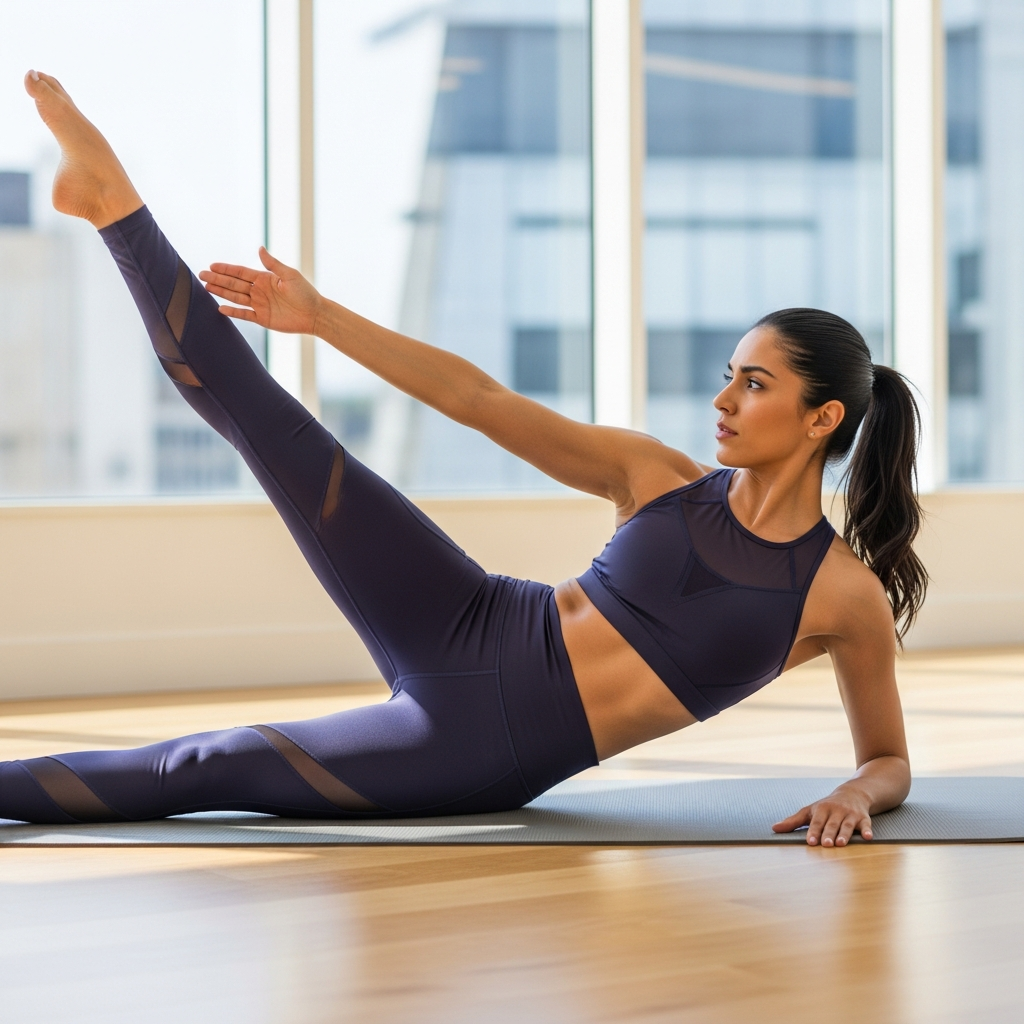
Mat Pilates, a branch of the larger Pilates tree, is a form of exercise that focuses on improving flexibility, strength, and body awareness. Its foundation lies in the principles put forward by Joseph Pilates in the early 20th century, which emphasize the development of a strong core or ‘powerhouse’, precision, control, flowing movements, and proper breathing. Unlike other forms of Pilates that utilize specialized equipment like reformers or Cadillac, Mat Pilates relies solely on your body weight and gravity to provide resistance.
In this post, we will divulge into what to expect in a Mat Pilates class. From learning about the fundamental Pilates principles to mastering the basic Mat Pilates exercises such as the Pilates 100, roll-up, and single-leg stretch, we will guide you through the entire process.
But why should you care about Mat Pilates? Well, this form of exercise is not just about achieving a toned body. It’s about holistic wellness. It’s about improving your mental clarity, reducing stress, boosting your energy levels, enhancing your body awareness, and developing a sense of inner peace. And the best part? All this can be achieved from the comfort of your own home, with no fancy equipment required.
To put it simply, Mat Pilates exercises are an all-in-one package that caters to both your physical and mental wellness needs. No matter where you are in your fitness journey – a beginner looking for a low-impact workout, a seasoned athlete seeking to enhance performance, or someone recovering from an injury striving for better mobility – Mat Pilates is your answer.
So, if you’re ready to embark on a journey towards improved health and well-being, this guide is your roadmap. Let’s delve into the world of Mat Pilates exercises and discover how they can help you sculpt your body, fortify your mind, and elevate your spirit.
Stay tuned as we help you unravel the magic of Mat Pilates exercises!
The Fundamentals of Mat Pilates Exercises
Mat Pilates is a body conditioning routine that seeks to build flexibility, strength, endurance, and coordination without adding muscle bulk. The practice was developed in the early 20th century by Joseph Pilates, a physical trainer from Germany. The regimen focuses on the core postural muscles that help keep the body balanced and are essential to providing support for the spine. In particular, Pilates exercises teach awareness
Mat Pilates Exercises: A Step-By-Step Guide and Real-World Examples
Mat Pilates is a fantastic way to improve core strength, increase flexibility, and promote overall wellness. These exercises are performed on a mat and require only your body weight, making them accessible to all fitness levels and perfect for home workouts. Here are some step-by-step instructions for popular Mat Pilates exercises
1. **Pilates Hundred**: This classic Pilates move can be modified to fit any fitness level.
– Lie flat on your back with your legs extended and arms by your side. – Lift your legs to a 45-degree angle and raise your head and shoulders off the mat. – Pump your arms up and down while breathing in for five counts and out for five counts. Repeat this cycle ten times to complete 100 counts.
Real-World Example: Sarah, a busy working mom, uses the Pilates Hundred as a warm-up to wake up her core at the beginning of her morning routine. She also uses it as a quick exercise during her lunch break to re-energize herself.
2. **Roll-Up**: This exercise targets the abdominals while also stretching the spine and hamstrings.
– Lie flat on your back with your arms extended overhead and legs straight. – Inhale and lift your arms towards the ceiling. Exhale and roll up into a seated position, reaching towards your toes. – Slowly roll back down, one vertebra at a time, to return to the starting position.
Real-World Example: Mike, an office worker with a sedentary job, uses the Roll-Up to counteract hours spent sitting at his desk. He does this exercise during his breaks to stretch his spine and strengthen his abdominals.
3. **Single Leg Circles**: This exercise improves hip mobility and core stability.
– Lie flat on your back with one leg extended along the mat and the other leg reaching towards the ceiling. – Circle the raised leg across your body, down, and back to the starting position. – Complete the desired number of circles in one direction before reversing the circle.
Real-World Example: Emma, a runner, uses Single Leg Circles to improve her hip mobility. She includes this exercise in her cool-down routine after her runs to help prevent injuries.
Actionable Advice:
1. **Consistency is Key**: Like any fitness regimen, consistency is key in Pilates. Aim for at least three sessions per week to see noticeable results. 2. **Quality Over Quantity**: Pilates focuses on precise movements, so it’s more important to do fewer repetitions with correct form than many with poor form. 3. **Start Slowly**: If you’re new to Pilates, start with beginner classes or exercises. As your strength and flexibility improve, gradually add more challenging exercises to your routine. 4. **Get Professional Guidance**: If possible, attend a few classes with a certified Pilates instructor. They can provide personalized feedback and ensure you’re performing the exercises correctly.
In summary, Mat Pilates is a versatile and accessible way to improve your fitness. Whether you’re a busy mom like Sarah, an office worker like Mike, or an athlete like Emma, you can incorporate Mat Pilates into your routine to enhance strength, flexibility, and overall wellness.
Mat Pilates Exercises: Overcoming Challenges and Maximizing Benefits
Pilates, a holistic exercise regimen developed by Joseph Pilates in the 1920s, has gained global recognition for its health benefits, including enhanced flexibility, balance, core strength, and overall body awareness. Among the various forms of Pilates, Mat Pilates stands out for its accessibility and simplicity, allowing anyone to practice it virtually anywhere. However, like any physical activity, Mat Pilates presents its own set of challenges. This article aims to address those challenges, offer solutions, and provide expert tips to ensure effective and safe practice.
Firstly, let’s address a common misconception: some believe that Mat Pilates is an easy, light workout. This is far from the truth. Although it doesn’t require heavy equipment like the Reformer or Cadillac, Mat Pilates can be just as challenging. It demands a high level of body control and precise movements.
Challenge 1: Lack of Core Engagement One of the main challenges beginners face is lack of proper core engagement. Many tend to rely on their larger muscles instead of activating their deep core muscles.
Solution: Practicing ‘Pilates breathing’ can be a game-changer in this regard. Breathe deeply into your rib cage rather than your belly, then exhale completely to engage your abdominal wall. This breathing technique encourages correct core engagement during every movement.
Challenge 2: Difficulty in Maintaining Proper Alignment Another challenge is maintaining proper alignment throughout the exercises. Poor alignment can lead to compensatory patterns and possible injuries.
Solution: Regular practice under the guidance of a certified instructor can address this issue. They can correct your posture and ensure you’re performing exercises correctly.
Expert Tip: Incorporate a mirror into your practice if possible. It provides visual feedback and helps you self-correct your alignment.
Challenge 3: Progressing Too Quickly Many practitioners try to progress to advanced exercises too quickly. Remember, Pilates is about the quality of movement, not quantity or speed.
Solution: Start with basic exercises and master them before progressing. Each exercise is designed to build upon the skills of the previous one.
Expert Tip: Choose a class that matches your skill level. As Joseph Pilates said, “A few well-designed movements, properly performed in a balanced sequence, are worth hours of doing sloppy calisthenics or forced contortion.”
Challenge 4: Over-reliance on Mat Classes Some believe they only need mat classes for a comprehensive workout. While Mat Pilates is beneficial, it’s just one part of the Pilates system.
Solution: If possible, try incorporating some equipment-based Pilates classes into your routine. They offer different challenges and can help deepen your understanding and practice.
Expert Tip: Look for studios offering mixed apparatus classes or try incorporating small apparatus like magic circles, bands, or foam rollers into your mat routine.
Finally, let’s bust a myth: Pilates is not just for women. Although it’s true that Pilates has a strong female following, it was developed by a man – Joseph Pilates – and it’s beneficial for everyone regardless of gender.
In conclusion, while Mat Pilates can be challenging, with the right guidance and approach, anyone can reap its benefits. Remember to focus on proper form and alignment, take it slow, and complement your mat work with other forms of Pilates. Above all, listen to your body and enjoy the journey of improved health and wellness through Pilates.
Unveiling the Journey of Mat Pilates Exercises: Expectations, Timelines, and Next Steps
Mat Pilates exercises provide a comprehensive approach to fitness that focuses on core strength, flexibility, balance, and body awareness. This low-impact form of exercise is adaptable to all fitness levels and ages, making it an accessible way for anyone to improve their overall physical health. However, understanding what to expect, timelines, and next steps can help you get the most out of your Mat Pilates journey.
What to Expect:
Mat Pilates classes typically last for about 45 minutes to an hour. The classes are structured around a series of exercises performed on a mat, using your own body weight for resistance. You can anticipate a blend of standing, sitting, and lying down exercises.
The initial sessions may be challenging as your body adapts to new movements and postures. However, the difficulty will decrease over time as your strength, flexibility, and endurance improve. You will perform exercises that target specific muscle groups, particularly the core, but also including the legs, arms, and glutes.
Pilates places a strong emphasis on correct form and breathing techniques. Your instructor will guide you through each exercise, ensuring you are performing movements correctly and safely.
Timelines:
The timeline for seeing results from Mat Pilates varies among individuals. Factors such as frequency of practice, initial fitness level, age, diet, and commitment to the program play significant roles in the speed of progress. However, with consistent practice – ideally two to three times a week – most people start noticing improvements in posture, flexibility, and muscle tone within a month.
Long-term effects such as enhanced core strength and improved overall fitness can take several months to manifest. Remember that Pilates is not just a temporary regimen but a lifestyle choice that promotes lifelong health and wellness.
Next Steps:
Once you have mastered the basics of Mat Pilates, consider diversifying your routine to challenge your body further and avoid plateaus. There are several ways you can do this
1. Integrate Pilates Props: Pilates props, like resistance bands, Pilates rings, or small weighted balls, add variety and challenge to your workout. They can enhance the effectiveness of the exercises and help target different muscle groups.
2. Advance Your Practice: As you grow more comfortable with the basics, try incorporating advanced Pilates exercises into your routine. These exercises often involve more complex movements that challenge your balance, strength, and flexibility.
3. Attend Workshops or Retreats: To deepen your understanding and experience of Pilates, consider attending a workshop or retreat. These events typically offer intensive training and the opportunity to learn from experienced practitioners.
4. Consider Private Sessions: If you want personalized attention to enhance your technique or work on specific goals, private sessions could be beneficial. A one-on-one session with a certified instructor offers the chance to fine-tune your form and focus on individual needs.
Mat Pilates is a journey of self-improvement that doesn’t end in the workout studio. The principles of control, concentration, precision, breath, and flow can be integrated into your daily life, promoting better posture, movement efficiency, and mindfulness. Take it slow, listen to your body, and remember that every little progress is a step towards a healthier you.
Ultimately, Mat Pilates is not about reaching a destination but about embracing a lifelong practice that nurtures your physical well-being and enhances your overall quality of life. Whether you’re a beginner or an advanced practitioner, there’s always something new to learn, explore, and benefit from in the world of Mat Pilates.
After deeply delving into the world of Mat Pilates exercises, we have discovered that they offer a powerful, body-transforming fitness regimen that is accessible to all. Mat Pilates is more than just a series of exercises; it’s a holistic approach to health and well-being that strengthens the body, enhances flexibility, and sharpens the mind.
Mat Pilates exercises are unique as they embody the core principles of concentration, control, centering, flow, precision, and breathing. These principles work in harmony to create a workout that engages the whole body. From our discussion, it’s evident that these exercises are not solely about physical strength or flexibility but also about the connection between the mind and body.
One key takeaway from our exploration of Mat Pilates exercises is their accessibility. They can be performed anywhere and at any time, with little to no equipment. This makes them a perfect addition to any fitness routine, regardless of your fitness level or experience. Whether you’re a seasoned athlete, a fitness newbie, or somewhere in between, you can benefit from the structured movement and deep concentration required in Mat Pilates.
Additionally, we’ve learned that Mat Pilates exercises offer an impressive array of health benefits. They can strengthen your core muscles, improve your posture, increase your flexibility, reduce stress levels, enhance mental focus, and even help prevent injuries. Moreover, because Mat Pilates exercises are low-impact, they’re an excellent choice for those with joint issues or those who are rehabilitating from an injury.
Notably, Mat Pilates is not a one-size-fits-all kind of exercise; it’s highly customizable to individual needs and goals. Whether you’re seeking to enhance your athletic performance, recover from an injury, manage chronic pain or simply improve your overall health and fitness, Mat Pilates can be tailored to meet your unique needs.
The beauty of Mat Pilates lies in its simplicity—yet this simplicity is deceptive. While the exercises themselves may appear straightforward, their power lies in the precision of the movements and the focus required to perform them correctly. This is where the guidance of a skilled instructor becomes invaluable.
In conclusion, Mat Pilates exercises offer a comprehensive method of body conditioning that combines strength, flexibility, and mind-body awareness. They provide a flexible and adaptable fitness solution that caters to various fitness levels and needs, making them an excellent choice for anyone looking to enhance their overall well-being.
However, as with any fitness regimen, the benefits you reap from Mat Pilates will be directly proportional to the quality of instruction you receive and the consistency with which you practice. Therefore, if you’re considering incorporating Mat Pilates exercises into your fitness routine, we strongly recommend seeking the guidance of a certified instructor.
We understand that embarking on a new fitness journey can be daunting, and that’s why we’re here to help. If you have questions about Mat Pilates exercises or if you would like to schedule a session with one of our certified instructors, please don’t hesitate to contact us. Our team is dedicated to helping you achieve your health and fitness goals, and we would be thrilled to guide you on your Mat Pilates journey. Remember, your journey towards better health and fitness is just one call away! So, don’t wait! Reach out to us today and let us assist you in experiencing the transformative power of Mat Pilates.