Unraveling the Power of Mat Pilates: A Comprehensive Guide for Beginners
Hook: Have you ever glanced into a Pilates studio and marvelled at the intricate equipment, wondering if you would ever be able to accomplish those movements? Fear not! Mat Pilates, a simpler yet equally effective form of Pilates, is an excellent starting point for beginners. This article seeks to guide you through the journey of understanding and enjoying Mat Pilates.
Context: Pilates, a system of exercises designed to improve physical strength, flexibility, and posture, has been enthusiastically embraced by millions worldwide. Developed in the early 20th century by Joseph Pilates, this fitness regime is recognized for its focus on the mind-body connection and its benefits that extend beyond physical fitness. Mat Pilates, as the term suggests, is a type of Pilates that requires just a mat and your body. It doesn’t involve any heavy-duty equipment like reformers or cadillacs that you see in a typical Pilates studio. It’s simpler, affordable and can be practiced anywhere – making it an excellent choice for beginners.
This article will delve into the world of Mat Pilates, specifically tailored for beginners. We will cover what Mat Pilates is, how it differs from other forms of Pilates, its numerous benefits, how to get started, and tips for a successful practice. We will also discuss details about Pilates classes, how to choose the right one for you, and how you can incorporate Pilates into your daily routine.
Why this matters to readers: The current state of our fast-paced world often leaves us with little time to pay attention to our health. The ease and convenience of Mat Pilates make it a perfect fit for those who are time-strapped yet want to maintain a healthy lifestyle. Moreover, with an increasing number of people experiencing back pain due to sedentary lifestyles, Mat Pilates offers a perfect solution. It not only strengthens the core but also improves posture and flexibility – all critical elements for a healthy back.
Mat Pilates is a low-impact exercise form, making it suitable for people of all age groups and fitness levels. Whether you are an athlete, a senior citizen, a pregnant woman, or a complete beginner to fitness, Mat Pilates can cater to your unique needs and abilities. It’s not just about physical fitness; it’s also about enhancing your mental well-being. The emphasis on controlled breathing and concentration in Mat Pilates promotes mindfulness and reduces stress.
As you embark on your Mat Pilates journey, this article will serve as your comprehensive guide – detailing everything from the history and principles of Pilates to the specifics of Mat Pilates. It will equip you with the necessary knowledge and confidence to step onto the mat. Whether you aim to improve your overall fitness, rehabilitate from an injury, or simply want to try something new, this guide will provide you with all the insights you need to get started.
So, if you’re ready to embrace a holistic approach to health and wellness, join us as we unravel the power of Mat Pilates together. Let’s step onto the mat and embark on a journey towards a healthier, stronger, and more flexible you!
The Fundamentals of Mat Pilates for Beginners
Pilates has been a cornerstone of the fitness industry since its inception in the early 20th century by Joseph Pilates. Initially designed for rehabilitation and strengthening, Pilates has evolved over the years to become a key component in the wellness and fitness routines of people worldwide. A key subset of this exercise system is Mat Pilates. This beginner-friendly variant focuses on strengthening the core, improving posture, and enhancing flexibility. It is a low-impact workout that requires minimal equipment, making it an excellent choice for those new to fitness or Pilates.
Mat Pilates is based on the same principles that Joseph Pilates defined when he first created the system. These principles include concentration, control, centering, flow, precision, and breathing. Each of these plays a vital role in how Pilates exercises are performed and the benefits they provide.
1. Concentration: Pilates requires a high level of focus and mindfulness during each exercise. This allows practitioners to be fully aware of their body’s movements, ensuring that each action is performed correctly and effectively.
2. Control: Each exercise in Pilates is performed with complete control over every part of the body. This control helps prevent injuries and ensures that the body is working as effectively as possible.
3. Centering: The concept of centering in Pilates is about focusing on the body’s core (the area from the lower ribs to the pubic bone). All Pilates exercises stem from this area, making it critical for balance and stability.
4. Flow: Flow refers to the smooth transition from one exercise to another in a Pilates session. This seamless movement helps create a workout that is both efficient and graceful.
5. Precision: Precision is all about the quality of each movement rather than the quantity. Each exercise is performed with meticulous attention to detail to ensure it’s done right.
6. Breathing: Proper breathing is integral in Pilates. Deep, controlled breathing helps improve circulation, focus, and the effectiveness of each exercise.
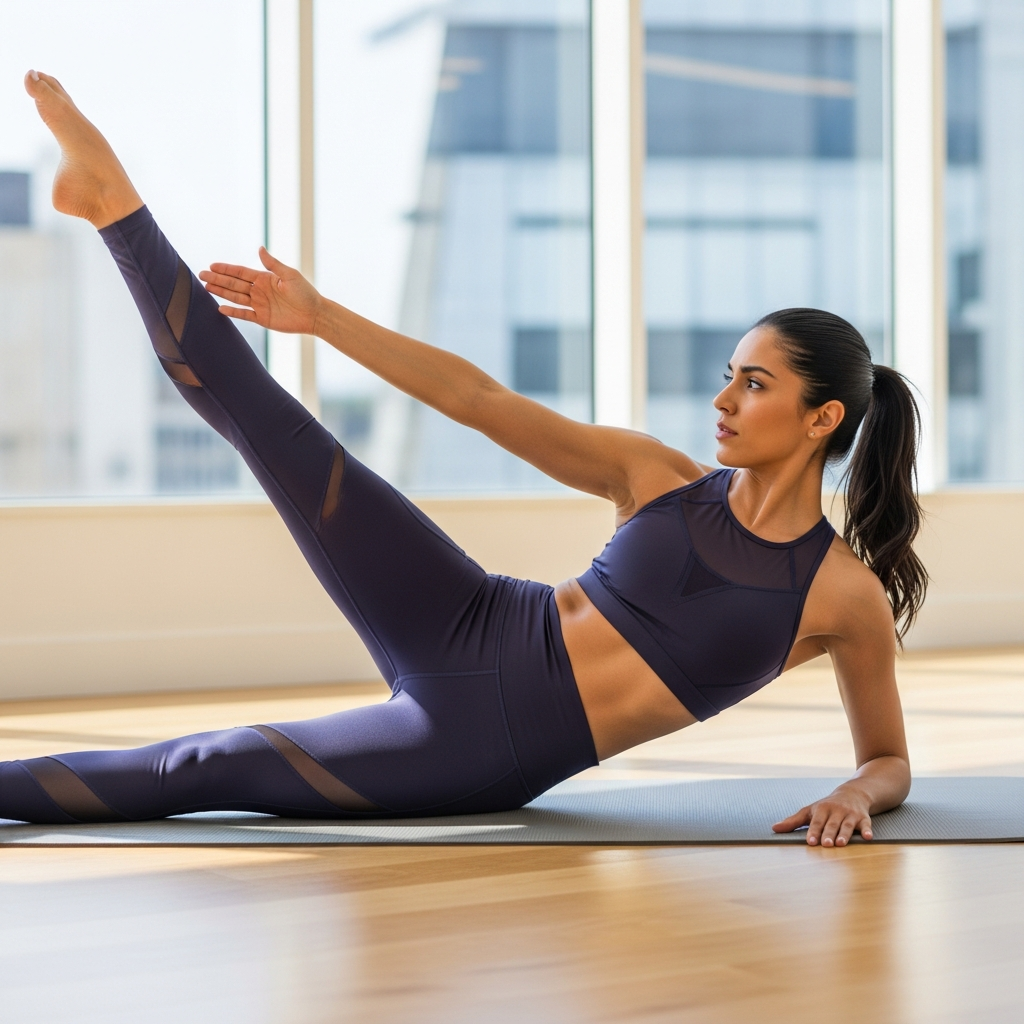
Mat Pilates exercises are performed on a mat, similar to a yoga mat, but usually thicker to cushion the spine. The exercises focus mainly on bodyweight, with occasional use of equipment like resistance bands or Pilates circles. Mat Pilates is a great way to build strength in the core muscles – the abdominals, lower back, and hips, also known as the powerhouse.
The Mat Pilates routine typically starts with a warm-up, followed by a series of exercises performed in an order that varies depending on the instructor or class level. These exercises can include the Pilates hundred (a core-strengthening exercise), the roll-up (a spinal articulation exercise), leg circles, and rolling like a ball (a balance and control exercise).
For beginners, Mat Pilates provides an accessible introduction to the world of Pilates. It requires little equipment and can be done anywhere, from a fitness studio to the comfort of your own home. The exercises can also be modified to cater to different fitness levels and physical limitations. For instance, if one has a back injury, certain exercises can be modified or skipped entirely to avoid straining the area.
One of the greatest advantages of Mat Pilates is its focus on quality over quantity. Instead of performing numerous repetitions, Pilates prioritizes performing each exercise with precision and control. This reduces the risk of injury and ensures that each muscle is targeted effectively.
In conclusion, Mat Pilates offers a comprehensive workout that strengthens the core, improves flexibility and posture, and enhances overall body awareness. For beginners, it provides an accessible introduction to fitness that prioritizes safety and effectiveness. As with any new exercise routine, it’s important to consult with a healthcare professional before starting Mat Pilates to ensure it’s suitable for your individual health needs. Once you’ve gotten the all-clear, you’re ready to start your journey in this transformative fitness method.
A Beginner’s Guide to Mat Pilates
Mat Pilates, a type of low-impact exercise that aims to strengthen muscles while improving postural alignment and flexibility, is an excellent option for beginners. With a focus on core strength, balance, and flexibility, Mat Pilates provides a full-body workout using only your body weight and a mat. Whether you’re new to exercise or just new to Pilates, this guide will help you understand the basics of Mat Pilates and provide actionable advice on how to get started.
Step 1: Understanding Mat Pilates
The first step for any beginner is understanding what Mat Pilates entails. Unlike other forms of Pilates that use machines, Mat Pilates only requires a mat and your body weight. The exercises are performed in a specific order and are designed to build strength and stability, particularly in the abdomen, lower back, hips, and buttocks – collectively known as the powerhouse.
Step 2: Equipment Required
As a beginner, the only equipment you need is a good-quality Pilates mat. These mats are thicker than yoga mats to cushion your body as you perform the exercises. You may also want to have some props such as a Pilates ball, resistance band, or magic circle for some exercises, but these are not necessary when you are just starting out.
Step 3: Basic Mat Pilates Exercises
Here are some basic Mat Pilates exercises that beginners can start with
1. Pilates Hundred: This exercise warms up the body and engages the abdominal muscles. Lie flat on your back with your legs in tabletop position (bent at the knee and lifted). Extend your arms along your sides, lift your head and shoulders off the mat and pump your arms up and down while breathing in for five counts and out for five counts.
2. Roll Up: Starting in a lying position with your arms extended above your head, inhale as you lift your arms and then your head and shoulders off the mat. Exhale as you continue to roll up, reaching for your toes. Inhale as you start rolling back down, and exhale as you return to the starting position.
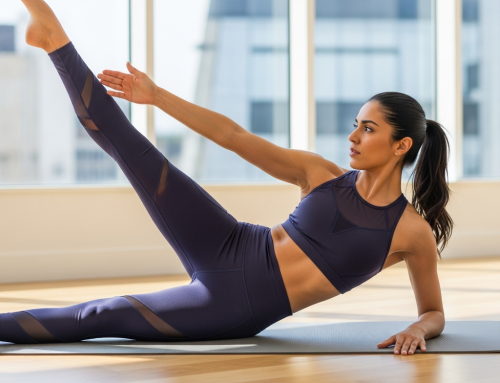
3. Single Leg Circles: Lie on your back with one leg extended towards the ceiling and the other flat on the mat. Circle your raised leg clockwise and then counter-clockwise, keeping your hips still.
Step 4: Joining a Mat Pilates Class
Joining a Mat Pilates class can be beneficial for beginners. A certified instructor can ensure you are performing exercises correctly and safely, and can provide modifications for any exercises that are too challenging. Look for beginner classes in your local area or online.
Step 5: Consistency is Key
Like any exercise program, consistency is key when it comes to Mat Pilates. Aim for two to three sessions per week to start with. Remember, it’s not about how fast or how many repetitions you can do, but about performing each exercise with control and precision.
Step 6: Progress Over Time
As you become more comfortable with the basic exercises, you can start to incorporate more advanced moves. Remember to always listen to your body and never push yourself to the point of pain. With regular practice, you will notice improvements in your strength, flexibility, and overall fitness.
Mat Pilates is a versatile and adaptable exercise method that can be tailored to suit your individual needs and fitness level. As a beginner, take things at your own pace and enjoy the journey towards better health and well-being.
Mat Pilates for Beginners: Challenges, Solutions, and Expert Tips
The world of Pilates can seem daunting for a beginner. With its unique terminology, specialized equipment, and emphasis on precision, it’s easy to feel overwhelmed. However, one of the most accessible ways for beginners to delve into Pilates is through mat Pilates. This article will discuss common challenges beginners face, solutions to these hurdles, and expert tips to maximize your mat Pilates experience.
1. Understanding Mat Pilates
Mat Pilates is a type of exercise that focuses on using one’s body weight and resistance to build strength, flexibility, balance, and mind-body awareness. It’s performed on a mat, unlike reformer Pilates which utilizes a machine.
Many beginners mistakenly think that mat Pilates is easier since it doesn’t involve equipment. However, mat exercises require control and precision with fewer external aids, making it a challenging yet rewarding practice.
2. Common Challenges and Solutions
Challenge 1: Difficulty in Understanding Terminology – Pilates involves specific terms like “C-curve”, “powerhouse”, and “scissor”. As a beginner, these can be confusing.
Solution: Make use of online resources or ask your instructor for clarification. Over time, as you continue your practice, you’ll naturally become familiar with the terms.
Challenge 2: Struggling with Form and Technique – Achieving the correct form in Pilates is crucial but can be a challenge for beginners.
Solution: A qualified instructor can provide guidance on proper form. Don’t rush through movements; instead, focus on doing them correctly.
Challenge 3: Lack of Core Strength – Many mat exercises require strong core muscles, which can be a struggle for beginners.
Solution: Patience and consistency are key. As you continue your practice, your core will become stronger. Also, incorporate other core-strengthening exercises into your routine.
3. Expert Tips for Mat Pilates Beginners
Tip 1: Start with a Beginner’s Class – As tempting as it might be to jump into a regular class, starting with a beginner’s session will ensure you learn the basics properly.
Tip 2: Listen to Your Body – If an exercise is causing pain or discomfort, stop. There’s a difference between challenging your body and pushing it too far.
Tip 3: Don’t Rush – Pilates is about quality, not quantity. Take your time to perform each exercise correctly rather than rushing through them.
Tip 4: Practice Regularly – Consistency is key in Pilates. Aim to practice at least 2-3 times per week to build strength and see improvements.
Tip 5: Incorporate Breathing – In Pilates, breath control is as crucial as the physical exercise. Coordinate your breath with your movements for maximum benefits.
4. Best Practices
Practice 1: Warm-Up Properly – Like any workout, a proper warm-up is essential before starting Pilates to prepare your body and prevent injuries.
Practice 2: Use Props – Props like a Pilates ring or ball can add variety to your workout and help you perform exercises correctly.
Practice 3: Dress Comfortably – Wear comfortable, form-fitting clothes that allow you to move freely but also enable your instructor to see your form.
Lastly, remember that everyone was a beginner at some point. Don’t be discouraged by your initial struggles. With time, practice, and patience, you’ll become more comfortable with mat Pilates, and soon enough, you’ll start to reap the incredible benefits of this holistic workout.
Mat Pilates for Beginners: Expectations, Timelines and Next Steps
One of the most effective and versatile forms of exercise is pilates. Particularly, mat pilates has gained significant attention for its efficacy in building strength, improving flexibility, and enhancing overall body awareness. If you’re a beginner looking to start your journey in mat pilates, here’s what you can expect, approximate timelines, and the next steps you should consider.
**Mat Pilates: An Overview**
Mat pilates is a series of exercises performed on a mat, using only your body weight as resistance. It focuses on improving flexibility, strengthening the body, particularly the core, and increasing body awareness. The movements are low-impact, making it suitable for beginners or individuals with joint issues.
**What to Expect as a Beginner**
As a beginner, your first mat pilates class might be a unique experience. Here’s what you can typically expect
1. *Introduction*: Instructors usually start by explaining the basic philosophy and principles of pilates – concentration, control, centering, fluidity, precision, and breath.
2. *Warm-up*: Classes begin with a series of warm-up exercises to prepare your body for the workout.
3. *Core focus*: Expect a lot of exercises targeting your core. Pilates is all about strengthening the core muscles – the deep abdominal muscles along with the muscles closest to the spine.
4. *Flexibility*: You’ll be introduced to various stretching movements aimed at increasing your flexibility.
5. *Cool down*: Like all good workouts, your session will end with a cool-down period with stretches to help reduce muscle tension.
6. *mental engagement*: Unlike other workouts, pilates requires a high level of mental engagement. You’ll need to focus on your breath, body movements, and alignment.
**Approximate Timelines**
The timeline for progress in mat pilates varies for each individual, depending on factors such as fitness level, frequency of practice, diet, and lifestyle. However, here’s a general timeline
1. *First few weeks*: In the initial weeks, you’ll likely be getting familiar with the exercises and learning to perform them with correct technique and alignment.
2. *After 1-2 months*: You may start to notice improvements in your flexibility, posture, and overall body strength. Your core will be stronger and you might also experience enhanced body awareness.
3. *After 3-6 months*: With consistent practice, you’ll notice significant changes in your body shape and muscle tone. You’ll also see improvements in your balance, coordination, and stress management.
**Next Steps**
Embarking on your mat pilates journey involves the following steps
1. *Find a class or instructor*: Look for beginner classes or instructors who specialize in mat pilates for beginners. They will guide you through the basics and ensure you’re performing the exercises correctly.
2. *Be consistent*: Consistency is key in pilates. Aim to attend classes 2-3 times a week for optimal benefits.
3. *Invest in a good mat*: A good quality thick mat will provide the necessary cushioning for your spine during the exercises.
4. *Listen to your body*: Don’t push yourself too hard. It’s okay to take it slow initially. Listen to your body and gradually increase the intensity as you gain strength and stamina.
5. *Maintain a healthy diet*: To complement your exercise routine, maintain a balanced diet rich in proteins, carbohydrates, and healthy fats.
6. *Keep learning*: As you progress, continue learning about different exercises, techniques, and principles of pilates.
7. *Track your progress*: Keep track of your progress over time. This will keep you motivated and help you identify areas that need improvement.
Mat pilates offers a holistic approach to fitness, integrating the mind and body. As a beginner, it’s crucial to understand and embrace the process, rather than focusing solely on the end result. With consistent practice and patience, you’ll experience the transformative power of pilates in your physical health, mental well-being, and overall quality of life.
In conclusion, Mat Pilates is an excellent choice for beginners who want to improve their core strength, flexibility, balance, and overall body awareness. This easy-to-follow exercise routine is not only beneficial for your physical health but also for your mental well-being as it promotes concentration and relaxation. It’s a low-impact workout that can be adapted to your fitness level and capabilities, making it suitable for everyone.
The first key takeaway from our discussion is that Mat Pilates is a unique exercise program that focuses on the core. Unlike other workouts, it doesn’t merely concentrate on superficial muscles but targets deep muscles, ensuring total body fitness. This core-centric approach results in improved posture, which can effectively alleviate back pain and other musculoskeletal problems.
Secondly, the equipment-free nature of Mat Pilates makes it highly accessible. The only thing you need is a mat, thus you can perform the exercises anywhere – at home, in a park, or during a break at work. This convenience means there are no excuses not to fit a session into your daily routine.
Thirdly, the focus on controlled movements and breathing in Mat Pilates enhances mind-body connection. As you become more tuned into the movements of your body, you’ll gain a greater understanding and appreciation of its capabilities and limits. This heightened sense of awareness can carry over into other areas of your life, helping you to live more consciously and mindfully.
Lastly, Mat Pilates is a versatile fitness regime. Whether you’re an athlete looking to enhance your performance, a senior aiming to maintain agility, or a beginner seeking a gentle introduction to exercise, Mat Pilates can be adapted to meet your needs. It is also an ideal complement to other forms of exercise, helping to improve strength and flexibility and reduce the risk of injury.
While we’ve provided you with valuable information about Mat Pilates for beginners, nothing beats practical experience. We encourage you to take the first step and try a class for yourself. You may find it challenging at first, but remember that every expert was once a beginner. With patience, persistence, and practice, you’ll soon start to see the benefits of Mat Pilates in your own body and life.
If you’re unsure where or how to start, we’re here to help. Our team of certified Pilates instructors can guide you through the basics and help you develop a routine that suits your lifestyle and fitness goals. We offer private and group classes, both in-person and online, providing flexibility to fit your schedule.
Don’t wait another day to start reaping the benefits of Mat Pilates. Contact us today to book your first class. Your journey to a stronger, healthier, more balanced you starts here. Remember, in the realm of fitness and health, the best project you’ll ever work on is yourself. So take the plunge, embrace Mat Pilates as part of your wellness journey, and experience the transformative effect it can have on your body and mind.