10 Common Myths About Pilates Classes in Grand Prairie
You’re scrolling through class schedules at your local Grand Prairie gym, finger hovering over that Pilates option you’ve been eyeing for… oh, about six months now. But then those little voices start up again. *Isn’t that just for dancers and super bendy people?* *Won’t I look ridiculous next to all those fitness influencers?* *Doesn’t it cost a fortune?*
Sound familiar?
You’re not alone. I can’t tell you how many times I’ve heard these exact concerns from people who desperately want to try something new for their health but keep talking themselves out of it. It’s like standing at the edge of a pool, wanting to jump in but convincing yourself the water’s too cold, too deep, or that everyone’s watching and judging your cannonball technique.
Here’s the thing – and I say this with all the love in the world – most of what you think you know about Pilates classes is probably wrong. Not your fault! There’s more misinformation floating around about Pilates than there is about whether carbs are evil (spoiler alert: they’re not, but that’s another conversation entirely).
I’ve been working in the wellness space long enough to see how these myths create real barriers for real people. People who could genuinely benefit from what Pilates offers – improved core strength, better posture, reduced back pain, enhanced flexibility, and honestly? A pretty amazing stress reliever. But instead of experiencing those benefits, they stay stuck on the sidelines because of outdated assumptions or, frankly, some pretty ridiculous misconceptions.
Take my neighbor Sarah, for instance. She’d been dealing with chronic lower back pain for years – you know, that nagging ache that makes you wince when you get out of bed or pick up groceries. Her physical therapist suggested Pilates, but Sarah was convinced she needed to be “flexible enough” first. Like, what? That’s like saying you need to be clean before you shower.
Or there’s Mike from down the street who assumed Pilates was just “expensive stretching for rich ladies who lunch.” (His words, not mine.) Turns out, he’d never actually looked into what modern Pilates classes really involve or what they cost. Spoiler alert: it’s not all reformer machines and hundred-dollar sessions.
The truth is, these myths aren’t just annoying – they’re actually harmful. They prevent people from exploring a form of exercise that could genuinely improve their quality of life. And in Grand Prairie specifically, where we have such incredible diversity in our fitness options and communities, it’s particularly frustrating to see people limiting themselves based on outdated information.
What gets me most fired up about this? The myths often target the exact people who could benefit most from Pilates. Busy parents who think they don’t have time. People dealing with joint issues who assume it’s too intense. Folks on tight budgets who believe it’s exclusively for the wealthy. Men who’ve been told it’s “not for them.” Beginners who think they need to get in shape before starting.
Actually, that reminds me of something a Pilates instructor once told me: “The people who say they’re not ready for Pilates are exactly the people who need it most.” Pretty profound, right?
So here’s what we’re going to do. We’re going to tackle the ten most persistent myths I hear about Pilates classes – especially here in Grand Prairie where the fitness scene is so vibrant but sometimes intimidating. We’ll look at what’s actually true versus what’s just… well, completely made up.
You’ll discover why that expensive reputation isn’t quite accurate, why being flexible isn’t a prerequisite, and why Pilates might actually be the perfect fit for your crazy schedule rather than another time-consuming burden. We’ll talk about what really happens in those classes (hint: it’s not two hours of impossible yoga poses), who actually attends them, and how to find options that work for your body, your schedule, and yes – your budget.
By the time you finish reading, you’ll have the real information you need to make an actual informed decision. No more excuses, no more myths, no more standing at the edge of that metaphorical pool wondering if you belong.
Ready to separate fact from fiction?
What Pilates Actually Is (And Why Everyone Gets It Wrong)
You know how everyone thinks they know what yoga is until they actually try it? Pilates is like that, but worse. People have some seriously wild ideas about what happens in those studios with the weird-looking equipment.
Joseph Pilates – yeah, that was a real person’s name – developed this method back in the 1920s. He was this fascinating guy who basically took everything he knew about gymnastics, martial arts, and rehabilitation, threw it in a blender, and came up with something completely different. He called it “Contrology” originally, which… honestly sounds way more intimidating than Pilates.
The thing is, Joe (can I call him Joe?) designed this system for everyone. Not just dancers with impossibly long legs or people who already had six-pack abs. He worked with injured soldiers, out-of-shape civilians, athletes – basically anyone who had a body and wanted it to work better.
The Core Confusion That Trips Everyone Up
Here’s where things get messy, and I totally get why people are confused about this. When most folks hear “Pilates,” they think it’s all about your abs. Like, you’ll do a thousand crunches and magically develop a flat stomach.
But here’s the thing – your “core” in Pilates isn’t just your six-pack muscles. It’s more like… imagine your torso is a soda can. If you only strengthen the front label, that can is still going to crumple under pressure, right?
Your Pilates core includes your deep abdominal muscles (the ones you can’t see in Instagram photos), your back muscles, your pelvic floor, even the muscles between your ribs. It’s this whole support system that keeps you upright and moving efficiently. Which is why people who do Pilates consistently often say they feel “stronger” without necessarily looking like fitness models.
The Equipment Isn’t Trying to Torture You
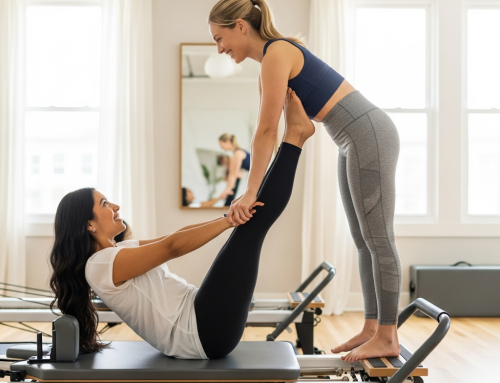
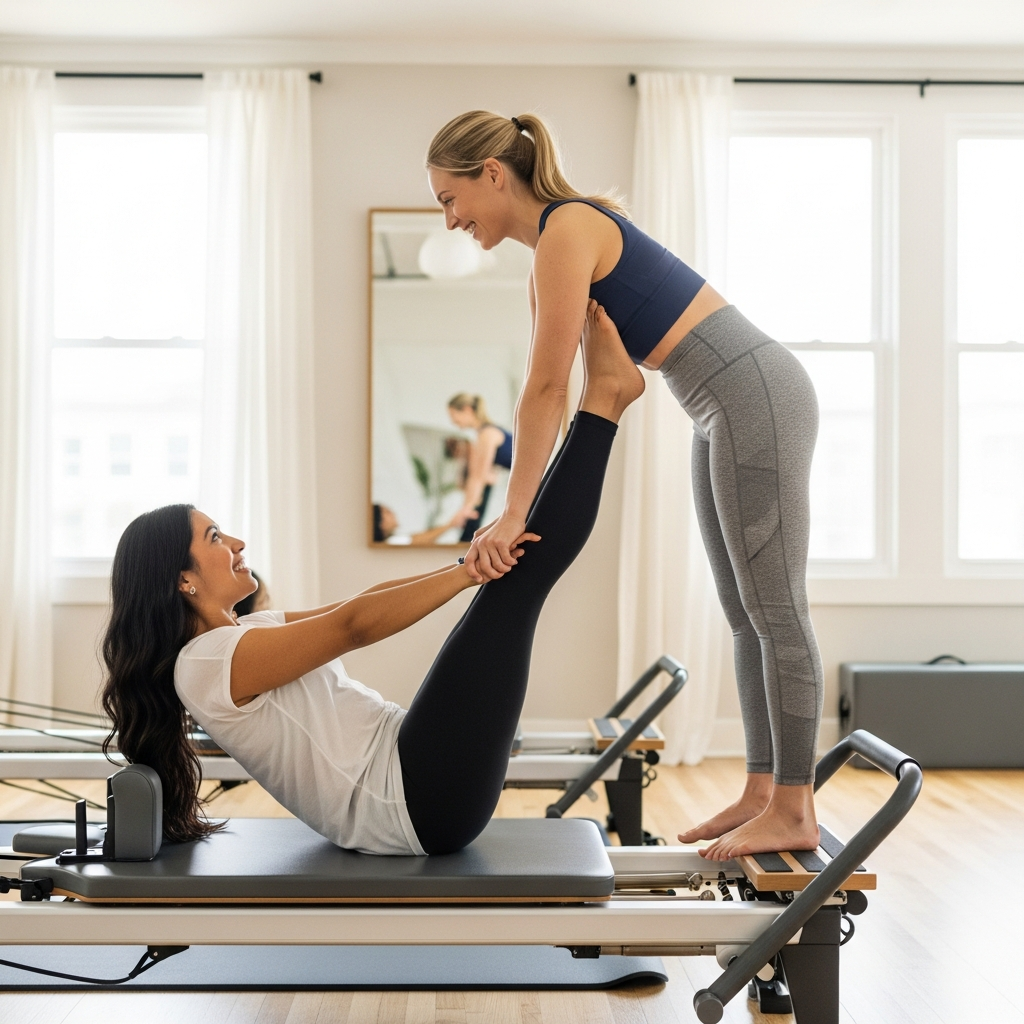
Walk into any Pilates studio and you’ll see what looks like medieval torture devices. The Reformer, with its springs and pulleys and sliding carriage, seems designed to confuse and possibly injure you.
Actually, that’s completely backwards. All that equipment – the Reformer, the Cadillac (yes, it’s really called that), the Chair – it’s designed to help you move better. Think of the springs like training wheels on a bike. They provide assistance when you need it and resistance when you’re ready for more challenge.
The sliding carriage on a Reformer? It’s giving you instant feedback about whether you’re moving efficiently or fighting against yourself. If you’re all tense and jerky, that carriage will let you know immediately. It’s like having a very honest friend who calls you out when you’re not being your best self.
Mat Classes Aren’t Just “Pilates Light”
This is where I see a lot of confusion, especially for people just starting out. There’s this assumption that mat Pilates is easier – you know, no scary equipment, just you and a mat on the floor.
Plot twist: mat classes can actually be harder. Without springs and pulleys to assist or support you, you’re working against gravity with just your own body strength. It’s like the difference between learning to swim with pool noodles versus jumping into the deep end.
That said, mat classes are incredibly accessible. You don’t need to figure out how to adjust springs or position yourself on unfamiliar equipment. But don’t let the simplicity fool you – some of those traditional mat exercises will humble you real quick.
Why Your Expectations Might Be Setting You Up for Confusion
Here’s something I wish more people understood before their first class: Pilates often feels counterintuitive. You might leave thinking, “That didn’t feel like much of a workout,” only to wake up the next day feeling muscles you forgot you had.
Or you might struggle with exercises that look ridiculously simple. Moving slowly and precisely? Much harder than flailing around with heavy weights. It’s like the difference between speed-walking and leisurely strolling – one looks easy but will absolutely exhaust you.
The real magic happens in the precision, the breath work, the tiny adjustments that add up to big changes over time. But that’s not always obvious when you’re in the middle of it, wondering why something that looks so simple feels so challenging.
Start Small (Trust Me on This One)
Look, I get it – you want to jump into that advanced class because it looks so graceful on Instagram. But here’s what nobody tells you: even former dancers and athletes often start with beginner classes. Your ego might bruise a little, but your body will thank you later.
Book a private session first if your budget allows. Seriously, it’s like having a translator for your body. The instructor can spot compensation patterns you don’t even know you have – like how you’re gripping your shoulders when you think you’re relaxing, or the way you hold your breath during certain movements.
Can’t swing private sessions? No problem. Show up 15 minutes early to your first group class. Most instructors will do a quick body scan with you – previous injuries, tight spots, what’s been bugging you lately. This isn’t small talk; it’s reconnaissance that’ll keep you safe and actually progressing.
Decode the Studio Lingo Before You Go
Every studio has its own personality, and honestly… sometimes their class descriptions sound like they’re written in code. “Dynamic flow” at one place might mean gentle stretching, while at another it’s basically athletic conditioning with reformers.
Call ahead. Ask specific questions: What’s the pace like? How much time is spent on each piece of equipment? Do beginners usually keep up, or do they modify most exercises? The front desk staff have heard these questions a million times – they won’t think you’re high-maintenance.
Here’s a insider tip: ask about their “signature style.” Some studios lean heavily into physical therapy approaches (great if you’re dealing with chronic pain), while others are more fitness-focused. Neither is wrong, but knowing helps you pick the right fit.
Your Pre-Class Strategy That Actually Works
Eat something light about 2 hours before – not because Pilates is super intense, but because some of those core exercises can make an empty stomach feel… weird. A banana or handful of nuts usually does the trick.
Dress in layers you can peel off. Studios vary wildly in temperature, and you’ll warm up as you move. Sticky socks are non-negotiable for equipment classes – regular socks on metal footbars are basically asking for a cartoon-style slip.
Hydrate, but don’t chug water right before class. You’ll be moving your spine in all directions, and a sloshing stomach isn’t anyone’s friend.
Navigate Your First Equipment Class Like a Pro
Reformers look intimidating – all those springs and pulleys – but they’re actually more forgiving than mat work for beginners. The equipment provides feedback your body can understand, plus the springs assist your movements rather than fighting against them.
Don’t be the person frantically trying to figure out spring tensions while everyone else is moving. Watch the instructor’s demo, then adjust your springs to match. If you’re lost, catch the instructor’s eye and point to your springs with a questioning look. They’ll either nod (you’re good) or come fix it quickly.
Most studios rotate equipment during class, so you’ll probably try 2-3 different machines. Don’t stress about being slow to transition – everyone’s been there, and the movement between stations is actually part of the workout design.
Deal With the Comparison Trap (Because It’s Real)
You know that person who flows effortlessly through every exercise while you’re still figuring out which way is up? They’ve probably been doing this for years. But here’s what you don’t see: they were once exactly where you are, wondering if they’d ever get it.
Focus on internal feedback rather than what you look like. Can you feel your core turning on? Are you breathing through the tough parts? Is that chronic shoulder tension starting to release? These victories matter more than perfect form on day one.
If you’re struggling with a particular exercise, ask for a modification – not just once, but every time you need it. Your body will tell you when it’s ready for the full version, and that timeline is uniquely yours.
Build Your Practice Without Burning Out
Start with once or twice a week max. Your nervous system needs time to process all the new movement patterns, and honestly, you’ll probably be sore in muscles you forgot existed.
Keep a simple log of how you feel after each class – energy levels, any aches, what felt challenging versus impossible. After a month, you’ll start seeing patterns that help you choose classes and modifications that work best for your body.
The real magic happens when you stop trying to “master” Pilates and start letting it teach you. Some days will feel incredible, others… not so much. That’s not failure – that’s learning.
The Intimidation Factor is Real (And That’s Okay)
Let’s be honest – walking into your first Pilates class can feel like showing up to a dinner party where everyone speaks a different language. You’re trying to figure out what a “teaser” is (spoiler: it’s not a movie trailer), while the person next to you is effortlessly flowing through movements that look like some sort of beautiful, controlled torture.
The intimidation is real, and frankly… it’s completely normal. I’ve seen confident executives turn into nervous teenagers when faced with a Pilates reformer. The trick isn’t to pretend you’re not intimidated – it’s to show up anyway.
Start with beginner classes, even if your ego whispers that you could handle more. Actually, especially then. A good instructor will modify everything for your level, and most studios in Grand Prairie offer intro packages specifically designed for newcomers. Think of it like learning to drive – you didn’t start on the highway, right?
Your Body Might Rebel (Temporarily)
Here’s what nobody tells you: Pilates can make you sore in places you didn’t know existed. Not the “I crushed it at the gym” kind of sore – more like the “apparently I have 47 muscles in my foot and they’re all mad at me” variety.
This happens because Pilates targets stabilizing muscles that have been basically freeloading while your bigger muscle groups did all the work. It’s like suddenly asking your quiet coworker to give a presentation – they’re capable, but they need a minute to adjust.
The solution? Start slow, communicate with your instructor about any discomfort, and remember that feeling awkward doesn’t mean you’re doing it wrong. Your body is learning a new language, and like any language, fluency takes time. Also – and this might sound obvious but apparently isn’t – breathe. I can’t tell you how many people hold their breath through entire sequences, then wonder why they feel dizzy.
The Equipment Learning Curve is Steeper Than Expected
Those reformers, towers, and chairs aren’t just fancy gym equipment – they’re precision instruments that can feel like alien technology at first. The springs have different tensions, the straps adjust in mysterious ways, and don’t even get me started on trying to figure out the footbar positions.
I’ve watched people spend five minutes just trying to lie down on the thing correctly. It’s like trying to operate a really expensive, really complicated recliner while someone watches and gives you directions in what might as well be ancient Greek.
The best advice? Ask questions. Lots of them. Good instructors expect this and actually prefer students who speak up rather than struggle silently. Most Grand Prairie studios will walk you through equipment basics before your first class, and many offer equipment orientation sessions. Take them up on it – your dignity (and your safety) will thank you.
Scheduling Consistency is Harder Than It Looks
You know what’s funny? People worry about whether they can do the moves, but the real challenge often turns out to be… showing up consistently. Life happens. Work explodes, kids get sick, your car decides to have an existential crisis on the very day you planned to restart your Pilates routine.
The all-or-nothing mentality kills more Pilates practices than poor form ever will. Missing a week doesn’t mean you’re a failure – it means you’re human. Instead of aiming for perfect attendance, focus on good-enough consistency. Two classes a week beats zero classes because you couldn’t manage four.
Many studios offer class packages that don’t expire quickly, and some even let you freeze memberships during crazy life periods. Don’t be too proud to use these options – they exist because the studio owners understand that life isn’t a perfectly scheduled Pilates sequence.
Progress Doesn’t Always Feel Like Progress
Here’s the weirdest part about Pilates: sometimes getting better feels like getting worse. You become more aware of imbalances, more conscious of compensation patterns, more… well, more everything. It’s like getting glasses for the first time – suddenly you can see all the dust you’ve been living with.
This awareness phase can be discouraging. You might feel less coordinated than when you started, more conscious of your limitations. That’s not regression – that’s your nervous system actually paying attention for the first time in years.
Trust the process, even when it feels messy. Especially when it feels messy.
Setting Realistic Expectations for Your First Few Weeks
Let’s talk turkey about what you can actually expect when you start Pilates – because honestly, there’s a lot of wishful thinking floating around out there.
First off, you’re not going to walk out of your initial session feeling like a graceful swan. More like a newborn giraffe who’s still figuring out which leg goes where. And that’s completely normal! Your body is learning an entirely new language of movement, and it takes time to become fluent.
Most people start noticing subtle changes around the 3-4 week mark – maybe you’re sleeping better, or your posture feels a bit more natural when you’re standing in line at the grocery store. The bigger transformations? Those typically show up around the 8-12 week point, assuming you’re consistently attending classes 2-3 times per week.
Here’s something nobody tells you: some days you’ll feel amazing after class, energized and centered. Other days? You might feel more tired than when you started. Both reactions are totally normal – it depends on stress levels, sleep quality, what you ate (or didn’t eat), and about fifty other factors that make us human.
What “Progress” Actually Looks Like
Progress in Pilates isn’t always linear – it’s more like a dance between challenge and mastery. You might nail a movement one week, then struggle with it the next. That’s your body integrating new patterns, not a sign you’re moving backward.
Pay attention to the small wins: holding a plank for five seconds longer, remembering to breathe during the Hundred, or simply showing up on a day when Netflix was calling your name. These matter more than whether you can do a perfect teaser (spoiler alert: most of us are still working on that one).
Your core strength will develop gradually – think of it like slowly turning up the dimmer switch rather than flipping on a spotlight. One day you’ll realize you got through an entire class without your lower back screaming for mercy, or you’ll notice you’re naturally engaging your core while carrying groceries.
Navigating the First Month
Your first month is all about building the habit and learning the vocabulary. Don’t worry about being perfect – focus on being present. Show up consistently, ask questions when you’re confused (everyone’s confused at first), and resist the urge to compare yourself to the person next to you who’s been coming for two years.
Soreness is normal, especially in muscles you didn’t know existed. But sharp pain? That’s your body saying “hold up there, friend.” Listen to those signals and speak up if something doesn’t feel right. Good instructors want to know – we’d rather modify an exercise than have you push through pain.
Actually, that reminds me… don’t be surprised if you feel sore in weird places. Your feet, your ribs, even your armpits might be talking to you after those first few classes. Pilates has a way of finding all the muscles that have been taking a vacation.
Building Your Long-Term Practice
After that initial adjustment period, you’ll start developing what I like to call “Pilates intuition” – an awareness of your body that extends beyond the studio. You might catch yourself sitting straighter at your desk, or notice when you’re holding tension in your shoulders.
Most people find their sweet spot with 2-3 classes per week, though some start with just once weekly and gradually build up. There’s no prize for doing too much too soon – consistency beats intensity every time.
As you get stronger, you’ll probably want to challenge yourself with different class formats or equipment. That’s exciting! But remember, even advanced practitioners go back to basics regularly. There’s always something new to discover in the fundamentals.
Your Next Steps Forward
Ready to get started? Most Grand Prairie studios offer introductory packages or trial classes – perfect for dipping your toes in the water. Look for beginner-friendly classes or ask about private sessions if you’re feeling particularly nervous about jumping into a group setting.
Don’t overthink the gear situation. Comfortable clothes you can move in, a water bottle, and an open mind are really all you need to begin. The fancy equipment and accessories? Those can wait until you’ve decided this is something you want to stick with.
The most important thing is taking that first step. Your future self – the one with better posture, stronger core, and maybe even a little more confidence – is waiting for you to begin.
Ready to Give Pilates a Real Try?
You know what? It’s pretty amazing how many misconceptions float around about Pilates. I mean, here we are in 2024, and people still think it’s just stretching for dancers or that you need to be a pretzel-person to even walk into a studio.
The truth is so much simpler – and honestly, so much better.
Pilates isn’t about being perfect or fitting into some impossible mold. It’s about showing up as you are and getting stronger, more flexible, and more connected to your body. Whether you’re dealing with chronic back pain, recovering from an injury, or just tired of feeling stiff and uncomfortable in your own skin… there’s probably a Pilates approach that’ll work for you.
And here in Grand Prairie? We’re lucky. There are instructors who actually get it – who understand that real people have real bodies with real limitations. They’re not going to judge you for using modifications (actually, good instructors encourage them). They won’t roll their eyes if you can’t touch your toes or if you need to take breaks.
What I love most about Pilates is how it sneaks up on you. One day you’re struggling to hold a plank for thirty seconds, and then – without really noticing – you’re carrying groceries upstairs without your usual back twinge. Or you realize you’ve been sitting at your desk for hours without that familiar shoulder tension.
It’s those little victories that add up to something bigger. Not just physical strength, but this quiet confidence that comes from knowing your body can do hard things… even if they looked impossible at first.
The equipment isn’t as scary as it looks, by the way. Those reformers and Cadillacs might seem intimidating, but they’re actually designed to help you succeed. Think of them as really sophisticated assistants – there to support you, challenge you appropriately, and help you figure out what your body can do when it has the right tools.
Listen, I get it if you’re still on the fence. Maybe you’ve tried other fitness programs that left you feeling defeated or invisible. Maybe you’re worried about keeping up or looking foolish. Those feelings are completely valid – and honestly? Most of us have been there.
But here’s what I’ve learned after years in this field: the right Pilates studio feels different. It feels like a place where you can breathe, where you can be yourself, where your progress matters more than your performance.
If you’re curious – even a little bit – about what Pilates might do for your body and your life, why not reach out? Most studios offer intro sessions or trial classes. You could ask about their approach to beginners, what to expect, or which classes might be the best fit for your goals and any physical concerns.
There’s no pressure to commit to anything major. Just a conversation. Maybe a single class to see how it feels. Because sometimes the biggest step isn’t the first workout – it’s simply picking up the phone and asking, “Is this right for someone like me?”
The answer, more often than you might think, is yes.