Pilates for Core Strength: What Oak Cliff Clients Should Know
You’ve probably had that moment. You bend down to pick something up off the floor – your keys, a bag of groceries, maybe just a sock – and something in your lower back just… protests. Not a sharp injury, just that dull, tired ache that says *hey, we need to talk.* Or maybe it’s the afternoon slump that hits around 2pm where you’re practically melting into your chair because sitting upright feels like actual work. Sound familiar?
Here’s something most people don’t realize: that’s not just tiredness. That’s your core waving a little white flag.
And look, when most of us hear “core strength,” we immediately picture someone doing endless crunches in a gym, or those impossibly fit people on Instagram planking on a beach somewhere. That picture? It’s not exactly motivating. But what if building real, functional core strength looked completely different than you imagined – and actually felt *good* in the process?
That’s where Pilates comes in.
Why Oak Cliff Residents Are Paying Attention
There’s something worth mentioning here. The Oak Cliff community – whether you’re in Kessler Park, Bishop Arts, Elmwood, or anywhere in between – tends to be pretty active. People here walk the neighborhood, chase kids around, work physical jobs, or spend long hours at desks in the Design District commute cycle. You’re not sedentary people. But being generally active and having genuine core strength? Those are two very different things, and that gap catches a lot of people off guard.
We see it all the time at the clinic. Someone comes in frustrated. They’re moving through their life, they’re not sitting on a couch all day, so why does their back ache? Why do they feel unstable? Why does weight loss feel so much harder than it should?
The answer, more often than not, lives somewhere in the deep muscles surrounding your spine and pelvis – muscles that standard exercise almost never reaches.
What Pilates Actually Does (Versus What You Think It Does)
Here’s where it gets genuinely interesting. Pilates isn’t really about flexibility, though that often improves. It’s not about burning maximum calories in minimum time – it’s not that kind of workout. What it *is* about is building the kind of deep, stabilizing strength that makes everything else in your life work better.
Think of your core like the foundation of a house. You could have beautiful walls, great windows, a solid roof – but if the foundation is shaky, everything eventually shows the strain. Pilates is essentially foundation work. And for people who are also working on weight loss, managing metabolic conditions, or recovering from injury, that foundation becomes even more critical.
Actually, that reminds me of something important we’ll cover in this article – the specific connection between core strength and metabolic health. It’s a relationship that doesn’t get nearly enough attention, and it matters a lot if you’re working with a medical weight loss program.
What You’ll Take Away From This
By the time you finish reading, you’ll have a clear picture of what Pilates actually involves – no fluff, no overselling. You’ll understand why the deep core muscles matter so specifically for the kinds of health goals people around here are working toward. We’ll talk about who tends to benefit most, what to realistically expect in those first few weeks, and how Pilates can slot into a broader wellness or weight loss plan without feeling like one more overwhelming thing on your list.
We’ll also get into some practical questions – like whether you need any experience to start, what to look for in a class or instructor, and honestly… whether it’s even the right fit for you. Because it’s not magic, and pretending otherwise wouldn’t be doing you any favors.
What it *can* be, though, is one of the most quietly transformative things you add to your routine. The kind of change that doesn’t announce itself dramatically but shows up in your posture, your energy, your back not complaining when you reach for those keys.
That’s worth knowing more about, don’t you think?
Your Core Is Not What You Think It Is
Here’s the thing most people get wrong right off the bat – when someone says “core,” your brain probably jumps straight to abs. Six-pack territory. That flat stomach you’re working toward. And honestly? That’s understandable. Fitness culture has spent decades selling us that image.
But your core is actually more like… a canister. Or a soup can, if that’s easier to picture. You’ve got a top (your diaphragm), a bottom (your pelvic floor), a front and sides (various abdominal layers), and a back (the deep spinal muscles nobody talks about). All of these muscles have to work *together* – like a coordinated team, not a bunch of soloists. When one part is weak or checked out, the whole system compensates. That compensation is usually where the back pain, the instability, the “I threw out my back sneezing” moments come from.
Pilates was specifically designed to train that whole canister. Not just the pretty surface muscles.
Where Pilates Actually Came From
Joseph Pilates – yes, a real person – developed this method in the early 20th century. He called it “Contrology,” which sounds a little intense, but his core idea was pretty straightforward: controlled movement, breath, and mental focus working together. He originally developed many of the exercises while working with injured soldiers and dancers, which explains why the method is simultaneously rehabilitative *and* demanding. It’s both things at once. That can be confusing when you first encounter it.
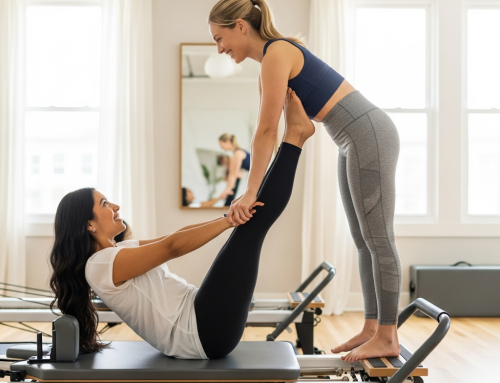
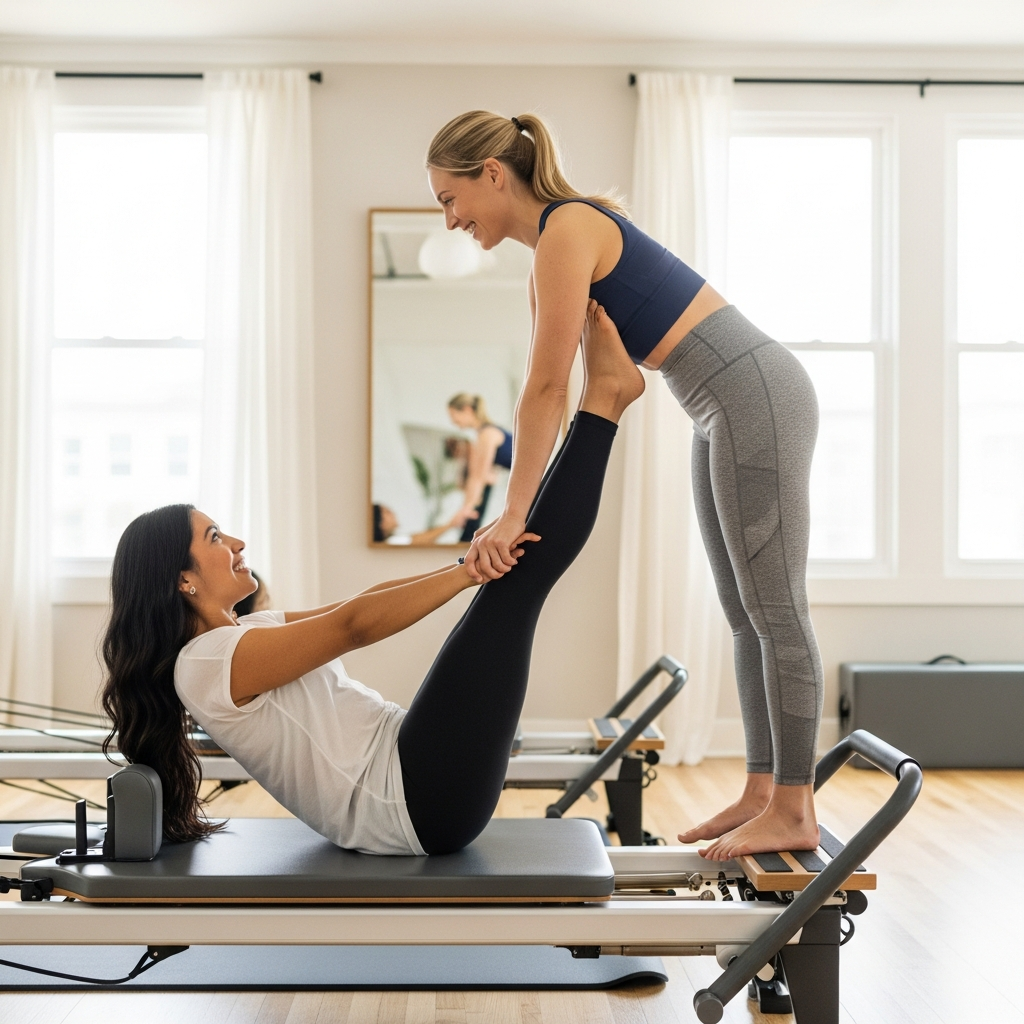
He built specialized equipment – the Reformer being the most famous – that uses spring resistance to create both challenge and support. This is actually one of those counterintuitive things about Pilates: the springs can make a movement *easier* or *harder* depending on how they’re set up. So when you walk into a studio and see someone lying on what looks like a medieval contraption doing something that appears effortless, don’t assume it is. They’ve just learned how to use the equipment. You will too.
The “Neutral Spine” Thing (And Why It Matters for You)
Instructors will say “neutral spine” roughly a thousand times in your first few classes. It sounds like jargon. It kind of is. But the concept behind it is genuinely useful.
Your spine has natural curves – a gentle inward curve at the lower back, an outward curve at the upper back. Neutral spine just means maintaining those natural curves rather than flattening them out or exaggerating them. Think of your spine as a suspension bridge: those curves *are* the suspension system. They’re not flaws to be corrected. They’re engineering.
A lot of people – especially those who’ve spent years doing crunches or sitting at a desk in Oak Cliff traffic on I-35 – have lost touch with what their natural spinal position even feels like. Pilates basically reintroduces you to it. Slowly, deliberately, sometimes frustratingly slowly.
Why “Low and Slow” Actually Works
This is the part that surprises people who come from a more intense fitness background. Pilates movements are often small. Controlled. Deliberate. You might do 8-10 repetitions of something and feel more worked than you expected, because the method asks you to actually *engage* the right muscles rather than just moving your body through space using momentum.
Think of it like the difference between carefully lifting a box with proper form versus just yanking it off the shelf. You can move a lot of boxes quickly with the yanking method – right up until you can’t.
The slow, intentional approach also does something interesting for your brain-body connection. Actually, this is probably the most underrated benefit of Pilates – it forces you to pay attention. You can’t really zone out to a podcast and do it well. That heightened body awareness tends to carry over into everyday movement, which is where the real injury prevention happens.
The Breathing Piece (Don’t Skip This)
Pilates uses a specific breathing pattern – inhaling to prepare, exhaling on the exertion – and it’s tied directly to how your deep core activates. Your transverse abdominis (the deepest abdominal layer, your internal corset essentially) naturally engages when you exhale fully. So the breathing isn’t just relaxation theater. It’s functional.
It takes a while to coordinate. Most people feel slightly ridiculous for the first few classes. That’s completely normal.
What Actually Works (And What Wastes Your Time)
Let’s be honest for a second – most people walk into their first Pilates class expecting to feel like they just did a spa day. Then the instructor asks them to hold a hollow body position for 30 seconds and suddenly everything is on fire. That’s not a bad thing. That’s the point.
But here’s what nobody tells you upfront: not all Pilates is created equal for core strength, especially when you’re coming in with weight loss goals or a body that’s been through some things. So let’s talk about what actually moves the needle.
Start With the Breath (Seriously, Don’t Skip This)
I know, I know – you came here to talk about exercises, not breathing. But the lateral thoracic breathing technique that’s foundational to Pilates is genuinely the secret handshake. When you breathe into the sides and back of your ribcage instead of your belly, you naturally engage your deep transverse abdominis – that’s the internal corset muscle that does the real stabilizing work.
Practice it before class. Lie on your back, hands on your lower ribcage, and breathe like you’re trying to push your hands apart sideways. Two weeks of this before bed and you’ll walk into class feeling like you already know something the other students don’t. Because you will.
The Exercises That Deliver the Most Bang
If you’re working with a local instructor in Oak Cliff or doing mat work at home, prioritize these specific movements over the flashy stuff
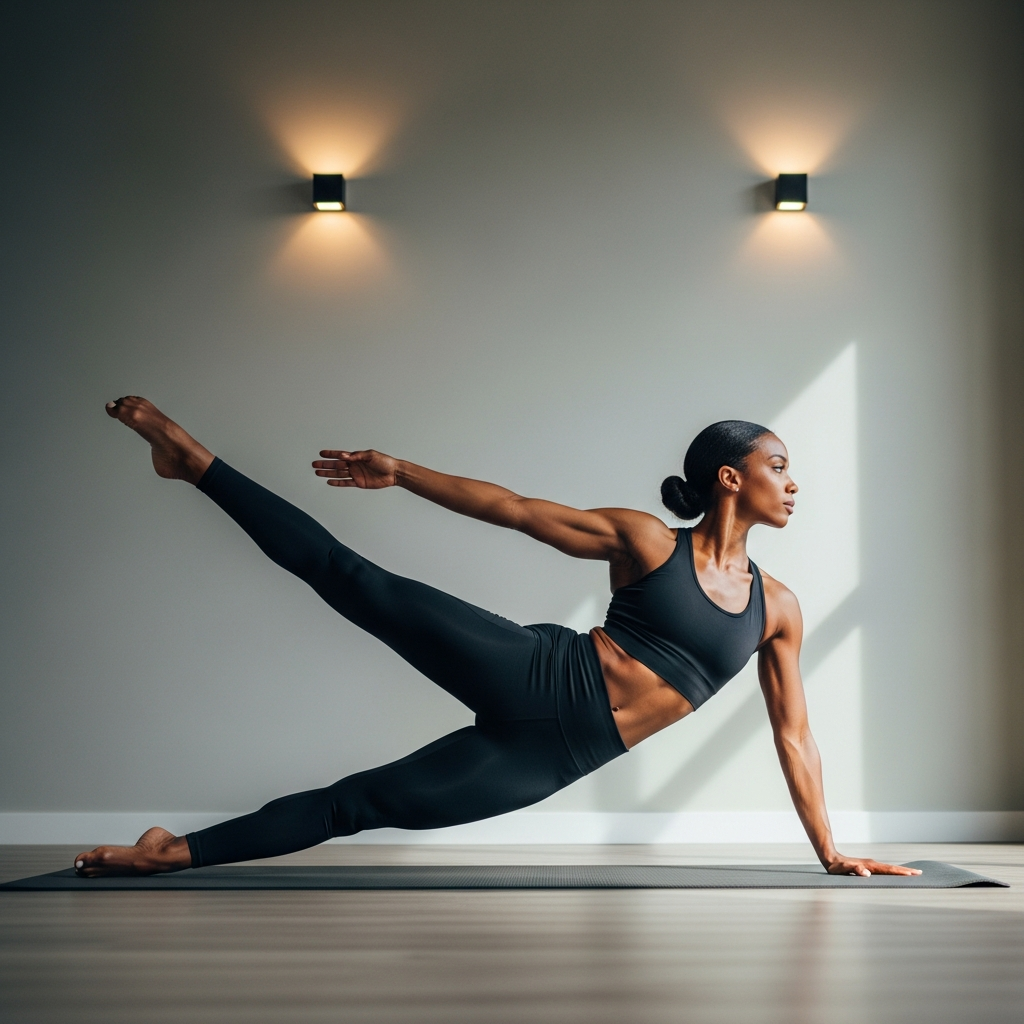
– Dead bug variations – These look almost embarrassingly simple, but when done with proper lower back contact on the mat, they fire up the deepest core layers that crunches completely ignore – Pilates hundreds with modified leg position – Keep your legs at a 90-degree tabletop instead of extended if you have lower back sensitivity. You’ll still get the full abdominal engagement without compensation patterns sneaking in – Single leg stretch – Go slower than you think. Half the speed, double the result – Side-lying leg series – Honestly underrated for building the lateral core stability that protects your hips and spine during everyday movement
Notice what’s not on that list? Sit-ups. Traditional crunches. Anything that has you yanking on your neck. Oak Cliff’s summers mean a lot of outdoor activity – walking, cycling along the river, chasing kids around Kidd Springs Park – and your core needs functional strength, not just the ability to crunch forward.
How Often Is Often Enough?
Here’s a realistic expectation: three focused sessions per week will produce noticeable change in 6-8 weeks. Not “Instagram transformation” change, but real, structural change – the kind where you realize you’ve been sitting up straighter at your desk without thinking about it, or you lifted a bag of mulch from Home Depot and your back didn’t complain afterward.
Two sessions a week will maintain what you’ve built. One session is better than nothing but won’t get you anywhere new. That’s just the honest math.
Pairing Pilates With Your Weight Loss Program
If you’re working with a medical weight loss program, here’s something worth knowing – Pilates is particularly effective during the phases when you’re losing weight quickly. Rapid weight loss can sometimes mean losing muscle alongside fat, which is exactly what you don’t want. Core-focused Pilates helps you preserve and build that lean muscle tissue, which keeps your metabolism working harder for you.
Actually, that reminds me of something a lot of clients ask about – whether they should eat before a session. A light snack 60-90 minutes before is fine. A full meal followed by Pilates is… not. You’ll spend the whole class regretting your choices.
A Note on Finding the Right Instructor
The Oak Cliff area has grown a lot – there are more options now than there were even a few years ago. When you’re vetting an instructor, ask them specifically how they modify for people with lower back issues or limited core activation. If they look at you blankly or just say “we’ll figure it out,” keep looking. A good instructor should be able to tell you exactly which cues they use and why.
Your core is the foundation everything else is built on – your posture, your metabolism, your injury resilience. Treat finding the right Pilates approach with the same seriousness you’d bring to any other part of your health plan.
When It Feels Like Nothing Is Happening
This is probably the most common thing people say around week two or three. You’re showing up, you’re doing the work, and yet… nothing feels different. Your core doesn’t feel stronger. You’re not sure you’re even doing it right.
Here’s the honest truth: Pilates has a steep invisible learning curve. The first several sessions are almost entirely about learning *how* to feel muscles you’ve probably been ignoring for years. Your brain is literally building new neural pathways to muscles that have been checked out since, I don’t know, maybe since you were twelve. That’s not failure – that’s neurological groundwork.
The solution? Stop looking for visible results and start looking for awareness. Can you feel your transverse abdominis engage when you’re lying on your back? That tiny, almost imperceptible tightening low in your belly – that’s it. That’s the whole game at first. Once you can feel it on the mat, you’ll start noticing it everywhere else.
The “I’m Just Not Flexible Enough” Trap
Oh, this one. If I had a dollar for every time someone said they needed to get in shape *before* starting Pilates…
You don’t. You really don’t. Pilates isn’t a reward for already being fit – it’s a tool for getting there. Tight hamstrings, stiff hips, a back that complains when you tie your shoes – these are exactly the reasons to start, not reasons to wait. Waiting just means spending more months with those same tight hamstrings.
That said, stiffness can make certain movements genuinely uncomfortable, especially in the early sessions. The real solution here is communication with your instructor. Tell them what hurts, what pulls, what feels impossible. A good instructor – and this matters in Oak Cliff specifically, because our community tends toward desk jobs and long commutes – will modify movements without making you feel singled out or behind.
When Your Brain Keeps Wandering
Pilates demands mental presence in a way that, say, a treadmill does not. On a treadmill you can zone out, check your phone, mentally draft your grocery list. Pilates will not allow that. And for a lot of people – especially those of us who spend our days multitasking and context-switching – that focused attention feels almost impossible at first.
It’s not a personality flaw. It’s just an unfamiliar mode.
What actually helps is anchoring your attention to your breath. Every Pilates movement has a breathing pattern, and the breath is concrete – it’s something you can track. When your mind drifts to whether you remembered to reply to that email, the breath pulls you back. Over time, that anchoring becomes automatic. Some clients actually tell me this is the unexpected benefit they treasure most – that hour of forced presence starts feeling like relief rather than effort.
The Soreness Surprise
First-time Pilates clients are often shocked by where they’re sore. Not their arms. Not even really their abs, at least not in the way they expected. It’s often the deep hip flexors, the muscles along the spine, the inner thighs. Places that feel almost embarrassingly obscure to be sore.
That’s actually confirmation you’re doing it right. Those are stabilizer muscles – the ones that conventional exercise tends to completely overlook. They’re not used to being asked to do anything, so they’re going to register some protest in the beginning.
The practical advice here: don’t push through sharp pain, ever. Dull, unfamiliar muscle fatigue? That’s fine, that’s progress. Sharp or joint pain? Stop and tell your instructor immediately.
Consistency Is Where Most People Actually Struggle
And finally – the hardest one to solve. Life in Oak Cliff is busy. Really busy. Between work, family, traffic on I-35 doing what it always does… finding three consistent sessions per week can feel like a scheduling miracle.
The research on Pilates is pretty clear that consistency matters more than intensity. Two shorter sessions per week, every week, beats three intense sessions followed by two weeks off. Every time.
What helps is treating your session like a medical appointment rather than an optional workout. It’s on the calendar, it’s non-negotiable, and you’re not “squeezing it in” – you’re showing up for something that’s genuinely part of your health plan. That mental shift, simple as it sounds, is what separates the people who see real change from the ones who plateau after month one.
What “Progress” Actually Looks Like (And When to Expect It)
Here’s the honest truth – and I’d rather tell you this upfront than have you quit after three weeks feeling like you failed. Pilates results don’t come with a dramatic before-and-after moment. There’s no single session where you’ll suddenly feel your core “activate” and your life transform. It’s quieter than that. Slower. And honestly? More lasting.
Most clients start noticing something within the first two to four weeks – but it’s usually not what they expected. It’s not a six-pack. It’s more like… you bent down to pick up groceries and your back didn’t complain. Or you sat through a long drive and realized you’d been sitting tall without thinking about it. Those small moments? That’s the real stuff happening.
Visible changes in strength and body composition typically take longer – we’re usually talking eight to twelve weeks of consistent practice. And “consistent” means showing up two to three times per week, not once when you feel motivated. I know that’s not the answer anyone wants to hear, but it’s the one that’s actually true.
The First Month Might Feel Awkward, and That’s Fine
Your body is essentially learning a new language in those early sessions. The movements might feel strange, the instructor keeps cueing you to do things that seem impossibly subtle (“breathe into your back ribs” – what does that even mean, right?), and you might leave feeling more confused than accomplished.
That’s normal. Completely, totally normal.
Actually, if everything feels easy in your first few Pilates sessions, that’s a sign something’s off – either the modifications are too aggressive or you’re not quite connecting to the right muscles yet. Real Pilates engagement is challenging even at a beginner level. Your stabilizing muscles – the deep ones, the ones that don’t get much attention in traditional gym workouts – are being asked to wake up and do a job they’ve been sleeping through for years.
Give yourself permission to be a beginner. It sounds obvious, but a lot of Oak Cliff clients come in having been athletes, gym regulars, or just generally active people. Hitting a beginner’s learning curve can feel frustrating when you’re used to being good at physical things. Just stick with it.
Working With Your Medical Weight Loss Plan
If you’re already working with our clinic on a broader weight loss or wellness program, Pilates fits into that picture in a specific way – it’s not a calorie-torching cardio substitute, and it works best when you treat it that way. Think of it as the foundation you’re building while the other pieces of your plan address nutrition, metabolic health, and cardiovascular fitness.
That said, a stronger core genuinely supports everything else. It makes your walks more efficient. It protects you during higher-intensity workouts as your fitness builds. It reduces the kind of nagging back and hip discomfort that makes people skip workouts altogether.
Talk to your care team before starting if you have any spinal conditions, recent injuries, or if you’re in early recovery from a medical procedure. Most of the time, Pilates can be beautifully adapted – but “most of the time” isn’t “always,” and your specific situation matters.
Your Next Practical Steps
So you’re interested. Here’s what actually makes sense to do next
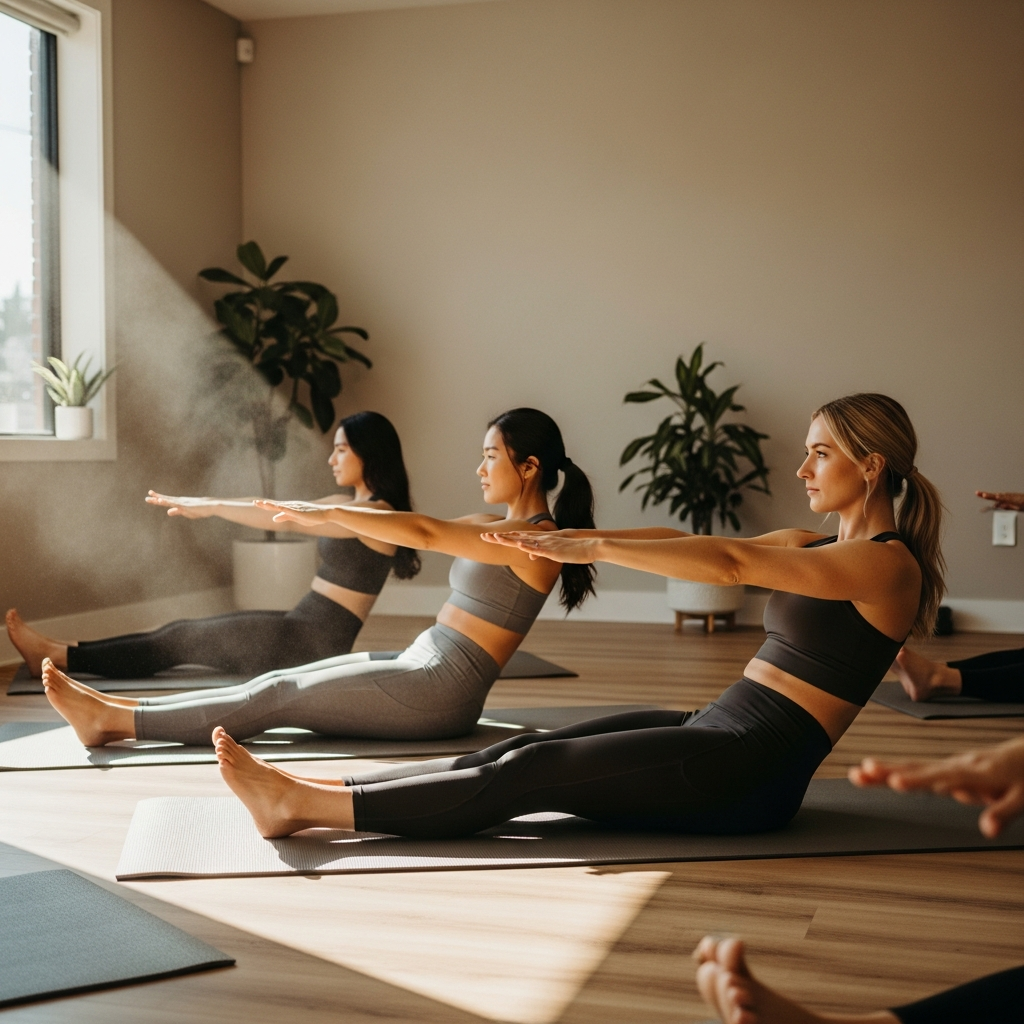
Start with a beginner or foundations class, not a general intermediate class. This isn’t about ability – it’s about learning the vocabulary. Even former athletes benefit enormously from starting here. Many studios in and around Oak Cliff offer intro packages that give you a lower-stakes way to try a few sessions before committing.
Consider mat Pilates before reformer, at least initially. Mat work teaches you the foundational movements in their most stripped-down form. Reformer classes add springs and pulleys that can actually mask improper form for beginners – it looks impressive, but mat work builds the real baseline.
Ask instructors about their training and whether they have experience working with clients who have weight-related health goals or physical limitations. A good instructor won’t be offended by the question. A great one will welcome it.
And finally – track how you *feel*, not just how you look. Keep a simple note on your phone. Sleep quality, back discomfort, energy levels, how your clothes fit. The scale tells one small piece of the story. The rest of it shows up in how you move through your actual life, day to day, in ways that matter more than any number.
So here’s the thing about core strength – it’s not really about getting a six-pack or impressing anyone at the gym. It’s about feeling stable in your own body. Being able to pick something up off the floor without wincing. Standing a little taller at the end of a long day instead of wilting like last week’s grocery store flowers. That’s what this is actually about.
Pilates has this beautiful way of meeting you exactly where you are. And for so many of our Oak Cliff neighbors – people juggling jobs and kids and the general beautiful chaos of life in this community – that matters more than you might think. You don’t need to be flexible. You don’t need any prior experience. You honestly don’t even need to know what a “transverse abdominis” is right now (though you probably do after reading this far, which is fun).
What you *do* need is a starting point.
The core work you build through Pilates doesn’t just show up on a mat – it shows up when you’re carrying groceries up porch steps, when you’re leaning over to help a kid with homework, when you realize your back hasn’t bothered you in two weeks and you finally notice its absence. Those small moments? They compound. Quietly, steadily, they add up into something that genuinely changes how you move through the world.
That said… it’s worth being honest about something. Exercise – even the good, gentle, intentional kind – works best when it’s part of a bigger picture. Sleep matters. Stress matters. Nutrition absolutely matters. And if weight or metabolic health is part of what you’re navigating alongside core strength, having someone in your corner who actually understands that full picture makes an enormous difference.
That’s exactly what we do.
At our clinic, we don’t hand you a generic plan and send you on your way. We sit down with you. We listen to what’s actually going on – not just the numbers on a scale, but what your life looks like, what you’ve already tried, what feels hard, what you’re hoping for. And then we help you build something that actually fits. Something sustainable. Something that makes sense for *your* body, your schedule, your Oak Cliff life.
Actually, that’s the part that gets us most excited – watching someone go from uncertain and a little skeptical (totally understandable, by the way) to feeling genuinely good in their body. Strong. Capable. Like themselves again.
If you’ve been thinking about taking a step toward better core health – whether Pilates is calling your name or you’re just not sure where to start – we’d genuinely love to hear from you. No pressure, no hard sell, no overwhelming you with information before you’re ready. Just a real conversation about where you are and where you’d like to be.
Reach out whenever you feel ready. We’re right here in the community with you, and we’re not going anywhere. Sometimes just asking the first question is the whole thing – and we promise, we’ll make that part easy.
Your core has been working hard for you this whole time. It might just be time to return the favor.