How Pilates Classes Help Mesquite Residents Build Consistency
You signed up for the gym in January. Told yourself this was the year. You went three times that first week – maybe four – and felt genuinely proud of yourself. Then life happened. A busy week at work, a sick kid, one skipped session that turned into two, and suddenly it’s March and your gym bag is collecting dust in the corner of your bedroom like a monument to good intentions.
Sound familiar? Yeah. We’ve all been there.
Here’s the thing that nobody really talks about when we discuss fitness and exercise – the *hardest* part has nothing to do with the actual workout. It’s not the sweat or the soreness or even getting up early. It’s showing up consistently, week after week, even when motivation has long since packed its bags and left town. Consistency is the secret ingredient that separates “I tried that for a while” from genuine, lasting change.
And that’s exactly where Mesquite residents are finding something a little unexpected.
Pilates – which, honestly, a lot of people still picture as some intimidating thing reserved for professional dancers or influencers with perfect posture – is quietly becoming one of the most effective tools for building the kind of fitness habit that actually *sticks*. Not because it’s flashy. Not because it promises some dramatic transformation in 30 days. But because of something more interesting than that.
Why Consistency Is So Hard (And Why That’s Not Your Fault)
Think about most conventional exercise programs for a second. They’re designed around intensity – push harder, go longer, feel the burn. And that approach works great… until it doesn’t. Until your knees ache, or you dread walking through the door, or the workout feels so punishing that your brain starts quietly negotiating reasons to skip it. Your body and mind weren’t being lazy. They were doing exactly what they’re designed to do: avoiding things that feel unsustainable.
This is something we see constantly at our clinic. Smart, motivated people who genuinely *want* to be healthier, but who’ve been burned enough times by programs that felt like punishment that they’ve started to lose faith in themselves. When really? The program was the problem, not them.
Mesquite has its own particular rhythms too – long commutes for some, intense summer heat that makes outdoor exercise feel like a dare, and the kind of full, busy family and work schedules that leave fitness perpetually at the bottom of the list. The barriers here are real. Specific. Not just generic excuses.
What Makes Pilates Different in This Equation
Pilates has this interesting quality – it meets you exactly where you are. Whether you’re recovering from a back injury, carrying extra weight, haven’t exercised in years, or you’re already fairly active but feeling stuck, the method adapts. That adaptability isn’t just physically important. It’s *psychologically* important.
When exercise doesn’t feel like punishment, you come back. When you leave a class feeling stronger and more capable rather than wrecked and exhausted, your brain files it under “things worth doing again.” That neurological loop – show up, feel good, come back – is the actual foundation of consistency. It sounds almost too simple, but it’s backed by real science around habit formation and behavioral psychology.
There’s also something about the Mesquite Pilates community specifically worth understanding – because community, it turns out, is one of the most powerful consistency tools in existence.
What You’re Going to Learn Here
In this article, we’re going to walk through exactly why Pilates classes in Mesquite are helping everyday people – not fitness enthusiasts, not athletes, just regular people with regular lives – finally break their cycle of starting and stopping. We’ll look at the physical mechanics of why Pilates works for long-term adherence, the social and community factors that make local classes particularly powerful, and some practical, honest guidance on how to actually get started without overthinking it.
Actually, that last part might be the most important. Because overthinking is where most good intentions go to die.
By the time you’re done reading, you’ll have a genuinely clearer picture of whether this approach makes sense for where you are right now – and maybe, just maybe, you’ll feel that quiet little pull toward trying something that might actually be different this time.
No pressure. But we think it might be worth reading on.
Why Consistency Is the Actually Hard Part (Not the Workout Itself)
Here’s something most fitness articles won’t admit: the exercise itself is rarely the problem. Most people know *how* to move their bodies. They’ve watched the YouTube videos, they’ve read the tips, they’ve maybe even hired a trainer once or twice. The real struggle – and honestly, it’s a deeply human one – is showing up again. And again. And again, even when life in Mesquite gets hectic, even when the temperature outside makes you want to dissolve into your couch.
Consistency isn’t about willpower. It’s about systems. And this is where Pilates, almost accidentally, turns out to be a surprisingly powerful tool.
What Pilates Actually Is (Because It’s Genuinely Confusing at First)
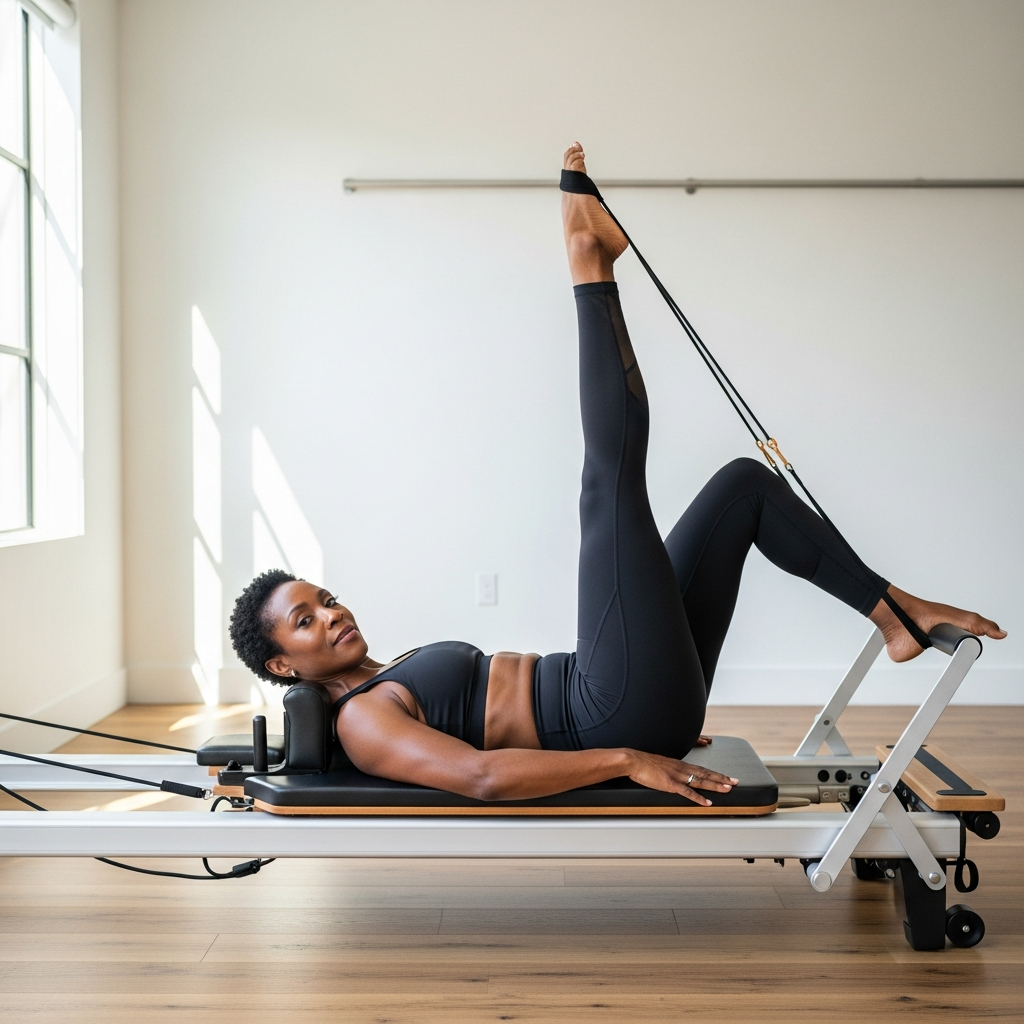
Okay, let’s be real. If you’ve never tried Pilates, your mental image is probably… unclear. Maybe you’re picturing people doing weird things on a contraption that looks like a medieval torture device? (That’s the reformer, and it’s actually wonderful.) Or maybe you’ve lumped it in with yoga, which is understandable but not quite right.
Pilates is a system of controlled movements – developed in the early 20th century by Joseph Pilates, who was, by all accounts, a fascinating and slightly obsessive man – focused on building strength through your core, improving posture, and creating what practitioners call “body awareness.” That last phrase sounds a little woo-woo, but it basically means learning to notice *how* you’re moving, not just *that* you’re moving.
Think of it like the difference between typing and touch-typing. One is functional. The other has you genuinely understanding where your fingers are without looking. Pilates builds that kind of deep, almost automatic relationship between your brain and your muscles.
The Mind-Body Connection (Which Sounds Cheesy Until It Clicks)
This is the part that trips people up. We’re used to workouts that are basically just… effort. You push, you sweat, you’re done. Pilates asks something different – it asks you to be present during the movement itself. Breathing patterns, precise alignment, the engagement of specific muscle groups. It’s a lot to track at first.
But here’s the counterintuitive thing: that mental engagement is actually part of why people stick with it. When your brain has to be genuinely *there* during a workout, it’s harder for the session to feel like a chore you’re grinding through. You’re problem-solving. You’re concentrating. It’s the difference between passively watching a movie and playing chess – one washes over you, the other *holds* you.
For Mesquite residents specifically, who often deal with long work commutes, physical jobs in the heat, or just the general busyness of life in a fast-growing suburb, that mental reset during a class can feel almost medicinal.
How the Structure of a Class Does the Heavy Lifting
Most Pilates classes – whether mat-based or reformer – follow a predictable, logical flow. There’s a warm-up, a progression through movements that build on each other, and a cool-down. It’s not random. And that structure matters more than people realize.
Your brain is essentially a pattern-recognition machine. When a workout has a familiar rhythm to it, your nervous system starts to anticipate it – almost like how you don’t have to think about the route to the grocery store anymore. The routine becomes grooved. That grooved familiarity is the foundation of consistency.
This is different from, say, a random HIIT class where every session is wildly different. Variety has its place, sure. But for building the habit of *showing up*, predictability is weirdly powerful.
The Low Injury Factor (More Important Than You’d Think)
One thing that quietly destroys exercise consistency? Getting hurt. It sounds obvious, but it’s worth saying plainly – because so many people pick high-intensity workouts, tweak something, spend three weeks recovering, and then lose the entire habit thread they were building.
Pilates is inherently low-impact. It emphasizes controlled range of motion and proper alignment rather than pushing through pain or fatigue. That doesn’t mean it’s easy – experienced practitioners will tell you a reformer class can leave your muscles genuinely shaking – but the injury rate is significantly lower than higher-intensity modalities.
For anyone over 40, dealing with an old injury, or just returning to exercise after a long break… that matters enormously. You can’t build consistency from the couch.
Start Small Enough That It Feels Almost Too Easy
Here’s the thing nobody tells you when you’re signing up for your first Pilates class in Mesquite – starting too ambitious is actually the fastest way to quit. Your brain needs early wins. So instead of committing to five days a week because you’re feeling motivated right now, start with two. Tuesday and Thursday. Done. That’s it.
When a class feels manageable – not punishing – you’ll actually look forward to it. And looking forward to something is how habits stick.
Lock In Your Spot Before You Leave the Parking Lot
Most studios in the area use booking apps. Use them. Seriously, the moment you finish a class, pull out your phone and register for your next session before you even start your car. You’re still in the mindset, your mat bag is in the backseat, the endorphins are doing their thing… that’s the exact moment to commit.
Don’t leave it to “I’ll book when I get home.” You won’t. Or you’ll intend to and then Tuesday rolls around and somehow it didn’t happen.
Find Your People at the Studio
This sounds a little cheesy, but Mesquite has a genuinely tight-knit fitness community, and it matters more than you’d think. When you recognize the same faces in your Wednesday reformer class, you’ve suddenly got a social accountability layer that no app or habit tracker can replicate. Missing class isn’t just letting yourself down – it’s leaving Maria wondering where you went.
Introduce yourself. Chat for two minutes after class. Ask someone how long they’ve been coming. It doesn’t have to be a whole thing, just enough to create a small sense of belonging.
Work With Mesquite’s Schedule, Not Against It
Summer afternoons here are brutal – like, walk-to-your-car-and-immediately-regret-it brutal. If you’ve been trying to motivate yourself for an evening class after sitting in 105-degree heat all day, the deck is stacked against you. Morning classes tend to have much better consistency rates for local residents, especially from late spring through September.
Actually, this is worth thinking about when you choose your studio too. Facilities near Highway 80 or closer to Town East area tend to have more flexible morning slots specifically because instructors here know the climate reality.
Use the “Two-Week Rule” When Life Gets Messy
Life in Mesquite is busy – work, kids, commutes to Dallas, all of it. At some point, your routine will get disrupted. That’s not a failure, that’s just Tuesday. The two-week rule is simple: never let more than two weeks pass without getting back on the mat. One missed week? Fine. Two missed weeks? Still recoverable. Hit three and the mental barrier starts feeling like a wall.
When you’re coming back after a gap, don’t try to pick up where you left off. Drop down to a beginner class for one session. No ego. It just makes re-entry feel easier and you’re far less likely to bail halfway through when it’s not crushing you.
Keep a Simple “Did It” Log
Not a complicated tracker. Not a spreadsheet. Literally just an X on your calendar for every class you attend. There’s something weirdly satisfying about a row of X’s that makes you reluctant to break the streak – it’s like a low-tech video game you’re actually winning.
After about three weeks, you’ll have a visual record that proves something to yourself: *you’re someone who does this.* That identity shift – from “person trying Pilates” to “person who does Pilates” – is quietly one of the most powerful things that happens in this process.
Talk to Your Instructor Like a Human
Your Pilates instructor isn’t just there to count reps. Tell them when your lower back is acting up. Tell them you’ve been stressed. Tell them you’ve missed three classes and you’re not sure why. Good instructors – and there are genuinely skilled ones working in the Mesquite area – will adjust the session, check in on you, and quietly help you troubleshoot your consistency without making it feel like a lecture.
That relationship is an underused resource. Most people treat it like a transaction. The ones who build lasting habits usually don’t.
When Life Gets in the Way (Because It Always Does)
Let’s be real for a second. You started Pilates with the best intentions – maybe you signed up for three classes a week, bought the cute grippy socks, told your coworkers you were “really committed this time.” And then… week three happened. Work got crazy. Your kid got sick. You missed one class, then two, and suddenly it’s been three weeks and the guilt spiral starts.
This is normal. So normal. And it’s not a character flaw.
The people who build lasting consistency aren’t the ones who never struggle – they’re the ones who’ve figured out how to handle the specific, real-life things that knock everyone off track.
The Schedule Collision Problem
Here’s what trips up most Mesquite residents: the gap between “I’ll find time” and actually finding time. North Texas life is busy in a particular way – long commutes, kids in multiple activities, jobs that don’t respect your 5 PM boundary. Pilates gets bumped because it feels like the most moveable thing on the calendar.
The solution isn’t better willpower. It’s treating your class like a doctor’s appointment. You wouldn’t skip a dermatology appointment just because work got hectic. When you book your Pilates sessions at the start of each week – actually block them in your calendar, set the reminder – they stop being optional.
A lot of people also underestimate the value of having a class time that genuinely fits their life rather than the one they *think* they should want. Early morning sounds disciplined, but if you’re not a morning person, you’re setting yourself up to fail. Pick the slot that works for the actual human you are.
The “I’m Not Seeing Results Fast Enough” Trap
This one’s sneaky because it feels logical. You’ve been showing up for six weeks and you’re wondering why you don’t look like someone who’s been doing Pilates for six years. So motivation dips. Attendance slips.
Here’s what’s actually happening during those early weeks – your nervous system is learning. Your deep stabilizers are waking up for possibly the first time in years. Your posture is shifting in subtle ways your mirror hasn’t caught yet. The results are real, they’re just not Instagram-visible yet.
A better metric? Ask yourself how your lower back feels compared to six weeks ago. Notice whether carrying groceries feels different. Whether you’re standing taller without reminding yourself to. These are the early wins – and they matter enormously, even if they don’t photograph well.
Going It Alone
Accountability is genuinely underrated. When you’re taking Pilates classes in a group setting – which is exactly what most people in Mesquite are doing – there’s a social fabric that makes showing up easier. Your instructor notices when you’re absent. You have a spot you gravitate toward. Maybe there’s another regular you always end up chatting with before class.
But between classes? That support evaporates. And isolation breeds inconsistency.
Actually, that reminds me of something instructors hear constantly: people quit not because Pilates stopped working, but because they never built a community around it. Consider finding one class friend – just one – who you can text when you’re tempted to bail. The social contract is surprisingly powerful.
The All-or-Nothing Mentality
This might be the biggest one. You miss two classes and suddenly you’ve “ruined it,” so you might as well start fresh next month. It’s the diet mentality applied to exercise, and it’s exhausting.
The truth is that two classes a week beats zero classes a week by an enormous margin. One modified class when you’re tired beats skipping entirely. Showing up even when you’re not feeling it – doing less, moving slower – still counts. Still builds the habit.
Think of consistency less like a streak you have to protect and more like a relationship you’re building. Relationships survive missed calls and off days. They just need you to come back.
When It Physically Hurts to Progress
Some people hit a wall where certain movements are genuinely difficult or uncomfortable – an old injury, tight hips from desk work, shoulder issues. And they either push through and hurt themselves, or they stop coming.
Neither is necessary. A good Pilates instructor will modify movements for you – that’s not weakness, that’s smart training. But you have to tell them what’s going on. Don’t suffer silently in the back row. The modifications exist precisely because real bodies have real histories.
Showing up imperfectly is always better than not showing up at all.
What to Actually Expect in the First Few Weeks
Let’s be honest with each other for a second. The first time you walk into a Pilates class, you’re probably going to feel a little lost. Maybe a lot lost. Everyone else seems to know what a “neutral spine” means, the instructor is calling out cues you’ve never heard before, and you’re pretty sure you’re using the wrong muscles for literally everything. That’s completely normal. You’re not behind – you’re just new.
The first two to three weeks are mostly about learning the vocabulary. Your body is figuring out how to do things it hasn’t done before, and your brain is working overtime just to keep up. Don’t expect to feel graceful. Don’t expect to feel strong. Expect to feel… confused, a little sore in weird places (your inner thighs? really?), and maybe slightly humbled.
That’s actually a good sign.
The Timeline Nobody Talks About Honestly
Here’s where we want to set realistic expectations, because you deserve that. A lot of fitness marketing promises transformations in 21 days or six weeks, and while you *will* notice changes in that window – better posture, improved body awareness, maybe some relief in that chronic lower back tension – the real consistency-building happens around months two and three.
This is when Pilates stops feeling like a puzzle you’re trying to solve and starts feeling like something that belongs in your week. The movements become more automatic. You start recognizing your own patterns – the way your left hip always wants to shift, the way you hold your breath during ab work. That self-knowledge is genuinely valuable, and it takes time to develop.
Months four through six? That’s often when people start noticing changes that others can see. Not because Pilates is slow, but because sustainable physical change just… takes that long. Anyone telling you otherwise is selling something.
What “Building Consistency” Actually Looks Like
Consistency doesn’t mean perfect attendance. That’s worth repeating. Missing a class because life happened isn’t failure – it’s Tuesday. What matters is whether you come back the following week.
For most people, two to three classes per week is the sweet spot for building real momentum without burning out. One class a week can work, but it tends to feel like you’re always starting over. More than four times a week early on can actually backfire – your body needs recovery time, especially when you’re asking it to move in new ways.
You might hit a plateau around week six or seven where everything feels harder again. This isn’t regression. It’s usually because your instructor has started giving you more nuanced cues, asking more of you now that the basics have clicked. Think of it like a video game increasing the difficulty once you’ve leveled up – frustrating in the moment, but proof that you’re progressing.
Combining Pilates with a Medical Weight Loss Program
If you’re incorporating Pilates into a broader medical weight loss plan here in Mesquite, the timeline conversation gets a little more layered. Pilates isn’t a high-calorie-burn workout – let’s just put that on the table. A session burns roughly 170-250 calories depending on intensity and body weight. It’s not going to replace the metabolic work happening through your program.
What it *will* do is complement it beautifully. Improved core strength makes everyday movement easier, which means you’re naturally more active outside of class. Better body awareness helps you tune into hunger and fullness cues. And honestly – having something you actually look forward to doing? That’s not a small thing when you’re working through a challenging lifestyle change.
Talk to your medical provider about how to sequence things, especially in the early weeks of any new medication or protocol. Sometimes low-impact movement is ideal; other times, rest is actually the prescription.
Your Next Step Is Simpler Than You Think
You don’t need to have everything figured out before you start. You don’t need the perfect schedule, the right leggings, or a clear goal beyond “I want to try this.” Most Mesquite studios offer introductory classes or beginner series specifically designed for people who’ve never done this before – and those instructors have seen every level of starting point imaginable.
Just show up once. Give yourself permission to be a beginner. The consistency part? It tends to take care of itself once you’ve had a few classes that leave you feeling genuinely good in your body – and that moment usually comes sooner than you’d expect.
There’s something really special about what happens when a community finds a movement practice that actually *sticks*. And that’s exactly what we’re seeing happen here in Mesquite – not overnight transformations or dramatic before-and-after stories, but something quieter and honestly more meaningful. Real people showing up for themselves, week after week, building something sustainable.
Pilates has a funny way of sneaking up on you. You start because your back hurts, or because your doctor mentioned core strength, or because your friend dragged you along and you didn’t want to go alone. Then somewhere around week three or four – maybe during a particularly satisfying stretch, or when you notice you stood up from your car without that familiar twinge – something shifts. It stops feeling like a chore you’re checking off a list and starts feeling like something you actually *want* to do. That’s not magic. That’s the consistency loop doing its thing.
The physical benefits are real and well-documented – improved posture, stronger core, better balance, reduced pain. But honestly? The thing that keeps most people coming back isn’t the physical stuff alone. It’s the way a regular Pilates practice quietly reorganizes how you think about your body. You start treating it less like a problem to be fixed and more like something worth caring for. That’s a genuinely big deal, especially if you’ve spent years in a frustrating cycle with your health.
For Mesquite residents specifically, there’s also something to be said for having a local community that understands your life – the commutes, the Texas heat that makes outdoor exercise feel like a punishment half the year, the busy family schedules, all of it. Finding movement that fits *your* actual life, not some ideal version of your life, is what makes the difference between a practice that lasts and a gym membership that quietly expires.
You don’t have to have everything figured out before you start. You don’t need to already be flexible, already be fit, already know what you’re doing. Actually, showing up without any of that is kind of the whole point – Pilates meets you exactly where you are.
And if you’re carrying extra weight and wondering whether any of this applies to you… it absolutely does. Actually, this is worth saying plainly: movement-based practices like Pilates can be a genuinely powerful complement to a structured weight loss approach. The two aren’t separate tracks. They work together.
—
If you’ve been thinking about taking better care of yourself but aren’t quite sure where to start – or if you’ve tried before and it hasn’t stuck – we’d love to just *talk* with you. No pressure, no sales pitch, no judgment about where you’ve been. Our team at the clinic works with real people living real lives in Mesquite, and we’re genuinely good at helping you figure out what’s going to work for *you* specifically.
Reach out whenever you’re ready. It could be today, it could be three months from now. We’ll be here. And if you just have questions – about Pilates, about weight loss support, about anything wellness-related – honestly, ask us. That’s what we’re here for.
You deserve to feel good in your body. Consistently, sustainably, without white-knuckling your way through it. That’s not too much to hope for.