Unveiling the Power of Pilates: A Beginner’s Guide to Mat Pilates
Introduction:
Are you tired of the same old gym routine and looking for a more dynamic, interesting and effective way to stay fit? Or perhaps, you’re recovering from an injury and want an exercise regimen that can help you regain your strength without putting undue pressure on your joints? If so, then Mat Pilates could be your ticket to a healthier, more balanced lifestyle. Now, you might be wondering, ‘What about Mat Pilates beginner?’ This blog post is here to demystify this highly beneficial form of exercise and provide beginners with all they need to know to get started.
Pilates has been gaining popularity worldwide due to its ability to improve flexibility, build strength, and develop control and endurance in the entire body. Named after its creator, Joseph Pilates, this unique form of exercise emphasizes alignment, breathing, developing a strong core, and improving coordination and balance. For those who are new to this type of workout and want to grasp its basics before advancing to equipment-based forms, Mat Pilates is an excellent starting point.
As a beginner, starting a new fitness routine can be daunting. You might have numerous questions swirling around in your mind: What exactly is Mat Pilates? What are the benefits? What should I expect in a Mat Pilates class? How do I prepare for my first class? Don’t worry; we’ve got you covered! This comprehensive guide will walk you through the journey of pilates from its origin to its modern practice and explain everything you need to know about Mat Pilates.
Firstly, we will delve into the fascinating history of Pilates and its evolution over time. Understanding the origin and principles of Pilates will not only deepen your appreciation for this form of exercise but will also help you grasp its goal – the pursuit of balanced muscle development.
Next, we will demystify Mat Pilates, a type of Pilates performed on a mat, just like in yoga. This section will give you an overview of what Mat Pilates entails, and why it’s the preferred choice for many beginners. We will also explore the numerous health benefits that Mat Pilates offers, from enhancing flexibility and strength to promoting better posture and reducing stress.
Following this, we will provide a sneak peek into what you can expect in a typical Mat Pilates class. This will help you prepare mentally for your first class and know what to look forward to. We will also provide tips on how to prepare for your first Mat Pilates class, including what to wear, what to bring, and how to approach the exercises.
Why does this matter to you? In today’s fast-paced world, maintaining good physical and mental health has become more important than ever. Mat Pilates offers a holistic approach to fitness, focusing on not just physical strength but also mental well-being. For beginners, it provides an accessible entry point into the world of Pilates without the intimidation of complicated equipment or advanced moves. Whether you’re a fitness enthusiast wanting to diversify your workout regimen or someone looking for a gentle yet effective form of exercise, Mat Pilates holds the key to achieving your health and fitness goals.
So, are you ready to embark on this exciting journey towards wellness and balance with Mat Pilates? Let’s dive in and unravel the magic that this unique form of exercise holds!
Mat Pilates for Beginners: A Comprehensive Guide
Pilates, a physical fitness system pioneered in the early 20th century by Joseph Pilates, has emerged as a popular exercise regimen worldwide. Concentrating on core strength, flexibility, balance, and endurance, Pilates integrates both mind and body to promote overall well-being. One of the most common forms of Pilates is Mat Pilates. It is often the entry point for beginners and this article will delve into its fundamentals.
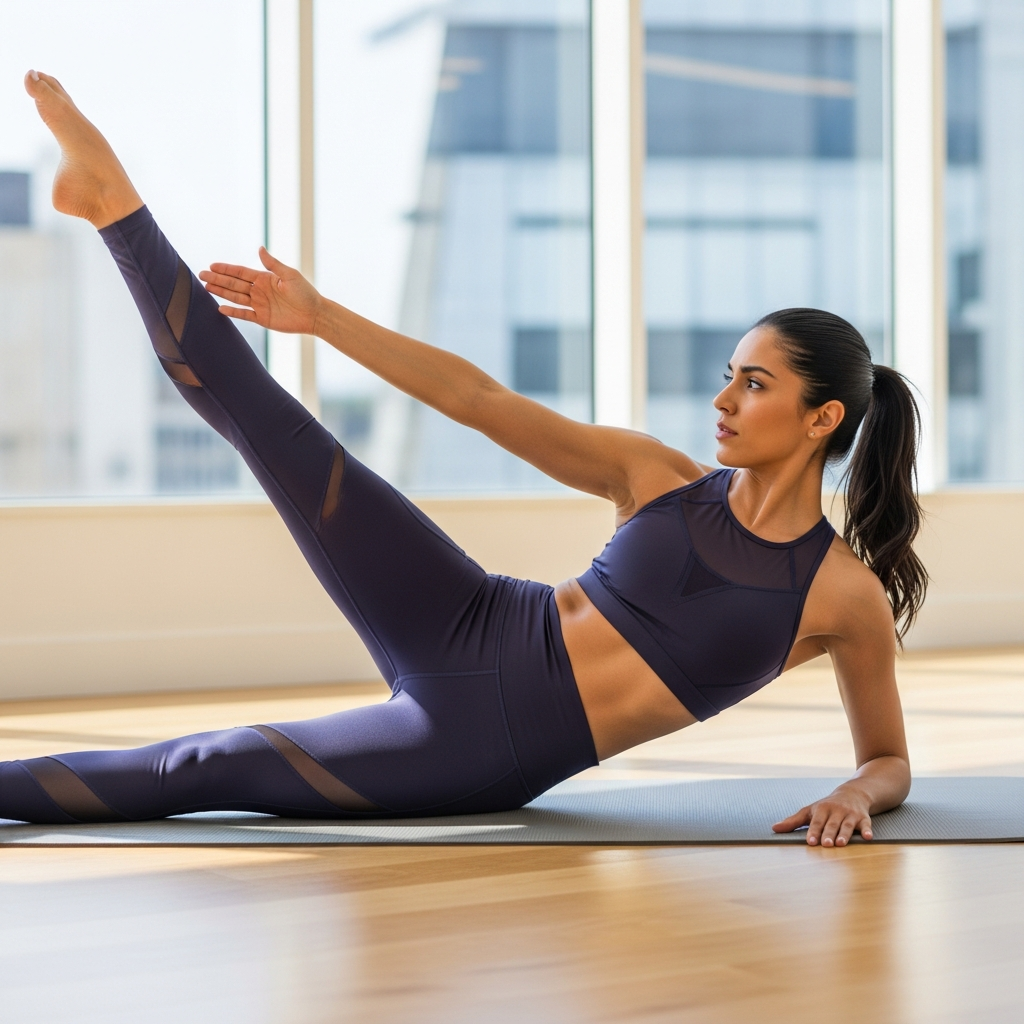
Mat Pilates is a sequence of exercises performed on a padded mat, using the body’s weight as resistance. This form of Pilates is often favored by beginners because it doesn’t require any expensive machines or equipment – just a simple mat and your determination.
At the core of Mat Pilates are six key principles: concentration, control, centering, precision, breath, and flow. These principles interweave to create the framework of this holistic exercise system.
1. Concentration: This principle emphasizes the importance of mental focus during workouts. It encourages the practitioner to connect with their body on a deeper level, understanding each movement and its impact.
2. Control: Control is about maintaining proper form during each exercise and avoiding any abrupt or uncoordinated movements that can cause injury.
3. Centering: This principle refers to focusing on the ‘powerhouse’ area of the body – the abdomen, lower back, hips, and buttocks. All Pilates exercises are driven from this core area, promoting strength and stability.
4. Precision: Precision in Pilates means executing each movement with utmost accuracy. This enhances the effectiveness of the exercise and reduces the risk of injury.
5. Breath: Proper breathing techniques are crucial in Mat Pilates. Joseph Pilates emphasized using breath to cleanse the body and invigorate the mind. Coordinating breath with movement helps in oxygenating muscles and maintaining rhythm during workouts.
6. Flow: Lastly, flow refers to the smooth transition from one exercise to another, creating a dance-like movement. It encourages efficiency and grace in each movement.
Mat Pilates exercises primarily target the core muscles, but they also engage the whole body, fostering overall strength and flexibility. Therefore, it is an excellent choice for beginners looking to enhance their fitness levels.
The beginner’s routine in Mat Pilates typically includes exercises like the Pilates Hundred (a core-strengthening exercise), the roll-up (a spinal articulation exercise), single-leg circles, and more. Each of these exercises aims at strengthening different muscle groups while improving flexibility and balance.
Moreover, Mat Pilates offers many benefits. Regular practice can lead to improved posture, increased muscle tone and flexibility, enhanced athletic performance, and injury prevention. It also promotes weight loss, stress reduction, and improved mental clarity.
However, like any other fitness regimen, it is crucial to learn and perform Mat Pilates correctly to reap its benefits fully. Beginners should ideally start their Pilates journey under the guidance of a certified instructor. This ensures that they learn the correct techniques, avoid injuries, and get the most out of their workouts. Additionally, consistency is key – regularity in practice will yield better results.
In conclusion, Mat Pilates is a versatile and accessible form of exercise that can benefit individuals of all fitness levels. Its emphasis on mindful movement and breath makes it a holistic practice that enhances both physical and mental well-being. For beginners embarking on their fitness journey or seasoned athletes seeking to diversify their workout routine, Mat Pilates is an excellent choice.
Remember that each body is unique, and what works for one person may not work for another. Therefore, listen to your body during workouts and adjust the exercises as needed. With time, patience, and consistent practice, Mat Pilates can become an integral part of your lifestyle, promoting a healthier and more balanced you.
Your First Step into Mat Pilates: A Comprehensive Guide for Beginners
If you’re just starting your fitness journey or looking to switch up your routine, mat Pilates can be a perfect choice. This low-impact exercise method focuses on muscular balance, control, flexibility, and strength- all without putting too much strain on your joints. So, whether you’re a fitness enthusiast, a stay-at-home parent, a busy professional, or a senior citizen, mat Pilates is a versatile and adaptable fitness regime that can cater to your specific needs.
Step 1: Understand the Basics Mat Pilates is a series of exercises inspired by ballet, yoga, and calisthenics. The exercises are performed on a mat, either in a class or at home. It’s essential to understand that while Pilates’ movements might seem simple, they require a lot of precision, control, and proper form.
Step 2: Find the Right Class For beginners, it’s advisable to start with instructor-led classes. They will guide you through the proper form and techniques. Look for classes labeled as ‘beginner’ or ‘introductory.’ Many local gyms and community centers offer mat Pilates classes. You can also find online classes that offer real-time feedback from certified instructors.
Step 3: Get the Right Equipment The only essential equipment for mat Pilates is a Pilates or yoga mat. Choose a thick mat that provides ample cushioning for your spine. Check that it’s also long enough for your body and has a non-slip surface for safety.
Step 4: Master the Pilates Principles Pilates operates on six principles: concentration, control, centering, flow, precision, and breathing. As a beginner, it’s crucial to understand these principles – they are the foundation of every Pilates move you’ll learn.
For instance, ‘centering’ refers to focusing on the body’s core (the area between the lower ribs and pubic bone). All Pilates exercises stem from this ‘powerhouse’ area. ‘Control’ and ‘precision’ refer to the importance of performing each movement with maximum control and precision – there are no sloppy or uncontrolled movements in Pilates.
Step 5: Learn the Basic Moves
Start by learning some basic mat Pilates exercises. Some of these include
– The Pilates Hundred: A warming exercise that targets the abdominal muscles. – The Roll-Up: This exercise works on the spine flexibility and abdominal strength. – Leg Circles: This is great for hip flexibility and abdominal control. – The Plank: A fantastic exercise for working on your core strength and stability.
Step 6: Practice Regularly
Consistency is key in Pilates. Aim for at least two to three classes per week. As you get more comfortable, you can incorporate Pilates exercises into your daily routine. Remember, it’s not about how many repetitions you do, but the quality of each movement.
Step 7: Listen to Your Body Pilates should never cause pain. If a move or position is uncomfortable, stop and seek advice from your instructor. They can modify the exercise to accommodate any physical limitations or injuries.
Real-world scenarios:
1. For a busy professional struggling to find time for a workout, mat Pilates can be an excellent choice. It’s easy to perform in small spaces, doesn’t require expensive equipment, and online classes can fit around your schedule. 2. Aging can bring decreased flexibility and muscle strength. For senior citizens looking for a gentle yet effective workout, mat Pilates can help improve flexibility, balance, and core strength. 3. For a stay-at-home parent, attending regular gym sessions might be challenging. Mat Pilates offers an opportunity to stay fit at home, with exercises that can be done at any time.
Actionable advice:
– Always warm up before you start your mat Pilates routine to prepare your muscles for the workout. – Focus on your body and mind connection. Concentrate on your movements and breathe correctly. – Seek professional advice if needed. If a movement causes discomfort or you’re unsure about an exercise’s form, ask a certified instructor for help.
Mat Pilates is an inviting and beneficial exercise method for beginners. With consistency, attention to form, and a focus on the core principles, you’ll soon see improvements in strength, flexibility, and overall physical health. Start slow, and remember, it’s not a race- it’s a journey towards a healthier you.
Mat Pilates for Beginners: Common Challenges, Solutions, and Expert Tips
Starting a new workout regimen like mat Pilates can be exciting, but it also comes with its set of challenges, particularly for beginners. This article will delve into these common challenges, provide solutions, and share expert tips to help you navigate your mat Pilates journey successfully.
**Common Challenges**
1. **Understanding the Basics**: Pilates is a complex exercise system that emphasizes body control, flexibility, and strength. For beginners, understanding the basic principles such as centering, concentration, control, precision, breath, and flow can be overwhelming.
2. **Body Awareness**: Pilates requires a high level of body awareness. As a beginner, it’s common to struggle with understanding your body’s alignment and movement.
3. **Core Strength**: Pilates heavily emphasizes core strength. For those who are new or have weak core muscles, this can be challenging.
4. **Flexibility**: Pilates exercises often involve stretches and movements that require a reasonable level of flexibility. Beginners may find some exercises difficult due to limited flexibility.
5. **Breathing Techniques**: Proper breathing is crucial in Pilates, but beginners often struggle to coordinate their breath with movements.
**Solutions and Best Practices**
1. **Educate Yourself**: Before diving into mat Pilates, take the time to familiarize yourself with its principles. Many resources are available online or you can consult a Pilates instructor for an in-depth understanding.
2. **Start Slow and Steady**: Don’t push yourself too hard at the beginning. Start with basic exercises to build your body awareness and gradually increase the intensity as your understanding improves.
3. **Consistent Practice**: Consistency is key in building core strength. Regular practice will help strengthen your core muscles and improve your overall performance.
4. **Incorporate Stretching**: To improve your flexibility, incorporate regular stretching exercises into your routine, even on days you’re not doing Pilates.
5. **Breathing Exercises**: Practice the Pilates breathing technique regularly. You can do this even when you’re not exercising to help train your body and make it a habit.
**Expert Tips**
1. **Use Props**: Beginners can benefit from using props like bands, magic circles, or balls for support and to help perform exercises correctly.
2. **Invest in a Good Mat**: A good quality mat is essential for comfort and safety while practicing Pilates. Look for one that’s thick enough to provide proper cushioning but firm enough to support your movements.
3. **Master the Pilates Stance**: This is a slight turnout described as heels together, toes apart, and only as wide as the hips. This stance helps to engage the deep abdominal muscles and the pelvic floor.
4. **Listen to Your Body**: While it’s important to push yourself, it’s equally critical not to overdo it. If a certain move feels wrong or causes pain, stop doing it and consult your instructor.
5. **Join a Class or Get a Personal Trainer**: As a beginner, joining a class or hiring a personal trainer can be very beneficial. They can guide you through the exercises, correct your form, and give personalised advice based on your needs.
**Addressing Misconceptions**
One common misconception is that Pilates is only for women or dancers. This is untrue. Pilates was actually created by a man named Joseph Pilates for war veterans, and it can benefit everyone regardless of gender or profession.
Another misconception is that Pilates is easy or similar to yoga. While there are similarities, Pilates is focused more on core strength, body control, and flexibility with an emphasis on proper postural alignment.
In conclusion, embarking on a mat Pilates journey as a beginner might seem daunting, but with understanding, consistency, and the right approach, you can overcome the common challenges and reap the numerous benefits that this exercise system offers. Remember to be patient with yourself; progress may be slow, but it will be worth it.
Mat Pilates for Beginners: Expectations, Timelines, and Next Steps
As a beginner embarking on your Mat Pilates journey, you may be filled with excitement, curiosity, and perhaps a hint of apprehension. Such feelings are completely normal! After all, you are about to dive into a world that promises improved strength, flexibility, balance, and overall body awareness. This guide will provide a comprehensive rundown of what to expect, the timeline for progress, and the next steps to take as a Mat Pilates novice.
**What to Expect**
Mat Pilates is a low-impact exercise modality designed to strengthen the core, enhance flexibility, improve balance, and promote better posture. As a beginner, you’ll start with basic Pilates principles such as proper alignment, centering, control, precision, breath, and flow.
Expect a full-body workout. Although Pilates primarily targets the core (the ‘powerhouse’ as Joseph Pilates referred to it), you’ll engage muscles throughout your entire body.
Your first few sessions may feel challenging as you learn to coordinate your movements with your breath and work muscles that may not be used in everyday activities. It’s common to feel some muscle soreness at the beginning; this is simply your body adjusting to new movements.
Remember, each person’s body is unique. Listen to yours. Push yourself but never to the point of pain. Your instructor should offer modifications for each exercise to accommodate different fitness levels and any pre-existing conditions.
**Timeline for Progress**
The timeline for progress in Mat Pilates can vary significantly depending on factors such as your initial fitness level, frequency of practice, and commitment to applying Pilates principles both in and out of class.
Joseph Pilates himself said, “In 10 sessions you’ll feel the difference, in 20 you’ll see the difference, and in 30 you’ll have a whole new body.” While this is an inspiring motto, remember that progress is not linear and patience is key.
As a general rule, attending Pilates classes 2-3 times per week can lead to noticeable changes within a few weeks to a few months. You might first notice an improvement in your body awareness, posture, and flexibility. With consistent practice, increased core strength, toned muscles, and enhanced balance typically follow.
**Next Steps**
After your initial foray into Mat Pilates, there are several paths you can take.
1. **Continue with Beginner Classes:** If you’re still getting to grips with the fundamentals, there’s no rush to move on. Mastery of basic principles is critical for safety and effectiveness as you progress to more advanced exercises.
2. **Progress to Intermediate Classes:** Once you’re comfortable with beginner exercises and have noticed improvements in strength and flexibility, consider moving up to intermediate classes. These will introduce more challenging exercises and faster-paced sequences.
3. **Try Equipment-Based Pilates:** Mat Pilates is just one aspect of the Pilates world. Reformer Pilates, for example, uses a specialized piece of equipment to add resistance to exercises, providing a different challenge.
4. **Incorporate Pilates into Your Daily Routine:** The principles of Pilates—especially those related to posture and core activation—can and should be applied to everyday activities. This continuous engagement helps reinforce what you learn in class and leads to more noticeable improvements.
5. **Private Lessons:** If you’re dealing with specific physical issues or just want more personalized attention, consider one-on-one sessions with a qualified instructor.
Embracing Mat Pilates as a beginner can be a fulfilling journey leading to numerous physical and mental benefits. Don’t be discouraged if progress seems slow; with patience and consistency, you’ll soon start reaping the rewards of this powerful practice. Welcome to the wonderful world of Pilates!
In conclusion, Mat Pilates offers a unique blend of strength, flexibility, and mindfulness that can benefit beginners in numerous ways. This form of exercise, which originated from Joseph Pilates, isn’t only a popular fitness regimen but also a rehabilitative tool for those recovering from injuries or managing chronic conditions. It’s a versatile practice that can be adapted to the needs of different individuals, allowing everyone to enjoy its numerous benefits.
One of the main takeaways is that Mat Pilates focuses on developing core strength. The core is the powerhouse of the body and strengthening it can improve your overall fitness, prevent injuries, and enhance your performance in other physical activities. By concentrating on controlled movements and proper alignment, Mat Pilates helps to create a strong foundation for improved posture and alignment, which can be particularly beneficial to those who spend long hours sitting or standing.
Mat Pilates also offers a unique approach to mind-body integration. Through conscious breathing and the focus on smooth, flowing movements, you learn to tune into your body. This not only improves your physical performance but also helps to reduce stress and promote mental clarity. The mindful nature of Mat Pilates can transform it from a simple exercise routine into a form of moving meditation.
Moreover, another key point is the adaptability of Mat Pilates. With hundreds of exercises and modifications available, it can be tailored to the needs of each individual. Whether you’re recovering from an injury, training for a sport, or simply wanting to improve your fitness, there’s a Mat Pilates routine that’s right for you. This adaptability also means that as your strength and flexibility improve, your workouts can evolve to continue challenging you.
Lastly, starting a new exercise routine can be daunting, but with Mat Pilates, you’re not alone. An experienced instructor will guide you through each movement, ensuring that you’re performing exercises correctly and safely. They can also provide modifications to suit your current fitness level and personal needs. This personalized attention helps you to get the most from each workout and reach your fitness goals faster.
However, the benefits of Mat Pilates go beyond the physical. It also fosters a sense of community. Mat Pilates classes offer a supportive and non-competitive environment where you can challenge yourself, make new friends, and learn from others. This sense of camaraderie can make your fitness journey more enjoyable and motivating.
In summary, Mat Pilates is a comprehensive exercise method that can benefit everyone, regardless of age or fitness level. It strengthens the core, improves flexibility, promotes good posture and alignment, develops mind-body awareness, and can be adapted to individual needs. Plus, the supportive community that often accompanies Mat Pilates classes can make your fitness journey more enjoyable.
If you’re interested in experiencing the benefits of Mat Pilates for yourself, don’t hesitate to reach out to us. Our team of experienced instructors is ready to guide you through this journey. Whether you’re a complete beginner looking for a gentle introduction to exercise, or an experienced athlete seeking a new challenge, we’re here to assist you. Contact us today to book your first Mat Pilates session and start reaping the rewards this practice has to offer. Welcome to the world of Pilates, where fitness and wellbeing meet.