The Man Behind the Movement: Understanding Joseph Pilates and His Revolutionary Fitness Method
Introduction:
We know you’ve heard about Pilates. Maybe you’ve tried it, or perhaps you’re already addicted. But have you ever wondered about the origin of this revolutionary fitness method? Have you ever asked yourself, ‘What about Joseph Pilates?’ The practice we all know and love didn’t just spring up out of nowhere. It was born from the mind of a visionary. A man named Joseph Pilates, whose life, philosophies, and teachings continue to shape our fitness and wellness journeys in profound ways.
In this blog post, we’ll delve into the fascinating life of Joseph Pilates, the man behind this transformative fitness phenomenon. From his humble beginnings to his enduring legacy, we’ll explore how his own personal struggles and triumphs shaped the development of the Pilates system. We’ll look at how his teachings moved from the mat to the reformer, and how these two approaches to Pilates provide distinct yet complementary paths to improved health and fitness.
This exploration matters because it deepens our understanding of Pilates, not just as a fitness routine, but as a holistic approach to wellness. Knowing the story behind Pilates can enhance our appreciation for each movement, each breath, and each moment of focus during our practice. It can inspire us to approach our workouts with renewed vigor and commitment, and perhaps even motivate us to extend the principles of Pilates beyond the studio and into our daily lives.
Imagine embarking on a journey back in time, tracing the footsteps of this visionary. Picture yourself in Germany in the late 19th century, where a sickly child named Joseph Pilates was born. As he battled various ailments, he began developing a series of exercises designed to improve his physical strength and health. Little did he know, these exercises would later form the basis of the Pilates method.
Fast forward to the First World War, where Joseph Pilates was interned as a German national in Britain. During this time, he refined his exercise system and even started using bedsprings to support the rehabilitation of wounded soldiers. These early innovations would eventually lead to the development of the Pilates reformer, a piece of equipment that has become synonymous with Pilates training today.
Then, journey with us to the bustling streets of New York City in the mid-20th century, where Joseph Pilates and his wife Clara opened their first fitness studio. Here, they introduced the world to mat Pilates and reformer Pilates, forever changing the landscape of fitness and wellness.
As we delve into these historical milestones, we’ll also examine the core principles that Joseph Pilates embedded in his fitness method. From centering and concentration to control, precision, and breath, we’ll understand how these principles are not just guidelines for our workouts, but also powerful tools for enhancing our overall well-being.
Finally, we’ll explore how the teachings of Joseph Pilates continue to shape modern fitness trends. We’ll look at how his philosophy of mind-body integration has influenced other wellness practices and how his emphasis on purposeful movement has challenged conventional notions of exercise.
So fasten your seatbelts and prepare for a fascinating journey into the life and legacy of Joseph Pilates. Whether you’re a seasoned Pilates enthusiast or a curious newcomer, this exploration promises to deepen your understanding and appreciation for this transformative fitness method. By understanding the origins of Pilates, you will not only enrich your own practice but also join a global community of practitioners who continue to be inspired by Joseph Pilates’ vision of holistic health and fitness.
The Man Behind the Method: Joseph Pilates and the Evolution of His Holistic Fitness Regime
Joseph Hubertus Pilates, the innovative man behind the world-renowned fitness regimen, Pilates, was born on December 9, 1883, near Düsseldorf, Germany. From his early life, Pilates was far from the picture of health. He suffered from numerous ailments, including asthma, rickets, and rheumatic fever. However, rather than succumb to these challenges, he drew inspiration from them and dedicated his life to improving his physical strength and health – a pursuit that would later transform the landscape of physical fitness and rehabilitation.
Joseph Pilates’ journey towards developing his revolutionary fitness method began with self-education. Fascinated by the human body and its potential, he delved into studying various forms of exercise and disciplines, including yoga, martial arts, gymnastics, weightlifting, and even ancient Greek and Roman regimens. This multidisciplinary approach allowed him to develop a unique perspective on body movement and fitness.
Pilates’ quest for physical perfection led him to England in 1912, where he worked as a circus performer, boxer, and self-defense trainer. However, the breakout of World War I resulted in his internment along with other German nationals. During this time, he began devising exercises for his fellow internees to maintain their physical health and boost morale. This period was instrumental in the early development of the Pilates method.
In 1918, the Spanish Flu pandemic hit the internment camp. Pilates attributed the survival of his trainees to their good physical health and credited his exercise regimen for it. This incident provided him with first-hand evidence of the effectiveness of his method.
After World War I, Pilates returned to Germany and started training the Hamburg Military Police in self-defense and physical conditioning. During this time, he further refined his unique approach to physical health and fitness.
Pilates’ method, which he initially called “Contrology,” centered on the idea of muscle control, correct alignment, breathing, and fluid movements. He believed that these elements, when combined, resulted in improved physical strength, flexibility, and overall health. His approach was holistic, addressing both the body and mind. Pilates saw the body as a whole, where each part works in harmony with the others. This thinking was groundbreaking at the time and continues to resonate in the fitness world today.
In 1926, Pilates emigrated to the United States. On the ship to America, he met his future wife Clara, a nurse who shared his interest in holistic health. In New York City, they opened a fitness studio introducing “Contrology” to the local community. Their clientele included dancers, athletes, and actors who sought Pilates’ method to improve their performance, rehabilitate injuries, or maintain their health.
Pilates continued to innovate and develop his method throughout his lifetime. He designed specialized apparatus like the Reformer, Cadillac, and Wunda Chair – equipment that is still integral to Pilates practice today. These machines were designed to support the body in achieving correct alignment, providing resistance for muscle strengthening and enhancing flexibility.
Joseph Pilates believed in his method’s power as a holistic wellness tool. He wrote two books about it: “Your Health: A Corrective System of Exercising That Revolutionizes the Entire Field of Physical Education” in 1934 and “Return to Life Through Contrology” in 1945. Both publications provide insights into his philosophy and method and continue to be fundamental texts for Pilates practitioners.
Joseph Pilates passed away in 1967, but his method lives on and continues to evolve. Today, his innovative approach to physical fitness has been adopted worldwide by fitness enthusiasts, athletes, dancers, physiotherapists, and anyone looking to improve their physical and mental wellbeing.
In conclusion, Joseph Pilates was not just a fitness guru but a visionary who forever changed the way we perceive fitness and wellness. His method, now known as Pilates, is a testament to his understanding of the human body and its potential. Through a lifetime of dedication and innovation, Pilates created a holistic exercise system that continues to influence fitness and rehabilitation practices worldwide. His legacy lives on in every Pilates class, every session on the Reformer, and in the improved wellbeing of his method’s practitioners.
Joseph Pilates: A Deep Dive into the Origins of Pilates
The realm of Pilates, whether mat-based or utilizing the unique reformer apparatus, owes its existence to one man: Joseph Pilates. His life, philosophies, and innovations have shaped this fitness regime, now practiced by millions worldwide. In this article, we’ll delve into the life of Joseph Pilates, explore the evolution of his method, and provide practical advice on incorporating the original principles into your routines.
Joseph Pilates: A Brief Biography
Born near Dusseldorf, Germany in 1883, Joseph Hubertus Pilates was a sickly child who suffered from asthma, rickets, and rheumatic fever. Determined to overcome his physical ailments, he embarked on a journey of physical self-improvement. Drawing inspiration from Eastern practices like yoga and martial arts, as well as Western forms like gymnastics and bodybuilding, he developed a fitness program that reflected his belief in the connection between physical and mental health.
During World War I, while interned in England, Joseph fine-tuned his method—originally called “Contrology,”—to rehabilitate injured war veterans. He invented equipment using springs from hospital beds to provide resistance training for bedridden patients. These prototypes paved the way for the development of the reformer and other Pilates equipment we see today.
In the 1920s, Joseph moved to New York City where he and his wife Clara opened a fitness studio. Their method gained popularity among dancers for its benefits in flexibility, strength, control, and endurance.
Incorporating Joseph Pilates’ Principles into Your Routine
1. Centering: Joseph believed all energy for exercise begins from the core or ‘powerhouse’ of the body—the abdomen, lower back, hips and buttocks. Focus on these areas when practicing Pilates. For example, in mat Pilates’ ‘The Hundred’ exercise, keep your navel drawn in towards your spine, engaging your core throughout the exercise.
2. Concentration: Pilates is not about mindlessly repeating movements. It requires full attention for maximum value. In a reformer Pilates class, while executing the ‘Footwork’ series, focus on the articulation of your foot and ankle, and the engagement of your legs and core.
3. Control: Every Pilates exercise should be performed with utmost control to avoid injury and produce positive results. When doing ‘The Teaser’ on mat or reformer, control the movement of your limbs from your powerhouse, rather than relying on momentum.
4. Precision: Precise movements are crucial in Pilates. Quality over quantity was Joseph’s belief. During ‘Short Spine Massage’ on the reformer, focus on articulating your spine vertebra by vertebra, both as you roll up into an inverted position and roll back down.
5. Breath: Joseph stressed the importance of using breath properly to oxygenate the blood and cleanse the body. In all exercises, use your breath effectively. In ‘The Saw’ on the mat, inhale as you twist your torso, exhale as you “saw” forward, inhaling again as you come back to center.
6. Flow: Pilates exercises are meant to flow into each other with grace and balance. Whether moving through a mat series or transitioning between reformer exercises, aim for smooth, flowing movements.
The Legacy of Joseph Pilates
Joseph Pilates’ revolutionary method continues to change lives by promoting strength, control, and mindfulness in fitness routines. His principles apply not only in Pilates studios but can also be incorporated into daily life—improving posture, enhancing physical performance, and fostering mental resilience.
Whether you’re a seasoned practitioner or a newcomer to Pilates, remembering Joseph Pilates and his dedication to holistic health can inspire your journey. By understanding his philosophies and incorporating his principles, we can better realize the true value and potential of this transformative fitness discipline. As Joseph himself said, “Physical fitness is the first requisite of happiness.” Let this be a guiding light in your Pilates practice.
Joseph Pilates: The Man, His Method, and Overcoming Common Pilates Challenges
Joseph Pilates, the father of the Pilates method, was a pioneer in physical fitness. His holistic approach towards physical and mental health has had a lasting impact on wellness practices worldwide. In this comprehensive guide, we delve into the life of Joseph Pilates, dispel common misconceptions about his method, and provide solutions to commonly faced challenges in practicing Pilates.
Joseph Pilates was a German physical trainer who developed the Pilates method in the early 20th century. Born in 1883, Pilates was a sickly child suffering from asthma, rickets, and rheumatic fever. His determination to overcome these conditions led him to study various forms of exercise, including yoga, martial arts, and gymnastics.
Pilates’ method focuses on core strength, flexibility, balance, uniform development, and efficient movement patterns. It is often misunderstood as being solely for dancers or women. However, Pilates initially developed his method for men during World War I while working as an intern at a hospital on the Isle of Man. He customized his program based on individual needs, emphasizing the importance of mindful movement over mindless repetition.
Now let’s address some common challenges faced by practitioners and provide solutions and expert tips to overcome them
1. Challenge: Difficulty in maintaining core connection.
Solution: The essence of Pilates lies in engaging the ‘Powerhouse,’ a term coined by Joseph Pilates referring to the area from the bottom of your ribs to your hip line. This is the most challenging part for beginners.
Expert Tip: Practice deep belly breathing exercises regularly as it helps to engage your core muscles. Also, visualize pulling your belly button towards your spine whenever you’re doing any Pilates exercise.
2. Challenge: Struggling with flexibility.
Solution: Many newcomers to Pilates worry about their flexibility. Although Pilates does improve flexibility, it doesn’t demand it.
Expert Tip: Consistency is the key. Regular practice will gradually increase your flexibility. Remember, Pilates is not about touching your toes; it’s about efficient and controlled movement.
3. Challenge: Understanding the difference between Mat Pilates and Reformer Pilates.
Solution: Mat Pilates and Reformer Pilates are both based on Joseph Pilates’ principles but use different equipment. Mat Pilates uses your body weight and gravity to provide resistance, while Reformer Pilates involves a bed-like machine with springs to add resistance.
Expert Tip: Beginners can start with Mat Pilates to understand the basic principles of alignment, core control, and precision. Once comfortable, they could progress to Reformer Pilates for more advanced exercises.
4. Challenge: Fear of injury.
Solution: Like any exercise regimen, the risk of injury exists in Pilates if not done correctly. However, the risk is significantly lower compared to other high-impact exercises.
Expert Tip: Always learn Pilates under a certified instructor’s guidance, especially if you’re a beginner. They can correct your alignment and modify exercises according to your fitness level, minimizing the risk of injury.
In conclusion, Joseph Pilates was an extraordinary man who laid the foundation for a method that continues to improve people’s overall well-being. His approach is holistic, inclusive, and adaptable to individual needs. The challenges faced in practicing Pilates can be overcome by understanding the principles correctly, practicing under guidance, and being regular and consistent in your regime. Remember the words of Joseph Pilates himself: “Patience and persistence are vital qualities in the ultimate successful accomplishment of any worthwhile endeavor.”
The Legacy of Joseph Pilates: An Exploration into Pilates, Mat Pilates, and Reformer Pilates
Joseph Pilates, the founding father of the contemporary mind-body workout known as Pilates, has left an indelible mark on the world of fitness. Born in Germany in 1883, Joseph Pilates was a frail child who suffered from asthma, rickets, and rheumatic fever. Determined to overcome his physical challenges, he studied anatomy and various forms of exercises including yoga, gymnastics, and boxing. His physical pursuits led to the development of a unique system of exercises known as ‘Contrology’, later renamed as ‘Pilates’.
So, what can one expect from this revolutionary exercise methodology? Pilates is fundamentally about integrating the mind, body, and spirit to achieve overall wellbeing. The technique focuses on strengthening the core muscles (the powerhouse), improving posture, enhancing flexibility, and developing body awareness.
Mat Pilates is a series of exercises performed on a mat, using your own body weight as resistance. It is the most widely practiced form of Pilates and can be done virtually anywhere with minimal equipment. Expect to engage your core muscles extensively in a mat Pilates session. The typical sequences will challenge your balance and coordination while promoting better posture.
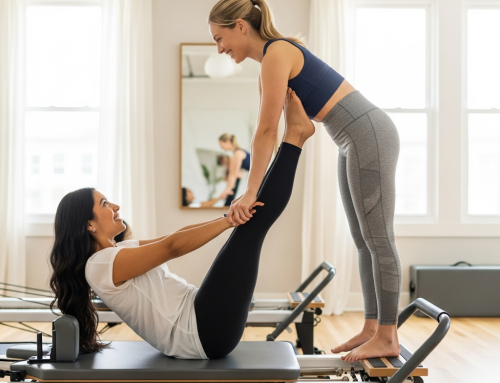
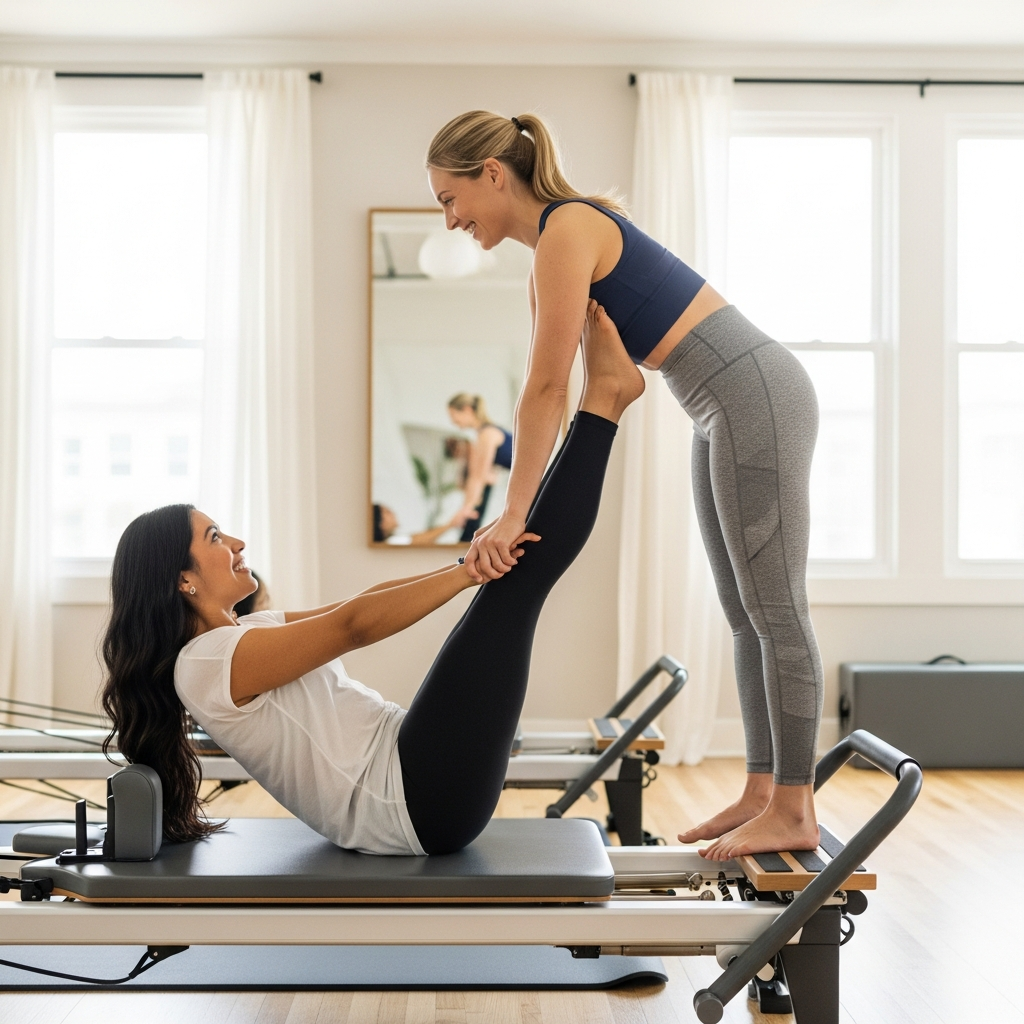
Reformer Pilates, on the other hand, is performed on a specialized piece of equipment called a ‘reformer’. This contraption is a sliding carriage rigged with springs, bars and straps that provide resistance to the exercises. Reformer Pilates can be more dynamic and intense than mat Pilates due to the added resistance from the equipment. It is highly effective for rehabilitation purposes and for those looking to level up their fitness regime.
Let’s delve into a practical timeline for beginners in Pilates. As with any new fitness endeavor, it’s crucial to start slow and build up gradually. In your first few weeks (1-4 weeks), focus on learning the basic principles of Pilates such as proper alignment, breath control, and core engagement. A typical beginner’s class will guide you through simple exercises designed to familiarize you with these concepts.
In the intermediate phase (4-12 weeks), expect the intensity of the workouts to increase. You will be introduced to more complex movements that require greater strength, flexibility, and balance. This phase will push you to engage your core muscles in new and challenging ways.
After three months of consistent practice, you should be comfortable enough to progress to advanced classes. Here, the exercises become more dynamic and fluid, requiring a high level of control and precision.
It’s important to note that everyone’s Pilates journey is unique. The timeline above is a rough guide, but the pace of progress can vary depending on your fitness level, frequency of practice, and individual body conditions.
So, what are the next steps? If you’re interested in starting Pilates, it’s recommended to begin with a beginner’s class or a private lesson where you can learn the fundamentals under the guidance of a certified instructor. Consider your goals when choosing between mat or reformer Pilates. If convenience and affordability are key, mat Pilates might be your best bet. If you’re recovering from an injury or looking for a more intense workout, reformer Pilates would be more suitable.
Remember, Pilates is not just about physical fitness. It’s a holistic approach that promotes mental wellbeing alongside physical strength. As Joseph Pilates himself said, “Physical fitness is the first requisite of happiness”. Embrace Pilates as a journey of self-discovery and enjoy the myriad benefits it offers for your body and mind.
In conclusion, Joseph Pilates was not just a health enthusiast — he was a pioneer, an innovator, and an inspirer. His life and work have made a significant impact on the world of physical fitness and health. His unique approach to body conditioning, which emphasizes mental focus and control, breathwork, precision, concentration and flow, has transformed the way we perceive and realize the concept of physical wellness and body-mind harmony.
Joseph’s methodology, often referred to as the Pilates method, is not just a collection of exercises but a holistic approach to health. The focus is not just on building physical strength but also on enhancing mental strength, creating a balance between body and mind. This harmony is achieved through a combination of specific exercises, breathing techniques, concentration, and precision.
Joseph Pilates believed that our physical health is intrinsically linked to our mental well-being. His philosophy was “a sound mind in a sound body”. To him, physical fitness was not just about having toned muscles or being free from illness. It was about having complete control over one’s body, maintaining a disciplined mind, and leading a balanced lifestyle.
The Pilates method has gained immense popularity over the years, thanks to its effectiveness in improving posture, flexibility, muscle tone, and joint mobility. It is also effective in relieving stress and tension, promoting relaxation, improving digestion, and stimulating the circulatory system.
Pilates’ exercises are designed to engage the whole body, with special emphasis on the core muscles. By focusing on the core — the powerhouse — Pilates helps improve stability and balance. The exercises are adaptable for people at different fitness levels, making it accessible to all irrespective of age or physical condition.
Joseph Pilates’ work has left an enduring legacy in the health and wellness industry. His teachings continue to inspire fitness enthusiasts across the globe. Pilates studios have become a common sight in cities, towns, and even in the countryside. Pilates exercises have been incorporated into the training regimens of athletes, dancers, and celebrities. They are also being used in physiotherapy for injury rehabilitation.
Joseph Pilates once said, “Physical fitness is the first requisite of happiness.” His holistic approach to physical wellness is more relevant today than ever before, in a world where people are struggling with stress, sedentary lifestyles, and numerous health issues. The principles of Pilates — centering, concentration, control, precision, breath, and flow — provide a roadmap to achieve physical fitness and mental well-being.
In conclusion, the life and work of Joseph Pilates serve as a testament to the power of discipline, determination, and a holistic approach to health. His teachings have transcended time and continue to influence the world of physical fitness and wellness. Whether you’re a seasoned athlete, a beginner to fitness, or recovering from an injury, Pilates could offer a beneficial addition to your fitness regimen.
We hope this deep dive into the life and legacy of Joseph Pilates has inspired you as much as it has us. If you’re looking to start your journey with Pilates or deepen your existing practice, we invite you to contact us. Our team of certified Pilates instructors would be more than happy to guide you through this transformative practice. Remember, every journey begins with a single step. Let your first step towards holistic health be guided by the wisdom of Joseph Pilates. Reach out to us today!