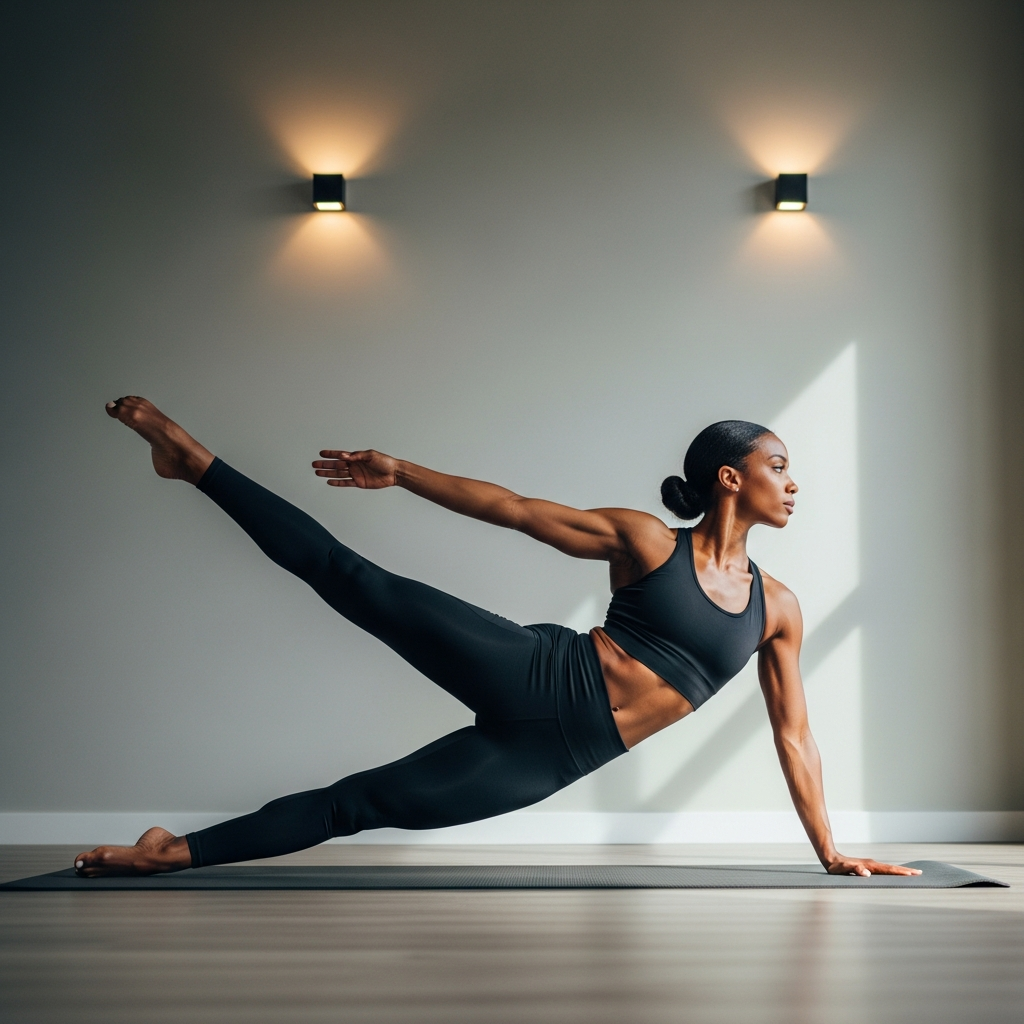
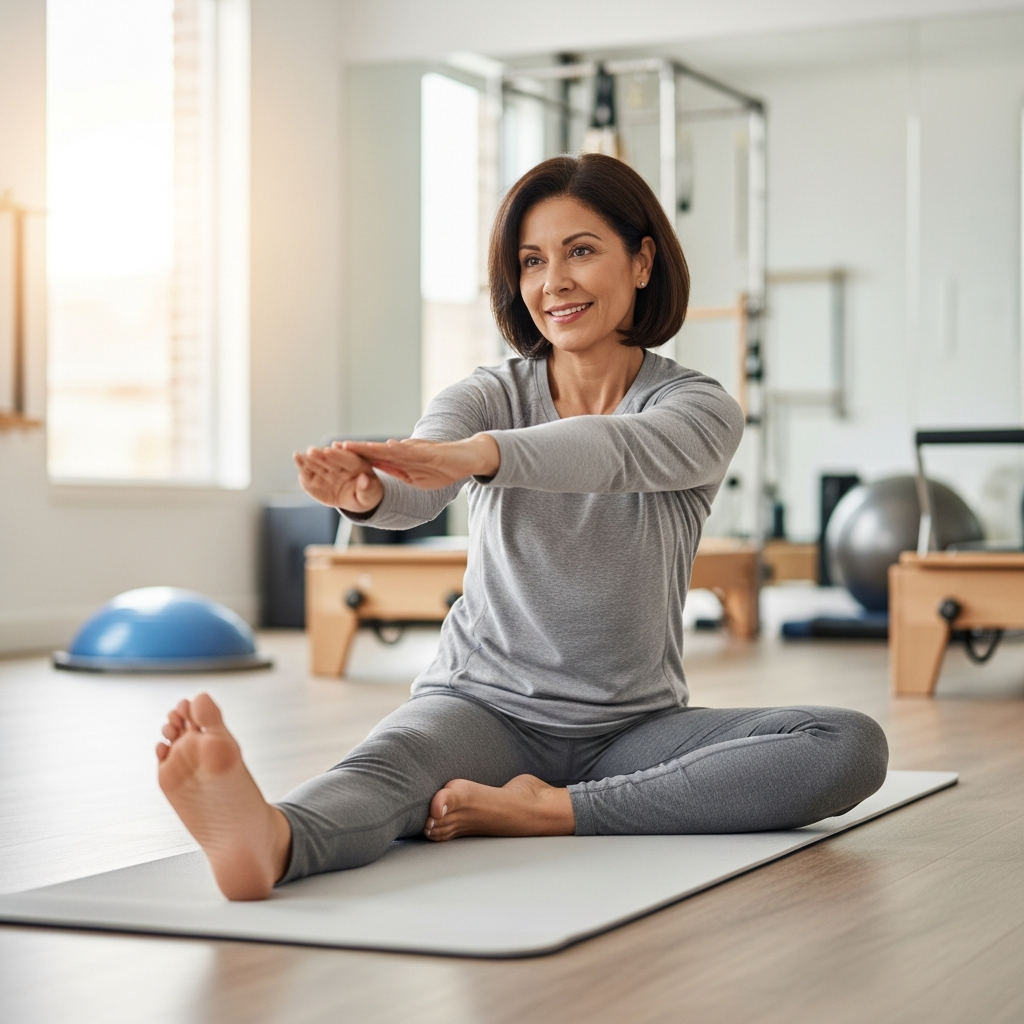
Pilates Classes Designed for All Levels Near Cedar Hill
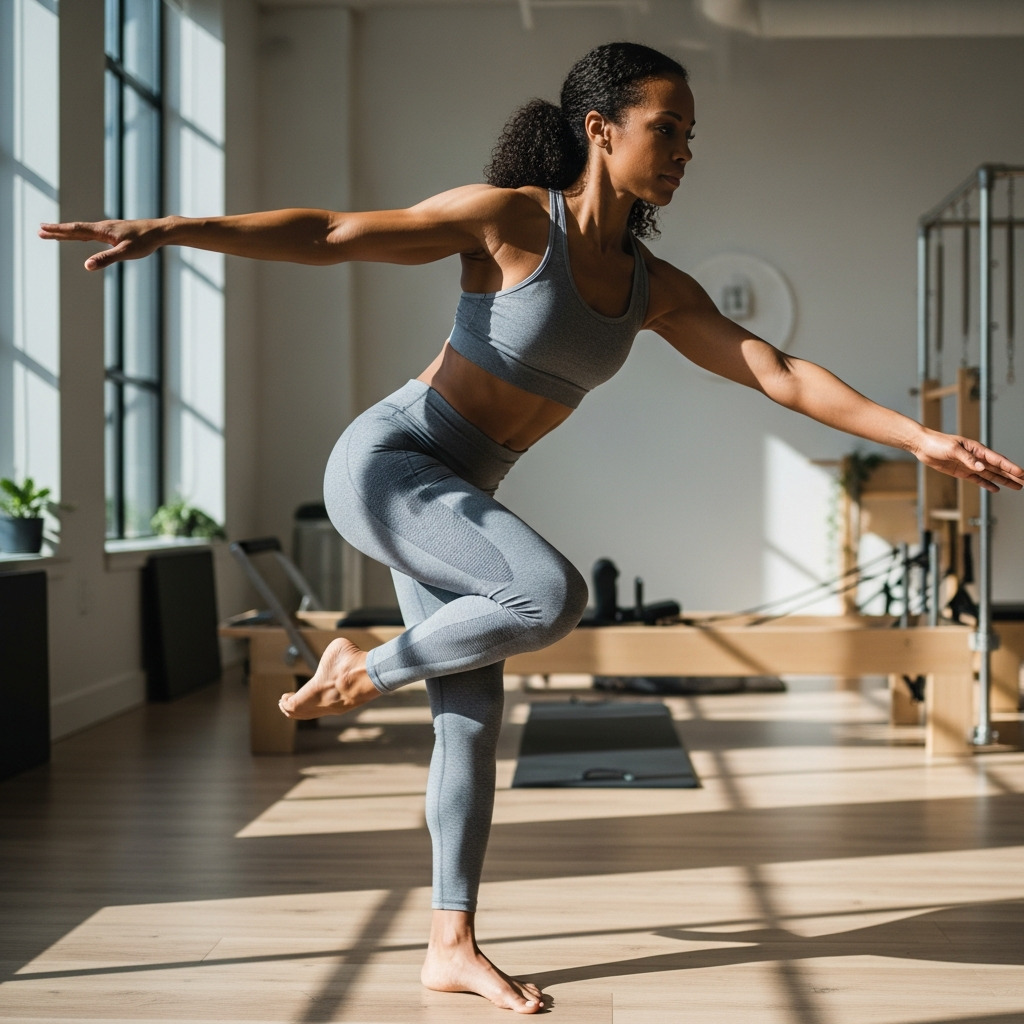
You’re scrolling through fitness class schedules again, aren’t you? That familiar mix of hope and dread washing over you as you scan the options. “Beginner Pilates” – but what if everyone there is secretly a contortionist? “Advanced Core Fusion” – yeah, that’s definitely not happening. And then there’s the eternal question: will you be the only person over 30 stumbling through moves while twenty-somethings effortlessly flow from position to position?
I get it. I’ve been there too, standing in the doorway of a fitness studio feeling like I’m about to crash someone else’s party. The thing is, finding the right Pilates class isn’t just about getting stronger or more flexible (though those are pretty great perks). It’s about finding a space where you can actually breathe – literally and figuratively.
Here in Cedar Hill, we’re lucky. Really lucky, actually. While other communities might have one-size-fits-all fitness options that leave half the population feeling like square pegs in round holes, our local Pilates scene has evolved into something… well, something pretty special.
Why Your Body Doesn’t Need to Be “Ready” for Pilates
Let me tell you something that might surprise you – your body is already perfect for Pilates. Not perfect in general (whose is?), but perfect for starting exactly where you are right now. Whether you’re dealing with a creaky lower back from too many hours at a desk, recovering from an injury, or just tired of feeling disconnected from your own strength… Pilates meets you there.
The beauty of a truly inclusive Pilates program isn’t that it dumbs things down – it’s that it scales up. Think of it like cooking with adjustable heat settings rather than just having an on/off switch. You get the same fundamental benefits, the same core strengthening, the same improved posture and flexibility. But the intensity? The complexity? That’s completely in your control.
The Cedar Hill Advantage
What’s happening in our community is something I wish I’d had access to years ago when I was intimidating myself out of trying new things. Local studios have figured out that “beginner” doesn’t mean “easy” and “all levels” doesn’t mean “lowest common denominator.” Instead, they’ve created environments where a 65-year-old managing arthritis can work alongside a 25-year-old athlete – and both walk away feeling challenged and accomplished.
It’s not magic, though it might feel like it sometimes. It’s intentional program design, skilled instruction, and honestly? A recognition that most of us are carrying around some combination of stress, physical limitations, and the desire to feel strong again.
What We’re Going to Explore Together
In this deep dive (sorry, I know that phrase is overused, but it really fits here), we’ll walk through what makes Cedar Hill’s Pilates scene so accessible. You’ll discover how to decode class descriptions so you actually know what you’re signing up for – because “gentle flow” at one studio might be completely different from another’s interpretation.
We’ll look at the specific adaptations and modifications that make classes truly inclusive, not just theoretically welcoming. You’ll learn what questions to ask instructors before your first class, what equipment you might encounter (and why you don’t need to be intimidated by any of it), and how to set realistic expectations for your progress.
Most importantly, we’re going to talk about finding your people. Because the right Pilates class isn’t just about the exercises – it’s about the community that forms when a bunch of imperfect humans show up consistently, supporting each other through wobbly balance poses and celebrating small victories together.
Maybe you’ve been putting off trying Pilates because you’re not sure your body is “ready.” Or maybe you’ve tried it before and felt lost or left behind. Either way, I think you’ll find that Cedar Hill’s approach to inclusive Pilates might just change how you think about fitness entirely.
Ready to discover what’s possible when movement meets you exactly where you are?
What Exactly Is Pilates, Anyway?
You know how everyone talks about Pilates like it’s this magical cure-all exercise? Well… they’re not entirely wrong, but let me break it down without all the mystical fitness guru nonsense.
Pilates is essentially a low-impact workout that focuses on precise movements, controlled breathing, and – here’s the key part – your core stability. Think of your core like the foundation of a house. You wouldn’t build walls on a shaky foundation, right? Same principle applies to your body. When your core is strong and stable, everything else – your posture, balance, even how you walk up stairs – gets easier.
The whole system was developed by Joseph Pilates (yes, that’s actually his last name) back in the early 1900s. Originally called “Contrology,” it was designed to help rehabilitate injured soldiers. Which explains why it’s so darn effective for building strength while being gentle on your joints.
The Mind-Body Connection That Actually Makes Sense
Here’s where Pilates gets interesting – and honestly, a bit confusing at first. It’s not just about moving your body; it’s about thinking while you move. I know, I know… when you’re struggling to hold a plank, the last thing you want to do is overthink it.
But here’s the thing: in Pilates, you’re constantly focusing on how you’re moving, not just what you’re moving. It’s like the difference between mindlessly scrolling your phone versus actively reading a book. Both involve your hands and eyes, but one engages your brain completely differently.
This mind-body connection means you’ll often hear instructors giving cues like “imagine you’re hugging a tree” or “think about lengthening through the crown of your head.” Sounds a bit woo-woo? Maybe. But it works because it forces you to engage muscles you didn’t even know you had.
Mat Work vs. Reformer – The Great Pilates Divide
Now, when you start looking at Pilates classes, you’ll quickly discover there are two main camps: mat Pilates and reformer Pilates. And honestly? Both have their devoted followers who’ll swear their way is superior.
Mat Pilates is exactly what it sounds like – exercises performed on a mat using your body weight and maybe some small props like resistance bands or balls. Think of it as the acoustic guitar of Pilates – stripped down, pure, accessible. You can literally do it in your living room (though having an instructor guide you makes a huge difference, trust me).
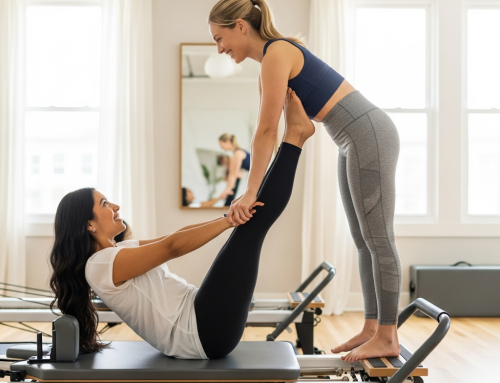
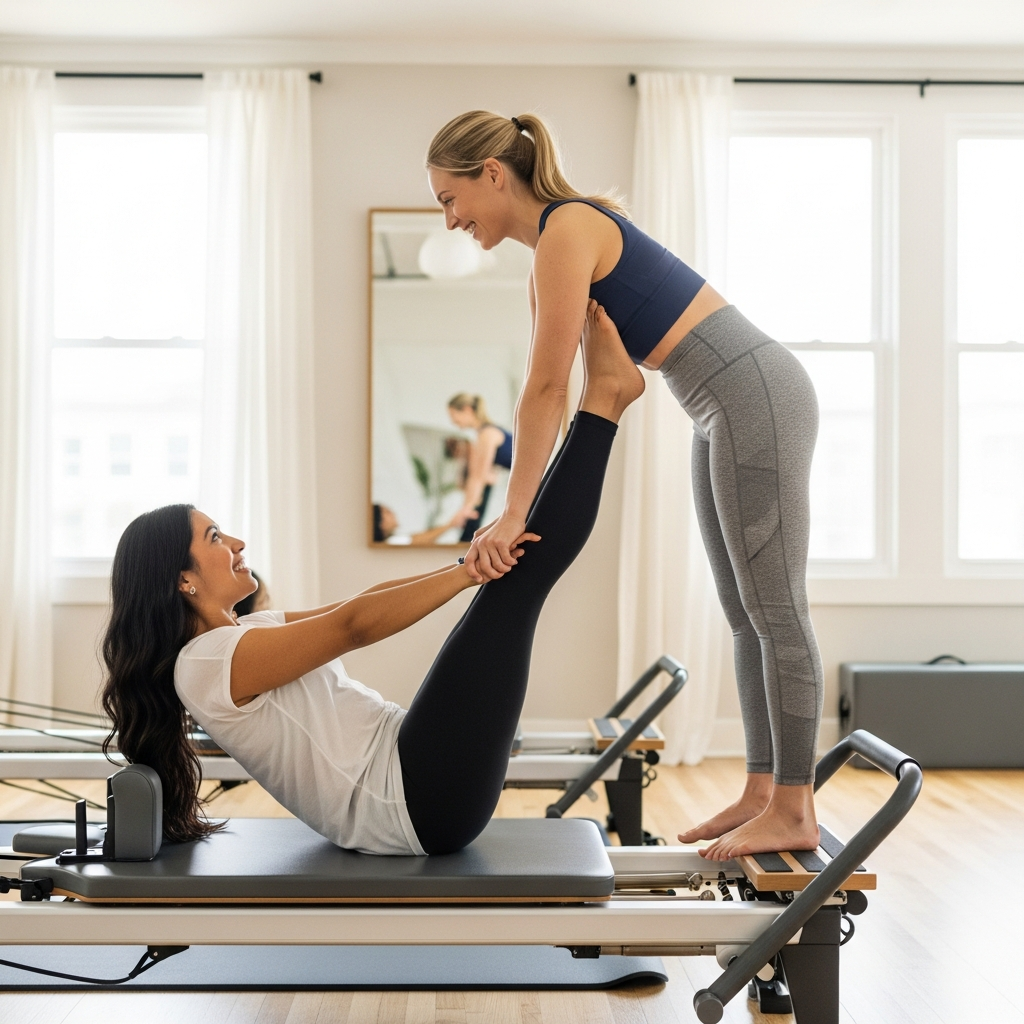
Reformer Pilates uses this contraption that looks like a medieval torture device had a baby with a gym machine. It’s actually quite brilliant – the reformer uses springs and pulleys to provide both resistance and assistance. Sometimes it makes exercises easier by supporting your body weight; other times it makes them ridiculously challenging by adding instability.
The reformer can be intimidating at first glance. All those springs and straps and moving parts… it’s like looking under the hood of a car when all you wanted was to check the oil. But once you understand the basics, it becomes this incredibly versatile tool.
Why “All Levels” Actually Means Something in Pilates
Here’s what’s beautiful about well-designed Pilates classes: the same exercise can challenge a beginner and an advanced practitioner simultaneously. How? Modifications and progressions.
Take a simple exercise like the hundred – you’re lying on your back, pumping your arms while breathing rhythmically. Sounds easy enough, right? A beginner might keep their knees bent and feet on the floor. Someone more advanced might extend their legs straight out, hovering them inches off the ground. Same exercise, completely different challenge levels.
It’s like cooking – you can make scrambled eggs with just eggs and butter, or you can add herbs, cheese, and technique to create something restaurant-worthy. The foundation remains the same.
The Breathing Thing Everyone Mentions (And Why It Matters)
Let’s address the elephant in the room – Pilates breathing. Yes, there’s a specific way to breathe, and yes, it feels weird at first. You’re supposed to breathe into your ribs laterally (sideways) rather than up into your chest or down into your belly.
Why? Because it allows you to maintain core engagement while still getting oxygen. It’s counterintuitive – most of us learned to take deep belly breaths for relaxation. But in Pilates, you need that core stability, so lateral breathing becomes your best friend.
Don’t worry if it takes a while to click. Even instructors will tell you it took them months to really “get” the breathing pattern.
What to Actually Expect in Your First Class (The Real Talk)
Here’s what nobody tells you about that first Pilates class – you’re going to feel muscles you forgot existed. That’s completely normal, and honestly? It’s kind of exciting once you get past the initial “oh wow, my core is apparently made of jelly” realization.
Most beginner classes start with breathing exercises, which might feel silly at first. Don’t skip this part… it’s actually where the magic begins. The instructor will probably have you lie on your back, knees bent, and focus on expanding your ribcage. This isn’t just relaxation – you’re literally training your deep core muscles to wake up.
Expect modifications for everything. A good instructor will show you three ways to do each exercise – and there’s zero shame in choosing the easiest version. Actually, that’s often the smartest move. I’ve seen people try to keep up with someone who’s been doing Pilates for five years, only to end up frustrated and sore in all the wrong places.
Finding Your Perfect Class Match (Beyond Just “Beginner”)
The class descriptions can be confusing – what exactly is “Pilates Flow” versus “Mat Pilates” anyway? Here’s your decoder ring
Mat classes happen on the floor with minimal equipment. They’re perfect if you want to understand the fundamentals without feeling overwhelmed by contraptions that look like medieval torture devices. Plus, you can practice what you learn at home.
Reformer classes use that sliding bed-like machine you’ve probably seen on Instagram. Don’t let it intimidate you – the springs actually help support your movements, making some exercises easier than the mat versions. Though your legs might disagree the next day.
Small group classes (usually 4-6 people) give you more attention without the one-on-one price tag. This is your sweet spot if you want corrections but don’t want to feel like you’re performing solo.
Look for classes specifically labeled “fundamentals” or “basics” – these focus on building proper form rather than flashy movements. Trust me, nailing the basics will serve you way better than struggling through advanced sequences.
The Equipment Situation (And What You Actually Need)
You don’t need to buy anything fancy right away. Most studios provide everything, but if you’re doing home practice or want your own gear, start simple
A decent mat is worth investing in – something with enough cushioning that your tailbone doesn’t hate you, but not so thick that you feel unstable. About 6mm thickness hits that sweet spot.
Those small props everyone uses? The magic circle, resistance bands, small balls – they’re helpful but not essential. Many exercises work just fine without them, and you can always substitute household items. A throw pillow works surprisingly well instead of a small ball for certain exercises.
Reading Your Instructor (And Getting What You Need)
Pay attention to how your instructor cues exercises. Do they focus on anatomical precision (“engage your transverse abdominis”) or use more intuitive language (“imagine drawing your belly button to your spine”)? Neither approach is better, but one might click with your learning style.
Don’t be shy about asking for modifications – even mid-exercise. A simple “this doesn’t feel right” or “my back is bothering me” will get you immediate alternatives. Good instructors actually appreciate the feedback because it shows you’re paying attention to your body.
If you’re not feeling challenged after a few classes, speak up. Sometimes instructors play it safe with new faces, but they can easily add complexity once they know you’re ready.
Making It Stick (The Consistency Game)
Here’s the thing about Pilates – sporadic classes won’t get you anywhere. It’s better to do two classes a week consistently than to go hard for a month and then disappear. Your body learns through repetition, not intensity.
Try to book your next class before you leave the current one. I know it sounds obsessive, but it removes the decision fatigue of “should I go this week?”
Many studios offer package deals that actually save money while encouraging consistency. Those 10-class packages with expiration dates? They’re not trying to stress you out – they’re helping you build a habit.
And here’s a little secret from the Pilates world… most people see real changes around the 6-8 week mark. Not just strength improvements, but that whole “I carry myself differently” transformation everyone talks about. Stick with it through that initial phase – that’s where the good stuff happens.
“I’m Not Flexible Enough” – The Biggest Myth That Keeps People Home
Here’s the thing about flexibility – you don’t need it to start Pilates. You need Pilates to get it. It’s like saying you need to be clean before taking a shower, you know?
I’ve watched countless people stand outside our studio, peering through the windows, convinced everyone inside was born doing perfect swan dives. The reality? Most of us started about as flexible as a wooden ruler. That woman gracefully flowing through her hundred? She probably couldn’t touch her toes six months ago.
The solution isn’t waiting until you’re more flexible – it’s finding an instructor who gets it. Look for classes that offer modifications from day one. Can’t reach your toes in rolling like a ball? Grab behind your thighs instead. Your spine will thank you, and you’ll build strength while your flexibility catches up… which it will, almost without you noticing.
The Coordination Conundrum (Or Why Your Brain Feels Scrambled)
Let’s be honest – Pilates can feel like patting your head while rubbing your belly, except you’re also supposed to breathe in a specific pattern and engage muscles you forgot you had. It’s a lot.
The first few classes? You might feel like you’re learning a foreign language while doing calculus. Your instructor says “exhale and draw your navel to spine while reaching your arms overhead” and your brain just… nopes out. This is completely normal, even though it doesn’t feel that way when you’re the one fumbling through it.
The trick is to pick one thing to focus on per class. Week one, maybe it’s just breathing. Week two, add in the arm movements. By week four, your body starts connecting the dots without your brain having to work overtime. Most good instructors will remind you of this – they’ve seen the deer-in-headlights look before.
The Equipment Intimidation Factor
Walking into a Pilates studio for the first time can feel like entering NASA mission control. Reformers with springs and pulleys, cadillacs that look nothing like cars, and enough straps to make you wonder if you accidentally signed up for some kind of medieval torture session.
Here’s what nobody tells you: the equipment is designed to make things easier, not harder. Those springs? They’re giving you support and feedback. The straps help you figure out where your body is in space. The reformer’s moving carriage actually helps you find your center better than working on solid ground.
Start with mat classes if the equipment feels overwhelming – many studios offer these, and they’re just as effective. When you’re ready to try equipment, book a private session first. Having one-on-one time with the machinery (with an expert guide) makes everything click faster.
Feeling Lost in Class (Even When You’re Not Actually Lost)
You know that moment when the instructor demonstrates something that looks simple, you think you’ve got it, and then… your body does something completely different? Meanwhile, the person next to you flows through it like they choreographed the movement themselves.
This is where the inner critic gets loud: “Everyone else gets it. I look ridiculous. I should probably just stick to walking.”
Reality check – that person who looks like a Pilates prodigy? They’re probably thinking about their grocery list or wondering if they remembered to feed their cat. Most people are too focused on their own movement to judge yours. Plus, what looks “wrong” from the outside might actually be exactly what your body needs that day.
The best solution is finding your “modifications buddy” – that instructor who remembers you prefer certain variations and offers them without making a big deal about it. Good instructors make modifications feel like upgrades, not consolation prizes.
Making It Fit Your Real Life (Not Your Ideal Life)
Let’s talk about the gap between Pilates Instagram and actual life. You see these gorgeous studios with people in matching workout sets, and you’re here trying to squeeze in a class between work and picking up kids, wearing whatever clean athletic wear you could find.
The perfectionism trap is real. You think you need the right outfit, the perfect schedule, or to have read up on Pilates theory. You don’t. You need to show up – messy hair, borrowed yoga mat, and all.
Most Cedar Hill studios get this. They’re not looking for perfection; they’re looking for people who want to feel better in their bodies. Start small, be consistent, and let everything else sort itself out as you go.
What to Expect in Your First Few Classes
Let’s be honest – your first Pilates class might feel a bit like trying to pat your head and rub your belly at the same time. You’ll be concentrating so hard on what your arms are doing that you completely forget about your breathing. And that’s totally normal.
Most people leave their first class thinking, “Well, that was harder than it looked.” You’re not alone in that feeling. Pilates has this sneaky way of making simple movements feel incredibly challenging because you’re asking your body to move in ways it’s probably not used to moving.
You might feel muscles you forgot you had – especially around your core and those deep stabilizing muscles that have been taking a nice long vacation. Don’t worry if you can’t hold a plank for more than ten seconds or if the instructor’s cues sound like they’re speaking a foreign language. “Engage your transverse abdominis” will eventually make sense, I promise.
The Timeline Reality Check (Because We’re Not Selling Magic)
Here’s what actually happens when you start Pilates consistently
Weeks 1-4: You’re figuring out the basics. Your body awareness starts improving – you know, that ability to actually know where your limbs are in space without looking. You might notice you’re sleeping a bit better, and those everyday aches and pains from sitting at your desk all day? They might start to ease up.
Months 2-3: This is where things get interesting. Your core strength is building, and you’ll probably notice that getting out of bed or picking things up off the floor feels easier. You’re not necessarily losing tons of weight (though some people do), but your posture is improving and your clothes might fit differently.
Months 4-6: Here’s where the magic really happens. Your balance is better, you’re stronger, and – this is my favorite part – you start to move through daily life with more confidence. That’s when you realize Pilates isn’t just about the hour you spend in class… it’s changing how you move through your whole day.
Remember, we’re talking about 2-3 classes per week here. Going once a month and expecting dramatic changes is like watering a plant once and wondering why it’s not blooming.
Building Your Pilates Routine (Without Overwhelming Your Schedule)
Starting a new fitness routine when you’re already juggling work, family, and everything else life throws at you? It can feel impossible. But here’s the thing – Pilates classes near Cedar Hill are designed with real people’s real schedules in mind.
Most studios offer early morning classes for the “get it done before the day explodes” crowd, lunch break sessions for those quick midday resets, and evening classes for after-work stress relief. You don’t need to commit to five classes a week right out of the gate.
Start with one or two classes weekly. Maybe Tuesday evenings and Saturday mornings – whatever works with your actual life, not your fantasy life where you have unlimited time and energy.
As you build strength and – perhaps more importantly – develop the habit, you can always add more. But there’s something to be said for consistency over intensity. Better to go twice a week for six months than to burn out trying to go every day for three weeks.
What Happens Beyond the Studio
Here’s what nobody talks about enough: Pilates starts to sneak into your regular life in the best possible way. You’ll catch yourself standing taller at the grocery store checkout. You’ll engage your core when lifting that heavy laundry basket. You might even find yourself doing breathing exercises during stressful meetings (works like a charm, by the way).
Some of our members tell us they feel more grounded, more present in their bodies. Others mention that chronic back pain they’ve dealt with for years has significantly improved. And yes, many people do see changes in their weight and body composition – but that’s often a happy side effect of feeling stronger and more confident in their movement.
The real goal? Moving through life with less pain, more strength, and greater awareness of what your body can actually do. That’s worth way more than any number on a scale, don’t you think?
You know what? Finding the right fitness routine when you’re working toward weight loss goals doesn’t have to feel like climbing Mount Everest in flip-flops. And honestly – that’s exactly what we love about Pilates. It meets you where you are, not where you think you should be.
Your Body Deserves This Kind of Care
Whether you’re someone who breaks into a sweat just thinking about exercise or you’ve been moving your body for years, there’s something beautifully democratic about stepping into a Pilates studio. No one’s judging your flexibility (or lack thereof), and there’s definitely no requirement to twist yourself into a human pretzel on day one.
The studios here in the Cedar Hill area really get that. They’ve created spaces where your 68-year-old neighbor recovering from knee surgery can work out right alongside the college athlete home for winter break. And somehow… it just works. Because Pilates isn’t about competing – it’s about connecting with your body in a way that actually feels good.
Small Steps, Big Changes
Here’s what we’ve noticed with our patients who add Pilates to their weight loss plan: they start standing a little taller. Moving with more confidence. Actually *enjoying* the way their body feels during movement instead of just enduring it. And while the scale might not always reflect these changes immediately (bodies are mysterious that way), the mirror definitely does.
Those core muscles you’ve been wondering about? They’re there – just waiting for some gentle coaxing. The back pain that’s been your unwelcome companion for months? Often starts backing down when your posture improves. It’s like your body finally remembers what it was designed to do.
It’s Okay to Start Small
Maybe you’re reading this thinking, “This sounds great, but I can barely touch my toes.” Perfect. That’s exactly where most people start. The beauty of beginner-friendly classes is that they’re designed for real humans with real limitations – not Instagram fitness models.
And if you’re dealing with injuries, chronic pain, or mobility challenges? Even better. Pilates instructors are trained to work with bodies that need extra attention. They’re not going to push you into anything that doesn’t feel right.
Ready When You Are
Look, we know that taking the first step toward better health can feel overwhelming. Especially when you’re already juggling work, family, and about seventeen other responsibilities. But here’s the thing – you don’t have to figure this out alone.
Whether you’re curious about how Pilates might fit into your weight loss goals, wondering which classes would work best for your fitness level, or just need someone to talk through your health concerns… we’re here. No pressure, no judgment – just real conversation about what might actually work for your real life.
Give us a call when you’re ready. We’d love to chat about how movement – whether it’s Pilates or something else entirely – can support the healthier, more energetic version of yourself you’re working toward. Because you deserve to feel strong, confident, and completely at home in your own skin.
Your body has carried you this far. Let’s help it carry you even further.