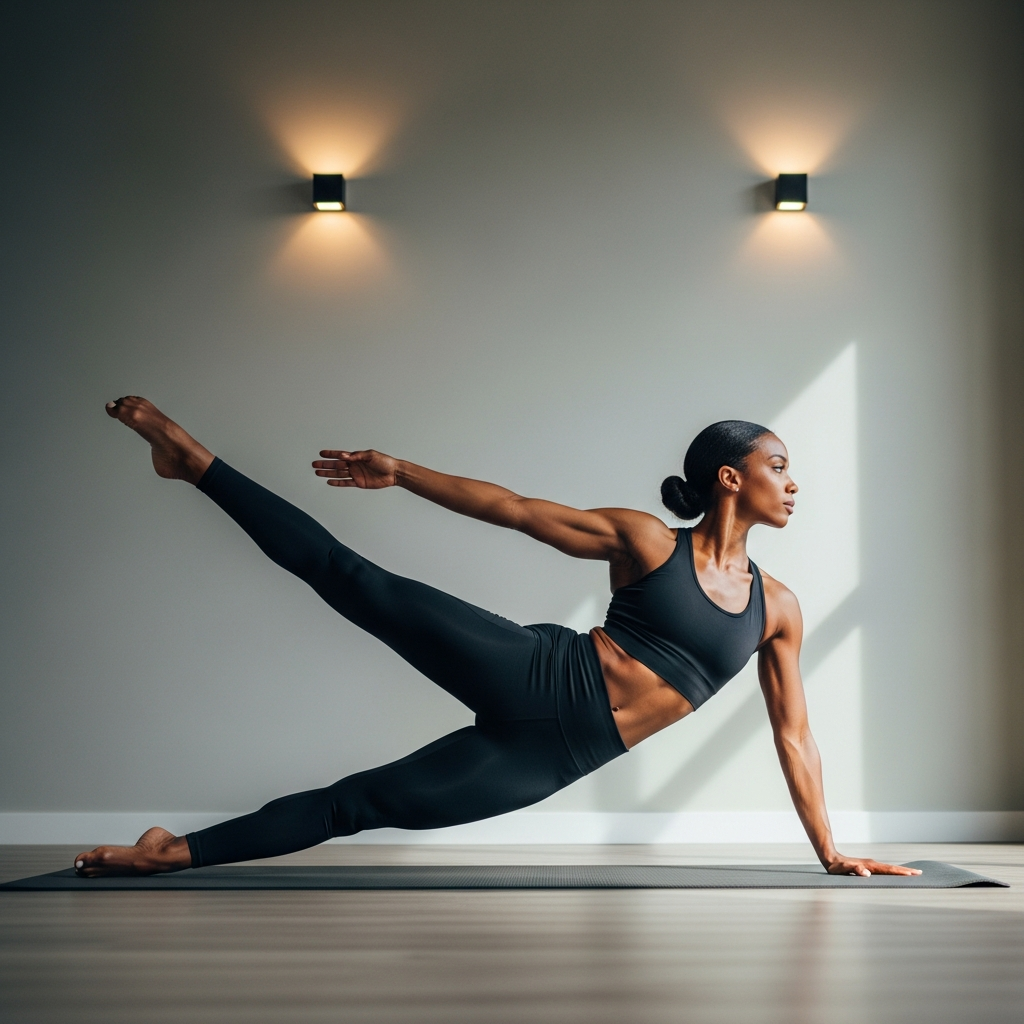
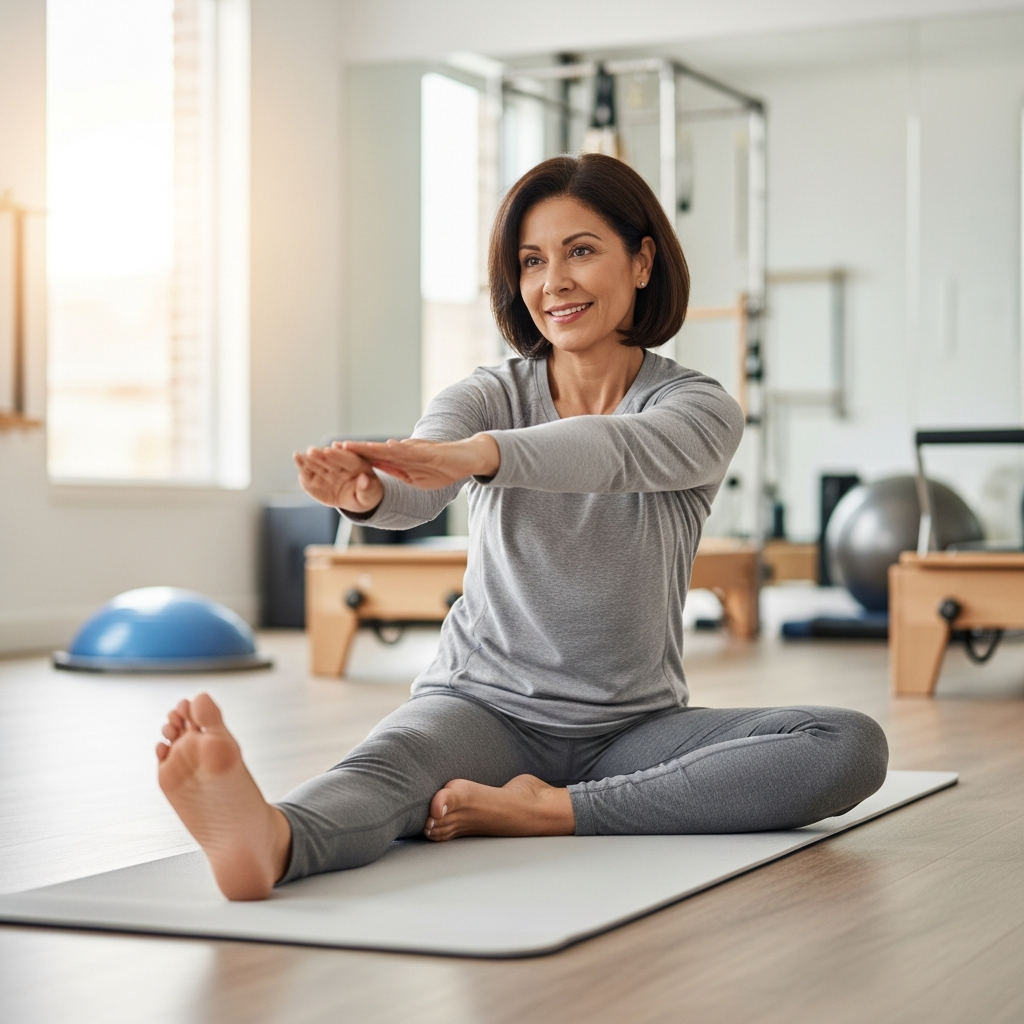
What to Expect From Your First Pilates Class in Grand Prairie

Picture this: you’re standing outside that sleek Pilates studio in Grand Prairie, checking your phone for the third time even though you’re already ten minutes early. Your palms are slightly sweaty (and not just from the Texas heat), and you’re second-guessing everything – your outfit, your fitness level, whether you should’ve eaten that energy bar an hour ago or if you’re going to embarrass yourself in front of all those seemingly effortless people through the window.
Yeah… we’ve all been there.
You know that feeling when you really want to try something new – something that might actually help you feel stronger, more confident, maybe even help with that weight loss goal you’ve been working toward – but your brain starts playing those familiar tricks? *What if I can’t keep up? What if I’m the only beginner? What if I fall over during some impossible-looking pose and everyone stares?*
Here’s the thing about Pilates, though. It’s not what most people think it is.
I’ve watched hundreds of first-time students walk into our clinic’s recommended Pilates studios here in Grand Prairie over the years, and honestly? The ones who are most nervous often end up loving it the most. There’s something about Pilates that just… clicks. Maybe it’s because it meets you exactly where you are – no judgment, no competition with the person on the mat next to you.
And if you’re on a medical weight loss journey (which, let’s be honest, is probably why you’re considering this), Pilates might just be the missing piece you didn’t know you needed. It’s not about burning massive calories in some sweat-drenched torture session – though you’ll definitely feel it working. It’s about building that deep, sustainable strength that makes everything else easier.
You see, when we’re carrying extra weight or dealing with the physical challenges that come with it, traditional exercise can feel… well, punishing. Your knees might protest during high-impact workouts. Your back might ache after lifting weights incorrectly. But Pilates? It’s like having a conversation with your body instead of shouting at it.
I remember one client – let’s call her Sarah – who came to us after trying everything. Gym memberships she never used, workout videos that left her feeling defeated, even a few personal training sessions that made her feel more self-conscious than empowered. She was hesitant about Pilates because, in her words, “it looks too easy and too hard at the same time.”
Turns out, she was absolutely right. And that’s exactly why it worked.
See, Pilates has this sneaky way of challenging muscles you forgot you had while never making you feel like you’re failing. Those tiny, controlled movements? They’re doing more work than you realize. That focus on breath and alignment? It’s rewiring how your body moves through space. And that mind-body connection everyone talks about? It’s not just wellness-speak – it’s real, and it’s incredibly powerful when you’re trying to change your relationship with your body.
But here’s what nobody tells you about that first class: it’s going to surprise you. Maybe you’ll discover you’re stronger than you thought. Maybe you’ll realize you’ve been holding tension in places you didn’t even know existed. Or maybe – and this happens more often than you’d think – you’ll walk out feeling like you just had the best therapy session of your life.
The studios here in Grand Prairie have this wonderful mix of instructors who really get it. They understand that bodies come in all shapes, sizes, and ability levels. They know that some days you’re going to feel amazing, and other days just showing up is a victory.
So whether you’re looking to complement your weight loss program, find a sustainable way to build strength, or just try something that doesn’t make you dread exercise… that first Pilates class is probably going to be different from what you’re imagining.
In the next few minutes, we’re going to walk through exactly what to expect – from what to wear (spoiler: it’s simpler than you think) to what those first few movements will feel like, and yes, we’ll talk about all those questions you’re too polite to ask out loud. Because honestly? Everyone wonders about them.
What Exactly Is Pilates, Anyway?
You know how people throw around the word “Pilates” like everyone automatically knows what it means? Well, here’s the thing – even after doing it for years, I still get asked this question constantly. And honestly? It’s not the easiest thing to explain.
Think of Pilates as the love child of yoga and physical therapy, with a dash of ballet thrown in for good measure. Joseph Pilates (yes, that was his actual last name – talk about destiny) developed this system back in the 1920s. He was this fascinating guy who combined his background in gymnastics, boxing, and martial arts to create something totally different.
The basic idea is pretty straightforward: you’re working on building strength from the inside out, focusing on what Pilates called your “powerhouse” – basically your core, but not just your abs. We’re talking about everything from your ribs to your hips, front to back. It’s like… imagine your torso is a can of soda. Regular exercise might work on denting the can from the outside, but Pilates is more about creating pressure from within so the whole structure becomes stronger.
The Mind-Body Thing (And Why It’s Not Just Wellness Fluff)
Here’s where things get a little counterintuitive. You might walk into that Grand Prairie studio expecting a workout that’ll leave you drenched in sweat and gasping for air. Instead, you’ll find yourself moving slowly, breathing deliberately, and thinking – really thinking – about every single movement.
This isn’t meditation with movement (that’s more yoga’s territory), but there’s definitely a mental component that catches people off guard. You’ll hear your instructor say things like “imagine you’re squeezing a grape between your shoulder blades” or “pretend there’s a string pulling the crown of your head toward the ceiling.”
At first, you might think – what kind of new-age nonsense is this? But here’s the thing: these weird little visualizations actually work. Your body responds to imagery in ways that simple “lift your leg higher” commands just… don’t.
Why Your First Class Might Feel Like Learning a New Language
Okay, let’s be real for a second. Pilates has its own vocabulary, and walking into your first class can feel like everyone’s speaking in code. You’ll hear terms like “imprint,” “neutral spine,” “draw your navel to your spine” – and if you’re like most beginners, you’ll spend half the class just trying to figure out what the instructor is actually asking you to do.
Don’t worry about this. Seriously. I’ve seen people get so caught up in trying to decode every cue that they forget to actually move their bodies. Your instructor in Grand Prairie will absolutely help translate all this – most good studios are used to beginners who look slightly bewildered for the first few sessions.
The Equipment Situation (It’s Not What You Think)
When most people hear “Pilates,” they picture those medieval torture device-looking contraptions with springs and pulleys. Those are called Reformers, and yes, they’re amazing – but they’re not your only option, especially when you’re starting out.
Mat Pilates uses just… well, a mat. Plus maybe some small props like resistance bands, balls, or blocks. It’s actually where Joseph Pilates started, and honestly? Some of the most challenging work happens right there on the floor with nothing but gravity and your own body weight.
Think of equipment as the difference between learning to cook with a full professional kitchen versus mastering the basics with just a good knife and a reliable pan. Both can create incredible results – it’s more about understanding the fundamentals first.
The Strength vs. Flexibility Balance
Here’s something that confuses a lot of newcomers: Pilates doesn’t fit neatly into the “cardio” or “strength training” or “flexibility” boxes that we’re used to. It’s doing all three simultaneously, which can feel… weird at first.
You might find yourself shaking – actually trembling – while holding what looks like a simple position. Meanwhile, you’re also working on mobility and coordination. It’s like your body is having three different conversations at once, and initially, that can feel overwhelming.
But that’s exactly why it works so well for people dealing with weight management – you’re building lean muscle, improving posture (which instantly makes you look taller and more confident), and developing better body awareness all at the same time.
What to Wear (And What Not to Bother With)
Here’s the thing about Pilates gear – you don’t need those $120 leggings to get started. Really. I’ve seen people in basic Target workout clothes absolutely crush their first class while someone in head-to-toe Lululemon struggled with basic movements.
Wear something that moves with you but isn’t so loose it becomes a distraction. Think fitted t-shirt or tank, leggings or shorts that won’t ride up when you’re doing leg circles. And here’s a tip most people don’t think about: avoid anything with zippers or metal bits that’ll dig into your back during floor work.
Socks? Skip them entirely or bring grip socks if the studio requires them. Regular socks on Pilates equipment are basically asking to slip and slide like you’re on ice… which isn’t exactly the mind-body connection you’re going for.
The Equipment Situation (It’s Not as Scary as It Looks)
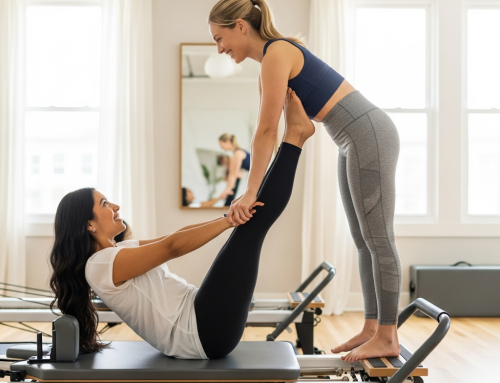
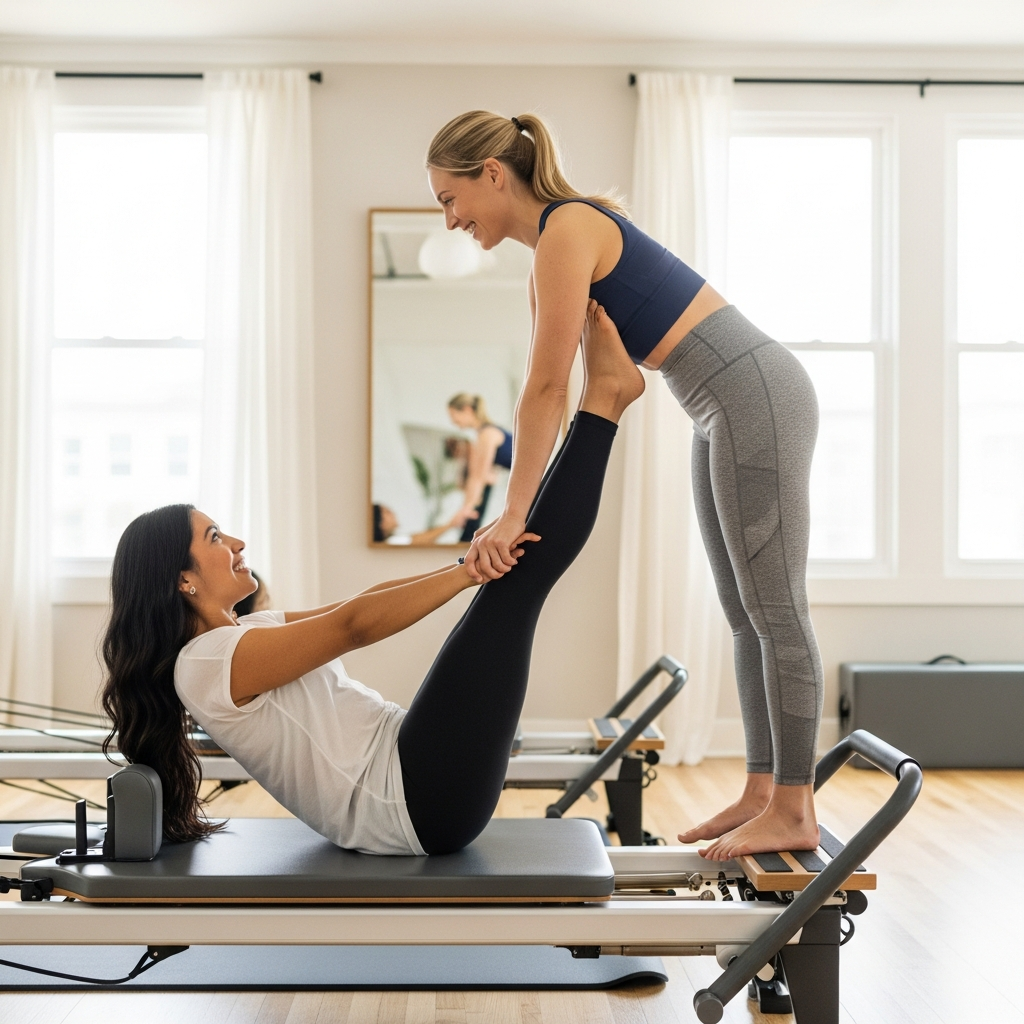
Walking into a Pilates studio for the first time can feel like entering some kind of medieval torture chamber. All those springs and pulleys and contraptions that look like they belong in a steampunk novel. But here’s what I wish someone had told me before my first class: that intimidating Reformer machine? It’s actually your friend.
Those springs aren’t there to make things harder – they’re there to help you. The resistance can actually make certain movements easier by supporting your body weight. When your instructor adjusts the springs (and they will, constantly), they’re fine-tuning the difficulty level just for you.
Don’t touch anything until your instructor shows you. Seriously. I once watched someone accidentally launch a foot bar across the room because they thought they were being helpful by “setting up.” Just… don’t.
Managing Your Expectations (The Real Talk)
You might leave feeling amazing – that post-workout glow is real with Pilates. Or you might feel like you’ve discovered muscles you didn’t know existed, and not necessarily in a good way. Both reactions are completely normal.
Pilates has this sneaky way of making you work harder than you realize in the moment. Those tiny, controlled movements? They add up. Fast. Don’t be surprised if you’re sore in weird places the next day – like the sides of your ribs or deep in your glutes.
And here’s something most people don’t expect: you might feel taller when you walk out. It’s not magic (though it feels like it) – it’s all that spinal alignment work actually doing its job.
The Breathing Thing Everyone Talks About
Yes, there’s specific breathing in Pilates, and yes, your instructor will mention it approximately 47 times during class. But don’t stress if you can’t master it immediately. I spent my first three classes basically holding my breath through half the exercises because I was so focused on getting the movements right.
The basic pattern is usually exhale on the effort – so when you’re lifting, pulling, or pushing against resistance. But honestly? Just breathe. Consistently. The fancy coordination comes later.
What to Do When You’re Completely Lost
You will get confused. Your brain will temporarily forget how to make your left leg move independently from your right arm. This is not a character flaw – it’s just Tuesday in Pilates land.
When this happens, stop and watch. Your instructor won’t think less of you for taking a breather to observe. In fact, they’ll probably appreciate that you’re being smart instead of flailing around trying to fake your way through a movement.
Ask questions, but maybe save the detailed anatomy discussions for after class. A quick “which way should my palm face?” is perfect mid-class. “Can you explain the entire history of the Hundred exercise?” is better saved for later.
The Post-Class Reality Check
Don’t plan anything too physically demanding right after your first class. I’m not saying you’ll be incapacitated, but your stabilizer muscles might be having a little conversation with you that makes walking down stairs… interesting.
Drink water – more than you think you need. Pilates works your muscles in ways that create different kinds of waste products than your typical cardio workout, and you’ll want to help flush those out.
And here’s the most important thing: if you didn’t love it immediately, give it another shot. Pilates is one of those things that grows on you… kind of like how vegetables taste better once you’re an adult. Sometimes the best things require a little patience.
The Things Nobody Warns You About
Let’s be honest – your first Pilates class isn’t going to be all zen breathing and graceful movements. You’re going to face some stuff that might catch you off guard, and that’s completely normal. Actually, it’s kind of refreshing when instructors acknowledge this upfront instead of pretending everything will feel natural from day one.
The biggest surprise? Your brain and your body won’t be speaking the same language yet. You’ll hear “engage your core while lifting your leg and breathing deeply” and think, “Sure, easy enough.” Then you’ll realize you’re holding your breath, your shoulders are practically touching your ears, and you’ve completely forgotten which leg was supposed to move. It’s like trying to pat your head and rub your stomach while reciting the alphabet backwards – doable, but not immediately intuitive.
When Your Body Rebels
Here’s what’s really going to happen: muscles you didn’t know existed are going to speak up. Loudly. That burning sensation between your shoulder blades? Those are your rhomboids finally getting some attention after years of hunching over laptops and steering wheels. The shaking in your legs during what looks like a “simple” bridge? That’s your glutes remembering they have a job to do.
The solution isn’t to push through pain – that’s different from the good kind of muscle fatigue – but to listen to what your body’s telling you. If something hurts in a sharp, shooting way, speak up immediately. Grand Prairie instructors are used to modifications, and honestly, they’d rather help you adjust than have you injured.
But that muscle trembling during a plank hold? That’s normal. Your muscles are learning a new skill, kind of like when you first learned to ride a bike and your legs felt wobbly for days afterward. Take breaks when you need them. No one’s keeping score.
The Flexibility Reality Check
You might walk into that first class thinking you need to touch your toes or bend like a pretzel. Plot twist: Pilates isn’t really about flexibility in the way most people think. It’s more about… well, imagine your spine as a chain. Right now, some links might be rusty and stuck while others are doing all the work. Pilates teaches each link to move independently and smoothly.
So when you can’t roll down vertebra by vertebra like the instructor demonstrates, don’t panic. Start where you are, not where you think you should be. Maybe you can only roll down halfway before your back feels tight – that’s your starting point. Six months from now, you’ll probably surprise yourself.
The comparison trap is real, by the way. That person next to you who flows through movements like water? They might have been coming for two years. Or they might be a former dancer. Or maybe they just have different body mechanics than you do. Your flexibility journey is yours alone.
Breathing Like You Mean It
This one trips up almost everyone. In regular life, breathing just… happens. In Pilates, suddenly there are rules about when to inhale and when to exhale, and it can feel overwhelming. You’ll probably catch yourself holding your breath during challenging moves – it’s a natural response to difficulty.
Here’s a secret: the breathing patterns matter less than just breathing consistently. If you can’t remember whether to exhale on the lift or the lower, just keep breathing steadily. Your instructor can fine-tune the timing with you later. Think of it like learning to drive – first you focus on not crashing, then you work on smooth gear shifts.
Finding Your Rhythm
Every class has its own personality, even with the same instructor. Some days you’ll feel strong and coordinated. Other days, you’ll feel like you’ve never seen your own body before. This isn’t a reflection of your progress or potential – it’s just being human.
The real solution is showing up consistently, even when you don’t feel like it. Not every class needs to be perfect or challenging or transformative. Sometimes it’s enough to spend an hour moving your body mindfully and breathing deeply. Think of it as making deposits in your health bank account – even small deposits add up over time.
Remember, everyone in that Grand Prairie studio was a beginner once. Even your instructor probably remembers their first wobbly Teaser attempt or that time they completely lost track of their breathing pattern. You’re not behind – you’re exactly where you need to be.
What You’ll Actually Feel After Your First Class
Let’s be honest here – you’re probably going to feel… different. Not necessarily transformed (sorry, Instagram), but definitely aware of muscles you forgot existed.
That slightly wobbly feeling in your legs? Totally normal. Your core might feel like it just ran a marathon, even though you were lying on a mat half the time. And don’t be surprised if you feel taller walking out – Pilates has this weird way of making you suddenly aware of your posture.
Some people describe it as feeling “wrung out like a dishrag” but in the best possible way. You know that feeling after a really good stretch? It’s like that, but for your entire body.
The Reality Check: How Long Until You See Changes
Here’s where I need to pump the brakes on those “transform your body in 10 sessions!” promises you see everywhere. Real talk? You’ll start noticing subtle changes around week 3 or 4 if you’re going consistently – maybe twice a week.
The first thing most people notice isn’t dramatic weight loss or suddenly looking like a fitness model. It’s usually something like… you don’t grunt when getting out of bed anymore. Or your back doesn’t ache after sitting at your desk all day. Small stuff, but the kind of small stuff that makes a big difference in how you feel.
Physical changes – the visible ones – typically start showing up around the 6-8 week mark. Your clothes might fit differently before you see dramatic changes in the mirror. And honestly? The mental benefits often kick in faster than the physical ones.
Setting Yourself Up for Success
The biggest mistake I see people make is going all-in for two weeks, then burning out completely. Look, enthusiasm is great, but your body (and your schedule) need time to adapt.
Start with 2 classes per week if you can swing it. Once a week will maintain flexibility and might help with stress, but twice weekly is where you’ll really start building strength and seeing changes. Three times? Even better, but don’t feel pressured if life gets in the way.
And please – this is important – don’t try to keep up with the person next to you who’s clearly been doing this for years. They were beginners once too, probably feeling just as lost as you might feel now.
What to Expect in Your Second and Third Classes
Your second class might actually feel harder than your first. Weird, right? It’s because you’ll be more aware of what you’re supposed to be doing, so you’ll work harder. Plus, any soreness from class one might still be lingering around.
By your third class, though, something clicks. You’ll remember some of the moves, the breathing won’t feel so forced, and you might even – dare I say it – enjoy parts of it. The exercises that felt impossible in week one will start feeling… well, maybe not easy, but doable.
Building Your Pilates Routine
Think of Pilates like learning a new language – you wouldn’t expect to be fluent after one lesson, right? Same principle applies here. Each class builds on the last one.
Most people find their groove around the one-month mark. That’s when the movements start feeling more natural, when you’re not constantly looking around to see what everyone else is doing. It’s also when you might start noticing that your balance is better, or your shoulders don’t hunch forward as much when you’re stressed.
Don’t get discouraged if progress feels slow some weeks. Bodies are weird – sometimes you’ll have breakthrough moments, other times it’ll feel like you’re moving backward. That’s completely normal and part of the process.
Your Next Steps
Before you leave that first class, ask about package deals or membership options. Most studios in Grand Prairie offer newcomer specials that are way better than paying drop-in rates. Plus, having classes already paid for gives you that gentle push to keep showing up even when motivation wavers.
Consider scheduling your next few classes right away. I know, I know – you want to see how you feel first. But here’s the thing: you’ll always find reasons not to go if you leave it up to future-you to decide. Present-you is motivated and ready. Take advantage of that energy.
And remember – every expert was once a beginner. You’re exactly where you need to be.
You’ve Got This (Really, You Do)
Look, I get it. Right about now, you might be sitting there thinking, “Okay, this all sounds great, but what if I’m the person who trips walking into the studio?” Here’s the thing – everyone feels that way before their first class. Even the instructor who now moves like liquid grace once fumbled through their first hundred position and wondered if they’d accidentally signed up for advanced contortionism.
The truth is, Pilates isn’t about being perfect from day one. It’s about showing up… and then showing up again. Some days you’ll nail that teaser pose and feel like you could conquer the world. Other days? Well, other days you might spend most of the class figuring out which way is up during the roll-ups. Both are completely normal.
What I love about the Pilates community here in Grand Prairie is how genuinely supportive it is. You’re not walking into some intimidating fitness scene where everyone’s judging your form or your workout gear. You’re joining a group of people who understand that strength comes in all shapes, sizes, and flexibility levels. The mom next to you might be working through back pain from years of carrying kids. The gentleman across the room could be recovering from surgery. Everyone’s there for their own reasons – and that’s what makes it beautiful.
Your body will surprise you, honestly. Maybe not in the first class (though it might!), but definitely in the weeks that follow. You’ll notice you’re standing a little taller while waiting in line at the grocery store. Those stairs at work won’t leave you quite as winded. And that nagging lower back pain that’s been your constant companion? It might just start to fade into the background.
But here’s what really matters – you’re taking a step toward feeling better in your own skin. That’s not small stuff. In a world that constantly tells us we need to be different, faster, stronger, younger… Pilates whispers something revolutionary: you’re enough, right now, exactly as you are. We’re just going to help you feel even better.
The hardest part? It’s not the exercises or learning the equipment. It’s walking through that studio door the first time. After that, everything else is just… well, it’s just movement. And movement, as you’ll discover, can be pretty magical.
Ready to Take That First Step?
If you’re feeling inspired but still have questions swirling around in your head – totally normal, by the way – we’re here to help. Whether you want to chat about which class might be the best fit, discuss any physical concerns, or just want someone to talk through your goals with, our team genuinely loves these conversations.
You don’t have to figure this out alone. Give us a call, send an email, or even stop by the clinic. We’re not here to pressure you into anything – we’re here to support you in whatever way feels right. Sometimes that means starting with a conversation, sometimes it means jumping right into a beginner class. There’s no wrong way to begin.
Your future self is going to thank you for taking this step. Trust me on this one.