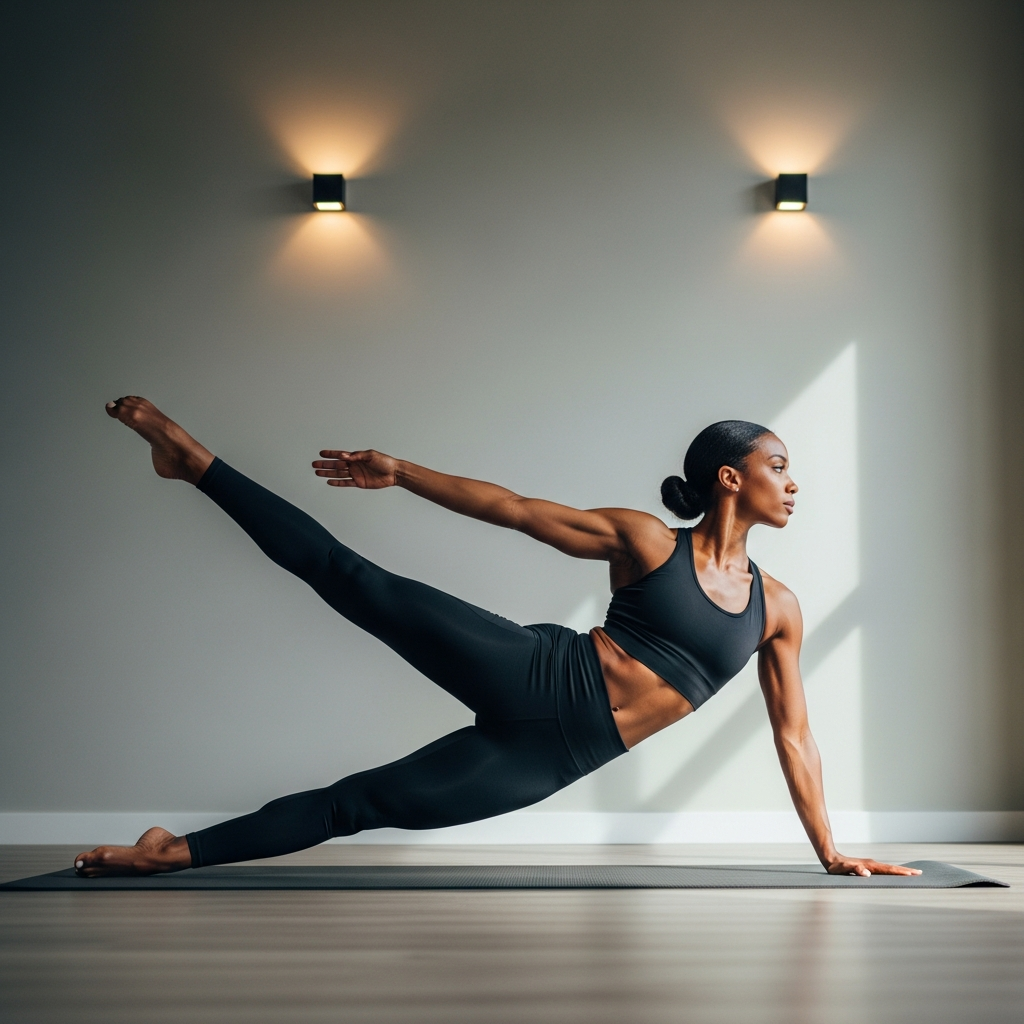
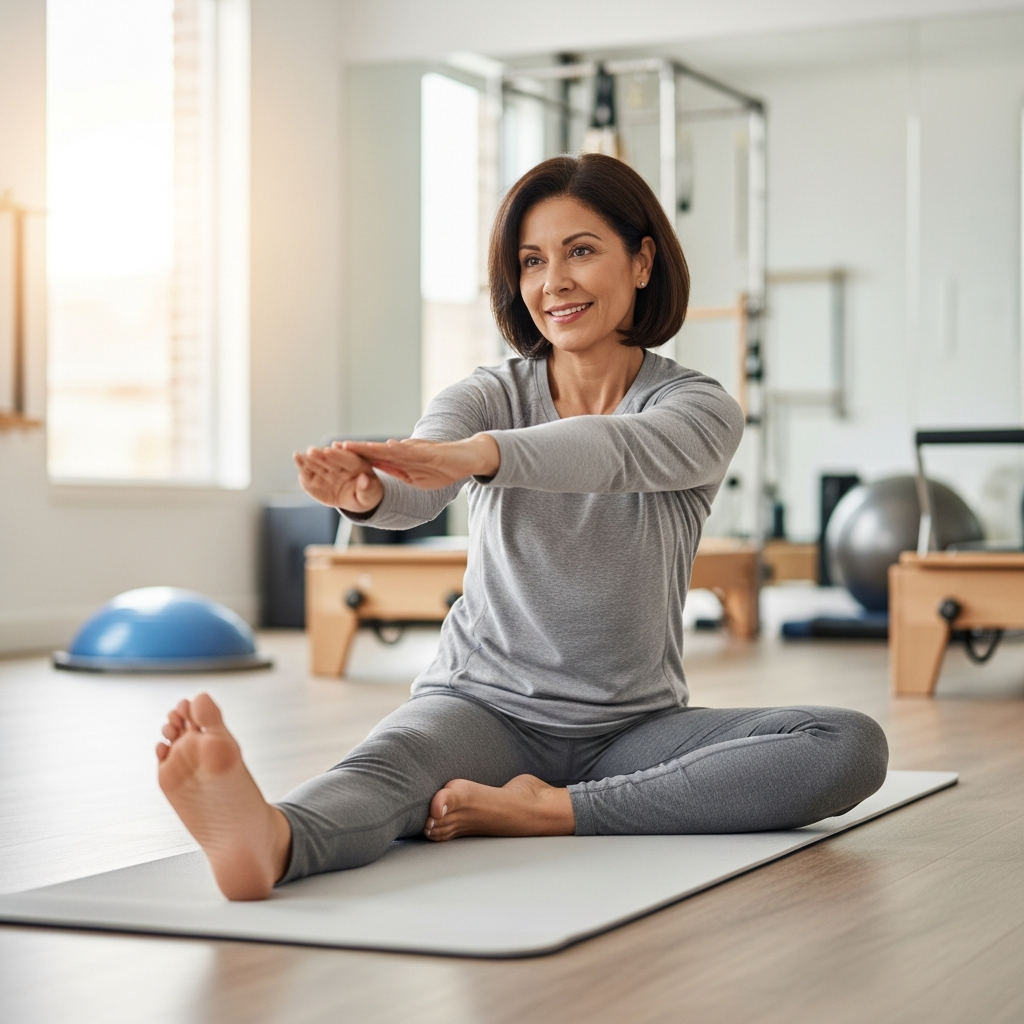
What’s the Difference Between Mat Pilates and Other Styles in Grand Prairie?
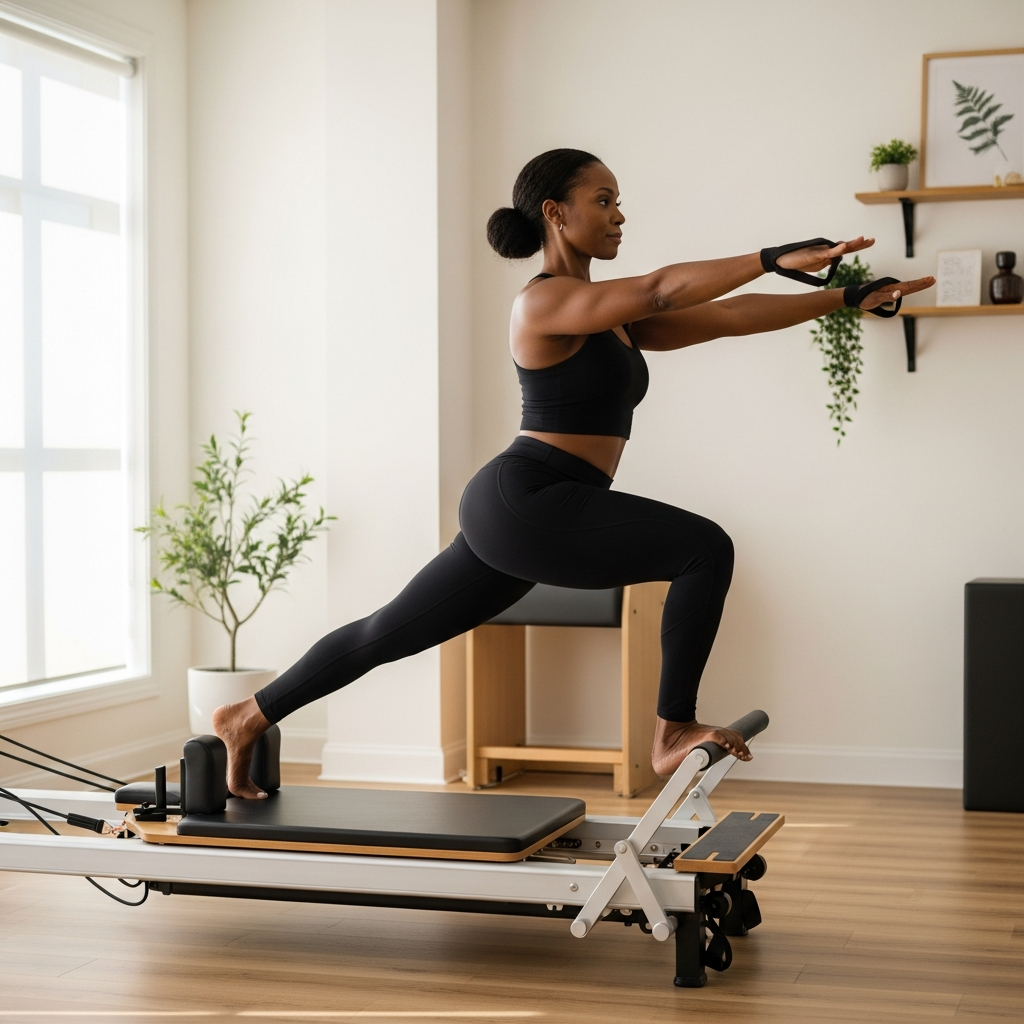
You know that feeling when you walk into a fitness studio for the first time and suddenly realize you have absolutely no idea what you’ve gotten yourself into? There you are, clutching your brand-new yoga mat (because someone told you that’s what you need for Pilates), scanning the room full of people who look like they could teach the class themselves, and wondering if “reformer Pilates” means you’re about to confess your fitness sins to some kind of exercise priest.
Trust me – you’re not alone in this confusion.
Just last week, I had a client tell me she’d been doing “Pilates” at three different studios around Grand Prairie, only to discover she’d actually been doing three completely different things. One place had her lying on a mat doing what felt like really slow, controlled torture. Another had her strapped to a medieval-looking contraption with springs and pulleys. The third? Well, let’s just say it involved a lot more jumping and sweating than she expected.
Here’s the thing about Pilates in Grand Prairie (and honestly, everywhere else) – it’s kind of like saying you’re going out for “food.” Sure, that’s technically accurate, but are we talking about a gas station hot dog or a five-course meal at that fancy place downtown? The experience… and the results… can be worlds apart.
Mat Pilates has become the most common introduction to this whole world, partly because it seems less intimidating than those reformer machines that look like they belong in a physical therapy clinic. But here’s what nobody tells you when you sign up for that first class – mat Pilates isn’t just “Pilates without equipment.” It’s its own beast entirely, with specific benefits, challenges, and yes, limitations that might surprise you.
And if you’re someone who’s been struggling with weight loss (which, let’s be honest, is probably why you’re reading this in the first place), understanding these differences isn’t just academic curiosity – it could be the key to finally finding a form of movement that actually works with your body instead of against it.
You see, I’ve watched too many people bounce between different Pilates styles like they’re shopping for the perfect pair of jeans, getting frustrated when what worked for their friend doesn’t work for them. They’ll try mat Pilates for a month, feel like they’re not seeing results fast enough, then jump to reformer classes, get overwhelmed by the learning curve, then maybe dabble in some fusion class that promises to be “the best of everything.”
The problem? They never really understood what each style was supposed to do for them in the first place.
Mat Pilates might be perfect if you’re dealing with back pain and need something you can do at home without investing in equipment. But if you’re looking to build serious strength while protecting sensitive joints, those reformer springs might be exactly what your body’s been craving. And if you’re the type who gets bored easily and needs variety to stick with something long-term… well, that’s where some of the newer fusion styles really shine.
The truth is, in a city like Grand Prairie where you’ve got everything from traditional studios in historic downtown to those sleek new fitness chains popping up in every strip mall, you have more options than ever. But more options can actually make the choice harder, not easier.
That’s exactly why I wanted to break this down for you – not with some dry comparison chart that reads like a textbook, but with the real, practical differences that matter when you’re trying to decide where to spend your time, money, and energy. Because let’s face it, if you’re going to commit to showing up somewhere consistently (and consistency is really the only thing that matters for lasting results), you need to know what you’re walking into.
So let’s talk about what mat Pilates actually is, how it stacks up against all these other styles you’ve probably heard about, and most importantly – how to figure out which approach might actually work for your specific situation, goals, and let’s be real, your schedule and budget too.
Think of Pilates Like Your Smartphone – Same Core, Different Apps
You know how your iPhone and your friend’s Samsung basically do the same things, but the interface feels completely different? That’s Pilates in a nutshell. Joseph Pilates created this brilliant system back in the 1920s – think of him as the Steve Jobs of movement – and everything we do today stems from his original “Contrology” method.
But here’s where it gets interesting (and honestly, a bit confusing at first)… Pilates has evolved into these different styles that can feel worlds apart, even though they’re all built on the same foundation. It’s like how jazz musicians all know the same scales but create totally different sounds.
The Six Sacred Principles – Your Pilates GPS
Before we dive into what makes each style unique, let’s talk about what they all share. Every legitimate Pilates class – whether it’s on a mat in someone’s garage or a fancy Reformer in Beverly Hills – should honor these six principles
Centering is about finding your powerhouse (that’s everything between your ribcage and your pelvis). Think of it as your body’s command center. Concentration means you can’t just phone it in – your mind needs to be as engaged as your muscles. Control is the anti-CrossFit… we’re not throwing weights around here. Precision over power, always. Breath isn’t just oxygen delivery – it’s like the conductor of an orchestra, timing everything perfectly. And Flow ties it all together, making movements feel more like a dance than a workout.
Sounds simple, right? Well… not exactly. These principles are deceptively deep, and different Pilates styles interpret them in their own ways.
Classical vs. Contemporary – The Great Pilates Divide
This is where things get a bit political in the Pilates world (yes, that’s actually a thing). Classical Pilates is like driving your grandfather’s perfectly maintained 1965 Mustang – it’s exactly what Joseph Pilates intended, down to the specific order of exercises and breathing patterns. Classical instructors guard this tradition fiercely, and honestly? There’s something beautiful about that dedication.
Contemporary Pilates, on the other hand, is more like a Tesla – it takes the original concept and adds modern bells and whistles. Contemporary teachers incorporate research from physical therapy, sports science, and biomechanics. They might modify exercises for different body types or add props that didn’t exist in Joseph’s time.
Neither approach is “wrong” – it’s more like preferring acoustic guitar over electric. Both make music, just differently.
Equipment vs. Mat – More Than Just Convenience
Here’s something that might surprise you: mat Pilates isn’t the “beginner” version of equipment Pilates. Actually, Joseph Pilates considered mat work the most advanced form because you don’t have springs and pulleys helping you out. It’s like the difference between riding a bike with training wheels versus without – both are valid, but one demands more from your core stability.
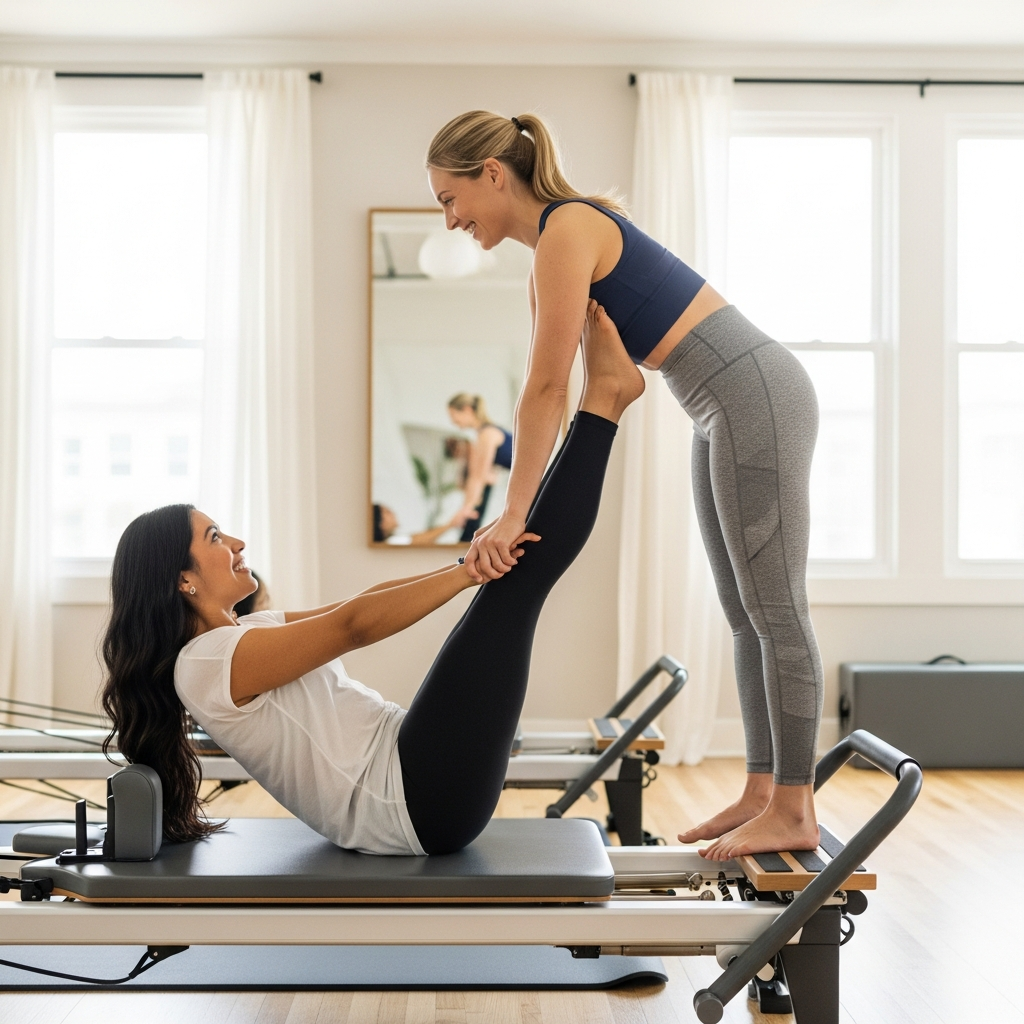
The equipment (Reformer, Cadillac, Chair) provides resistance and assistance simultaneously. Those springs can support you through a movement or challenge you – sometimes both at the same time, which honestly messes with your brain at first. Mat Pilates strips away all that assistance, leaving you with just gravity and your own strength.
The Style Spectrum – Where Things Get Personal
Think of Pilates styles as existing on a spectrum. On one end, you’ve got your pure Classical method – precise, traditional, sometimes a bit intimidating. Move along the spectrum and you’ll find variations like BASI (which adds anatomical precision), Stott (biomechanically focused), and Peak (performance-oriented).
Then there’s the newer wave – Power Pilates that gets your heart pumping, Pilates Barre hybrids, even Pilates-yoga fusions. Some purists roll their eyes at these variations, but honestly? If it gets people moving and honors those core principles, does it really matter what we call it?
The key is finding what resonates with your body, your goals, and – let’s be real – your personality. Some people thrive with the discipline of Classical method. Others need the adaptability of Contemporary approaches. And that’s perfectly okay.
What matters most isn’t which style you choose, but that you choose one that keeps you coming back. Because consistency? That’s where the real magic happens.
Finding Your Perfect Pilates Match in Grand Prairie
Look, I get it – walking into a Pilates studio can feel a bit like ordering coffee at one of those fancy places where they ask seventeen questions about your milk preference. But here’s the thing: once you understand what makes each style tick, choosing becomes way easier.
Start with your current fitness level and any physical limitations. If you’re dealing with lower back issues (and honestly, who isn’t these days?), mat Pilates might be your sweet spot. You’re working with gravity as resistance, which means you can control the intensity more easily than when you’re strapped into a reformer that’s basically trying to pull you in three directions at once.
But – and this is important – don’t automatically assume mat work is “easier.” I’ve seen seasoned athletes shake like leaves during a simple mat sequence. It’s just different.
The Studio Scouting Game
Before you commit to any Grand Prairie studio, do a little detective work. Most places offer intro packages or trial classes, and you’d be crazy not to take advantage of these. Actually… let me share something most people don’t think to ask: what’s the instructor-to-student ratio?
In mat classes, you might have 15-20 people, which is fine for seasoned practitioners but can be overwhelming if you’re new. Reformer classes typically max out around 6-8 people because, well, there are only so many machines. Classical Pilates often runs smaller groups because the sequences are more rigid and require closer attention to form.
Here’s a pro tip I wish someone had told me: visit during different times of day. That 6 AM mat class? Probably filled with regulars who’ve been doing this for years and could flow through the hundred in their sleep. The evening reformer session might have more beginners working around desk job tension.
Making the Most of Your Trial Period
When you’re trying different styles, keep a little mental (or actual) notebook. After each class, jot down how your body felt – not just during, but the next day too. Did that contemporary Pilates class leave you energized or completely wiped out? Did the classical session make your shoulders feel amazing or did you spend the whole time fighting with the footwork?
Pay attention to the studio’s modification philosophy too. Some instructors are fantastic at offering alternatives, while others… well, they expect you to just figure it out. If you need modifications (and most of us do for something), you want to be somewhere that makes you feel supported, not like you’re holding everyone back.
The Equipment Investment Reality Check
Let’s talk money for a hot minute. Mat classes are obviously the most budget-friendly since you’re not paying for expensive equipment usage. But here’s what studios don’t always advertise upfront: many reformer places require you to buy their specific socks, and some classical studios have pretty strict dress codes.
If you’re thinking about eventually practicing at home, mat Pilates wins hands down. You need… a mat. Maybe some resistance bands if you get fancy. Compare that to a decent home reformer (we’re talking several thousand dollars) and suddenly those studio fees don’t look so bad.
Building Your Practice Strategically
Here’s something interesting – you don’t have to pick just one style and stick with it forever. Actually, many people in Grand Prairie mix and match depending on what their body needs that week. Feeling stressed and tight? Hit up a gentle mat class. Want to challenge your coordination? Try some reformer work.
But do yourself a favor: get comfortable with one style first before branch out. I’ve seen too many people hop around so much they never really build the foundational strength and body awareness that makes Pilates so effective.
The Social Factor Nobody Mentions
Different Pilates styles attract different crowds, and honestly, this matters more than people admit. Mat classes tend to be more chatty and community-oriented. Equipment classes often feel more focused and intense. Classical Pilates attracts people who really geek out on precision and technique.
Think about what kind of energy motivates you. Do you thrive in that supportive group atmosphere, or do you prefer to zone in and focus on your own work? There’s no wrong answer, but knowing yourself helps you pick a place where you’ll actually want to keep showing up.
And that, my friend, is really what this whole decision comes down to – finding the style and studio that makes you excited to come back next week.
The Reality Check: Why Mat Pilates Feels Impossible at First
Let’s be honest – your first mat Pilates class probably left you wondering if you accidentally wandered into advanced contortion training. That’s completely normal, by the way.
The biggest shock? You can’t just power through it. If you’re coming from cardio or weight training, you might expect to sweat buckets and feel that familiar muscle burn. Instead, you’re lying on a mat, barely moving, yet somehow your abs are screaming and you’re shaking like a leaf. It’s… confusing.
The solution isn’t to push harder – it’s to slow down. Mat Pilates rewards precision over intensity. Think of it like learning to write with your non-dominant hand. You wouldn’t scribble furiously and expect beautiful penmanship, right? Same principle here. Focus on one movement at a time, even if that means doing a modified version for weeks.
“I Can’t Feel Anything” vs. “This is Torture”
Here’s something instructors don’t always warn you about: you’ll probably experience both extremes, sometimes in the same class.
During breathing exercises, you might think, “Am I even working out?” Then comes single-leg teaser, and suddenly you’re convinced this is cruel and unusual punishment. This wild swing between “too easy” and “impossibly hard” trips up so many people – especially if you’re used to more predictable workout intensities.
The trick is understanding that mat Pilates works your stabilizing muscles differently than reformer or chair work. On the reformer, springs provide resistance and assistance. On the mat? Gravity and your own body weight are calling the shots. Some exercises will feel easier without spring tension, others much harder without that mechanical support.
Don’t judge your progress by how much you sweat or how sore you are the next day. Instead, notice improvements in balance, posture, or how your back feels after sitting at your desk all day.
The Dreaded Coordination Catastrophe
You know that moment when the instructor says “extend your right leg while lifting your left arm, breathe in for three, pulse twice, then switch” and your brain basically short-circuits? Yeah, that’s not just you.
Mat Pilates demands serious mind-body coordination – more than reformer work because you don’t have springs guiding your movements. It’s like trying to pat your head and rub your stomach while reciting the alphabet backwards. In Portuguese.
Here’s what actually helps: forget about looking graceful for now. Really. Pick one element to focus on – maybe just the leg movement, or just the breathing pattern. Master that piece first. The coordination will come, but trying to do everything perfectly from day one is a recipe for frustration.
Also? Watch the instructor’s feet, not just their torso. So many people miss the lower body positioning because they’re focused on arm movements.
The Flexibility Reality Check
Let me guess – you thought Pilates would magically make you flexible overnight? Or maybe you’re on the opposite end, worried that you’re too stiff to even start?
Here’s the thing: mat Pilates isn’t primarily a flexibility program, though it certainly helps over time. It’s about strength through range of motion. You might discover muscles you didn’t know existed (hello, deep hip flexors) long before you notice major flexibility gains.
If you’re particularly tight, don’t force the stretches. Your hamstrings aren’t going to forgive you for yanking them into submission. Instead, bend your knees when needed, use towels to assist with reaches, and remember that your range of motion today isn’t your range of motion forever.
The Comparison Trap
This one’s sneaky. You’re doing fine, improving steadily, then you notice the person next to you flowing through movements like liquid poetry while you’re still figuring out which way is up.
Here’s the reality check you need: that graceful person might be a dance teacher, or someone who’s been practicing for years, or maybe they’re just naturally gifted at this particular type of movement. You don’t know their story, their struggles, or how many “ugly” classes they had before finding their flow.
Your Pilates practice is exactly that – yours. The only person you should compare today’s performance to is yesterday’s you. Some days you’ll feel strong and coordinated. Other days you’ll feel like you’re moving through molasses. Both are part of the process.
Focus on what your body can do today, celebrate small victories, and remember that consistency beats perfection every single time.
What to Expect in Your First Few Weeks
Let’s be honest – you’re probably wondering if you’ll be gracefully flowing through movements like those Instagram videos by week two. The reality? You’ll likely spend your first class figuring out what the heck your instructor means by “neutral spine” and why your abs are already shaking during the warm-up.
That’s completely normal, by the way. I’ve seen people come out of their first mat Pilates class looking slightly bewildered, wondering if they accidentally signed up for advanced torture instead of beginner-friendly exercise. Your body needs time to learn this new language of movement – and it’s speaking a dialect you’ve probably never heard before.
Most people start feeling more coordinated around the 3-4 week mark. You’ll notice you’re not constantly looking around the room trying to copy your neighbor (though we all still do that sometimes). By week six to eight, you might actually start enjoying those dreaded Hundred pulses instead of counting down like you’re defusing a bomb.
Setting Realistic Timeline Goals
Here’s something no one talks about enough – Pilates isn’t a quick fix, and anyone selling it as such is… well, they’re selling you something. Think of it more like learning to play piano. You wouldn’t expect to nail Chopin after a month of lessons, right?
For mat Pilates specifically, expect to feel stronger and more aware of your body within the first month. That mind-body connection everyone raves about? It starts clicking around week 6-8 for most people. You’ll begin to understand why your instructor keeps talking about “drawing your navel to your spine” – and you’ll actually be able to do it without holding your breath.
If weight loss is part of your goal, remember that Pilates is playing the long game. You might see some initial changes in how your clothes fit (better posture does wonders), but significant body composition changes typically show up after 2-3 months of consistent practice. That’s when the real magic happens – when strength meets endurance meets improved movement patterns.
How Often Should You Practice?
This is where I see people either go all-in and burn out, or dip their toes in so gently they never really progress. The sweet spot for most beginners? Two to three times per week, with at least one day of rest between sessions.
Your muscles need time to adapt and recover – pushing through soreness every single day isn’t going to fast-track your results. Actually, it might set you back. I know, I know… you want results yesterday. But your body has its own timeline, and working with it (instead of against it) gets you where you want to go faster.
If you’re doing other workouts too – maybe some cardio or strength training – Pilates fits beautifully into that routine. It’s like the perfect complement to whatever else you’re doing, helping improve your form and reducing injury risk.
Building Your Home Practice
Once you’ve got a few classes under your belt, you might want to try some moves at home. Start small – maybe 10-15 minutes with exercises you feel confident about. YouTube videos can be helpful, but nothing replaces having an instructor correct your form in real time.
That said… your living room floor works just fine for mat Pilates. No fancy equipment needed, though a decent mat will save your tailbone from developing a personal vendetta against hardwood floors.
What Comes Next?
After a few months of consistent mat work, you might find yourself curious about those medieval-looking reformer machines or wondering about more advanced classes. That curiosity is a good sign – it usually means Pilates is clicking for you.
Some people stick with mat Pilates forever and love it. Others branch out into equipment-based classes or different styles. There’s no right or wrong path here. Your body will tell you what it wants to explore next… you just have to listen. And trust me, after a few months of Pilates, you’ll be much better at hearing what it’s trying to say.
Finding Your Perfect Pilates Match
Here’s what I want you to remember – and this comes from watching hundreds of people discover their movement sweet spot over the years… There’s no “perfect” style of Pilates, just the one that feels right for *you* right now.
Maybe you’re drawn to mat work because you love the idea of using your own body weight, feeling that deep burn in your core while you’re grounded on the floor. Or perhaps the reformer calls to you – that smooth, controlled resistance that makes you feel like you’re floating through each movement. Some people absolutely light up when they try the tower or chair, finding challenge and support in ways they never expected.
The beautiful thing about Pilates? It meets you where you are. Literally.
If you’re dealing with chronic pain, recovering from an injury, or just feeling disconnected from your body after years of yo-yo dieting… the right Pilates approach can be like finding that missing puzzle piece. I’ve seen people who couldn’t touch their toes suddenly moving with grace they didn’t know they possessed. I’ve watched folks who were terrified of exercise discover strength – not just physical, but emotional too.
And honestly? Sometimes the “best” choice is just trying something. Anything. Because movement – even imperfect movement – is still better than staying stuck in that cycle of wanting to change but not knowing where to start.
Here in Grand Prairie, you’ve got options. Real options. Studios that understand that everyone’s body tells a different story, instructors who know that some days you need gentle encouragement and other days you need someone to push you just a little harder than you’d push yourself.
The research is pretty clear about Pilates and weight management – it builds lean muscle, improves posture, reduces stress (hello, cortisol!), and creates that mind-body connection that makes intuitive eating actually possible. But beyond all that clinical stuff… it just feels good. Like really, genuinely good in a way that makes you want to keep showing up.
You Don’t Have to Figure This Out Alone
Listen, I know how overwhelming it can feel when you’re trying to make the “right” choice about your health. You’re probably already juggling work, family, maybe some medical stuff… and now you’re supposed to become a Pilates expert too?
That’s where we come in.
Our team has been helping people in Grand Prairie navigate these exact questions for years. We understand that your body, your schedule, your health history – it’s all unique. And we believe your approach to wellness should be too.
Whether you’re curious about how Pilates might fit into a broader weight management plan, wondering if it’s safe with your specific health concerns, or just want to talk through what style might feel most sustainable for you… we’re here. No sales pitch, no pressure – just real conversation with people who genuinely care about helping you feel stronger, more confident, and more at home in your body.
Give us a call. Let’s figure out what movement looks like for you – because you deserve to feel amazing in your own skin.